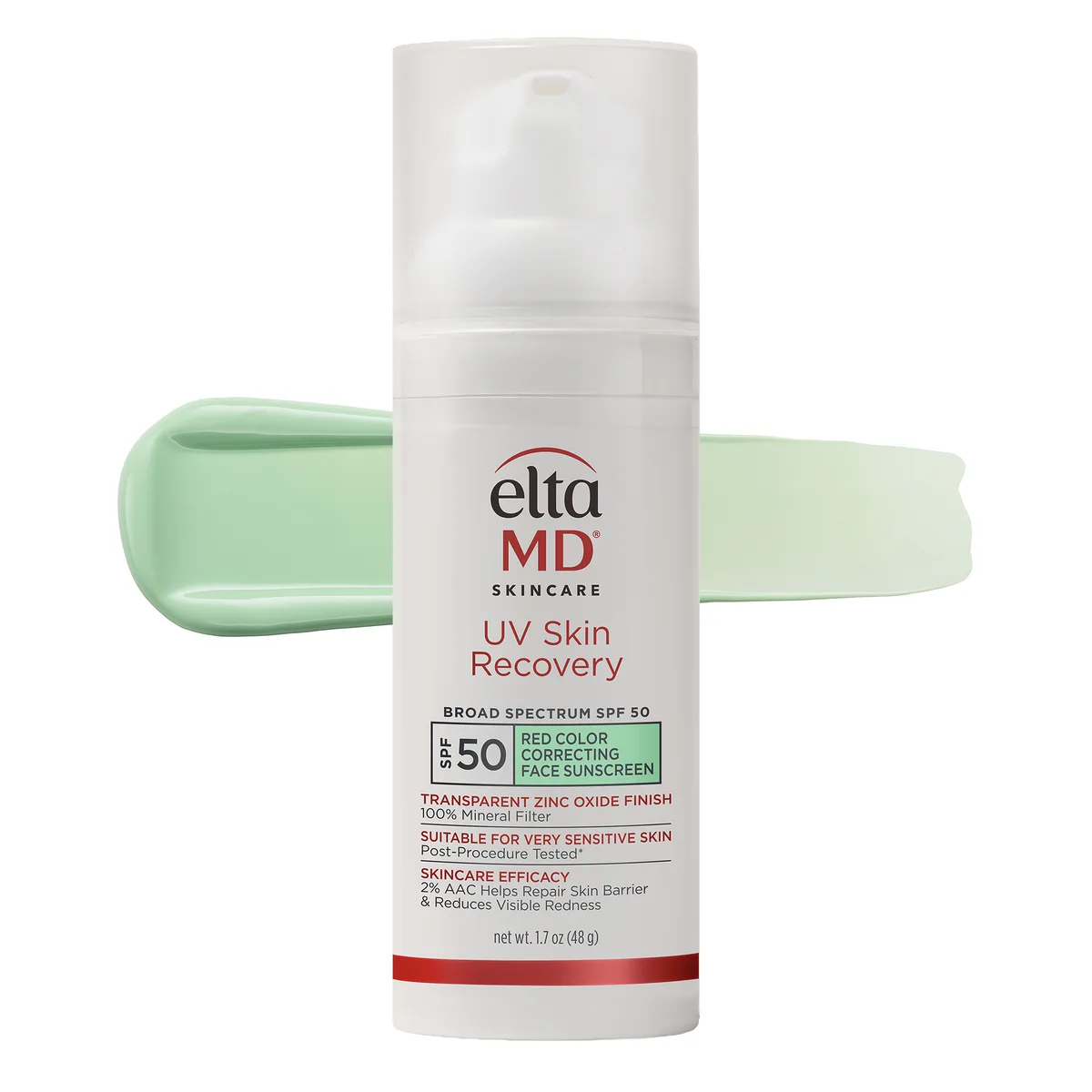
Most mineral sunscreens aimed at sensitive skin stop at zinc oxide and a bland emollient base — this one layers in houttuynia cordata and pine bark extract for a genuinely active soothing-and-antioxidant story. And the green-tint visual cleverly doubles as redness neutralization for rosacea-prone users.
A rare thing in K-beauty suncare: a 100% mineral, fragrance-free, alcohol-free sunscreen that doesn't feel like a punishment to wear. Zinc oxide does the photoprotection heavy lifting while houttuynia and pine bark handle soothing and antioxidant work. A legitimate daily SPF for rosacea, sensitive, and post-procedure skin.
Dr.G's twenty-year dermatology pedigree and repeated hypoallergenic testing underpin this mineral sunscreen, though English-language reviews number a moderate 950 versus a wider base in Korean publications and sensitive-skin forums. Scoring therefore blends that feedback with formulation analysis, with long-term Western user data still the thinner side of the picture.
Verdicts
How well it fits each concern
Verdict by concern tap a concern for the case
Good choicefor SensitivityIn your profileYou chose · No fragrance, drying alcohol, declarable allergens or sensitising preservatives in this cream — the profile sensitive skin looks for.Not yet assessedGentleNo reviews collected yet
The case for it
Centella Asiatica Extract has been researched for this concern and the evidence does not support it.
It is plausibly present at a working level, though the concentration is not declared.
The formula carries none of the triggers this concern is sensitive to.
What would change this: A declared concentration would move this to a firmer reading of the dose.
Same rule for everyone. “Good choice” is the verdict on 1,938 of 45,024 concern verdicts across the catalog; rule F2 decided 1,938 of them.
Unchanged since September 5, 2026, engine 5.1.1.
Supporting rolefor RosaceaIn your profileYou chose · Centella Asiatica has early evidence for rosacea, and photoprotection against a known trigger is the recognised companion to treating it — a reasonable supporting choice, short of a recommendation.Moderate evidenceGentleNo reviews collected yet
The case for it
Centella Asiatica Extract has early or mechanistic evidence for this concern, not trial-backed standing.
It is plausibly present at a working level, though the concentration is not declared.
The formula carries none of the triggers this concern is sensitive to.
What would change this: A declared concentration would move this to a firmer reading of the dose.
Same rule for everyone. “Supporting role” is the verdict on 8,197 of 45,024 concern verdicts across the catalog; rule R8a decided 1,489 of them.
Unchanged since September 5, 2026, engine 5.1.1.
R8a — A plausible-tier active in a category with a supportive job: the sentence names the active instead of saying nothing targets the concern (the AmLactin / CeraVe SA case for keratosis pilaris, where no guideline and single trials leave the keratolytics at early evidence). · the full register
Carrying active
Centella Asiatica Extract
Standing
plausible — trials support it
Form
plausible
Tolerability
gentle
Row checked
against its sources on July 17, 2026 (evidence table ev-2026.09-r228)
Supporting rolefor AcneIn your profileYou chose · Nothing here targets acne directly; photoprotection for post-inflammatory marks is the recognised companion to treating it, and this cream does that without known triggers.Not yet assessedStandard tolerabilityNo reviews collected yet
The case for it
Zinc Oxide has no evidence row yet for this concern — it is in the research queue.
The formula carries no trigger this concern is sensitive to, with the cautions noted.
Cautions: fungal-acne triggers.
What would change this: A researched evidence row for the lead active would replace this with a verdict.
Same rule for everyone. “Supporting role” is the verdict on 8,197 of 45,024 concern verdicts across the catalog; rule R8 decided 4,250 of them.
Unchanged since September 5, 2026, engine 5.1.1.
R8 — The category's job (barrier care, humectant hydration, gentle cleansing, photoprotection) is the documented supportive role for this concern. This is the honest verdict for a moisturizer on an acne page. · the full register
Full protectionfor Post-ProcedureIn your profileYou chose · Broad-spectrum SPF 50 with zinc oxide: the protection post procedure calls for.Moderate evidenceGentleNo reviews collected yet
The case for it
Centella Asiatica Extract has early or mechanistic evidence for this concern, not trial-backed standing.
It is plausibly present at a working level, though the concentration is not declared.
The formula carries none of the triggers this concern is sensitive to.
What would change this: A declared concentration would move this to a firmer reading of the dose.
Same rule for everyone. “Full protection” is the verdict on 2,288 of 45,024 concern verdicts across the catalog; rule P1 decided 2,232 of them.
Unchanged since September 5, 2026, engine 5.1.1.
P1 — Photoprotection standing is regulatory (M020 / Annex VI filters; 21 CFR 201.327 attaches the early-skin-aging claim to tested broad-spectrum SPF 15+). SPF 30 is the AAD daily-use bar. · the full register
Carrying active
Centella Asiatica Extract
Standing
plausible — trials support it
Form
plausible — studied range 0.05%, from the OTC monograph or label; needs leave-on contact
Tolerability
gentle
Row checked
against its sources on July 17, 2026 (evidence table ev-2026.09-r228)
Full protectionfor Sun DamageIn your profileYou chose · Broad-spectrum SPF 50 with zinc oxide: the protection sun damage calls for.Moderate evidenceGentleNo reviews collected yet
The case for it
Zinc Oxide is a first-line active — approved, monograph-listed or named in current guidelines — for this concern.
It is present at an effective concentration, declared or high in the ingredient list.
The formula carries none of the triggers this concern is sensitive to.
Same rule for everyone. “Full protection” is the verdict on 2,288 of 45,024 concern verdicts across the catalog; rule P1 decided 2,232 of them.
Unchanged since September 5, 2026, engine 5.1.1.
P1 — Photoprotection standing is regulatory (M020 / Annex VI filters; 21 CFR 201.327 attaches the early-skin-aging claim to tested broad-spectrum SPF 15+). SPF 30 is the AAD daily-use bar. · the full register
Also listed for Compromised Skin Barrier — the actives here (Zinc Oxide, Houttuynia Cordata (Heartleaf) are in our research queue for that concern; there is no verdict until their evidence rows are written. That is a gap in our table, not a mark against the product.
Does the jobDoes what a sunscreen is for: UVA coverage, kind to the skin wearing it. Not measured from the label: pleasant enough to actually use.
A verdict is DermApproved’s assessment of how well a product’s ingredients fit a concern — never a claim about what the product treats. Evidence dots and collected reviews sit beside it and are never blended in.
Rules 0.5.1 · evidence table ev-2026.09-r228 · how we decide
Assessment
Pros & Cons
Pros
✓ 100% mineral zinc oxide formula with no chemical filters
✓ Fragrance-free and alcohol-free — suitable for reactive skin
✓ Green tint neutralizes mild facial redness on application
✓ Houttuynia cordata and centella provide real soothing action
✓ Pine bark and vitamin E add antioxidant layer to photoprotection
✓ Lower white cast than most 100% mineral sunscreens
✓ Reef-safe for ocean-side travel
Cons
✗ Heavier texture than hybrid or chemical sunscreens
✗ Can pill when layered over silicone-heavy products
✗ Not ideal as a makeup primer — foundation sits rather than blends
✗ 50ml tube empties quickly at proper application dose
✗ Still shows cast on very deep skin tones
Review
Full Review
If you came to Dr.G hunting for a sunscreen that wouldn't set your sensitive skin alight, you probably tried the Brightening Up Sun first — it's the more famous product, the one in every K-beauty roundup. And you may well have regretted it, because despite the brand's sensitive-skin positioning, that sibling contains both fragrance and alcohol denat., the two ingredients reactive skin should specifically avoid. The Green Mild Up Sun is the correction. Dr.G — founded in 2003 by a Korean dermatologist with a sensitive-skin focus — clearly knew a portion of its audience needed a sunscreen stripped of the cosmetic bells and whistles, and this is what they built. The active is zinc oxide, full stop: a true 100% mineral sunscreen, not a hybrid pretending otherwise.
The engineering trick that keeps modern mineral sunscreens from feeling like spackle is the base, and here it's a silicone-dispersed system. Cyclomethicone and caprylyl methicone take prominent positions in the formula, creating the slip and spreadability that traditional aqueous mineral formulas struggle with. The zinc oxide sits embedded in that silicone matrix rather than clumping in a thick emulsion, which is precisely why the white cast comes out notably lower than you'd expect from a genuinely active SPF 50+ mineral sunscreen. Zinc oxide itself earns the trust: it remains the most broad-spectrum single UV filter available, covering the spectrum continuously and extending well into UVA1, with a safety record in sensitive populations better established than any organic filter — which is exactly why dermatologists routinely steer rosacea, eczema, and post-procedure patients toward zinc-only formulas.
The green tint is the clever part. On first application the product has a visible green undertone — enough that most people notice it in the tube — but it fades into the skin rather than leaving a cast, because the color is calibrated to neutralize mild facial redness. This is straight color theory: green sits opposite red on the color wheel, so a green tint cancels the rosy undertone that sensitive and rosacea-prone skin typically shows. It isn't full makeup-grade color correction, but it's enough to settle into a more even, natural finish than a pure-white mineral sunscreen would manage.
The supporting cast is where this separates from the generic mineral-SPF pack. Houttuynia cordata — the green-tinted botanical the sunscreen is named for — is a popular anti-inflammatory ingredient in Korean dermatology, used to calm post-acne redness, and its flavonoids show activity against inflammatory markers in skin models. Centella asiatica reinforces the soothing story, its madecassoside and asiaticoside supporting barrier repair. Pine bark extract, rich in proanthocyanidins, and tocopherol build a two-part antioxidant system that catches the UV-generated free radicals even the best filter can't entirely block — mineral sunscreens stop most UV, but antioxidants mop up the oxidation that still occurs in exposed skin. That's genuinely thoughtful formulation at this price, and it's why the soothing angle here is distinct from the standard centella-only K-beauty approach.
What you trade for all this is a measure of cosmetic ease. The texture is medium-weight and heavier than a chemical or hybrid sunscreen — mineral physics insist on that — and it takes about a minute of careful massage to disappear fully. Layered over a silicone-heavy moisturizer or primer it can pill, so order of operations matters: water-based hydrator, cream moisturizer if needed, then this, and don't stack it over a silicone primer. It's also not a makeup-friendly base the way some chemical sunscreens are; foundation tends to sit on top rather than blend into it, which is fine if that's your preference but a shift if you're used to silicone formulas. The 50ml tube empties fairly quickly at a proper application dose, and on very deep skin tones a slight cast can still show despite the lowered whitening. None of these are dealbreakers for the target user, but they're honest trade-offs.
Photoprotection is immediate from the first application, while the redness-calming benefit builds over roughly two to four weeks of consistent use as the skin stops being repeatedly re-triggered by UV. That second effect is easy to underrate. A lot of facial redness in sensitive and rosacea-adjacent skin is partly UV-driven and self-perpetuating: sun exposure inflames, the inflammation lingers, and the next day's exposure compounds it. Genuinely blocking the UV with a mineral filter the skin tolerates, day after day, lets that cycle finally settle, which is why the soothing botanicals and the photoprotection here work as a system rather than as two separate selling points. Value is fair: a 24-dollar mineral SPF with genuine soothing and antioxidant actives, no fragrance, and no alcohol is well-priced for what it delivers, especially given the established brand's hypoallergenic testing track record. The 50ml tube does empty faster than a pump bottle of chemical sunscreen at a proper protective dose, so factor in that you'll repurchase more often than the sticker price alone suggests.
For rosacea, post-procedure skin, active eczema, fragrance sensitivity, or anyone whose dermatologist has said 'stick to mineral,' this is one of the better options coming out of K-beauty. The green tint and the soothing botanical story put it a meaningful step ahead of the plain zinc-oxide tubes on the drugstore shelf, and it's a legitimate everyday SPF rather than a once-in-a-while mineral compromise. If you want a featherweight, makeup-grade chemical sunscreen, this isn't it — but if your priority is reactive-skin safety with real soothing built in, it earns its 'Sensitive Skin MVP' billing.
Formula
Key Ingredients
The hero actives that drive this product's performance.
The sole active filter in this formula — Dr.G leaned all the way into the mineral-only approach here, unlike its Brightening Up sibling. The high load of zinc oxide sits in a silicone-dispersed base that keeps the white cast lower than most 100% mineral sunscreens manage at SPF 50+.
Regulator-approvedfor Sun Damage · limited certainty
The green-tinted backbone ingredient this sunscreen is named for. In Korean dermatology it's a popular anti-inflammatory botanical used to calm post-acne redness, and in this formula it's paired with centella to build a clear soothing angle distinct from the standard K-beauty centella-only approach.
Included at the tail of the formula to reinforce the soothing positioning — not a headline concentration, but enough to carry Dr.G's signature sensitive-skin story in a product aimed at redness-prone and post-breakout users.
Maritime pine bark is a potent proanthocyanidin-rich antioxidant, added here to round out the photoprotection story — mineral filters block most UV but antioxidants help neutralize the free radicals that still get generated in exposed skin.
Vitamin E layered on top of the pine bark to create a two-part antioxidant system — working particularly well with the lipid-soluble layer of skin where UV-generated oxidation starts.
Limitedfor Sun Damage
Ingredient standings describe the active at treatment-level doses and
vehicles; this product's own condition grades weigh its actual formula.
Save this for the last step of morning skincare. This mineral formula benefits from being rubbed in slowly and warmly — too much friction emulsifies it and reduces coverage evenness. Let it sit a full minute before any makeup.
Results Timeline
Photoprotection is immediate. Reduction in redness and irritation typically becomes noticeable within 2-4 weeks of consistent use as the skin stops being re-triggered by UV exposure.
Zinc oxide remains the most broad-spectrum single UV filter available, covering roughly 290-380nm continuously and extending further into UVA1 than any chemical filter other than avobenzone or Tinosorb S. At cosmetically viable concentrations (typically 12-25% in mineral sunscreens) it provides reliable SPF 30-50+ protection, and its safety record in sensitive populations is better established than any organic filter, which is why dermatologists routinely direct rosacea, eczema, and post-procedure patients to zinc-only formulas. The delivery system in this product is a silicone-in-water dispersion, which uses cyclomethicone and dimethicone crosspolymers to keep zinc particles evenly suspended and reduce visible whitening compared to traditional aqueous mineral formulas. Houttuynia cordata has been studied for its anti-inflammatory effects — quercitrin and other flavonoids in the plant show activity against inflammatory markers in in-vitro skin models, supporting its traditional use in Korean medicine for inflamed skin. Centella asiatica's triterpenoid compounds, particularly madecassoside and asiaticoside, have demonstrated wound-healing and barrier-repair effects in published dermatology literature. Pine bark extract (Pycnogenol) contains proanthocyanidins with documented antioxidant activity, and small studies have suggested it may complement sunscreen protection by reducing UV-induced free radical damage in skin, though the evidence base is smaller than for tocopherol. Tocopherol (vitamin E) is a well-established lipid-soluble antioxidant that protects membrane lipids from UV-induced oxidation and is a standard inclusion in modern photoprotective formulas.
Dermatologist Perspective
Dermatologists routinely recommend 100% mineral sunscreens for patients with rosacea, active eczema, post-procedure skin, and chemical filter sensitivity — zinc oxide remains the gold standard for these populations. Clinicians note that fragrance is one of the most common contact allergens in skincare, and alcohol denat. can disrupt barrier function in already-compromised skin, so sunscreens that eliminate both are disproportionately useful in sensitive-skin protocols. Dermatologists managing patients who've had recent laser treatments, chemical peels, or microneedling commonly direct them to fragrance-free mineral formulas like this one for the first weeks of recovery. The inclusion of centella asiatica and houttuynia cordata aligns with the soothing-ingredient recommendations frequently made for post-inflammatory skin, and the addition of antioxidants reflects current photoprotection guidance that pairs UV filters with free-radical scavengers for more comprehensive protection.
Guidance
Usage & Recommendations
How to Use
Apply as the final step of morning skincare after your moisturizer has fully absorbed. Dispense roughly two finger-lengths (about 1/4 teaspoon) for face and neck. Warm the product briefly between fingertips, then press and pat it into skin in sections rather than rubbing aggressively — massaging too hard with a mineral sunscreen can cause it to streak or pill. Wait at least one minute before layering foundation. Reapply every two hours of direct sun exposure, which is easiest with a mineral sunscreen stick for touch-ups over makeup.
Value Assessment
At around $24 for 50ml, this sunscreen is competitively priced for an imported mineral K-beauty SPF with this level of formulation thoughtfulness. Compared to Western mineral sunscreens at the same price point, which often stop at zinc oxide and a basic emollient base, the Dr.G formula includes meaningful soothing botanicals and an antioxidant layer. No larger refill is offered, which is a slight drawback for daily users who will empty a tube every two months at the correct application dose. For sensitive skin that's struggled to find a tolerable daily SPF, the cost-per-outcome calculation is strongly in the brand's favor.
Who Should Buy
Anyone with rosacea, eczema, sensitive skin, fragrance intolerance, or post-procedure recovery needs. Also an excellent choice for acne-prone skin looking for a fungal-acne-friendly mineral SPF with active soothing benefits. Ideal for fair-to-medium skin tones in Korean tint calibration.
Who Should Skip
Anyone who wants a weightless silicone-slip finish or uses their sunscreen as a makeup primer — this is more textured than chemical alternatives. Hold off, too, if you have very deep skin tones, since some white cast will still be visible despite the formulation's efforts to minimize it.
Medium-weight silicone-dispersed mineral cream with a faint green tint on first application
Scent
Neutral, nearly odorless
Packaging
Squeeze tube with narrow nozzle
Finish
satinnaturalnon-greasy
What to Expect on First Use
The first pump looks green and slightly thick, which is the cue that this is a legitimate mineral formula rather than a chemical one cosplaying as one. It rubs in to a neutral finish within a minute, and the green undertone neutralizes mild redness rather than leaving any visible cast.
How Long It Lasts
About 2 months with daily facial application at correct SPF dose
Dr.G developed this sunscreen as a companion to its popular Red Blemish Clear line, targeting Korean consumers with acne-prone and rosacea-adjacent skin who needed a mineral SPF that wouldn't break out, sting, or leave a heavy cast. The 'Green' in the name references both the tint and the plant-extract orientation of the formula.
About Dr.G Established Brand (5–20 years)
Dr.G was founded in 2003 by Korean dermatologist Dr. Ahn Gun-Young with a sensitive-skin focus. The brand is well established in Korean dermatology clinics and has passed repeated in-vivo hypoallergenic testing across its product range.
Brand founded: 2003
Myth vs. Reality
Common Myths
Myth
Mineral sunscreens always leave a heavy white cast.
Reality
Modern silicone-dispersed mineral formulas like this one minimize the cast dramatically — this product's green undertone actually works with mild redness rather than against it.
Myth
'Green' in the product name means it contains chlorophyll or greens extract.
Reality
The green is primarily a visual cue referencing the botanical soothing theme. The color fades on application, and the active soothing agents are houttuynia cordata and centella rather than any green juice ingredient.
FAQ
Frequently Asked Questions
Is Dr.G Green Mild Up Sun a 100% mineral sunscreen?
Yes — zinc oxide is the sole UV filter in this formula. It's a true mineral sunscreen, which is why it's suitable for sensitive, post-procedure, and rosacea-prone skin that reacts to chemical filters.
Does it leave a white cast?
The silicone-dispersed formulation keeps the cast notably lower than traditional mineral sunscreens, and the faint green tint helps neutralize any residual whiteness by pairing with underlying skin redness. On very deep skin tones some cast will still be visible.
Is it safe for rosacea?
Yes — it's fragrance-free, alcohol-free, uses only zinc oxide as the active, and includes houttuynia cordata and centella as dedicated soothing agents. This combination makes it one of the better daily SPF options for rosacea-prone skin.
Can I wear it under makeup?
Yes, though it has more grip than a silicone-heavy chemical sunscreen, so foundation will sit on top rather than glide. Use a hydrating primer or skip primer entirely for best results.
Is it reef-safe?
Yes, since it contains only zinc oxide as an active filter and no octinoxate or oxybenzone. It's suitable for ocean-facing travel and compliant with reef-protection legislation in places like Hawaii.
Is Green Mild Up Sun SPF 50+ fungal-acne (malassezia) safe?
The formula is largely free of esters and fatty alcohols that feed malassezia, so it's generally considered fungal-acne-friendly — though individual tolerance varies, so patch test on a small area first.
How does it compare to the Dr.G Brightening Up Sun?
The Brightening version is a hybrid tone-up sunscreen with fragrance and alcohol and a peach tint. The Green Mild is fragrance-free, 100% mineral, and aimed at sensitive and reactive skin. Pick based on which goal matters more — brightening versus soothing.
Reviews
What Reviewers Tend to Say
Recurring themes our editors read across retailer reviews of this product — summaries in our words, not quotations, and not a substitute for your own patch test.
Common Praise
Genuinely non-irritating
Lower white cast than expected for mineral
Calms redness over time
Common Complaints
Slight green tint on initial application
Can pill if layered over heavy silicone products
Small tube size
Notable Endorsements
Recommended in Korean sensitive-skin forumsFrequently cited as a gateway mineral sunscreen
The K-beauty buzzword slaps a green leaf on half the shelf — but centella is one of the rare botanicals with genuine wound-healing data. The trick is knowing which molecule is doing the job.
IPL is a filtered flashlamp, a true vascular laser is one wavelength aimed at haemoglobin, and the choice between them turns on a distinction almost no consult makes: whether your redness is vessels or a state.
Cutting a beard hair takes about a twentieth of a newton. You press with two and stretch your skin by a fifth — which is why almost every shaving problem is a technique problem wearing a hardware costume.
The smallest AHA gets deepest and shows results soonest — which is precisely why routines built around it overshoot, and why the people who do best with it use it least.
Jul 30, 2026· 7 min
Questions people ask about sensitive skin
Verified answers from our questions library — the nuance a product page cannot carry.
Products, answers, therapy guides, tools and articles in one search. Brand names,
slang and abbreviations all work — accutane finds isotretinoin, bacne finds truncal acne.