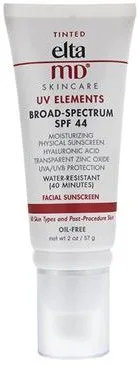
TiZO 3 is one of the earliest tinted mineral sunscreens designed around the iron-oxide-for-visible-light concept, and the execution remains distinctive: iron oxide pigment worked into a silicone elastomer matrix alongside the mineral filters and stable vitamin C. It delivers UV protection, visible-light defense, antioxidant backup, and a skin-evening tint in a single step, which is still rare a decade and a half after launch.
TiZO 3 takes the same silicone elastomer base and 8% titanium / 3.8% zinc active load as TiZO 2 and adds iron oxides for a universal tint and meaningful visible-light protection. It's one of the earlier and cleaner executions of the iron-oxide-for-melasma concept, with stable vitamin C and E worked into the formula for antioxidant backup. The $47 price is the main hurdle, and the universal tint excludes deeper skin tones.
Basic protectionfor MelasmaIn your profileYou chose · Broad-spectrum SPF 40, but no iron oxides — melasma is worsened by visible light, which UV filters alone do not block.Moderate evidenceGentleNo reviews collected yet
The case for it
Tetrahexyldecyl Ascorbate has early or mechanistic evidence for this concern, not trial-backed standing.
It is present below the studied range.
The formula carries none of the triggers this concern is sensitive to.
What would change this: A concentration inside the studied range would raise this a step.
Same rule for everyone. “Basic protection” is the verdict on 175 of 45,024 concern verdicts across the catalog; rule P3 decided 68 of them.
Unchanged since September 5, 2026, engine 5.1.1.
Full protectionfor HyperpigmentationIn your profileYou chose · Broad-spectrum SPF 40 with titanium dioxide, zinc oxide: the protection hyperpigmentation calls for.Moderate evidenceGentleNo reviews collected yet
The case for it
Tetrahexyldecyl Ascorbate has early or mechanistic evidence for this concern, not trial-backed standing.
It is present below the studied range.
The formula carries none of the triggers this concern is sensitive to.
What would change this: A concentration inside the studied range would raise this a step.
Same rule for everyone. “Full protection” is the verdict on 2,288 of 45,024 concern verdicts across the catalog; rule P1 decided 2,232 of them.
Unchanged since September 5, 2026, engine 5.1.1.
P1 — Photoprotection standing is regulatory (M020 / Annex VI filters; 21 CFR 201.327 attaches the early-skin-aging claim to tested broad-spectrum SPF 15+). SPF 30 is the AAD daily-use bar. · the full register
Carrying active
Tetrahexyldecyl Ascorbate
Standing
plausible — trials support it
Form
sub threshold — studied range 5–6%, from the trials on the row; needs leave-on contact; judge it after ~12 weeks
Tolerability
gentle
Row checked
against its sources on July 17, 2026 (evidence table ev-2026.09-r228)
Full protectionfor Sun DamageIn your profileYou chose · Broad-spectrum SPF 40 with titanium dioxide, zinc oxide: the protection sun damage calls for.Moderate evidenceGentleNo reviews collected yet
The case for it
Titanium Dioxide 8% is a first-line active — approved, monograph-listed or named in current guidelines — for this concern.
It is present at an effective concentration, declared or high in the ingredient list.
The formula carries none of the triggers this concern is sensitive to.
Same rule for everyone. “Full protection” is the verdict on 2,288 of 45,024 concern verdicts across the catalog; rule P1 decided 2,232 of them.
Unchanged since September 5, 2026, engine 5.1.1.
P1 — Photoprotection standing is regulatory (M020 / Annex VI filters; 21 CFR 201.327 attaches the early-skin-aging claim to tested broad-spectrum SPF 15+). SPF 30 is the AAD daily-use bar. · the full register
Carrying active
Titanium Dioxide 8%
Standing
first line — a regulator recognises it for this use; trials support it · per § 352.10 Sunscreen active ingredients. (U.S. Food and Drug Administration — 21 CFR Part 352 (Sunscreen Drug Products for Over-the-Counter Human Use), Code of Federal Regulations via GovInfo), opened July 27, 2026
Form
adequate (declared 8%) — studied range up to 25%, from the OTC monograph or label; needs leave-on contact
Tolerability
gentle
Row checked
against its sources on July 27, 2026 (evidence table ev-2026.09-r228)
21 CFR 352.10 — Sunscreen active ingredients — US Food and Drug Administration / Electronic Code of Federal Regulations (retrieved 2026-07-16; note stayed effective date), opened July 16, 2026
Full protectionfor AgingIn your profileYou chose · Broad-spectrum SPF 40 with titanium dioxide, zinc oxide: the protection aging calls for.Moderate evidenceGentleNo reviews collected yet
The case for it
Tetrahexyldecyl Ascorbate has early or mechanistic evidence for this concern, not trial-backed standing.
It is present below the studied range.
The formula carries none of the triggers this concern is sensitive to.
What would change this: A concentration inside the studied range would raise this a step.
Same rule for everyone. “Full protection” is the verdict on 2,288 of 45,024 concern verdicts across the catalog; rule P1 decided 2,232 of them.
Unchanged since September 5, 2026, engine 5.1.1.
P1 — Photoprotection standing is regulatory (M020 / Annex VI filters; 21 CFR 201.327 attaches the early-skin-aging claim to tested broad-spectrum SPF 15+). SPF 30 is the AAD daily-use bar. · the full register
Carrying active
Tetrahexyldecyl Ascorbate
Standing
plausible — trials support it
Form
sub threshold — studied range 5%, from the trials on the row; needs leave-on contact; judge it after ~12 weeks
Tolerability
gentle
Row checked
against its sources on July 17, 2026 (evidence table ev-2026.09-r228)
Supporting rolefor RosaceaIn your profileYou chose · Nothing here targets rosacea directly; photoprotection against a known trigger is the recognised companion to treating it, and this cream does that without known triggers.Not yet assessedGentleNo reviews collected yet
The case for it
Titanium Dioxide 8% has no evidence row yet for this concern — it is in the research queue.
The formula carries none of the triggers this concern is sensitive to.
What would change this: A researched evidence row for the lead active would replace this with a verdict.
Same rule for everyone. “Supporting role” is the verdict on 8,197 of 45,024 concern verdicts across the catalog; rule R8 decided 4,250 of them.
Unchanged since September 5, 2026, engine 5.1.1.
R8 — The category's job (barrier care, humectant hydration, gentle cleansing, photoprotection) is the documented supportive role for this concern. This is the honest verdict for a moisturizer on an acne page. · the full register
Full protectionfor Post-ProcedureIn your profileYou chose · Broad-spectrum SPF 40 with titanium dioxide, zinc oxide: the protection post procedure calls for.Not yet assessedGentleNo reviews collected yet
The case for it
Titanium Dioxide 8% has no evidence row yet for this concern — it is in the research queue.
The formula carries none of the triggers this concern is sensitive to.
What would change this: A researched evidence row for the lead active would replace this with a verdict.
Same rule for everyone. “Full protection” is the verdict on 2,288 of 45,024 concern verdicts across the catalog; rule P1 decided 2,232 of them.
Unchanged since September 5, 2026, engine 5.1.1.
P1 — Photoprotection standing is regulatory (M020 / Annex VI filters; 21 CFR 201.327 attaches the early-skin-aging claim to tested broad-spectrum SPF 15+). SPF 30 is the AAD daily-use bar. · the full register
Good choicefor SensitivityIn your profileYou chose · No fragrance, drying alcohol, declarable allergens or sensitising preservatives in this cream — the profile sensitive skin looks for.Not yet assessedGentleNo reviews collected yet
The case for it
Titanium Dioxide 8% has no evidence row yet for this concern — it is in the research queue.
The formula carries none of the triggers this concern is sensitive to.
What would change this: A researched evidence row for the lead active would replace this with a verdict.
Same rule for everyone. “Good choice” is the verdict on 1,938 of 45,024 concern verdicts across the catalog; rule F2 decided 1,938 of them.
Unchanged since September 5, 2026, engine 5.1.1.
Full protectionfor Dark SpotsIn your profileYou chose · Broad-spectrum SPF 40 with titanium dioxide, zinc oxide: the protection dark spots calls for.Moderate evidenceGentleNo reviews collected yet
The case for it
Tetrahexyldecyl Ascorbate has early or mechanistic evidence for this concern, not trial-backed standing.
It is present below the studied range.
The formula carries none of the triggers this concern is sensitive to.
What would change this: A concentration inside the studied range would raise this a step.
Same rule for everyone. “Full protection” is the verdict on 2,288 of 45,024 concern verdicts across the catalog; rule P1 decided 2,232 of them.
Unchanged since September 5, 2026, engine 5.1.1.
P1 — Photoprotection standing is regulatory (M020 / Annex VI filters; 21 CFR 201.327 attaches the early-skin-aging claim to tested broad-spectrum SPF 15+). SPF 30 is the AAD daily-use bar. · the full register
Carrying active
Tetrahexyldecyl Ascorbate
Standing
plausible — trials support it
Form
sub threshold — studied range 1–28%, from the trials on the row; needs leave-on contact; judge it after ~12 weeks
Tolerability
gentle
Row checked
against its sources on July 17, 2026 (evidence table ev-2026.09-r228)
Does the jobDoes what a sunscreen is for: UVA coverage, kind to the skin wearing it. Not measured from the label: pleasant enough to actually use.
A verdict is DermApproved’s assessment of how well a product’s ingredients fit a concern — never a claim about what the product treats. Evidence dots and collected reviews sit beside it and are never blended in.
Rules 0.5.1 · evidence table ev-2026.09-r228 · how we decide
Assessment
Pros & Cons
Pros
✓ Iron oxides provide genuine visible-light protection for melasma
✓ Universal shade blends across light-to-medium skin tones
✓ Stable tetrahexyldecyl ascorbate plus vitamin E antioxidant support
✓ Evens skin enough to replace light-coverage foundation
✓ Satin dry-down suits normal, combination, and dry skin
✓ Dermatologist-office staple with nearly two decades of clinical use
✓ Skin Cancer Foundation Seal of Recommendation
Cons
✗ Single universal shade excludes deeper skin tones
✗ Premium $47 price for a 1.75-ounce tube
✗ Tint can transfer slightly to clothing collars
✗ Silicone base can pill if rushed into makeup
✗ Modest zinc percentage compared to some competitors
Review
Full Review
Here's a problem dermatologists have been trying to explain to melasma patients for years: UV protection alone isn't enough. Research beginning in the mid-2010s started connecting visible light — particularly the blue-violet wavelengths that reach deep into the dermis — to melasma flare-ups and post-inflammatory hyperpigmentation, especially in darker skin tones. The uncomfortable implication was that most sunscreens, including high-quality mineral formulas, don't block visible light at all. What does? Iron oxides. And the most practical way to get them onto the face in meaningful amounts is a tinted sunscreen.
TiZO 3 was doing this before the iron-oxide-for-melasma conversation went mainstream. Fallene, the Pennsylvania company behind the TiZO line, had been supplying mineral sunscreens to dermatology and plastic surgery offices since the mid-1990s, and the tinted version was developed with direct feedback from derm customers who needed coverage that did real work on pigmentation. That origin matters. This isn't a formula that tacked iron oxides onto a legacy product to chase a trend — it was built around the use case, and the architecture still holds up more than fifteen years later.
The active load is the same 8% titanium dioxide plus 3.8% zinc oxide that the untinted version uses, suspended in the same silicone elastomer matrix, with iron oxide pigment worked into it. The pigment does two things at once: it provides the universal tint that evens skin cosmetically, and it blocks a meaningful fraction of visible light, including the high-energy blue-violet wavelengths that drive pigmentation. Those are not separate features. It is the same molecule doing both jobs — which is precisely why a well-formulated tinted sunscreen outperforms an untinted one with foundation applied over the top, and why 'tinted sunscreen is just sunscreen with colour in it' is exactly wrong.
Read the ingredient list and something else stands out: there are thirteen ingredients and not one of them is water. This is an anhydrous silicone formula — cyclopentasiloxane, cyclohexasiloxane, dimethicone, a pair of crosspolymers, dimethiconol, a couple of PEG-methicone dispersants, and alumina coating the mineral particles. No water means no preservative system, because there is nothing for microbes to grow in. It is one of the shortest, most inert ingredient lists in any sunscreen, and it explains why post-procedure patients tolerate it: there is essentially nothing here to react to. It's also, incidentally, fine for anyone managing fungal acne.
The texture difference from the untinted sibling is subtle but meaningful. Where that one dries to a flat matte that oily skin loves and dry skin fights, TiZO 3 finishes satin — a slightly more emollient dry-down that reads velvety rather than powdery. The elastomer still does its blurring work, softening pores and smoothing the surface, but there is enough slip that normal, combination, and dry skin find it wearable. If the matte version dragged on your dehydrated skin, this is usually the fix. And it puts paid to the other tired assumption about mineral sunscreens, that they cannot look good: this one looks like a tinted moisturizer.
The stable vitamin C and E pairing deserves its mention. Tetrahexyldecyl ascorbate is a lipid-soluble ascorbate ester that tucks neatly into the silicone phase — a formulation impossibility in a water-based sunscreen — alongside tocopheryl acetate. The two regenerate each other in skin, extending antioxidant activity beyond what either manages alone. For pigmentation-prone skin this matters more than usual, because oxidative stress is part of the melasma story, and every layer of antioxidant cover reduces the load on melanocytes.
Application technique is not optional with a tinted mineral. A quarter-teaspoon for the face and another for the neck, warmed briefly between the fingers, pressed into the skin in sections rather than rubbed — rubbing streaks the pigment and thins the film, which costs you both the tint and the protection. Give it a full minute to set before makeup goes on, or the silicone base will pill. And it needs reapplying every couple of hours in real sun, which is genuinely awkward over a made-up face and is the honest weak point of every tinted sunscreen ever formulated.
The universal tint is where the formula hasn't kept pace with the category. One shade does not fit everyone. It blends beautifully across light-to-medium tones with neutral undertones and reads ashy, or leaves a faint cast, on deep skin — which is precisely the skin that benefits most from iron-oxide visible-light protection. Other brands have pushed into proper shade ranges; TiZO hasn't. If you have a deeper complexion and you want iron oxides, a shade-matched option elsewhere will serve you better, even at some cost in cosmetic sophistication.
For the skin it was built for, though, it earns its office-staple reputation. Across more than a thousand reviews, people say it evens skin enough to replace light foundation, sits well under makeup, and doesn't sting or flush rosacea-prone faces. The complaints are the ones the formula predicts: the shade, the price, and a faint tint transfer to collars.
Which leaves the price. Forty-seven dollars for 1.75 ounces — around two months of proper daily use — is upper-tier, and cheaper iron-oxide tinted minerals now exist. What you're paying for is the elastomer finish, the anhydrous simplicity, the stable vitamin C, and a two-decade dermatology track record. For melasma, post-procedure recovery, and rosacea, that premium is defensible. For everyone else, it's a luxury in a category where good alternatives are easy to find.
Formula
Key Ingredients
The hero actives that drive this product's performance.
Handles the UVB and short-UVA portion of the protection curve in this formula. Dispersed through the same silicone elastomer matrix as TiZO 2 but with iron oxide pigment worked into the phase, so the protective film carries both UV and visible-light coverage without becoming streaky or uneven.
Regulator-approvedfor Sun Damage · limited certainty
Extends protection into the long UVA1 range — the wavelengths most tied to pigmentary changes and photoaging. The modest zinc percentage keeps the tinted formula wearable; higher loads in tinted sunscreens tend to drag and separate from the pigment phase.
Regulator-approvedfor Sun Damage · limited certainty
This is the ingredient that distinguishes TiZO 3 from its non-tinted sibling. The iron oxide both provides the universal tint and blocks visible light — specifically the high-energy visible and blue-violet wavelengths that research has linked to melasma and post-inflammatory hyperpigmentation independent of UV exposure.
A stable, lipid-soluble vitamin C ester that integrates into the silicone phase of the formula. Sits alongside the mineral filters and vitamin E as antioxidant backup, neutralizing free radicals generated by any UV or visible light that slips through the tinted mineral film — meaningful for pigmentation-prone skin where oxidative stress worsens melasma.
Limitedfor Melasma
Silicone Elastomer Complex
The cyclopentasiloxane, dimethicone, and dimethicone crosspolymer network is what holds everything together. It creates a thin, even film that disperses the mineral and pigment particles uniformly, blurs pores, and dries down satin rather than flat — giving TiZO 3 a slightly more emollient finish than TiZO 2.
Not yet assessed
Ingredient standings describe the active at treatment-level doses and
vehicles; this product's own condition grades weigh its actual formula.
Apply as the final morning step after moisturizer. The universal tint blends across a range of skin tones and can replace light-coverage foundation on no-makeup days. Press and pat rather than rub to preserve the even tinted film.
Results Timeline
Immediate UV and visible-light protection. With consistent daily use paired with pigment-fading actives, melasma and post-inflammatory hyperpigmentation patients typically see meaningful improvement at 8-12 weeks. Sun protection compliance is the single biggest factor in long-term pigmentation management.
The formulation logic behind TiZO 3 connects two separate research threads. The first is the well-established UV protection offered by mineral filters: 8% titanium dioxide covers UVB and short UVA efficiently, and 3.8% zinc oxide extends deeper into UVA1 (340-400nm), the wavelengths most strongly associated with photoaging and pigmentary changes. The combination provides the SPF 40 rating, and both actives fall comfortably within the FDA monograph permitted range.
The second thread is the visible-light research. A study reported in journals including the Journal of the American Academy of Dermatology and the British Journal of Dermatology have shown that visible light, particularly the high-energy visible (HEV) and blue-violet ranges, induces pigmentation in Fitzpatrick III-VI skin and drives melasma flares independent of UV exposure. Standard mineral and chemical sunscreens don't block visible light — they're essentially transparent in that wavelength range. Iron oxides are one of the few cosmetically tolerable ingredients that meaningfully attenuate visible light, and clinical trials have shown that tinted sunscreens containing iron oxides outperform non-tinted mineral sunscreens for melasma maintenance.
The specific construction of TiZO 3 reflects this. The iron oxide pigment isn't a cosmetic afterthought — it's loaded at levels sufficient to provide visible-light attenuation while still blending into a wearable tint. The silicone elastomer matrix built from cyclopentasiloxane, dimethicone, and dimethicone crosspolymer creates an even film that disperses both the mineral filters and the iron oxide uniformly across the skin, which is important because patchy application is the main reason real-world sunscreen performance falls short of labeled SPF.
The antioxidant strategy rounds out the protection. Tetrahexyldecyl ascorbate is a lipid-soluble vitamin C derivative that's stable in anhydrous formulas and converts to active ascorbate in the skin. Paired with tocopheryl acetate, it forms the now-classic vitamin C/E photoprotective couple that regenerates itself in the skin, extending antioxidant activity beyond what either ingredient could deliver alone. In the context of melasma, where oxidative stress is part of the pathogenesis, this layered approach is clinically thoughtful.
Dermatologist Perspective
TiZO 3 is commonly recommended by dermatologists as a first-line sunscreen for melasma and post-inflammatory hyperpigmentation patients. The combination of mineral filters and iron oxide tint addresses both UV and visible-light drivers of pigmentation, which is a clinical priority that plain mineral sunscreens don't meet. Dermatologists in everyday practice often pair TiZO 3 with pigment-fading actives like tranexamic acid, azelaic acid, or hydroquinone, noting that sun protection compliance is the single most important factor in long-term melasma management. The fragrance-free formula also makes it a common recommendation for rosacea and post-procedure patients who need gentle but serious protection.
Guidance
Usage & Recommendations
How to Use
Apply as the last morning step after moisturizer, using about a quarter-teaspoon for the face and a quarter-teaspoon for the neck. Warm briefly between fingertips and press into the skin in sections rather than rubbing — this preserves the even tinted film and prevents patchy coverage. Allow a full minute to set before applying any additional makeup. Reapply every two hours during sun exposure or after swimming or sweating. On no-makeup days, this can replace a tinted moisturizer entirely.
Value Assessment
TiZO 3 sits at $47 for 1.75 ounces, meaningfully above budget-friendly tinted mineral options like EltaMD UV Elements or La Roche-Posay Anthelios Mineral Tinted. What justifies the premium for the right buyer is the silicone elastomer finish, the stable vitamin C inclusion, and the long dermatology-office track record. For melasma patients and post-procedure recovery, where the formulation integrity actually matters, the premium is defensible. For casual daily use on skin without pigment concerns, the alternatives do enough of the same job to make TiZO 3 feel optional.
Who Should Buy
Melasma and hyperpigmentation patients who need genuine visible-light protection. Normal, combination, dry, and sensitive skin types who want a mineral sunscreen sophisticated enough to replace foundation. Post-procedure patients who need fragrance-free protection that also covers residual redness.
Who Should Skip
Deep skin tones will likely find the universal tint ashy or cast-leaving — a shade-matched alternative is a better choice. Very oily skin may prefer the flatter matte of TiZO 2. Budget-conscious buyers can find iron-oxide-containing tinted sunscreens at lower price points.
Ready to try TiZO 3 Facial Mineral Sunscreen SPF 40 Tinted?
Silicone-based tinted cream with a velvety, satin-matte finish.
Scent
Essentially scentless.
Packaging
Squeeze tube with a flip cap.
Finish
satinnon-greasyvelvety
What to Expect on First Use
Goes on as a silicone-slick tinted cream and dries down to a satin finish within about a minute. The universal tint disappears into light-to-medium tones, reading as a subtle evening rather than obvious color. Patch test along the jaw first if you have a cool or deep undertone — the warm iron oxide shade can look peachy or ashy on the edges of the range.
How Long It Lasts
Roughly 2 months with daily face and neck application at the recommended dose.
TiZO 3 was designed for the same dermatology-office clientele that drove TiZO 2's development, with explicit attention to the melasma and post-procedure patients who needed both UV and visible-light coverage. Iron oxides weren't yet a marketing buzzword when TiZO 3 launched in the late 2000s — Fallene included them because their derm customers were asking for tinted protection that actually did something measurable for pigmentation.
About TiZO Established Brand (5–20 years)
TiZO is made by Fallene, a Pennsylvania sun protection company founded in 1995 that has supplied dermatology and plastic surgery offices for decades. TiZO 3 launched alongside TiZO 2 and remains a post-procedure and melasma staple in clinical practice, holding the Skin Cancer Foundation Seal of Recommendation.
Brand founded: 1995 · Product launched: 2008
Myth vs. Reality
Common Myths
Myth
Tinted sunscreens are just sunscreens with color added.
Reality
The iron oxides that create the tint also block visible light, which standard UV filters don't touch. For melasma and PIH, this additional coverage is clinically meaningful, not cosmetic.
Myth
Mineral sunscreens can't look good on the skin.
Reality
The silicone elastomer matrix in TiZO 3 disperses both the minerals and iron oxide pigment evenly enough to read as a satin-finished tinted moisturizer on most light-to-medium tones, rather than a chalky zinc film.
FAQ
Frequently Asked Questions
What's the difference between TiZO 3 and TiZO 2?
Both share the same 8% titanium dioxide and 3.8% zinc oxide active load and the same silicone elastomer base. TiZO 3 adds iron oxides for a universal tint and visible-light protection, with a slightly more emollient satin finish. TiZO 2 is non-tinted and finishes flatter matte. TiZO 3 suits normal-to-combination and pigmentation-prone skin; TiZO 2 suits oily skin and primer users.
Does TiZO 3 help with melasma?
It's frequently recommended for melasma because the iron oxide tint blocks visible light, which research has linked to melasma flare-ups independent of UV exposure. Pair it with a pigment-fading active like tranexamic acid, azelaic acid, or hydroquinone for meaningful improvement over weeks to months.
Will TiZO 3 match my skin tone?
The universal tint is formulated to blend across light to medium skin tones with neutral undertones. On deeper skin tones, it may read ashy or leave a residual cast; on very fair or cool undertones, the warm iron oxide tone may read slightly peach. Patch test along the jawline before committing.
Can I wear TiZO 3 under makeup?
Yes, though it already provides light skin-evening on its own. Many users skip foundation entirely on lower-coverage days. If layering foundation, let TiZO 3 set for a minute before applying — the silicone elastomer base can pill if rushed or if layered under another silicone-heavy product.
Is TiZO 3 safe after a chemical peel or laser?
It's commonly recommended by dermatologists for post-procedure sun protection. The fragrance-free, alcohol-free formula is well-tolerated by compromised skin, and the tint helps disguise the redness that often follows procedures. Always confirm with your provider first.
Is TiZO 3 reef-safe?
It uses only zinc oxide and titanium dioxide as active filters, with no oxybenzone or octinoxate — the chemicals banned in some reef-protection regulations. Whether any sunscreen is truly reef-safe is debated, but TiZO 3 meets the Hawaii and Key West legal standards.
How much should I apply?
About a quarter-teaspoon for the face and another quarter-teaspoon for the neck and chest. This is the standard dose for any facial sunscreen to achieve its labeled SPF — underapplication is the most common reason mineral sunscreens underperform.
Reviews
What Reviewers Tend to Say
Recurring themes our editors read across retailer reviews of this product — summaries in our words, not quotations, and not a substitute for your own patch test.
Common Praise
Universal tint blends across light-to-medium skin tones
Evens skin enough to replace light foundation
Tolerated by rosacea and post-procedure skin
Fragrance-free with no sting
Visible-light protection matters for melasma
Common Complaints
Single universal shade doesn't work for deep skin tones
Premium price for 1.75 oz
Tint can transfer slightly to collars
Not dewy enough for very dry skin in winter
Notable Endorsements
Widely stocked in US dermatology and plastic surgery officesFrequently recommended for melasma patients
Every pigment-fading active runs against a re-pigmenting stimulus, and for melasma part of that stimulus is visible light — which broad-spectrum sunscreen does essentially nothing about unless you can see it on your face.
'Dark spots' bundles at least five distinct processes that sit at different depths, respond to different things, and have wildly different prognoses — one clears on its own, one relapses forever, and one will not move for any serum ever made.
Aug 6, 2026· 7 min
Questions people ask about Melasma
Verified answers from our questions library — the nuance a product page cannot carry.
Products, answers, therapy guides, tools and articles in one search. Brand names,
slang and abbreviations all work — accutane finds isotretinoin, bacne finds truncal acne.