




Why Korean Sunscreens Outclass American Ones — and the 1999 Rule That's to Blame
It isn't chemistry. It's paperwork: the US spent a quarter-century unable to approve the filters Seoul and Paris have used since the Bush administration.

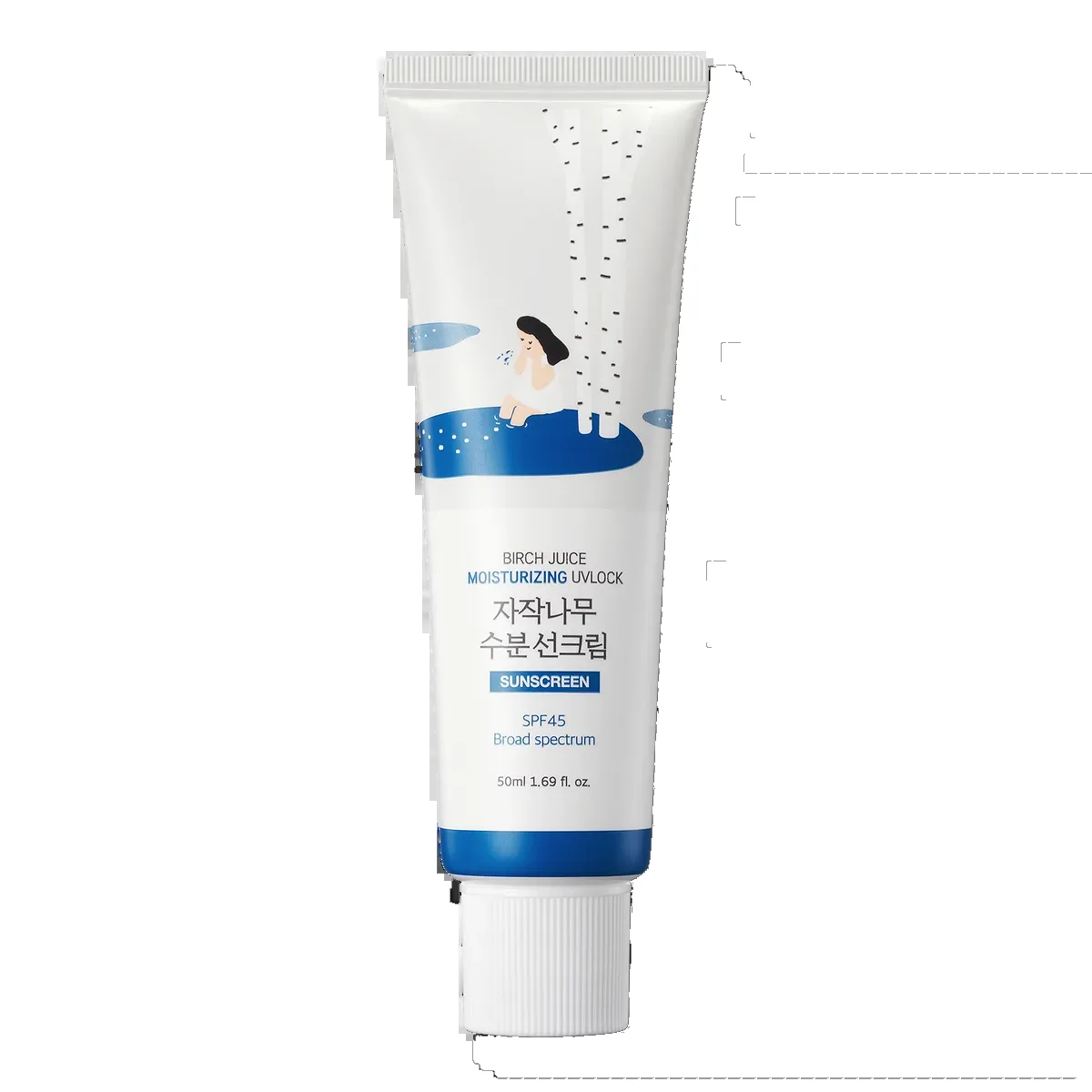
Most hybrid sunscreens either skimp on UVA filters to cut costs or bulk up with heavy silicones to prevent breakdown. Round Lab does neither — it uses a 70% birch sap base instead of water to build hydration into the formula, combines zinc oxide with Tinosorb S and Uvinul A Plus for modern photostable UVA coverage, and lands on a finish that reads as skincare-first, SPF-second.
One of the best hybrid sunscreens in K-beauty right now — a 70% birch sap base, modern UVA filters you can't get in the US, and a finish that wears like a lightweight moisturizer. Broadly compatible, well-priced, and genuinely pleasant to apply, with minor tradeoffs for oily and fungal-acne-prone users.
The case for it
Same rule for everyone. “Full protection” is the verdict on 2,288 of 45,024 concern verdicts across the catalog; rule P1 decided 2,232 of them. Unchanged since September 5, 2026, engine 5.1.1.
Brand or formulator? Disclose a concentration or correct a fact →
The studies behind the evidence row
The case for it
What would change this: A declared concentration would move this to a firmer reading of the dose.
Same rule for everyone. “Full protection” is the verdict on 2,288 of 45,024 concern verdicts across the catalog; rule P1 decided 2,232 of them. Unchanged since September 5, 2026, engine 5.1.1.
Brand or formulator? Disclose a concentration or correct a fact →
The studies behind the evidence row
The case for it
What would change this: A declared concentration would move this to a firmer reading of the dose.
Same rule for everyone. “Full protection” is the verdict on 2,288 of 45,024 concern verdicts across the catalog; rule P1 decided 2,232 of them. Unchanged since September 5, 2026, engine 5.1.1.
Brand or formulator? Disclose a concentration or correct a fact →
The studies behind the evidence row
Also listed for Dehydration and Dryness — the actives here (Zinc Oxide, Uvinul A Plus (DHHB) are in our research queue for those concerns; there is no verdict until their evidence rows are written. That is a gap in our table, not a mark against the product.
Does the jobDoes what a sunscreen is for: UVA coverage, kind to the skin wearing it. Not measured from the label: pleasant enough to actually use.
A verdict is DermApproved’s assessment of how well a product’s ingredients fit a concern — never a claim about what the product treats. Evidence dots and collected reviews sit beside it and are never blended in. Rules 0.5.1 · evidence table ev-2026.09-r228 · how we decide
Most sunscreen disappointment starts the moment you squeeze it out of the tube. The finish is chalky, the film feels occlusive, the fragrance is aggressive, and by the time you've blended it in you've already decided you'll skip reapplication. Round Lab's thesis with the Birch Juice Moisturizing Sun Cream is essentially that you can fix this problem by solving it at the base of the formula instead of at the surface. Instead of starting from purified water and then trying to add enough humectants and emollients to compensate, the brand replaced water with Japanese white birch sap as the solvent base — a stated 70% of the formula — and built the rest of the sunscreen on top of that. The move followed the playbook that built the brand: after the 1025 Dokdo line's success, Round Lab extended its regional-sourcing philosophy to sun care, this time around sap tapped from Japanese white birch — a traditional East Asian hydration ingredient — and released it into the early-2020s wave of renewed Western interest in Korean sunscreens, where it graduated from forum curiosity to standing recommendation within a year.
That choice matters less because birch sap is a mystical ingredient (it isn't) and more because it forces the rest of the formulation to behave differently. Sitting on top of the birch juice base is a thoughtfully chosen UV filter stack: zinc oxide for mineral broad-spectrum coverage, Uvinul A Plus for deep UVA1 protection, Tinosorb S for photostable broad-spectrum support, and Ethylhexyl Triazone handling the UVB end. Uvinul A Plus and Tinosorb S are both modern filters that aren't approved by the US FDA, which is the main reason Korean sunscreens consistently feel more elegant and protect more effectively against long-wave UVA than what you can buy off the shelf at an American drugstore. Then niacinamide, panthenol, adenosine, and a calming botanical blend — centella, licorice root, houttuynia, portulaca — round out the skincare layer. It's a real formula, not a gimmick with a marketing claim attached. For anyone still carrying doubts about whether Korean SPF numbers are trustworthy: the testing follows ISO 24444, the same standard Europe uses, and the PA++++ grade reflects measured UVA protection rather than marketing enthusiasm. The rigor is real; what differs from the US market is simply which filters regulators allow.
In use, the difference from a conventional sunscreen is immediate. The cream is milky-white in the tube, spreads thinly and easily, and disappears on medium-toned skin without a visible cast. There's no chalky finish, no tight pulling sensation as it dries, and no aggressive sunscreen smell — the scent is effectively neutral with a faint natural-ingredient whisper that dissipates in seconds. The dry-down is closer to a satin-dewy moisturizer than a traditional sunblock, which is either a feature or a bug depending on your skin type. For dry, normal, combination, and most sensitive-skin users, it's a genuine upgrade that makes daily SPF compliance much easier. For very oily or acne-prone users who want a matte finish, it may read as a little too dewy, and you'll want to set it or pair it with a mattifying base underneath.
Its limitations are worth naming. The 50 ml tube is the biggest one — at proper face-and-neck application (roughly two finger lengths), you'll run through a tube in about six weeks, and Round Lab doesn't currently offer a larger size. That ups the real cost of daily use, even if the sticker price is friendly. The second issue is fungal-acne compatibility: the formula contains cetyl ethylhexanoate and other esters that can feed Malassezia, so users with confirmed fungal acne will need to look elsewhere. And while the silicone content is modest, silicone-avoiders will want to know it's there — it contributes to the smooth blend and the makeup-friendly finish, but it's not a water-only 'clean' formula. None of these are dealbreakers for the intended audience; they're just the tradeoffs you sign up for with a modern hybrid Korean sunscreen. The scale of the reception says as much as any review can: roughly eighteen thousand ratings averaging 4.5, with the praise remarkably uniform — no cast, genuinely moisturizing, invisible under makeup, kind to sensitive skin — and the complaints limited to the tube size, the dewiness on very oily faces, and the silicones. It's also considered pregnancy-safe and carries no added fragrance, which quietly removes two of the most common sunscreen objections in one stroke.
Where this cream genuinely excels is as a daily-wear SPF for users who've historically struggled with sunscreen texture. People who skip SPF because their old brand felt greasy, people on retinoids who need photoprotection but also need moisture, people with dry winter skin who couldn't stomach the usual Korean physical sunblocks — this is the formula that tends to convert them. The fact that you're also getting some of the best modern UVA filters available at a sub-$25 price tag, from a brand with a track record of formulation restraint and transparent sourcing, is close to a best-case outcome in the category. Round Lab didn't invent the hybrid Korean sunscreen, but it built one that consistently earns its cult positioning, and that's what makes the Birch Juice Sun Cream one of the easier sunscreen recommendations in the entire K-beauty space.
The hero actives that drive this product's performance.
| Ingredient | Function | Evidence |
|---|---|---|
| Birch (Betula Platyphylla Japonica) Juice (70%) | Replaces water as the formula's base — Round Lab markets the 70% birch sap concentration as the hydration backbone that offsets the classically drying feel of high-SPF chemical sunscreens, which is why this cream wears more like a light moisturizer than a traditional Korean sunblock. | Not yet assessed |
| Zinc Oxide | Provides broad-spectrum mineral coverage that works alongside the organic UV filters — the hybrid approach is what lets this formula hit SPF50+ PA++++ without the heavy white cast that a zinc-only sunscreen would require. | Regulator-approved for Sun Damage · limited certainty |
| Uvinul A Plus (Diethylamino Hydroxybenzoyl Hexyl Benzoate) | A modern UVA filter not approved in the US that provides photostable protection across the UVA1 spectrum — the inclusion is a key reason Korean sunscreens like this one consistently outperform most US-available chemical SPFs on long-wave UVA. | Regulator-approved for Sun Damage · limited certainty |
| Tinosorb S (Bis-Ethylhexyloxyphenol Methoxyphenyl Triazine) | A photostable broad-spectrum organic filter that covers both UVB and UVA, complementing Uvinul A Plus and helping stabilize the other filters in the formula over the course of a day of wear. | Regulator-approved for Sun Damage · limited certainty |
| Niacinamide | Works alongside panthenol and the botanical extracts to add a gentle barrier-supporting layer — a deliberate choice so the sunscreen functions as a light AM moisturizer for users who want to simplify their routine. | Emerging for Hyperpigmentation |
Ingredient standings describe the active at treatment-level doses and vehicles; this product's own condition grades weigh its actual formula.
Betula Platyphylla Japonica Juice, Butylene Glycol, Zinc Oxide, Diethylamino Hydroxybenzoyl Hexyl Benzoate, Dibutyl Adipate, Ethylhexyl Triazone, Cetyl Ethylhexanoate, Diethylhexyl Carbonate, Polymethylsilsesquioxane, Glycerin, Niacinamide, Bis-Ethylhexyloxyphenol Methoxyphenyl Triazine, 1,2-Hexanediol, Silica, Cetyl Peg/Ppg-10/1 Dimethicone, Disteardimonium Hectorite, Sodium Chloride, Tromethamine, Ethylhexylglycerin, Panthenol, Adenosine, Aluminum Hydroxide, Stearic Acid, Disodium EDTA, Tocopherol, Trihydroxystearin, Polyglyceryl-3 Polyricinoleate, Pentaerythrityl Tetra-Di-T-Butyl Hydroxyhydrocinnamate, Propanediol, Xanthan Gum, Centella Asiatica Extract, Camellia Sinensis Leaf Extract, Houttuynia Cordata Extract, Portulaca Oleracea Extract, Glycyrrhiza Uralensis (Licorice) Root Extract
sunscreen
AM
Apply as the closing step of your morning routine after moisturizer, using roughly two finger-lengths for face and neck. Reapply every 2 hours with extended sun exposure. Plays well under makeup.
Immediate hydration and a soft dewy finish on first use. Cumulative photoprotection benefits — reduced pigmentation and slowed photoaging — develop over months to years of consistent daily use.
The UV filter system in this sunscreen is the clearest part of its clinical story. Uvinul A Plus (diethylamino hydroxybenzoyl hexyl benzoate) is a photostable UVA filter with peak absorbance around 354 nm, well into the UVA1 range where most US-available chemical filters underperform. Tinosorb S (bis-ethylhexyloxyphenol methoxyphenyl triazine) absorbs across both UVB and UVA (peak absorbance around 310 and 343 nm), is highly photostable, and can also help stabilize other filters in a formula. Ethylhexyl Triazone is one of the strongest UVB absorbers available with peak absorbance around 314 nm. Published dermatology literature on modern organic filters generally supports their superior photostability and broader UVA coverage relative to older US-available chemical filters like avobenzone, which degrades quickly without stabilization. Zinc oxide adds baseline mineral coverage across UVB and UVA. Together, this filter stack is consistent with a legitimate SPF 50+ PA++++ claim under ISO 24444 testing, the standard Korean sunscreens are required to meet. Beyond UV filters, the supporting cast — niacinamide, panthenol, glycerin, adenosine, and the calming botanicals — has well-established evidence for barrier support, hydration, and mild anti-inflammatory effects. The birch sap base is the most speculative element: birch sap contains trace polyphenols, minerals, and organic compounds, and has a long history in Korean and Russian traditional skincare, but dedicated peer-reviewed research on topical birch juice is limited. Its role in this formula is best understood as a coherent hydration base rather than a proven unique active.
Dermatologists frequently point to Korean and European sunscreens as benchmarks for modern photoprotection because of the availability of newer UV filters like Tinosorb S and Uvinul A Plus, which are not approved in the United States. From a clinical standpoint, these filters provide superior UVA1 protection and better photostability than older US-available chemical filters, which is meaningful because UVA contributes significantly to photoaging and pigment concerns. For patients struggling with daily sunscreen compliance due to texture complaints, dermatologists often recommend hybrid Korean formulations like this one — they tend to feel more elegant, layer better under makeup, and therefore get applied more consistently. Dermatologists also typically advise that proper quantity (approximately 1/4 teaspoon for face, 1/4 for neck) and reapplication every two hours in direct sun matter far more than the specific SPF value, and a well-tolerated formula a patient will actually wear is preferable to a higher-SPF product they skip.
Apply as the final step of your morning routine, after moisturizer and before any makeup. Use roughly two finger lengths for face and neck — sunscreen underapplication is the most common reason users don't get the labeled SPF protection. Dot across forehead, cheeks, nose, and chin, then blend outward in gentle sweeping motions. Wait 60-90 seconds for the cream to set before applying foundation or tinted products to avoid pilling. Reapply every two hours with extended sun exposure, and more frequently if swimming or sweating. Store at room temperature away from direct heat.
At around $20-22 for 50 ml, this is a strong value for a sunscreen featuring modern UVA filters, niacinamide, and a genuinely moisturizing base formula. Compared to prestige US sunscreens at $40-60 that often contain older, less photostable filters, it's a meaningful upgrade at less than half the price. The main caveat is size — you'll go through the tube in about six weeks at proper application volume, which pushes the real annual cost up. Round Lab doesn't currently offer a larger format, so daily users should budget for roughly 8-10 tubes a year. Even at that rate, the cost-per-use stays reasonable, and the formulation quality more than justifies it.
Dry, normal, combination, and most sensitive-skin users looking for a daily-wear sunscreen with modern UVA protection and a comfortable, moisturizing finish. An especially strong pick for users on retinoids, vitamin C, or other actives that require reliable photoprotection without added irritation.
Very oily skin types who need a strictly matte finish may find this too dewy. Anyone with confirmed fungal acne should choose a fungal-acne-safe formula instead, as this contains esters that can feed Malassezia.
Ready to try ROUND LAB Birch Juice Moisturizing Sun Cream SPF 50+?
Buy at Amazon ♥Lightweight milky cream that spreads easily and dries down to a hydrated, satin-dewy finish.
Effectively unscented with a faint natural ingredient smell that dissipates on application.
Soft plastic tube with flip cap — travel-friendly and easy to dispense cleanly.
First application feels like a lightweight hydrating cream — no sting, no heavy sunscreen film, and no visible white cast once rubbed in. Users often report surprise that a 50+ PA++++ sunscreen can feel this close to a regular moisturizer.
Approximately 1.5-2 months with proper daily face and neck application — about 6 weeks for most users.
All Year
After the success of the 1025 Dokdo line, Round Lab extended its regional-sourcing philosophy to sunscreen with the Birch Juice line — built around sap harvested from Japanese white birch trees, a traditional East Asian hydration ingredient. The formula rode the wave of renewed interest in Korean sunscreens on US and European K-beauty forums in the early 2020s and quickly became a staple recommendation.
Round Lab launched in 2017 and built its reputation on regionally sourced, minimalist Korean skincare. The Birch Juice Sun Cream has become one of the brand's most reviewed products since its 2021 launch and sits alongside the 1025 Dokdo line in nearly every major K-beauty sunscreen roundup.
Birch juice is just a marketing gimmick.
Birch sap is the actual solvent base of the formula — it replaces purified water as the top ingredient. Whether its mineral and polyphenol content delivers unique skin benefits vs. plain water is debated, but it's not a decorative trace ingredient.
Korean sunscreens don't meet real SPF standards.
Korean SPF testing follows ISO 24444, the same standard used in Europe and most of the world. The PA++++ rating here reflects high measured UVA protection, not a marketing claim.
It's a hybrid sunscreen. Zinc oxide provides mineral coverage, while modern organic filters — Uvinul A Plus, Tinosorb S, and Ethylhexyl Triazone — handle most of the UVB and UVA work. The combination is why the formula achieves SPF 50+ PA++++ without heavy white cast.
Yes — Betula Platyphylla Japonica (Japanese white birch) juice is the first ingredient on the INCI list at a stated 70% concentration, replacing water as the solvent base. Whether birch sap is biologically superior to purified water is debatable, but it's not a token inclusion.
Minimal to none on most skin tones. The low zinc load combined with organic UV filters is specifically engineered to avoid the chalky look that mineral-only formulas tend to produce, and user reviews consistently note it blends cleanly on medium to deep skin.
For most sensitive-skin users, yes — the formula is fragrance-free, alcohol-free, and includes calming botanicals and panthenol. Users with eczema or reactive rosacea may still want to patch test, as the multiple organic filters can occasionally trigger reactions in very reactive skin.
No. The formula contains cetyl ethylhexanoate and other esters that can feed Malassezia. Users with confirmed fungal acne should choose a strictly FA-safe sunscreen instead.
Yes. The satin-dewy finish plays nicely under most foundation and tinted products, and it doesn't pill with common layering as long as you give it 60-90 seconds to set before applying makeup.
Recurring themes our editors read across retailer reviews of this product — summaries in our words, not quotations, and not a substitute for your own patch test.
no white cast
genuinely moisturizing finish
comfortable under makeup
minimal scent
gentle on sensitive skin
50 ml bottle runs out fast with proper application
slightly dewy for very oily skin
contains silicones some users avoid
Verified answers from our questions library — the nuance a product page cannot carry.