Homemade Sunscreen Fails for a Reason You Cannot Fix in a Kitchen
Every other DIY mistake announces itself. This one stays silent for eight hours, and the equipment that would prevent it does not fit on a countertop.
Read the preview
From the DermApproved blog, in DIY & At-Home: homemade sunscreen. It doesn't have a low SPF — it has no SPF, because that number is the output of a test on human volunteers, not a property of an ingredient. And the recipes don't fail on the recipe. It's a piece of equipment that never fits on a counter. For the full breakdown, visit dermapproved.com/blog.
A recipe cannot have an SPF, and this is not a technicality
Ask what SPF 30 means and most people will answer with something about ingredients or strength. It is neither. SPF is a measurement produced by running an experiment on human beings.
The US procedure is written down in exacting detail. The test product and a reference standard are applied to sites on subjects' backs at 2 milligrams per square centimetre. A solar simulator delivers a graded series of UV doses. Someone reads the minimal erythemal dose on protected and unprotected skin, and the ratio is the SPF. At least ten valid results are required, from subjects screened by skin type and medical history. To make a broad spectrum claim at all, a separate spectral test on roughened plates, after pre-irradiation, must return a mean critical wavelength of 370 nanometres or greater.
So when a recipe blog says its mixture is 'about SPF 20', the correct response is not scepticism about the number. It is that there is no number. The mixture has never been through the experiment that generates one. Its protection is unmeasured, which is a completely different state of affairs from measured-and-low — you cannot compensate for it, hedge against it, or reason about how long you can stay out.
That matters more here than anywhere else in DIY, because sunburn is the only common skincare injury with a delay built into it. A bad cleanser stings immediately. UV damage arrives hours after the exposure that caused it, and the carcinogenic fraction never announces itself at all.
The physics: dispersion is not a detail, it is the entire mechanism
Zinc oxide and titanium dioxide do not work by being present. They work by forming a film.
A mineral filter attenuates UV through absorption and scattering by individual particles suspended in the vehicle. How much it attenuates depends on particle size, on how evenly those particles are distributed, and on whether the dried film is continuous. Cosmetic-grade mineral filters are milled to a controlled particle size distribution and surface-treated — commonly with silica, alumina or a silicone — specifically to stop them clumping back together, then dispersed with a mill or high-shear homogeniser into an emulsion engineered to keep them suspended and to dry down evenly rather than beading up.
Stir zinc oxide powder into melted coconut oil and beeswax with a spoon and you get agglomerates: clusters of particles behaving optically like one large particle, with bare vehicle between them. The mass of zinc in the jar is unchanged. The protection is not, because protection is decided locally, pixel by pixel across your skin. Modelling work on facial products makes this concrete — local film thickness varies across the face, local effective SPF varies with it, and products applied non-uniformly or binding poorly deliver inadequate protection regardless of their rated value.
Thickness compounds it. A multicentre in-vivo study applied three commercial sunscreens at 0.5, 1.0 and 2.0 milligrams per square centimetre and found SPF depended on the quantity applied, with the tightest confidence intervals at the full test dose and the widest at the thinnest. That is under laboratory conditions, with a properly manufactured product. A homemade balm that is stiff, greasy and unpleasant to spread is going on thin — and it is going on thin unevenly.
None of this is fixable with better technique or a nicer recipe. It is a manufacturing capability. If you want to see how much of a real sunscreen people actually apply versus what the number assumes, our sunscreen amount tool does that arithmetic for your own face and body.
Where 'coconut oil has a natural SPF' actually came from
This claim has a real source, which is unusual for viral skincare and worth tracing.
A 2010 paper in Pharmacognosy Research set out to measure the UV absorbance of herbal oils used in cosmetics. The authors prepared hydroalcoholic dilutions and read them on a spectrophotometer between 290 and 320 nanometres, converting absorbance to an SPF figure by an established in-vitro equation. Fixed oils came out between SPF 2 and 8; volatile oils between 1 and 7. Olive oil scored highest among the fixed oils.
Everything in that sentence is accurate, and almost nothing about how it gets quoted is. It is an absorbance reading taken on a diluted sample in a cuvette, not a measurement of what happens on skin. It covers the UVB window only — 290 to 320 nanometres — so it says nothing whatsoever about UVA, which is the range driving photoageing and a substantial share of the carcinogenic burden, and which the broad spectrum critical wavelength test exists to police. And a genuine SPF in that range, even if it transferred to skin intact, blocks a small fraction of erythemal UV.
The deeper issue is what plant oils do in a sunscreen recipe. They are the vehicle, not the filter, and an oily vehicle spreads a mineral suspension unevenly unless it has been engineered not to. Coconut oil's actual profile is worth reading on its own terms; it is a competent occlusive with a fatty acid mix that suits some skin and not others. It is not a photoprotectant, and the study it is credited to never claimed it was.
What the recipes look like in the wild, and why the failure is invisible
A content analysis of Pinterest — a platform with well over a hundred million users at the time of the study — sampled 189 pins returned for 'homemade sunscreen' and 'natural sunscreen'. Two coders worked from a piloted codebook at ninety percent interrater reliability.
The results: 95.2 percent of pins portrayed homemade sunscreen positively, and 68.3 percent recommended recipes offering insufficient UV radiation protection. A third of pins made an explicit SPF claim, spanning SPF 2 to SPF 50 — numbers invented for products that had never been tested. And 41.8 percent had been saved by other users, some more than twenty-one thousand times.
That last figure is the mechanism by which this spreads, and it interacts with the delay in an ugly way. Someone applies a homemade balm, spends a moderate day outdoors, does not burn — because they were partly in shade, or their skin tans readily, or the UV index was low — and reports success. The feedback loop rewards the recipe for an outcome it did not cause. Meanwhile the DNA damage that shows up as an actinic keratosis in twenty years generates no signal at all, in either direction, ever.
Every other DIY mistake in this category self-corrects. Lemon juice burns you and you stop. Baking soda leaves your face tight and you stop. Homemade sunscreen has no correcting signal until a dermatologist is freezing something off your temple. If someone has already reached that point, the answer on natural remedies for actinic keratosis is the one that matters — the folk-remedy claims aimed at those lesions are, if anything, more dangerous than the sunscreen recipes.
The powder itself is not a benign kitchen ingredient
One practical hazard gets almost no attention in the recipe posts: zinc oxide arrives as a very fine dry powder, and fine dry powders become airborne.
Inhaled zinc oxide is the classic cause of metal fume fever, an occupational syndrome familiar from welding and galvanising work — fever, chills, cough, chest tightness and malaise hours after exposure, driven by an inflammatory pulmonary response. Kitchen mixing is not a foundry, and nobody is arguing that a home balm session equals a day of hot work on galvanised steel. But the recipes routinely call for tipping several tablespoons of unbound micronised powder into a bowl, over a warm double boiler, in an unventilated room, sometimes with children present, and none of them mention a mask. The occupational-hygiene answer for handling that material is respiratory protection and local exhaust, which is a reasonable signal about what it is.
The ingredient's regulatory footprint also gets misread. Zinc oxide appears in the US skin protectant monograph at one to twenty-five percent, and it appears separately as a sunscreen filter, and those are different listings with different testing obligations behind them. Being permitted as a skin protectant says nothing about photoprotection — which is precisely the confusion that lets a diaper-rash-grade powder be marketed to home mixers as sunscreen raw material. The zinc oxide page and the titanium dioxide page separate the two roles, and the mechanism answer explains how mineral filters actually attenuate UV, which is less intuitive than the 'physical shield' metaphor suggests.
The distrust is earned. The conclusion drawn from it is not.
It would be dishonest to argue this without acknowledging why people go looking for an alternative in the first place, because the sunscreen industry's record genuinely invites suspicion.
The US regulator has proposed that only two active filters — zinc oxide and titanium dioxide, at up to twenty-five percent — be recognised as generally safe and effective on the current data, while a dozen widely used organic filters were flagged as needing more data, and two older ones were designated not GRASE outright. Independent testing, not manufacturer testing, is what caught labelled SPF values that failed on retest, and it was an outside laboratory that found benzene contamination in aerosol products and forced the recalls. Anyone who concluded from that history that a label is a marketing claim until independently verified reasoned correctly, and they should not be talked out of it.
But notice what that reasoning actually supports. It supports demanding independent verification. A kitchen mixture has no label to be wrong, no batch record, no retest, no recall pathway and no measurement of any kind. It is not a step toward more scrutiny; it is a step outside scrutiny altogether. If a tested product can quietly under-deliver, an untested one can under-deliver by an unknown amount in an unknown direction, and you will never find out.
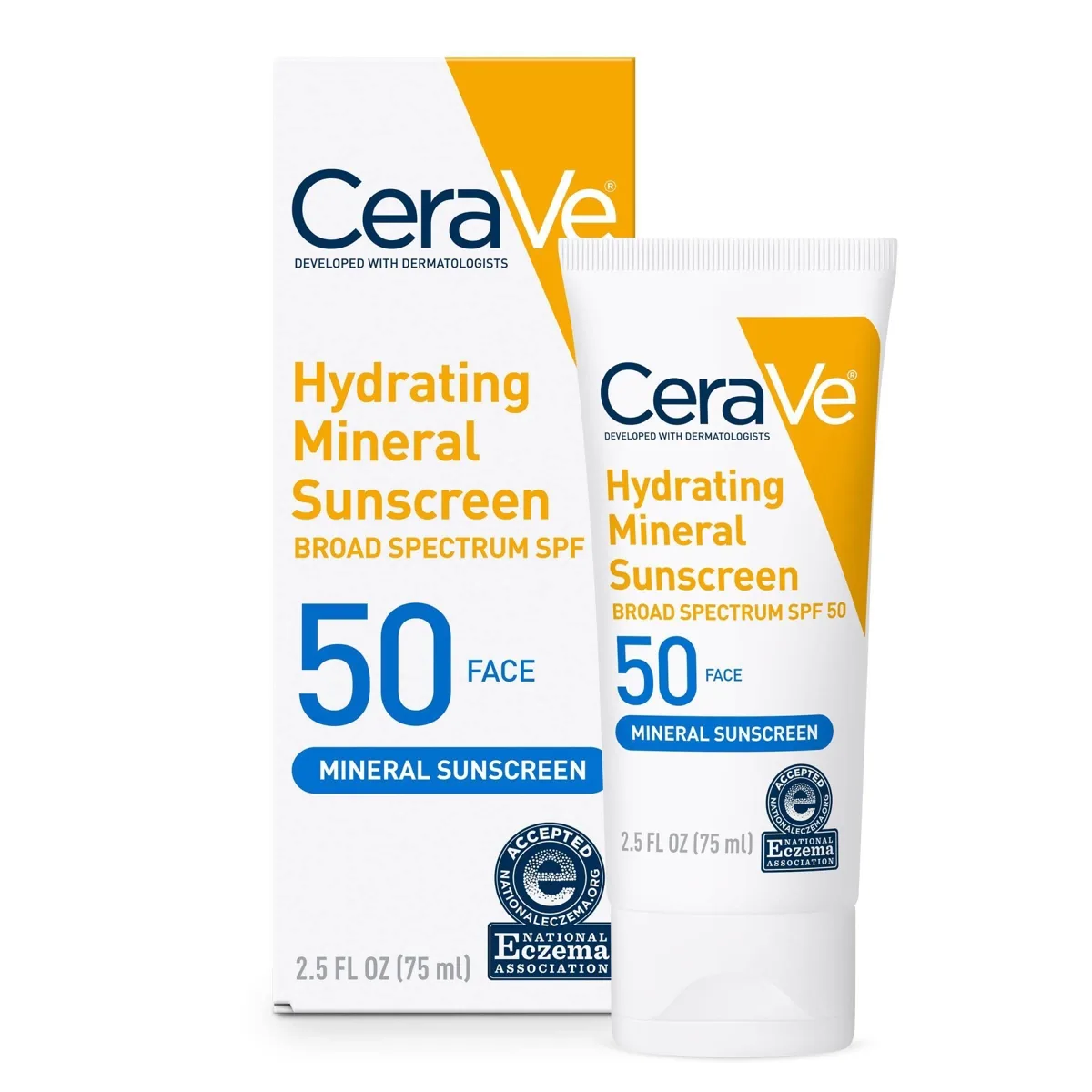
The honest alternatives are two, and they are both real. First, the low-product route is legitimate: shade, timing, and clothing are genuinely effective, need no trust in anyone, and are what dermatology recommends first for high-UV exposure anyway. Our sun safety tool works out when the UV actually matters where you are, which is usually a narrower window than people assume. Second, if you want a filter you can reason about, a mineral formula gives you a manufactured dispersion and a tested number. Blue Lizard Sport Mineral Sunscreen is built for water and outdoor work. Vanicream Mineral Sunscreen keeps the ingredient list short for reactive skin. For dry skin at a drugstore price there is CeraVe Hydrating Mineral Sunscreen, and Avène Mineral Sunscreen Fluid if you want a lighter finish. Our sunscreen finder filters by filter system and texture, and the mineral ranking shows how we assess them. The gentleness myth is worth reading alongside, because mineral is not automatically kinder — that assumption is the mirror image of the one this article is arguing against.
Make the balm if you like making things. Just do not let it be the only thing between your face and July.
Products mentioned
Independently reviewed and scored — the real products behind this piece.



- Ranked list Best Mineral Sunscreens How we assess mineral formulas, for readers who want zinc oxide without mixing it themselves.
- Ingredient Zinc Oxide Separates the skin-protectant listing from the sunscreen-filter role that the recipes conflate.
- Ingredient Titanium Dioxide The second mineral filter, and why particle engineering governs its performance.
- Ingredient Coconut Oil What the oil at the centre of the 'natural SPF' claim actually does.
- Question Do mineral and chemical sunscreens work in different ways? How mineral filters actually attenuate UV — the mechanism the 'physical shield' metaphor obscures.
- Question Is mineral sunscreen automatically the safer, gentler pick? The mirror-image assumption to the one this post dismantles.
- Question Do apple cider vinegar, castor oil or tea tree remove them? For readers already past the prevention stage, where folk remedies are more dangerous still.
References
- Pinterest Homemade Sunscreens: A Recipe for Sunburn — Health Communication, 2020
- In vitro sun protection factor determination of herbal oils used in cosmetics — Pharmacognosy Research, 2010
- Influence of applied quantity of sunscreen products on the sun protection factor--a multicenter study organized by the DGK Task Force Sun Protection — Skin Pharmacology and Physiology, 2007
- A theoretical and experimental study of the temporal reduction in UV protection provided by a facial day cream — International Journal of Cosmetic Science, 2018
- Immune response to zinc oxide inhalation in metal fume fever, and the possible role of IL-17f — Scientific Reports, 2023
Every cited link is verified to resolve to the paper named. Where a source could not be independently confirmed, it is listed without a link rather than pointing you somewhere wrong.
Frequently asked
If I use enough zinc oxide, can't I hit a usable SPF at home?
Not reliably, because concentration is not the limiting factor — dispersion is. Cosmetic mineral filters are milled to a controlled particle size and surface-treated to prevent clumping, then dispersed under high shear into an emulsion designed to dry into a continuous film. Hand-stirring produces agglomerates with bare vehicle between them, and protection is decided locally rather than averaged.
Where did the claim that coconut oil is SPF 7 come from?
From a 2010 in-vitro study that read the UV absorbance of hydroalcoholic dilutions of herbal oils on a spectrophotometer and converted the result to an SPF figure. Fixed oils came out between SPF 2 and 8. It measured absorbance in a cuvette across the UVB window only, made no UVA assessment, and was never a human erythema test.
How would I even know if my homemade sunscreen was failing?
You largely would not, which is the core problem. Sunburn appears hours after the exposure, and the cumulative photoageing and carcinogenic damage produces no immediate signal at all. A day outdoors without burning is weak evidence, since shade, cloud, UV index and your own skin type all contribute independently of what you applied.
Is handling zinc oxide powder actually risky?
It warrants care. Zinc oxide inhalation is the classic cause of metal fume fever, an inflammatory reaction with fever, chills, cough and chest tightness hours after exposure. Home recipes routinely call for tipping tablespoons of fine unbound powder into a warm bowl in an unventilated kitchen, and none of them mention respiratory protection.
If regulators have not confirmed most sunscreen filters as safe and effective, why trust sunscreen at all?
Because the gap is a data gap, not a finding of harm, and it does not apply to the mineral filters — the US regulator proposed zinc oxide and titanium dioxide up to twenty-five percent as generally recognised as safe and effective. If the concern is unverified claims, a homemade product is the least verified option available. Shade, clothing and timing are the legitimate low-product route.