'Reef-Safe' Is Not a Regulated Claim. Here's What It Actually Buys You.
A wave of bans reshaped the sunscreen aisle, but the phrase driving it all means whatever a brand wants it to mean.
Read the preview
From the DermApproved blog, in Sun Protection: what 'reef-safe' sunscreen actually means. Here's a phrase quietly taking over the beach aisle, and a secret hiding behind it. Bans in Hawaii and beyond reshaped what's on the shelf, all triggered by a genuinely unsettling study about coral. But the term 'reef-safe' itself? Completely unregulated. Nobody defines it, nobody tests it, and a bottle wearing that badge can still contain a banned ingredient. Even the science that started the panic turns out to be messier than the marketing lets on, and there's a bigger threat to reefs the scientists actually agree on. So what should you buy, and what should you ignore? Find out at dermapproved.com/blog.
Why this label suddenly took over the aisle
Walk into any beach-town pharmacy and 'reef-safe' now competes with SPF for the biggest text on the bottle. The surge isn't organic; it's regulatory. Hawaii became the first state to restrict the sale of over-the-counter sunscreens containing two common UV filters, oxybenzone and octinoxate, with the law taking effect on January 1, 2021. Key West, the U.S. Virgin Islands, the Pacific nation of Palau, and others passed their own versions, and Maui County went further still, moving to permit only mineral sunscreens. Faced with a patchwork of bans, brands reformulated and slapped 'reef-safe' on the results.
The catch is the phrase itself. 'Reef-safe' is not a regulated term. No federal agency defines it, tests for it, or enforces it, which means a product can carry the claim and still contain ingredients that are discouraged or outright banned in places like Hawaii. The label tells you what the marketing department decided, not what an ecotoxicologist verified. That gap is the whole story.
The science that started it, and the science that complicates it
The bans trace largely to a 2016 study by Downs and colleagues in Archives of Environmental Contamination and Toxicology, which found that oxybenzone harmed coral in unsettling ways. In their experiments, the filter bleached coral larvae, damaged their DNA, acted as an endocrine disruptor, and even induced the larvae to encase themselves in their own skeleton, with toxicity worsening in light. The researchers also detected oxybenzone in reef seawater in Hawaii and the Virgin Islands. It's a genuinely alarming set of findings, and it did what alarming findings do: it moved lawmakers.
But the picture got more complicated on closer inspection. A critical review in Environmental Toxicology and Chemistry examined the exposure, hazard, and risk of organic UV filters to corals and highlighted real weaknesses in the case, chiefly that there's no standardized method for testing toxicity in reef-building corals, and that it remains unclear whether the concentrations shown to harm coral in the lab are actually reached in the open ocean where sunscreen is heavily diluted. None of this means the concern is fake. It means the certainty implied by a ban outran the state of the evidence. And crucially, marine scientists broadly agree that the dominant driver of global reef collapse is climate change, warming seas, acidification, and repeated mass bleaching, against which sunscreen is a minor and local variable at most.
So how should you actually choose?
Hold two honest facts at once: your sunscreen is not the main thing killing coral reefs, and there's no downside to avoiding the two filters that raised the most concern. That combination points to a calm, non-fanatical approach. Skip oxybenzone and octinoxate, especially if you're swimming near a reef or somewhere they're banned, and don't pay a premium for the word 'reef-safe' when it certifies nothing. Instead, read the active-ingredient panel yourself.
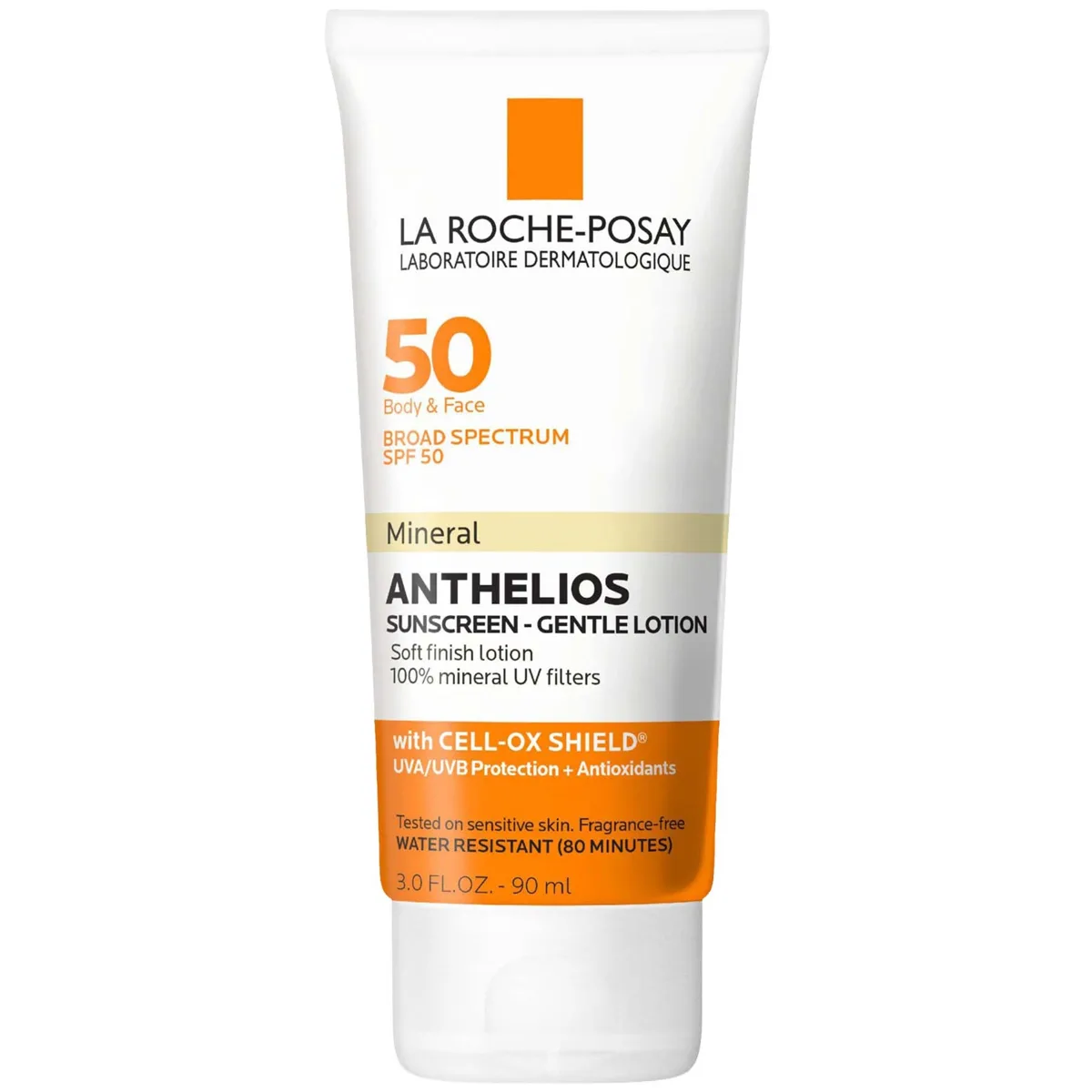
A non-nano mineral sunscreen built on zinc oxide or titanium dioxide is the most defensible pick, protective, widely accepted in ban zones, and free of the contested filters. Affordable, cosmetically decent options are everywhere now: CeraVe Invisible Mineral Sunscreen SPF 50 pairs zinc and titanium with barrier-friendly ceramides, La Roche-Posay Anthelios Mineral Gentle Sunscreen Lotion SPF 50 is an elegant all-mineral fluid, and Blue Lizard Sensitive Mineral Sunscreen SPF 50+ is a longtime beach staple in the mineral category. Our sunscreen-finder tool can narrow these to your skin type and finish preference, and our sun-safety tool helps you plan protection that doesn't rely on chemistry alone, shade, timing, and clothing, which are gentler on both your skin and the water. The worst outcome would be letting reef anxiety talk you out of wearing enough sunscreen; UV damage to your own skin is the certain harm here.
The honest bottom line
'Reef-safe' is a well-intentioned phrase doing marketing work it can't actually back up. The underlying worry about oxybenzone deserves respect, the research deserves to continue, and the bans have at least pushed some genuinely nasty questions into daylight. But as a shopper, don't outsource your judgment to an unregulated sticker. Choose a mineral formula, wear it generously, and save your real environmental energy for the threat the scientists agree on: a warming ocean.
Products mentioned
Independently reviewed and scored — the real products behind this piece.


References
- Toxicopathological Effects of the Sunscreen UV Filter, Oxybenzone (Benzophenone-3), on Coral Planulae and Cultured Primary Cells and Its Environmental Contamination in Hawaii and the U.S. Virgin Islands — Archives of Environmental Contamination and Toxicology, 2016
- A Critical Review of Organic Ultraviolet Filter Exposure, Hazard, and Risk to Corals — Environmental Toxicology and Chemistry, 2021
Every cited link is verified to resolve to the paper named. Where a source could not be independently confirmed, it is listed without a link rather than pointing you somewhere wrong.
Frequently asked
Does 'reef-safe' on a sunscreen mean anything official?
No. It's an unregulated marketing term with no legal definition, standardized test, or enforcing agency behind it. A product can be labeled reef-safe and still contain filters that are restricted in places like Hawaii. The only reliable move is to read the active-ingredient list yourself rather than trusting the phrase.
Which sunscreen ingredients are banned in Hawaii?
Hawaii's law restricts the sale of over-the-counter sunscreens containing oxybenzone and octinoxate, effective January 1, 2021. Other jurisdictions have added their own restrictions, and Maui County moved to allow only mineral sunscreens. If you're traveling to a ban zone, checking the active ingredients before you pack avoids being caught out.
Is sunscreen really a major cause of coral reef damage?
Most marine scientists say no. While lab studies show filters like oxybenzone can harm coral, the dominant driver of global reef decline is climate change, warming seas, acidification, and repeated mass bleaching. It's also debated whether sunscreen reaches harmful concentrations in the open ocean, so it's best seen as a minor, local factor.
Is mineral sunscreen better for the environment?
It's the more defensible choice, since zinc oxide and titanium dioxide formulas avoid the two contested organic filters and are accepted in ban zones. Opting for non-nano mineral versions is a reasonable precaution. That said, the evidence isn't strong enough to call any sunscreen a reef savior, so choose mineral for peace of mind, not as an offset.