Your Morning Sunscreen Is a Great Start and a Quiet Lie
The SPF on the bottle is a lab number you almost never actually get, and by lunchtime the protection you thought you had is mostly gone.
Read the preview
From the DermApproved blog, in Sun Protection: the reapplication rule almost everyone breaks. Here's an uncomfortable thought for a sunny morning. That SPF 50 you smoothed on at breakfast? You're probably not getting anywhere near 50. Not because the sunscreen is lying, exactly, but because the number on the bottle is a lab result you almost never actually collect. And whatever protection you did get is quietly draining off your face as the hours pass, so that by lunch the armor you're counting on is mostly a memory. The fixes are not what you'd guess. The single most valuable reapplication of the whole day happens at a moment most people completely ignore. The amount you use changes everything, in a way that is nowhere near proportional. And the trick to topping up over a full face of makeup, without starting over, is quietly simple. No perfectionism, no lectures, just the realistic version that actually works. Find it at dermapproved.com/blog.
The number on the bottle is a promise you rarely collect
There's a comforting ritual to a morning sunscreen: smooth it on, glance in the mirror, and feel protected for the day. The problem is that the protection is neither as high nor as durable as the bottle implies. SPF 50 is a laboratory result, achieved under controlled conditions with a specific, generous amount of product spread evenly on skin that then sits still. Your actual morning application, thinner, uneven, applied to a face you're about to touch, sweat on, and expose to hours of light, delivers something considerably less.
And whatever you started with degrades. UV filters aren't permanent shields; they're chemistry that gets consumed and disturbed as it does its job and as you go about your day. By early afternoon, the film you applied at eight in the morning is a patchy remnant of itself. This isn't an argument against morning sunscreen, which is essential. It's an argument that treating that single application as all-day armor is where most people's sun defense quietly collapses. The reapplication step, the one everyone knows about and almost nobody actually does, is the difference between the SPF you think you have and the SPF you really have.
Why the protection drains away by lunchtime
Several forces chip at your sunscreen simultaneously. Some organic UV filters photodegrade, meaning the very ultraviolet light they absorb slowly breaks them down; avobenzone, a widely used UVA filter, is a classic example, which is why modern formulas pair it with stabilizers. On top of the chemistry, there's simple mechanical loss: the film rubs onto your phone, your collar, and your hands, sweats off in humidity, and migrates as your face moves. Water and toweling accelerate it further, which is why even water-resistant products carry a time limit rather than a permanence claim.
The cumulative effect is that the effective SPF on your skin is a declining curve, highest right after application and sliding downward for the rest of the day. The lab number captures only the peak of that curve, under ideal conditions, at a dose you probably didn't use. So the real question isn't what SPF is printed on your bottle; it's what fraction of that number is still on your face three hours later. For most people going about a normal day, the honest answer is: not enough.
The amount problem nobody warns you about
Before reapplication even enters the picture, there's the amount. Sunscreen SPF is tested at 2 milligrams per square centimeter of skin, a genuinely thick layer. Study after study finds that in the real world, people apply roughly a quarter to a half of that. A review by Petersen and Wulf in Photodermatology, Photoimmunology and Photomedicine laid out the consequence bluntly: the protection you get does not fall in a gentle, linear way as you skimp. It collapses faster than that, with effective protection dropping toward the square or even the fourth root of the labeled SPF as application thins out. Translated, applying half the tested amount of an SPF 50 doesn't leave you with SPF 25; it can leave you far lower.
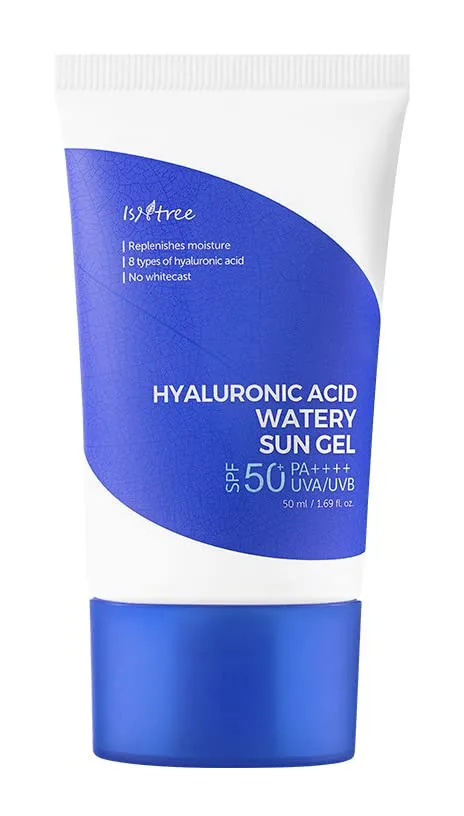
This single fact reframes the whole conversation. Most people don't have a reapplication problem so much as a dosage problem stacked on top of one. The fix is to measure, at least until your eye is calibrated. The two-finger rule, two full strips of sunscreen squeezed along your index and middle fingers, or roughly a quarter to a third of a teaspoon for the face and neck, gets you into the right neighborhood. Our ftu-calculator tool translates that fingertip-unit logic to whatever area you're covering, so you're not guessing. Applying a genuinely generous layer of an easygoing, lightweight formula, something like Isntree Hyaluronic Acid Watery Sun Gel SPF 50+ that doesn't feel heavy at full dose, is the least glamorous and most important upgrade you can make.
The two-hour rule, and the smarter version of it
The standard advice, reapply every two hours, is fine as a rough rhythm but misleads people about timing. A mathematical modeling study by Diffey in the Journal of the American Academy of Dermatology found that the single most valuable reapplication isn't at the two-hour mark at all: it's early. Reapplying about 15 to 30 minutes after you go outside dramatically reduces your total UV exposure, because it compensates for the thin, uneven initial layer before the sun has done much damage. In his model, waiting the full two hours let far more ultraviolet through than an early top-up.
There's a related trick with real evidence: applying twice up front. A study in PLoS One found that two consecutive applications a few minutes apart produced a more even, reliable film than a single pass, effectively patching the pinholes and thin spots. Combined, the practical protocol looks less like a rigid clock and more like this: apply generously, ideally in two passes, before you leave; top up once early into your time outdoors; and then reapply every couple of hours only if you're still exposed, sweating, or swimming. The two-hour number isn't wrong, but the early reapplication is the part that actually moves the needle, and it's the part the standard phrasing buries.
Reapplying over makeup without starting your face over
Here's where good intentions die: nobody wants to smear a fresh coat of cream over a finished face of makeup at noon. The refusal is understandable, and it's why the honest guidance has to be about practicality rather than perfection. A powder SPF dusted over makeup is better than nothing but rarely delivers a meaningful dose on its own, because you simply can't get enough product on evenly. A setting spray with SPF has the same problem: most people don't apply anywhere near a protective amount.
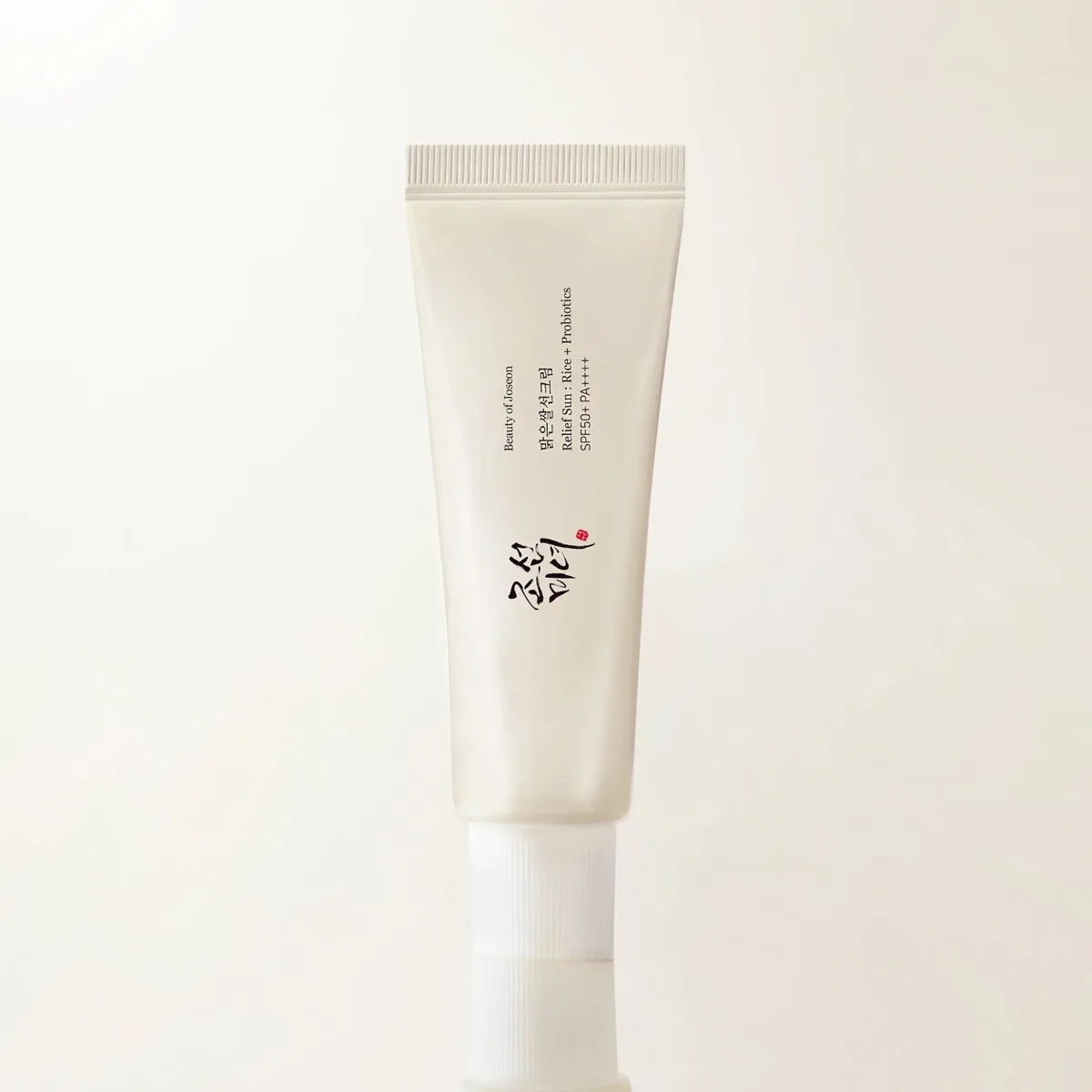
The most reliable makeup-friendly option is a stick. Pressed and swiped generously over the high points of the face, a sunscreen stick like Bubble Sun Rise Mineral Sunscreen Stick SPF 40 lays down a real, measurable layer without disturbing makeup much, and it travels in a bag for midday touch-ups. For days when you're not wearing much on your face, the simplest answer is best: just reapply a normal generous layer of your regular sunscreen. If you're building a routine from scratch and want a base that's pleasant enough to actually reapply, a cosmetically elegant SPF such as Beauty of Joseon Relief Sun: Rice + Probiotics SPF 50+ is the kind of formula people don't dread topping up. Our sunscreen-finder tool can match a base and a reapplication product to your skin type and how much coverage you actually wear.
The realistic bottom line
Perfect sun protection is a fantasy, and chasing it is how people give up entirely. The realistic version is three habits that compound: use enough (measure until you don't have to), reapply early rather than obsessing over the exact two-hour mark, and keep a stick or a pleasant formula on hand so the midday top-up actually happens. Do those, and your real-world SPF finally starts to resemble the number you paid for. Treat the morning application as the whole job, and you're wearing a lab result that expired hours ago.
Products mentioned
Independently reviewed and scored — the real products behind this piece.

References
- Application of sunscreen--theory and reality — Photodermatology, Photoimmunology & Photomedicine, 2014
- When should sunscreen be reapplied? — Journal of the American Academy of Dermatology, 2001
- Sunscreen use optimized by two consecutive applications — PLoS One, 2018
Every cited link is verified to resolve to the paper named. Where a source could not be independently confirmed, it is listed without a link rather than pointing you somewhere wrong.
Frequently asked
Why isn't one morning application of sunscreen enough?
The SPF on the label is a lab result achieved with a thick, even layer on still skin. Through the day the filters degrade in UV light and the film rubs, sweats, and migrates off, so effective protection steadily declines. By afternoon the morning layer is a patchy remnant, which is why reapplication is what actually keeps you protected.
How much sunscreen should I actually apply to my face?
SPF is tested at 2 mg per square centimeter, and most people use far less. Aim for roughly a quarter to a third of a teaspoon for the face and neck, or the two-finger rule: two full strips squeezed along your index and middle fingers. Using too little drops protection sharply, so measuring until your eye is trained is worth it.
Is reapplying sunscreen every two hours a strict rule?
It's a useful rhythm but not the most important part. Modeling research shows the highest-value reapplication is early, about 15 to 30 minutes after you go outside, because it fixes the thin initial layer before much damage occurs. After that, top up every couple of hours if you're still exposed, sweating, or swimming.
How do I reapply sunscreen over makeup?
A sunscreen stick is the most reliable option because you can swipe on a real, measurable layer without wrecking your makeup. Powder and spray SPF products are better than nothing but rarely deliver a protective dose on their own. On low-makeup days, simply reapplying a normal generous layer of your regular sunscreen is the simplest fix.
Does applying sunscreen twice actually help?
Yes. A study found that two consecutive applications a few minutes apart create a more even, reliable film than a single pass, filling in the thin spots and pinholes that a single layer leaves. Doing a quick double application before you head out is an easy way to get closer to the protection the label promises.