The Sunscreen Dose Math Nobody Runs, and Why Your SPF 50 Probably Isn't One
Protection does not scale linearly with how much you apply. It scales as a root — which means the difference between a proper layer and your usual one is not a few points of SPF.
Read the preview
From the DermApproved blog, in Sun Protection: the number on your sunscreen was measured at a thickness almost nobody applies. And protection does not fall in proportion when you skimp — it falls as a root. Which means buying a higher SPF as insurance does the opposite of what you think. The fix takes thirty seconds. For the full breakdown, visit dermapproved.com/blog.
What the number on the bottle actually measures
An SPF rating is not a property of a formula in the abstract. It is the result of a specific test performed under a specific condition, and that condition is an application density of 2 milligrams per square centimetre of skin.
That density is far heavier than it sounds. Spread across an adult face and neck it works out at somewhere around a quarter to a third of a teaspoon — enough that a lotion sits visibly on the skin before it is worked in, and enough that most people would describe it as too much. The two-finger rule, where you lay a line of product along the length of the index and middle fingers, exists to make that quantity legible without a measuring spoon.
Nobody applies that much. This is not a controversial claim and it has been measured repeatedly. In one study, 42 volunteers on a beach applied their own sunscreen to their whole body and the amount used averaged 0.5 mg/cm² — a quarter of the test density. Other work has put practical application closer to 1 mg/cm², or half.
So the question is not whether people under-apply. It is what happens to the protection when they do.
The relationship is a root, not a fraction
The intuitive assumption is proportional: half the sunscreen, half the SPF. If that were true, half a layer of SPF 50 would leave you with roughly SPF 25, which is still excellent, and none of this would matter very much.
It is not what happens.
Researchers at a Copenhagen hospital marked five areas on the backs of twenty volunteers, applied a sunscreen at four different densities — 0.5, 1, 2 and 4 mg/cm² — and phototested each area to determine the actual erythema protection delivered. The SPFs at the different amounts all differed significantly from each other, and the relationship between amount applied and protection delivered was best described by exponential growth, fitting with an r² of 0.903.
Stated as the authors state it: application of 1 mg/cm² makes the SPF fall as the square root, and 0.5 mg/cm² makes it fall as the fourth root. Applying 4 mg/cm² results in an almost squared SPF.
Run that arithmetic. At half the test density, a label SPF of 50 delivers something in the region of the square root of 50 — around 7. At a quarter of the test density, the fourth root of 50 is under 3. Those numbers are startling, and they deserve two honest caveats: the study used an SPF 4 product across those densities, so applying the derived relationship to SPF 50 is an extrapolation beyond the tested range, and other work models the curve as logarithmic rather than exponential and lands on a less severe penalty.
But every version of the curve agrees on the direction and the shape. Protection falls faster than the amount does, and the shortfall is not a rounding error.
Why high SPF suffers most
There is a second finding that inverts the most common consumer response to all of this.
The usual reaction to learning about under-application is to buy a higher number as insurance — if I only get half my SPF, I will start from a bigger one. A study run across three laboratories in China tested sunscreens labelled SPF 4, 15, 30 and 55 at application levels of 0.5, 1.0, 1.5 and 2.0 mg/cm² using the standard protocol. The low-SPF products showed a linear dose-response with application level. The higher-SPF products did not — their protection related to thickness exponentially.
The authors' conclusion is the part worth carrying around: consumers may achieve an even lower than expected sunburn protection from high-SPF products than from low-SPF sunscreens.
So buying up the SPF ladder does not buy you a margin of error. It buys you a number that degrades faster when you skimp. The insurance policy people think they are purchasing is the opposite of what the physics delivers, and the only variable that actually creates margin is the thickness of the layer.
None of which is an argument against high SPF. Applied properly, a high-SPF product genuinely outperforms a low one. It is an argument that label shopping is the least useful lever available, and that a person diligently applying a full layer of SPF 30 is better protected than someone smearing SPF 100.
Formats ranked by how honestly they dose
Since dose is the variable, format matters mainly for whether it lets you deliver one.
Creams and lotions are the honest baseline. You can measure them, see them on the skin, and tell when the layer is thin. Everything else is a compromise against this. La Roche-Posay Anthelios Melt-In Milk and Blue Lizard Sport Mineral SPF 50+ cover a lot of surface area quickly, which matters because a format you find tedious is a format you under-apply.
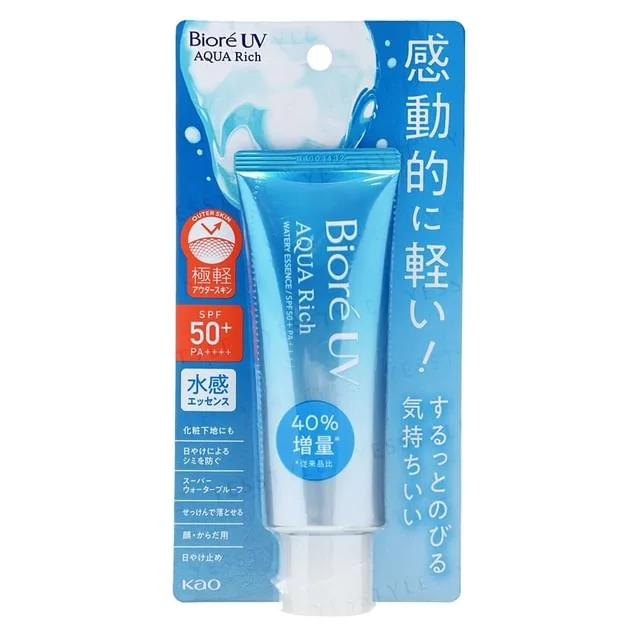
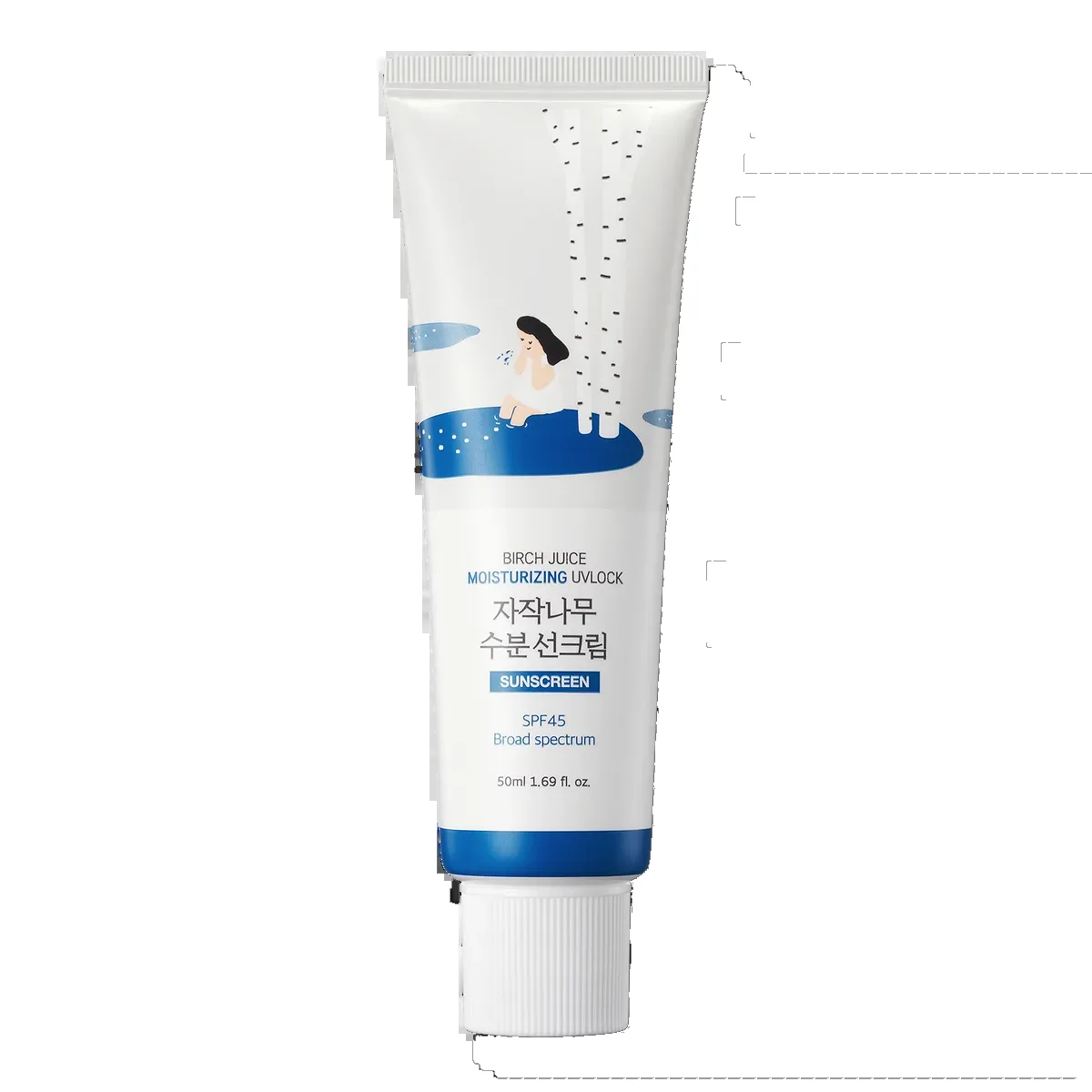
Fluids and essences — the Asian sunscreen category — are lotions with better sensory engineering. Because they feel like nothing, people apply more of them, which is a genuine protective advantage rather than a cosmetic one. Bioré UV Aqua Rich Watery Essence, COSRX Ultra-Light Invisible Sunscreen and ROUND LAB Birch Juice Moisturizing Sunscreen all belong here.
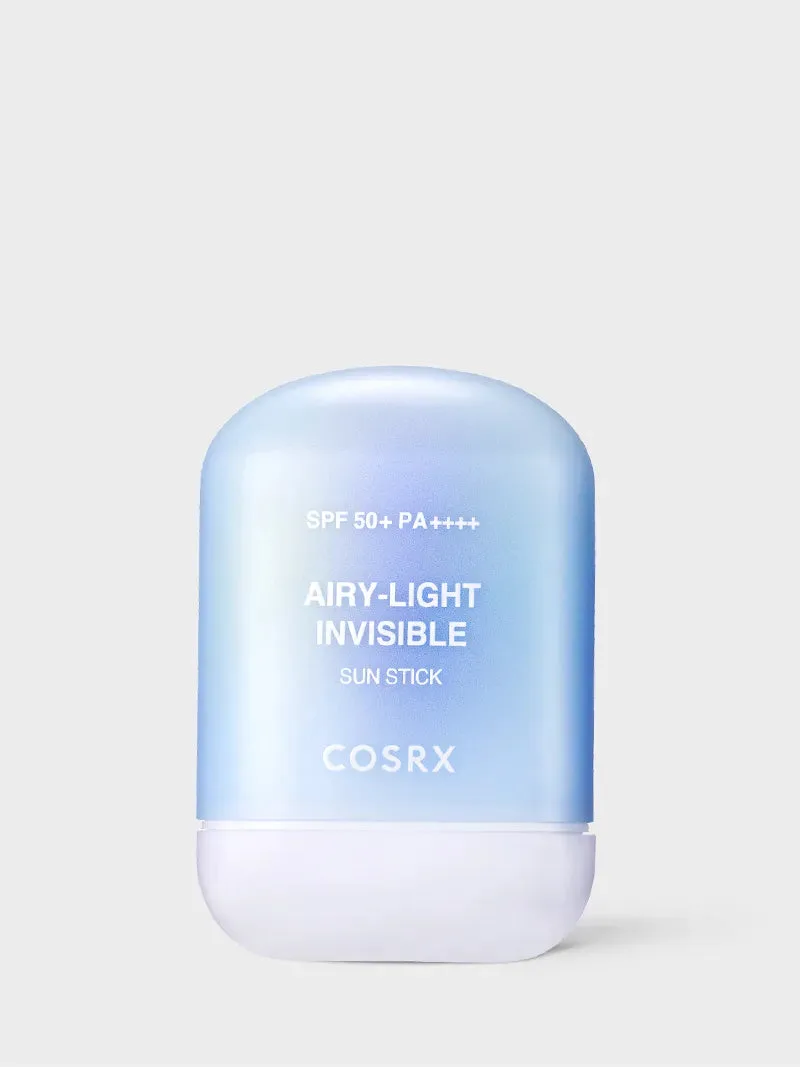
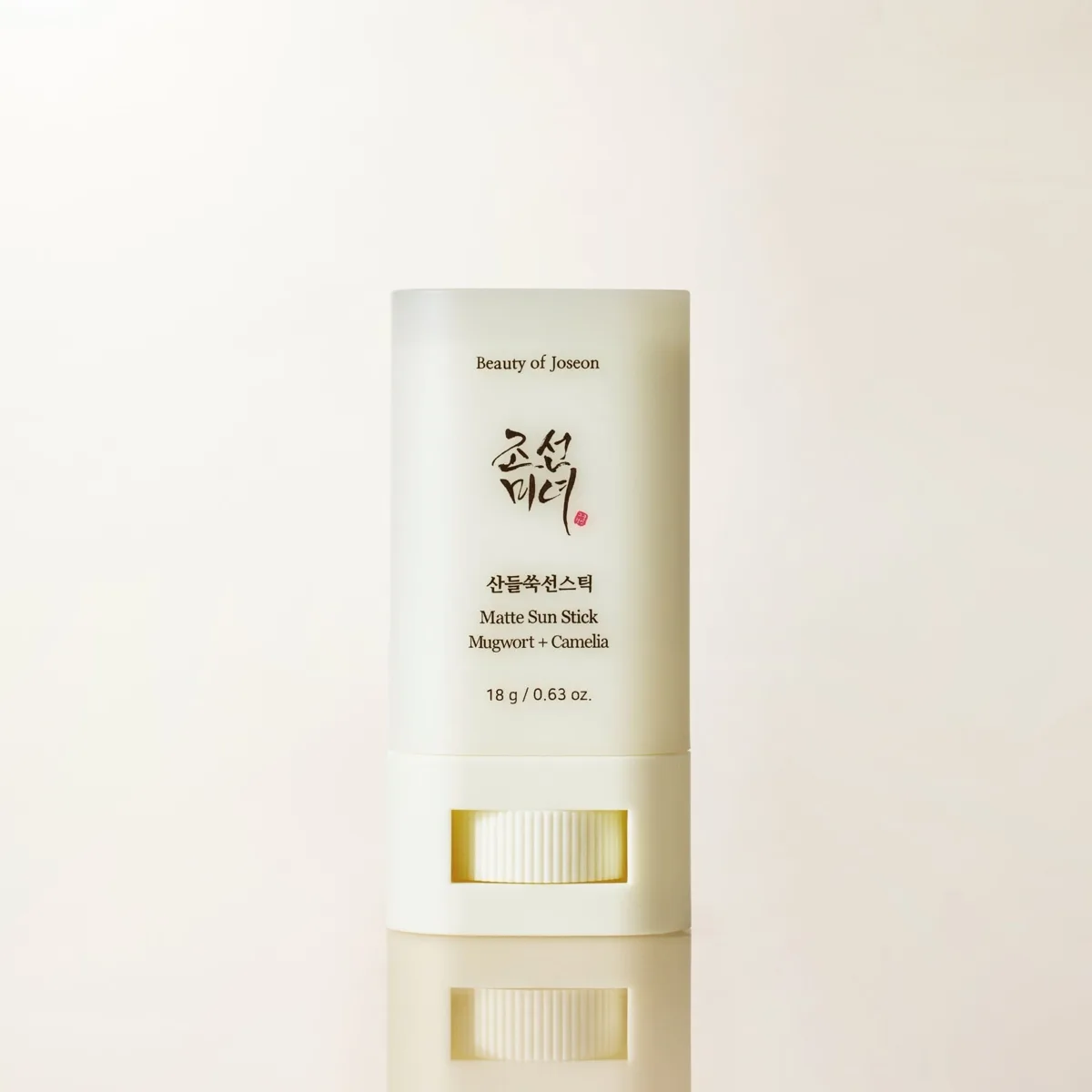
Sticks dose better than their reputation suggests, but only with technique: several passes back and forth over the same area until there is visible product, not one swipe. COSRX Airy-Light Invisible Sun Stick and Beauty of Joseon Matte Sun Stick are convenient for ears, hairline and the back of the neck, which are the sites people miss entirely.
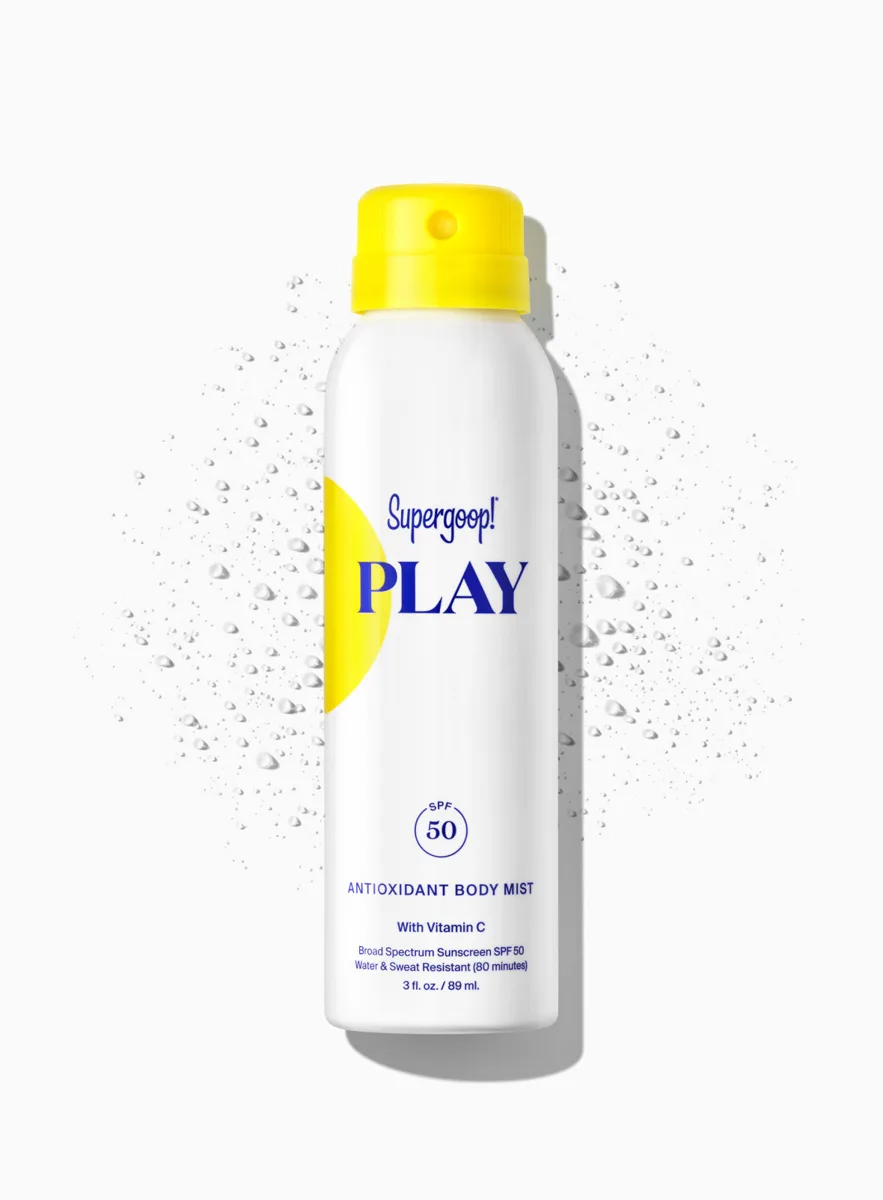
Sprays are where dosing collapses. Product blows away, coverage is uneven, and there is no visual feedback. If you use one, spray until the skin is visibly wet and then rub it in — which is to say, treat it as a lotion in an inconvenient container. Supergoop! PLAY Antioxidant Body Mist and Banana Boat Sport Ultra SPF 50 Sunscreen Spray are fine products applied that way and close to decorative applied the usual way.
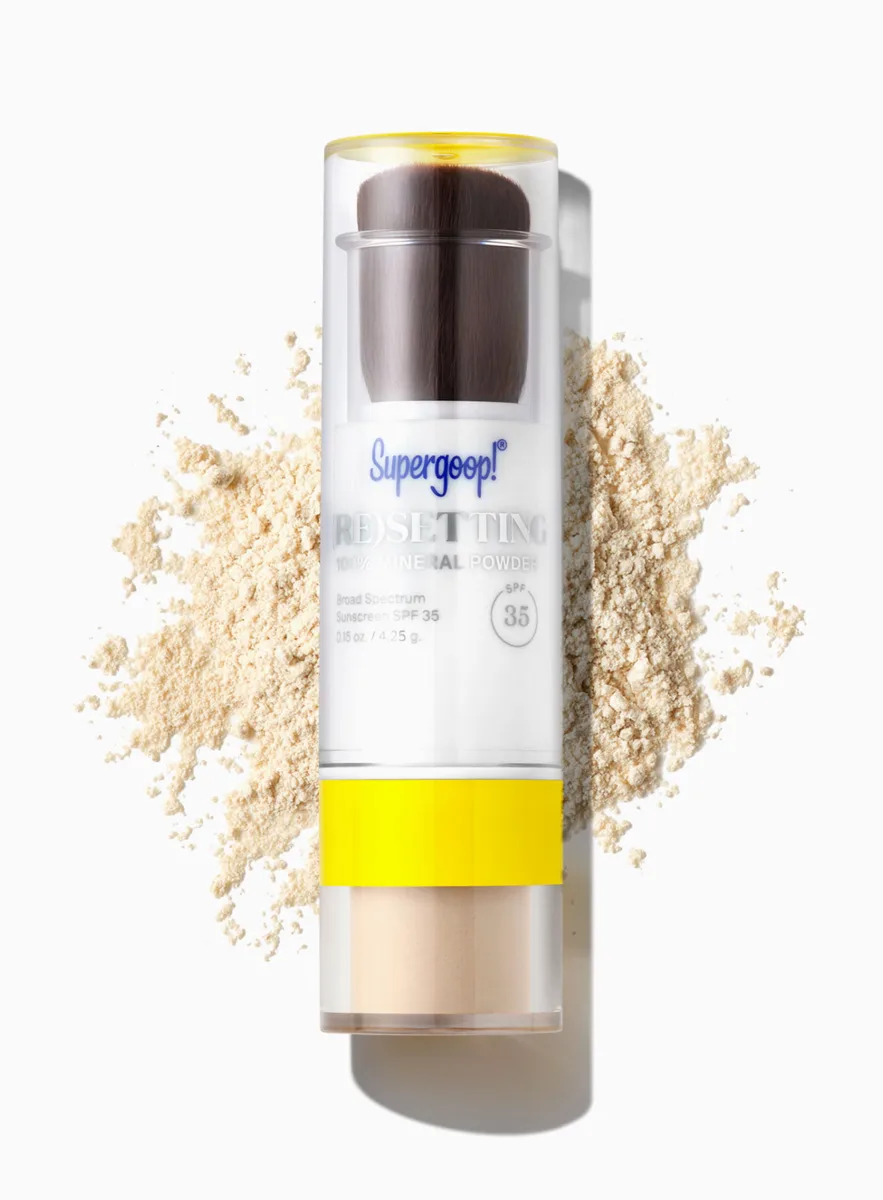
Powders are the least honest format in the category. No dusting motion delivers anything approaching test density, and the SPF on the container was generated at a density a brush cannot reach. Supergoop! (Re)setting 100% Mineral Powder is a competent product for what it is; it is not a substitute for a sunscreen application, and treating it as one is how people end up confidently unprotected.
SPF makeup sits in the same bracket. Foundation applied at cosmetic density delivers a fraction of its labelled figure, and the number is best read as a bonus on top of a real sunscreen rather than as the sunscreen.
The fix is embarrassingly simple
Given how alarming the arithmetic is, the remedy is almost disappointing.
Apply twice. A study measuring application under practical conditions found people delivering around 1 mg/cm² unprompted — and that simply directing them to apply a second time raised the measured thickness to nearly the full 2 mg/cm². One extra pass, thirty seconds apart, closes most of the gap. The researchers went as far as recommending that double-application guidance be posted in public places where sunscreen is used. It is worth noting that study came from a cosmetics company's research laboratories, which does not invalidate the measurement but is worth knowing.
The practical version, then:
Use the two-finger rule for face and neck as your first layer, then do it again. If you prefer volume, a quarter to a third of a teaspoon per pass is the same target. For the body, roughly a shot glass covers an adult in swimwear — and that is per application, not per day.
Run the numbers against your own body once. The Sunscreen Amount calculator converts the areas you are actually covering into a quantity, and seeing the figure for a pair of arms and a torso is the moment most people realise how far off their habit has been.
Reapply every two hours of genuine exposure, and after swimming, sweating or towelling — not because the filters expire on a timer, but because the film is physically disturbed. And accept that a hat and shade are not a fallback for people who cannot be bothered; they are the only interventions in this entire article that do not depend on you applying the correct quantity of anything.
One last framing. Every debate about which sunscreen to buy — mineral against chemical, this brand against that one, SPF 30 against 50 — is an argument about a variable that matters less than the one nobody discusses. Pick a formula you genuinely like the feel of from any decent shortlist, then apply twice as much of it as you were going to. That is the whole intervention, and the Sun Safety tool covers the rest of the exposure picture that a bottle cannot.
Products mentioned
Independently reviewed and scored — the real products behind this piece.




References
- The relation between sun protection factor and amount of suncreen applied in vivo — British Journal of Dermatology, 2007
- Sunbathers' application of sunscreen is probably inadequate to obtain the sun protection factor assigned to the preparation — Photodermatology, Photoimmunology & Photomedicine, 1992
- Sunburn protection as a function of sunscreen application thickness differs between high and low SPFs — Photodermatology, Photoimmunology & Photomedicine, 2012
- Relationship between sun-protection factor and application thickness in high-performance sunscreen: double application of sunscreen is recommended — Clinical and Experimental Dermatology, 2012
Every cited link is verified to resolve to the paper named. Where a source could not be independently confirmed, it is listed without a link rather than pointing you somewhere wrong.
Frequently asked
How much sunscreen should I actually use on my face?
Aim for roughly a quarter to a third of a teaspoon for face and neck, or the two-finger rule — a strip of product laid along the length of your index and middle fingers. Both approximate the 2 mg/cm² density at which SPF is measured. If it does not look like slightly too much before you spread it, it is probably not enough.
If I use half as much, do I get half the SPF?
No — you get considerably less. In vivo phototesting found the relationship followed exponential growth, with protection falling as the square root at half the test density and as the fourth root at a quarter. Other studies model the curve less steeply, but all agree protection drops faster than the quantity does. Proportional intuition is the wrong mental model here.
Should I just buy a higher SPF to compensate for under-applying?
That is the natural response and it does not work. Testing across four SPF levels found low-SPF products scaling linearly with thickness while higher-SPF products scaled exponentially — meaning high-SPF protection collapses faster when the layer thins. The margin you think you are buying is not there. Applying a full layer of a moderate SPF beats skimping on a high one.
Are spray and powder sunscreens useless?
Not useless, but they are the two formats where reaching test density is hardest. A spray can work if you apply until skin is visibly wet and then rub it in. A powder cannot reach that density by any dusting motion, so treat it as a top-up over a real application rather than as one. SPF in foundation sits in the same category — a bonus, not the plan.
What is the single most effective change I can make?
Apply twice. A study measuring real application found people delivering about half the test density unprompted, and that simply instructing a second application brought thickness to nearly the full amount. One extra pass costs thirty seconds and closes most of the gap — a far larger effect than any choice between brands or between SPF 30 and SPF 50.