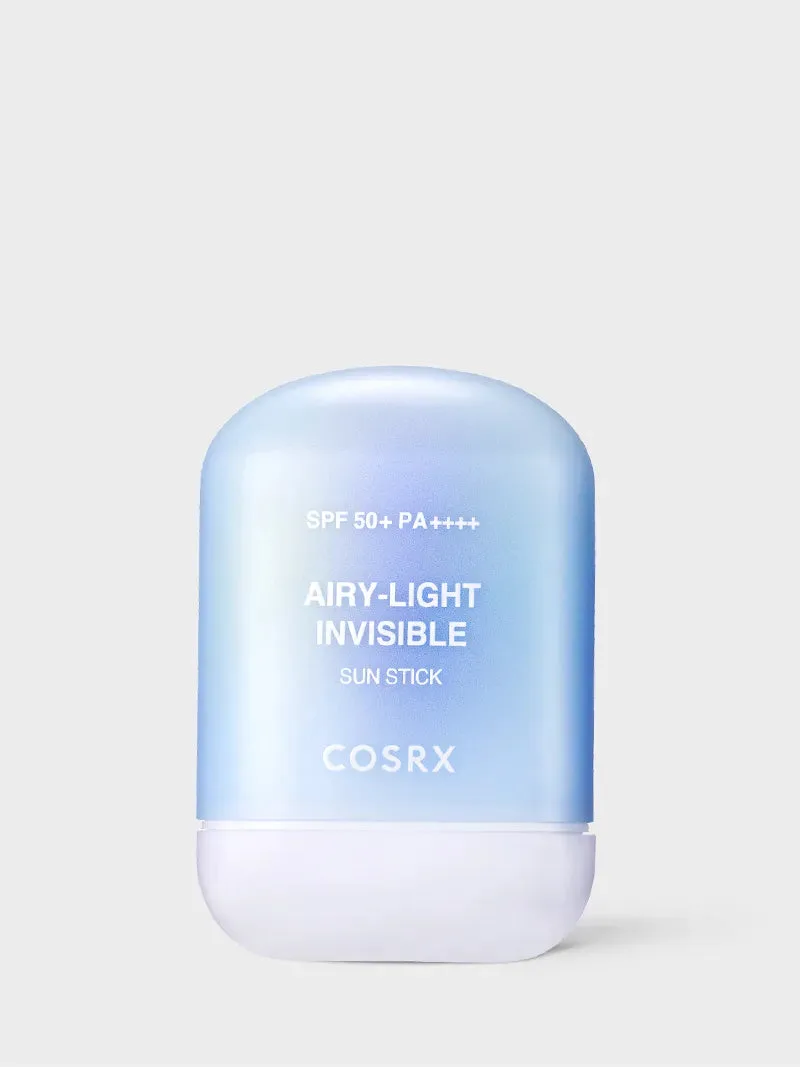
Uses a modern quad-filter UV system (Tinosorb S, Uvinul A Plus, Ethylhexyl Triazone, Polysilicone-15) that offers superior photostability compared to the avobenzone-based formulations common in US-market sunscreen sticks. The addition of ceramide NP, niacinamide, and zinc PCA transforms a basic SPF stick into a targeted treatment for oily, shine-prone skin — most competitors offer UV protection alone.
A technically impressive sunscreen stick that pairs next-generation UV filters with genuine skincare benefits for oily skin. The powdery, invisible finish is a genuine leap forward for the category — but the tiny 19g size and limited availability make it a convenience luxury rather than an everyday workhorse.
Note: This stick launched in 2025 with fewer than 100 independent reviews available. Our scoring is primarily based on ingredient analysis, UV filter technology assessment, and the COSRX brand's track record. As more real-world feedback arrives, this rating could move either way.
Verdicts
How well it fits each concern
Verdict by concern tap a concern for the case
Unprovenfor Excess OilinessIn your profileYou chose · Niacinamide has early or mechanistic evidence for excess oiliness — a reasonable bet, not a recommendation; the other actives here are not yet assessed for it.Moderate evidenceStandard tolerabilityNo reviews collected yet
The case for it
Niacinamide has early or mechanistic evidence for this concern, not trial-backed standing.
It is present below the studied range.
The formula carries no trigger this concern is sensitive to, with the cautions noted.
Cautions: fungal-acne triggers.
What would change this: A concentration inside the studied range would raise this a step.
Same rule for everyone. “Unproven” is the verdict on 1,111 of 45,024 concern verdicts across the catalog; rule R9 decided 1,111 of them.
Unchanged since September 5, 2026, engine 5.1.1.
R9 — Plausible-tier actives alone do not earn a recommendation, and 'not for this' would overstate the case against them. 'Unproven' with the evidence dots lets the reader judge the bet (added 0.2.0 after the first shadow run put a 10% niacinamide serum at 'not for this' for hyperpigmentation). 0.5.0: the closing clause reads the other heroes — "nothing else here addresses it" only when every other active has a researched 'none' row; "not yet assessed" when that is the truth. Rows whose dots read moderate or better now reach R9p first. · the full register
Carrying active
Niacinamide
Standing
plausible — trials support it
Form
sub threshold — studied range 2%, from the trials on the row; needs leave-on contact; judge it after ~8 weeks
Tolerability
standard — fungal triggers
Row checked
against its sources on July 17, 2026 (evidence table ev-2026.09-r228)
Full protectionfor Sun DamageIn your profileYou chose · Broad-spectrum SPF 50 with Uvinul A Plus, bemotrizinol (Tinosorb S): the protection sun damage calls for.Moderate evidenceGentleNo reviews collected yet
The case for it
Tinosorb S + Uvinul A Plus + Ethylhexyl Triazone + Polysilicone-15 is a first-line active — approved, monograph-listed or named in current guidelines — for this concern.
It is plausibly present at a working level, though the concentration is not declared.
The formula carries none of the triggers this concern is sensitive to.
What would change this: A declared concentration would move this to a firmer reading of the dose.
Same rule for everyone. “Full protection” is the verdict on 2,288 of 45,024 concern verdicts across the catalog; rule P1 decided 2,232 of them.
Unchanged since September 5, 2026, engine 5.1.1.
P1 — Photoprotection standing is regulatory (M020 / Annex VI filters; 21 CFR 201.327 attaches the early-skin-aging claim to tested broad-spectrum SPF 15+). SPF 30 is the AAD daily-use bar. · the full register
Carrying active
Tinosorb S + Uvinul A Plus + Ethylhexyl Triazone + Polysilicone-15
21 CFR § 352.10 Sunscreen active ingredients — US FDA — 21 CFR Part 352 (Sunscreen Drug Products for Over-the-Counter Human Use), via Cornell Legal Information Institute; part heading marked [STAYED INDEFINITELY], effective date stayed at 66 FR 67485, opened September 1, 2026
Full protectionfor AgingIn your profileYou chose · Broad-spectrum SPF 50 with Uvinul A Plus, bemotrizinol (Tinosorb S): the protection aging calls for.Moderate evidenceGentleNo reviews collected yet
The case for it
Niacinamide has early or mechanistic evidence for this concern, not trial-backed standing.
It is present below the studied range.
The formula carries none of the triggers this concern is sensitive to.
What would change this: A concentration inside the studied range would raise this a step.
Same rule for everyone. “Full protection” is the verdict on 2,288 of 45,024 concern verdicts across the catalog; rule P1 decided 2,232 of them.
Unchanged since September 5, 2026, engine 5.1.1.
P1 — Photoprotection standing is regulatory (M020 / Annex VI filters; 21 CFR 201.327 attaches the early-skin-aging claim to tested broad-spectrum SPF 15+). SPF 30 is the AAD daily-use bar. · the full register
Carrying active
Niacinamide
Standing
plausible — trials support it
Form
sub threshold — studied range 4–5%, from the trials on the row; needs leave-on contact; judge it after ~8 weeks
Tolerability
gentle
Row checked
against its sources on July 17, 2026 (evidence table ev-2026.09-r228)
Full protectionfor HyperpigmentationIn your profileYou chose · Broad-spectrum SPF 50 with Uvinul A Plus, bemotrizinol (Tinosorb S): the protection hyperpigmentation calls for.Moderate evidenceGentleNo reviews collected yet
The case for it
Niacinamide has trial-supported standing for this concern.
It is present below the studied range.
The formula carries none of the triggers this concern is sensitive to.
What would change this: A concentration inside the studied range would raise this a step.
Same rule for everyone. “Full protection” is the verdict on 2,288 of 45,024 concern verdicts across the catalog; rule P1 decided 2,232 of them.
Unchanged since September 5, 2026, engine 5.1.1.
P1 — Photoprotection standing is regulatory (M020 / Annex VI filters; 21 CFR 201.327 attaches the early-skin-aging claim to tested broad-spectrum SPF 15+). SPF 30 is the AAD daily-use bar. · the full register
Carrying active
Niacinamide
Standing
supported — trials support it
Form
sub threshold — studied range 2–5%, from the trials on the row; needs leave-on contact; judge it after ~8 weeks
Tolerability
gentle
Row checked
against its sources on July 17, 2026 (evidence table ev-2026.09-r228)
Unprovenfor Large PoresIn your profileYou chose · Niacinamide has early or mechanistic evidence for large pores — a reasonable bet, not a recommendation; the other actives here are not yet assessed for it.Moderate evidenceGentleNo reviews collected yet
The case for it
Niacinamide has early or mechanistic evidence for this concern, not trial-backed standing.
It is present below the studied range.
The formula carries none of the triggers this concern is sensitive to.
What would change this: A concentration inside the studied range would raise this a step.
Same rule for everyone. “Unproven” is the verdict on 1,111 of 45,024 concern verdicts across the catalog; rule R9 decided 1,111 of them.
Unchanged since September 5, 2026, engine 5.1.1.
R9 — Plausible-tier actives alone do not earn a recommendation, and 'not for this' would overstate the case against them. 'Unproven' with the evidence dots lets the reader judge the bet (added 0.2.0 after the first shadow run put a 10% niacinamide serum at 'not for this' for hyperpigmentation). 0.5.0: the closing clause reads the other heroes — "nothing else here addresses it" only when every other active has a researched 'none' row; "not yet assessed" when that is the truth. Rows whose dots read moderate or better now reach R9p first. · the full register
Carrying active
Niacinamide
Standing
plausible — trials support it
Form
sub threshold — studied range 4%, from the trials on the row; needs leave-on contact; judge it after ~8 weeks
Tolerability
gentle
Row checked
against its sources on July 17, 2026 (evidence table ev-2026.09-r228)
Also listed for Dullness — the actives here (Tinosorb, Bisabolol, Ceramides, Niacinamide) are in our research queue for that concern; there is no verdict until their evidence rows are written. That is a gap in our table, not a mark against the product.
Does the jobDoes what a sunscreen is for: UVA coverage, kind to the skin wearing it. Not measured from the label: pleasant enough to actually use.
A verdict is DermApproved’s assessment of how well a product’s ingredients fit a concern — never a claim about what the product treats. Evidence dots and collected reviews sit beside it and are never blended in.
Rules 0.5.1 · evidence table ev-2026.09-r228 · how we decide
Assessment
Pros & Cons
Pros
✓ Next-generation UV filters (Tinosorb S, Uvinul A Plus) offer superior photostability over US-market avobenzone systems
✓ Genuinely invisible application with zero white cast on all skin tones
✓ Silky, powdery texture feels like a primer rather than a sunscreen stick
✓ Niacinamide and zinc PCA provide dual-pathway oil control for oily skin
✓ Ceramide NP prevents the matte finish from crossing into dryness
✓ Fragrance-free and alcohol-free with minimal irritation risk
Cons
✗ Small 19g size depletes in 3-4 weeks with recommended reapplication frequency
✗ Matte finish is unflattering on dry or textured skin without proper moisturizer prep
✗ UV filters are not FDA-approved — marketed as a cosmetic in the US
✗ Very limited review data as a 2025 launch — long-term performance unverified
✗ Contains ethylhexyl palmitate which is not fungal acne safe
✗ Limited mainstream US retail availability — primarily K-beauty retailers
Review
Full Review
The US sunscreen market operates under a peculiar handicap: the FDA has not approved a new UV filter since 1999. While the rest of the world has moved on to newer-generation filters with superior photostability, broader UV coverage, and lower skin penetration rates, American consumers remain largely stuck with avobenzone, homosalate, and octocrylene — ingredients that the EU approved decades ago and has since surpassed. The COSRX Airy-Light Invisible Sun Stick is what happens when a Korean brand ignores that regulatory bottleneck entirely.
The filter system here reads like a wish list from a cosmetic chemist who has stopped caring about the FDA. Tinosorb S provides broad-spectrum UVA and UVB absorption with exceptional photostability — unlike avobenzone, it does not degrade under UV exposure, maintaining its protective capacity throughout the wear period. Uvinul A Plus delivers potent UVA absorption with a high molecular weight that keeps it on the skin's surface rather than penetrating into it. Ethylhexyl Triazone handles UVB with similar stability. And Polysilicone-15, a silicone-bonded UV filter, adds UVB protection with minimal systemic exposure. Together, these four filters provide the kind of robust, photostable, broad-spectrum protection that the best European and Japanese sunscreens have offered for years.
This matters practically, not just theoretically. A sunscreen stick designed for midday reapplication over makeup needs to maintain its UV protection under real-world conditions — heat, sweat, sebum, UV degradation. A stick that loses significant UVA protection after two hours of sun exposure defeats the purpose of reapplication. The photostability of this filter system means that each reapplication builds on still-functional previous layers, rather than replacing degraded ones.
The texture is where COSRX flexes its formulation muscles. Methyl methacrylate crosspolymer and multiple silicone crosspolymers create a base that feels nothing like a traditional sunscreen stick. There is no waxiness, no drag, no greasy film. The stick glides on with a silky, powder-like feel and sets to a soft matte finish within seconds. It is the first sunscreen stick this reviewer has used that genuinely felt like applying a primer rather than a sunscreen. The invisible application is literal — zero white cast, zero visible residue, even on deeper skin tones.
The skincare additions are not mere decoration. Niacinamide and zinc PCA form a dual-pathway oil control system that addresses the primary enemy of daytime SPF compliance on oily skin: shine. Niacinamide regulates sebum production over time, while zinc PCA provides more immediate oil absorption. Ceramide NP prevents the matte finish from crossing into dryness — a common failure point for mattifying sunscreens that control oil at the expense of barrier health. Bisabolol adds gentle anti-inflammatory and anti-pigmentation support. Sodium hyaluronate and panthenol round out the hydration and soothing profile.
This is, without qualification, a sunscreen stick designed for oily skin. And it knows its audience with precision. Every choice — the matte finish, the oil-absorbing particles, the niacinamide-zinc PCA combination, the lack of occlusive oils — is calibrated for the person whose T-zone could power a small generator by 2 PM.
Which also means it is emphatically not for everyone. Dry skin types will find the matte finish unflattering — it can emphasize texture, settle into fine lines, and make dry patches more visible. Without thorough moisturizer application beforehand, it will look and feel drying. This isn't a formulation flaw; it is a targeting choice. But it limits the product's audience significantly.
The size issue deserves frank discussion. At 19 grams for $23, this is an expensive product by volume. If you are reapplying as recommended — every two hours during sun exposure, or at minimum once at midday — a single stick will last three to four weeks. That is roughly $6 per week for a single product in your routine. For a luxury sunscreen stick, this is not unreasonable. For a daily essential, it adds up.
The regulatory ambiguity is worth understanding. Because the UV filters in this stick are not FDA-approved, the product cannot be sold as an OTC sunscreen drug in the US. It is marketed as a cosmetic. For consumers who are comfortable with the extensive safety and efficacy data that supports these filters in the EU, Korea, Japan, and dozens of other markets, this is a non-issue. For those who prefer products that conform to US regulatory standards, COSRX's Clear Sunscreen Stick uses FDA-approved filters and exists precisely for this reason.
The product is too new for comprehensive real-world assessment. With fewer than 100 independent reviews at the time of writing, we are working primarily from ingredient analysis and early user feedback. What that analysis shows is a technically sophisticated formula with a filter system that outperforms its US-market sibling, in a format that oily skin types will love and dry skin types should avoid. Whether the small size and premium pricing are justified depends entirely on whether the texture and convenience add enough value to your specific routine.
For oily and combination skin types who want a reapplication-friendly, truly invisible, matte-finish sunscreen stick with modern UV filters and genuine skincare benefits — and who are willing to pay for the convenience — the COSRX Airy-Light Invisible Sun Stick delivers on every claim it makes. It is the sunscreen stick that the category has been waiting for. It is just a very small sunscreen stick.
Formula
Key Ingredients
The hero actives that drive this product's performance.
A modern quad-filter UV system using next-generation European and Asian chemical filters. Tinosorb S (Bis-Ethylhexyloxyphenol Methoxyphenyl Triazine) provides broad-spectrum UVA/UVB coverage, Uvinul A Plus (DHHB) delivers potent UVA absorption, Ethylhexyl Triazone handles UVB, and Polysilicone-15 adds UVB protection with minimal skin penetration. This combination is significantly more photostable than the avobenzone/homosalate systems used in the US-market Clear Stick variant.
Regulator-approvedfor Sun Damage · limited certainty
Provides sebum-regulating and brightening benefits underneath the SPF layer, working alongside Zinc PCA to control the excess oil production that can break down sunscreen films on oily skin. In a matte-finish sunscreen designed for shine control, niacinamide's oil-regulating properties extend the product's aesthetic performance beyond basic UV protection.
Reinforces the skin barrier against the dehydrating effects of UV exposure and some chemical UV filters. In this matte-finish sunscreen, Ceramide NP prevents the formula from over-drying skin while maintaining its sebum-controlling properties — a balance that most mattifying sunscreens fail to achieve.
A sebum-regulating zinc salt that controls oil production at the follicular level. Paired with niacinamide, it provides a dual-pathway approach to shine control that helps maintain the matte finish throughout the day — critical for the stick format's reapplication promise on oily skin.
A chamomile-derived soothing agent that calms potential irritation from chemical UV filters and prevents UV-induced inflammation. Its anti-pigmentation properties complement the sunscreen's photoprotective function by addressing melanogenesis triggered by any UV that penetrates the filter system.
Not yet assessed
Ingredient standings describe the active at treatment-level doses and
vehicles; this product's own condition grades weigh its actual formula.
Use as the last step of your morning skincare routine. Glide the stick directly across the face in 3-4 passes per area. The matte finish means you can skip setting powder. For reapplication, glide gently over makeup without pressing hard. Do not use around the eyes — the stick format can tug on delicate periorbital skin.
Results Timeline
Immediate UV protection and matte finish upon application. Sebum control lasting 4-6 hours before reapplication is recommended. Skincare benefits (niacinamide brightening, ceramide barrier support) accumulate with daily consistent use over weeks.
Pairs Well With
Lightweight gel moisturizer underneathHydrating toner (for dry areas)
The UV filter system in this stick represents a meaningful generational upgrade over conventional US-market sunscreen formulations. Bis-Ethylhexyloxyphenol Methoxyphenyl Triazine (Tinosorb S) is a broad-spectrum organic UV filter that absorbs UVA and UVB radiation across the 280-380nm range. What distinguishes Tinosorb S from older filters is its exceptional photostability — it does not degrade under UV exposure, a critical advantage for a product designed for outdoor reapplication. Published research in Photodermatology, Photoimmunology & Photomedicine has documented its superior photostable profile.
Diethylamino Hydroxybenzoyl Hexyl Benzoate (Uvinul A Plus/DHHB) provides UVA absorption in the 320-400nm range with a high molar extinction coefficient — meaning it absorbs more UV radiation per molecule than many competing UVA filters. Its high molecular weight (>500 Da) limits skin penetration, a property that supports its favorable safety profile. The EU Scientific Committee on Consumer Safety has evaluated and cleared it for use at up to 10% concentration.
Ethylhexyl Triazone (Uvinul T 150) is a UVB filter with one of the highest UV absorption capacities among organic filters. Its molecular weight exceeds 800 Da, effectively preventing dermal penetration. Polysilicone-15 (Parsol SLX) bonds a UVB chromophore to a silicone backbone, combining UV absorption with excellent skin feel and further reducing systemic exposure.
The skincare component is equally well-supported. A landmark 2002 study in the British Journal of Dermatology demonstrated that niacinamide inhibits melanosome transfer — directly relevant in a sunscreen context, where residual UV-triggered melanogenesis occurs even with high SPF. Ceramide NP's role in barrier maintenance has been documented in the Journal of Clinical Investigation, where its incorporation into topical products was shown to restore barrier function in disrupted skin.
Dermatologists specializing in photoprotection would note the technical superiority of this filter system over conventional US-market avobenzone-based formulations. The combination of Tinosorb S, Uvinul A Plus, Ethylhexyl Triazone, and Polysilicone-15 provides photostable broad-spectrum coverage without the avobenzone degradation concerns that plague many American sunscreens. Many dermatologists frequently emphasize that adherence — actually applying and reapplying sunscreen — is the single greatest predictor of UV protection outcomes. A stick format that feels pleasant, applies invisibly, and controls oil removes several common barriers to compliance. The addition of niacinamide and ceramide NP aligns with dermatological recommendations for multi-functional sun protection products that support skin health beyond UV filtration. However, dermatologists would note that the matte finish makes this unsuitable for dry skin types and that pregnancy safety data for these newer UV filters remains limited.
Guidance
Usage & Recommendations
How to Use
Apply as the final step of your morning skincare routine, after moisturizer. Glide the stick directly across the face in 3-4 passes per area — nose, forehead, each cheek, chin — for adequate coverage. Avoid tugging around the delicate eye area; use a separate eye-safe sunscreen for that zone. Reapply every 2 hours during sun exposure, or once at midday for indoor/office days. The stick can be applied over makeup without disruption. Pair with thorough double cleansing at night to fully remove the silicone-based formula.
Value Assessment
At $23 for 19g, this stick demands a convenience premium. Three to four weeks of use at recommended reapplication frequency means roughly $6 per week — substantially more per use than liquid sunscreens offering equivalent SPF. The value proposition is not about economy; it is about the willingness to pay for a genuinely pleasant reapplication experience with modern UV filters. For oily skin types who have tried and abandoned other sunscreen sticks due to greasiness or white cast, the texture alone may justify the premium. The skincare additions (ceramide NP, niacinamide, zinc PCA) provide genuine functional value beyond basic SPF that cheaper sticks lack.
Who Should Buy
Oily and combination skin types who want a matte, invisible, reapplication-friendly sunscreen stick with modern UV filters. Anyone frustrated by the greasiness, white cast, or photostability issues of conventional sunscreen sticks. K-beauty enthusiasts who prefer next-generation UV filter technology over US-market avobenzone systems.
Who Should Skip
Dry skin types will find the matte finish unflattering and potentially drying. Those who prefer FDA-approved UV filters should choose the COSRX Clear Sunscreen Stick instead. Pregnant individuals should consult their physician due to limited pregnancy safety data on these newer filters. Fungal-acne-prone users should avoid due to ethylhexyl palmitate content.
Ready to try COSRX Airy-Light Invisible Sun Stick?
Airy, lightweight stick that glides on with a silky, powdery feel. Methyl methacrylate crosspolymer and silicone crosspolymers create a velvet-like application that absorbs into a soft matte finish without the waxy or greasy sensation typical of sunscreen sticks.
Scent
Completely fragrance-free. No discernible scent.
Packaging
Compact twist-up stick in a sleek, pocket-sized tube. Standard sunscreen stick format with minimalist COSRX branding. 19g size is portable but small.
Finish
mattenon-greasyinvisiblevelvety
What to Expect on First Use
On first use, the most striking quality is how unlike a sunscreen stick this feels. The application is silky and powder-like rather than waxy or greasy. It leaves absolutely no white cast — even on deeper skin tones, the product is genuinely invisible. The matte finish sets within seconds, leaving skin feeling smooth and lightly blurred. Those with dry skin may notice it emphasizes textured areas if not properly moisturized underneath.
How Long It Lasts
3-4 weeks with daily facial use and midday reapplication
The Invisible Sun Stick launched alongside the Clear Sunscreen Stick in 2025 as part of COSRX's push into portable sun protection formats. While the Clear Stick uses FDA-approved filters for the US market, the Invisible Stick employs next-generation European and Asian UV filters — Tinosorb S, Uvinul A Plus, and Ethylhexyl Triazone — that offer greater photostability and broader UVA protection. The formula was specifically engineered for oily skin, incorporating zinc PCA and niacinamide for oil control alongside ceramide NP for barrier support.
About COSRX Established Brand (5–20 years)
COSRX launched in 2013 with a philosophy of minimal, effective formulations (the name stands for 'Cosmetics + RX'). Over 11 years the brand has built a reputation for ingredient-forward products widely praised by dermatologists, and was acquired by AmorePacific in 2023.
Brand founded: 2013 · Product launched: 2025
Myth vs. Reality
Common Myths
Myth
European and Asian UV filters are not effective because the FDA has not approved them.
Reality
The FDA's approval process for sunscreen ingredients is notoriously slow and has not kept pace with the EU, Japan, or Korea. Filters like Tinosorb S and Uvinul A Plus have extensive safety and efficacy data, are approved worldwide (except the US), and offer superior photostability compared to avobenzone. The lack of FDA approval reflects regulatory lag, not safety or efficacy concerns.
Myth
Matte sunscreens are always drying and unsuitable for daily use.
Reality
This formula includes ceramide NP, sodium hyaluronate, panthenol, and allantoin specifically to counteract dryness. The matte finish comes from silicone crosspolymers and powder particles that absorb surface oil without stripping the skin of moisture. The drying risk primarily affects those with already-dry skin who skip moisturizer underneath.
FAQ
Frequently Asked Questions
What is the difference between COSRX Invisible Sun Stick and Clear Sunscreen Stick?
The Invisible Sun Stick uses next-generation UV filters (Tinosorb S, Uvinul A Plus) with superior photostability and a more mattifying finish designed for oily skin. The Clear Sunscreen Stick uses FDA-approved US filters (avobenzone, homosalate, octocrylene) with a more neutral finish. Choose the Invisible for maximum oil control and modern UV filters, or the Clear for US-regulated formulation.
Is the COSRX Invisible Sun Stick FDA approved?
The UV filters in this stick (Tinosorb S, Uvinul A Plus, Ethylhexyl Triazone, Polysilicone-15) are not FDA-approved active ingredients. They are widely approved in the EU, Korea, Japan, and most other markets. The product is sold as a cosmetic rather than an OTC drug in the US. If FDA-approved filters are important to you, the COSRX Clear Sunscreen Stick uses US-market-approved filters.
Does this sunscreen stick leave a white cast?
No — as a purely chemical sunscreen with no mineral filters (zinc oxide or titanium dioxide), it applies completely transparent. The 'Invisible' name is literal — it leaves zero white cast on all skin tones.
Can I use this sunscreen stick on dry skin?
The matte finish and oil-absorbing ingredients make this stick best suited for oily and combination skin. If you have dry skin, apply a thorough layer of moisturizer underneath and be aware that the mattifying effect may emphasize dry patches or flaking. The COSRX Aloe Soothing Sun Cream may be a better fit for dry skin types.
Is this sunscreen stick pregnancy safe?
The newer-generation UV filters in this product have limited pregnancy-specific safety data. While they have lower skin penetration rates than older chemical filters, one in vitro study flagged Uvinul A Plus for potential endocrine activity. Mineral sunscreens are generally recommended during pregnancy. Consult your OB-GYN for personalized guidance.
Reviews
What Reviewers Tend to Say
Recurring themes our editors read across retailer reviews of this product — summaries in our words, not quotations, and not a substitute for your own patch test.
Common Praise
Truly invisible with zero white cast on all skin tones
Lightweight powdery texture feels like wearing nothing
Soft matte finish controls shine throughout the day
Convenient stick format for reapplication over makeup
Fragrance-free and non-irritating for most users
Modern UV filter system provides robust photostable protection
Common Complaints
Small 19g size depletes quickly with daily reapplication
Matte finish may emphasize dry patches or flaking
Stick format requires careful application around the eye area
Limited availability at mainstream US retailers
Contains ethylhexyl palmitate which is not fungal acne safe
At one o'clock the morning's protection has degraded and there is a full face on top of it. The available answers run from genuinely useful to ritual with a label, and the ranking is not the one the marketing suggests.
Protection does not scale linearly with how much you apply. It scales as a root — which means the difference between a proper layer and your usual one is not a few points of SPF.
Pore size is mostly genetic and you can't permanently shrink it — but you can dramatically change how visible pores look, and the products that do it aren't the ones labeled 'pore-minimizing.'
Nearly every trial that made this ingredient famous ran at 2–5%. The double-digit numbers on the shelf are answering a question the biology never asked.
Aug 1, 2026· 8 min
Questions people ask about Hyperpigmentation
Verified answers from our questions library — the nuance a product page cannot carry.
Products, answers, therapy guides, tools and articles in one search. Brand names,
slang and abbreviations all work — accutane finds isotretinoin, bacne finds truncal acne.