




Can You Actually Shrink Your Pores? The Honest Answer
Pore size is mostly genetic and you can't permanently shrink it — but you can dramatically change how visible pores look, and the products that do it aren't the ones labeled 'pore-minimizing.'
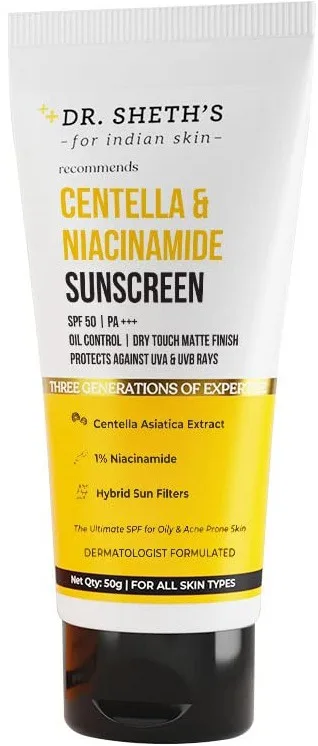
It delivers a genuinely modern, robust filter system — including strong long-UVA filters like DHHB and bemotrizinol that many sunscreens skip — in an ultra-matte, oil-controlling gel built for hot, humid climates and oily, acne-prone skin, all at a budget price. It's a serious broad-spectrum sunscreen, not just a cosmetically pleasant one.
Dr Sheth's Centella & Niacinamide Sunscreen SPF 50 is a quietly excellent value pick: a genuinely robust modern multi-filter system — with strong long-UVA filters many sunscreens skip — in an ultra-matte, oil-controlling gel built for oily, acne-prone skin in hot weather, plus niacinamide and centella, at a budget price. The matte finish can feel drying on dry skin, but for its target user it's a serious, affordable sunscreen.
The case for it
What would change this: A declared concentration would move this to a firmer reading of the dose.
Same rule for everyone. “Full protection” is the verdict on 2,288 of 45,024 concern verdicts across the catalog; rule P1 decided 2,232 of them. Unchanged since September 5, 2026, engine 5.1.1.
Brand or formulator? Disclose a concentration or correct a fact →
The studies behind the evidence row
The case for it
What would change this: A concentration inside the studied range would raise this a step.
Same rule for everyone. “Unproven” is the verdict on 1,111 of 45,024 concern verdicts across the catalog; rule R9 decided 1,111 of them. Unchanged since September 5, 2026, engine 5.1.1.
Brand or formulator? Disclose a concentration or correct a fact →
The studies behind the evidence row
The case for it
What would change this: A concentration inside the studied range would raise this a step.
Same rule for everyone. “Supporting role” is the verdict on 8,197 of 45,024 concern verdicts across the catalog; rule R8 decided 4,250 of them. Unchanged since September 5, 2026, engine 5.1.1.
Brand or formulator? Disclose a concentration or correct a fact →
The studies behind the evidence row
The case for it
What would change this: A concentration inside the studied range would raise this a step.
Same rule for everyone. “Full protection” is the verdict on 2,288 of 45,024 concern verdicts across the catalog; rule P1 decided 2,232 of them. Unchanged since September 5, 2026, engine 5.1.1.
Brand or formulator? Disclose a concentration or correct a fact →
The studies behind the evidence row
The case for it
What would change this: A concentration inside the studied range would raise this a step.
Same rule for everyone. “Unproven” is the verdict on 1,111 of 45,024 concern verdicts across the catalog; rule R9 decided 1,111 of them. Unchanged since September 5, 2026, engine 5.1.1.
Brand or formulator? Disclose a concentration or correct a fact →
The studies behind the evidence row
Does the jobDoes what a sunscreen is for: UVA coverage, kind to the skin wearing it. Not measured from the label: pleasant enough to actually use.
A verdict is DermApproved’s assessment of how well a product’s ingredients fit a concern — never a claim about what the product treats. Evidence dots and collected reviews sit beside it and are never blended in. Rules 0.5.1 · evidence table ev-2026.09-r228 · how we decide
After a long parade of luxury serums where the bulk of your money buys a name and a heavy jar, a sunscreen like this works as a palate cleanser: an affordable product that is genuinely, substantively good, where the budget goes into the formula instead of the marketing. Dr. Sheth's is an Indian dermatologist-developed brand, founded in 2017, that formulates for South Asian skin and climate, specifically the very common pairing of oily, acne-prone skin with heat and humidity, and this sunscreen is a smart, serious answer to that brief that happens to cost very little.
The headline is the filter system, and it is where this quietly outclasses pricier competitors. Rather than leaning on one or two basic filters, it deploys a robust, modern multi-filter blend: the strong long-UVA filters DHHB (diethylamino hydroxybenzoyl hexyl benzoate) and bemotrizinol (Tinosorb S), alongside zinc oxide, titanium dioxide, and UVB filters including octinoxate and Uvasorb HEB, for well-rounded SPF 50 PA+++ protection. That architecture matters more than the SPF number alone lets on, because SPF chiefly measures UVB defense; the dedicated long-UVA filters here are what guard against the photoaging and pigmentation that UVA drives, and a surprising number of sunscreens, including some far more expensive ones, skimp on exactly that range. This is a properly protective broad-spectrum formula, not merely a cosmetically pleasant one.
It is worth pausing on why that long-UVA coverage is such a meaningful detail, because it is the part shoppers most often overlook. The SPF figure on a bottle tells you almost nothing about UVA defense, the deeper-penetrating wavelengths that drive collagen breakdown, photoaging and a good deal of pigmentation. A sunscreen can boast SPF 50 while offering mediocre protection across that longer-wave range, and plenty do, which is how some pricey products end up worse on paper than a budget formula that simply spent its filter budget more wisely. Dr. Sheth's clearly understood the brief here, choosing modern filters specifically engineered to plug the UVA gap, and pairing them with the PA+++ rating that signals it. For skin that is both sun-exposed and prone to dark spots, that is the difference between a sunscreen that merely prevents burning and one that genuinely defends against the slower, sneakier damage.
It is also genuinely well-built for the skin it targets. The base is a silicone gel carrying tapioca starch and silica powders that set to a real, velvety, dry-touch matte finish, so oily skin stays shine-free and the sunscreen doubles as an excellent makeup base. Niacinamide, at roughly 1%, regulates sebum and supports the barrier, while centella asiatica calms irritation and redness, both sensible inclusions for breakout-prone skin that wants protection without provocation. The formula is fragrance-free, oil-free, free of common allergens, vegan, and fungal-acne-safe, which is a clean and considered profile for a sunscreen aimed at reactive, congested complexions. On most skin tones it blends down with minimal white cast, which is no small feat for a formula carrying mineral filters in the mix and a frequent stumbling block for sunscreens aimed at deeper complexions.
The context behind the brand matters here too. Dr. Sheth's was built by people formulating for hot, humid conditions and for skin tones that the wider sunscreen market has historically served poorly, and that focus shows in the choices, an ultra-matte base for climates where a dewy sunscreen would slide off by midday, a filter system tuned for the kind of relentless year-round sun exposure that makes UVA defense non-negotiable, and a price point that keeps daily, generous application financially realistic rather than a luxury you ration. A sunscreen you apply sparingly because it stung your wallet protects no one, so an affordable formula that actually invites you to use enough is doing something quietly important.
The limitations are few and, for the target user, minor. The mattifying, oil-absorbing powders that oily skin loves can read as drying on genuinely dry skin, which should hydrate well underneath or choose something more emollient. The base is silicone-heavy, the very thing responsible for that elegant finish, which a few people simply prefer to avoid on principle. The deepest skin tones may catch a faint cast from the mineral filters. And it contains octinoxate, an effective UVB filter that some choose to skip for environmental reasons, though it is well-buffered within the broader blend here. None of these meaningfully dent the core proposition.
A word on realistic expectations, because sunscreen is only as good as its application. The protection and the shine-free finish are immediate on day one; the cumulative payoff is the prevention of sun damage, dark spots and breakout-related pigmentation over months of daily, generous use. That word generous is doing real work, the labeled SPF 50 assumes roughly a quarter-teaspoon for the face with reapplication, and under-application quietly guts the protection of any sunscreen, not just this one. Use enough and reapply, and the 50g tube still lasts six to eight weeks at proper use, which keeps the cost-per-use close to nothing.
And the value is genuinely the story here. At a budget price for a sunscreen carrying this caliber of filter system and these skin-supportive extras, it is frankly better value than the large majority of sunscreens at any price point, a rare case where affordable and substantive line up cleanly. The high data confidence, backed by a large pool of user feedback and several years on market, means you are not gambling on a hopeful new launch either.
Where it settles is as a serious, modern, robustly protective matte sunscreen for oily and acne-prone skin that costs a fraction of what its filter quality would suggest. For its intended user, oily, breakout-prone skin in warm, humid weather wanting strong, comfortable, shine-free protection, it is an easy and genuinely enthusiastic recommendation, and a real value standout. Only very dry skin, or those committed to avoiding silicones, have much reason to look elsewhere.
The hero actives that drive this product's performance.
| Ingredient | Function | Evidence |
|---|---|---|
| Multi-Filter UV System (DHHB + Bemotrizinol + Zinc Oxide + Titanium Dioxide + Octinoxate + Uvasorb HEB) | A genuinely robust, modern broad-spectrum filter blend — pairing strong long-UVA filters DHHB and bemotrizinol (Tinosorb S) with zinc oxide, titanium dioxide, and UVB filters for well-rounded SPF 50 PA+++ protection, a far more complete UVA defense than a typical two-filter sunscreen. | Regulator-approved for Sun Damage · limited certainty |
| Niacinamide (1%) | Folded in to regulate oil and support the barrier, reinforcing the sunscreen's design for oily, acne-prone skin and adding a calming, tone-supporting benefit on top of the sun protection. | Emerging for Hyperpigmentation |
| Centella Asiatica Extract | A soothing botanical that calms irritation and redness, helping keep the high-filter formula comfortable on reactive, breakout-prone skin through the day. | Not yet assessed |
| Tapioca Starch + Silica Powders | Oil-absorbing mattifying powders that give the silicone-gel its signature velvety, dry-touch finish, soaking up sebum so oily skin stays shine-free under and over the sunscreen. | Not yet assessed |
Ingredient standings describe the active at treatment-level doses and vehicles; this product's own condition grades weigh its actual formula.
Cyclopentasiloxane (and) Dimethicone Vinyl Dimethicone Crosspolymer, Octyl Methoxycinnamate, Caprylyl Methicone (and) PEG-12 Dimethicone/PPG-20 Crosspolymer, C12-15 Alkyl Benzoate, Zinc Oxide (and) Triethoxycaprylylsilane, Diethylhexyl Butamidotriazone, Diethylamino Hydroxybenzoyl Hexyl Benzoate, Niacinamide, Tapioca Starch (and) Polymethylsilsesquioxane, Titanium Dioxide (and) Alumina (and) Simethicone, Caprylyl Methicone, Bis-Ethylhexyloxyphenol Methoxyphenyl Triazine, Dicaprylyl Carbonate, Centella Asiatica Extract, Diethylhexyl Syringylidenemalonate (and) Caprylic/Capric Triglyceride
sunscreen
AM
Apply generously as the final morning step over moisturizer, and reapply through the day. Its matte finish makes it a good makeup base; dry skin should hydrate well underneath, as the mattifying powders can feel drying.
Immediate broad-spectrum protection and a shine-free matte finish on application; the cumulative benefit is preventing sun damage, dark spots, and break-out-related pigmentation with daily, generous use.
The sunscreen's strength is its filter architecture. It combines UVB filters (octyl methoxycinnamate, diethylhexyl butamidotriazone/Uvasorb HEB) with strong, photostable long-UVA filters — diethylamino hydroxybenzoyl hexyl benzoate (DHHB) and bis-ethylhexyloxyphenol methoxyphenyl triazine (bemotrizinol/Tinosorb S) — plus mineral filters zinc oxide and titanium dioxide. This is a well-rounded, modern broad-spectrum system: critically, the inclusion of dedicated long-UVA filters addresses the UVA range responsible for photoaging and pigmentation, which high-SPF sunscreens with minimal UVA coverage neglect, supporting the PA+++ rating. The silicone gel base with tapioca starch and polymethylsilsesquioxane provides sebum absorption and the matte, dry-touch finish suited to oily skin. Niacinamide at roughly 1% has evidence for sebum regulation and barrier support, and centella asiatica offers soothing, anti-inflammatory benefits relevant to acne-prone skin. The formula is fragrance-free and free of common allergens, an evidence-aligned choice for reactive, breakout-prone complexions, and it's fungal-acne-safe. The universal caveat governs real-world performance: labeled SPF assumes ~2 mg/cm² application (about a quarter-teaspoon for the face) with reapplication, and under-application drastically cuts protection. The honest summary: a genuinely robust, modern broad-spectrum sunscreen whose filter quality rivals or exceeds far pricier products, well-tailored to oily, acne-prone skin.
Dermatologists value sunscreens with strong, modern long-UVA filters like DHHB and bemotrizinol, since comprehensive UVA protection is essential for preventing photoaging and pigmentation and is often underdelivered by basic formulas. They regard a fragrance-free, oil-free, mattifying gel with niacinamide and centella as well-suited to oily and acne-prone skin, particularly in hot, humid climates, and appreciate the fungal-acne-safe profile. Clinicians would note that mattifying powders can be drying for dry skin, that silicone-heavy bases suit oily skin best, and that the deepest skin tones may see a slight mineral cast. As always, they emphasize generous application and reapplication for real protection. For oily, breakout-prone skin seeking robust, comfortable daily protection, this style of high-filter matte sunscreen aligns strongly with clinical recommendations.
As the final step of your morning routine, apply generously over the face and neck — about a quarter-teaspoon for the face — over your moisturizer, and let it set to its matte finish before makeup. Reapply through the day, especially with sun exposure, sweating, or after swimming, since protection wears off. If your skin is dry, apply a hydrating moisturizer underneath, as the mattifying powders can feel drying. Use it every day, year-round, for cumulative protection against sun damage and pigmentation.
This is the sunscreen's standout quality. At a budget price, it delivers a filter system — including dedicated strong long-UVA filters like DHHB and bemotrizinol — that rivals or beats sunscreens costing several times more, plus genuinely useful extras in niacinamide and centella and an elegant matte finish. The 50g tube lasts six to eight weeks at the generous application sunscreen actually requires, making the cost-per-use trivial. For oily, acne-prone skin, it's hard to find better protection-per-dollar anywhere, and it sharply outshines pricier sunscreens that skimp on UVA coverage. The only buyers who won't maximize the value are very dry skin (which the matte finish doesn't flatter) and those avoiding silicones; for everyone in its target audience, it's an exceptional value.
Oily, combination, and acne-prone skin wanting strong, modern broad-spectrum protection with a genuinely matte, shine-free finish — especially in hot, humid climates — at an unbeatable price. It's ideal for those who want a serious sunscreen that doubles as a smoothing makeup base and suits breakout-prone skin.
Very dry skin may find the mattifying powders drying and should choose a more emollient sunscreen or hydrate well underneath. Those who prefer silicone-free formulas, the deepest skin tones bothered by any mineral cast, and anyone specifically avoiding octinoxate may want an alternative.
Ready to try Dr. Sheth's Centella & Niacinamide Sunscreen SPF 50?
Buy at Amazon ♥Silicone gel-cream that blends to a velvety, dry-touch matte finish
Fragrance-free, essentially odorless
Squeeze tube
Blends in as a silicone gel that quickly sets to a genuinely matte, velvety, dry-touch finish with minimal white cast on most tones; oily skin stays shine-free, while very dry skin may feel the mattifying powders.
The 50g tube lasts roughly 1.5 to 2 months with daily generous face-and-neck use
All Year
Dr. Sheth's formulates for South Asian skin and climate, and this sunscreen targets the very common combination of oily, acne-prone skin in hot, humid conditions, using a high-filter system and mattifying powders to deliver strong protection that actually stays comfortable and shine-free through the day.
Dr. Sheth's is an Indian dermatologist-developed skincare brand founded in 2017, known for affordable, climate-appropriate formulas for South Asian skin; this matte gel sunscreen pairs a robust modern multi-filter system with niacinamide and centella at a budget-friendly price.
A high SPF number is all that matters in a sunscreen.
SPF mainly measures UVB protection; strong long-UVA defense, from filters like DHHB and bemotrizinol used here, matters just as much for preventing aging and pigmentation, which is why a robust multi-filter system like this is more protective than a high-SPF product with minimal UVA coverage.
Yes, it's designed for exactly that — a fragrance-free, oil-free silicone gel with mattifying powders, niacinamide to regulate sebum, and soothing centella, leaving a genuinely shine-free finish that suits oily and acne-prone skin in hot, humid weather.
It's robust — SPF 50 PA+++ using a modern multi-filter system that includes strong long-UVA filters like DHHB and bemotrizinol alongside zinc oxide, titanium dioxide, and UVB filters, giving more complete broad-spectrum protection than many two-filter sunscreens.
Minimal on most skin tones thanks to the blend of chemical and small mineral filters, though the deepest skin tones may notice a slight cast from the titanium dioxide and zinc oxide. Blending it in well minimizes any residue.
Its mattifying, oil-absorbing powders can feel drying on dry skin, so dry types should hydrate well underneath. Oily and combination skin will appreciate the velvety, shine-free finish, which also makes a good makeup base.
Yes to both — it's fragrance-free, free of common allergens, oils, and alcohol, and it's vegan and cruelty-free, making it suitable even for many sensitive, breakout-prone complexions.
Apply generously — about a quarter-teaspoon for the face — to achieve the labeled SPF, and reapply through the day, since under-application sharply reduces protection. The 50g tube lasts roughly six to eight weeks at proper daily use.
Recurring themes our editors read across retailer reviews of this product — summaries in our words, not quotations, and not a substitute for your own patch test.
Genuinely matte, shine-free finish
Strong broad-spectrum protection
No white cast on most tones
Great makeup base
Affordable for the filter quality
Matte finish can feel drying
Silicone-heavy formula
Slight cast on deepest skin tones
Needs generous application
Verified answers from our questions library — the nuance a product page cannot carry.