



Can You Actually Shrink Your Pores? The Honest Answer
Pore size is mostly genetic and you can't permanently shrink it — but you can dramatically change how visible pores look, and the products that do it aren't the ones labeled 'pore-minimizing.'
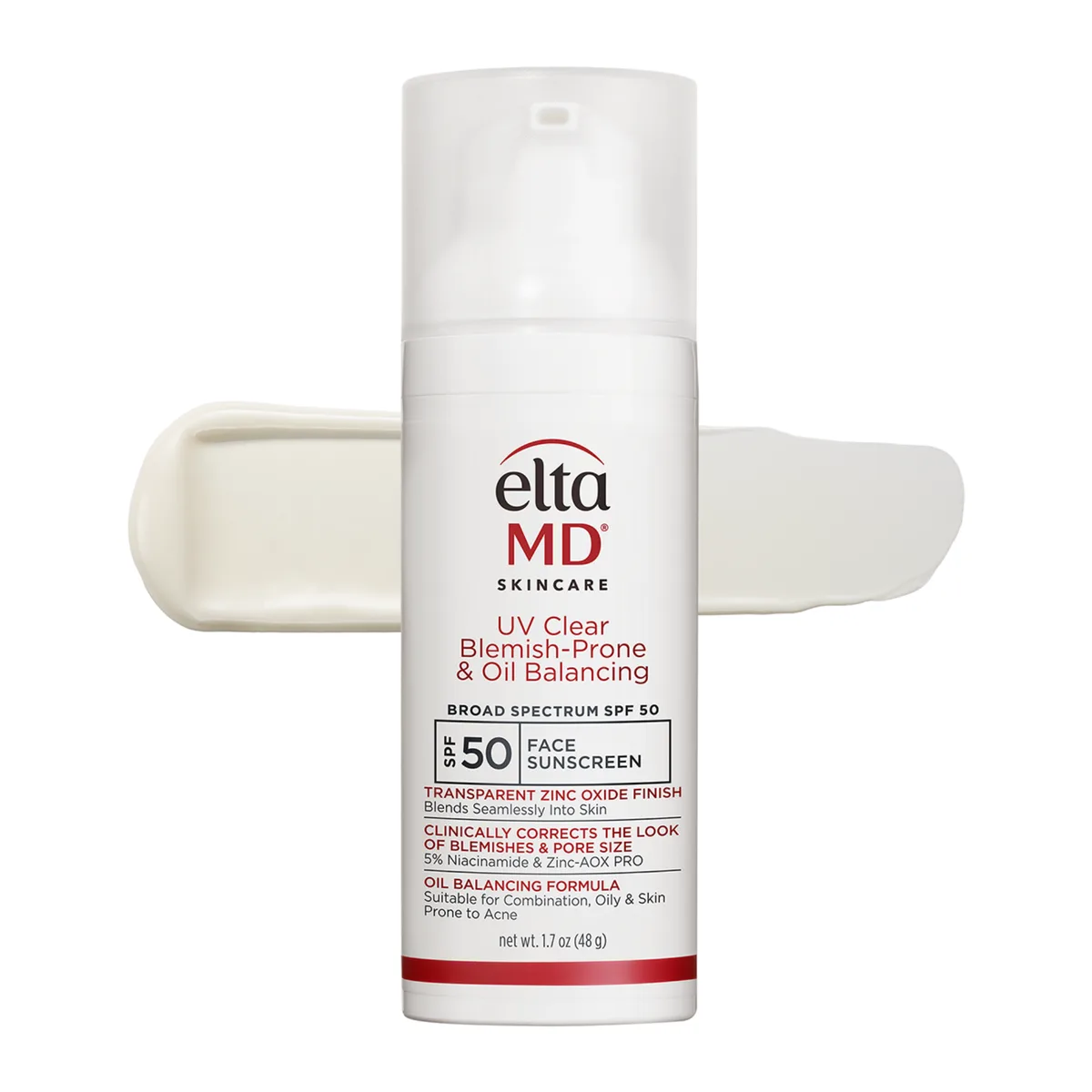
It is the updated version of EltaMD's UV Clear — long one of the most dermatologist-recommended sunscreens for acne-prone skin. It solves a genuine problem: it is lightweight, oil-free, and non-comedogenic, so blemish-prone skin will actually wear it, and it carries a real 5% niacinamide, an active that itself helps calm blemishes and balance oil.
An updated version of a longtime dermatologist-favorite sunscreen for acne-prone skin — a high-zinc hybrid filter system with a genuine 5% niacinamide, lightweight, oil-free, and non-comedogenic. It solves the real problem of finding a sunscreen blemish-prone skin will actually wear. Premium-priced, and a hybrid rather than pure mineral.
Note: This is a recently reformulated version of an established product, launched in March 2026. Our scoring blends ingredient analysis with the strong track record of the original UV Clear. Treat the score as provisional until independent data catches up.
The case for it
Cautions: a photosensitising active — use sun protection.
What would change this: A declared concentration would move this to a firmer reading of the dose.
Same rule for everyone. “Full protection” is the verdict on 2,288 of 45,024 concern verdicts across the catalog; rule P1 decided 2,232 of them. Unchanged since September 5, 2026, engine 5.1.1.
Brand or formulator? Disclose a concentration or correct a fact →
The studies behind the evidence row
The case for it
What would change this: Trial evidence for the active on this concern would move this from a bet to a recommendation.
Same rule for everyone. “Supporting role” is the verdict on 8,197 of 45,024 concern verdicts across the catalog; rule R8a decided 1,489 of them. Unchanged since September 5, 2026, engine 5.1.1.
Brand or formulator? Disclose a concentration or correct a fact →
The studies behind the evidence row
The case for it
What would change this: Guideline or regulatory standing for the active on this concern would move this from a promising bet to a recommendation.
Same rule for everyone. “Promising” is the verdict on 7,858 of 45,024 concern verdicts across the catalog; rule R9p decided 7,858 of them. Unchanged since September 5, 2026, engine 5.1.1.
Brand or formulator? Disclose a concentration or correct a fact →
The studies behind the evidence row
The case for it
What would change this: Guideline or regulatory standing for the active on this concern would move this from a promising bet to a recommendation.
Same rule for everyone. “Promising” is the verdict on 7,858 of 45,024 concern verdicts across the catalog; rule R9p decided 7,858 of them. Unchanged since September 5, 2026, engine 5.1.1.
Brand or formulator? Disclose a concentration or correct a fact →
The studies behind the evidence row
Does the jobDoes what a sunscreen is for: UVA coverage, kind to the skin wearing it. Not measured from the label: pleasant enough to actually use.
A verdict is DermApproved’s assessment of how well a product’s ingredients fit a concern — never a claim about what the product treats. Evidence dots and collected reviews sit beside it and are never blended in. Rules 0.5.1 · evidence table ev-2026.09-r228 · how we decide
There is a quiet standoff in the skincare lives of people with acne-prone skin, and the EltaMD UV Clear Blemish-Prone & Oil Balancing SPF 50 exists specifically to break it. On one side: acne-prone skin genuinely needs sun protection, arguably more than most. UV exposure darkens and prolongs post-acne marks and hyperpigmentation, and the cornerstone acne treatments — retinoids, exfoliating acids, benzoyl peroxide — all increase the skin's sensitivity to the sun. On the other side: acne-prone people avoid sunscreen more than most, because so many sunscreens are heavy, greasy, occlusive things that feel pore-clogging and seem to trigger breakouts. The result is a lot of people who most need sunscreen quietly skipping it. A sunscreen that genuinely resolves that standoff — one that protects properly and that oily, blemish-prone skin will actually, willingly wear — is a genuinely valuable product. EltaMD's UV Clear has, for years, been the answer dermatologists reached for, and this is its updated version.
The original UV Clear became a near-legend in dermatology offices for exactly this reason, and the update keeps what worked. Two things define it. The first is texture and feel: it is lightweight, oil-free, non-comedogenic, and finishes soft and low-shine rather than greasy or heavy. This sounds mundane, but it is the whole point — a sunscreen acne-prone skin tolerates is a sunscreen acne-prone skin uses, and that is most of the battle. The second is the niacinamide, and it is at a genuine 5%. This isn't a token sprinkle for the label. Five percent niacinamide is a real working concentration of an ingredient that, independently of sun protection, genuinely helps blemish-prone skin: it calms the look of blemishes, supports the barrier, helps regulate oil, and reduces post-blemish marks. Putting a real dose of it into the sunscreen means the product you apply for UV protection is also, quietly, doing acne-supportive skincare. That dual role is why the original earned its reputation, and the update preserves it.
The protection itself is sound. It is a hybrid filter system: a substantial 11% zinc oxide — a high mineral load, gentle and largely mineral in character — paired with 3.5% octinoxate, a chemical UVB filter that boosts efficiency without adding heaviness, for broad-spectrum SPF 50. The update also adds an antioxidant complex (vitamin E, carnosine, ginger) and a touch of gentle lactic acid exfoliation, both sensibly on-theme for blemish-prone skin. Bisabolol keeps it soothing, sodium hyaluronate keeps a high-zinc formula from turning chalky, and triethoxycaprylylsilane coats the zinc particles so they disperse evenly rather than streaking. There is no added fragrance. As a sunscreen specifically engineered for its target skin, it is genuinely well-built.
Its caveats are real but modest. First, this is a hybrid, not a pure mineral sunscreen — it contains octinoxate. For most people that is fine; octinoxate is a long-used, effective filter. But anyone who specifically wants only mineral filters should know it is here, and it is part of why the pregnancy status is marked uncertain, since many prefer pure mineral sunscreens in pregnancy. Second, 'non-comedogenic' and 'fungal-acne safe' are not the same claim, and the confusion between them costs people a lot of wasted money. Non-comedogenic means tested not to block pores. Fungal-acne-safe means free of the fatty esters that feed Malassezia. This formula is the first and not the second, which matters because malassezia folliculitis is routinely mistaken for ordinary acne. Third, the high zinc content can leave a faint cast on some skin, so blend it well.
Application discipline is the difference between SPF 50 and something much less. That means a generous layer — the quarter-teaspoon dermatologists keep asking for, which is roughly two big pumps for a face — applied last in the morning over moisturizer, and topped up every couple of hours in real sun. A 50ml tube burns through in six to eight weeks at that rate, which is a good sign rather than a bad one: a sunscreen that lasts you six months is a sunscreen you are under-applying.
On price, around forty-nine dollars is premium for a sunscreen. But it is worth weighing against what it does. This isn't an ordinary sunscreen marked up; it is a specifically engineered, dermatologist-trusted solution to a genuine problem, with a real 5% niacinamide doing acne-supportive work. For the person it is built for — someone with oily, acne-prone skin who has cycled through heavy sunscreens that broke them out — the value is reasonable, because the alternative is often not a cheaper sunscreen but no sunscreen at all, and that is the costliest option of all.
One honest note on the evidence: this specific reformulation launched in March 2026, so the review pool behind it is still shallow and the confidence here leans on the long track record of the original rather than years of data on this exact tube. Early feedback is consistent with that history — light, invisible, no breakouts — but it is early feedback, not a verdict from thousands of users over a decade.
Where it lands: this is a genuinely strong, well-targeted sunscreen, and the update of a deservedly trusted one. If you have oily or acne-prone skin and have struggled to find a sunscreen that does not feel like it is going to break you out, the EltaMD UV Clear Blemish-Prone & Oil Balancing is one of the most reliable recommendations there is — lightweight, oil-free, non-comedogenic, and carrying a 5% niacinamide that helps your skin in its own right. It is a hybrid rather than pure mineral, and it is not cheap. But for the standoff it is built to end — needing sunscreen, avoiding sunscreen — it is a genuine, well-earned answer.
The hero actives that drive this product's performance.
| Ingredient | Function | Evidence |
|---|---|---|
| UV Filters (Zinc Oxide 11% & Octinoxate 3.5%) | A hybrid filter system — a substantial 11% mineral zinc oxide plus the chemical UVB filter octinoxate — delivering broad-spectrum SPF 50. The high zinc content keeps the formula gentle and largely mineral, while the octinoxate boosts UVB efficiency without heaviness. | Regulator-approved for Sun Damage · limited certainty |
| Niacinamide (5%) (5%) | The signature ingredient, at a genuine 5% — the active that made the original UV Clear a dermatologist favorite for acne-prone skin. Niacinamide calms blemishes, supports the barrier, helps regulate oil, and reduces the look of post-blemish marks, all directly relevant to the skin this sunscreen targets. | Limited for Sun Damage |
| Bisabolol | A gentle soothing ingredient that calms irritation. In a sunscreen for blemish-prone skin — which is often reactive and may be using drying acne treatments — a calming agent is a sensible, area-appropriate inclusion. | Not yet assessed |
| Lactic Acid | An alpha-hydroxy acid at a gentle level, contributing mild surface exfoliation that supports clearer-looking, smoother skin. It is a small but on-theme addition for a blemish-and-oil-focused formula. | Not yet assessed |
| Antioxidant Complex (Vitamin E, Carnosine, Ginger) | A cluster of antioxidants — vitamin E, carnosine, and ginger root extract — that complement the UV filters by neutralizing free radicals from the UV, blue light, and pollution that reach the skin. Part of the brand's ZincAOXPro antioxidant approach. | Not yet assessed |
Ingredient standings describe the active at treatment-level doses and vehicles; this product's own condition grades weigh its actual formula.
Active: Zinc Oxide 11%, Octinoxate 3.5%. Inactive: Water, Dimethicone, Ethylhexyl Methoxycrylene, Octyldodecyl Neopentanoate, Niacinamide, Acrylates/Sodium Acryloyldimethyl Taurate Copolymer, Phenoxyethanol, Polyisobutene, Triethoxycaprylylsilane, Tocopheryl Acetate, Carnosine, Bisabolol, Tocopherol, PEG-7 Trimethylolpropane Coconut Ether, Pongamia Pinnata Seed Extract, Oleth-3 Phosphate, Lactic Acid, Sodium Hyaluronate, Zingiber Officinale (Ginger) Root Extract
sunscreen
AM
Slot it in last in the AM, settling over moisturizer, using a generous amount — the full quarter-teaspoon dermatologists recommend for the face. It is lightweight and non-comedogenic, made to sit comfortably on oily and blemish-prone skin without feeling greasy. Re-cover the skin at two-hour intervals in direct sun. It pairs well over acne treatments, which often increase sun sensitivity.
Sun protection is immediate on application. Skin looks less shiny soon after applying; over weeks of consistent use, the 5% niacinamide contributes a gradual calming of blemishes and improvement in tone and oil balance.
The UV Clear Blemish-Prone & Oil Balancing sunscreen uses a hybrid filter system: zinc oxide at 11%, a substantial mineral load providing broad-spectrum protection, plus octinoxate at 3.5%, a chemical UVB filter that improves UVB efficiency. Together they deliver broad-spectrum SPF 50. The high zinc proportion keeps the formula largely mineral in character and tolerability.
The formula's standout, and the basis of the original UV Clear's dermatological reputation, is niacinamide at a stated 5% — a genuine working concentration. Niacinamide has a strong evidence base relevant to acne-prone skin: it has anti-inflammatory activity that helps calm blemishes, supports barrier function, can help regulate sebum, and improves the appearance of post-inflammatory hyperpigmentation. Its inclusion at an effective dose means the sunscreen provides genuine, on-target skincare benefit for its intended user. The supporting ingredients are sensible: bisabolol is a recognized soothing agent, lactic acid at a low level contributes mild keratolytic exfoliation, and an antioxidant cluster (tocopherol, carnosine, ginger extract) complements the UV filters by addressing free-radical damage from UV, visible light, and pollution.
Two points warrant scientific clarity. First, 'non-comedogenic' (tested not to clog pores) and 'fungal-acne safe' (free of ingredients that feed Malassezia) are distinct claims; this formula is the former, not confirmed the latter, as it contains esters. Second, the standard sunscreen caveat applies: the labeled SPF requires adequate, generous application. What the trial data actually supports: this is a well-formulated, effective sunscreen genuinely engineered for acne-prone skin, with the 5% niacinamide a real and well-evidenced asset.
EltaMD's UV Clear has long been among the sunscreens dermatologists most frequently recommend for acne-prone skin, and this updated version preserves the qualities behind that reputation. Dermatologists consistently emphasize that acne-prone patients need sun protection — UV worsens post-inflammatory hyperpigmentation, and common acne treatments increase photosensitivity — and that the practical obstacle is finding a sunscreen that is lightweight, oil-free, and non-comedogenic enough to be tolerated, which this formula is. The 5% niacinamide is an ingredient and dose dermatologists genuinely endorse for blemish-prone skin. Clinicians would note that the formula is a hybrid rather than pure mineral, and that non-comedogenic testing does not equate to fungal-acne safety — a distinction relevant for patients whose 'acne' is actually malassezia folliculitis. Standard guidance applies: apply generously and reapply. Overall, dermatologists would consider this a well-targeted, trustworthy sunscreen for its intended user.
Apply as the final step of a morning routine, after moisturizer, using a generous amount — two large pumps' worth for the face — and blending the high-zinc formula in well. Top it up at the two-hour mark during sustained sun exposure, and any time you swim or wipe down. It pairs well over acne treatments, which increase sun sensitivity, making daily sunscreen especially important for anyone using them.
At around $49 for 50ml, this sunscreen is premium-priced, and a bottle lasts roughly six to eight weeks of adequately generous daily use. The price is genuinely on the high side for a sunscreen — but the value should be weighed against what the product does and replaces. It is a specifically engineered, dermatologist-trusted solution for acne-prone skin, with a real 5% niacinamide doing on-target skincare work, not a generic sunscreen with a markup. For its intended user — someone with oily, blemish-prone skin who has struggled to tolerate other sunscreens — the relevant alternative is too often no sunscreen at all, which carries a far higher long-term cost in sun damage and pigmentation. Within that framing, the value is reasonable, though budget-conscious shoppers with less troublesome skin can find effective sunscreens for less.
Anyone with oily, combination, or acne-prone skin who has struggled to find a sunscreen that does not feel heavy, greasy, or pore-clogging. The lightweight, oil-free, non-comedogenic formula and the genuine 5% niacinamide make it a strong, well-targeted choice, and a sensible companion to acne treatments that raise sun sensitivity.
Those who specifically want a pure mineral sunscreen should note the octinoxate. Anyone managing fungal acne should be cautious, as the formula is non-comedogenic but not confirmed malassezia-safe. Those who are pregnant should consult a doctor given the chemical filter, and budget-focused shoppers with untroublesome skin can find effective sunscreens for less.
Ready to try EltaMD UV Clear Blemish-Prone & Oil Balancing SPF 50?
Buy at Amazon ♥A lightweight lotion that spreads easily and absorbs into a soft, low-shine, non-greasy finish
Effectively scentless — fragrance-free
A 50ml tube in EltaMD's clean, clinical styling. The tube is hygienic and practical for daily use.
Expect a light lotion that spreads easily and absorbs into a soft, low-shine finish that does not feel heavy or greasy — the quality that made the original UV Clear a favorite for oily, blemish-prone skin. No fragrance hits the nose, no sting hits the skin.
About 6-8 weeks with daily, properly generous facial use
All Year
EltaMD's original UV Clear earned a near-legendary status in dermatology offices as the sunscreen to recommend for acne-prone skin — lightweight, non-comedogenic, and built around niacinamide. This Blemish-Prone & Oil Balancing version, launched in 2026, is the reformulated update, keeping the winning core and adding antioxidants and gentle exfoliation.
EltaMD was founded in 1988 and is one of the most widely dermatologist-recommended sunscreen brands, long sold through dermatology offices. Its original UV Clear is a longstanding clinic favorite for acne-prone skin; this is an updated, reformulated version of that product.
Acne-prone skin should skip sunscreen because sunscreens cause breakouts.
Many heavy sunscreens can feel pore-clogging, but skipping sun protection is the wrong fix. UV worsens post-acne marks and many acne treatments increase sun sensitivity. The answer is a lightweight, oil-free, non-comedogenic sunscreen built for acne-prone skin — which is exactly what this product is.
Niacinamide in a sunscreen is just a token skincare add-on.
At 5%, the niacinamide here is a genuine working dose — the active that made the original UV Clear a dermatologist favorite. Niacinamide calms blemishes, supports the barrier, and helps regulate oil, so for blemish-prone skin it is doing real, on-target work, not decorating the label.
It is a broad-spectrum SPF 50 sunscreen built for acne-prone and oily skin. It uses a high-zinc hybrid filter system for UV protection, and carries a genuine 5% niacinamide to calm blemishes, support the barrier, and help balance oil. It is lightweight, oil-free, and non-comedogenic.
It is the updated, reformulated version of the longtime dermatologist-favorite UV Clear. It keeps the winning core — a high-zinc filter system and 5% niacinamide — and adds an antioxidant complex and gentle lactic acid exfoliation, with positioning specifically around blemish-prone, oily skin.
It is a hybrid. It is mostly mineral — 11% zinc oxide — with a smaller amount of octinoxate, a chemical UVB filter, to boost efficiency. The high zinc content keeps it gentle and largely mineral, but it is not a pure mineral sunscreen, which matters to those who specifically want only mineral filters.
Absolutely. UV exposure worsens post-acne marks and hyperpigmentation, and many acne treatments — retinoids, exfoliating acids, benzoyl peroxide — increase sun sensitivity. The key is choosing a lightweight, oil-free, non-comedogenic sunscreen built for acne-prone skin, like this one, rather than skipping sun protection.
At around $49, it is premium-priced for a sunscreen. But it is a genuinely well-formulated, dermatologist-trusted product that solves a real problem — finding a sunscreen acne-prone skin will actually wear — and the 5% niacinamide adds real on-target value. For its target user, the value is reasonable.
We list its pregnancy status as uncertain. It is a hybrid sunscreen containing octinoxate, a chemical filter, and many people prefer pure mineral sunscreens during pregnancy. Anyone pregnant should consult their doctor — while still using a daily sunscreen of some kind.
Recurring themes our editors read across retailer reviews of this product — summaries in our words, not quotations, and not a substitute for your own patch test.
Lightweight, oil-free, non-comedogenic — doesn't feel heavy or greasy
Genuine 5% niacinamide calms blemishes and helps oil balance
A sunscreen acne-prone skin will actually wear
Fragrance-free and gentle
Updated version of a trusted derm-recommended formula
Premium price for a sunscreen
Hybrid formula contains octinoxate, a chemical filter
Not confirmed fungal-acne safe despite being non-comedogenic
Slight cast possible from the high zinc content
Verified answers from our questions library — the nuance a product page cannot carry.