K-Beauty Is Sold on Hydration. Its Best Work Is Arguably on Oily Skin.
The dewy-layering marketing reads as a warning if you are congested — and it is hiding the strongest mass-market lineup anywhere for exactly that skin.
Read the preview
From the DermApproved blog, in K-Beauty: the category everyone with oily skin has written off. All that dew hides the strongest mass-market lineup anywhere for congested skin — and one of its signature ingredients exists purely because a Korean regulator drew a line somewhere unexpected. There's also a catch in the sunscreens nobody prints on the box. For the full breakdown, visit dermapproved.com/blog.
The category is marketed against its own strength
If you have oily, congested, easily-inflamed skin and you have ever looked at Korean skincare content, you have almost certainly bounced off it. The imagery is dew. The vocabulary is hydration, layering, essences, plumpness, glass skin. The routine diagrams have more steps than your morning has minutes, and each one appears to add another film of something to a face that already produces plenty of its own.
It reads as a category built for dry skin by people with dry skin, and for a reader with visible pores and an afternoon shine, it reads as a warning.
That impression is close to the opposite of the truth. Set the marketing aside and look at what Korean formulation has actually put on shelves at accessible prices, and the strongest cluster is a set of tools for oily and acne-prone skin: a whole family of salicylate exfoliants, a genuine culture of low-pH cleansing, a soothing tier built for skin that is inflamed rather than dry, and sunscreens with textures that other markets have spent a decade failing to match.
The mismatch is not accidental — dew photographs better than clarity, and hydration is a claim you can make about anyone. But it means the people best served by the category are the ones most likely to have written it off.
Betaine salicylate is a regulatory artefact, and that is what makes it interesting
Pick up a Korean exfoliant and you will frequently find betaine salicylate where a Western product would list salicylic acid. The usual explanation is that it is gentler. The real explanation is more interesting and considerably more useful.
In Korea, salicylic acid and its salts are limited to 2 percent in rinse-off human cleansing products. More consequentially, a product making an acne-relief claim is not a general cosmetic at all — it is a functional cosmetic, a regulated category requiring official review, with safety data, efficacy data and a full dossier submitted to the Ministry of Food and Drug Safety, and labelling that must match what was approved. Making a false or divergent claim carries real penalties.
That is a substantial compliance burden to take on for a leave-on exfoliant. Betaine salicylate — salicylic acid conjugated with betaine, a humectant — sits under a different INCI name and outside the salicylic-acid-specific restrictions, while still delivering salicylate to the skin. An entire sub-category of Korean BHA products exists in the shape it does because of where a regulatory line was drawn.
Now the honest caveat, because this is where most coverage overclaims. You will read everywhere that roughly 4 percent betaine salicylate is equivalent to 2 percent salicylic acid, and that betaine salicylate is about twice as gentle. That conversion circulates widely as an industry rule of thumb; it is not, as far as we can find, backed by a published head-to-head equivalence study. Treat it as a working heuristic rather than a measured fact, which in practice means: expect a betaine salicylate product to be milder than a salicylic acid product at the same number, and judge it by what your skin does over six weeks rather than by arithmetic.
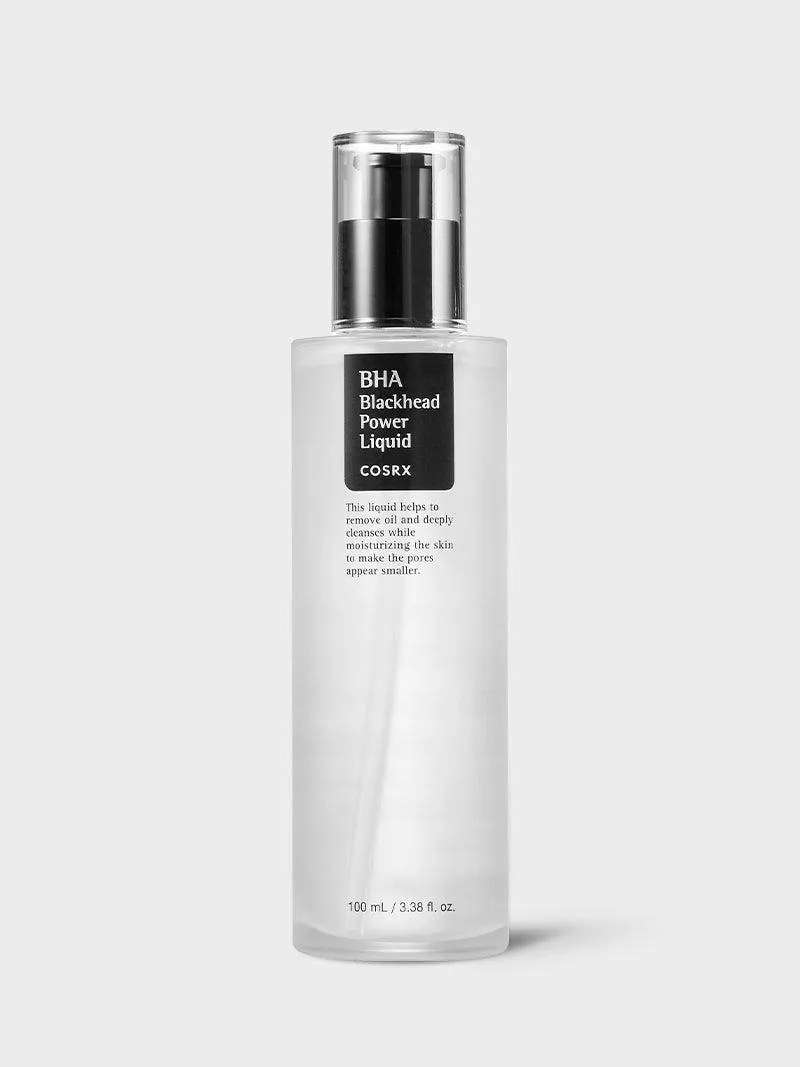
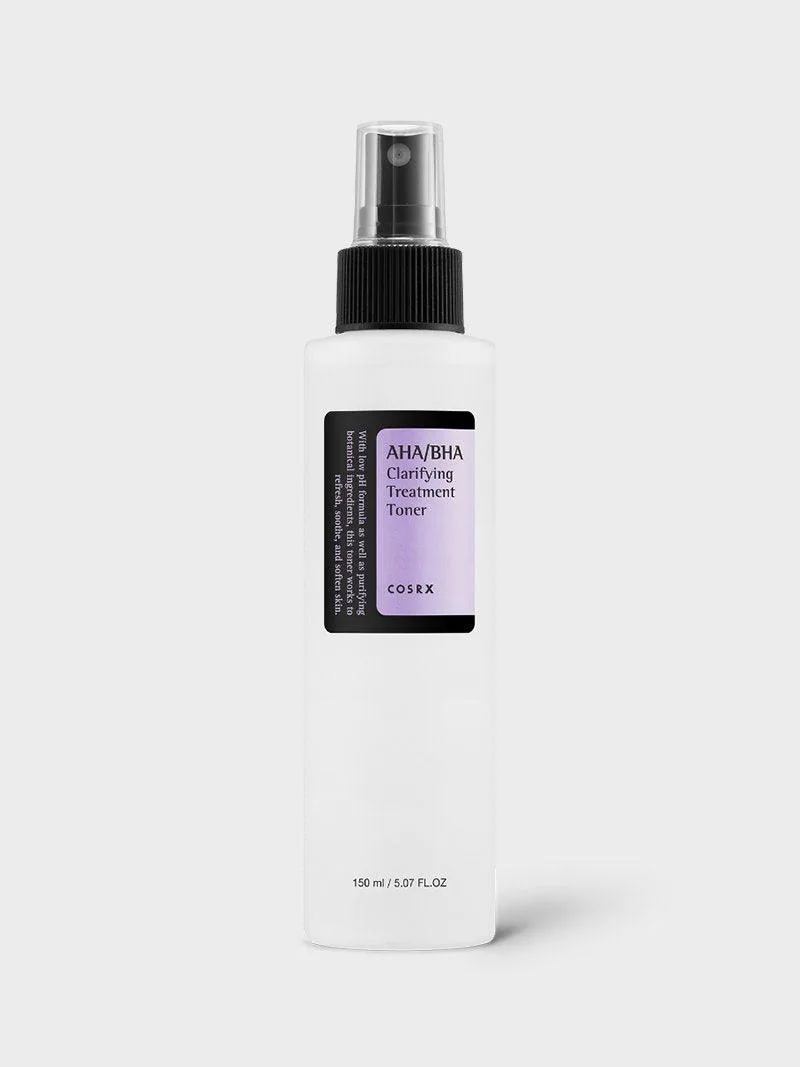
The betaine salicylate page carries the grading, and salicylic acid is the reference to read it against. In practice, COSRX BHA Blackhead Power Liquid and COSRX AHA/BHA Clarifying Treatment Toner are the two most commonly used entry points, and both behave like what they are: a slow, low-irritation salicylate rather than a peel.
Low-pH cleansing, where the claim is checkable
Most product claims cannot be verified by a shopper. This one nearly can, and it matters more for oily skin than for anyone else.
A high-foaming alkaline cleanser strips efficiently, which feels like the correct answer when your face is oily by lunchtime. The problem is that oily skin is rarely running a bare routine — it is usually running a salicylate, sometimes a retinoid, often both, and the cleanser is the step that determines what condition the skin is in when those arrive. Cleanse alkaline and you hand your actives a surface that is already stressed, then wonder why a well-chosen exfoliant is stinging.
A low-pH gel cleanser, formulated in the mid-fours to low-fives rather than the eights and nines of a traditional soap-based wash, removes sebum and sunscreen without that swing. The Korean market normalised this years before it became a Western talking point, and a formula like COSRX Low pH Good Morning Gel Cleanser is the archetype — unglamorous, cheap, and doing the one job that determines whether everything after it is tolerable.
The practical test is simple: if your skin feels tight and squeaky after cleansing, that is not clean, it is stripped, and it is the most common self-inflicted wound in an oily-skin routine. Our oily-skin cleanser ranking is organised around exactly that distinction, because the temptation to over-cleanse is the single behaviour that turns manageable oiliness into a reactive mess.
The calming tier, graded honestly
Heartleaf, mugwort and centella are the three botanicals doing the emotional work in Korean acne formulas, and they deserve a fair assessment rather than either the marketing version or the reflexive dismissal.
The mechanistic evidence is real and it is preclinical. Houttuynia cordata polysaccharides — heartleaf — have been shown to ameliorate atopic dermatitis in mice through modulation of the skin immune barrier and lipid metabolism. Artemisia princeps extract has been shown to enhance expression of filaggrin and loricrin, two genuine barrier proteins, via the AHR/OVOL1 pathway in laboratory work. Artemisia annua extract has been assessed in a 3D epidermal model and in a mouse model of contact-induced dermatitis, with anti-inflammatory effects reported.
Every one of those is a mouse, a cell line or a reconstructed tissue. There is no controlled human trial showing that a heartleaf or mugwort cosmetic clears acne, and anyone telling you otherwise is extrapolating past the data. Heartleaf, mugwort and centella all carry the same shape of file: a coherent story, laboratory support, no clinical endpoint.
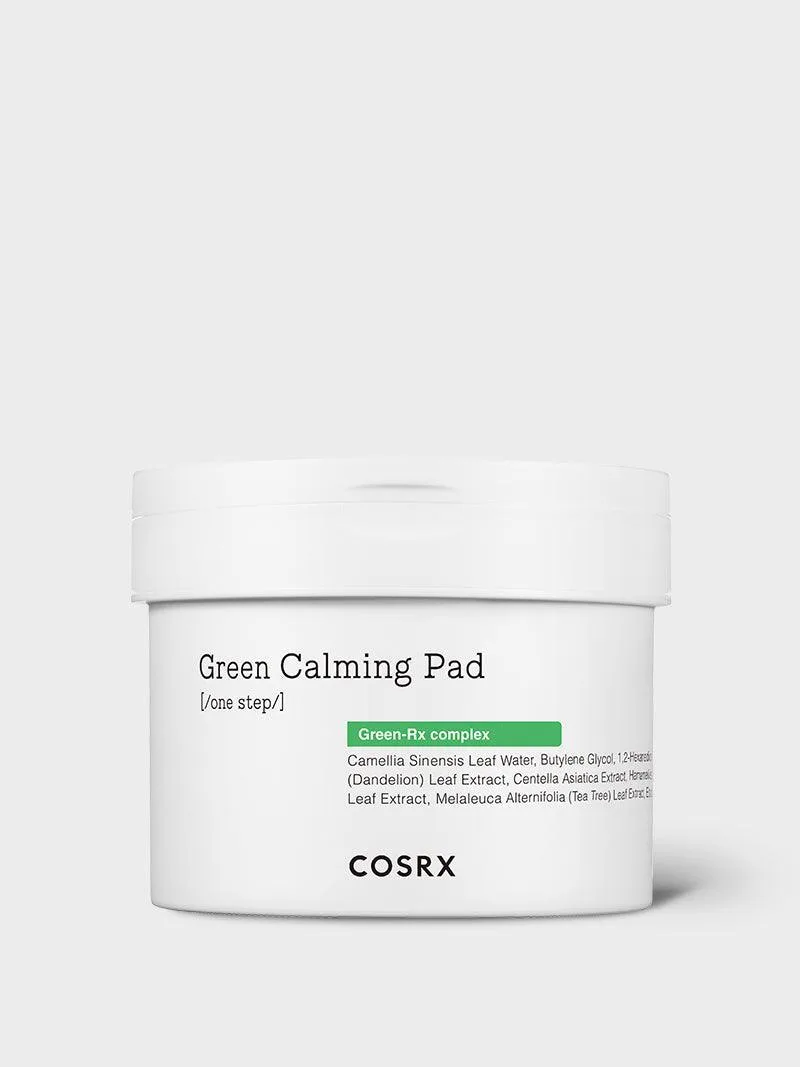
But here is why they still earn shelf space in an acne routine, and it is not the reason the packaging gives. Inflamed acne skin under active treatment needs steps that are tolerable — that add hydration and comfort without adding irritants, occlusion or fragrance. The calming tier is very good at being unobjectionable, which is a genuine formulation achievement when the alternative is a heavy cream that clogs or a soothing product loaded with essential oils. Anua Heartleaf 70% Daily Relief Lotion and COSRX One Step Green Calming Pad are useful because they are boring, not because the plant is doing something a trial has measured.
Judge them as the supporting cast. The acne work is being done by the salicylate, and above that by whatever the acne pathway escalates you to.
The sunscreen advantage, and the catch nobody prints
This is the clearest, least arguable strength, and it is largely a consequence of a longer permitted filter list rather than of superior chemistry — Korean formulators have had access to photostable, high-molecular-weight UVA filters for years that American formulators are only now beginning to get. Give a formulator those filters and they can hit high protection in a fluid, gel or watery-milk texture rather than in a thick cream.
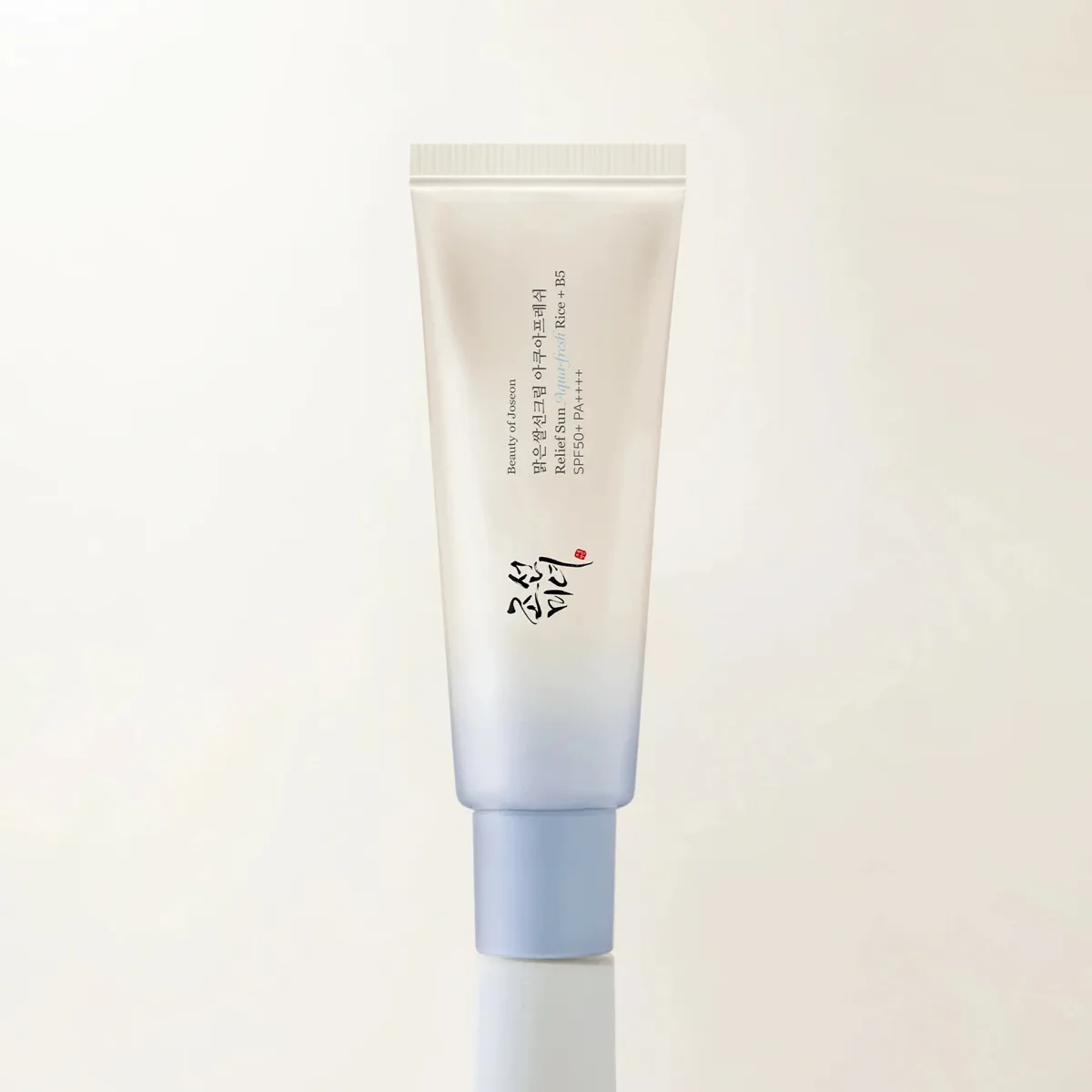
For oily skin that difference is not cosmetic, it is behavioural. A sunscreen that pills under sebum, slides by midday or leaves a greasy film is a sunscreen you stop reapplying, and an unapplied sunscreen protects nobody. Something like COSRX Ultra-Light Invisible Sunscreen or Beauty of Joseon Relief Sun Aqua-Fresh solves a compliance problem, which is the problem that actually governs outcomes. Our oily-skin sunscreen ranking is built on that logic.
Now the catch. Many of the textures that make these products wearable on oily skin are achieved with fatty esters and fatty alcohols — isopropyl palmitate, caprylic/capric triglyceride, cetearyl alcohol and their relatives. Malassezia yeasts cannot synthesise their own long-chain fatty acids and depend on lipids supplied at the skin surface, which is why those exact ingredients are implicated in Malassezia folliculitis, the condition usually called fungal acne.
So the elegant Korean sunscreen that solved your reapplication problem may be the thing feeding the uniform crop of small itchy bumps on your forehead. If your breakouts are monomorphic, itchy, and clustered on the forehead, hairline, chest or upper back rather than the classic mixed comedones and papules, run your products through our fungal acne checker before you change anything else, and read the fungal acne pathway — it is a different condition with a different treatment, and treating it as acne is why so many people plateau.
What a K-beauty routine for oily skin actually looks like
Four steps. Not ten. The layering aesthetic is a stylistic preference from the market's marketing, not a requirement of the formulations, and nothing in the category obliges you to adopt it.
Morning: low-pH gel cleanser, a light hydrator if your skin wants one, sunscreen. Evening: cleanse — double-cleanse only if you are wearing sunscreen or makeup, which on oily skin you probably are — then the salicylate on the nights you use it, then the same light moisturiser. That is it. Add the calming step if your skin is irritated; drop it when it is not.
The sequencing rule that matters most for this skin type is to introduce one active at a time and give it six weeks. Oily, acne-prone skin generates a lot of day-to-day noise — hormonal fluctuation, sweat, mask friction, sleep — and running two changes at once means you learn nothing from either. Comedones also take weeks to surface as visible lesions, so a fortnight's verdict is always premature.
And the honest limit of everything in this article: none of it is a treatment for moderate or severe acne. A salicylate manages comedonal congestion, a good cleanser and sunscreen stop you making things worse, and the calming tier keeps you comfortable enough to stay consistent. If you have nodules, scarring, or a pattern that has not shifted in three months of a decent routine, the answer is a prescription rather than a better toner, and the acne pathway sets out what that escalation looks like and in what order.
If you would rather have the routine assembled around your own skin than assemble it yourself, our routine finder will build one, and the pore-clog checker will flag which of your existing steps is most likely to be the problem.
Products mentioned
Independently reviewed and scored — the real products behind this piece.



- Therapy guide Acne Where a routine stops being enough and prescription escalation begins.
- Therapy guide Fungal acne The different condition that the ester-rich textures in this category can feed.
- Ranked list Best Cleansers for Oily Skin Organised around the stripped-versus-clean distinction this post turns on.
- Ranked list Best Sunscreens for Oily Skin Assessed on wearability, because an unapplied sunscreen protects nobody.
- Ingredient Betaine Salicylate The regulatory artefact at the centre of Korean BHA formulation.
- Ingredient Salicylic Acid (BHA) The reference to read betaine salicylate against.
- Ingredient Houttuynia Cordata (Heartleaf) Coherent mechanism, preclinical evidence, no human acne endpoint.
- Ingredient Mugwort (Artemisia) Filaggrin and loricrin work in vitro — laboratory support, not clinical.
- Ingredient Centella Asiatica (Cica) The third member of the calming tier, with the same shape of evidence file.
References
- Houttuynia cordata polysaccharides ameliorate atopic dermatitis in mice through modulation of skin immune barrier and lipid metabolism — International Journal of Biological Macromolecules, 2025
- Antioxidant Artemisia princeps Extract Enhances the Expression of Filaggrin and Loricrin via the AHR/OVOL1 Pathway — International Journal of Molecular Sciences, 2017
- Topical application of Artemisia annua L. essential oil ameliorates 2,4-dintrochlorobenzene-induced atopic dermatitis in mice — Journal of Ethnopharmacology, 2024
- Artemisia annua Extract Ameliorates Atopic Dermatitis: Evidence from 3D Epidermal Model and Complementary in vitro Assays — Journal of Experimental Pharmacology, 2025
Every cited link is verified to resolve to the paper named. Where a source could not be independently confirmed, it is listed without a link rather than pointing you somewhere wrong.
Frequently asked
Why do Korean products use betaine salicylate instead of salicylic acid?
Largely regulation. Korea limits salicylic acid and its salts to 2 percent in rinse-off cleansing products, and any acne-relief claim makes a product a functional cosmetic requiring MFDS review with safety and efficacy dossiers. Betaine salicylate sits under a different INCI name outside those specific restrictions while still delivering salicylate.
Is 4 percent betaine salicylate really the same as 2 percent salicylic acid?
That conversion is repeated everywhere but circulates as an industry rule of thumb rather than a published head-to-head equivalence study. Treat it as a working heuristic — expect a betaine salicylate product to be milder at the same number — and judge the product by what your skin does across six weeks rather than by the arithmetic.
Do heartleaf, mugwort and centella actually treat acne?
There is no controlled human trial showing they do. The evidence is mechanistic and preclinical — mouse models, cell lines and reconstructed epidermis. They earn a place in an acne routine by being genuinely tolerable alongside actives, which is a real formulation achievement, but the acne work is done by the salicylate and by whatever a clinician escalates to.
Why does a Korean sunscreen suit oily skin better?
Mostly because Korean formulators have had access to photostable, high-molecular-weight UVA filters for years, which allows high protection in a fluid or gel texture rather than a thick cream. For oily skin that is a compliance advantage rather than a cosmetic one — a sunscreen you will actually reapply outperforms a better one you avoid.
Can these sunscreens cause fungal acne?
Some can. The fatty esters and fatty alcohols that create those wearable textures are exactly the lipids Malassezia depends on, since the yeast cannot synthesise its own long-chain fatty acids. If your bumps are uniform, itchy and clustered on the forehead, chest or upper back rather than mixed comedones and papules, that is worth investigating as a separate condition.