The COSRX Routine, Decoded: Which of the Cult Products Earn the Slot
A brand built on three formulas that deserved their reputation now sells dozens, and the difference between the two groups is legible in the ingredient list if you know which line to read.
Read the preview
From the DermApproved blog, in K-Beauty: one of the most-bought COSRX acids contains its two famous acids at about a tenth of a percent each. It's a lovely hydrating toner wearing an exfoliant's name — and thousands of people think they added a treatment step when they added water. The snail essence is a stranger case still. For the full breakdown, visit dermapproved.com/blog.
Three products built the reputation. The catalogue is now much larger than three.
There is a version of COSRX that existed around 2013 to 2015 and a version that exists now, and conflating them is why arguments about the brand go nowhere. The early range was small, unglamorous, and unusually literal: ingredient lists you could read in one breath, packaging that looked like it came from a supplies cupboard, and product names that told you the concentration and then stopped talking. The name itself — cosmetics plus Rx — was the whole pitch.
That version of the brand solved problems that Western drugstores were not solving. Then it worked, and success does to a skincare range what it does to everything else: it expands it. The catalogue now runs to dozens of SKUs across acids, vitamin C, retinol, peptides, propolis, PDRN and several parallel snail lines, and the honest position is that the hit rate across them is uneven.
The useful exercise isn't defending or dismissing the brand. It's learning to tell, from the ingredient list, which group any given product belongs to — the ones built around a formulation idea, or the ones built around a number on the front.
The BHA that no American brand could have invented
Start with the product that best explains why K-beauty formulation diverged from Western formulation, because it's a regulatory story before it's a chemistry one. Korean rules permit salicylic acid in leave-on cosmetics only at a fraction of the concentration allowed in the US, low enough that a conventional 2% BHA is simply not a product you can sell there. Korean formulators went looking for a legal route to the same job.
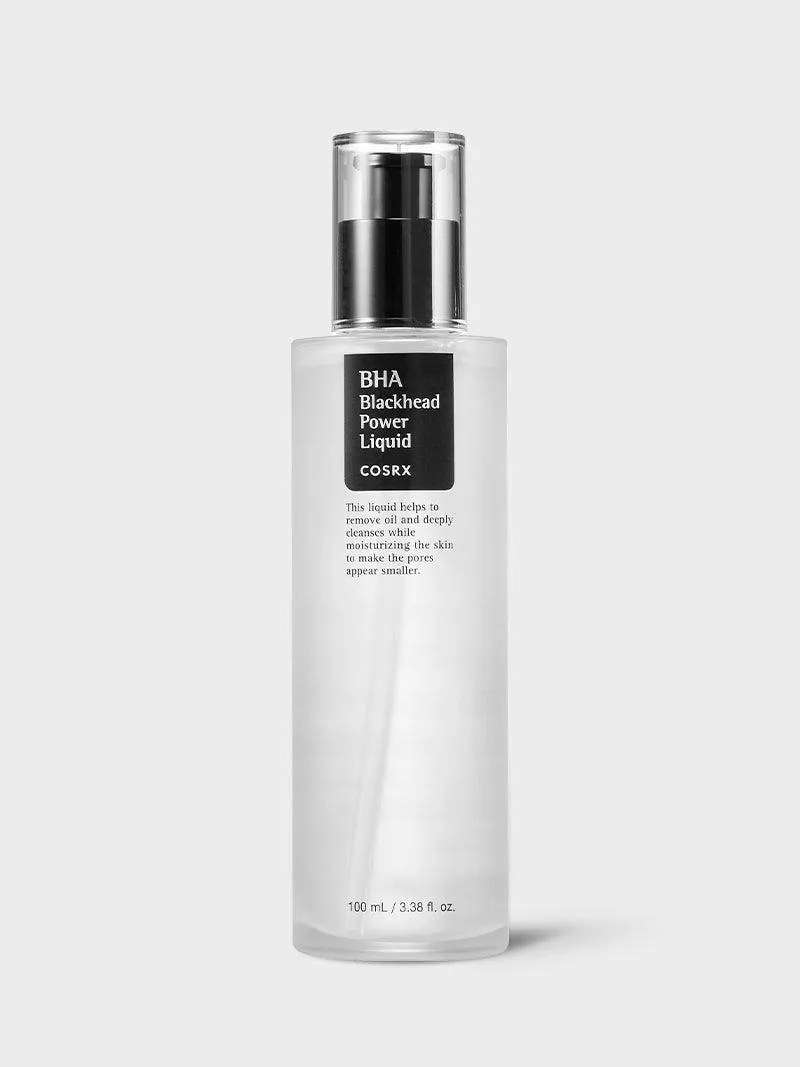
What they landed on was betaine salicylate — salicylic acid reacted with betaine, a humectant, into a salt that releases its salicylate more gently. The widely used rule of thumb is that it's roughly half as potent, so a four-percent formula lands somewhere near a conventional two-percent one. That's an industry approximation rather than a measured clinical equivalence, and it should be read as such. But the practical consequence is real: COSRX BHA Blackhead Power Liquid delivers a meaningful exfoliating dose in a base that is mostly willow bark water, with niacinamide and panthenol along for the ride, at an acidic pH where the acid is actually active. It is one of the few unquestionably potent things the brand sells, and its reputation for being tolerable is not marketing — it's the salt.
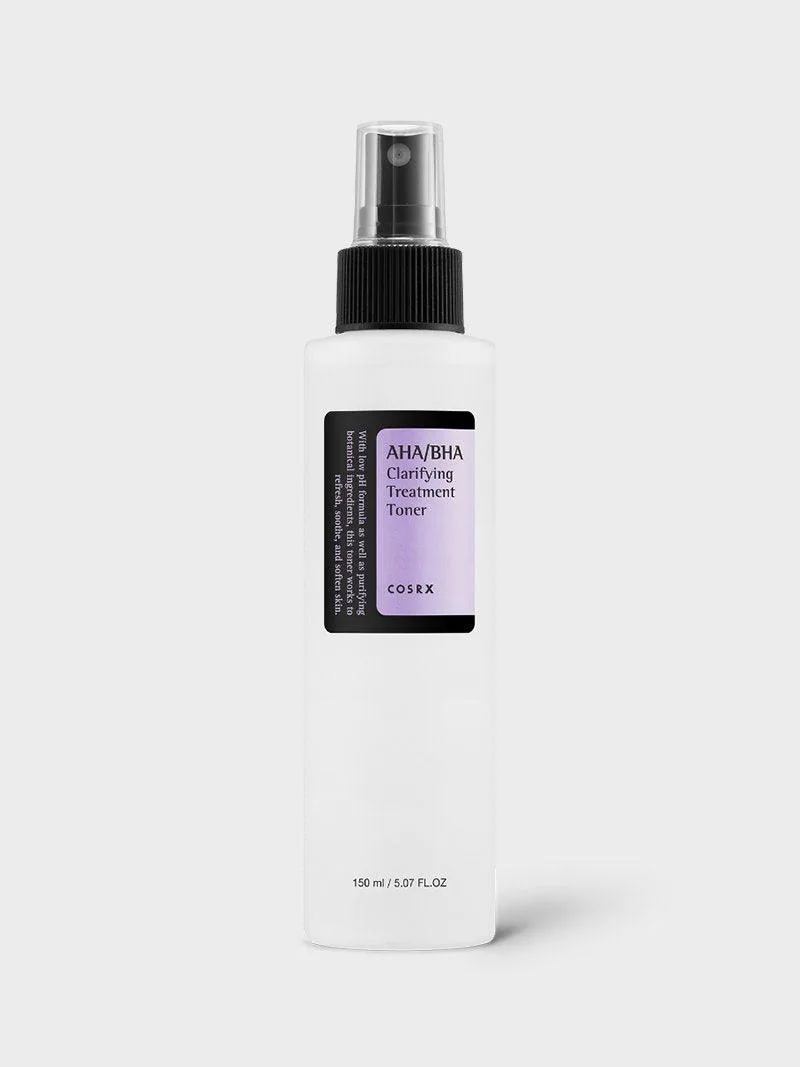
Which brings us to the awkward companion piece. COSRX AHA/BHA Clarifying Treatment Toner is among the brand's most-purchased products and contains both of its named acids at roughly a tenth of a percent apiece. At that dose, in a base of willow bark and apple fruit water with allantoin and panthenol, what you have is a pleasant, mildly acidic hydrating toner. It is not a bad product. It is a badly named one, and thousands of people have bought it believing they added an exfoliation step to their routine when they added a watery hydration step instead. If you want salicylic acid doing salicylic acid's job, it isn't this.
A cleanser whose whole argument is what it declines to do
Healthy skin sits at an acidic surface pH, and that acidity is not decorative — it governs the enzymes that build the barrier's lipid matrix and shapes which bacteria find the surface habitable. Wash with something alkaline and you drive that pH up; the barrier's swelling and lipid ordering measurably change with pH even in the absence of surfactant, and repeated alkaline exposure is associated with higher transepidermal water loss and lower hydration. Soap-based cleansers and syndet-based ones differ meaningfully here, and a 2024 survey of marketed cleansers found many still sit at a pH that makes little sense for compromised, atopic skin.
This is the entire case for COSRX Low pH Good Morning Gel Cleanser, and it's an unglamorous one. The surfactant system is mild — an amphoteric plus a methyl isethionate rather than a soap — and it's buffered into the acidic range instead of the alkaline one. There's a trace of betaine salicylate and a token of tea tree oil, both effectively decorative at the contact time a cleanser gets. Nothing in it treats anything.
That's the point, and it's the K-beauty insight most worth stealing: the cleanser is the step where you have the most to lose and almost nothing to gain. Judging it by what it contains is the wrong test. Judge it by what your face feels like ten minutes later.
Snail mucin is more interesting than either its fans or its critics allow
COSRX Advanced Snail 96 Mucin Power Essence is the product that turned the brand into a global phenomenon, and the discourse around it has calcified into two equally lazy positions: that it is a regenerative miracle, or that it is expensive slime. The evidence supports a third, less satisfying reading.
What's in the bottle is nearly all filtrate, with betaine, sodium hyaluronate, panthenol and allantoin making up the rest. Snail secretion filtrate itself is a mixture — glycoproteins, glycosaminoglycans, naturally occurring allantoin, some antimicrobial peptides — and it behaves on skin like a humectant film, which is precisely what it feels like. Notably, it sits near neutral rather than acidic, so it stacks with almost anything without a pH quarrel.
The clinical literature is thinner than the marketing implies, and it's specific in ways the marketing skips. A fourteen-week split-face trial in patients with moderate to severe facial photodamage tested secretions from Cryptomphalus aspersa, at concentrations well below what an essence carries, and reported improvement against placebo. A double-blind split-face trial after ablative fractional CO2 laser found a snail-containing cream significantly improved skin hydration over two weeks. A placebo-controlled study in mask-related acne used a serum combining snail filtrate with calendula and licorice root — which means the design cannot tell you what the snail component did on its own.
So: the hydration effect is real, has been measured more than once, and is the thing people actually notice. The wound-healing and regeneration narrative is an extrapolation from small studies, different species, and different formulations. That is not nothing — it's more evidence than most cosmetic hero ingredients have — but it is not the case the internet argues for. The full ingredient breakdown goes through the trials individually. Buy it as an excellent, unusually elegant hydrating essence and you will not be disappointed. Buy it expecting scar remodelling and you will be.
Where the range thinned as it grew
The expansion produced a recognisable pattern: a number on the front of the bottle, doing the work a formulation idea used to do.
COSRX Full Fit Propolis Light Ampoule leads with a very high percentage of propolis extract, which sounds impressive until you ask what dose of propolis is therapeutically meaningful — a question with no established answer, because propolis composition varies enormously by hive, season and region. A high percentage of an unstandardised botanical is a fact about the bottle, not about your skin. It is a perfectly nice soothing ampoule; the number is theatre.
COSRX The Vitamin C 23 Serum is the opposite problem: genuinely potent, and carrying all the baggage that comes with high-dose L-ascorbic acid at the low pH it needs to stay active. It stings on compromised skin, oxidises once air gets in, and asks for a tolerance ramp most people don't give it. Nothing here is a formulation failure — it's the honest cost of the actual molecule, which is exactly what the marketing doesn't say.
The retinol line reads as competent and undifferentiated: a reasonable ramp of strengths in a soothing base, which is a fine thing to sell and not a reason to choose this brand in particular. And that's the fairest summary of the middle of the catalogue. Not bad. Not the reason anyone fell in love with it.
The quiet newer formulas that don't need a number
It would be neat to conclude that everything after 2016 is filler, and it isn't true. COSRX Skin Barrier Moisturizing Cream is built on the logic that made the early products good: a multi-ceramide complex with cholesterol and petrolatum, which is a lipid-matrix argument rather than a percentage claim. Barrier repair is one of the few areas where the ingredient list genuinely predicts the outcome, and this one reads correctly.
And the humblest item in the catalogue may be the most defensible. COSRX Acne Pimple Master Patch is a hydrocolloid dressing — a wound-care technology, not a skincare invention — that absorbs exudate from an already-open lesion, keeps it moist, and stops you touching it. It treats nothing. It changes the outcome of a single spot substantially, mostly by removing your hands from the equation. Sometimes the best product in a range is the one making the smallest claim.
Assembling a routine that doesn't fight itself
The failure mode with a range this deep isn't picking a bad product. It's picking four good ones that do overlapping work — the toner-that-isn't-an-exfoliant, plus the real BHA, plus a high-dose vitamin C, plus a retinol, all arriving in the same week, on the same face.
A coherent build looks like this. One acidic, non-stripping cleanser. One exfoliating acid — one, chosen by what you're treating, used at the frequency your skin actually tolerates rather than the frequency the bottle suggests. Hydration handled by the essence, which is doing humectant work and doesn't compete with anything. A barrier-led moisturiser to close, because every active in this list is easier to tolerate over an intact lipid matrix. Patches for individual spots. Sunscreen, non-negotiable, especially alongside the acids and the vitamin C.
If you want it laid out as an actual sequence, the COSRX routine page does that, and the broader Korean routine shows where these steps sit in the longer tradition they came from. The Conflict Checker is worth a minute before you add the fourth active to a routine that already has three, and the Routine Finder will tell you which steps you're missing rather than which product to buy next.
The brand's reputation was earned by formulas that made a specific, legible argument — this acid, at this pH, in this base, for this reason. The ones still making that argument are worth the slot. The ones leading with a percentage are, at best, a nice texture.
Products mentioned
Independently reviewed and scored — the real products behind this piece.


- Routine The Complete COSRX Routine, Step by Step The step-by-step build this post argues for, laid out as a sequence.
- Routine Korean Skincare Routine, Done Sensibly (Not All 10 Steps) Where these steps sit in the longer K-beauty structure they came from.
- Ingredient Snail Mucin (Snail Secretion Filtrate) The trial-by-trial breakdown of what snail secretion filtrate has and hasn't been shown to do.
- Ingredient Salicylic Acid (BHA) For readers who want the conventional BHA rather than the betaine salicylate route.
References
- pH-induced alterations in stratum corneum properties — International Journal of Cosmetic Science, 2003
- Cleansing without compromise: the impact of cleansers on the skin barrier and the technology of mild cleansing — Dermatologic Therapy, 2004
- Not all marketed skin cleansers' pH is optimal for atopic dermatitis — Allergy and Asthma Proceedings, 2024
- The Effects of Filtrate of the Secretion of the Cryptomphalus Aspersa on Photoaged Skin — Journal of Drugs in Dermatology, 2013
- Snail Soothing and Repairing Cream Improves Skin Hydration after Ablative Fractional CO2 Laser: A Split-Face Randomized Double-Blinded Placebo-Controlled Trial — Skin Pharmacology and Physiology, 2021
- Efficacy and safety of a facial serum containing snail secretion filtrate, Calendula officinalis, and Glycyrrhiza glaba root extract in the treatment of maskne: A randomized placebo-controlled study — Journal of Cosmetic Dermatology, 2022
Every cited link is verified to resolve to the paper named. Where a source could not be independently confirmed, it is listed without a link rather than pointing you somewhere wrong.
Frequently asked
Is the COSRX AHA/BHA toner actually an exfoliant?
Not in any meaningful sense. Both named acids appear at roughly a tenth of a percent, which is far below an exfoliating dose. It works well as a light hydrating toner, but if you want exfoliation you need the betaine salicylate liquid or a conventional salicylic acid product instead.
Why does COSRX use betaine salicylate instead of plain salicylic acid?
Korean cosmetic rules cap salicylic acid in leave-on products at a small fraction of the US limit, so a conventional 2% BHA cannot legally be sold there. Betaine salicylate is the workaround — a gentler salt commonly reckoned at about half the potency, which is why four-percent formulas are the norm.
Does the snail essence actually do anything, or is it just hydration?
Hydration is the effect with the most consistent measurement behind it, including a split-face trial after ablative laser resurfacing. The repair and regeneration claims come from small studies using a different snail species at different concentrations, sometimes in combination formulas, so they don't transfer cleanly to an essence.
Can I use the BHA liquid and the vitamin C serum in the same routine?
In the same routine yes, in the same application no. Both are acidic and both raise irritation load, so most people do best putting one in the morning and the other at night, or alternating days. The Conflict Checker will flag the combination against whatever else you're already using.
Which COSRX products are worth it if I only buy two?
The low-pH cleanser and the snail essence cover the two steps where the brand's formulation philosophy is clearest and the risk of getting it wrong is lowest. Add the betaine salicylate liquid third if congestion is your actual concern rather than dryness.