Snail Mucin: A Gimmick That Turned Out to Have Receipts
It sounds like a dare and reads like a novelty ingredient — but snail secretion filtrate has a surprisingly reasonable evidence base, plus two caveats the fandom rarely mentions.
Read the preview
From the DermApproved blog, in K-Beauty: snail mucin — yes, the slime, the one that sounds like a dare your group chat wouldn't take. Here's the twist that annoys the skeptics — it actually has receipts. Real studies, real hydration data, real collagen signals. This is the rare viral ingredient that mostly earns its cult, with controlled data behind the hydration and collagen claims. But before you slather it on, there are two footnotes the fandom conveniently skips — and one of them is a hard line that means an entire group of people should never buy it, no matter how dewy the essence looks in the jar. There's also a single number on the label that quietly separates the real formulas from the expensive marketing garnish, and most people never think to check it. So what's genuinely in the goo, what does the science actually prove, and what's the caveat nobody posts about while they're layering it on camera? We pulled the receipts apart, honestly, at dermapproved.com/blog.
What's actually in the goo
The first thing to understand about snail mucin is that it isn't a single molecule you can point to on an INCI list — it's a whole secretion, and that's the entire reason it works the way it does. On the label it appears as 'snail secretion filtrate,' the strained, purified version of the mucus a snail produces to move, protect itself, and repair its own body.
Analyze that secretion and you find a surprisingly loaded cocktail: glycoproteins, hyaluronic acid, glycosaminoglycans, glycolic acid, allantoin, antimicrobial peptides, and a spread of antioxidants. Each of those has a job you'd recognize from other products. The hyaluronic acid and glycoproteins hold water and give the goo its famously plump, cushiony slip. Allantoin soothes and supports skin renewal. The small amount of glycolic acid offers gentle exfoliation. The peptides and antioxidants are the anti-aging and protective end of the spectrum. In other words, snail mucin is a naturally pre-mixed multitasker — which explains why a single essence can plausibly claim to hydrate, calm, and smooth all at once.
That composition is also why the concentration on the label matters. A formula like COSRX Advanced Snail 96 Mucin Power Essence advertising 96% mucin is telling you the active cocktail is doing most of the formulating work, not sitting at the bottom of the ingredient list as a marketing garnish. If you want to see how it stacks against the rest of a formula, our ingredient-decoder breaks down where it actually sits.
The evidence is better than the ingredient's reputation
Here's the part that surprises skeptics: for an ingredient that sounds like a TikTok dare, snail mucin has a more respectable research base than most viral actives. It's not slam-dunk pharmaceutical-grade evidence, but it's real, and it points in a consistent direction.
On the anti-aging side, a 2020 controlled study in the Journal of Clinical and Aesthetic Dermatology tested a snail secretion filtrate regimen on 50 women aged 45 to 65 over three months and found significant improvements versus vehicle control — reduced transepidermal water loss, plus gains in skin roughness, firmness, and elasticity. That's a legitimate signal for hydration and barrier support. The healing story is backed at the mechanistic level: a 2021 study in Veterinary Sciences showed snail secretion filtrate accelerated wound closure in mice with increased collagen deposition and reduced inflammatory markers, and lab work has repeatedly shown the secretion stimulates fibroblast proliferation and collagen production. That fibroblast activity is the plausible engine behind both the 'my skin healed faster' anecdotes and the mild anti-aging effect.
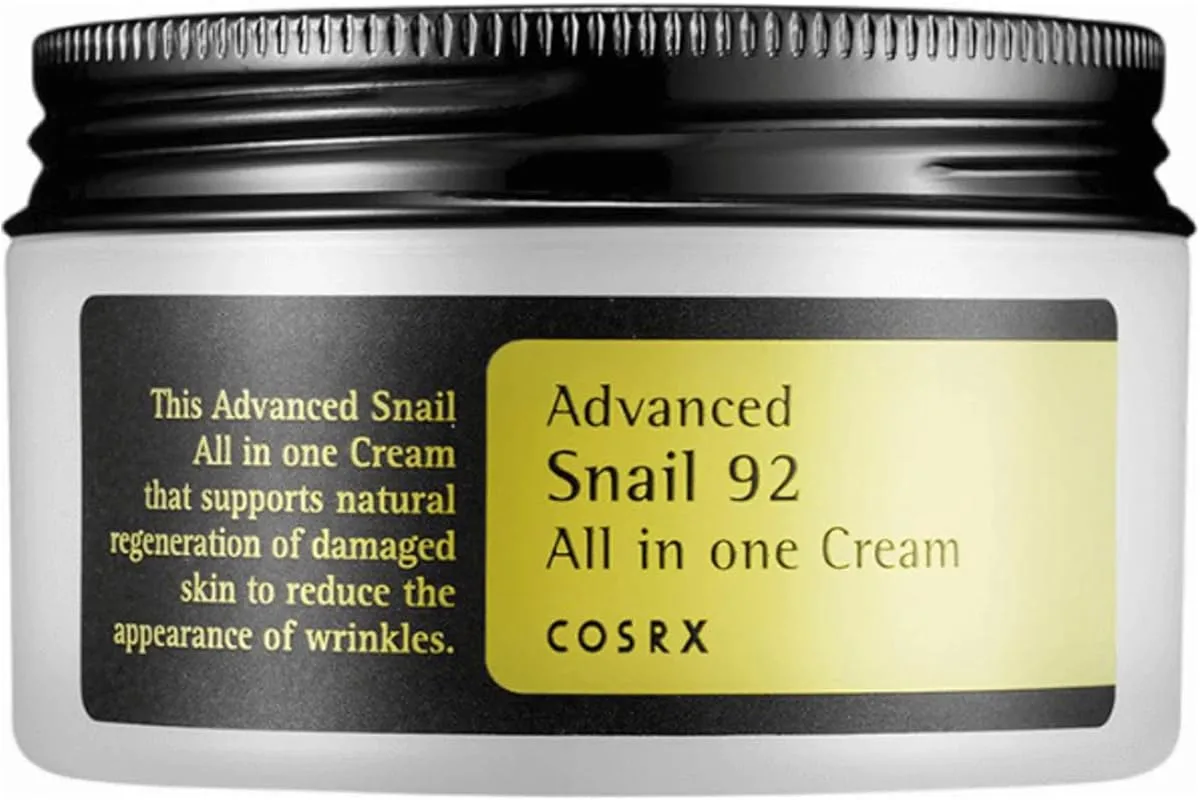
The honest caveats: many human trials are small, some are uncontrolled or split-face rather than placebo-controlled, and the strongest results used high concentrations. So the accurate framing isn't 'miracle' — it's 'a well-supported gentle hydrator and barrier helper with promising, not proven, anti-aging upside.' A budget option like COSRX Advanced Snail 92 All in One Cream delivers that core hydrating, soothing benefit without overpromising.
The caveats the fandom skips: vegan and sourcing
For all its evidence, snail mucin carries two asterisks that the enthusiastic corner of the internet tends to gloss over — and both are worth saying plainly. This is exactly the kind of thing our house skepticism exists to flag: a genuinely good ingredient shouldn't need its inconvenient facts hidden.
First: it is not vegan, and it can't be. Snail secretion filtrate is, by definition, an animal-derived ingredient — you cannot make it without a snail. No amount of clean-beauty framing changes that, and anyone avoiding animal-derived ingredients should simply skip the category. Second, and more nuanced: 'cruelty-free' is not automatic. How the mucus is collected varies by producer, and older or cheaper methods can stress the animals. There is a genuinely humane approach — a 2023 study in Molecules validated a cruelty-free Müller-style method that gently stimulates snails to secrete via a citric-acid rinse rather than harming them, and found the resulting slime still supported fibroblast viability and collagen. The problem is that most brands don't disclose which method they use, so the 'ethically sourced' claim on a jar is frequently unverifiable.
The practical upshot: snail mucin is a legitimate ingredient with a real ethics footnote. If cruelty-free sourcing matters to you, look for brands that actually describe their collection method — and treat silence as a lack of information, not a guarantee. A well-known essence like COSRX's 96 essence is effective, but 'not vegan' applies to the whole category, full stop.
Who it suits, and how to actually use it
The good news after all that scrutiny is that snail mucin is one of the most broadly tolerable actives in K-beauty, which is a big part of why it went cult in the first place. It's gentle, hydrating, and low on the irritation scale, so it suits most skin types — dry skin loves the humectant load, sensitive and compromised skin appreciates the soothing allantoin and barrier support, and even oily skin usually tolerates the lightweight essence textures well.
Usage is refreshingly simple. Apply it after cleansing and any watery toner, on slightly damp skin, before your heavier creams — think of it as a hydrating treatment layer. Because the glycoprotein slip is a little tacky, give it a moment to sink in before layering. It plays well with almost everything, which is another underrated advantage: it pairs beautifully with barrier ingredients and can help buffer the sting of stronger actives. A niacinamide-and-peptide take like Jumiso Snail Mucin 88 + Peptide Cream folds the hydration into a moisturizer step, which is a tidy way to get the benefit without adding a separate product.
One more practical note: texture preference should guide the format. Essences give the lightest, most layerable version and are ideal if you already have a full routine; all-in-one creams condense the step for minimalists; sheet masks deliver a big one-off hydration hit but aren't where the long-term benefit lives. Choose the format that you'll actually reach for daily, because consistency is what turns a gentle ingredient into a visible one.
The one thing snail mucin is not: a replacement for your heavy-hitters. It complements a retinoid, it does not substitute for one; it supports your barrier, but it is not sunscreen. Slot it in as the reliable, crowd-pleasing hydration-and-soothing layer it genuinely is, and let your proven actives do the structural work. If you're not sure where it fits with the rest of your lineup, our routine-finder and conflict-checker will place it without stepping on your other steps.
Products mentioned
Independently reviewed and scored — the real products behind this piece.


References
- Efficacy and Safety of a New Cosmeceutical Regimen Based on the Combination of Snail Secretion Filtrate and Snail Egg Extract to Improve Signs of Skin Aging — The Journal of Clinical and Aesthetic Dermatology, 2020
- The Protective Effect of Snail Secretion Filtrate in an Experimental Model of Excisional Wounds in Mice — Veterinary Sciences, 2021
- Snail Slime Extracted by a Cruelty Free Method Preserves Viability and Controls Inflammation Occurrence: A Focus on Fibroblasts — Molecules, 2023
Every cited link is verified to resolve to the paper named. Where a source could not be independently confirmed, it is listed without a link rather than pointing you somewhere wrong.
Frequently asked
Does snail mucin actually do anything for your skin?
Yes, and better than its novelty reputation suggests. A controlled study found a snail secretion regimen reduced transepidermal water loss and improved firmness and roughness, and lab and animal research shows it stimulates fibroblasts and collagen. It's a well-supported gentle hydrator and barrier helper with promising mild anti-aging benefits — not a miracle, but not a gimmick either.
Is snail mucin vegan or cruelty-free?
It is never vegan — snail secretion filtrate is an animal-derived ingredient, so anyone avoiding animal products should skip the whole category. Cruelty-free is a separate question that depends on the collection method: a validated humane approach exists that gently stimulates snails without harm, but most brands don't disclose which method they use, so the claim is often unverifiable.
What is snail mucin actually made of?
It's a naturally occurring blend rather than a single ingredient. Snail secretion filtrate contains glycoproteins, hyaluronic acid, glycosaminoglycans, glycolic acid, allantoin, antimicrobial peptides, and antioxidants. That built-in mix of humectants, a mild exfoliant, soothing agents, and antioxidants is why one essence can hydrate, calm, and smooth at the same time.
Does the percentage of snail mucin in a product matter?
It does. The strongest clinical results came from high-concentration formulas, so a product advertising something like 92 or 96 percent mucin is signaling the active cocktail is doing most of the work rather than sitting at the bottom of the ingredient list. Very low concentrations in a long ingredient list are more marketing garnish than meaningful dose.
Can I use snail mucin with retinol or other actives?
Yes — it's one of the most compatible ingredients in a routine. Its gentle, hydrating, soothing profile pairs well with stronger actives and can even help buffer irritation from retinoids or acids. Just remember it complements those actives rather than replacing them, and it's never a substitute for sunscreen. Apply it as a hydrating layer before heavier creams.