Glass Skin: How Much Is Skincare, and How Much Is a Ring Light?
The poreless, lit-from-within look is part real barrier health and part genetics, lighting, and a good primer — and chasing it literally can wreck the very skin you're trying to perfect.
Read the preview
From the DermApproved blog, in K-Beauty: glass skin — that poreless, lit-from-within look flooding your feed. Here's the question nobody selling you a seven-step routine wants to answer: how much of it is actually skincare, and how much is a ring light and a very good primer? The honest answer splits right down the middle — and one half is genuinely achievable while the other is pure optics engineering you will never buy in a bottle. There's real science here about why hydrated skin literally bends light differently. But there's also a trap, and it's the exact routine most people reach for to chase 'poreless' — the one that quietly destroys the glow they're after. Which half is real, and which mistake is wrecking your barrier right now? We drew the line at dermapproved.com/blog.
What 'glow' actually is, physically
Before deciding whether glass skin is achievable, it helps to know what you're even chasing. Radiance isn't a substance you apply — it's a description of how light behaves when it hits your face. And that behavior is governed by the microscopic texture of your skin surface.
A 2025 ray-tracing study in Scientific Reports mapped this precisely: the fineness of skin's subvisible micro-texture — essentially the width-to-height ratio of the tiny ridges and furrows on the surface — determines how light scatters off it. Finer, smoother micro-texture produces more diffuse reflection, the soft-focus scattering that reads to our eyes as luminous, healthy 'glow.' Rough, dehydrated, flaky skin does the opposite: it scatters light chaotically and looks dull. This is the real mechanism behind glass skin, and it's genuinely good news, because surface smoothness is partly something you can influence. Hydration plumps the stratum corneum and softens micro-texture; gentle exfoliation clears the rough, light-scattering dead-cell buildup; barrier health keeps the surface intact and even.
So glass skin is not pure fantasy. A meaningful chunk of it is optics you can nudge in your favor by making your skin surface smoother and better-hydrated. The trouble starts when people mistake the achievable part (smooth, dewy, healthy) for the unachievable part (a literally poreless, filtered surface) and start treating their face like a sanding project.
Hydration is the lever you actually control
If there's one thing that moves the needle on glass skin, it's water content in the outer skin layer — and this is where K-beauty routines quietly earn their reputation. The famous seven-skin method (layering thin hydrating toners) and essence-heavy routines aren't magic; they're just a very effective way to saturate the stratum corneum.
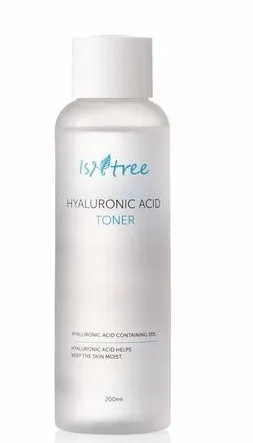
The science underneath is solid. A 2017 Scientific Reports study on stratum corneum hydration showed that once skin's water content crosses a threshold, its keratin structure reorganizes, the tissue swells, and its mechanical properties change — the molecular basis for why hydrated skin looks and feels plumper and smoother. Humectants do the practical work: glycerin and hyaluronic acid pull and hold water in the surface layers, and glycerin in particular has been shown to smooth the skin surface and improve its appearance for at least 24 hours by forming a reservoir in the stratum corneum. That's the glass-skin glow in a sentence. A layering toner like Isntree Hyaluronic Acid Toner applied to slightly damp skin, then sealed, does more for luminosity than any single 'brightening' serum.
The key nuance the trend videos skip: humectants need something to hold onto. Applied to a compromised barrier in dry air, hyaluronic acid can pull water out of deeper skin and worsen dehydration. Layer it onto damp skin and lock it in with a moisturizer — a ceramide cream like Tocobo Multi Ceramide Cream — and the glow holds. Skip the seal and you get tightness, not glass.
The part that's genetics, lighting, and a very good primer
Here's the honest deflation the aspirational content never offers: a large share of the flawless glass skin you scroll past is not skincare at all. It's some combination of genetics, camera, lighting, and makeup — and pretending otherwise sets you up to over-treat your skin chasing a target that no serum can hit.
Start with pores. Pore size is largely determined by genetics, sebum output, and age, and no topical permanently shrinks them. You can make pores look smaller — hydration plumps the surrounding skin so they're less shadowed, and niacinamide can modestly refine their appearance over time — but 'poreless' skin in a photo is usually a blurring primer, a smoothing filter, or both. Then there's light itself. A ring light throws even, frontal, diffuse illumination that erases shadows in texture and pores; it is, quite literally, a hardware version of the soft-focus effect. Add a phone's built-in skin-smoothing and you have a look that owes as much to optics engineering as to any routine. None of this means the people posting are lying — it means the medium flatters. Judging your bare face at 7 a.m. in bathroom lighting against a ring-lit, primed, lightly filtered close-up is a rigged comparison you will always lose.
The over-exfoliation trap that destroys glow
The single most common way people wreck their skin chasing glass skin is by attacking the word 'poreless' with acids and scrubs. It's an intuitive mistake — if a little exfoliation smooths texture, more should smooth it faster — and it's exactly backwards.
Exfoliation smooths skin by removing the outer layer of dead cells, but that layer is also part of your barrier. Do it too often — daily acids, a scrub, and a peel pad stacked together — and you strip the stratum corneum faster than it can rebuild. The consequences are measurable: a damaged barrier shows elevated transepidermal water loss, meaning water evaporates out of skin faster than it should, along with disrupted pH and inflammation. The visible result is the cruel irony of the whole pursuit: red, tight, flaky, dehydrated skin that scatters light chaotically and looks duller than when you started. You sanded away the smooth surface that creates glow. A gentle, measured exfoliant used a couple of times a week — something like By Wishtrend Mandelic Acid 5% Prep Water, with mandelic acid's larger molecule being lower-irritation — clears buildup without demolishing the barrier.
If you're already stacking multiple actives, run the combination through our conflict-checker before you add another. More acid is the fastest route to the opposite of glass skin, and the barrier you're damaging is the exact thing that makes skin luminous.
A glass-skin-adjacent routine that's actually sustainable
Strip away the illusion and a genuinely worthwhile routine remains — one aimed at the achievable version of glass skin: smooth, deeply hydrated, healthy, light-reflective skin that looks great in normal light without a filter. The blueprint is unglamorous and it works.
Morning: a gentle cleanse, layered hydration on damp skin (a humectant toner or essence, then a hydrating serum), a barrier-supporting moisturizer, and — non-negotiable — sunscreen, because UV degrades the collagen and even tone that underpin the whole look. A soothing, hydrating ampoule like SKIN1004 Hyalu-Cica First Ampoule fits neatly into the layering step for reactive skin. Evening: cleanse, exfoliate only two or three nights a week at most, hydrate, and seal with a richer moisturizer. That's it. The discipline is in the restraint — resisting the urge to add a fifth active or a nightly acid.
The verdict on glass skin: the routine behind it has real merit, and the smooth, dewy result is genuinely achievable for most people. The literally poreless, filtered version is not skincare — it's genetics, lighting, and makeup, and chasing it with aggressive products damages the barrier that makes skin glow in the first place. Build the sustainable version and let the ring light stay on TikTok. If you want a personalized layering order that won't overload your skin, our routine-finder and ingredient-decoder can sequence it for your type.
Products mentioned
Independently reviewed and scored — the real products behind this piece.


References
- Study of diffuse scattering on facial surface using ray tracing approach — Scientific Reports, 2025
- Skin hydration: interplay between molecular dynamics, structure and water uptake in the stratum corneum — Scientific Reports, 2017
Every cited link is verified to resolve to the paper named. Where a source could not be independently confirmed, it is listed without a link rather than pointing you somewhere wrong.
Frequently asked
Is glass skin actually achievable or is it just a filter?
It's both. The smooth, dewy, light-reflective part is genuinely achievable through deep hydration, gentle exfoliation, and barrier health — a well-hydrated, fine-textured surface really does scatter light more softly. But the literally poreless version you see online is largely genetics, ring lighting, primers, and skin-smoothing filters, not something any product can deliver.
Can skincare actually make my pores disappear for glass skin?
No topical permanently shrinks or erases pores — their size is set mostly by genetics, oil production, and age. You can make pores look smaller by keeping skin hydrated so they cast less shadow, and niacinamide can modestly refine their appearance, but 'poreless' skin in photos is usually a blurring primer or a filter, not skincare.
Why does my skin look duller after exfoliating more for glass skin?
Because you've likely over-exfoliated. Removing the outer skin layer too often strips the barrier, spikes transepidermal water loss, and triggers inflammation, leaving skin red, flaky, and dehydrated — which scatters light chaotically and looks duller. The smooth surface that creates glow depends on an intact barrier, so exfoliating no more than two to three times a week protects the very luminosity you want.
Does the seven-skin method really give you glass skin?
It helps, because layering thin hydrating toners saturates the stratum corneum with water, which plumps and smooths the surface for a more light-reflective finish. But it only works if you seal it with a moisturizer — humectants left unsealed in dry air can pull water out of skin and backfire. It's a hydration technique, not a poreless-skin guarantee.
What's the minimum routine for glass-skin-style glow?
Gentle cleanse, layered hydration applied to damp skin, a barrier-supporting moisturizer to seal it, and daily sunscreen — with exfoliation kept to two or three nights a week at most. The look comes from consistent hydration and barrier health, not from stacking actives. Restraint, not intensity, is what keeps skin smooth and luminous over time.