Octocrylene and Homosalate: The Filters America Is Stuck With
The critics are right about the data gap, and they are right that it took two decades to move. What follows from that is not the conclusion most people draw.
Read the preview
From the DermApproved blog, in Sun Protection: the filters America got stuck with. On the central complaint, the critics were simply right — the regulator's own document said the data wasn't sufficient. But the number everyone quotes from those absorption studies isn't a safety limit at all, and misreading it leads people to exactly the wrong decision. For the full breakdown, visit dermapproved.com/blog.
Concede the case first, because the case is good
There is a version of this article that opens by reassuring you and never quite gets around to the substance. This is not that article, because on the central complaint the critics have been straightforwardly correct.
Here is the position the American sunscreen aisle was in. In 2019 the FDA published a proposed rule on over-the-counter sunscreens, and the finding, restated in its 2021 proposed order, was that of the active filters in use, only two — zinc oxide and titanium dioxide, at concentrations up to 25 percent — had sufficient safety data to be proposed as generally recognised as safe and effective. A dozen widely used organic filters, including octocrylene and homosalate, were flagged as requiring additional data before that determination could be made. Two older ones, PABA and trolamine salicylate, were designated not GRASE outright.
So the products on the shelf were built on actives the regulator itself had declined to clear on the available evidence. Meanwhile filters that European and Asian regulators had permitted for around two decades were unavailable to any American formulator.
That is a real failure and it lasted a long time. Anyone who noticed it and got annoyed was reasoning correctly, and the reflex to tell such a person they are being unscientific has the argument exactly backwards — they were reading the regulator's own document.
What follows from it is where most of the public conversation goes wrong, and the rest of this piece is about that.
The absorption studies, and the number everybody misreads
The evidence that made this a public argument came from the FDA's own researchers, in two randomised trials published in JAMA.
The 2019 study enrolled 24 healthy volunteers and applied one of four commercial sunscreens at 2 milligrams per square centimetre to 75 percent of body surface area, four times daily for four days, with thirty blood samples per participant over a week. The filters measured were avobenzone, oxybenzone, octocrylene and ecamsule. All four exceeded a plasma concentration of 0.5 nanograms per millilitre after four applications on day one.
The 2020 follow-up widened it: 48 participants, four products, six filters — avobenzone, oxybenzone, octocrylene, homosalate, octisalate and octinoxate — with sampling out to 21 days. Every one of the six exceeded 0.5 ng/mL, and the threshold was crossed on day one after a single application.
Those findings are real, they were replicated, and they surprised people who had assumed these molecules stayed on the surface.
Now the part that gets mangled. That 0.5 ng/mL figure is not a safety limit. It is the threshold in FDA guidance above which a sunscreen active is expected to undergo additional nonclinical toxicology assessment — systemic carcinogenicity work, developmental and reproductive studies — rather than having those waived. Exceeding it means: this is absorbed enough that you cannot skip the extra testing. It does not mean a harmful concentration was reached, and the studies did not measure any health outcome at all.
The authors said so themselves, in the paper. The 2019 study's conclusion states that the results support the need for further studies to determine the clinical significance of the findings, and adds explicitly that they do not indicate individuals should refrain from using sunscreen.
One genuine differentiator did emerge, and it deserves attention rather than being flattened into the general alarm: oxybenzone absorbed at a completely different order of magnitude from everything else, with geometric mean maximum concentrations in the hundreds of nanograms per millilitre against single digits for most of the others. If you were going to be selective about one filter on absorption grounds, the data points at that one, not at octocrylene.
Octocrylene, homosalate, and what is actually known
Take the two named in the title on their own terms, because they are frequently treated as interchangeable villains and they raise different questions.
Octocrylene is a UVB filter used heavily for a second reason: it photostabilises avobenzone, which is the workhorse UVA filter available in the US and which degrades rapidly in sunlight on its own. That is why octocrylene is in so many American formulas — remove it and the UVA protection in a large share of the market gets worse, not better.
The specific concern raised about it is that octocrylene can contain and generate benzophenone as a degradation product, with reported accumulation over time in aged product. Benzophenone is a compound with its own toxicological questions, and that finding prompted regulatory attention and litigation. The honest scoping: this is a contamination-and-degradation question about levels and storage rather than a demonstration of consumer harm, the reported quantities and their significance have been contested in the subsequent literature, and it is a live area rather than a settled one. It is also a good argument for not using a sunscreen that has been in a hot car since the summer before last.
Homosalate is a weaker UVB filter used at relatively high concentrations to reach a given SPF, which is why it shows up on labels at levels that look striking beside other actives. In the 2020 absorption trial it reached geometric mean maxima in the teens to low twenties of nanograms per millilitre — above avobenzone, octocrylene and octisalate, well below oxybenzone. European regulators have moved to reduce its permitted concentration on the basis of endocrine-related concerns, which is a real regulatory divergence and worth knowing.
Our octocrylene page and the homosalate page carry the evidence for each, and the UV filters overview maps which molecule covers which part of the spectrum, which is the more useful frame than a list of things to avoid.
Why nothing moved for two decades, and what just changed
The interesting question is not whether the filter gap was real but why it persisted, and the answer is procedural rather than scientific.
OTC drug monographs in the United States were historically amended by notice-and-comment rulemaking — a process measured in years to decades, requiring agency resources, with no reliable timeline for a sponsor to plan around. Several manufacturers filed applications for newer filters. They sat. Meanwhile the FDA's own evidentiary expectations rose, and the absorption findings above meant more data was wanted, not less.
So the stalemate had a shape: sponsors would not fund expensive toxicology packages without a route that produced a decision, and the route did not produce decisions. That is a coordination failure, not a scientific disagreement, and it explains why the same molecule could be routine in Seoul and unobtainable in Seattle.
The CARES Act of 2020 replaced monograph rulemaking with an order-based system, and the first test of it has now completed. On 10 June 2026 the Federal Register carried notice of FDA final order OTC000039, amending Monograph M020 to add bemotrizinol at concentrations up to 6 percent as a sunscreen active ingredient. The sponsor had submitted its request in September 2024; a proposed order followed in December 2025, and the final order in June.
Under twenty months, for a filter that had been permitted elsewhere for roughly two decades. Nothing about the chemistry changed in that window. The paperwork did.
That is the strongest available evidence that this was always an administrative bottleneck. It is also the reason to expect the aisle to look different over the next few years, and the reason the framing 'no new filter since 1999' — accurate for a very long time — is no longer true.
What to actually do this summer
The reasoning that gets people into trouble runs: the filters are inadequately studied, therefore I should use less sunscreen. That inverts the risk.
What is not in doubt is the other side of the ledger. Ultraviolet radiation is a class 1 carcinogen with an unambiguous causal relationship to keratinocyte carcinomas and a substantial contribution to melanoma and photoageing. The absorption studies measured plasma concentrations and no health outcomes whatsoever. Trading a documented carcinogen exposure for an uncharacterised one on the basis of a threshold that was never a safety limit is a bad trade, and it is the trade the headlines encouraged.
So, in descending order of how much difference it makes:
Wear enough of whatever you wear, and reapply. Application quantity and reapplication govern real-world protection far more than filter selection, and almost everyone under-applies substantially. This is the single highest-leverage change available and it is free.
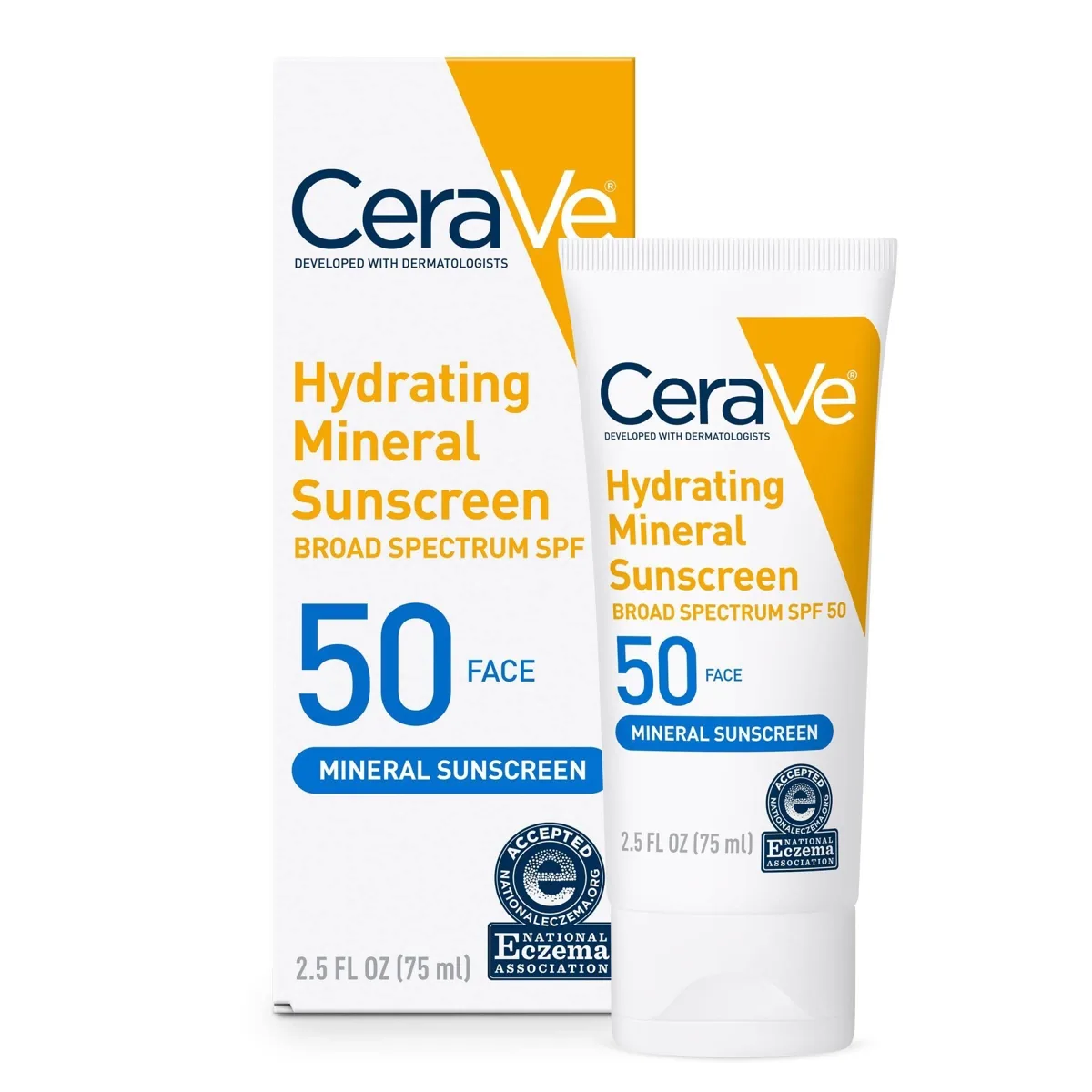
If you want to sidestep the organic filter debate entirely, you can. Zinc oxide and titanium dioxide are the two actives the FDA proposed as GRASE on current data, they are available everywhere, and a mineral formula you will reapply beats an organic one you will not. That is a legitimate, evidence-consistent choice rather than a fringe one.
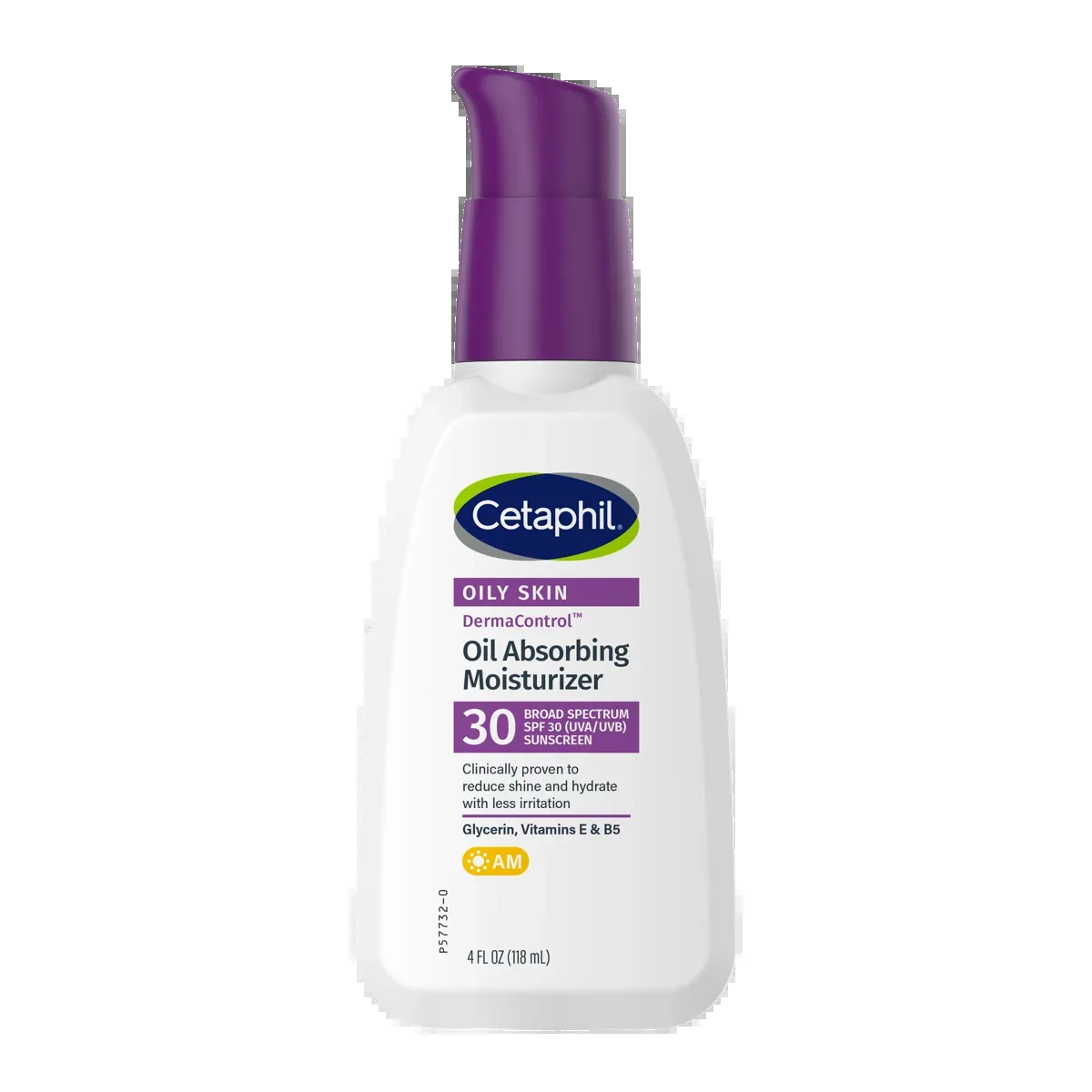
If you prefer organic filters for texture — which is a real reason, not a frivolous one — the well-formulated options are perfectly defensible. La Roche-Posay Anthelios Melt-In Milk is widely used for exactly that reason. So is Anthelios Clear Skin Dry Touch, on oilier skin. At the daily-wear end there is Neutrogena Invisible Daily Defense, and Cetaphil PRO Oil Absorbing Moisturizer for a lighter finish.
If you are specifically avoiding oxybenzone, that is the choice the absorption data most supports, and it is easy — it has largely been formulated out of the American market already, and reading the actives panel takes seconds. Our answer on identifying filters on labels is the reference, the one on newer filters covers what is arriving, and the answer on filters while trying to conceive handles the question that prompts most of these searches.
And replace old bottles. Given the degradation questions, a sunscreen that has spent two summers in a car is the one genuine reason in this whole article to throw something away. Our sunscreen finder will filter by filter system and texture, and the sun safety tool tells you when the UV where you are actually warrants any of this.
Products mentioned
Independently reviewed and scored — the real products behind this piece.


- Ingredient Octocrylene Including its photostabilising role, which is why removing it can worsen UVA protection.
- Ingredient Homosalate A weaker UVB filter used at high concentration, and the European concentration divergence.
- Ingredient UV Filters (Sunscreen Actives) Which molecule covers which part of the spectrum — a more useful frame than an avoid-list.
- Ingredient Zinc Oxide One of the two actives FDA proposed as GRASE on current data, available everywhere.
- Question Where do the actual UV filters hide in an ingredient list? How to read the actives panel, which takes seconds once you know the names.
- Question What do the newest UV filters add over the old ones? What is arriving now that the monograph pathway works again.
- Question Should I switch sunscreen filters while trying to conceive? The question that prompts most searches on this topic.
References
- Effect of Sunscreen Application Under Maximal Use Conditions on Plasma Concentration of Sunscreen Active Ingredients: A Randomized Clinical Trial — JAMA, 2019
- Effect of Sunscreen Application on Plasma Concentration of Sunscreen Active Ingredients: A Randomized Clinical Trial — JAMA, 2020
- Novel simultaneous method for the determination of avobenzone and oxybenzone in human plasma by UHPLC-MS/MS with phospholipid removal pretreatment: An application to a sunscreen clinical trial — Journal of Chromatography B, 2021
- Physiologically based pharmacokinetic modelling of in vitro skin permeation of sunscreen actives under various experimental conditions — International Journal of Pharmaceutics, 2025
Every cited link is verified to resolve to the paper named. Where a source could not be independently confirmed, it is listed without a link rather than pointing you somewhere wrong.
Frequently asked
Did the FDA say sunscreen filters are unsafe?
No. It said the available data were insufficient to determine that a dozen organic filters are generally recognised as safe and effective, and proposed that only zinc oxide and titanium dioxide met that bar on current evidence. Insufficient data is a statement about the size of the dossier, not a finding of harm — and two older filters, PABA and trolamine salicylate, were separately designated not GRASE.
What does the 0.5 ng/mL absorption threshold actually mean?
It is the level in FDA guidance above which a sunscreen active is expected to undergo additional nonclinical toxicology assessment rather than having those studies waived. Crossing it means more testing is required. It is not a safety limit, and the trials that measured it did not assess any health outcome — their authors stated explicitly that the results do not indicate people should stop using sunscreen.
Is octocrylene a problem because of benzophenone?
It is a live question rather than a settled one. Octocrylene can contain and generate benzophenone as a degradation product, with reported accumulation in aged product, and the quantities and their significance have been contested in the subsequent literature. The practical implication is about storage and age: replace sunscreen that has spent two summers in a hot car.
Why should I care that octocrylene is in everything?
Partly because it is doing a job people overlook. Octocrylene photostabilises avobenzone, the main UVA filter available in the US, which degrades quickly in sunlight on its own. Removing octocrylene from a large share of American formulas would make their UVA protection worse rather than better.
Has anything actually changed?
Yes, recently. The CARES Act of 2020 replaced monograph rulemaking with an order-based process, and on 10 June 2026 the FDA issued a final order adding bemotrizinol at up to 6 percent to the sunscreen monograph — the first new active in about two decades, roughly twenty months from application to decision. The long-standing claim that no filter has cleared the US since 1999 is no longer accurate.