Bemotrizinol Is Legal in US Sunscreens — Now What?
The first new American sunscreen active in over two decades became legal this month. The bottles will take considerably longer.
Read the preview
From the DermApproved blog, in Sun Protection: America's first new sunscreen filter in over twenty years is now legal. Bemotrizinol covers UVA and UVB, resists breaking down in sunlight, and helps stabilise the filters alongside it. So the shelves change this month, right? Not quite — and the reason has nothing to do with the FDA. For the full breakdown, visit dermapproved.com/blog.
What the order actually does
The mechanism matters, because "FDA approves sunscreen ingredient" is a headline that obscures what happened.
In September 2024, DSM Nutritional Products submitted a Tier 1 order request asking FDA to find that a sunscreen containing bemotrizinol is generally recognised as safe and effective under the conditions of the over-the-counter sunscreen monograph. A proposed order followed in December 2025. Final order OTC000039 issued on 10 June 2026, amending Monograph M020 to add bemotrizinol as a sunscreen active at concentrations up to 6 percent, and it takes effect today.
The practical consequence is that a manufacturer can now formulate and market a bemotrizinol sunscreen in the United States without filing a new drug application, provided it conforms to the rest of the monograph. That is the whole point of a monograph route: it converts a filter from something requiring individual approval per product into something any formulator can reach for.
The order is more specific than the concentration cap suggests. It sets out permitted combinations of bemotrizinol with other sunscreen actives and with skin-protectant actives, and it enumerates permitted dosage forms — oil, lotion, cream, gel, butter, paste, ointment, stick and spray — with a notable condition attached to sprays: a bemotrizinol spray must either carry no propellant, or be built so the propellant is fully isolated from the formulation inside the container, with no contact between the two. Anyone waiting for a bemotrizinol aerosol should expect that particular engineering problem to slow things down.
FDA considered comments on the proposal and made no changes to the final order.
What bemotrizinol actually adds
Two things, and the second is the one people underrate.
The first is coverage. Bemotrizinol absorbs across both the UVA and UVB ranges rather than sitting in one band, which is unusual and useful — the US filter list has long been comparatively thin in the UVA range, and the workhorse there has been avobenzone. Avobenzone is a good absorber and a fragile molecule: it degrades under the light it is supposed to be blocking unless something in the formula stabilises it, which is why formulators pair it with octocrylene and other stabilisers and why the research literature on photolabile UV absorbers is so preoccupied with keeping it intact.
The second is that bemotrizinol is exceptionally photostable itself, and that stability is transferable. It doesn't just survive sunlight; it can improve the photostability of other filters sharing the formula. Recent photophysical work has looked at why — the molecule appears to shed absorbed energy through very fast relaxation pathways rather than by breaking apart, which is the physical basis of a filter that holds up over hours of exposure.
The downstream effect on a finished product is mostly cosmetic, and cosmetics are not trivial here. A photostable broad-spectrum filter that works at modest concentration means a formulator can hit a high SPF with a lighter load of actives, which means thinner textures, less white cast, less of the heavy or greasy feel that makes people apply less than they should. Given that the largest problem in sun protection is not filter quality but how much product ends up on a face, a filter that makes sunscreen more pleasant to wear is doing genuinely protective work.
Why the shelf lags the law
Today the ingredient became legal. That is not the same as usable, and the gap is measured in quarters.
The raw material has to reach American formulators as a commercial supply with the documentation a US drug product requires. Then a formula has to be built around it — and reformulating a sunscreen is not swapping one line on an ingredient list, because filters interact with each other, with emulsifiers, and with the vehicle, and a change to the active system means rebuilding the emulsion. Then stability testing runs on real time and cannot be compressed. Then SPF and broad-spectrum testing has to be performed on the finished formula, in human trials, per the monograph's procedure. Then manufacturing scale-up, packaging and distribution.
None of that is unusual and none of it can be skipped. It is simply what stands between a legal ingredient and a bottle, and it is the reason a realistic expectation for the first US bemotrizinol sunscreens is months rather than weeks — with reformulations of existing lines likely to arrive before genuinely new products.
There is also an exclusivity period attached to the order request, running eighteen months from the effective date, which shapes who can bring products to market first and on what terms. Expect the early wave to be narrower than the eventual one.
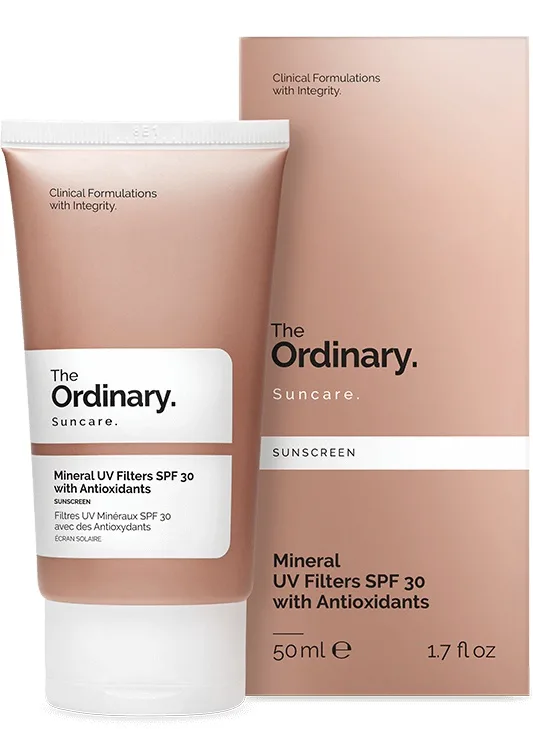
In the meantime the practical advice is unchanged, and unglamorous: the best sunscreen remains the one you will apply generously and reapply. If you're replacing one now, our oily-skin ranking filters on wearability, and our sunscreen finder will narrow by skin type and finish. A zinc-led mineral option such as The Ordinary Mineral UV Filters SPF 30 with Antioxidants, a chemical filter system like The INKEY List Polyglutamic Acid Dewy Sunscreen SPF 30, or a high-SPF avobenzone product like La Roche-Posay Anthelios Melt-In Milk SPF 100 all remain sound choices. Waiting for a filter that isn't on a shelf yet is the one genuinely bad response to this news.
What this fixes, and what it doesn't
It closes one gap. It does not close the gap.
The United States still permits a shorter list of UV filters than the European Union or several Asian markets, and several filters that formulators elsewhere treat as routine remain unavailable here. Additional order requests are in the pipeline, and each one runs its own multi-year course. Today's order is a precedent for the monograph reform route working — which may matter more in the long run than the single molecule it admitted.
It also doesn't touch the two things that actually determine how protected an American face is. The first is application quantity, which is the largest gap between the number on a bottle and the protection on skin, and which no filter chemistry can fix; our sunscreen amount calculator exists because that arithmetic is worth doing once. The second is habit — daily use, reapplication, and the shaded hat and sleeve layer that a bottle cannot substitute for.
A better filter list makes better products possible. It doesn't make anyone wear them.
When bemotrizinol products do appear, the label is where to check. US sunscreens list actives in a Drug Facts panel with the name and percentage, so bemotrizinol will appear there by name rather than buried in the inactive list — and if you see it in the inactive ingredients instead, something is wrong with the product's positioning. Watch, too, for whether it has been added to an existing filter system or whether the formula was rebuilt around it; the second usually produces the better texture. Our ingredient decoder will read a Drug Facts panel back to you in plain terms, and zinc oxide remains the reference point for anyone who wants a mineral-only route regardless of what arrives next.
Products mentioned
Independently reviewed and scored — the real products behind this piece.


References
- Amending Over-the-Counter Monograph M020: Sunscreen Drug Products for Over-the-Counter Human Use, and Related Information (Final Order OTC000039) — Federal Register, US Food and Drug Administration, 2026
- Synergistic effect of anomalous solvatochromism and fast relaxation on the enhancement of BEMT UV photoprotection performance — Physical Chemistry Chemical Physics, 2026
- Insights into the stabilization of photolabile UV-absorbers in sunscreens — Photochemical & Photobiological Sciences, 2020
- Multicenter methodology comparison of the FDA and ISO standard for measurement of in vitro UVA protection of sunscreen products — Journal of Photochemistry and Photobiology B: Biology, 2018
Every cited link is verified to resolve to the paper named. Where a source could not be independently confirmed, it is listed without a link rather than pointing you somewhere wrong.
Frequently asked
Can I buy a bemotrizinol sunscreen in the US right now?
Not yet. The final order makes the ingredient legal to use, but a finished product still needs formulation, stability testing, human SPF and broad-spectrum testing, and manufacturing scale-up. A realistic expectation for the first US launches is months rather than weeks, with reformulations of existing lines likely to appear before entirely new products.
What is bemotrizinol, and why does it matter?
It's a UV filter — known internationally as Tinosorb S — that absorbs across both UVA and UVB rather than sitting in one band, and it is unusually resistant to breaking down under light. That second property is transferable: it can improve the photostability of other, more fragile filters in the same formula, which is what makes it valuable to formulators rather than merely additive.
Does this mean American sunscreens have been inferior?
It means the US filter list has been shorter, particularly in the UVA range, where avobenzone has carried most of the load and requires stabilising partners to hold up. Well-formulated US sunscreens have worked around that constraint successfully. A wider filter list mainly buys better textures at a given SPF — which matters because texture drives how much product people actually apply.
Will bemotrizinol sunscreens be better than mineral ones?
Different, not automatically better. Mineral filters remain the right answer for people who prefer or need them, and zinc oxide continues to be the reference point for a mineral-only route. Bemotrizinol's advantage is achieving broad-spectrum coverage at a lighter cosmetic load, which is a formulation benefit rather than a protection ceiling.
Does this fix the gap between US and European sunscreens?
It closes one gap, not the gap. Several filters routine in Europe and Asia are still unavailable in the US, each requiring its own multi-year order request. The wider significance of this order may be as a precedent that the monograph reform route works, rather than the single ingredient it admitted.