The First US Bemotrizinol Sunscreens: What to Look For on a Label
The first new American sunscreen filter since the 1990s became legal to sell yesterday. Whether any given bottle uses it well is a separate question, and the Drug Facts panel answers it.
Read the preview
From the DermApproved blog, in Sun Protection: America's first new sunscreen filter since the nineties just became legal. Bemotrizinol — used everywhere else for twenty years, blocked here until now. But it's one filter, not the four Europe has, and the American label still can't tell you how much UVA protection you're actually getting. For the full breakdown, visit dermapproved.com/blog.
Legal since yesterday, on shelves considerably later
On 9 June 2026 the FDA issued Final Administrative Order OTC000039, amending Over-the-Counter Monograph M020 to add bemotrizinol — bis-ethylhexyloxyphenol methoxyphenyl triazine — as a permitted sunscreen active at concentrations up to six percent, generally recognised as safe and effective for adults and for children from six months of age. The order took effect on 9 August 2026. It is the first new active ingredient added to the American sunscreen monograph since the 1990s, and it arrives through a regulatory pathway that had never successfully delivered one before.
BASF announced US availability of its bemotrizinol ingredient the following day, under an arrangement with DSM Nutritional Products covering the eighteen-month exclusivity window that follows the order. The molecule has been in European and Asian sunscreens for over two decades.
What this does not mean is that you can buy one this week. Ingredient availability is upstream of finished goods by a long way: reformulation, stability testing, SPF and broad-spectrum testing on the new formula, and manufacturing all sit in between. First products are expected late in the year, with breadth arriving through 2027. The gap between the headline and the shelf is exactly the window in which marketing gets ahead of substance, which is why the useful skill right now is reading the panel rather than the press release.
Why the American panel has looked identical for twenty years
Pick up four US chemical sunscreens and read the Drug Facts box. You will find, with remarkable consistency, the same four names at the same four numbers: avobenzone at three percent, homosalate at fifteen, octisalate at five, octocrylene at ten. That isn't a lack of imagination. Those are the monograph maximums, and American formulators have been pinned against all of them simultaneously for years.
The consequence is that differentiation had to happen in the base rather than the filters. A well-engineered US sunscreen like Neutrogena's Ultra Sheer Dry-Touch or the cosmetically excellent Supergoop Unseen competes on film-formers, silicones, feel and finish, because the protective chemistry available to it is fixed by regulation. When people say American sunscreens feel worse than Korean ones, this is most of the reason: the same filters, doing the same jobs, in whatever vehicle a formulator can make tolerable around them.
The structural weakness in that panel is avobenzone. It's the only filter in the US arsenal with real reach into long-wave UVA, it's capped at three percent, and it degrades under UV — which is why it's almost always accompanied by octocrylene, a substantial part of whose job is holding it together rather than absorbing anything. A significant share of the American sunscreen panel is dedicated to propping up its single UVA filter.
Bemotrizinol is unusually photostable and is well established as a stabiliser for avobenzone. In practice that may turn out to be its most valuable contribution to US formulas — not replacing what's there, but letting the existing UVA filter survive the afternoon.
What it fixes, and what it doesn't
Here is the part the launch coverage will skip. Bemotrizinol has dual absorption peaks in the region of 310 and 340 nanometres. That makes it a genuinely broad filter — strong across UVB and well into UVA-II — but the long UVA-I tail toward 400 nm is not where its strength lies, and the filters that are purpose-built for that range remain unapproved in the United States.
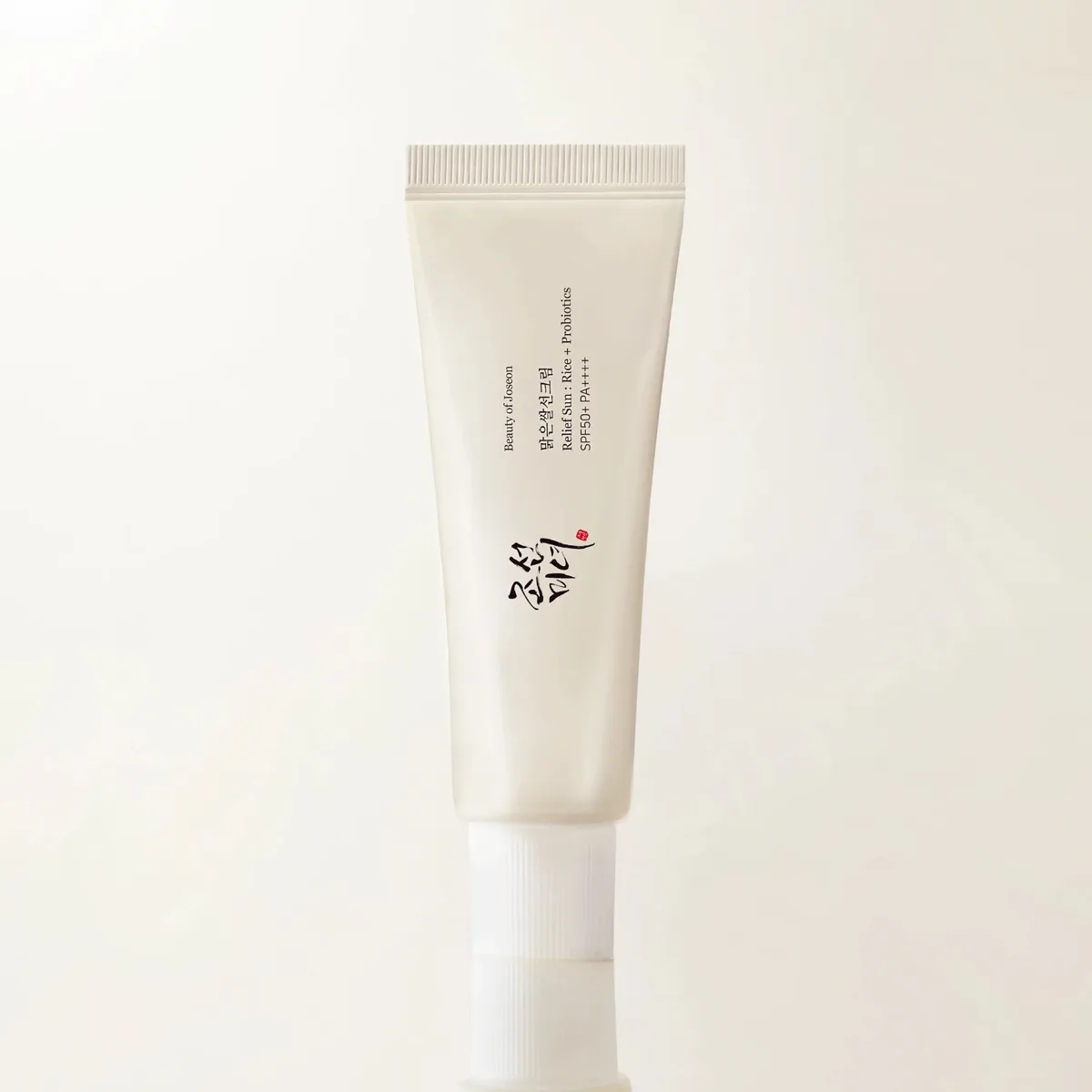
Compare an imported formula built on the modern European toolkit. Beauty of Joseon's Relief Sun runs diethylamino hydroxybenzoyl hexyl benzoate — a dedicated UVA-I filter — alongside ethylhexyl triazone and a bis-benzotriazolyl particulate filter. That is four modern actives covering different parts of the spectrum. The American approval added one. It's a meaningful one, and it is not parity.
The measurement problem compounds this. A US product earns the words "broad spectrum" by passing an in vitro critical-wavelength test: the wavelength below which ninety percent of the absorbance sits must be 370 nm or greater. It's a threshold, and it's pass/fail. The European framework goes further, recommending that UVA protection be at least one third of the labelled SPF before a product may display the UVA-in-a-circle mark, which forces UVA coverage to scale with the SPF number on the front.
So an American label can tell you a formula cleared the UVA bar. It cannot tell you by how much, and adding a new filter doesn't change what the label is permitted to communicate. Anyone claiming a specific UVA improvement from a US bottle is inferring it from the ingredient list, exactly as you would have to.
The five-second label check
When the first bottles appear, the Drug Facts panel settles it. Five things to look at, in order.
The percentage. Bemotrizinol is permitted up to six percent. A formula using it near that ceiling is built around it. A formula using a token amount alongside an otherwise unchanged panel has added a bullet point.
What stayed. Keeping avobenzone alongside bemotrizinol is a good sign, not a lazy one — they cover complementary parts of the spectrum and bemotrizinol helps the avobenzone survive. A product that drops avobenzone entirely is relying on bemotrizinol for its whole UVA claim, which is where the UVA-I question above becomes pointed.
What left. If homosalate and octocrylene have come down substantially, the base has genuinely been re-engineered. If every other number is unchanged and bemotrizinol was simply added on top, the formula is the old one with a new line in the box.
The name. During the exclusivity period the ingredient is supplied in the US under one trade name while the long-established international brand stays out of the market. On a US label the active will be declared as bemotrizinol regardless — it's the same molecule, and a trade name on the front of a carton tells you nothing about how much is inside.
The price. First-wave products will be positioned at a premium, because novelty is the feature being sold. That premium is worth paying for a formula you'll actually use daily and worth nothing for one you won't.
Should you switch? Mostly, no
If you have a sunscreen you apply properly and reapply without resenting it, the honest advice is to keep using it and revisit this in a year, when there are enough products to compare rather than one to be excited about.
That isn't dismissiveness about the filter, which is a real improvement to the American toolkit. It's an accurate ranking of the variables. SPF is measured at an application density of 2 mg/cm², and essentially nobody applies that much — real-world use tends to land well short, which means the protection actually achieved is a fraction of what the label promises long before filter chemistry becomes the limiting factor. A better filter applied thinly loses to an ordinary filter applied properly, every time. Our Sunscreen Amount tool exists to make that quantity concrete rather than aspirational.
Mineral users have even less reason to move. Zinc oxide is permitted up to twenty-five percent, has real UVA-I coverage, and a formula like Blue Lizard's Sport Mineral isn't waiting on anything. The trade there has always been cosmetic rather than protective, and bemotrizinol doesn't change it.
The people who should pay attention are those who have never found a chemical sunscreen they'd wear daily. A new filter means new base formulas, and new base formulas are where texture problems get solved. When those arrive, our sensitive-skin sunscreen ranking will reflect them as they're assessed rather than as they're announced. Until then, the Sunscreen Finder will match a filter panel to your skin and preferences from what actually exists, and the Ingredient Decoder will translate any panel you're squinting at in a pharmacy aisle.
One filter, twenty-odd years late, sold at a premium, in products that mostly don't exist yet. That's a good week for American sunscreen and a bad reason to throw out a bottle that works.
Products mentioned
Independently reviewed and scored — the real products behind this piece.



References
- Amending Over-the-Counter Monograph M020: Sunscreen Drug Products for Over-the-Counter Human Use, and Related Information — Federal Register, 2026
- FDA Expands Sunscreen Options for the First Time in 20 Years — US Food and Drug Administration press announcement, 2026
- Bemotrizinol, marketed by BASF as Tinosorb S, receives regulatory approval in the United States as the first new sunscreen active ingredient approved by the FDA since 1999 — BASF news release, 2026
- 21 CFR § 201.327 — Over-the-counter sunscreen drug products; required labeling based on effectiveness testing — US Code of Federal Regulations, Title 21, 2026
Every cited link is verified to resolve to the paper named. Where a source could not be independently confirmed, it is listed without a link rather than pointing you somewhere wrong.
Frequently asked
When can I actually buy a bemotrizinol sunscreen in the US?
The order permitting it took effect on 9 August 2026 and ingredient supply was announced immediately after, but finished products need reformulation, stability work and fresh SPF and broad-spectrum testing. Expect the first products late in 2026 and meaningful choice through 2027.
Does bemotrizinol close the gap with European sunscreens?
Partly. It's one filter, and a good one — photostable, broad, and useful for stabilising avobenzone. But the dedicated long-wave UVA-I filters used routinely in Europe and Asia remain unapproved in the US, so a modern imported panel still covers the far end of the UVA range more thoroughly.
How much bemotrizinol should a good formula contain?
The monograph permits up to six percent. A formula using it near that ceiling has been built around the filter; one using a small amount alongside an otherwise unchanged active panel has added a marketing line. The percentage is printed on the Drug Facts box, so you don't have to guess.
Will a US label tell me how much UVA protection I'm getting?
No. "Broad spectrum" in the US means a formula passed a pass/fail critical-wavelength test at 370 nm — it doesn't grade the strength of UVA coverage. The EU additionally requires UVA protection to be at least a third of the labelled SPF before the UVA-in-a-circle mark can be used. This approval doesn't change what US labels are allowed to say.
Should I stop using my current sunscreen?
Not if you apply it properly and reapply it. SPF is measured at an application density most people never reach, so quantity and reapplication dominate the outcome far more than which filters are in the bottle. A new filter matters most for people who've never found a chemical sunscreen they'd wear every day.