A Realistic Niacinamide Routine (No, You Don't Need 10%)
Nearly every trial that made this ingredient famous ran at 2–5%. The double-digit numbers on the shelf are answering a question the biology never asked.
Read the preview
From the DermApproved blog, in Hydration and Barrier: the niacinamide percentage on your bottle. Almost every trial that made it famous used two to five percent. The tens and fifteens on the shelf answer a marketing question, not a biological one — and the flushing people blame on niacinamide is usually caused by a different molecule entirely. For the full breakdown, visit dermapproved.com/blog.
The number on the bottle is not from a study
Go through the research that built niacinamide's reputation and a pattern emerges immediately: the doses are small. The pigment work that put it on the map ran at 5%. The sebum study ran at 2%. The inflammatory acne trial that compared it against a topical antibiotic ran at 4%. The wrinkle-and-tone work ran at 5%. Nobody who established that this ingredient does anything was working at ten percent, and nobody has since published a controlled head-to-head showing that ten beats five for any of the outcomes it is sold for.
So where did the escalation come from? From the shelf. Percentages are the easiest thing to put on a front label and the easiest thing for a shopper to compare, and once one brand prints a bigger number the rest follow or look weak. It is a legible signal in a category with very few of them. The trouble is that it is legible in the wrong direction — it implies a dose-response curve that the underlying biology mostly does not have.
This is not a case against the ingredient. Niacinamide is one of the genuinely well-evidenced things you can put on skin, with mechanisms that have been worked out rather than asserted. It is a case against the assumption that you are buying more of it when you buy a higher number.
Separate the claims, because the evidence does
Niacinamide is sold as an all-purpose ingredient, which flattens four quite different levels of evidence into one word.
Barrier is the strongest and the least discussed. Work published in the British Journal of Dermatology in 2000 traced the mechanism properly: incubating keratinocytes with nicotinamide raised ceramide biosynthesis 4.1- to 5.5-fold over six days, and also lifted glucosylceramide 7.4-fold, sphingomyelin 3.1-fold, free fatty acids 2.3-fold and cholesterol 1.5-fold. It did this by upregulating serine palmitoyltransferase, the rate-limiting enzyme, at the mRNA level. Applied topically, it raised stratum corneum ceramide and free fatty acid content and lowered transepidermal water loss in dry skin. That is an enzymatic pathway, and enzymatic pathways saturate. Flooding the tissue does not make the enzyme run faster indefinitely.
Pigment is the best-known claim and it has a specific, unusual mechanism. Niacinamide does not inhibit tyrosinase and does not suppress melanin production in melanocytes at all — the 2002 work checked both and found nothing. What it does is interrupt the handoff, blocking melanosome transfer from melanocyte to keratinocyte by 35–68% in coculture, with a 5% preparation producing measurable lightening in the clinical arms. That matters practically: it works downstream, it stacks well with agents that work upstream, and it acts on turnover timescales rather than overnight. The azelaic-versus-niacinamide question usually resolves in favour of using both for exactly this reason.
Sebum is real but modest. A 2006 study applying 2% niacinamide for four weeks found significantly lowered sebum excretion rate, with a difference between the two ethnic groups studied in which measure moved. Anyone expecting a matte face is going to be disappointed; anyone expecting a slightly less oily one by week three is reading it right.
Acne is the oldest claim and the thinnest modern evidence. The 1995 trial pitted a 4% nicotinamide gel against 1% clindamycin and found them comparable over eight weeks. It is a genuine result and it is thirty years old, with little replication at scale since.
Why the higher numbers sting
This next bit gets consistently misattributed. People try a double-digit niacinamide product, flush, sting, and conclude they are sensitive to niacinamide. Usually they are not.
Niacinamide and nicotinic acid are different molecules one hydrolysis step apart. Nicotinic acid — plain niacin — triggers the flush everyone knows from high-dose supplements, and the mechanism was pinned down in 2005: it acts through GPR109A, a receptor on skin immune cells, producing prostaglandin-mediated vasodilation. Niacinamide does not do this. But niacinamide in solution can convert to nicotinic acid, and that conversion is driven by pH, heat, water content and time on a shelf. The more niacinamide you dissolve, the more raw material there is for that conversion, and the more likely a formulator has pushed the formula somewhere the molecule is less stable.
The second contributor is simpler. To get 10% or 15% of a very water-soluble powder into a thin serum, the base has to be mostly water and humectants, with little to buffer it. Applied to a compromised barrier, that stings on its own — the same reason a high-glycerin essence can burn on cracked skin while a cream with the same actives does not. The complaint gets logged against the active; the base did it.
If a niacinamide product has ever burned you, the useful experiment is not to abandon the ingredient. It is to try it at a modest concentration inside a cream, where it has lipids and emollients around it. The conflict-checker will tell you whether anything else in your routine is contributing, and the ingredient-decoder will show you what else is in the base doing the work.
The vitamin C myth, and what actually conflicts
The most persistent niacinamide rule on the internet is that it cannot be used with vitamin C. The origin is real chemistry read at the wrong scale: niacinamide and ascorbic acid in solution, heated, can form a complex and liberate nicotinic acid. Those are laboratory conditions — elevated temperature, sustained contact, an aqueous mixture. Two serums applied minutes apart to skin at body temperature are not that experiment. People have used both together for years without the predicted problem, and formulators routinely put them in the same product.
What does deserve attention is more mundane. Niacinamide is comfortable across a wide pH range, so it does not fight with acids the way people assume, but the acids themselves may be doing enough irritating for one evening. Stacking a strong exfoliant, a retinoid and a high-concentration humectant serum on the same night is a barrier problem regardless of which one you blame afterwards. The niacinamide routine we build around it deliberately separates those loads, and the routine-order tool sorts the sequence if you are layering more than three steps.
The most common real conflict is not chemical at all. It is duplication. Niacinamide appears in an enormous share of modern moisturisers, cleansers, sunscreens and toners, so a routine can easily carry it at four steps and a dedicated serum on top — which is how people end up applying far more than any trial used without ever choosing to.
Reading the dose you're actually getting
Front labels tell you about the products that want you to know. For everything else, position in the INCI list is the more honest signal. Ingredients above 1% are listed in descending order by weight, so a niacinamide sitting third or fourth — ahead of the thickeners and behind water and a glycol — is present at a meaningful level. Sitting after the preservative system and the fragrance, it is decorative.
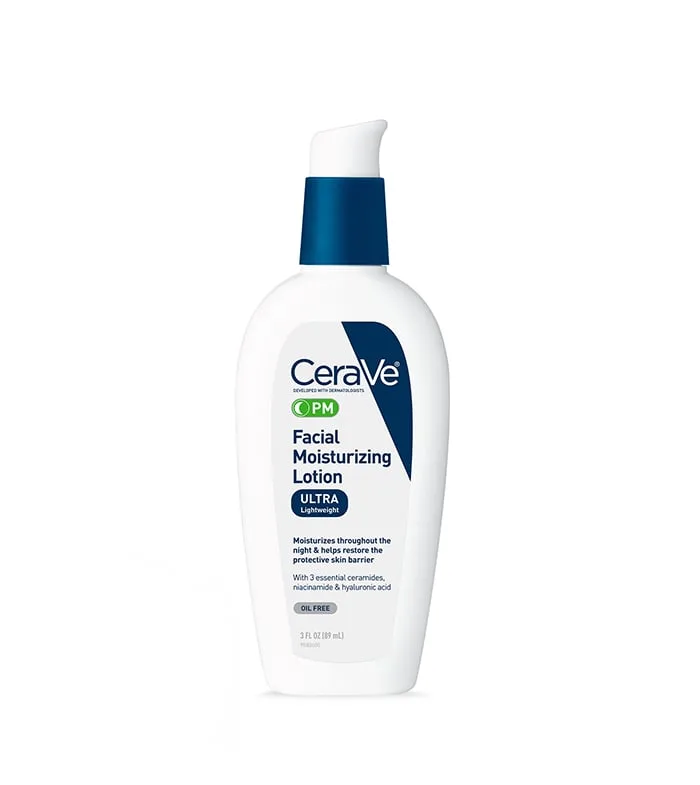
This is where a well-built moisturiser quietly outperforms a dedicated serum. La Roche-Posay Toleriane Double Repair Face Moisturizer carries niacinamide alongside ceramides and glycerin in a base designed for reactive skin, which is closer to the trial conditions than a bare aqueous serum is. CeraVe PM Facial Moisturizing Lotion does the same thing in a lighter texture. Even something as unfashionable as Cetaphil Moisturizing Cream pairs it with petrolatum and glycerin — an occlusive-plus-humectant base is exactly the environment in which the barrier findings were generated.
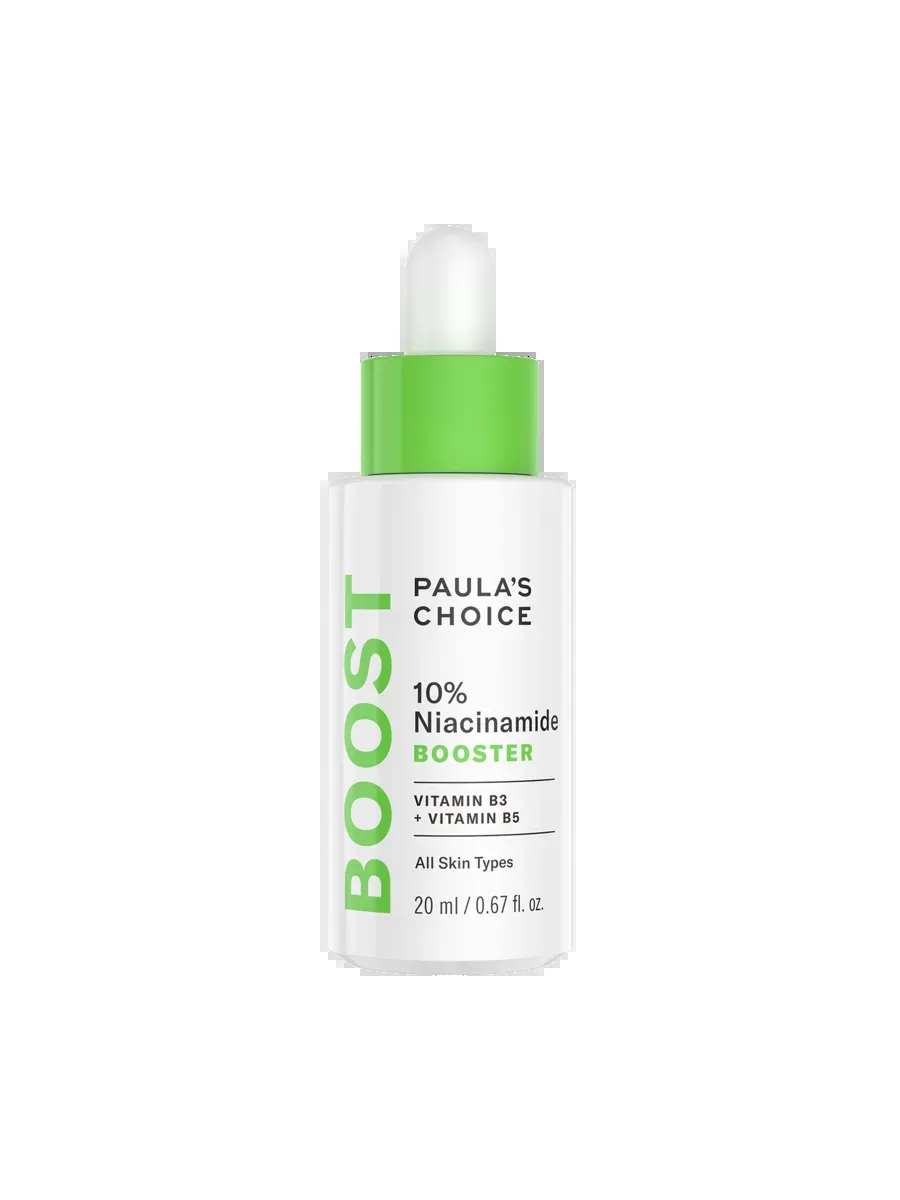
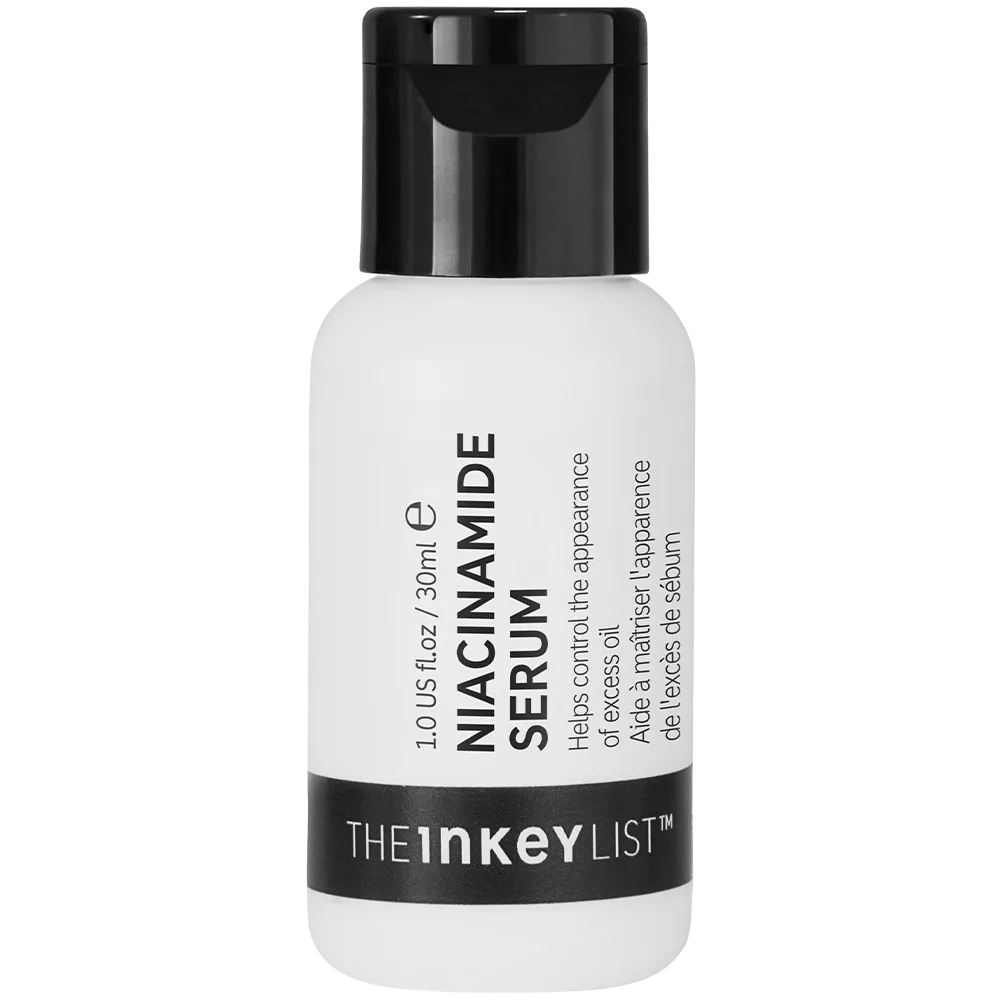
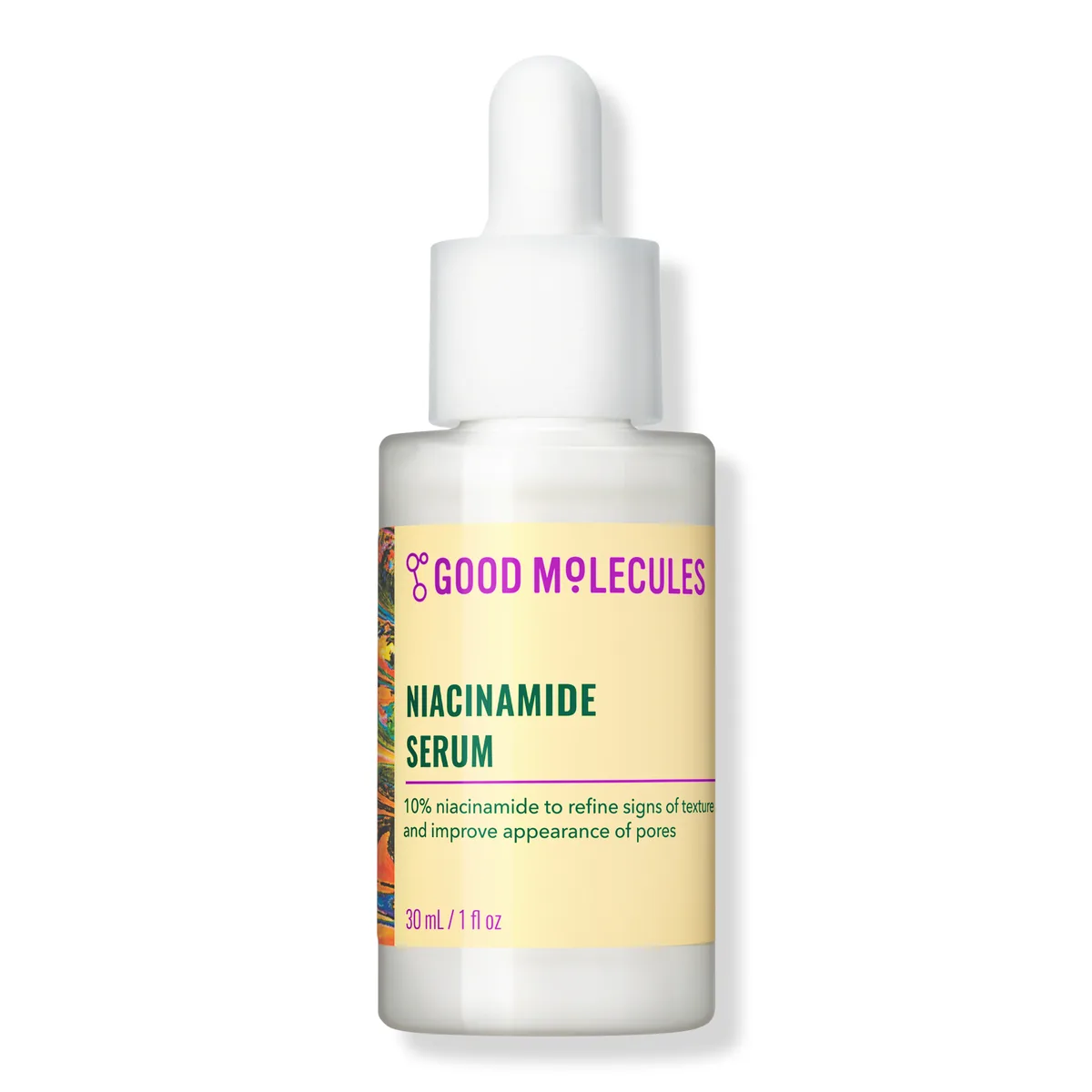
If you want it as a discrete step, the classics are honest about what they are. The Ordinary Niacinamide 10% + Zinc 1% is the product that set the ten-percent convention and remains the clearest example of the category; Paula's Choice 10% Niacinamide Booster is built to be diluted into a moisturiser, which is a smarter way to use a high concentration than applying it neat. The INKEY List Niacinamide Serum and Good Molecules Niacinamide Serum sit in the same territory at drugstore level. None of these are bad products. The point is that the number on the front is a ceiling, not a requirement — and if your skin objects, stepping down is not a compromise.
What a realistic routine looks like
Start from the claim you actually care about, because it determines where niacinamide belongs.
If the goal is barrier and comfort, you do not need a serum at all. Put it in the moisturiser, use it twice daily, and let it run for eight to twelve weeks — ceramide synthesis is a slow, cumulative thing and the studies that measured it ran on that timescale. If the goal is oil, the same placement works; expect a modest reduction rather than a transformation, and pair it with something that manages the follicle rather than the sebocyte. Our ranking of niacinamide products for oily skin leans toward lighter bases for this reason.
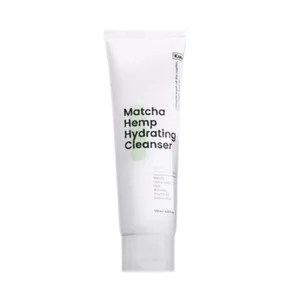
If the goal is pigment, niacinamide is a supporting player and should be treated as one. It blocks transfer; something else needs to reduce production or accelerate clearance, and sunscreen needs to stop the input. Getting the layering order right matters more here than the concentration does. If you want a dedicated step, the shortlist in our niacinamide serum ranking covers the range, and a gentle cleanser like Krave Beauty Matcha Hemp Hydrating Cleanser keeps the routine from undoing itself at the first step.
The honest summary is unfashionable. Niacinamide at a sensible dose, in a decent base, applied consistently for three months, does most of what niacinamide can do. The double-digit version does not do more of it. It just does it in a formula with less room for everything else.
Products mentioned
Independently reviewed and scored — the real products behind this piece.



- Routine A Realistic Niacinamide Skincare Routine The step-by-step routine built around a sensible dose
- Ranked list Best Niacinamide Serums Shortlist if you want a dedicated step
- Ranked list Niacinamide for Oily Skin: What the Verdicts Say Lighter bases for the sebum use case
- Ingredient Niacinamide (Vitamin B3) Full mechanism and evidence page
- Ingredient Ceramides The lipid class niacinamide upregulates
- Question Azelaic acid or niacinamide for post-acne dark marks? Why the two are usually complements rather than alternatives
- Question What order do these products go in? Order matters more than concentration for pigment work
References
- Nicotinamide increases biosynthesis of ceramides as well as other stratum corneum lipids to improve the epidermal permeability barrier — British Journal of Dermatology, 2000
- The effect of niacinamide on reducing cutaneous pigmentation and suppression of melanosome transfer — British Journal of Dermatology, 2002
- The effect of 2% niacinamide on facial sebum production — Journal of Cosmetic and Laser Therapy, 2006
- Topical nicotinamide compared with clindamycin gel in the treatment of inflammatory acne vulgaris — International Journal of Dermatology, 1995
- Topical niacinamide reduces yellowing, wrinkling, red blotchiness, and hyperpigmented spots in aging facial skin — International Journal of Cosmetic Science, 2004
- GPR109A (PUMA-G/HM74A) mediates nicotinic acid-induced flushing — Journal of Clinical Investigation, 2005
Every cited link is verified to resolve to the paper named. Where a source could not be independently confirmed, it is listed without a link rather than pointing you somewhere wrong.
Frequently asked
Is 5% niacinamide genuinely enough, or is that just a compromise?
It is where most of the published work sits. The pigment and photoageing studies used 5%, the sebum study used 2%, and no controlled trial has shown a double-digit concentration outperforming that range for any of the standard claims. Choosing 5% is following the evidence rather than settling.
Why does my niacinamide serum sting when the ingredient is supposed to be gentle?
Two likely causes. Nicotinic acid, a conversion product that forms in solution under the wrong conditions, causes flushing through the GPR109A receptor — niacinamide itself does not. And a very high concentration forces a thin, mostly-aqueous base with little to buffer it. A lower dose inside a cream usually solves both.
Can I really use niacinamide and vitamin C together?
Yes. The incompatibility comes from heated aqueous laboratory mixtures, not from two products applied minutes apart on skin. If you want to be cautious, separate them by a few minutes or use one in the morning and one at night — but there is no need to abandon either.
How long before niacinamide does anything visible?
Barrier and oil changes are the earliest, on the order of two to four weeks in the studies that measured them. Pigment is slower because the mechanism works on melanosome transfer and therefore on turnover — plan on eight to twelve weeks before judging it, with sunscreen running the whole time.
How do I tell if a moisturiser has a meaningful amount of it?
Look at position in the INCI list rather than the front label. Above 1%, ingredients are ordered by weight, so niacinamide in the first handful — ahead of thickeners and emulsifiers — is present at a real level. After the preservatives and fragrance, it is there for the label.
Am I overdoing it if niacinamide is in several of my products?
Possibly, and it is the commonest way people exceed trial doses without deciding to. It appears in a large share of moisturisers, cleansers, toners and sunscreens. If you already have it in two or three steps, adding a dedicated high-concentration serum is where irritation tends to show up.