Polyglutamic Acid Holds More Water Than Hyaluronic Acid. That's Not the Whole Story.
The headline number that fuels every polyglutamic acid launch is real. Whether it means better-hydrated skin than a good hyaluronic acid serum is a much more interesting question.
Read the preview
From the DermApproved blog, in Hydration and Barrier: polyglutamic acid, the humectant that supposedly out-holds hyaluronic acid. And technically? It does. The water-holding number everyone quotes is completely real. So why isn't this an easy win? Because that number was measured in a beaker, and your face is not a beaker. There's a catch hiding in the size of the molecule, another hiding in where those impressive statistics actually come from, and a twist that means the whole PGA-versus-HA debate has been asking the wrong question all along. We get into what this ingredient really does on skin, who will genuinely feel the difference, and who's about to pay for a very nice redundancy. The hype has a kernel of truth and a lot of beaker. Sort the two out at dermapproved.com/blog.
The number everyone quotes, and what it leaves out
Every polyglutamic acid pitch orbits one statistic: it holds up to several thousand times its weight in water, several times more than hyaluronic acid. The number is real. It is also a lab measurement of a purified biopolymer swelling in a beaker, and a beaker is not a cheek. Water-holding capacity in isolation tells you how thirsty a molecule is, not how much of that thirst translates into hydrated, comfortable skin over a day.
This is the gap the marketing quietly steps over. A humectant's job on skin is not to win a water-absorption contest; it is to raise the water content of the outer skin layers and keep it there without pulling moisture out of you in dry air. On that scorecard, raw absorbency is only one input. Molecule size, where it sits, what it does to the skin's own systems, and what you layer on top all matter as much or more. Polyglutamic acid is genuinely good at hydration. It is just good for reasons the headline number doesn't actually capture.
Why size decides everything
Polyglutamic acid is a large, chain-like molecule, considerably bigger than most of the hyaluronic acid used in serums. Size is destiny for a humectant. Small, low-molecular-weight hyaluronic acid can diffuse a little way into the upper skin and hydrate from within the layers; large molecules cannot, so they stay up top. That sounds like a weakness and is actually PGA's signature move: it spreads into a thin, breathable film across the surface, a microgel that swells with water and holds it against the skin like a damp veil.
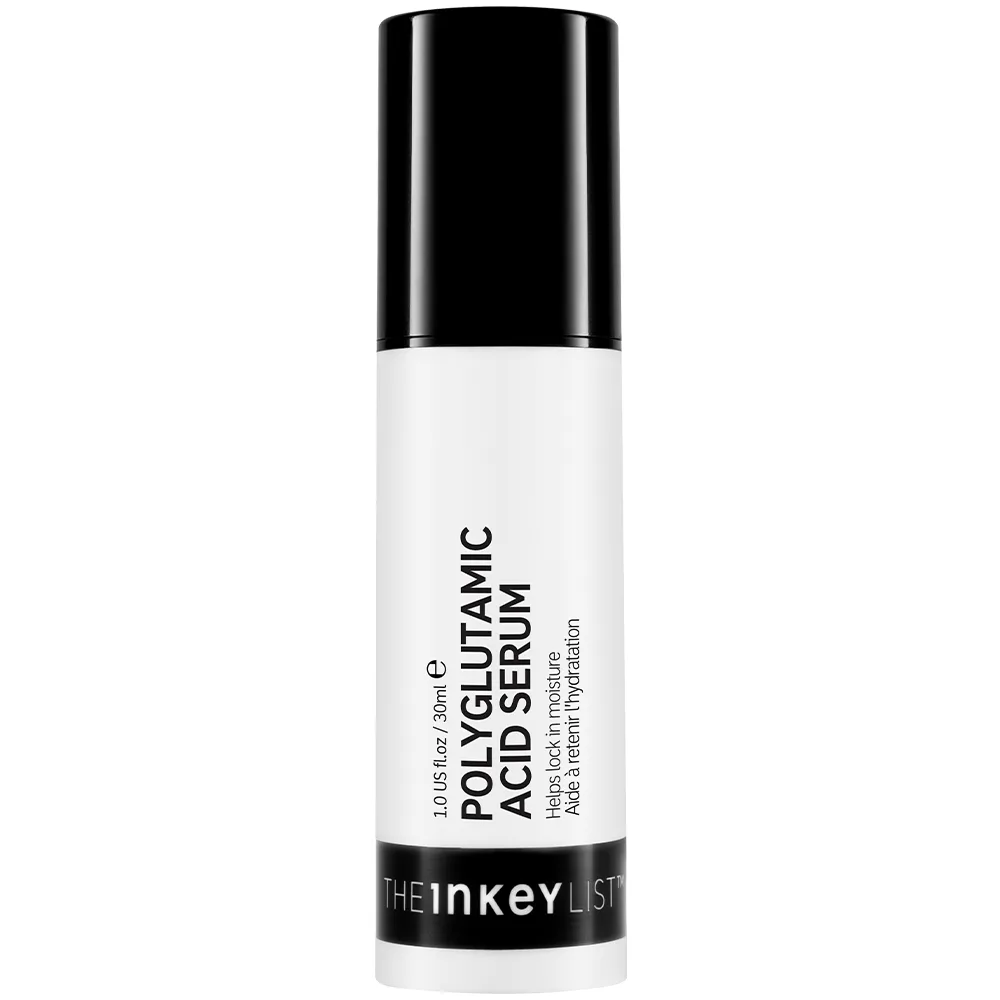
That film is why PGA-forward products often feel like they leave a smooth, slightly cushiony finish that grips makeup well and reduces the tight feeling of dehydrated skin. A surface layer like The INKEY List Polyglutamic Acid Serum is doing exactly this, sitting on top and slowing evaporation. The trade-off is real too: a film-former does less for the deeper reservoirs of moisture that smaller humectants and, crucially, occlusive creams address. PGA seals the top; it does not restock the basement.
The evidence is thinner than the marketing
Here is the part the launch copy never says out loud. The dramatic PGA-versus-HA comparisons that circulate online overwhelmingly come from cosmetic-industry corneometry testing and manufacturer data, not from large, independent, randomized clinical trials. Small panel studies and instrument readings showing PGA outperforming glycerol or low-weight HA at holding surface moisture over a couple of hours are plausible and consistent, but they are directional, not definitive. When a claim rests on a five-person corneometry panel run by a supplier, treat the exact percentage with a raised eyebrow.
What is better established is the underlying principle PGA leans on. Controlled research on natural moisturizing factor shows that supplementing the skin's own NMF components measurably increases the tightly-bound water in the stratum corneum and helps keep its lipids organized. PGA is thought to feed into this system, encouraging the skin to make more of its own moisturizing factors rather than only sitting on top like an inert sponge. That distinction matters: an ingredient that raises the skin's endogenous water-binding compounds is doing durable work, whereas a pure surface humectant is only as good as its next reapplication.
That mechanism is credible and useful; it is also a quieter, less clickable claim than 'holds 4,000 times its weight in water,' which is precisely why you rarely see it on the front of the box. None of this makes PGA a fraud. It makes it a good ingredient that has been sold with a lab statistic instead of its actual strengths. If you want to see whether a given serum is genuinely built around PGA or just sprinkling a token amount near the bottom of the list where it can't do much, run the ingredients through the ingredient-decoder before you believe the marketing.
PGA and HA are not rivals
The framing that PGA is a replacement for hyaluronic acid is the whole confusion in miniature. They work at different depths and, more interestingly, they help each other. Because they sit and swell at different levels, HA hydrating within the upper layers while PGA caps the surface, layering them builds a more complete moisture gradient than either alone. Beyond geography, PGA is reported to slow the enzyme that breaks down hyaluronic acid, which would help the skin hold onto its own HA longer. Cooperation, not competition.
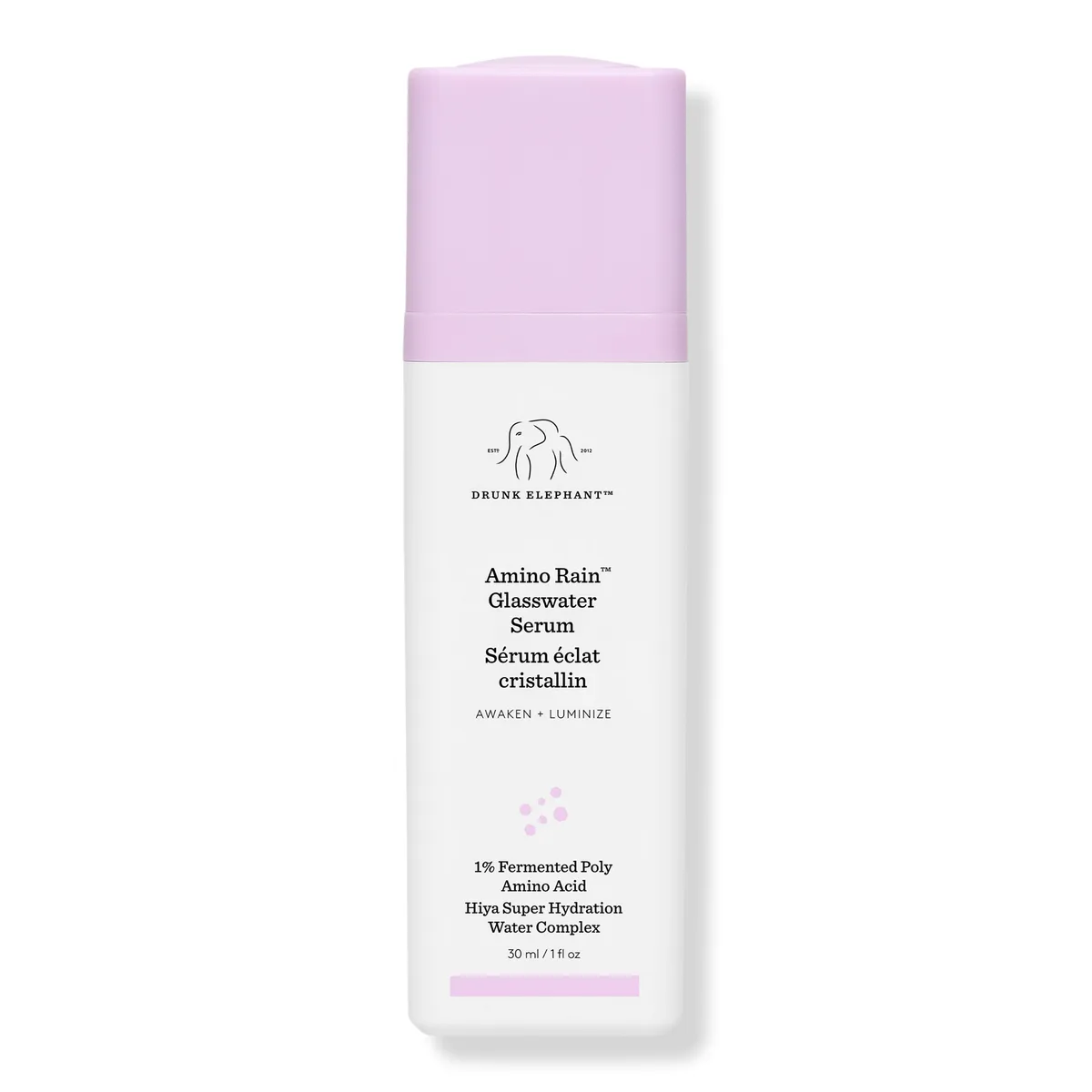
This is why so many of the best hydration serums simply put both in one bottle. Alpha-H Hyaluronic 8 Super Serum stacks multiple hyaluronic acid weights with PGA and ectoin, and Drunk Elephant Amino Rain Glasswater Serum pairs PGA with HA and amino acids to hit several hydration mechanisms at once. If you are layering separate products, apply the smaller, thinner hydrator before the film-forming one so the surface layer doesn't block what's underneath; a quick check in a routine-order tool settles the sequence in seconds. The right question was never PGA or HA. It's how to use both so each does what it's good at.
Who actually notices, and who won't
Polyglutamic acid rewards a specific kind of skin. If you run dehydrated, feel tight by mid-afternoon, live somewhere with dry indoor air, or wear makeup you want to sit smoothly, the surface film is something you can genuinely feel: skin that stays supple longer and a base that grips foundation. Combination and oily skin often like it too, because it delivers a plush, hydrated finish without the heaviness of a rich cream.
Who won't be wowed? Anyone whose skin is already well-moisturized under a good occlusive cream may find PGA a pleasant redundancy rather than a revelation, because the cream is already handling water loss. And anyone hoping a humectant will fix flaking from a damaged barrier is aiming at the wrong target; that needs lipids and ceramides, not more water on top. Bought with clear eyes, polyglutamic acid is a legitimately good hydrator with a satisfying finish and a sensible mechanism. Just don't buy it because a beaker number told you it beats hyaluronic acid. Buy it because a smooth, moisture-sealing film is what your skin actually wants, and pair it with the HA it was never really competing with.
Products mentioned
Independently reviewed and scored — the real products behind this piece.


References
Every cited link is verified to resolve to the paper named. Where a source could not be independently confirmed, it is listed without a link rather than pointing you somewhere wrong.
Frequently asked
Is polyglutamic acid actually better than hyaluronic acid?
Not better, different. PGA holds more water per gram in the lab and forms a moisture-sealing film on the surface, while hyaluronic acid, especially at lower molecular weights, hydrates within the upper skin layers. They work at different depths, so the smarter move is using both rather than picking a winner.
Should I use polyglutamic acid and hyaluronic acid together?
Yes, and they may even reinforce each other, since PGA is reported to slow the enzyme that breaks down hyaluronic acid. Apply the thinner, smaller-molecule hydrator first and let the film-forming PGA layer go on top so it doesn't block what's underneath. Many serums simply combine both in one bottle.
Why does my polyglutamic acid serum feel like it leaves a film?
That film is the point. PGA is a large molecule that can't sink in, so it spreads across the surface as a microgel that swells with water and traps it against the skin. That's what creates the smooth, slightly cushiony finish and helps makeup sit better.
Will polyglutamic acid fix dry, flaky skin?
Only partly. PGA is a humectant that adds and holds water at the surface, so it helps skin that's dehydrated and tight. But flaking from a damaged barrier needs lipids and ceramides to repair, not just more water on top, so pair PGA with a barrier cream in that case.
How trustworthy are the '4,000 times its weight in water' claims?
The water-holding figure itself is a real lab measurement, but it describes a purified molecule swelling in a beaker, not skin performance. Most head-to-head PGA-versus-HA numbers come from small cosmetic-industry panels rather than large independent trials, so treat the exact percentages as directional rather than proven.