The Molecule That Keeps Bacteria Alive in Salt Lakes Is Now in Your Serum
Ectoin protects microbes in some of Earth's harshest habitats by rearranging water itself. In 2026 it's the barrier ingredient with unusually real science — and one honest limit the marketing skips.
Read the preview
From the DermApproved blog, in Hydration & Barrier: the desert molecule quietly invading your serum shelf. Picture a bacterium surviving inside a salt lake — heat, drought, chemistry that should kill it. It lives by making one clever little molecule. That's ectoin, and in 2026 it's everywhere. Why does it stand out from the usual trend hype? It doesn't just moisturize — it rearranges water itself into a kind of armor, and it's got clinical receipts most buzzy ingredients can only dream of. But there's a catch the marketing loves to skip. Ectoin is brilliant at one job and quietly useless at another — and confusing the two is how people waste their money. Which is which, at dermapproved.com/blog.
How a bug in a salt lake ended up in your skincare
Somewhere in a salt-crusted, blistering-hot microbial mat, a bacterium called Halomonas elongata is doing something that should kill it: living. The salt concentration outside its cells is high enough to suck water straight out of them, and the heat is enough to unfold its proteins. It survives by manufacturing a small molecule that lets it hold onto water and keep its cellular machinery folded under stress. That molecule is ectoine.
Biologists call molecules like this 'extremolytes' — stress-protectant compounds that extremophile microbes brew to endure conditions that would destroy ordinary cells. Ectoin's leap from microbiology curiosity to skincare shelf is one of 2026's quieter ingredient stories, showing up in a growing wave of barrier serums and anti-pollution formulas. And unlike a lot of buzzy actives, it earned the spot with a mechanism worth understanding rather than a marketing deck.
The water-shell trick, explained without the hand-waving
The interesting part of ectoin isn't that it 'hydrates' — plenty of humectants do that. It's how. Ectoin is what chemists call a kosmotrope: it organizes the water molecules around itself into a more structured shell. That structured water is then preferentially excluded from the immediate surface of nearby proteins and membranes, which paradoxically stabilizes them. The technical name is preferential exclusion, and the upshot is a molecule that props up the water layer keeping your barrier lipids and cellular proteins in their proper shape under stress.
That's a different job description from hyaluronic acid or glycerin, which mostly bind and hold water. Ectoin binds water and uses it as structural armor. The lab consequences are concrete: it's been shown to shield DNA from damage by ionizing radiation, and preclinical work found it protects skin and lung cells against inflammatory cascades triggered by pollution particles. On skin specifically, ectoine-treated areas hold measurably more moisture over 24 hours and show improved transepidermal water loss — the standard barometer of barrier integrity.
This is why you increasingly see it stacked with other humectants rather than sold solo. A formula like Good Molecules 5% Niacinamide Serum with Ectoin pairs it with niacinamide so one ingredient calms and protects while the other addresses tone and oil, and a polyglutamic-acid blend like Prequel Multi-Quench Plumping Hydration Serum uses ectoin as the stabilizing partner to heavier water-binders.
The part with actual clinical receipts
Here's where ectoin separates from the trend-ingredient pack: it has been through the kind of testing most viral actives never face. A 2014 randomized, double-blind, intra-individual trial in Skin Pharmacology and Physiology tested an ectoine-containing cream against a comparator in mild-to-moderate atopic dermatitis and found it a credible, well-tolerated option. A 2022 systematic review in Dermatology and Therapy went further, pooling the evidence and concluding that topical formulations with 5.5-7% ectoine improved dryness, itch, and dermatitis scores — and, notably, that using ectoine as an adjuvant was associated with a reduced need for pharmacological therapy and better results from topical corticosteroids.
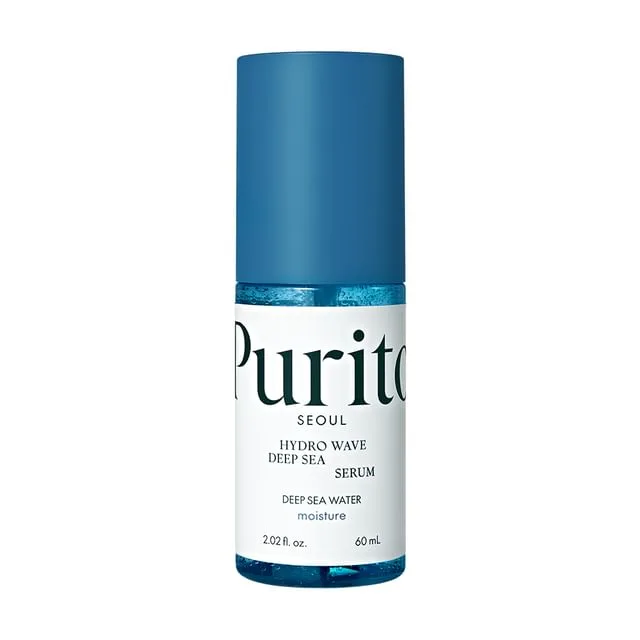
That corticosteroid-sparing finding is the quiet headline. An ingredient that lets sensitive or eczema-prone skin lean on fewer steroids is doing something clinically meaningful, not cosmetically decorative. It also explains why ectoin gravitates toward reactive, compromised-barrier, and pollution-exposed skin — a barrier-support serum such as Purito Hydro Wave Deep Sea Serum leans on it precisely for that soothe-and-shield role.
The hype check: a bodyguard, not a renovator
Now the honest caveat, because every ingredient has one and ectoin's is easy to gloss over. Ectoin protects and stabilizes. It does not remodel. It won't stimulate collagen the way a retinoid does, won't fade hyperpigmentation like a well-formulated vitamin C, and won't clear a breakout. Its entire value proposition is defensive: keep the barrier intact, keep inflammation down, keep water where it belongs. That's genuinely useful — a stable barrier is the foundation every other active depends on — but it's a supporting role.
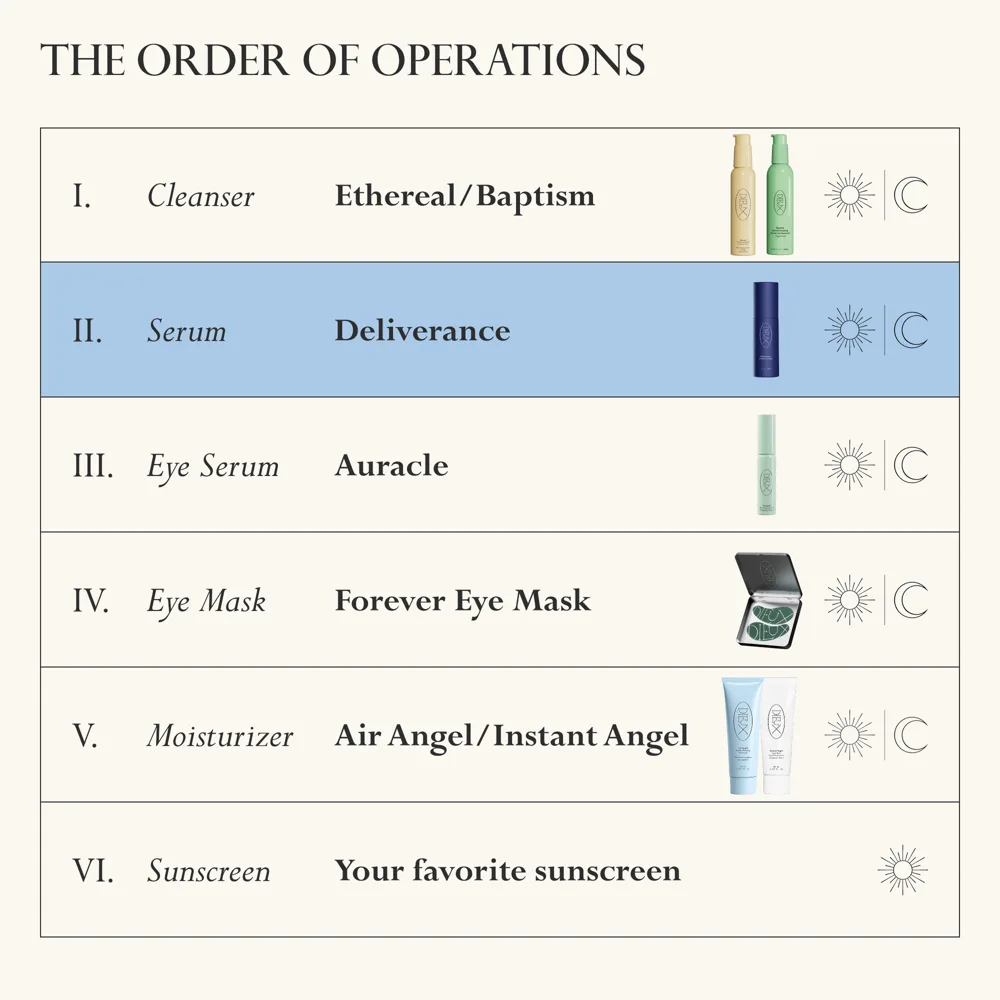
The marketing temptation is to inflate a good protectant into a hero transformer, and that's where a premium ectoin serum like Dieux Deliverance Serum deserves a clear-eyed read: it's a well-built barrier formula worth its niche, not a $85 shortcut to structural change. If your skin is reactive, over-exfoliated, city-dwelling, or eczema-prone, ectoin is close to an ideal addition. If you're chasing wrinkle reversal or acne clearance, it belongs in your routine as insurance, not as the active doing the work.
Not sure which camp you're in? Our Ingredient Decoder breaks down what a formula actually delivers, and the My Skin profiler maps ectoin's protective strengths against what your skin is actually asking for. Ectoin is the rare trend ingredient that's more real than its hype — as long as you hire it for the job it's good at.
Products mentioned
Independently reviewed and scored — the real products behind this piece.


References
- Ectoine-containing cream in the treatment of mild to moderate atopic dermatitis: a randomised, comparator-controlled, intra-individual double-blind, multi-center trial — Skin Pharmacology and Physiology, 2014
- Topical Ectoine Application in Children and Adults to Treat Inflammatory Diseases Associated with an Impaired Skin Barrier: A Systematic Review — Dermatology and Therapy, 2022
- Ectoine protects DNA from damage by ionizing radiation — Scientific Reports, 2017
Every cited link is verified to resolve to the paper named. Where a source could not be independently confirmed, it is listed without a link rather than pointing you somewhere wrong.
Frequently asked
What exactly is ectoin, and why is it suddenly in so many serums?
Ectoin (also spelled ectoine) is an extremolyte — a molecule that microbes living in salt lakes and deserts produce to survive extreme dryness and heat. It works by organizing a protective shell of water around proteins and membranes. Formulators have adopted it because that same mechanism measurably improves skin hydration and barrier resilience, with unusually solid clinical backing for a trend ingredient.
Is ectoin better than hyaluronic acid?
It's different, not strictly better. Hyaluronic acid binds and holds large amounts of water; ectoin binds water and uses it as structural protection for your barrier lipids and cell proteins under stress. Many formulas pair the two so you get both bulk hydration and stress-protection, which is more useful than choosing one over the other.
Does ectoin actually help eczema or just moisturize?
There's real clinical evidence here. Randomized and systematic-review data support 5.5-7% ectoine creams for mild-to-moderate atopic dermatitis, improving dryness and itch. Notably, when used alongside prescription treatment, ectoine was linked to needing fewer corticosteroids, so it's doing more than surface moisturizing for compromised skin.
Can ectoin replace my retinol or vitamin C?
No. Ectoin is protective, not transformative — it stabilizes the barrier and calms inflammation but doesn't remodel collagen or fade pigment. Think of it as insurance that lets your active ingredients work on a healthier canvas, not as a substitute for the retinoid or vitamin C actually driving change.
Who benefits most from adding an ectoin product?
Reactive, sensitive, over-exfoliated, pollution-exposed, and eczema-prone skin gets the most out of ectoin, because its strengths are soothing, barrier support, and defense against environmental stress. If your main goals are anti-aging or acne, keep ectoin as a supportive layer rather than expecting it to be the lead active.