The Face Oil for People Who Are Sure They Hate Face Oils
Squalane copies a lipid your own skin makes, then removes the one chemical flaw the original has. That's why it sinks in like water instead of sitting on top like grease.
Read the preview
From the DermApproved blog, in Hydration & Barrier: the face oil for people absolutely certain they hate face oils. You know the type — one bad run-in with coconut oil, a week of breakouts, and a lifelong grudge against anything labeled 'oil.' Squalane is the ingredient built to change that mind, and it does it with chemistry, not charm. Here's the hook: it's a near-perfect copy of a lipid your own skin already makes by the bucketful — so instead of sitting on top like grease, it just... slots in. But the original your body produces has one chemical flaw, a flaw that can actually trigger the exact breakouts oil-haters fear. So skincare took that molecule and changed a single letter — squalene to squalane — and fixed it. That one tweak is the whole story. Then there's the sourcing question, involving olives, sugarcane, and a shark nobody wants to talk about. Which oil finally earns its reputation by refusing to act like one — at dermapproved.com/blog.
The oil that doesn't behave like one
There's a specific kind of person who recoils at the phrase 'facial oil' — usually someone with oily or breakout-prone skin who has, at some point, slathered on a rosehip or coconut oil and spent the next week regretting it. If that's you, squalane is the ingredient built to change your mind, and it does it not with marketing but with chemistry.
The reason squalane feels nothing like the greasy oils people fear is that it isn't trying to be a foreign occlusive layer. It's a near-copy of something your skin already manufactures in large quantities. Squalene — with an 'e' — is one of the most abundant lipids in human sebum, accounting for something like 10 to 12 percent of the oil your own skin produces. When you apply a molecule your skin already recognizes as part of its own lipid matrix, it doesn't sit on top feeling heavy. It slots in. That biomimicry is the entire pitch, and unusually for skincare, the pitch is literally true at the molecular level.
Why the single letter — 'squalene' vs 'squalane' — changes everything
Here's the part that separates a good squalane explainer from a marketing blurb. If squalene is what your skin makes, why do we bother converting it to squalane? Because the version your body produces has a serious flaw as a skincare ingredient: it's chemically unstable. Squalene contains six carbon-carbon double bonds, and those double bonds are magnets for oxidation. Exposed to air, UV, ozone, and pollution, squalene oxidizes readily — and once it does, it turns from benign lipid into a genuine problem.
This isn't hypothetical. Research has established that squalene is oxidized dramatically fast by singlet oxygen — at a rate reported to be roughly ten-fold higher than other skin surface lipids — and a 2003 study in the Journal of Investigative Dermatology showed UVA generates squalene monohydroperoxide isomers directly in human sebum and skin surface lipids. The clinical consequence is the ugly part: oxidized squalene is irritating and strongly comedogenic. A 2023 in vivo study in Pharmaceuticals found squalene and its peroxidized form elevated in acne-prone skin, reinforcing the link between sebum oxidation and comedogenesis. Squalene has even been used as a reliable biomarker of environmental oxidative pollution precisely because it degrades so predictably.
Hydrogenation fixes all of it. Adding hydrogen across those double bonds converts squalene into squalane — fully saturated, essentially inert, and resistant to going rancid. You get the biomimetic feel and the skin-recognition benefit without the oxidation liability the raw version carries. The single letter is the whole innovation.
The non-comedogenic paradox, explained
This is where squalane pulls off something that sounds contradictory: it's an oil that generally doesn't clog pores. The apparent paradox dissolves once you understand the oxidation story above. The lipids that turn comedogenic are the unsaturated ones — squalene, oleic acid — and specifically their oxidized breakdown products. Saturated squalane doesn't have the reactive double bonds to oxidize in the first place, so it never generates the peroxidized, pore-clogging byproducts that give facial oils their bad reputation.
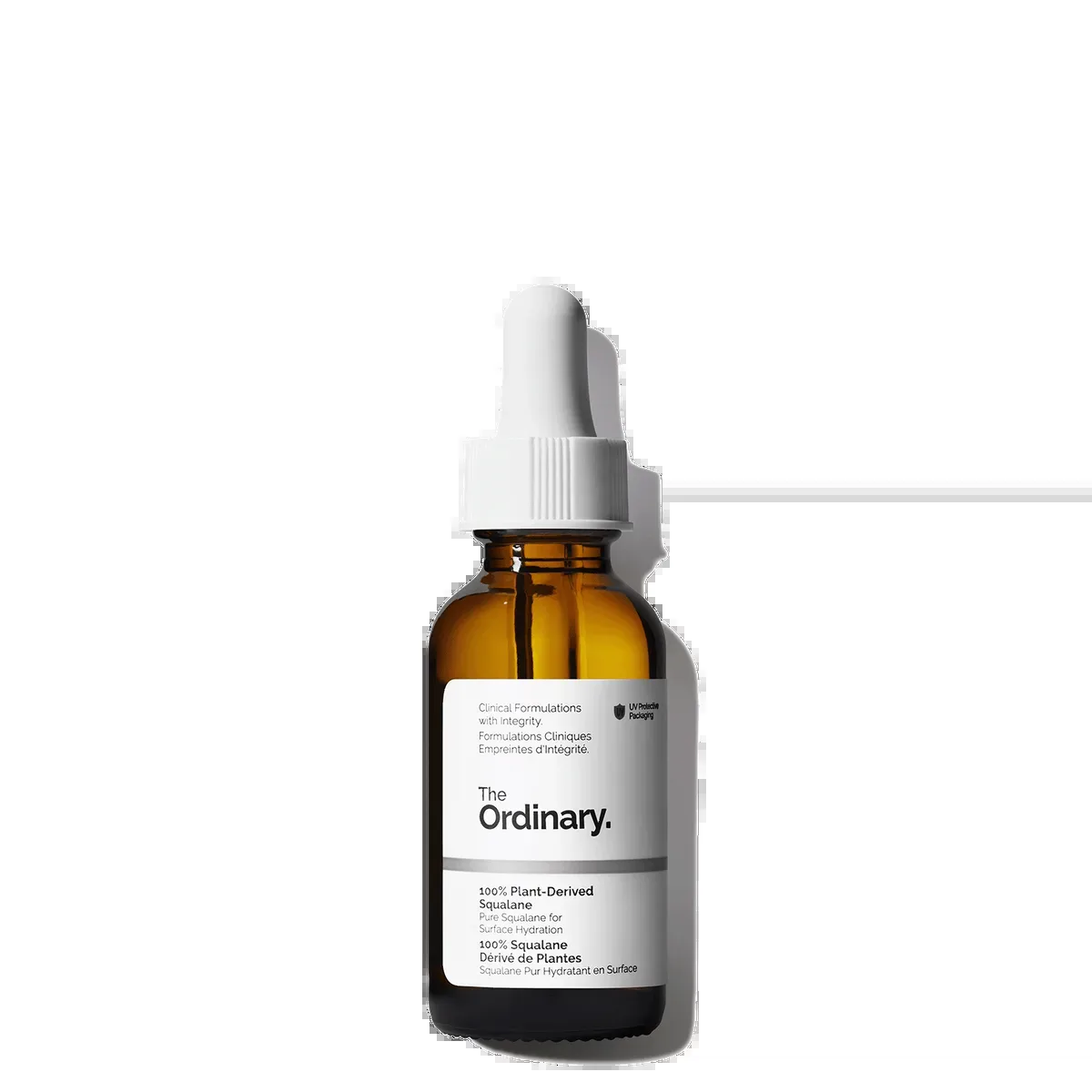
That's why squalane consistently lands near the bottom of comedogenicity ratings and why dermatology-minded formulators reach for it in products meant for reactive and blemish-prone skin. A minimalist single-ingredient option like The Ordinary 100% Plant-Derived Squalane gives you the pure lipid for about the price of lunch, which makes it an easy, low-risk way to test whether your oil-phobia was really about squalane or about the oxidation-prone oils you'd tried before. If you'd rather it come pre-blended into a barrier formula, a lightweight recovery oil like Byoma Recovery Oil pairs squalane with ceramides and jojoba so the sealing emollient arrives alongside barrier lipids.
The honest caveat: 'low comedogenic' is not 'zero risk for everyone.' Skin is individual, and a small number of people react to almost anything. But as facial oils go, squalane is about as close to universally tolerated as the category offers.
Olive, sugarcane, and the shark nobody wants to talk about
For most of the twentieth century, commercial squalane came from an uncomfortable source: shark liver oil, which is exceptionally rich in squalene. That sourcing is now largely obsolete in mainstream skincare, and good riddance — it was both an ecological problem and a quality-control one. Today's squalane is overwhelmingly plant-based, and the two dominant sources are olives and sugarcane.
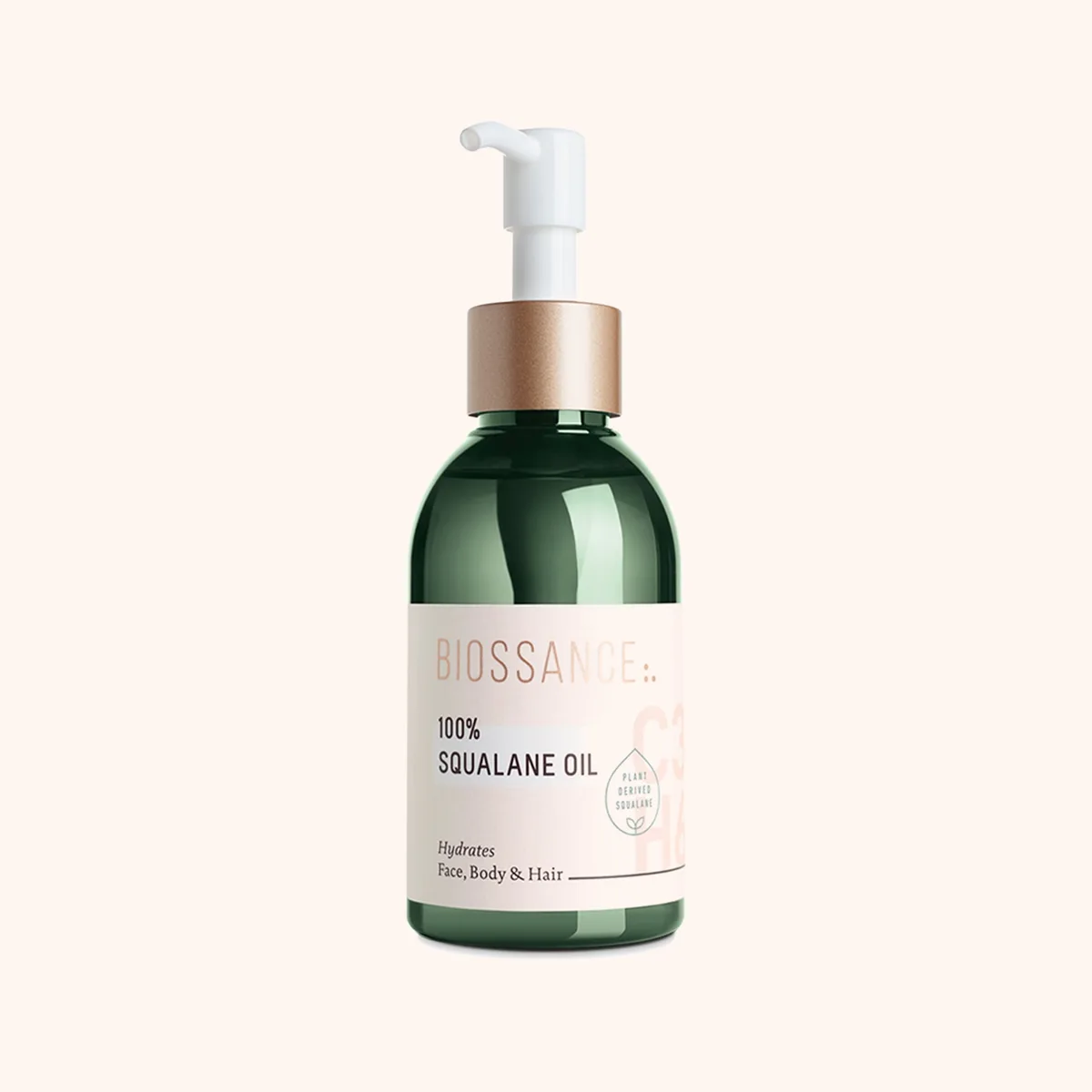
Olive-derived squalane is well-established and effective, but it carries a couple of practical caveats: olive harvests vary in quality year to year, yields are relatively low, and there's a theoretical consideration for anyone sensitive to olive-derived ingredients. Sugarcane-derived squalane, produced by fermenting sugarcane-derived sugars, tends to be the more consistent, more sustainable, and more scalable option, with a very high purity profile — which is why the brand that popularized modern squalane built its identity around it. A pure sugarcane squalane like Biossance 100% Squalane Oil is the archetype of that approach.
From your skin's perspective, well-purified squalane is squalane regardless of feedstock — the finished molecule is identical. The sourcing question is really about sustainability, consistency, and your own sensitivities rather than a difference you'll feel on your face. If you want to compare what a given bottle actually contains beyond the marketing, our Ingredient Decoder is built for exactly that kind of label read.
Where it fits — and where it doesn't
It's worth being clear-eyed about what squalane is and isn't. It is an outstanding emollient and a gentle sealant. It is not an active. It won't fade pigment, stimulate collagen, or exfoliate — anyone selling squalane as an anti-aging hero is overreaching. Its job is to soften, to reduce the roughness of a compromised surface, and to lock humectants underneath it so they don't evaporate. Judged as what it is, it's close to flawless. Judged as a treatment, it's miscast.
That clarity tells you how to use it. Squalane belongs near the end of your routine, after your water-based hydrators and serums, where it can seal in the moisture they deliver. Layer it over a glycerin or hyaluronic acid step and you get the reservoir-plus-seal combination that keeps skin hydrated for hours; if you're unsure of the sequence, our Routine Order tool sorts the layering. Squalane also shines as a buffer for harsh actives — its stability and skin-affinity make it a smart way to cushion a retinoid, which is why you'll find it as the carrier in oils like Murad Retinol Youth Renewal Face Oil Drops, where the squalane base helps deliver the retinol while blunting its dryness.
Who actually needs it? Oily and acne-prone people who've been scared off oils and want the sealing benefit without the risk; dry and mature skin that needs an extra emollient layer; sensitive and barrier-compromised skin that can't tolerate fragrant botanical oils; and anyone using potent actives who wants a low-drama way to soften the blow. Who can skip it? People whose moisturizer already contains enough emollients and who feel no tightness or roughness — squalane is a fix for a specific problem, not a mandatory step. It's the rare oil that earns its reputation precisely by refusing to act like one.
Products mentioned
Independently reviewed and scored — the real products behind this piece.


References
- Ultraviolet A induces generation of squalene monohydroperoxide isomers in human sebum and skin surface lipids in vitro and in vivo — Journal of Investigative Dermatology, 2003
- Squalene Peroxidation and Biophysical Parameters in Acne-Prone Skin: A Pilot 'In Vivo' Study — Pharmaceuticals (Basel), 2023
- Oxidization of squalene, a human skin lipid: a new and reliable marker of environmental pollution studies — International Journal of Cosmetic Science, 2015
Every cited link is verified to resolve to the paper named. Where a source could not be independently confirmed, it is listed without a link rather than pointing you somewhere wrong.
Frequently asked
What's the difference between squalene and squalane?
Squalene (with an 'e') is an unstable lipid your skin naturally produces; it oxidizes quickly and, once oxidized, becomes irritating and comedogenic. Squalane (with an 'a') is the hydrogenated, fully saturated version — chemically stable, shelf-stable, and non-oxidizing. Skincare uses squalane specifically to get the skin-mimicking benefit without the oxidation problem the raw form carries.
Will squalane clog my pores or cause breakouts?
It's one of the least likely oils to. The lipids that clog pores are unsaturated ones and their oxidized byproducts, and squalane is fully saturated, so it doesn't oxidize into those comedogenic breakdown products. It consistently rates very low on comedogenicity. No oil is guaranteed non-reactive for every person, but for oily and acne-prone skin, squalane is among the safest choices available.
Is sugarcane or olive squalane better?
The finished molecule is identical either way, so your skin can't tell the difference. Sugarcane-derived squalane is generally more consistent, more sustainable, and higher-purity, and it avoids olive-related sensitivities. Olive-derived squalane works well too but has more year-to-year variability. Choose based on sustainability and any personal sensitivities rather than expecting a difference in performance.
When should I apply squalane in my routine?
Near the end, after your water-based serums and hydrators. Squalane is an emollient and sealant, so its job is to lock in the moisture those earlier steps deliver — applying it over a glycerin or hyaluronic acid layer maximizes the effect. It can also be used to buffer a retinoid or layered under a heavier cream in very dry conditions.
Can squalane replace my moisturizer?
Not really — it depends on your skin and climate. Squalane seals and softens but contains no humectants to draw in water, so on its own it can lock in whatever is already there without adding hydration. Most people get better results using it as the final sealing step over a humectant-rich moisturizer rather than as a standalone replacement.