

The Face Oil for People Who Are Sure They Hate Face Oils
Squalane copies a lipid your own skin makes, then removes the one chemical flaw the original has. That's why it sinks in like water instead of sitting on top like grease.
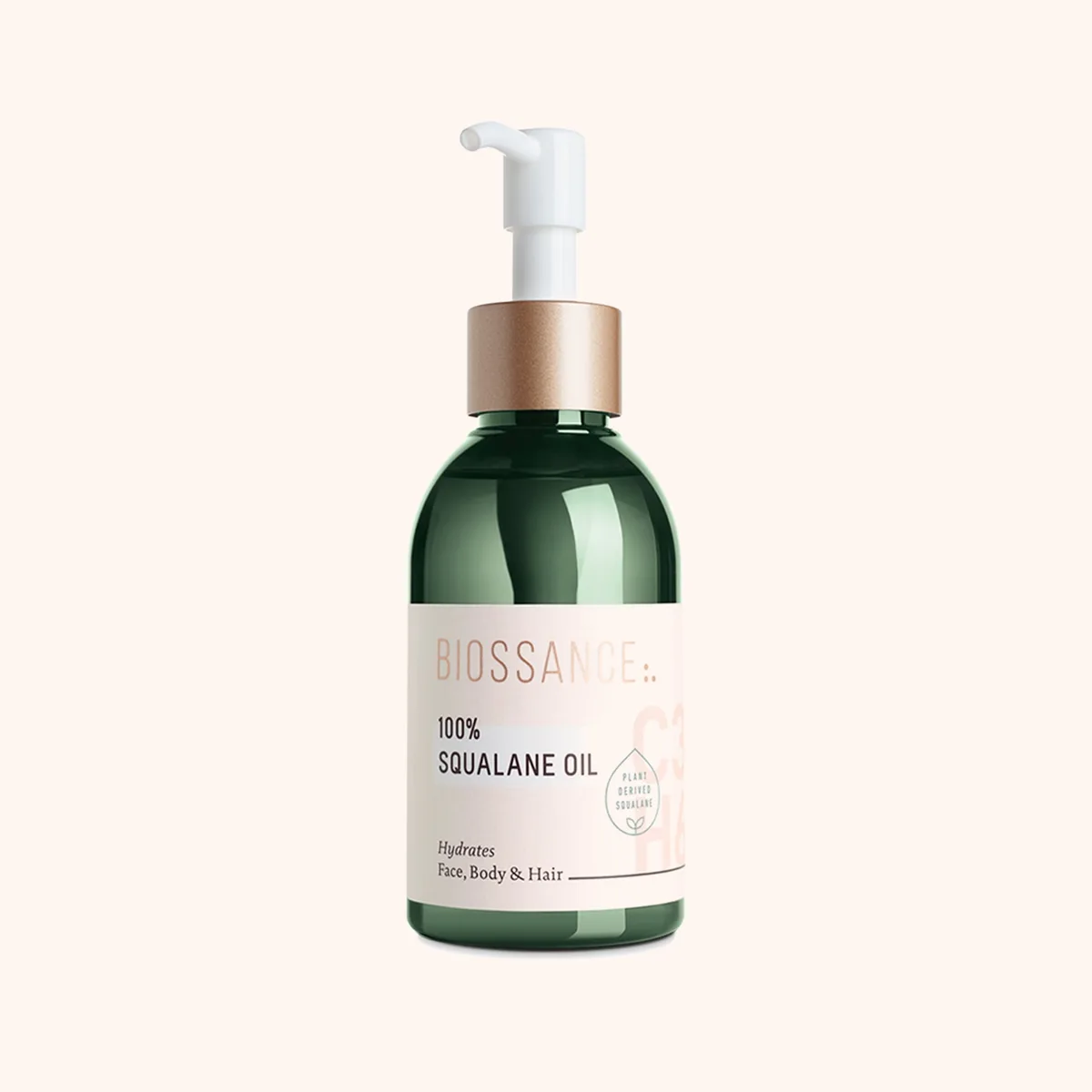
It is a single, ultra-pure ingredient — nothing but sugarcane-fermented squalane — which makes it one of the most predictable, low-risk products you can put on your face. Because squalane is structurally near-identical to the skin's own squalene and the formula contains zero fragrance, fillers, or actives, it suits virtually every skin type, is fungal-acne safe, and carries a National Eczema Association seal.
The product that built the brand, and still its purest: a single ingredient, sugarcane-derived squalane, that absorbs weightlessly and seals in moisture without fragrance, fillers, or fuss. It is fungal-acne safe, NEA-accepted, and suits nearly every skin type. Not a treatment and priced at a clean-beauty premium, but as a do-no-harm finishing oil it is genuinely excellent.
The case for it
Same rule for everyone. “Good choice” is the verdict on 9,564 of 45,024 concern verdicts across the catalog; rule R5 decided 9,072 of them. Unchanged since September 5, 2026, engine 5.1.1.
Brand or formulator? Disclose a concentration or correct a fact →
The studies behind the evidence row
The case for it
What would change this: A researched evidence row for the lead active would replace this with a verdict.
Same rule for everyone. “Supporting role” is the verdict on 8,197 of 45,024 concern verdicts across the catalog; rule R8 decided 4,250 of them. Unchanged since September 5, 2026, engine 5.1.1.
Brand or formulator? Disclose a concentration or correct a fact →
The case for it
What would change this: A researched evidence row for the lead active would replace this with a verdict.
Same rule for everyone. “Good choice” is the verdict on 1,938 of 45,024 concern verdicts across the catalog; rule F2 decided 1,938 of them. Unchanged since September 5, 2026, engine 5.1.1.
Brand or formulator? Disclose a concentration or correct a fact →
The case for it
Same rule for everyone. “Not for this” is the verdict on 488 of 45,024 concern verdicts across the catalog; rule R10 decided 488 of them. Unchanged since September 5, 2026, engine 5.1.1.
Brand or formulator? Disclose a concentration or correct a fact →
The studies behind the evidence row
Also listed for Dehydration and Winter Skin — the actives here (Squalane) are in our research queue for those concerns; there is no verdict until their evidence rows are written. That is a gap in our table, not a mark against the product.
As a oilNot judged: what a oil is for — fatty-acid profile, seals moisture, resists going rancid — cannot yet be measured from the ingredient list (only pore and malassezia risk can).
A verdict is DermApproved’s assessment of how well a product’s ingredients fit a concern — never a claim about what the product treats. Evidence dots and collected reviews sit beside it and are never blended in. Rules 0.5.1 · evidence table ev-2026.09-r228 · how we decide
Before this was a bestseller, it was a fix for an ugly problem. For decades the skincare industry's best emollient, squalane, was harvested largely from shark liver oil — an unsustainable, ethically grim supply chain hiding inside countless moisturizers. Biossance's entire reason for existing was a biotech answer to that: ferment sugarcane into a pure, vegan, fully traceable squalane instead. This single-ingredient oil is the direct result, the founding product, and arguably the most honest thing the brand makes — because there is nowhere to hide in a bottle that contains exactly one ingredient. What you see on the label, squalane, is the entire formula. That radical simplicity is the whole point, and it is worth understanding why it works. Squalane is the hydrogenated, stabilized form of squalene, a lipid our own sebaceous glands produce as part of the skin's natural moisture system. Because it is essentially skin-identical, the skin recognizes it and accepts it readily, which is why this oil behaves so differently from heavier botanical oils. It is weightless to the point of feeling almost dry, sinks in within seconds, and leaves behind softness and a sealed, comfortable feel rather than a greasy slick. As an emollient it fills the microscopic gaps between skin cells and reinforces the barrier's ability to hold water, making it an ideal final or near-final step to lock in everything you applied beneath it. The case for it is really the case for predictability. With one ultra-pure ingredient and zero fragrance, the risk profile is about as low as skincare gets. There is nothing in here to trigger a fragrance allergy, nothing to clog pores — squalane is non-comedogenic — and crucially, it is fungal-acne safe, a rarity among facial oils that makes it one of the very few oils people prone to malassezia breakouts can use freely. It carries the National Eczema Association Seal of Acceptance, which is not a marketing flourish but a meaningful nod toward its suitability for the most reactive, compromised skin. In practice, this makes it almost universally recommendable: dry skin loves it as a sealing layer, sensitive and eczema-prone skin tolerates it when little else is tolerable, and even oily skin generally gets along with it because a lightweight, skin-identical oil does not overload the surface. The versatility is a quiet bonus. A few drops finish a face routine, but the same bottle smooths flyaways and dry ends in hair, softens cuticles, calms dry patches on the body, and can be mixed into foundation for a lo-fi glow. It is the kind of multitasker that justifies a permanent spot in a drawer. And because it is so pure and stable — squalane resists the oxidation that turns lesser oils rancid — it keeps well, with a generously long shelf life once opened. Now for the honest framing, because praise without context is useless. This is not a treatment. It contains no actives, no antioxidants, no retinoids or acids or vitamin C; it will not fade dark spots, smooth wrinkles, or clear breakouts. Its entire job is to hydrate, soften, and seal, and judging it by any other standard is a category error. The people who end up disappointed are the ones who expected a pure emollient to do an active's work. Bought for what it actually is — a do-no-harm finishing and barrier-support oil — it is hard to fault. On value, thirty-four dollars for the standard bottle is a clean-beauty premium for what is, chemically, a simple commodity ingredient; you can find squalane oils for less, and the price here reflects the brand's sustainable sourcing story, its traceability, and its name as much as the oil itself. The mitigating factors are real, though: a little goes a long way at a few drops per use, a jumbo size meaningfully improves the cost per milliliter, and the purity and NEA seal offer a level of reassurance that bargain squalane oils may not match. For anyone who wants one supremely gentle, versatile, fragrance-free oil that nearly any skin can use, this remains a benchmark — not because it is fancy, but precisely because it refuses to be. There is also something quietly clarifying about owning a product this simple. Modern skincare runs on the anxiety of optimization — the sense that you should be layering more actives, chasing more results, adding more steps. A single-ingredient oil is the antidote to that mindset. It asks nothing of you except to seal in what you already applied and to soften skin that needs softening, and it does both without fanfare. For people overwhelmed by complicated routines, or for those rebuilding after they overdid it on actives and wrecked their barrier, the value of a do-no-harm product cannot be overstated. It is the thing you reach for when your skin needs less, not more. The versatility deepens that appeal: one bottle quietly replaces a separate hair serum, a cuticle oil, a body oil for dry patches, and a face oil, which is its own kind of value even at a premium price. Years after it launched, plenty of flashier oils have come and gone, and this one is still on shelves doing exactly what it always did. That longevity is the real endorsement — not a clever marketing angle, but a product that earned its place by being genuinely, reliably useful and getting out of its own way.
The hero actives that drive this product's performance.
| Ingredient | Function | Evidence |
|---|---|---|
| Squalane (Sugarcane-Derived) (100%) | The entire product — a single, ultra-pure ingredient. As the only thing in the bottle, this sugarcane-fermented squalane delivers undiluted, skin-identical emollience that mimics the squalene our own sebaceous glands produce, sealing in moisture and softening skin without competing ingredients or fillers. | Established mechanism for Dryness · established mechanism |
Ingredient standings describe the active at treatment-level doses and vehicles; this product's own condition grades weigh its actual formula.
Squalane
occlusive
AM & PM
Apply as one of the last steps, after serums and ideally after or mixed into a moisturizer, to seal in everything beneath it. A few drops can also be pressed over moisturizer at night, added to a foundation for glow, or smoothed onto dry hair ends and cuticles.
Immediate softness and a sealed, comfortable feel from the first application. Ongoing barrier comfort and reduced dryness build over days to weeks of regular use, though as a pure emollient its benefit is consistent maintenance rather than a cumulative active effect.
The science here is refreshingly singular: this is one well-characterized ingredient and nothing else. Squalane is the saturated, hydrogenated derivative of squalene, a lipid naturally present in human sebum and the skin's surface lipid film. Because it is structurally near-identical to a component the skin already produces, it integrates readily into the stratum corneum and functions as an emollient that fills intercellular spaces and is documented to reduce transepidermal water loss, supporting the barrier's capacity to retain moisture. Hydrogenation is the key chemical step: squalene itself oxidizes rapidly and can become irritating or comedogenic as it degrades, whereas squalane is far more oxidatively stable, which underpins both its excellent shelf life and its non-comedogenic profile. Its lightweight molecular character explains the fast, non-greasy absorption that distinguishes it from heavier triglyceride oils. From a tolerability standpoint, a single-ingredient, fragrance-free oil is about as low-risk as topical products get, consistent with its acceptance by the National Eczema Association. The realistic boundary, scientifically, is that squalane is an emollient and occlusive support, not a biologically active treatment — it does not modulate pigment, collagen, or sebum in the way actives do. The honest summary is that the emollient and barrier-support evidence for squalane is solid and well-established, while the product makes no active claims that would require further substantiation.
Squalane is widely regarded in clinical practice as one of the most reliable, well-tolerated emollients available, frequently suggested for dry, sensitive, and eczema-prone skin and as a barrier-support layer over moisturizers. Its skin-identical nature, non-comedogenic profile, and absence of fragrance make it a common recommendation for patients who react to more complex products, and a single-ingredient version simplifies the task of identifying triggers. Dermatologists often note that pure squalane is appropriate even for acne-prone and fungal-acne-prone skin, where many oils are off-limits. The standard clinical framing positions it as a hydrating and protective adjunct rather than an active treatment, to be paired with retinoids, acids, or other targeted therapies that address specific concerns the oil itself is not designed to treat.
Use morning and night as one of the final steps in your routine. After serums and moisturizer, dispense two to four drops, warm them between the palms, and press gently over the face and neck to seal in the products underneath. For very dry skin it can be mixed directly into a moisturizer or applied as the last step at night. Beyond the face, smooth a drop over dry hair ends and flyaways, massage into cuticles, or add a drop to liquid foundation for a dewy finish. Because it is fragrance-free and non-comedogenic, it can be used as often as the skin wants.
At thirty-four dollars for the standard bottle, this commands a clean-beauty premium for what is chemically a simple, widely available ingredient — squalane oils from other brands can cost noticeably less. What the price buys is purity, traceable and sustainable sugarcane sourcing rather than shark-derived squalane, an NEA seal, and the reassurance of a single-ingredient formula. Those are legitimate reasons to pay more, though not everyone needs to. The practical value is helped considerably by usage: a few drops suffice, so a bottle lasts months, and the larger jumbo size meaningfully lowers the cost per milliliter for committed users. Fair value for a benchmark-quality pure squalane; an easy place to economize if sourcing and brand are not priorities.
Ideal for almost anyone, but especially dry, sensitive, eczema-prone, or reactive skin that needs a supremely gentle, fragrance-free way to seal in moisture and support the barrier. It is also a smart pick for oily and fungal-acne-prone skin seeking a lightweight, non-comedogenic oil, and for anyone who wants one versatile multitasker for face, body, and hair.
Anyone wanting a product that actively treats a concern — dark spots, wrinkles, acne, or texture — should look elsewhere, because this pure emollient does none of that. Bargain shoppers content with a basic squalane oil, and anyone wanting an oil with added botanicals or actives, will also be better served by something else.
A clear, weightless oil that feels almost dry on contact, spreads thinly, and absorbs quickly without leaving a heavy or slick film.
Completely fragrance-free and essentially odorless, with no botanical or added scent.
Frosted glass bottle with a dropper for controlled dispensing; offered in a standard size and a larger jumbo bottle for better value.
From the very first drop the oil sinks in fast and leaves skin soft and sealed rather than greasy, which surprises people expecting a heavy facial oil. There is no tingle, scent, or adjustment period; it simply makes skin feel more comfortable immediately and is gentle enough that even reactive, eczema-prone skin typically tolerates it without issue.
Several months from the standard bottle when used as a few-drop finishing step; the jumbo size lasts well over half a year with daily face use, longer if reserved for the face alone.
All Year
Squalane was historically harvested from shark liver, an unsustainable and ethically fraught source. Biossance's founding breakthrough was fermenting sugarcane into a pure, vegan, traceable squalane, and this single-ingredient oil became the product that put the brand on the map. It remains the purest expression of the brand's entire reason for existing: clean, sustainable squalane as the hero rather than a supporting player.
Biossance launched in 2016 from the Amyris biotech platform that pioneered fermenting sugarcane into cosmetic-grade squalane, and this single-ingredient oil is effectively the brand's founding product. It carries the National Eczema Association Seal of Acceptance, lending it credibility beyond the brand's marketing.
Facial oils are bad for oily or acne-prone skin.
Squalane is non-comedogenic and fungal-acne safe, and because it is lightweight and skin-identical, even oily skin generally tolerates it well. A few drops can actually help balance skin that overproduces oil in response to dehydration.
Squalane is the same as the unstable squalene it comes from.
Squalene, found in our sebum, oxidizes quickly and goes rancid. Squalane is the hydrogenated, stabilized form — far more shelf-stable and resistant to oxidation while retaining the same skin-identical emollient benefits, which is why a pure squalane oil keeps so well.
Yes. The entire formula is sugarcane-derived squalane and nothing else, with no fragrance, fillers, or actives. That purity is what makes it so predictable and gentle, and why it suits even reactive, eczema-prone skin.
Yes. Squalane is non-comedogenic and fungal-acne safe, and its lightweight, skin-identical texture absorbs without overloading oily skin. A few drops can even help balance skin that overproduces oil due to dehydration.
Use it as one of the last steps, after serums and moisturizer, to seal everything in. A few drops pressed over a moisturizer at night work well, and in the morning apply it before sunscreen.
Chemically the squalane is the same molecule, but Biossance's is fermented from sustainable sugarcane rather than harvested from shark liver. That makes it vegan, traceable, and free of the ethical and sustainability problems of marine-derived squalane.
No. It is a pure emollient that hydrates, softens, and seals in moisture, but it contains no actives, so it will not fade pigment or smooth wrinkles. Pair it with treatments like retinoids or vitamin C for those concerns.
Yes. As a single, fragrance-free, inert emollient with no retinoids or other restricted actives, it is considered one of the safer skincare choices during pregnancy. As always, anyone with concerns can confirm with their provider.
Recurring themes our editors read across retailer reviews of this product — summaries in our words, not quotations, and not a substitute for your own patch test.
Absorbs fast without greasiness
Calms and softens dry, irritated skin
Pure and fragrance-free
Versatile for face, body, and hair
Not a substitute for an active treatment
Pricier than other squalane oils
Dropper can dispense too much
Some want more than just hydration
Verified answers from our questions library — the nuance a product page cannot carry.