



Homemade Sunscreen Fails for a Reason You Cannot Fix in a Kitchen
Every other DIY mistake announces itself. This one stays silent for eight hours, and the equipment that would prevent it does not fit on a countertop.
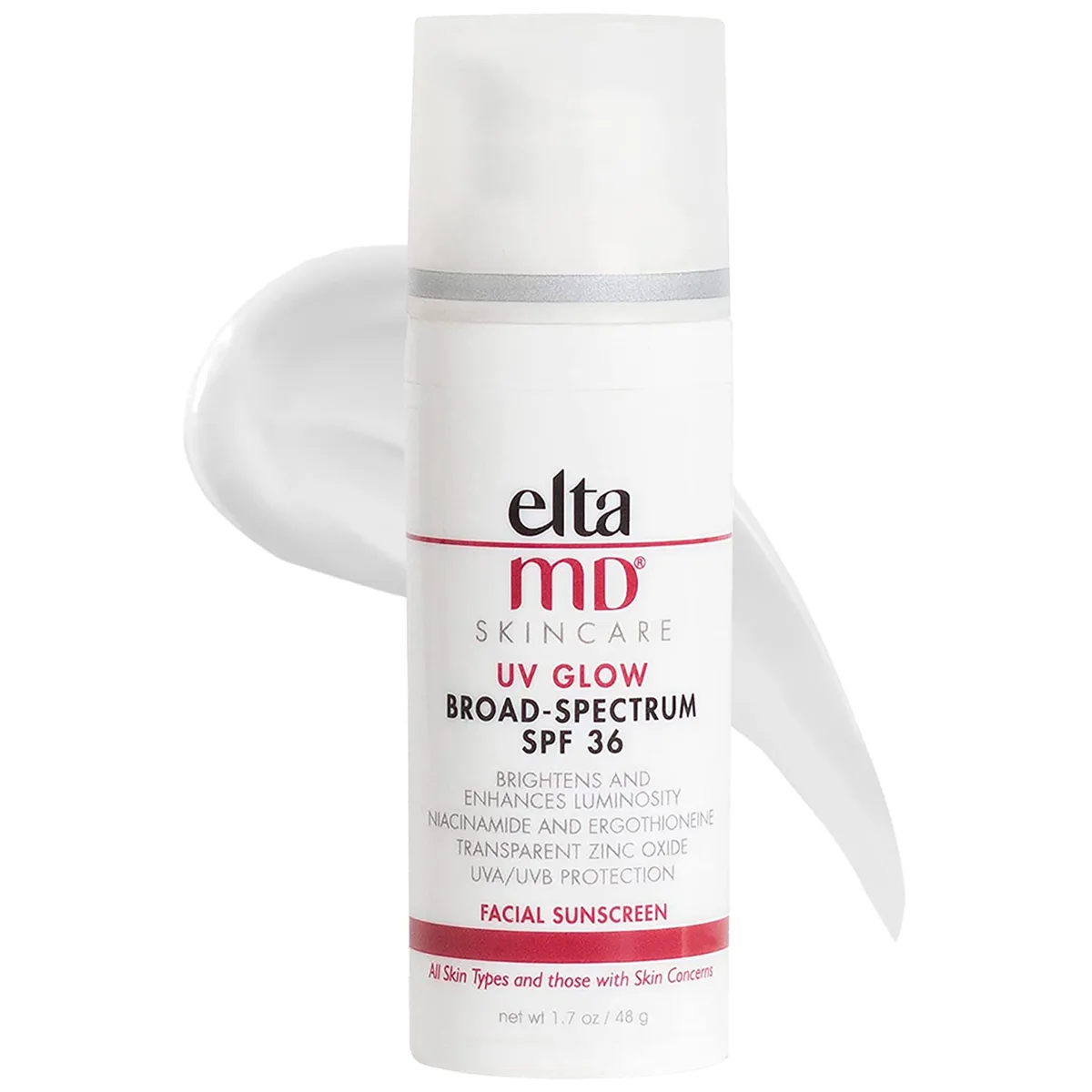
Within the EltaMD UV lineup — already among the most-prescribed sunscreens in U.S. dermatology — UV Glow occupies a unique cosmetic position. It's the brand's only SKU explicitly designed for a glowy, dewy finish rather than satin or matte, with mica for luminosity and a notably higher niacinamide concentration than the rest of the line. The 20.15% zinc oxide is also unusually high — about double UV Daily's load — making it one of the most concentrated pure-mineral sunscreens with broad-spectrum protection at this finish level.
EltaMD's least-clinical, most-cosmetic SKU — and one of the smartest entries in the brand's expanding portfolio. UV Glow pairs a remarkably high 20.15% zinc oxide load with active-level niacinamide and a sophisticated antioxidant blend (ergothioneine, bisabolol, ginger), all under a luminous mica finish that genuinely makes skin look brighter. A clear win for the patient who'd otherwise skip mineral SPF because it looked flat or chalky.
The case for it
Cautions: a photosensitising active — use sun protection.
Same rule for everyone. “Full protection” is the verdict on 2,288 of 45,024 concern verdicts across the catalog; rule P1 decided 2,232 of them. Unchanged since September 5, 2026, engine 5.1.1.
Brand or formulator? Disclose a concentration or correct a fact →
The studies behind the evidence row
The case for it
Cautions: a photosensitising active — use sun protection.
What would change this: A declared concentration would move this to a firmer reading of the dose.
Same rule for everyone. “Full protection” is the verdict on 2,288 of 45,024 concern verdicts across the catalog; rule P1 decided 2,232 of them. Unchanged since September 5, 2026, engine 5.1.1.
Brand or formulator? Disclose a concentration or correct a fact →
The studies behind the evidence row
The case for it
Cautions: a photosensitising active — use sun protection.
What would change this: A declared concentration would move this to a firmer reading of the dose.
Same rule for everyone. “Full protection” is the verdict on 2,288 of 45,024 concern verdicts across the catalog; rule P1 decided 2,232 of them. Unchanged since September 5, 2026, engine 5.1.1.
Brand or formulator? Disclose a concentration or correct a fact →
The studies behind the evidence row
The case for it
What would change this: A declared concentration would move this to a firmer reading of the dose.
Same rule for everyone. “Promising” is the verdict on 7,858 of 45,024 concern verdicts across the catalog; rule R9p decided 7,858 of them. Unchanged since September 5, 2026, engine 5.1.1.
Brand or formulator? Disclose a concentration or correct a fact →
The studies behind the evidence row
Also listed for Dullness — the actives here (Zinc Oxide, Niacinamide, Iron Oxides, Bisabolol) are in our research queue for that concern; there is no verdict until their evidence rows are written. That is a gap in our table, not a mark against the product.
Does the jobDoes what a sunscreen is for: UVA coverage, kind to the skin wearing it. Not measured from the label: pleasant enough to actually use.
Where our review and the verdict differ. The review below was written on the formulation and the published trials; the verdicts above apply the stricter standing test in our methodology — an active earns a recommendation only with guideline or regulatory standing for the concern. Where the two disagree, the verdict is DermApproved’s position.
A verdict is DermApproved’s assessment of how well a product’s ingredients fit a concern — never a claim about what the product treats. Evidence dots and collected reviews sit beside it and are never blended in. Rules 0.5.1 · evidence table ev-2026.09-r228 · how we decide
The biggest unsolved problem in sun protection isn't formulation — it's adherence. Dermatologists have been telling patients to wear daily sunscreen for decades, and the science backs them up: photoaging, skin cancer, and pigment-driven concerns all respond meaningfully to consistent daily SPF. But the actual compliance rates are dismal. Most studies show fewer than half of patients with a sunscreen recommendation use one daily. The reason isn't usually cost or doubt about the medical advice. It's that mineral sunscreens, particularly the clinical-grade ones derms recommend, often look terrible on skin. White cast, chalky finish, dry texture, makeup pilling. Patients get the prescription, try the sunscreen, hate how it looks, and stop using it within a week. EltaMD figured this out earlier than most. The brand's UV line has spent years developing pure-mineral sunscreens that don't look like pure-mineral sunscreens — UV Daily with a moisturizing finish, UV Elements with a universal tint that masks white cast, UV Clear with a thin lightweight texture. UV Glow, launched in 2021 as a Dermstore exclusive, represents the most cosmetic version of this same thinking. The premise: if patients want sunscreen that also makes their skin look brighter and more luminous, formulate one that delivers both without compromising on the clinical-grade mineral active system. The active is the centerpiece. Zinc oxide at 20.15% is among the highest concentrations of any commercial mineral sunscreen on the market — roughly double UV Daily's 9% or UV Elements' 10%, and high enough that achieving SPF 36 with broad-spectrum coverage doesn't require a single chemical filter. Pure mineral, FDA-tested, with the broad-spectrum critical wavelength requirement met by the zinc alone. The remarkable thing is that you cannot feel or see the 20% zinc. The finish reads dewy and luminous, not white or chalky. This is partly the mica — which sits in the formulation as both a literal glow particle and a white-cast-masking pigment — and partly the emollient base. Coco-caprylate/caprate, ethyl macadamiate, isopropyl myristate, and a series of polyglyceryl emollients build a slippery, fast-spreading texture that disperses the high zinc load evenly across skin. The result is a serum-like fluid that wears more like a luminizing primer than a sunscreen. The supporting ingredient list is where UV Glow actually pulls ahead of most cosmetic-finish sunscreens on the market. Niacinamide sits at the third position on the inactive list — above most of the emollient phase, which positions it as an active rather than a marketing-claim ingredient. At what's likely a 3-5% concentration based on its ingredient list position, this is functional niacinamide doing real work: barrier support, mild pigment-modulating activity, and reduced redness. Ergothioneine appears further down — an amino acid antioxidant derived from mushrooms with research showing strong free radical scavenging particularly relevant to UV-induced oxidative stress. Bisabolol from chamomile provides anti-inflammatory support. Aloe and ginger root extract add additional soothing and antioxidant activity. This is a more sophisticated antioxidant payload than typical sunscreens carry. The wear in actual use lives up to the formulation choices. The pump dispenses a thin, slightly opalescent fluid. It spreads with almost no drag across the face and settles within 60 seconds into a soft luminous finish that catches light. There's no chalkiness, no flaking, no makeup interference. Skin feels lightly hydrated and looks visibly brighter immediately — separate from the longer-term niacinamide effect that builds over 4-8 weeks. The glow is real and looks like skin, not like body glitter or cheap shimmer. Where the formula has limits worth naming: oily skin and fungal-acne-prone skin. The dewy finish may emphasize shine on already-shiny skin types that prefer matte. More importantly, the coconut fruit extract and isopropyl myristate ingredients may trigger fungal acne (malassezia folliculitis) in users predisposed to it. For these skin types, EltaMD UV Clear remains the better choice within the brand. Price runs $42 for 1.7 oz, similar to UV Daily and UV Elements within the brand and broadly competitive with Supergoop Glowscreen ($40 for 1.7 oz) and Saie Glowy Sunscreen ($38 for 1.7 oz). The differentiating value is the pure-mineral formula, which both Supergoop Glowscreen and Saie Glowy use chemical filters to achieve. For pregnant patients, reef-safe travel, and skin-sensitive users who want a glow finish without chemical filters, UV Glow is functionally one of very few options at this protection level. The Dermstore exclusive distribution is a small annoyance — you can't easily browse it next to the rest of the EltaMD line at every retailer — but it's stocked consistently and the brand is unlikely to pull it from the channel. For the right user, this is one of the most thoughtful sunscreens EltaMD has formulated. It accomplishes the rare achievement of being clinically credible and cosmetically appealing at the same time, and it solves the adherence problem that's frustrated dermatologists for decades: patients are far more likely to wear a sunscreen they actually like the look of.
The hero actives that drive this product's performance.
| Ingredient | Function | Evidence |
|---|---|---|
| Zinc Oxide 20.15% (20.15%) | The single mineral filter in this 100% mineral formula, present at an exceptionally high 20.15% — roughly double the concentration of UV Daily's 9% or UV Elements' 10%. This high zinc load is what allows the formula to be a pure mineral SPF 36 with broad-spectrum coverage without any chemical UV filters anywhere in the formula. | Regulator-approved for Sun Damage · limited certainty |
| Niacinamide | Sits at the third position on the ingredient list (above many of the emollients) — meaningfully higher than its supporting role in UV Daily or UV Elements. At this concentration it's working as an active rather than a co-ingredient, contributing to brightness, pore appearance, and barrier function alongside the SPF protection. | Emerging for Hyperpigmentation |
| Mica + Iron Oxides (if tinted) | Mica provides the literal 'glow' of the product name — a subtle pearlescent finish that catches light and gives skin a luminous quality. In the tinted version, iron oxides are added to provide universal warm tint plus visible-light protection. This is what differentiates UV Glow as a cosmetic-finish SPF vs. UV Elements' matte tint or UV Daily's natural finish. | Not yet assessed |
| Ergothioneine | A potent amino acid antioxidant derived from mushrooms, with research showing strong free radical scavenging activity particularly relevant to UV-induced oxidative stress. Folded into the formula as a complementary antioxidant alongside vitamin E and ginger extract — a more sophisticated antioxidant payload than the typical sunscreen. | Not yet assessed |
| Bisabolol + Aloe + Ginger Extract | Anti-inflammatory and soothing botanicals folded into the inactive base — bisabolol from chamomile is well-documented to calm irritation, aloe adds hydration and barrier support, ginger root extract provides additional antioxidant activity. The combination is designed to keep the high-zinc formula tolerable for sensitive skin. | Not yet assessed |
Ingredient standings describe the active at treatment-level doses and vehicles; this product's own condition grades weigh its actual formula.
Active Ingredient: Zinc Oxide 20.15%. Inactive Ingredients: Water, Coco-Caprylate/Caprate, Niacinamide, Isopropyl Myristate, Polyglyceryl-3 Diisostearate, Ethyl Macadamiate, Mica, Glycerin, Propanediol, Cetearyl Nonanoate, Capryloyl Glycerin/Sebacic Acid Copolymer, Undecane, Caprylic/Capric Triglyceride, Tridecane, Polyglyceryl-3 Polyricinoleate, Disteardimonium Hectorite, Phenoxyethanol, Sodium Chloride, Magnesium Sulfate, Tocopheryl Acetate, Isostearic Acid, Cocos Nucifera (Coconut) Fruit Extract, Xanthan Gum, Bisabolol, Silica, Sodium Hyaluronate, Aloe Barbadensis Leaf Juice, Lactic Acid, Zingiber Officinale (Ginger) Root Extract, Ergothioneine.
sunscreen
AM
Apply as the closing step in your AM routine after serums and moisturizer. The serum-like texture spreads easily and adds a glow finish that can replace illuminating primer. Layer foundation over it for additional coverage, or wear alone for a no-makeup glowy finish. Reapply every 2 hours outdoors.
Immediate luminous finish on application; UV protection effective after 15 minutes. Brighter, more even skin tone over 4-8 weeks of consistent use as the niacinamide content takes effect. Long-term photoaging prevention over months and years.
The high-zinc-oxide approach to pure-mineral sunscreen formulation is well-established but underutilized commercially. Most mineral sunscreens use 6-12% zinc oxide because higher concentrations historically caused unacceptable white cast and chalky texture. UV Glow's 20.15% zinc is at the upper bound of what's commercially feasible, and getting it to wear acceptably required the specific emollient and pigment architecture described above. The advantage is broad-spectrum protection without any chemical UV filters — the zinc handles UVA1, UVA2, and UVB protection through reflection, scattering, and absorption mechanisms. Niacinamide research is among the most thoroughly established in cosmetic dermatology. Hakozaki and colleagues demonstrated that 4-5% topical niacinamide measurably reduces hyperpigmentation and improves barrier function over 8-12 weeks of consistent use. Subsequent studies have confirmed effects on redness, pore appearance, and sebum regulation at similar concentrations. UV Glow's niacinamide position in the ingredient list suggests it's at or near these active concentrations. Ergothioneine is more emerging. A handful of in vitro studies have shown the amino acid scavenges hydroxyl radicals and superoxide anions with high efficiency, and topical preparations have demonstrated photoprotective activity in early human studies. The evidence base is smaller than niacinamide's but the mechanism is plausible and the inclusion alongside other antioxidants creates a layered defense. Bisabolol, derived from chamomile, has been used in cosmetic formulations for decades. Its anti-inflammatory and skin-soothing properties are well-documented in dermatology literature. Aloe and ginger extracts provide additional traditional soothing and antioxidant activity at supportive concentrations rather than treatment-level doses. The architecture is layered defense: zinc oxide blocking UV radiation, niacinamide modulating barrier and pigment response, ergothioneine and other antioxidants scavenging residual free radicals, bisabolol and botanicals calming inflammation. It's more sophisticated than the typical mineral sunscreen formulation and reflects the four-year-newer formulation date relative to UV Daily.
Dermatologists frequently recommend EltaMD UV Glow as a solution for patients who report skipping their daily sunscreen because the clinical mineral options feel or look too heavy. The glow finish provides a cosmetic incentive that improves adherence — the most important sunscreen variable in real-world use. Dermatologists treating patients for dullness, mild hyperpigmentation, or fine lines often pair UV Glow with vitamin C or retinol topicals in the AM routine, since the niacinamide content complements those actives without conflict. The pregnancy-safe formulation also makes it a common recommendation for expectant patients who want a luminous finish during a time when many cosmetic products are restricted. Dermatologists typically avoid recommending it for very oily acne-prone patients, where UV Clear's lighter texture and niacinamide-only base is better positioned. The Dermstore-exclusive distribution is occasionally mentioned as inconvenient for patients who shop at other retailers.
Apply a generous quarter-teaspoon (nickel-sized amount) to face and neck as the final step in your AM routine, after serums and moisturizer. Dispense onto fingertips, warm briefly, then press and spread across face — pressing rather than rubbing helps preserve the luminous finish. Allow 60-90 seconds to settle before applying foundation if desired. The serum-like texture works particularly well as a glow primer under makeup. For midday touch-ups outdoors, use a powder or stick SPF — the lotion is difficult to reapply over makeup. Avoid the eye area; if it gets in your eyes, rinse thoroughly.
At $42 for 1.7 oz, UV Glow prices similarly to other glow-finish sunscreens in the premium tier — Supergoop Glowscreen at $40, Saie Glowy Sunscreen at $38, La Roche-Posay Anthelios Mineral Tinted at $36. The differentiating value is the pure-mineral active system that avoids chemical filters entirely, which competing glow sunscreens do not match at this protection level. For pregnant patients, reef-safe travel, and sensitive-skin users wanting a luminous finish, the value is genuinely strong. With daily face-and-neck application, a bottle lasts 2-3 months, putting the per-day cost at roughly $0.45-$0.70. For shoppers who don't need pure-mineral specifically, the chemical-filter alternatives at slightly lower prices may be a reasonable substitute.
This sunscreen suits anyone with normal, combination, dry, or sensitive skin who wants a luminous, glowy finish from their daily SPF. It's especially well-matched to pregnant patients (pure mineral), patients with dullness or early hyperpigmentation (niacinamide content), patients planning reef-safe travel, and patients who've struggled with clinical mineral sunscreens looking too flat or chalky. It's also a strong choice as a glow primer under foundation.
Give it a miss if you have very oily, shiny skin that prefers matte finishes; if you're fungal-acne-prone and react to coconut or isopropyl myristate; if you need water-resistance for athletic activity; or if you're shopping primarily on price and don't specifically need the glow finish or pure-mineral formulation. EltaMD UV Clear is the better choice for oily acne-prone skin.
Ready to try EltaMD UV Glow Broad-Spectrum SPF 36?
Buy at Amazon ♥Lightweight, slightly slippery serum-like fluid that spreads thinner than a typical sunscreen lotion — closer to a hybrid serum-SPF than a traditional cream
Effectively unscented — no added fragrance, faint underlying scent from the niacinamide and coconut fruit extract
Pump bottle with metered dispensing — the pump is essential since the high-zinc formula needs consistent stirring/dispensing and a tube would be less reliable.
Dispenses as a thin, slightly opalescent fluid. Spreads easily with very little drag. Sets within 60 seconds into a soft, glowy satin finish that catches light. No white cast despite the 20% zinc — the mica and emollient system masks it effectively. Skin feels lightly hydrated and visibly more radiant immediately. No stinging, tingling, or burning.
2-3 months with daily face-and-neck application
All Year
UV Glow launched in 2021 as a Dermstore-exclusive collaboration with EltaMD, designed to expand the brand's cosmetic-finish offerings beyond the clinical and post-procedure positioning of UV Physical and UV Elements. The formulation reflects a shift in dermatology consumer expectations — patients increasingly want sunscreen that doubles as a finishing product, and UV Glow was EltaMD's answer to brands like Supergoop! Glowscreen and Saie Glowy Sunscreen, but with the brand's signature clinical-grade pure-mineral formulation.
EltaMD was founded in 1988 and is one of the most-recommended dermatologist-distributed sunscreen brands in the U.S. The UV Glow SKU is a Dermstore exclusive launched in 2021, designed as a glow-finish mineral sunscreen with niacinamide and ergothioneine — a more cosmetic, finish-driven product within the otherwise clinical UV line.
Glowy sunscreens are just shimmer with SPF and not real sun protection.
UV Glow contains 20.15% zinc oxide — among the highest concentrations of any commercial mineral sunscreen — and is FDA-tested at SPF 36 broad-spectrum. The mica provides the luminous finish but the SPF protection is genuine and pure-mineral.
If a sunscreen has 'glow' in the name, it can't be derm-recommended for serious sun protection.
UV Glow is sold through dermatologist offices and clinical retailers (Dermstore) and is the brand's answer to patients who would otherwise skip daily SPF because the cosmetic finish didn't appeal to them. The protection level and ingredient quality are consistent with the rest of the EltaMD line.
UV Glow is a 100% pure-mineral sunscreen at SPF 36 with 20.15% zinc oxide and niacinamide as a key active. Supergoop Glowscreen uses chemical UV filters (avobenzone, homosalate, octisalate) at SPF 40 with hyaluronic acid and sea lavender. UV Glow is pregnancy-safe and reef-safe; Glowscreen is not. Both have glow finishes but UV Glow has a more luminous-skin look while Glowscreen leans dewier.
Yes — the formula contains only zinc oxide as the UV filter (no chemical filters), making it one of the safer SPF options during pregnancy and breastfeeding. The niacinamide and antioxidant content is also generally considered pregnancy-safe.
It can, but with caution. The dewy finish may emphasize shine on already-oily skin types, and the coconut fruit extract and isopropyl myristate ingredients may not suit fungal-acne-prone skin. For oily acne-prone skin, EltaMD UV Clear is the better choice.
For most normal, combination, or dry skin types, yes — the glycerin, sodium hyaluronate, and emollient base provide enough hydration to skip a separate daytime moisturizer. For very dry skin, layer a hydrating serum underneath.
Yes — the formula contains only non-nano zinc oxide as the active UV filter. There are no octinoxate, oxybenzone, or other reef-restricted chemical filters in the formulation. It's safe for use in Hawaii and other marine-protected areas.
Yes — both versions are sold as Dermstore exclusives. The tinted version adds iron oxides for visible-light protection and universal warm tint. The untinted version provides the glow finish from mica without color correction. Both share the same SPF 36 protection and active ingredient profile.
The luminous finish from mica lasts throughout the day, though it may transfer slightly onto fabrics or oily-skin areas. The niacinamide brightness develops over 4-8 weeks of consistent use as the active builds in skin function — this is separate from the immediate cosmetic glow.
Recurring themes our editors read across retailer reviews of this product — summaries in our words, not quotations, and not a substitute for your own patch test.
Genuinely glowy finish without looking greasy
Niacinamide noticeable as brightening over weeks
Lightweight despite 20% zinc
Wears beautifully under or instead of foundation
Pregnancy-safe with no chemical filters
Glow finish may not suit oily skin types who want matte
Some shimmer settles into fine lines if applied too generously
Price for 1.7 oz vs comparable Dermstore SKUs
Coconut may break out fungal-acne-prone skin
Pump dispenser can get stuck
Verified answers from our questions library — the nuance a product page cannot carry.