



You Can Mix L-Ascorbic Acid at Home. Keeping It Alive Is the Hard Part.
The one home formulation with a genuinely coherent case, taken apart on its own terms: the pH window, the oxidation clock, and what a browning serum has actually become.
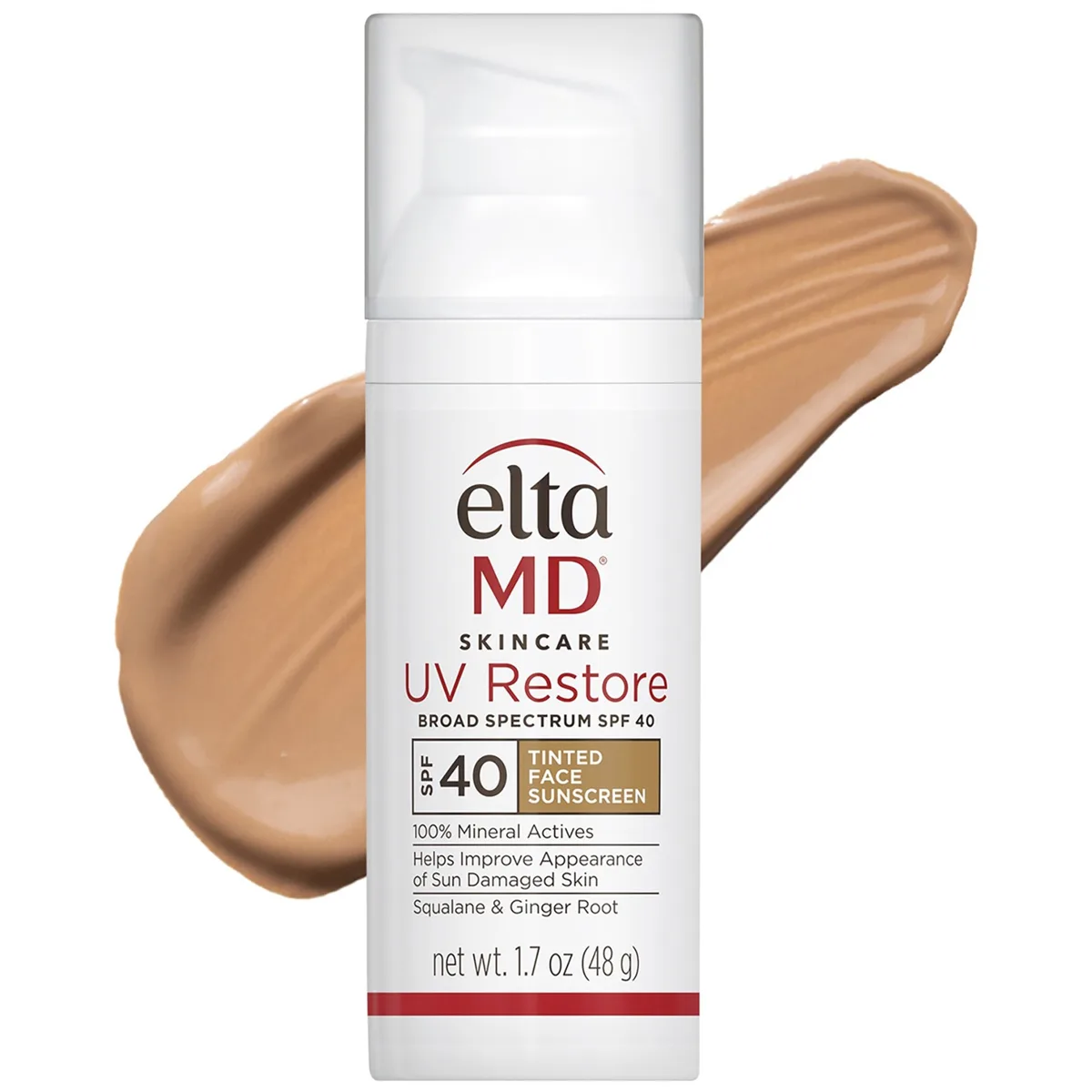
Within the EltaMD UV lineup, UV Restore is the SKU explicitly positioned as anti-aging-active. The 15% zinc oxide provides serious UV protection, the tetrahexyldecyl ascorbate (a stable, oil-soluble vitamin C ester) provides actual collagen and brightening support — meaningfully more potent than the ascorbyl palmitate in UV Elements or UV Replenish. The squalane plus saccharide isomerate plus glycerin trio provides barrier-restore hydration. For shoppers who want one product that combines SPF, vitamin C, and barrier support, this is the brand's most complete formulation.
EltaMD's most ingredient-sophisticated entry — the SKU that pairs high 15% zinc protection with a genuinely meaningful vitamin C ester (tetrahexyldecyl ascorbate) and barrier-restoring squalane plus saccharide isomerate. For aging, sun-damaged, or compromised skin where you want anti-aging activity packed into your daily SPF, UV Restore is the brand's most complete formulation. Tinted finish flatters medium skin tones best.
The case for it
Same rule for everyone. “Full protection” is the verdict on 2,288 of 45,024 concern verdicts across the catalog; rule P1 decided 2,232 of them. Unchanged since September 5, 2026, engine 5.1.1.
Brand or formulator? Disclose a concentration or correct a fact →
The studies behind the evidence row
The case for it
What would change this: A concentration inside the studied range would raise this a step.
Same rule for everyone. “Full protection” is the verdict on 2,288 of 45,024 concern verdicts across the catalog; rule P1 decided 2,232 of them. Unchanged since September 5, 2026, engine 5.1.1.
Brand or formulator? Disclose a concentration or correct a fact →
The studies behind the evidence row
The case for it
What would change this: A concentration inside the studied range would raise this a step.
Same rule for everyone. “Full protection” is the verdict on 2,288 of 45,024 concern verdicts across the catalog; rule P1 decided 2,232 of them. Unchanged since September 5, 2026, engine 5.1.1.
Brand or formulator? Disclose a concentration or correct a fact →
The studies behind the evidence row
Also listed for Dullness and Compromised Skin Barrier — the actives here (Zinc Oxide, Probiotics & Prebiotics, Squalane, Vitamin C) are in our research queue for those concerns; there is no verdict until their evidence rows are written. That is a gap in our table, not a mark against the product.
Does the jobDoes what a sunscreen is for: UVA coverage, kind to the skin wearing it. Not measured from the label: pleasant enough to actually use.
A verdict is DermApproved’s assessment of how well a product’s ingredients fit a concern — never a claim about what the product treats. Evidence dots and collected reviews sit beside it and are never blended in. Rules 0.5.1 · evidence table ev-2026.09-r228 · how we decide
Most sunscreens marketed as 'anti-aging' get there by adding token amounts of vitamin C or peptides to a basic SPF formula. The actives are present in name but not at functional concentrations, and the marketing claim relies on the consumer not reading the ingredient list too carefully. EltaMD UV Restore, launched in 2020, takes a more honest approach. The vitamin C is a serious one — tetrahexyldecyl ascorbate, not ascorbyl palmitate — the supporting ingredients are calibrated for actual barrier work, the zinc concentration is high at 15%, and the iron oxide tint provides genuine visible-light protection. It's the EltaMD SKU where the supporting cast is doing real work, not just decoration.
The active filter system is 15% zinc oxide and 2% titanium dioxide. The zinc is the standout — among the highest in the brand's lineup — and a load that heavy would normally announce itself as a chalky white film. The iron oxide and mica system masks it effectively on most fair-to-medium skin tones, which is the quiet engineering achievement of the formula: serious mineral protection that doesn't look like spackle. Butyloctyl salicylate, sitting high in the inactive list, is not a UV filter but a solubilizer that helps the minerals disperse evenly, and silica gives the finish its soft, non-shiny settle.
Tetrahexyldecyl ascorbate is the standout supporting ingredient. It's a stable, oil-soluble vitamin C ester that penetrates skin and converts to active L-ascorbic acid, supporting antioxidant defense, collagen synthesis, and pigment modulation. Research from the early 2010s onward has shown measurable brightening and photoaging improvement over eight to twelve weeks of consistent use. It is meaningfully more effective than ascorbyl palmitate — the ester that shows up in most 'vitamin C sunscreens' and that has earned the whole category its reputation for empty claims. Its position in the ingredient list, after the emollients but ahead of the trailing ingredients, suggests something in the 0.5-3% range: not a treatment-strength serum dose, but enough to contribute genuinely when applied every single morning.
The barrier-restoration architecture is the second distinguishing feature. Squalane is a plant-derived emollient that closely mimics the lipid profile of healthy sebum. Saccharide isomerate bonds tightly to keratin in the stratum corneum, anchoring moisture for extended periods rather than evaporating off with the water phase. Glycerin adds straightforward humectant hydration. Together, these address the dryness and barrier compromise that so often travel alongside sun-damaged or over-treated skin. Ginger root extract contributes anti-inflammatory polyphenols, vitamin E adds lipid-soluble antioxidant backup, and the iron oxides do double duty as tint and as protection against the visible light implicated in melasma and post-inflammatory darkening.
In actual use, the formulation choices show up on the face. It dispenses as a sheer-tinted, slightly creamy lotion, spreads with a moderate emollient pull, and settles into a satin finish in about a minute. There's no sting, no tingle, and skin looks immediately more even. The finish is more substantial than the brand's lightest tinted options — heavier without being heavy — which is exactly what the barrier-restore positioning implies. Applied properly, that means about a quarter-teaspoon over face and neck as the last step of a morning routine, which is more product than most people instinctively use and the difference between the SPF on the box and the SPF on your skin.
Within the EltaMD wall of near-identical white tubes, it's worth being precise about what makes this one different, because the assumption that they're interchangeable costs people money. This is the highest total mineral load among the brand's tinted options, the only one with the sophisticated vitamin C ester, and the only one pairing squalane with saccharide isomerate for barrier work. The rest of the line trades those for lighter finishes, water resistance, or a different soothing package. They are not the same product with different labels.
Where the formula has limits worth naming: there is no water resistance, so a beach day or a long run calls for a different tube entirely. The 1.7 oz size at $41 works out to roughly $24 an ounce, at the expensive end of the brand's own range, and a tube runs two to three months of daily face-and-neck use. Coco-caprylate makes it a poor fit for anyone managing fungal acne. And the tint is a single universal warm shade — it flatters a broad middle range and reads noticeably off on very fair or very deep complexions, which is the most consistent complaint across the roughly twenty-two hundred reviews the product has collected.
The redundancy question is the one worth thinking hardest about. If your morning routine already includes a treatment-strength L-ascorbic acid serum, you are paying a premium here for an ingredient you're already getting at a higher dose, and a simpler mineral sunscreen from the same brand would serve you better for less. If you'd rather not run a separate serum at all — if the goal is one step that protects, brightens, and repairs — this is the most complete thing EltaMD makes, and the combined cost compares favorably to buying a decent vitamin C serum and a decent SPF separately.
What the tint also buys, for the right skin, is protection the SPF number never captures. Visible light drives melasma and darkens post-inflammatory marks, and no amount of zinc alone addresses it; the iron oxides do. For anyone whose primary concern is pigment rather than wrinkles, that single detail may matter more than the vitamin C.
What UV Restore ultimately is, then, is a well-made answer to a specific question: what if the daily sunscreen could also do real anti-aging work? For aging or sun-damaged skin, a compromised barrier, and a fair-to-medium complexion, the formulation supports its marketing more credibly than nearly anything else in the category, and it carries the clinical credibility EltaMD has spent decades earning in dermatology offices. For everyone else, the brand makes something cheaper, lighter, or waterproof — and knowing which of those you actually are is the whole decision.
The hero actives that drive this product's performance.
| Ingredient | Function | Evidence |
|---|---|---|
| Zinc Oxide 15.0% (15.0%) | Provides the bulk of broad-spectrum protection in this mostly-zinc mineral system — the 15% concentration is notably higher than UV Elements' 10% or UV Replenish's 10%, sitting between UV Physical (9%+7%) and UV Glow (20.15%) on the zinc-load spectrum. The high zinc supports the 'restore' positioning for compromised barriers. | Regulator-approved for Sun Damage · limited certainty |
| Tetrahexyldecyl Ascorbate | A stable, lipid-soluble vitamin C ester that penetrates skin to convert into active L-ascorbic acid for antioxidant defense and collagen support — meaningfully more sophisticated than the typical ascorbyl palmitate found in other EltaMD SKUs. This is the active that supports the 'restore' barrier-repair claim, with research showing measurable skin brightening and photoaging benefits at sustained use. | Limited for Sun Damage |
| Saccharide Isomerate | A plant-derived carbohydrate complex that bonds tightly to keratin in the upper stratum corneum to anchor moisture for extended periods — works in tandem with the squalane and glycerin in the formula to deliver long-lasting hydration that complements the high-zinc UV protection. | Not yet assessed |
| Squalane | Plant-derived occlusive emollient that closely mimics the skin's own sebum lipids — restores barrier function in compromised skin while staying non-comedogenic. The combination with saccharide isomerate and glycerin creates a humectant-plus-emollient hydration system that fits the formula's barrier-restore positioning. | Not yet assessed |
| Iron Oxides + Ginger Root Extract | Iron oxides provide the sheer universal tint that masks the white cast from 15% zinc, plus visible-light and HEV blue-light protection relevant for hyperpigmentation. Ginger root extract contributes anti-inflammatory polyphenols that calm low-grade inflammation associated with sun-damaged or aging skin. | Not yet assessed |
Ingredient standings describe the active at treatment-level doses and vehicles; this product's own condition grades weigh its actual formula.
Active Ingredients: Zinc Oxide 15.0%, Titanium Dioxide 2.0%. Inactive Ingredients: Water, Coco-Caprylate/Caprate, Butyloctyl Salicylate, Octyldodecyl Neopentanoate, Caprylic/Capric Triglyceride, Methyl Glucose Sesquistearate, Silica, Glyceryl Stearate, PEG-100 Stearate, PEG-20 Methyl Glucose Sesquistearate, Phenoxyethanol, Triethoxycaprylylsilane, Polyhydroxystearic Acid, Glycerin, Saccharide Isomerate, Glyceryl Behenate, Xanthan Gum, Zingiber Officinale (Ginger) Root Extract, Hydroxyethyl Acrylate/Sodium Acryloyldimethyl Taurate Copolymer, Squalane, Ethylhexylglycerin, Tocopheryl Acetate, Tetrahexyldecyl Ascorbate, Sclerotium Gum, Lecithin, Pullulan, Dimethicone, Polysorbate 60, Ethylene/Methacrylate Copolymer, Mica, Iron Oxides.
sunscreen
AM
Save this for the last step in AM routine, after serums and moisturizer. The tinted finish provides light color correction. For aging or sun-damaged skin, the tetrahexyldecyl ascorbate complements morning vitamin C serums. Layer foundation over it for additional coverage if desired.
Immediate UV protection (effective after 15 minutes). Visible barrier improvement and brightness over 4-8 weeks of consistent use from the tetrahexyldecyl ascorbate and saccharide isomerate. Long-term photoaging prevention with daily use over months and years.
Tetrahexyldecyl ascorbate is the most clinically distinctive ingredient in this formula. It's a lipid-soluble vitamin C derivative that's stable in cosmetic formulations (unlike free L-ascorbic acid which degrades quickly) and converts to active L-ascorbic acid after penetrating into skin. A paper published in the Journal of Cosmetic Science and the International Journal of Cosmetic Science from the late 2000s onward has demonstrated measurable improvements in collagen synthesis, melanin reduction, and antioxidant marker reduction with topical tetrahexyldecyl ascorbate at concentrations of 1-3% over 8-12 weeks of consistent use. The efficacy data is meaningfully better than older vitamin C esters like ascorbyl palmitate, which has more limited bioavailability. Zinc oxide at 15% provides broad-spectrum UVA1, UVA2, and UVB protection through reflection, scattering, and absorption mechanisms. The high concentration is what allows the formula to function with only 2% titanium dioxide as supplementary UVB protection — the zinc is doing most of the broad-spectrum work. Saccharide isomerate is a plant-derived carbohydrate complex (glucose-galactose-mannose) that bonds to keratin in the stratum corneum. Supplier-led studies have demonstrated 72-hour hydration retention after a single application, with the effect persisting through multiple cleansing cycles. Independent dermatological validation is more limited but the mechanism (high keratin affinity) is plausible and consistent with the observed performance. Squalane research is well-established as an occlusive emollient and barrier-supporting lipid. The plant-derived version (typically from olives or sugarcane) closely matches the molecular profile of the squalene naturally present in human sebum, making it well-tolerated and non-comedogenic. Iron oxides for visible-light protection have accumulated significant research support over the past decade, with the Castanedo-Cazares 2014 paper and subsequent work establishing iron-oxide-tinted sunscreens as the standard of care for melasma and PIH prevention in Fitzpatrick III-VI skin types. The overall architecture is one of the more thoughtful mineral sunscreen formulations in commercial distribution: serious mineral UV protection, a functional vitamin C ester, a layered barrier-hydration system, visible-light tint, plus supporting antioxidants. It's not a treatment-strength anti-aging routine, but it's meaningfully more active than the typical sunscreen with anti-aging claims.
Dermatologists frequently recommend EltaMD UV Restore for patients with sun-damaged or aging skin who want vitamin C and barrier-restoring ingredients combined with their daily SPF. The tetrahexyldecyl ascorbate content is the key feature for these patients — it provides meaningful antioxidant and collagen-supporting activity that the typical sunscreen doesn't deliver. Dermatologists also recommend UV Restore for patients managing hyperpigmentation in fair-to-medium skin tones, where the iron oxide tint provides visible-light protection alongside the standard UV filters. For patients running a sophisticated anti-aging routine with morning vitamin C serums and PM retinoids, dermatologists may suggest UV Elements or UV Physical instead — UV Restore's anti-aging content is meaningful but redundant when stacked with treatment-strength actives. The barrier-restoring squalane and saccharide isomerate make UV Restore well-suited to patients with compromised barriers from past over-treatment or recent procedures, though for immediate post-procedure recovery UV Physical's carnosine and bisabolol may be slightly better positioned.
Apply a generous quarter-teaspoon (nickel-sized amount) to face and neck as the final step in your AM routine, after serums and moisturizer. For best vitamin C integration, layer a treatment-strength L-ascorbic acid serum (10-20%) underneath UV Restore if hyperpigmentation or photoaging is a primary concern. Allow 60-90 seconds to settle before applying foundation. Reapply every 2 hours if outdoors. For midday touch-ups, use a tinted SPF powder or stick rather than re-applying the lotion. Avoid the eye area.
At $41 for 1.7 oz, UV Restore's per-ounce cost ($24/oz) sits at the upper end of the EltaMD pricing range, comparable to UV Daily but more expensive than UV Physical's 3 oz size. The price reflects the more sophisticated ingredient list — tetrahexyldecyl ascorbate is significantly more expensive than ascorbyl palmitate, and the squalane plus saccharide isomerate barrier system adds meaningful formulation cost. For shoppers who would otherwise buy a separate vitamin C serum plus a basic SPF, UV Restore's combined approach can actually be cost-competitive. The travel/trial size is occasionally available as a free sample with orders, providing a low-commitment way to test the product. For shoppers happy with simpler SPF and a separate AM vitamin C serum, the value gap to UV Physical narrows.
This sunscreen suits anyone with sun-damaged, aging, or compromised-barrier skin who wants meaningful anti-aging activity combined with SPF in one product. It's well-matched to patients with fair-to-medium complexions managing hyperpigmentation, anyone in their 40s-60s wanting simplified anti-aging routines, and pregnant patients who want pure-mineral SPF with active vitamin C support. It's also a good choice as the daily SPF in a streamlined routine when separate vitamin C serums aren't desired.
It is not your product if you have very deep skin tones where the universal tint reads ashy, if you're already running a treatment-strength morning vitamin C serum (UV Elements or UV Physical may be redundant-free alternatives), if you need water-resistance for athletic activity (UV Physical or UV Sport), or if you're fungal-acne-prone and reactive to coco-caprylate. Drugstore alternatives lack the tetrahexyldecyl ascorbate but provide adequate UV protection at lower prices.
Ready to try EltaMD UV Restore Broad-Spectrum SPF 40?
Buy at Amazon ♥Medium-weight tinted lotion with a slight emollient pull from the squalane and lipid base — heavier than UV Luminous but lighter than UV Physical
Effectively unscented — no added fragrance, with a faint underlying note from the mineral filters and ginger root extract
Squeeze tube with flip cap; opaque packaging protects the vitamin C ester and iron oxide pigments from light degradation.
Dispenses as a sheer-tinted, slightly creamy lotion. Spreads with a slight emollient drag and settles into a satin natural finish within 60-90 seconds. The universal tint masks the white cast from 15% zinc effectively on fair-to-medium skin tones. No stinging or tingling. Skin feels lightly hydrated, smooth, and visibly more even toned immediately.
2-3 months with daily face-and-neck application
All Year
EltaMD launched UV Restore in 2020 as the most ingredient-loaded entry in its UV line — designed to address the gap between basic sunscreen and an anti-aging treatment by combining a stable vitamin C ester (tetrahexyldecyl ascorbate) with high zinc oxide UV protection and barrier-restoring lipids. The brand's marketing positioned it specifically for sun-damaged, aging, or compromised skin where ongoing repair is as important as sun prevention.
EltaMD was founded in 1988 and is among the most-recommended sunscreen brands in U.S. dermatology offices, with Skin Cancer Foundation Seal of Recommendation across the UV line. UV Restore launched in 2020 as the brand's barrier-restoring entry with high zinc oxide (15%) and a stable lipid-soluble vitamin C ester (tetrahexyldecyl ascorbate).
Vitamin C in sunscreen is just a marketing ingredient and doesn't work.
Tetrahexyldecyl ascorbate is a stable, lipid-soluble vitamin C ester with well-documented research showing it penetrates skin, converts to active L-ascorbic acid, and provides measurable brightening and collagen-stimulating effects over 8-12 weeks of consistent use. It's meaningfully more potent than ascorbyl palmitate, which is the more common 'vitamin C in sunscreen' ingredient.
All EltaMD mineral sunscreens are basically the same.
Within the EltaMD line, UV Restore has the highest mineral content (15% zinc + 2% titanium = 17% total active) of the tinted SKUs, the most sophisticated vitamin C ester, saccharide isomerate plus squalane for barrier hydration, and ginger root antioxidant — a genuinely different formulation profile than UV Elements (10% zinc + 5.5% titanium with hyaluronic acid) or UV Physical (9% zinc + 7% titanium with carnosine).
Both are tinted pure-mineral sunscreens with iron oxides. UV Restore has 15% zinc oxide + 2% titanium dioxide as actives, tetrahexyldecyl ascorbate (vitamin C ester) plus squalane and saccharide isomerate for anti-aging/barrier support. UV Elements has 10% zinc + 5.5% titanium dioxide with sodium hyaluronate plus ascorbyl palmitate (less potent vitamin C). Choose UV Restore for active anti-aging and barrier restoration; UV Elements is better for general daily melasma management.
Partially. The tetrahexyldecyl ascorbate in this formula provides genuine vitamin C activity, but at a concentration below what a treatment-strength serum would provide. For best results on hyperpigmentation or significant photoaging, layer a dedicated vitamin C serum (like 10-15% L-ascorbic acid) underneath UV Restore in the morning rather than relying on UV Restore alone.
Yes — the formula contains only zinc oxide and titanium dioxide as active UV filters, both considered safe during pregnancy by virtually all obstetric dermatologists. Tetrahexyldecyl ascorbate (vitamin C ester) is also generally regarded as pregnancy-safe.
The universal warm tint flatters Fitzpatrick III-IV complexions most consistently. The high 15% zinc concentration would otherwise produce a strong white cast, but the iron oxide tint masks it effectively on medium skin tones. Very fair or very deep complexions may find the tint mismatched. UV Elements may be a better choice for very deep skin tones.
Yes — this is explicitly the SKU's positioning. The combination of high zinc protection, tetrahexyldecyl ascorbate for collagen and brightening, squalane plus saccharide isomerate for barrier repair, and iron oxides for visible-light protection makes it one of the more clinically reasoned anti-aging sunscreens. Consistent daily use is necessary for results.
No — UV Restore is not labeled water-resistant. For swimming, sweating, or extended outdoor activity, EltaMD UV Physical (40 minutes) or UV Sport (80 minutes) are the better choices in the brand's lineup.
Yes — the formula contains only non-nano zinc oxide and titanium dioxide as active UV filters, both allowed in marine-protected areas including Hawaii. There are no octinoxate, oxybenzone, or other reef-restricted chemical filters.
Recurring themes our editors read across retailer reviews of this product — summaries in our words, not quotations, and not a substitute for your own patch test.
High zinc concentration without heavy texture
Tetrahexyldecyl ascorbate makes this an anti-aging SPF in one step
Tint flatters a wide range of skin tones
Genuinely hydrating barrier feel
Works well over actives
Tint may not match very fair or very deep skin tones perfectly
Not water-resistant
Smaller 1.7 oz size at premium price
Some users find finish slightly tacky
Coco-caprylate may not suit fungal-acne-prone skin
Verified answers from our questions library — the nuance a product page cannot carry.