



Niacinamide vs Vitamin C: You're Asking the Wrong Question
They brighten through completely different machinery — which is exactly why the 'pick one' framing is a trap.
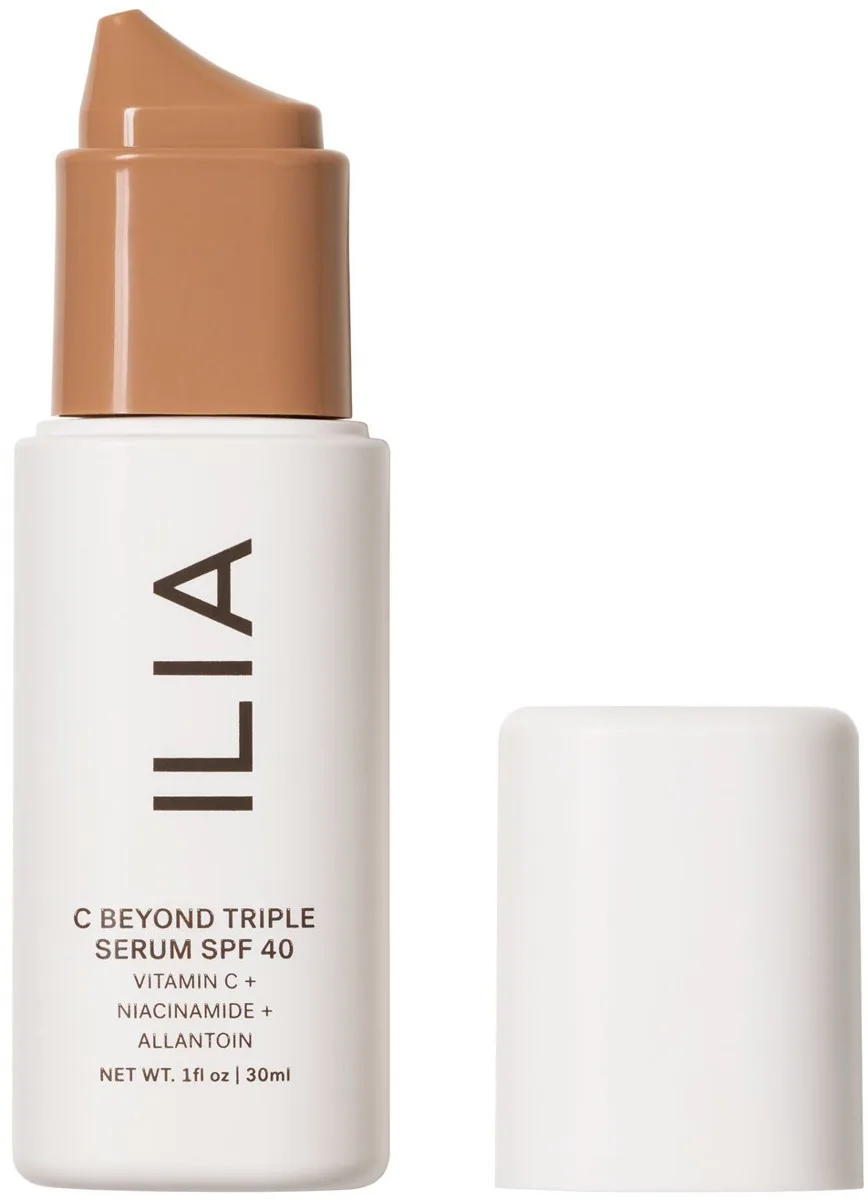
Pure L-ascorbic acid and mineral zinc oxide normally cannot coexist stably in a single formulation — ascorbic acid degrades rapidly in the presence of metal oxide UV filters, and the combination usually requires either separate products applied in sequence or a vitamin C derivative substituted for the unstable free acid. This serum uses microencapsulation technology to isolate the pure ascorbic acid (and the niacinamide) from the zinc oxide until point of skin contact, allowing all three actives to coexist in a single product. The waterless serum-cream base further protects the ascorbic acid stability. This is genuinely novel formulation work that almost no competing product attempts at this scale.
A genuinely ambitious hybrid that solves a real formulation problem: getting pure L-ascorbic acid to coexist with mineral zinc oxide SPF in one bottle, via microencapsulation. It delivers SPF 40, 10% vitamin C, and 2% niacinamide in a cushioned waterless serum-cream. The encapsulation tech is impressive and well-executed. The $64 price and 30ml size make the value math complicated.
The case for it
Same rule for everyone. “Full protection” is the verdict on 2,288 of 45,024 concern verdicts across the catalog; rule P1 decided 2,232 of them. Unchanged since September 5, 2026, engine 5.1.1.
Brand or formulator? Disclose a concentration or correct a fact →
The studies behind the evidence row
The case for it
Same rule for everyone. “Full protection” is the verdict on 2,288 of 45,024 concern verdicts across the catalog; rule P1 decided 2,232 of them. Unchanged since September 5, 2026, engine 5.1.1.
Brand or formulator? Disclose a concentration or correct a fact →
The studies behind the evidence row
The case for it
What would change this: Trial evidence for the active on this concern would move this from a bet to a recommendation.
Same rule for everyone. “Full protection” is the verdict on 2,288 of 45,024 concern verdicts across the catalog; rule P1 decided 2,232 of them. Unchanged since September 5, 2026, engine 5.1.1.
Brand or formulator? Disclose a concentration or correct a fact →
The studies behind the evidence row
The case for it
What would change this: Trial evidence for the active on this concern would move this from a bet to a recommendation.
Same rule for everyone. “Full protection” is the verdict on 2,288 of 45,024 concern verdicts across the catalog; rule P1 decided 2,232 of them. Unchanged since September 5, 2026, engine 5.1.1.
Brand or formulator? Disclose a concentration or correct a fact →
The studies behind the evidence row
Also listed for Dullness — the actives here (Zinc Oxide, Squalane, Shea Butter, Niacinamide) are in our research queue for that concern; there is no verdict until their evidence rows are written. That is a gap in our table, not a mark against the product.
Does the jobDoes what a sunscreen is for: UVA coverage, kind to the skin wearing it. Not measured from the label: pleasant enough to actually use.
A verdict is DermApproved’s assessment of how well a product’s ingredients fit a concern — never a claim about what the product treats. Evidence dots and collected reviews sit beside it and are never blended in. Rules 0.5.1 · evidence table ev-2026.09-r228 · how we decide
Here is a piece of cosmetic chemistry most people never think about: pure L-ascorbic acid and mineral zinc oxide do not get along. Put them in the same formula and the ascorbic acid degrades rapidly in the presence of the metal oxide, which is why almost every product that wants both either sells them as two separate steps or quietly swaps the unstable pure vitamin C for a more stable but less potent derivative. This incompatibility is the entire reason the Ilia C Beyond Triple Serum SPF 40 exists, and the product is, at its core, an answer to a hard question. Whether that answer is worth $64 is a separate matter, but the engineering deserves to be taken seriously first.
Ilia's solution is microencapsulation. The pure L-ascorbic acid — and the niacinamide — are isolated inside protective capsules that stay intact until the moment of skin contact, when the act of applying and rubbing the product breaks them open. Until then, the actives never touch the zinc oxide, so the vitamin C does not degrade. The formula goes further by being waterless: built on a squalane base rather than a water phase, which removes the other major accelerant of ascorbic acid breakdown. This is not marketing dressing — it is a genuine, somewhat clever formulation choice, and very few competing products attempt anything like it at this scale. Ilia, founded in 2011 and now an established player, clearly invested real R&D here.
What you get in the bottle is three functions at once. First, broad-spectrum sun protection: 10% non-nano zinc oxide, disclosed right on the INCI as the first ingredient, delivers the SPF 40 rating through physical reflection and absorption, with genuine UVA and UVB coverage. Second, brightening and antioxidant defense: pure L-ascorbic acid, the only form of vitamin C with a fully established clinical literature, at an effective level. Third, supporting brightening and barrier care: 2% niacinamide. Around these sit squalane, shea butter ethyl esters, jojoba, and meadowfoam oil — a lipid backbone that makes a waterless formula feel cushioned and hydrating rather than greasy or draggy — plus a soothing layer of vitamin E, bisabolol, and allantoin to keep the substantial active load tolerable.
The texture surprises people. Mineral SPFs have a reputation for being thick, chalky, and unpleasant; this one feels closer to a luxury moisturizer — a cushioned serum-cream that warms on application and settles to a soft satin finish. It is fragrance-free, which matters for a daily product. The tinted variants give a slight skin-tone-evening effect that some users treat as a no-makeup look, and the shade range is reasonably inclusive. The honest caveat is white cast: 10% zinc oxide is a lot of zinc, and the non-tinted version can leave a visible cast on medium-to-deep skin. The tinted shades address this for matching tones, but Fitzpatrick V-VI skin should choose the deepest tint and still expect a brief adjustment as it settles.
A few practical limitations come with the clever chemistry. Encapsulated actives need to be redistributed, so you have to shake the bottle well before each use. The airless dropper packaging protects the actives from oxidation but is less travel-friendly than a tube. And the encapsulation, while robust, rewards careful storage away from heat. None of these are dealbreakers, but they are the small taxes of a sophisticated formula.
The real friction point is value. At $64 for 30ml, this is expensive, and 30ml does not last long when you are applying the generous, dermatologist-recommended quarter-teaspoon daily for face and neck that the SPF rating actually requires — realistically a month and a half to two months. Ilia's own framing is that the product replaces both a morning vitamin C serum and a sunscreen, and that is fair: if you currently buy a dedicated vitamin C serum and a separate mineral SPF, the combined cost is comparable to or higher than this. The value case holds if you genuinely want the single-step convenience and the encapsulation technology. It falls apart if you are happy with two separate products, where you can often spend less and get a higher vitamin C concentration in a dedicated serum. There is also the honest point that a 10% pure ascorbic acid serum will not out-brighten a dedicated 15-20% formula — this is a convenience-and-integration product, not a maximum-strength one.
The fair verdict: this is a well-made, genuinely innovative hybrid, and the encapsulation that lets pure vitamin C live alongside mineral SPF is the real deal, not a gimmick. As a pregnancy-appropriate, fragrance-free, mineral-SPF-plus-brightening product in a single step, it is one of the better executions on the market. Just go in clear-eyed: you are paying a premium for clever integration and brand positioning, the 30ml runs through fast at proper sunscreen doses, and if you do not value the all-in-one convenience, the separate-products route is the better deal.
The hero actives that drive this product's performance.
| Ingredient | Function | Evidence |
|---|---|---|
| Zinc Oxide 10% (Non-Nano) (10%) | Listed first on the INCI at a disclosed 10% concentration, non-nano zinc oxide is the broad-spectrum mineral UV filter that delivers the SPF 40 rating. Zinc oxide provides genuine UVA and UVB coverage through physical reflection and absorption, and the non-nano particle size addresses the safety concerns about nanoparticle penetration. Mineral SPF is the formulation choice for users wanting clean-beauty positioning, pregnancy-appropriate sun protection, or alternatives to chemical UV filters. | Regulator-approved for Sun Damage · limited certainty |
| L-Ascorbic Acid (Encapsulated Vitamin C) (10%) | Pure L-ascorbic acid — the only form of vitamin C with a fully established clinical literature for topical brightening, antioxidant defense, and collagen synthesis support. The microencapsulation technology is the formulation key — pure ascorbic acid normally cannot coexist stably with mineral zinc oxide in a single formula, but the encapsulation isolates the actives until point of skin contact. This is a genuinely novel formulation choice that almost no competing product offers. | Limited for Sun Damage |
| Niacinamide 2% (2%) | Documented tyrosinase-inhibiting and barrier-supportive activity make niacinamide a clinical workhorse in modern brightening formulations. At 2% in this serum it provides supporting brightening alongside the primary vitamin C, plus barrier-supportive activity that helps offset any inflammatory potential of the high zinc oxide and ascorbic acid load. | Emerging for Hyperpigmentation |
| Squalane | Listed second on the INCI as the primary emollient base, squalane is a stable hydrocarbon that mimics natural skin sebum components. In this waterless serum-cream format, squalane is the primary vehicle that carries the encapsulated actives, replacing the water base that would otherwise destabilize the pure ascorbic acid. | Not yet assessed |
| Shea Butter Ethyl Esters + Jojoba + Meadowfoam Oil Lipid Backbone | A combination of plant lipids creating the serum's cushioned hydration backbone. Shea butter ethyl esters provide the unsaponifiable anti-inflammatory benefits of shea butter in a lighter ester form; jojoba oil mimics skin sebum; meadowfoam oil contributes long-chain cushioned emolliency. Together they make the waterless serum feel hydrating despite the absence of a water phase. | Not yet assessed |
| Tocopherol (Vitamin E) + Bisabolol + Allantoin Supporting Layer | Vitamin E provides baseline antioxidant defense that complements the ascorbic acid; bisabolol (chamomile-derived) contributes anti-inflammatory activity; allantoin offers soothing and skin-conditioning function. Together they make the formula tolerable as a daily product despite the substantial active load. | Limited for Sun Damage |
Ingredient standings describe the active at treatment-level doses and vehicles; this product's own condition grades weigh its actual formula.
Zinc Oxide (10%), Squalane, Ascorbic Acid, Polymethylsilsesquioxane, Shea Butter Ethyl Esters, Simmondsia Chinensis (Jojoba) Seed Oil, Limnanthes Alba (Meadowfoam) Seed Oil, Butyloctyl Salicylate, Caprylic/Capric Triglyceride, C12-15 Alkyl Benzoate, C9-12 Alkane, Niacinamide, Silica Silylate, Methylpropanediol, Lecithin, Tocopherol, Silica, Polyglyceryl-2 Dipolyhydroxystearate, Ethylene/Propylene/Styrene Copolymer, Allantoin, Bisabolol, Caprylyl Glycol, Phenylpropanol, Oryza Sativa (Rice) Bran Extract, Butylene/Ethylene/Styrene Copolymer, Helianthus Annuus (Sunflower) Extract, Polyglyceryl-4 Diisostearate/Polyhydroxystearate/Sebacate, Pentaerythrityl Tetra-Di-T-Butyl Hydroxyhydrocinnamate, Rosmarinus Officinalis (Rosemary) Leaf Extract, Hydrogenated Lecithin
sunscreen
AM
Apply as the final morning step after cleansing, toner, and treatment serums. Use a generous quarter-sized amount for face and neck to achieve the labeled SPF 40 — under-application drops real-world SPF substantially. Shake well before each use to redistribute the encapsulated actives. The product replaces both the morning vitamin C serum and the SPF step in a single application, which is the brand's hybrid positioning. The tinted variant provides slight skin-tone-evening coverage that may eliminate the need for foundation for users wanting a no-makeup look.
Immediate: cushioned hydrating serum-cream that absorbs to a soft satin finish. Short-term (daily protection): functioning SPF 40 mineral broad-spectrum protection plus vitamin C and niacinamide active layer. Full benefits (8–16 weeks): visible brightening from the L-ascorbic acid plus niacinamide pathway, alongside long-term photoaging prevention from consistent SPF use.
Two of the three actives here rest on extensive, well-established clinical literature, and the third is a delivery innovation rather than a new ingredient. L-ascorbic acid is the most studied form of topical vitamin C: a 2017 review in the Journal of Clinical and Aesthetic Dermatology on the mechanisms of topical vitamin C summarized its role as a cofactor in collagen biosynthesis, its stabilization of collagen fibers, and its inhibition of AP-1 signaling to reduce matrix metalloproteinase activity and collagen degradation, with photoprotective effects confirmed in human clinical studies. Earlier double-blind trials, including work published in Experimental Dermatology, demonstrated that topical ascorbic acid improved photoaged skin with biopsy evidence of new collagen formation. Zinc oxide is a clinically validated broad-spectrum mineral UV filter, and at 10% non-nano it delivers the SPF 40 rating through physical reflection and absorption. Niacinamide at 2% adds well-documented tyrosinase-inhibiting and barrier-supportive activity. The genuinely distinctive science is the delivery system: pure L-ascorbic acid normally degrades rapidly in the presence of metal oxide UV filters and in a water phase, so the formula uses microencapsulation to isolate the ascorbic acid and niacinamide from the zinc oxide until point of skin contact, and a waterless squalane base to remove the water-driven degradation pathway. Encapsulation technologies for stabilizing ascorbic acid have been explored in cosmetic chemistry research, and this product is a well-executed commercial application of that principle. The honest framing: the actives are individually well-evidenced, and the formulation solves a real stability problem competently — what it does not do is exceed the brightening potency of a dedicated high-concentration vitamin C serum, since the 10% level is calibrated for coexistence and daily tolerability rather than maximum strength.
Dermatologists generally view mineral zinc oxide as one of the most reliable broad-spectrum UV filters and a preferred choice for patients seeking pregnancy-appropriate sun protection or alternatives to chemical filters. Many dermatologists frequently recommend pairing daily SPF with a topical vitamin C, and a product that integrates both can support patient adherence by simplifying the morning routine. Dermatologists do emphasize that achieving the labeled SPF requires applying a sufficiently generous amount — roughly a quarter-teaspoon for the face — and that under-application substantially reduces real-world protection. For patients with deeper skin tones, dermatologists typically advise selecting a tinted formulation to minimize the white cast inherent to high-zinc-oxide sunscreens. They also note that pure ascorbic acid can be irritating for very sensitive or rosacea-prone skin even in encapsulated form, and patch testing is commonly recommended before regular use. Overall, hybrid SPF-and-vitamin-C products are regarded as a reasonable convenience option rather than a replacement for maximum-strength dedicated treatments.
Shake the bottle well before each use to redistribute the encapsulated actives. Apply as the final morning step, after cleansing, toner, and any treatment serums. Use a generous quarter-teaspoon for face and neck combined — under-application sharply reduces the real SPF you receive. The product replaces both a morning vitamin C serum and a separate sunscreen in one step. For extended outdoor exposure, reapply every two hours as with any sunscreen. If you have sensitive or rosacea-prone skin, patch test for about a week before regular use, since the pure ascorbic acid can irritate even in encapsulated form. Store away from heat to protect the encapsulated actives.
At $64 for 30ml, with no larger size offered, this is an expensive product, and the value math depends entirely on how you currently shop. Applied at the generous amount the SPF 40 rating actually requires, 30ml lasts only about six to eight weeks. Ilia positions it as a replacement for both a morning vitamin C serum and a separate sunscreen, and on that basis the price is genuinely defensible — buying a dedicated vitamin C serum plus a dedicated mineral SPF often costs as much or more. The encapsulation technology and waterless formulation represent real R&D, not hype, from an established brand. But for buyers content with two separate products, that route frequently costs less and allows a higher vitamin C concentration. The premium is fair for the integration and the chemistry; it is not a bargain.
This suits people with normal, combination, or dry skin who want sun protection and vitamin C brightening in a single convenient morning step. It is a strong pick for those who prefer mineral SPF, want a pregnancy-appropriate option, and value the encapsulation technology and cushioned texture enough to pay a premium for genuine formulation integration.
It is not your product if you are happy buying a separate vitamin C serum and sunscreen, where you can spend less and get a higher vitamin C concentration. Very sensitive or rosacea-prone skin may not tolerate the 10% pure ascorbic acid, and those wanting a budget-friendly, travel-easy SPF should look elsewhere given the price and small size.
Cushioned, slightly thick serum-cream that warms on application and absorbs to a soft satin finish with minimal white cast.
Fragrance-free, with a very faint neutral note from the plant oils.
30 mL frosted glass dropper bottle with airless dispensing to protect the encapsulated actives from oxidation and degradation.
First application is unusual for a mineral SPF — the cushioned serum-cream texture feels closer to a luxury moisturizer than to traditional zinc oxide formulations. The fragrance-free profile is the first noticeable characteristic. Skin feels immediately hydrated and slightly more even-toned (in the tinted variants), with the cushioned finish lasting throughout the day. Some white cast may be visible on darker skin tones immediately after application before settling. The tinted variants provide a slight skin-tone-evening effect that some users appreciate as a no-makeup look.
About 1.5–2 months at the dermatology-recommended quarter-teaspoon-per-day usage for face and neck.
All Year
Ilia launched the C Beyond Triple Serum SPF 40 in 2022 as one of the brand's most ambitious skincare formulation projects. The product reflects Ilia's broader hybrid skincare-makeup positioning — combining functional benefits typically requiring multiple separate products into a single hybrid. The encapsulation technology required to make pure ascorbic acid coexist with mineral zinc oxide in a single formulation is genuinely complex cosmetic chemistry, and the waterless serum-cream base reflects the formulation choices needed to maintain stability across all three actives.
Ilia launched in 2011 as a clean-beauty makeup brand and has expanded into hybrid skincare-makeup categories over the past decade. The C Beyond Triple Serum SPF 40 is one of the brand's most ambitious formulation projects — combining 10% non-nano zinc oxide mineral sunscreen, pure L-ascorbic acid vitamin C, and 2% niacinamide in a waterless serum-cream base. The encapsulation technology is the key formulation choice that allows pure ascorbic acid to coexist with mineral SPF in a stable product.
Mineral and chemical SPF give the same protection.
Mineral SPF (zinc oxide, titanium dioxide) works through physical reflection plus some absorption; chemical SPF works primarily through absorption. Mineral SPF generally provides excellent broad-spectrum protection with no risk of filter destabilization, but can leave a visible white cast on darker skin tones and may feel heavier than chemical alternatives. The 10% non-nano zinc oxide in this formulation is a clinically validated mineral SPF approach with the trade-off of potential white cast and heavier texture relative to modern chemical filter formulations.
You should always use a dedicated vitamin C serum separately.
For maximum vitamin C concentration and customization, dedicated serums (like SkinCeuticals C E Ferulic at 15%) deliver more aggressive single-active treatment. For users who want simplicity, sun protection plus brightening in a single morning product, and the encapsulation technology that allows pure ascorbic acid to coexist with mineral SPF, this hybrid serum is a legitimate alternative. The trade-off is between maximum single-active concentration and convenient multi-functional simplicity.
Through microencapsulation technology. Pure L-ascorbic acid normally degrades rapidly in the presence of metal oxide UV filters like zinc oxide, which is why most products separate the two actives or use vitamin C derivatives instead. The microencapsulation isolates the pure ascorbic acid in protective capsules that don't dissolve until point of skin contact, keeping the active stable until application. The waterless serum-cream base further protects stability by eliminating the water phase that would accelerate ascorbic acid degradation.
The non-tinted variant can leave a visible white cast on medium-to-dark skin tones because of the 10% zinc oxide content. The tinted variants (multiple shades available) provide skin-tone-matching coverage that eliminates the white cast for users with corresponding tone matches. For Fitzpatrick V–VI skin, choose the deepest available tint, and even then expect some adjustment period as the product settles.
Yes — mineral zinc oxide is one of the most pregnancy-appropriate UV filters available, and pure L-ascorbic acid, niacinamide, and the supporting actives are all considered safe during pregnancy. The fragrance-free profile is also helpful during heightened first-trimester scent sensitivity. This is one of the better hybrid SPF-and-vitamin-C options for pregnancy-related melasma management.
Yes — that's the product's intended hybrid positioning. The 10% pure L-ascorbic acid plus 2% niacinamide combination delivers a real brightening pathway alongside the SPF function. For users who currently use a dedicated higher-concentration vitamin C serum (15–20%), this serum delivers slightly less aggressive vitamin C activity but adds the SPF function in the same application step.
Yes — the SPF 40 mineral broad-spectrum protection is genuinely the daily sunscreen function, not a marketing claim. Apply a generous quarter-sized amount for face and neck to achieve the rated SPF. For extended outdoor exposure, reapply every two hours as with any sunscreen. For indoor office days with limited UV exposure, single morning application is generally adequate.
The mineral SPF formulation is generally well-tolerated by sensitive skin, and the fragrance-free profile plus the bisabolol-and-allantoin soothing layer support tolerability. However, the 10% pure L-ascorbic acid content can be irritating for very sensitive or rosacea-prone skin even in encapsulated form. For confirmed-sensitive users, patch test for a week before regular use, and consider a separate fragrance-free mineral SPF without vitamin C as an alternative if reactivity emerges.
The premium covers the encapsulation technology (genuinely complex cosmetic chemistry), the multi-active formulation (zinc oxide, pure ascorbic acid, niacinamide all stable in one product), the waterless serum-cream base, and the Ilia brand positioning. Compared to buying separate dedicated mineral SPF ($25–40) and dedicated vitamin C serum ($30–80), the combined cost is comparable to or higher than this hybrid product. For users who value the single-product convenience, the price is defensible; for users buying separate products, the value math is more complicated.
Recurring themes our editors read across retailer reviews of this product — summaries in our words, not quotations, and not a substitute for your own patch test.
Combines mineral SPF, vitamin C, and niacinamide in a single product
Encapsulation technology genuinely allows pure ascorbic acid in mineral SPF
Cushioned hydrating texture absorbs cleanly
Available in multiple tints for inclusive shade range
Pregnancy-safe formulation with mineral SPF
Visible brightening over weeks of consistent daily use
Premium price for a 30 mL size
Tinted variants don't match all skin tones perfectly
10% zinc oxide can leave a slight cast on darker skin tones
Encapsulated active stability requires careful storage
Need to shake well before each use to redistribute actives
Less travel-friendly than smaller SPF products
Verified answers from our questions library — the nuance a product page cannot carry.