




Niacinamide vs Vitamin C: You're Asking the Wrong Question
They brighten through completely different machinery — which is exactly why the 'pick one' framing is a trap.
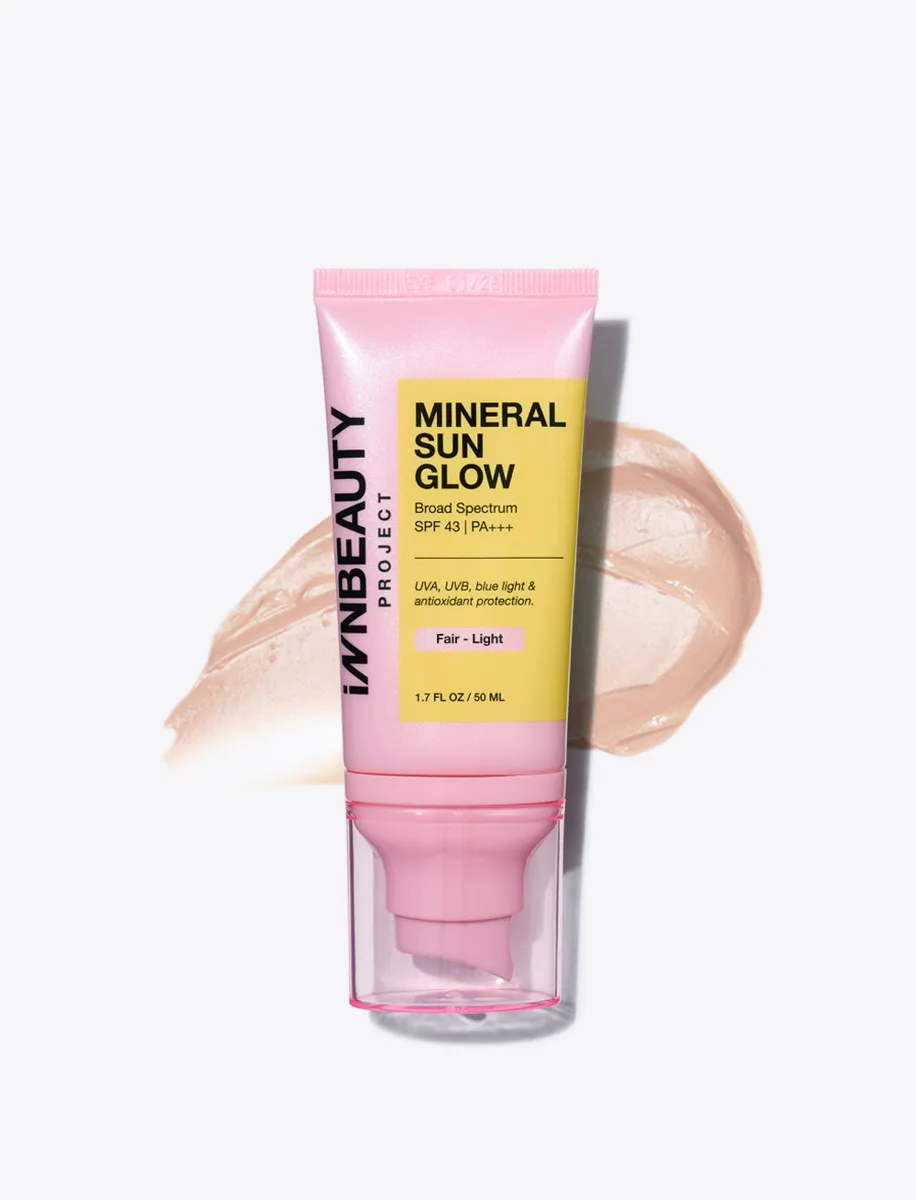
It packs a skincare serum's worth of actives into a tinted mineral sunscreen — three signal peptides, a stable vitamin C, resveratrol, superoxide dismutase, and a pigmented-rice blue-light complex sit alongside 14.2% zinc. Few mineral SPFs treat sun protection as a delivery vehicle for anti-aging and antioxidant treatment the way this one does.
Mineral Sun Glow crams a serum's worth of actives — three peptides, a stable vitamin C, resveratrol, antioxidants — into a tinted, fragrance-free 14.2% zinc sunscreen that glows instead of ghosting. It's one of the most skincare-loaded mineral SPFs at its price, genuinely friendly to sensitive skin. Only the three-shade range and SPF 43 rating keep it from a clean sweep.
With around a year on the market, this score leans on a strong early signal — more than 600 reviews averaging nearly 4.9 stars — together with the disclosed 14.2% zinc-and-actives formula, rather than years of accumulated data. How the tint wears across a wider range of skin tones and how the formula performs long-term are still being established as more feedback arrives.
The case for it
Same rule for everyone. “Full protection” is the verdict on 2,288 of 45,024 concern verdicts across the catalog; rule P1 decided 2,232 of them. Unchanged since September 5, 2026, engine 5.1.1.
Brand or formulator? Disclose a concentration or correct a fact →
The studies behind the evidence row
The case for it
What would change this: A declared concentration would move this to a firmer reading of the dose.
Same rule for everyone. “Full protection” is the verdict on 2,288 of 45,024 concern verdicts across the catalog; rule P1 decided 2,232 of them. Unchanged since September 5, 2026, engine 5.1.1.
Brand or formulator? Disclose a concentration or correct a fact →
The studies behind the evidence row
The case for it
What would change this: A declared concentration would move this to a firmer reading of the dose.
Same rule for everyone. “Full protection” is the verdict on 2,288 of 45,024 concern verdicts across the catalog; rule P1 decided 2,232 of them. Unchanged since September 5, 2026, engine 5.1.1.
Brand or formulator? Disclose a concentration or correct a fact →
The studies behind the evidence row
The case for it
What would change this: A researched evidence row for the lead active would replace this with a verdict.
Same rule for everyone. “Good choice” is the verdict on 1,938 of 45,024 concern verdicts across the catalog; rule F2 decided 1,938 of them. Unchanged since September 5, 2026, engine 5.1.1.
Brand or formulator? Disclose a concentration or correct a fact →
Also listed for Dullness — the actives here (Zinc Oxide, Vitamin C, Niacinamide, Matrixyl Peptides) are in our research queue for that concern; there is no verdict until their evidence rows are written. That is a gap in our table, not a mark against the product.
Does the jobDoes what a sunscreen is for: UVA coverage, kind to the skin wearing it. Not measured from the label: pleasant enough to actually use.
A verdict is DermApproved’s assessment of how well a product’s ingredients fit a concern — never a claim about what the product treats. Evidence dots and collected reviews sit beside it and are never blended in. Rules 0.5.1 · evidence table ev-2026.09-r228 · how we decide
You don't expect to find palmitoyl tripeptide-5, resveratrol, and superoxide dismutase on a sunscreen label. Those are anti-aging serum ingredients — the stuff of dedicated treatment steps — yet here they are, sitting in a tinted mineral SPF that costs $36. That overstuffed ingredient deck is INNBEAUTY PROJECT's whole personality as a brand, and Mineral Sun Glow is what happens when a company obsessed with cramming actives into everything turns its attention to sun care. The result is a sunscreen that's trying to be three products at once, and mostly pulling it off.
The foundation is a serious mineral filter: 14.2% non-nano zinc oxide, no chemical filters anywhere. That's a high zinc load, the kind that on its own would chalk you out, but the formula is built around an iron-oxide tint that does two jobs — it cancels the white cast and adds defense against visible and blue light, the wavelengths that drive pigmentation and that plain zinc misses. The payoff is a finish that genuinely glows: luminous, blurring, skin-like, the opposite of the flat gray ghost that scared people off mineral sunscreen for years. For many users it doubles as a no-makeup base, evening tone and softening pores enough to wear alone.
Then comes the skincare avalanche, and this is where the product earns its name. Three signal peptides — palmitoyl tripeptide-5, tripeptide-1, and tetrapeptide-7 — sit at meaningful positions to support collagen and firmness, a genuine rarity in sunscreen. Tetrahexyldecyl ascorbate, an oil-soluble and stable vitamin C, teams with resveratrol and superoxide dismutase for layered antioxidant defense against the free radicals UV and pollution throw off. A pigmented black-red-brown rice complex adds blue-light and pollution protection that reinforces the tint's visible-light shielding. Niacinamide, bisabolol, and allantoin handle soothing. Squalane and a NMF-style blend of urea, serine, and sodium lactate keep it hydrating. It's a legitimately impressive formula on paper, and the actives aren't just pixie-dusted afterthoughts buried at the bottom of the list.
The sensorial side holds up too. The texture is a cushiony, blendable tinted cream that melts into a soft skin-like layer, and critically, it's fragrance-free — INNBEAUTY explicitly positions it as hypoallergenic and sensitive-safe, and the soothing supporting cast backs that up. For reactive skin that wants a tinted mineral screen with real skincare benefits but can't tolerate fragrance, that combination is genuinely hard to find. The glow leans dewy, so very oily skin may find it a touch luminous by afternoon, but for normal, dry, combination, and sensitive skin it sits beautifully.
The real limitations are few and mostly structural. The biggest is the shade range: three tints — Fair-Light, Medium, and Tan-Deep — is simply not enough, and because it's a tinted product, that gap matters. Very fair skin can find the lightest shade slightly warm, and deep skin tones beyond Tan-Deep aren't served at all, which is a real exclusion for a product this otherwise thoughtful. The second is the SPF 43 rating — an oddly specific number that lands just shy of the SPF 50 many shoppers default to, though the real-world protection difference is minor. And as with any active-loaded sunscreen, there's a conceptual caveat worth stating: a sunscreen is applied in the morning and cleansed off at night, so the peptides and vitamin C have less leave-on treatment time than they would in a dedicated serum. Treat them as a meaningful bonus, not a substitute for your actual treatment steps.
It's worth being concrete about the peptide-and-vitamin-C question, because it's the crux of whether you're overpaying for label decoration. The honest answer is nuanced: these actives are present at meaningful positions, not pixie-dusted at the bottom of the list, so they're not purely cosmetic theater — but a sunscreen is applied in the morning and washed off at night, giving leave-on actives a fraction of the contact time they'd get in a dedicated nightly serum. The practical upshot is that you shouldn't buy this instead of a real vitamin C or peptide treatment, but you can absolutely value it as a sunscreen that happens to layer in genuine antioxidant defense during the exact hours your skin is fighting UV and pollution — which is arguably the most useful window for antioxidants anyway. Framed that way, the loaded formula is a smart bonus rather than a gimmick, and it's part of why the price, while not cheap, feels defensible for what you're getting in a single step.
None of that undercuts the core value, though. If your shade is covered and you want a glowy, fragrance-free mineral sunscreen that moonlights as an antioxidant-and-peptide day treatment and a light no-makeup base, this is one of the most loaded options at the price, and a rare one that sensitive skin can actually wear. The shade range is the one thing keeping it from being an easy universal recommendation — but for everyone it fits, it's a genuinely smart, multitasking buy.
The hero actives that drive this product's performance.
| Ingredient | Function | Evidence |
|---|---|---|
| Non-Nano Zinc Oxide 14.2% (14.2%) | The sole UV filter, scattering broad-spectrum UVA/UVB on the skin's surface. At 14.2% it carries the SPF 43 load while the formula's iron-oxide tint cancels the white cast and adds visible-light defense — the combination that makes a high-zinc mineral screen glow rather than ghost. | Regulator-approved for Sun Damage · limited certainty |
| Peptide Complex (Palmitoyl Tripeptide-5, -1 & Tetrapeptide-7) | A trio of signal peptides unusual to find in a sunscreen, included to support collagen and firmness so the product nudges toward anti-aging treatment territory rather than pure protection, working under the antioxidant umbrella the rest of the formula provides. | Not yet assessed |
| Tetrahexyldecyl Ascorbate | An oil-soluble, stable vitamin C derivative that pairs with resveratrol and superoxide dismutase to mop up the free radicals UV and pollution generate, adding the antioxidant daytime defense zinc alone can't deliver and feeding the brightening angle. | Limited for Sun Damage |
| Black, Red & Brown Rice Extract (Blue Oleoactif) | A pigmented-rice antioxidant complex positioned for blue-light and urban-pollution defense, reinforcing the iron-oxide tint's visible-light protection and lending the formula its glow-forward, environmental-shield identity. | Not yet assessed |
| Niacinamide | Sits alongside bisabolol and allantoin to calm and support the barrier, keeping the high-zinc film comfortable and helping the formula stay genuinely sensitive-skin friendly despite its loaded active list. | Emerging for Hyperpigmentation |
Ingredient standings describe the active at treatment-level doses and vehicles; this product's own condition grades weigh its actual formula.
Active: Zinc Oxide 14.2%. Inactive: Water/Aqua, Caprylic/Capric Triglyceride, Propanediol, Coco-Caprylate/Caprate, Pentaerythrityl Tetraisostearate, Dimethicone, Butyloctyl Salicylate, Cetearyl Olivate, Squalane, Sorbitan Olivate, Methyl Dihydroabietate, Capryloyl Glycerin/Sebacic Acid Copolymer, Palmitoyl Tripeptide-5, Palmitoyl Tripeptide-1, Palmitoyl Tetrapeptide-7, Tetrahexyldecyl Ascorbate, Oryza Sativa (Rice) Extract, Oryza Sativa (Rice) Germ Extract, Niacinamide, Superoxide Dismutase, Resveratrol, Bisabolol, Allantoin, Rhodomyrtus Tomentosa Fruit Extract, Pongamia Pinnata Seed Extract, Leuconostoc/Radish Root Ferment Filtrate, Polygonum Aviculare Extract, Glycerin, Butylene Glycol, Phospholipids, Sorbitol, Sodium Lactate, Serine, Urea, 1,2-Hexanediol, VP/Eicosene Copolymer, Polyglyceryl-3 Polyricinoleate, Lecithin, Polyhydroxystearic Acid, Isostearic Acid, C12-15 Alkyl Benzoate, Polyacrylate Crosspolymer-6, Xanthan Gum, Ethylene/Propylene/Styrene Copolymer, Polyglyceryl-3 Diisostearate, Iron Oxides
sunscreen
AM
Apply as the final morning step over moisturizer. Because it's tinted, blend it evenly to the jawline and ears; it can stand in for foundation or sit under a light makeup layer once it's set.
UV and antioxidant protection are immediate, as is the glowy tinted finish. The peptide and rice brightening benefits build gradually over 4-8 weeks of consistent daily use.
The product pairs a single high-percentage mineral filter with iron oxides and a dense antioxidant cohort, and the strength of the evidence varies across those layers. Zinc oxide at 14.2% is well-supported for broad-spectrum UVA/UVB coverage and is among the best-tolerated filters available. The iron-oxide tint is the more interesting protective element: tinted formulations with iron oxides have clinical support for shielding against visible and blue light, which untinted mineral screens largely miss, and this matters for pigmentary conditions where visible light independently drives melanogenesis. The skincare actives have a more graded evidence base. Tetrahexyldecyl ascorbate is a stable, lipophilic vitamin C derivative with antioxidant and brightening activity demonstrated in vitro, though its real-world potency at sunscreen-level concentrations is best treated as supportive. The palmitoyl peptide trio has cosmetic-study support for collagen signaling and firmness in leave-on contexts; in a sunscreen that's cleansed off nightly, the benefit is plausible but more limited. Resveratrol and superoxide dismutase are credible antioxidants with in-vitro photoprotective data. Niacinamide remains well-evidenced for barrier and redness support. The honest read: the UV and visible-light protection is well-grounded and genuinely good, while the peptide and antioxidant additions are real, formula-appropriate bonuses rather than the primary reason to choose it — a strong sunscreen first, a credible skincare layer second.
Tinted mineral sunscreens are a frequent recommendation for patients managing melasma and post-inflammatory pigmentation, since the iron oxides add visible-light protection that untinted zinc and titanium formulas lack. A high-zinc, fragrance-free formula like this fits the standard guidance for sensitive, reactive, or rosacea-prone skin particularly well, and the soothing bisabolol-and-allantoin base supports that positioning. The peptide and antioxidant additions are viewed as reasonable adjuncts to photoprotection rather than substitutes for dedicated treatment products, given a sunscreen's limited wear time. The main practical caveat noted in clinical contexts is shade availability: for the broadest range of skin tones, a wider tint selection would improve cosmetic acceptability, which in turn supports the consistent daily use that drives real-world results.
Apply as the final step of your morning routine, after moisturizer, using a generous quarter-teaspoon for the face and extending to the neck and ears. Because it's tinted, blend it evenly down to the jawline to avoid a visible line, and let it set for a minute or two before any additional makeup. For prolonged sun exposure, reapply every two hours and after sweating or swimming; a tinted powder or stick SPF makes midday reapplication over the tint more practical. It can be worn alone as a light base or under foundation for more coverage.
At $36 for 1.7 ounces, Mineral Sun Glow sits in the mid-premium range, but the value case is strong because of how much it does at once: it's simultaneously a high-zinc mineral sunscreen, a tinted no-makeup base, and a peptide-and-antioxidant day treatment. Compared with single-purpose tinted mineral screens at similar prices that skip the skincare payload, the loaded active list here makes the cost feel justified, even allowing that those actives work harder in a dedicated serum. From an emerging indie brand, the price reflects formulation ambition more than a long clinical pedigree. Only one size is offered, so there's no bulk savings, and at proper application a tube lasts roughly two months — reasonable for a multitasking daily product.
This is for normal, dry, combination, or sensitive skin that wants a glowy, fragrance-free tinted mineral sunscreen doubling as an antioxidant-and-peptide day treatment and a no-makeup base. It's an especially smart pick for reactive skin seeking real skincare benefits in an SPF without fragrance, provided one of the three shades matches.
Those whose skin tone falls outside the three-shade range — very fair or deeper than Tan-Deep — should pass or test carefully, since a tinted product lives or dies on the match. Very oily skin wanting a matte finish, anyone needing an untinted screen, and shoppers who specifically want an SPF 50 rating will be happier with a different formula.
Ready to try INNBEAUTY PROJECT Mineral Sun Glow Broad Spectrum Sunscreen SPF 43?
Buy at Amazon ♥A cushiony, blendable tinted cream that spreads smoothly and melts into a soft, skin-like layer.
Fragrance-free, with only a faint neutral base note from the cosmetic oils.
An opaque tube that shields the zinc emulsion and antioxidants from light and meters the tinted cream cleanly.
On first application it behaves like a hybrid tint-and-sunscreen, leaving a luminous, blurred finish with a soft warm tint that evens tone. There's no stinging or scent, and the formula feels comfortable enough that sensitive skin can usually wear it without issue.
Roughly 2 months with daily full-face application at a proper sunscreen quantity.
All Year
INNBEAUTY PROJECT built its name on packing high-performance actives into accessibly priced formulas, and Mineral Sun Glow applies that ethos to sun care — a tinted zinc screen doubling as a peptide-and-antioxidant day treatment, aimed at shoppers who want their SPF to multitask as skincare and a no-makeup base.
INNBEAUTY PROJECT is an indie brand founded in 2019, known for ingredient-forward, value-minded formulas aimed at a younger audience and sold through Sephora and other major retailers. It has built a sizable following and review base, but as an emerging brand it has less long-term clinical validation than legacy derm labels.
Mineral sunscreens can't deliver real skincare benefits.
This 14.2% zinc formula carries signal peptides, a stable vitamin C, resveratrol, and antioxidant rice extracts at meaningful positions — so beyond UV defense it offers genuine antioxidant and firming support, though it's still a sunscreen first.
No. Despite 14.2% zinc oxide, the iron-oxide tint cancels the chalkiness and leaves a glowy, blurred finish. The trade-off is that it comes in only three shades, so very fair or very deep skin tones should check the match carefully.
Yes. It's fragrance-free and uses zinc oxide as its only filter, with soothing bisabolol, allantoin, and niacinamide in the base, which makes it a sensible tinted mineral option for reactive or sensitive skin.
For many people, yes. The tinted, glow-forward finish evens tone and blurs pores enough to wear alone as a no-makeup base, though it offers light rather than full coverage and only three shade options.
They're present at meaningful positions and offer genuine antioxidant and firming support over time, but a sunscreen is a leave-on-then-cleanse-off product, so treat these as a valuable bonus to daily protection rather than a replacement for dedicated peptide or vitamin C serums.
As an all-mineral zinc oxide sunscreen with no chemical filters and no fragrance, it's generally considered a safe choice during pregnancy. As always, those with specific concerns can confirm with their healthcare provider.
Recurring themes our editors read across retailer reviews of this product — summaries in our words, not quotations, and not a substitute for your own patch test.
Glowy, blurring tinted finish
No white cast despite high zinc
Loaded with peptides and antioxidants
Fragrance-free and gentle
Only three tint shades
SPF 43 rather than 50
Glow may be too dewy for very oily skin
Verified answers from our questions library — the nuance a product page cannot carry.