



Homemade Sunscreen Fails for a Reason You Cannot Fix in a Kitchen
Every other DIY mistake announces itself. This one stays silent for eight hours, and the equipment that would prevent it does not fit on a countertop.
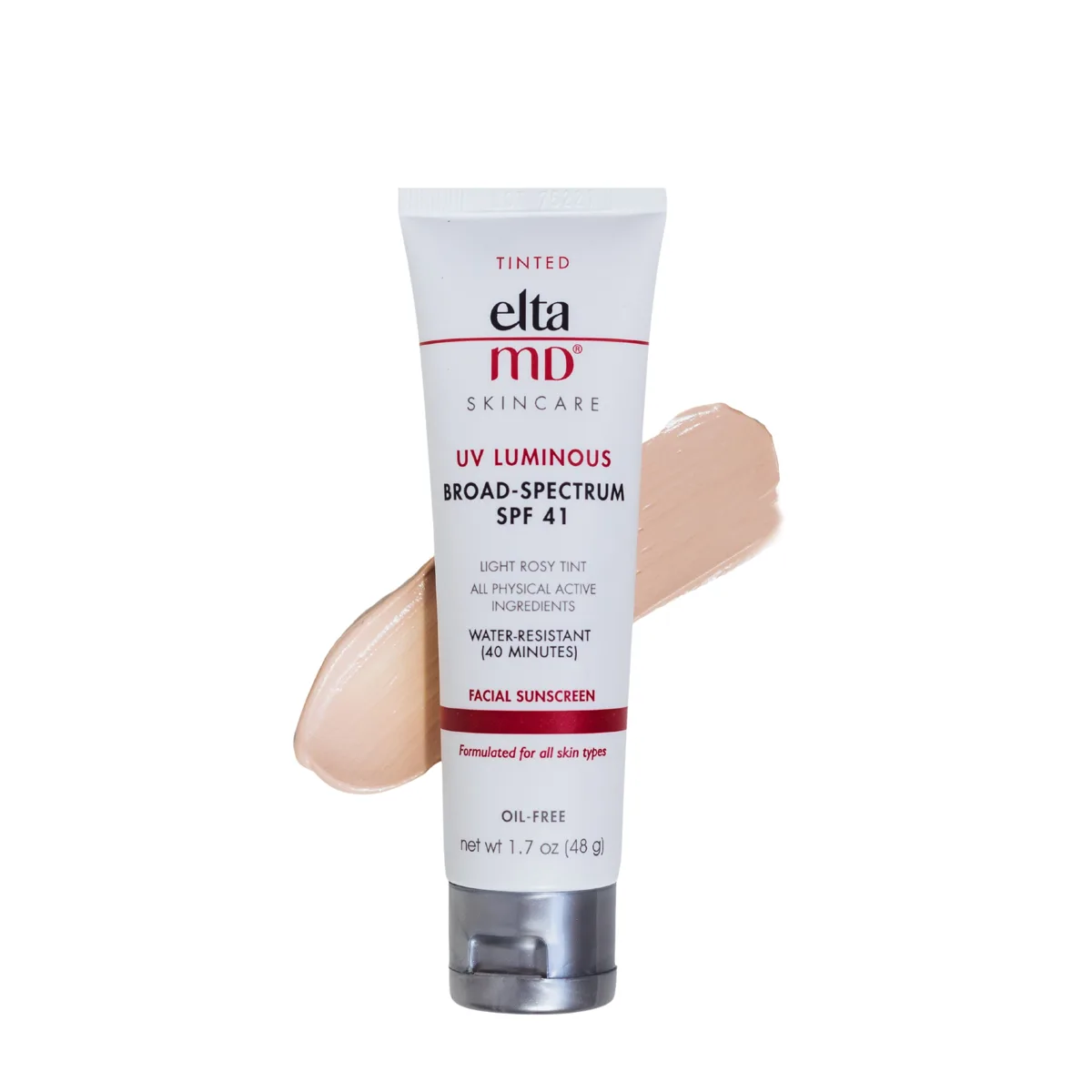
Within the EltaMD lineup, UV Luminous occupies the primer-positioned tinted mineral SPF slot. The rosy tint runs warmer-pink than UV Elements' warm-beige, suiting a different skin tone range. The antioxidant trio (alpha-lipoic acid, quercetin, vitamin E) is unusually sophisticated for a sunscreen and reflects a deliberate formulation choice to layer multiple antioxidant mechanisms behind the mineral filters. It's also water-resistant up to 40 minutes — a feature most of the brand's tinted SKUs lack.
EltaMD's newest tinted mineral SPF and the brand's first explicit attempt at a primer-positioned formula. The rosy-warm tint, semi-matte finish, and water resistance distinguish it from UV Elements, and the antioxidant trio (alpha-lipoic acid, quercetin, vitamin E) is unusually sophisticated for a sunscreen. Best for fair-to-medium complexions who want a makeup base that's also a serious mineral SPF.
Note: This lotion has a moderate track record, so our assessment combines detailed ingredient analysis with the real-world feedback available so far. Scores reflect both formulation quality and early user sentiment, and we'll revisit this review as more long-term data accumulates.
The case for it
Same rule for everyone. “Full protection” is the verdict on 2,288 of 45,024 concern verdicts across the catalog; rule P1 decided 2,232 of them. Unchanged since September 5, 2026, engine 5.1.1.
Brand or formulator? Disclose a concentration or correct a fact →
The studies behind the evidence row
The case for it
What would change this: A researched evidence row for the lead active would replace this with a verdict.
Same rule for everyone. “Full protection” is the verdict on 2,288 of 45,024 concern verdicts across the catalog; rule P1 decided 2,232 of them. Unchanged since September 5, 2026, engine 5.1.1.
Brand or formulator? Disclose a concentration or correct a fact →
The case for it
What would change this: A researched evidence row for the lead active would replace this with a verdict.
Same rule for everyone. “Full protection” is the verdict on 2,288 of 45,024 concern verdicts across the catalog; rule P1 decided 2,232 of them. Unchanged since September 5, 2026, engine 5.1.1.
Brand or formulator? Disclose a concentration or correct a fact →
The case for it
What would change this: A researched evidence row for the lead active would replace this with a verdict.
Same rule for everyone. “Supporting role” is the verdict on 8,197 of 45,024 concern verdicts across the catalog; rule R8 decided 4,250 of them. Unchanged since September 5, 2026, engine 5.1.1.
Brand or formulator? Disclose a concentration or correct a fact →
The case for it
What would change this: A researched evidence row for the lead active would replace this with a verdict.
Same rule for everyone. “Full protection” is the verdict on 2,288 of 45,024 concern verdicts across the catalog; rule P1 decided 2,232 of them. Unchanged since September 5, 2026, engine 5.1.1.
Brand or formulator? Disclose a concentration or correct a fact →
Also listed for Dullness — the actives here (Titanium Dioxide, Zinc Oxide, Alpha-Lipoic Acid, Iron Oxides) are in our research queue for that concern; there is no verdict until their evidence rows are written. That is a gap in our table, not a mark against the product.
Does the jobDoes what a sunscreen is for: UVA coverage, kind to the skin wearing it. Not measured from the label: pleasant enough to actually use.
A verdict is DermApproved’s assessment of how well a product’s ingredients fit a concern — never a claim about what the product treats. Evidence dots and collected reviews sit beside it and are never blended in. Rules 0.5.1 · evidence table ev-2026.09-r228 · how we decide
Sunscreen-primer hybrids have been a category problem for years. The two products want opposite things: sunscreen wants to sit on skin and reflect UV, primer wants to bond to skin and grip foundation. Most products marketed as both end up doing neither well — the sunscreen pills under foundation, the primer's grip isn't strong enough, and you end up with a midday face full of streaks and rolling makeup. EltaMD's solution with UV Luminous, launched in the early 2020s, was to build a tinted mineral sunscreen from the ground up with primer mechanics in mind, rather than trying to retrofit a daily moisturizer-SPF for the role. The active system is straightforward: 9% zinc oxide and 7.2% titanium dioxide, the two mineral UV filters EltaMD uses across its non-chemical lineup. The combination provides broad-spectrum UVA/UVB protection at SPF 41 — pure mineral, pregnancy-safe, reef-safe. The zinc concentration is moderate (not as high as UV Glow's 20.15% or UV Elements' 10%), but the addition of titanium dioxide at 7.2% extends UVB coverage and gets the SPF where it needs to be. Iron oxides provide the rosy-warm tint and contribute visible-light protection relevant for hyperpigmentation-prone skin. The formulation choice that distinguishes UV Luminous from UV Elements is the base. Where UV Elements uses cyclopentasiloxane and dimethicone with sodium hyaluronate humectant — a moisturizing finish — UV Luminous uses a more primer-engineered base. Perfluorononyl dimethicone, polyacrylate-13, polyisobutene, and a series of silicone derivatives build a finish that's semi-matte rather than dewy. Isopropyl palmitate and ethylhexyl stearate add slip without greasiness. There's no humectant pulling water to the surface, which would interfere with foundation grip. The result is a finish that grips makeup the way a real primer does. The other distinguishing feature is the antioxidant payload. Most sunscreens get vitamin E as a token antioxidant. UV Luminous gets three: alpha-lipoic acid (also called thioctic acid), quercetin, and tocopherol. Alpha-lipoic acid is unusual in being both water- and lipid-soluble, which means it works across cellular compartments more effectively than most antioxidants. Quercetin is a polyphenol with strong free-radical scavenging activity. Tocopherol is vitamin E. Together they provide layered defense against UV-induced oxidative stress that the mineral filters don't fully block — a more sophisticated approach than the single-antioxidant token addition that's standard in most sunscreens. The tint is the most polarizing element. UV Luminous is distinctly rosy-warm, calibrated for fair-to-medium complexions. On the right skin tone it provides a subtle pink-warm flush that looks like a healthy glow. On deeper skin tones it can read slightly cool or ashy, which is the main cosmetic limitation. EltaMD doesn't offer multiple shades, so if the universal tint doesn't match, you're either layering foundation over it or choosing a different SKU. UV Elements' warm-beige tint works across a broader skin tone range; UV Luminous trades that breadth for a more flattering match within its target range. The wear in actual use is where the primer-positioned design pays off. The product dispenses as a creamy rosy fluid that spreads with silicone slip across skin. It sets within 60-90 seconds into a semi-matte natural finish that doesn't look chalky, slippery, or wet. Foundation applied on top grips and stays — no sliding, no pilling, no patchy wear. Through a full day of wear, the finish holds without slipping into fine lines or pooling around the nose. For users who've struggled with sunscreens that fight with makeup, this is genuinely different. Water resistance is another distinguishing feature. UV Luminous is labeled water-resistant for 40 minutes, which is appropriate for light sweating or brief water exposure but not for extended swimming. UV Elements and UV Daily lack this water-resistance claim, so for outdoor wear in warm conditions, UV Luminous has an edge. For serious water exposure, the 80-minute water-resistant UV Sport SPF 50 is the better brand choice. Where the formula has limits worth naming: deep skin tones may need to layer foundation over it, very dry skin types may find the semi-matte finish slightly emphasizing of dry patches, and the small 1.7 oz tube at $41 means per-ounce cost is comparable to or above competing tinted mineral sunscreens. The 1 oz travel size at $32 is per-ounce expensive but useful for trying the product before committing. For shoppers in EltaMD's target use case — fair-to-medium complexion, wants tinted mineral SPF that doubles as primer, values the brand's clinical credibility — UV Luminous is a strong choice. For shoppers with darker skin, who don't wear foundation, or who specifically want a more moisturizing finish, UV Elements or UV Daily remain better positioned within the brand. The 2020s expansion of EltaMD's UV line into more cosmetic-finish SKUs (UV Glow, UV Luminous, UV Restore, UV Replenish) reflects a smart strategic move: the clinical sunscreen market is mature, but the cosmetic-finish sunscreen market is growing fast, and patients are more likely to wear daily SPF when the product also serves a cosmetic role. UV Luminous is one of the more thoughtful entries in that expansion.
The hero actives that drive this product's performance.
| Ingredient | Function | Evidence |
|---|---|---|
| Zinc Oxide 9.0% (9.0%) | The primary mineral filter in this formula, providing the bulk of broad-spectrum UVA/UVB protection — paired with titanium dioxide at 7.2% to hit SPF 41 with a more cosmetic finish than higher-zinc EltaMD SKUs like UV Glow could deliver. | Regulator-approved for Sun Damage · limited certainty |
| Titanium Dioxide 7.2% (7.2%) | Stacked with zinc oxide to extend UVB coverage and bring total protection to SPF 41 while keeping the cosmetic-finish texture light enough to function as a makeup primer — the entire positioning of this SKU. | Regulator-approved for Sun Damage · limited certainty |
| Iron Oxides (Rosy Tint) | Provides the signature rosy-warm universal tint that lightly evens skin tone and brings a subtle flush of color — the iron oxides also contribute visible-light and HEV blue-light protection, relevant for hyperpigmentation prevention. The tint shade is calibrated more toward the warm-pink end of the spectrum compared to UV Elements' warm-beige. | Not yet assessed |
| Thioctic Acid (Alpha-Lipoic Acid) + Quercetin + Tocopherol | An unusual antioxidant trio for a sunscreen — thioctic acid (alpha-lipoic acid) is a potent both water- and lipid-soluble antioxidant, quercetin is a polyphenol with strong free-radical scavenging activity, and tocopherol is vitamin E. Together they provide layered antioxidant defense against UV-induced free radical damage that the mineral filters don't fully block. | Not yet assessed |
Ingredient standings describe the active at treatment-level doses and vehicles; this product's own condition grades weigh its actual formula.
Active Ingredients: Titanium Dioxide 7.2%, Zinc Oxide 9.0%. Inactive Ingredients: Water, Isopropyl Palmitate, Ethylhexyl Stearate, Octyldodecyl Neopentanoate, Perfluorononyl Dimethicone, Alumina, Polyacrylate-13, Phenoxyethanol, Hydrogen Dimethicone, Polyisobutene, Triethoxycaprylylsilane, Oleth-3 Phosphate, Citric Acid, Polysorbate 20, Sorbitan Isostearate, Sodium Hydroxide, Thioctic Acid, Quercetin, Tocopherol, Iron Oxides.
sunscreen
AM
Use as the last step in AM routine or as a makeup primer base. The rosy tint provides subtle color correction that pairs well with foundation or works alone for natural everyday wear. The semi-matte finish makes this a stronger primer choice than UV Glow for foundation hold.
Immediate UV protection (effective after 15 minutes) and subtle color correction. Antioxidant benefits accumulate over weeks of daily use. Long-term photoaging prevention with consistent application.
The mineral filter system in this formula combines two FDA-approved physical UV blockers. Zinc oxide at 9% provides broad-spectrum UVA1, UVA2, and UVB protection through a combination of reflection, scattering, and absorption — its broad-spectrum credentials are well-validated in dermatological literature. Titanium dioxide at 7.2% is primarily a UVB blocker that extends the SPF rating without significantly adding to UVA1 coverage. The combination is what allows the formula to hit SPF 41 broad-spectrum at moderate mineral concentrations. Iron oxides for visible-light protection have accumulated meaningful research support over the past decade. Castanedo-Cazares and colleagues demonstrated in 2014 that sunscreens with iron oxides plus mineral UV filters outperformed UV-only sunscreens in preventing melasma recurrence over a 2-month treatment course. The mechanism is straightforward — iron oxides absorb visible light in the 400-700 nm range, including the HEV blue light wavelengths most associated with pigmentation. The antioxidant payload is unusually sophisticated for a sunscreen. Alpha-lipoic acid is both water- and lipid-soluble, allowing it to scavenge free radicals in both aqueous and lipid cellular compartments — research by Lin and Selim has demonstrated topical alpha-lipoic acid reduces UV-induced erythema and oxidative stress markers in human skin. Quercetin is a flavonoid polyphenol with documented antioxidant activity; topical formulations have shown anti-inflammatory and photoprotective effects in early studies. Tocopherol (vitamin E) is the most widely studied skin antioxidant and works synergistically with vitamin C — though vitamin C isn't present in this formula, the alpha-lipoic acid functions similarly as a regenerating partner for vitamin E. The three antioxidants together provide layered defense across cellular compartments and free radical types, a more sophisticated approach than typical single-antioxidant sunscreens. The water-resistance claim of 40 minutes is FDA-validated through standardized testing protocols. The semi-matte finish and primer-positioned formulation rely on dermatological understanding of how silicone derivatives (perfluorononyl dimethicone in particular) bond to skin and create a film that grips overlying makeup without sliding.
Dermatologists frequently recommend EltaMD UV Luminous as a tinted mineral sunscreen alternative for patients who want a foundation-friendly base. The primer-positioned semi-matte finish addresses a common complaint — that traditional moisturizing sunscreens cause makeup to slide or pill — without sacrificing the brand's signature mineral active system. Dermatologists treating patients with melasma or hyperpigmentation in fair-to-medium skin tones often suggest this SKU because the iron oxides provide visible-light protection that UV-only sunscreens don't. The water-resistance is useful for patients with outdoor lifestyles or warm climates where traditional tinted mineral sunscreens slide off. Dermatologists generally avoid recommending it for very deep skin tones (where the rosy tint reads ashy) or very dry skin (where the semi-matte finish emphasizes dryness). For pregnant patients who want a tinted mineral primer-SPF, this is a common recommendation alongside UV Elements.
Apply a generous quarter-teaspoon (nickel-sized amount) to face and neck as the final step in your AM routine, after serums and moisturizer. Dispense onto fingertips, warm briefly, then press and spread evenly across face. Allow 60-90 seconds to set into a semi-matte finish before applying foundation if desired. For midday touch-ups, a tinted SPF powder or stick is more practical than re-layering the lotion. Reapply every 2 hours if outdoors. For light water exposure or sweating, the 40-minute water-resistance allows reapplication after toweling off; for extended water exposure, switch to UV Sport SPF 50.
At $41 for 1.7 oz, UV Luminous prices similarly to UV Daily and UV Elements within the EltaMD line and broadly aligns with other tinted mineral SPF options at this protection level. The travel 1 oz at $32 is per-ounce more expensive but useful as an entry point. The unique value proposition is the combination of pure-mineral active system, primer-functional finish, water resistance, and sophisticated antioxidant payload — most competing tinted mineral SPFs lack at least one of these features. For shoppers needing all four together, the value is genuinely strong. For shoppers indifferent to one or more, the price gap to drugstore alternatives (CeraVe Hydrating Mineral SPF 30 Tinted, La Roche-Posay Anthelios Mineral Tinted) becomes harder to justify.
This sunscreen suits anyone with fair-to-medium complexion wanting tinted mineral SPF that functions as a foundation primer. It's well-matched to patients with melasma or hyperpigmentation who need visible-light protection, pregnant patients wanting pure mineral with a polished finish, and people who've struggled with sunscreens that fight with makeup. It's also a strong choice for users who value the brand's clinical credibility and want water resistance from a tinted SKU.
Look elsewhere if you have very deep skin tones where the rosy tint reads ashy, very dry skin where semi-matte finishes emphasize dryness, fungal-acne-prone skin reactive to isopropyl palmitate, or if you're shopping primarily on price and don't need the primer-functional finish. UV Elements' warm-beige tint works across a broader skin tone range, and drugstore options provide similar core protection at lower prices for shoppers without specific use cases.
Ready to try EltaMD UV Luminous Broad-Spectrum SPF 41?
Buy at Amazon ♥Smooth, light-bodied tinted lotion with a silicone slip — spreads thinner than UV Elements and UV Daily, more like a primer than a moisturizer
Effectively unscented — no added fragrance, very faint underlying note from the iron oxide and zinc base
Squeeze tube with flip cap; smaller travel-size pump also available.
Dispenses as a creamy rosy-tinted lotion. Spreads easily with silicone slip and blends into a semi-matte natural finish within 60-90 seconds. The rosy tint adds a subtle warm flush that flatters most fair-to-medium skin tones. No white cast. Sets to a finish that holds makeup well for several hours without sliding or pilling. No stinging.
2-3 months with daily face-and-neck application
All Year
UV Luminous launched in the early 2020s as EltaMD's expansion into makeup-primer-positioned tinted sunscreen. While UV Elements had been the brand's tinted mineral option since around 2010, it was positioned as a daily SPF rather than as a foundation base. UV Luminous explicitly bridges sun protection and makeup, with a semi-matte finish designed to hold foundation rather than slip beneath it, and a rosy tint calibrated for fair-to-medium complexions where UV Elements' warm-beige didn't always match.
EltaMD was founded in 1988 and has spent decades as one of the most-recommended sunscreen brands in U.S. dermatology offices. The UV line consistently carries the Skin Cancer Foundation Seal of Recommendation; UV Luminous was added in the early 2020s as a primer-positioned tinted mineral SPF that bridges sun protection and makeup base.
Tinted mineral sunscreens all have the same tint.
UV Luminous has a distinctly rosy-warm tint that runs warmer-pink than UV Elements' warm-beige or UV Physical Tinted's neutral-beige. The shade differences are calibrated for different skin tones — UV Luminous tends to flatter fair-to-medium complexions, UV Elements works across a broader medium range, and very deep skin tones may need a separate foundation regardless.
Makeup primers and sunscreens are interchangeable.
UV Luminous is specifically formulated to function as both. The semi-matte finish and silicone slip system are designed to grip foundation rather than slide, and the texture spreads thinner than typical sunscreens. A separate primer is rarely needed when wearing UV Luminous as a base.
Both are 100% pure-mineral tinted sunscreens with iron oxides for visible-light protection. UV Luminous has a rosy-warm tint, a lighter primer-friendly semi-matte finish, includes an unusual antioxidant trio (alpha-lipoic acid, quercetin, vitamin E), and is water-resistant for 40 minutes. UV Elements has a warm-beige tint with a slightly more moisturizing finish, sodium hyaluronate as a humectant, and is not water-resistant. Choose based on tint preference and whether you need water resistance.
The rosy tint flatters fair-to-medium complexions most naturally. For deeper skin tones, the tint may read slightly cool or appear ashy on the skin. UV Elements' warm-beige tint or a separate tinted moisturizer over UV Luminous may work better for deeper complexions.
Yes — it's specifically formulated to function as both sunscreen and primer. The semi-matte finish grips foundation rather than letting it slide, and the rosy tint provides subtle color correction underneath. Apply as the final step before foundation, allowing 60-90 seconds to set.
It's labeled water-resistant for 40 minutes, which is appropriate for light sweating or brief water exposure. For extended swimming or athletic activity, EltaMD UV Sport SPF 50 is the brand's 80-minute water-resistant option.
Yes — the formula contains only zinc oxide and titanium dioxide as active UV filters, both considered safe during pregnancy by virtually all obstetric dermatologists. The antioxidant ingredients (alpha-lipoic acid, quercetin, vitamin E) are also generally regarded as pregnancy-safe.
Alpha-lipoic acid (thioctic acid) is both water- and lipid-soluble, making it an unusually versatile antioxidant for skin formulations. It scavenges free radicals generated by UV exposure that mineral filters don't fully block. Combined with quercetin (a polyphenol) and tocopherol (vitamin E), this trio provides layered antioxidant defense behind the SPF.
A generous quarter-teaspoon (nickel-sized amount) for face and neck. Most people apply far less than this, which significantly reduces the actual SPF protection received. For full SPF 41 protection, you need to use enough product even though the formulation is designed to wear like a primer.
Recurring themes our editors read across retailer reviews of this product — summaries in our words, not quotations, and not a substitute for your own patch test.
Rosy tint flatters fair to medium skin
Water-resistant for outdoor wear
Works well as a makeup primer
No white cast despite pure mineral
Lightweight, semi-matte finish
Rosy tint may not match very deep skin tones
Small 1.7 oz size at this price point
Semi-matte finish can emphasize dry patches
Pump dispenser inconsistent on some units
Verified answers from our questions library — the nuance a product page cannot carry.