Alpha-Lipoic Acid (Thioctic Acid)
Products with Alpha-Lipoic Acid (Thioctic Acid)
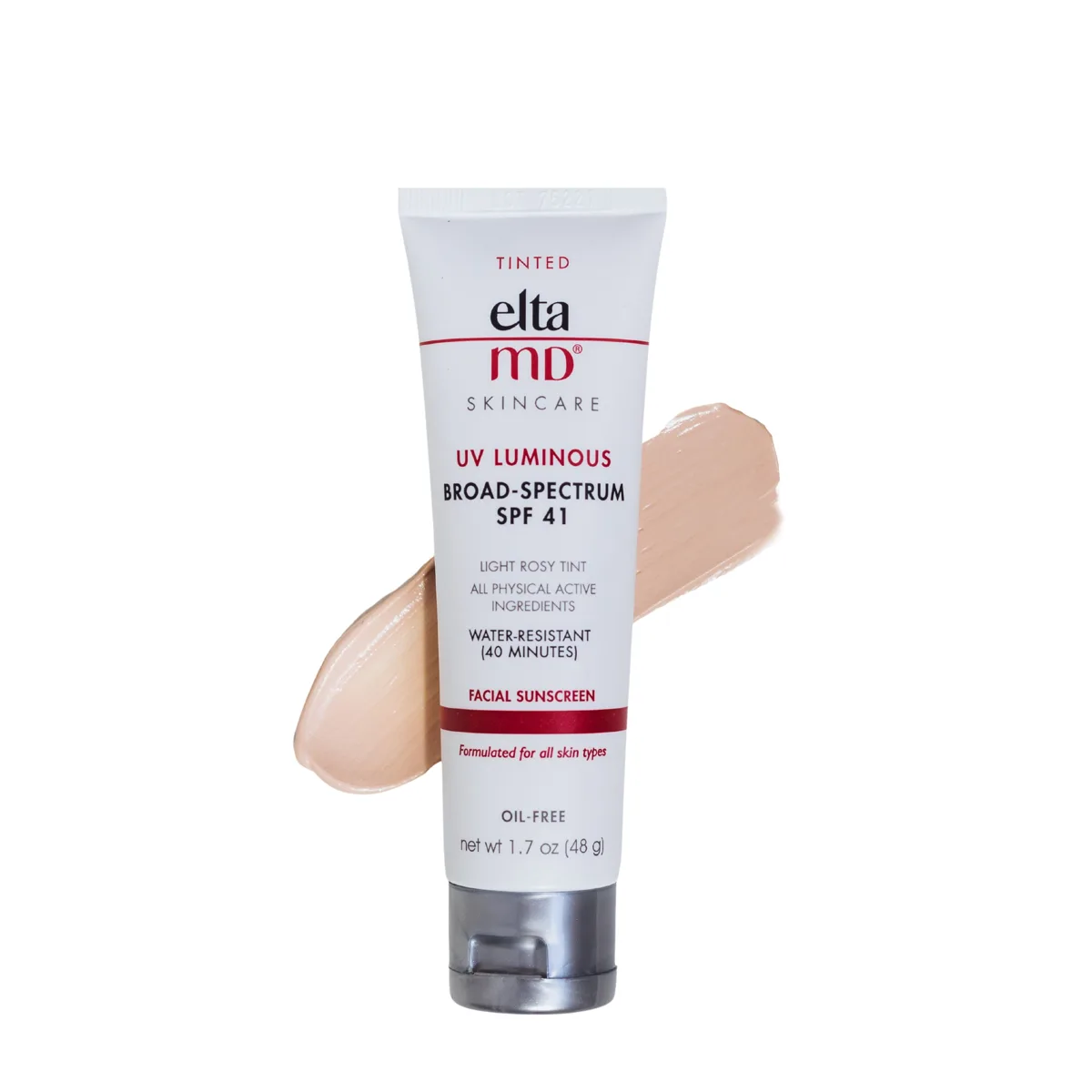 Primer-Friendly Tinted SPF
UV Luminous Broad-Spectrum SPF 41
EltaMD's newest tinted mineral SPF and the brand's first explicit attempt at a primer-positioned formula. The rosy-warm tint, semi-matte finish, and water resistance distinguish it from UV Elements, and the antioxidant trio (alpha-lipoic acid, quercetin, vitamin E) is unusually sophisticated for a sunscreen. Best for fair-to-medium complexions who want a makeup base that's also a serious mineral SPF.
 Nighttime Repair Workhorse
PM Restore Facial Moisturizer
A smartly formulated overnight moisturizer that delivers genuine barrier repair and anti-aging benefits without the heavy texture that makes most night creams feel like an obligation. Not the richest option for very dry skin, but its lightweight elegance and multi-functional approach make it an excellent nightly workhorse for most skin types.
 Multi-Mechanism Brightening Pick
No. 5 Glutathione TXA Advanced Dark Spot Ampoule Concentrate
A dense, multi-mechanism dark spot concentrate that attacks pigment four ways — tranexamic acid, glutathione, niacinamide and vitamin C — in a clever powder-activation bottle that keeps the unstable actives fresh. Genuinely well-built for uneven tone; the small size and the patience pigmentation demands are the trade-offs.
 Budget Antioxidant Cream
Essential Cream
An unexpectedly thoughtful little antioxidant cream that pairs coenzyme Q10 with alpha-lipoic acid — two complementary free-radical fighters — in a light, fragrance-free, fast-absorbing base, all for near-cost. It hydrates and softens dryness-related fine lines without heaviness. The doses are modest and the jar small, but as a budget antioxidant moisturizer it punches above its price.
 Budget Holy Grail
Firming DMAE Eye Lift Cream
A genuinely well-formulated multi-active eye cream at a price that undercuts most of the dermatologist-developed competition by a factor of three. DMAE, high-position niacinamide, two validated peptides, caffeine, and alpha-lipoic acid in a fragrance-free base — the ingredient density is almost unreasonable for the cost. Holds up extremely well against much more expensive eye creams for daily under-eye use.
 Derm Office Staple
PM Therapy Facial Moisturizer
A derm-office staple for good reason: a lightweight overnight lotion with a meaningful niacinamide load, a genuine ceramide-cholesterol-fatty-acid lipid trio, and the kind of low-irritation formulation that works on post-procedure skin. The 1.7 oz size at $48 is the only real friction; the formulation itself is consistently among the strongest in its category.
 Budget Hydration Serum
Hyaluronic Acid Serum
A genuine, budget-friendly hyaluronic acid serum that plumps and hydrates well and comes in a generous bottle — bolstered by DMAE, peptides and a vitamin cocktail. The drawbacks are old-school: added fragrance, lavender oil and a formaldehyde-releasing preservative push up the irritation risk. Good value for tolerant skin, a poor match for anyone reactive.
 Entry-Level Anti-Aging Toner
Goku-jyun Alpha Anti-Aging Lotion
The anti-aging upgrade of Hada Labo's iconic Gokujyun Lotion — adds retinyl palmitate, thioctic acid, beta-carotene, and a peptide stack to the brand's multi-hyaluronic-acid hydration base. Genuine value at the drugstore price point, with the meaningful caveat that retinyl palmitate is the weakest retinoid choice and clinical results are correspondingly modest.
 The Kojic One That Counts
Kojic Acid Turmeric Capsule Serum
The first product in Medicube's gold line where the kojic acid is high enough on the list to earn its name, sitting ninth behind niacinamide in second place, in a buffered base with dissolving squalane capsules that make it pleasant to wear. It is a credible daily brightener for post-acne marks and dullness, slowed only by a trace of hinoki oil and a bottle that is small for the price.
 Men's Retinol Anti-Aging Cream
Advanced Anti-Aging Formula
A genuinely well-built men's anti-aging cream led by real retinol and backed by peptides, GABA, and a strong antioxidant layer, all in a lightweight, fragrance-free base. It delivers legitimate retinol benefits with multi-pathway support; the undisclosed strength, premium price for a small tube, and PM-only, not-for-pregnancy nature are the caveats.
 Budget Antioxidant Serum
Vitamin C Super Serum
A sensible, affordable antioxidant serum that skips the harsh 20% L-ascorbic acid route in favor of two gentler vitamin C derivatives, plus alpha lipoic acid and hyaluronic acid. It brightens dullness slowly and tolerably for a low price — just know the citrus peel oils and a sulfite preservative make it a poor match for genuinely reactive skin.
 Ferment Prep Softener
Prime Advancer Skin Softener
A more substantive prestige softener than the category usually delivers, with a real ferment-and-adenosine core plus phloretin and alpha-lipoic acid antioxidants. It primes and conditions skin nicely and feels weightless. The catches are familiar O Hui ones: a premium price, added fragrance, and alcohol denat. sitting high enough to give pause for dry or sensitive skin.
 Makeup-Prep Firming Classic
Face Finishing & Firming Moisturizer
A long-running Perricone classic that does one thing reliably well: it sets to a smooth, soft-focus, subtly taut finish that makes skin look immediately more 'finished' and works beautifully as a makeup base. The firming is a real but temporary DMAE effect, not cumulative tightening, and $75 is premium for a daily moisturizer — but as an antioxidant-rich cream with an instant cosmetic payoff, it has earned its loyal repurchasers.
 Organic Fruit-Acid Brightening Serum
Green Apple Age Defy Serum
A genuinely active organic brightening serum: naturally-derived fruit AHAs resurface dull skin and fade dark spots, backed by an unusually strong antioxidant complex of CoQ10, alpha lipoic acid and green tea. It smooths and glows with patience. The honest caveats are natural-acid potency that is milder and less standardized than a clinical AHA, citrus-driven photosensitivity, and a premium price.
 Derm-Founded Do-Everything Serum
Cold Plasma Plus+ Advanced Serum Concentrate
Perricone's flagship 'multivitamin for the skin' is a genuinely broad, derm-founded antioxidant serum that gives an immediate firmer look and consolidates a lot of actives into one step. But the headline tightening comes from DMAE — a fast, largely temporary effect with a debated long-term evidence base — and at $169 you're paying flagship money for a formula whose most reliable benefits come from its cheaper, better-proven supporting players.
 Luxury Fermented Antioxidant Ampoule
Prime Advancer Ampoule Serum
A genuinely active luxury Korean ampoule: a fermentation complex and sumac-derived gallotannin joined by capable antioxidants — phloretin, alpha lipoic acid and adenosine — in an elegantly textured prestige serum from an LG-backed house. The actives are real and the feel is lovely. The reservations are a steep price, a fragrance-and-four-allergens panel, and alcohol that together narrow it away from sensitive skin.
 Alcohol-Forward Flagship Toner
The First Geniture Skin Softener
O Hui's flagship toner pairs respectable Matrixyl peptides, ATP, and antioxidants with a high-alcohol base — denatured alcohol is the second ingredient — plus heavy fragrance. The result is a bracing, fast-drying luxury toner suited mainly to oily, resilient skin, and a poor, even counterproductive, fit for the dry or mature skin its anti-aging marketing courts. Steep price, dated formula.
The full alpha-lipoic acid (thioctic acid) guide
Few antioxidants can operate in both the water-rich interior of a skin cell and its lipid-heavy membrane at the same time, and that dual citizenship is what makes alpha-lipoic acid interesting to formulators.
It has real human trial support for softening photoaged fine lines and roughness, alongside a glycation-fighting angle that most antioxidants don't touch. The catch worth knowing up front: its reputation as a sun-shield doesn't hold up to the data. You'll most often find it in anti-aging serums and eye creams, where its mix of free-radical scavenging and antioxidant-recycling earns it a spot.
How it's regulated in the US
FDA does not classify ingredients — it classifies products, by what they are sold to do. The same molecule can be a drug active in one product and a cosmetic ingredient in the next, and only the claim on the label decides which. What follows is a statement about that legal standing, not about whether it works — the evidence question is answered separately above.
Cosmetic Alpha-Lipoic Acid (Thioctic Acid) is a cosmetic ingredient in the US: no OTC monograph covers it and it is not an active in any FDA-approved drug, so a product built around it is a cosmetic rather than a drug.
The most-cited human data comes from Beitner's 2003 split-face trial (British Journal of Dermatology, PMID 14616378), in which 33 women applied a 5% ALA cream to one half of the face and a placebo cream to the other twice daily for 12 weeks. Laser profilometry showed roughness fell 50.8% on the ALA-treated side versus 40.7% on the placebo side (P < 0.001), with clinician-noted improvement in periorbital fine lines and skin color — a real but modest margin over the vehicle, not a 50% improvement over nothing. A separate single-blinded, right-left placebo-controlled study of cubosomal 5% ALA gel (Journal of Cosmetic Dermatology, PMID 27873449) reported significantly greater aesthetic improvement on the treated side at 3 and 6 months. Counterbalancing the anti-aging case, a controlled study in the Journal of Investigative Dermatology (PMID 15482491) found topical ALA — alone and combined with vitamins C and E — provided no measurable photoprotection against solar-simulated UV, undercutting one of the ingredient's most repeated marketing claims. The glycation-inhibition and collagen-signaling mechanisms are supported largely by in-vitro and animal work rather than topical human trials. Net read: the anti-aging and antioxidant evidence is genuine and moderately encouraging; the photoprotection story is contradicted.
How it works
Your mitochondria already make alpha-lipoic acid as a cofactor for energy-producing enzymes, so skin cells come equipped to handle it — a contrast with purely synthetic actives. Applied topically, it moves through both the watery cytosol and the fatty membrane of a cell, mopping up free radicals in compartments that single-environment antioxidants can't reach. That amphipathic nature is the root of its cosmetic appeal. Its more distinctive trick is its role in the so-called antioxidant network. Once vitamins C and E donate electrons to quench radicals, they sit oxidized and temporarily spent; lab studies show ALA can hand those molecules back their electrons, recycling them into active form and stretching the working life of a formula's antioxidant payload. A separate proposed mechanism targets glycation — the process where stray sugar molecules latch onto collagen and elastin, forging the stiff cross-links known as advanced glycation end products (AGEs) that build up with age and sun. ALA appears to bind the reactive carbonyl intermediates along that route, slowing AGE formation. In cell and animal models it has also been shown to influence AP-1 signaling and matrix-remodeling enzymes, which may help turn over glycation-damaged collagen, though that pathway hasn't been confirmed in topical human studies. Beyond that, laboratory work points to effects on TGF-beta signaling in dermal fibroblasts and to anti-inflammatory activity that may calm redness — promising mechanistically, but still ahead of the clinical evidence.
Key benefits
- Softened fine lines and skin roughness, shown over placebo in a 12-week split-face trial at 5%
- Recycles oxidized vitamins C and E back to active form, extending a formula's antioxidant lifespan
- Targets reactive carbonyl intermediates, a mechanism for slowing collagen-stiffening AGEs
- Dissolves in both water and oil, letting it scavenge radicals in membrane and cytosol alike
- Lab data suggests support for collagen turnover via AP-1 and matrix-remodeling pathways
- Anti-inflammatory activity in studies may help quiet redness in reactive skin
Concentration & usage
Clinical studies have used concentrations from about 1% up to 5%, with the most-cited trial relying on 5% in a lecithin-based cream; consumer products usually land in the 0.5–3% range. On an ingredient label, scan for "thioctic acid" — that's the INCI-standard name, while "alpha-lipoic acid" is the common term for the same molecule. ALA tolerates a broad pH window (roughly 3–10), so unlike vitamin C or AHA actives, the formula's pH isn't a make-or-break variable. Most products use the racemic (R+S) blend; R-ALA is the naturally occurring, more bioactive enantiomer, but because the topical efficacy trials used racemic material, any advantage of R-specific topical products is theoretical rather than demonstrated.
Who it's for & who should be cautious
Who it's for
If your main concerns are the markers of cumulative sun exposure — etched fine lines, rough or uneven texture, a tired-looking dullness — alpha-lipoic acid is a sensible active to trial. It tends to shine in combination formulas alongside vitamin C, vitamin E, or niacinamide, where its antioxidant-recycling role contributes something those ingredients can't supply on their own. There's also a reasonable rationale for people whose skin is prone to early glycation — think heavy sun history, higher-sugar diets, or anyone past their late 30s watching collagen quietly decline.
Who should be cautious
Skip it outright if you have a documented allergy to lipoic or thioctic acid; allergic contact dermatitis to ALA is reported, if uncommon. If your skin runs very reactive or is currently compromised, ease in every other day — the brief tingling and warmth some people feel at 3–5% isn't harmful but can be unsettling if you're not expecting it. People with a sulfa-drug allergy sometimes ask about its sulfur-containing dithiolane ring; cross-reactivity hasn't been established for topical use, so the concern is theoretical, but cautious patch testing is reasonable.
Pairs with & conflicts
Myths & facts
Myth: Alpha-lipoic acid shields skin from UV, so you can ease up on sunscreen
Reality: A controlled study in the Journal of Investigative Dermatology found topical ALA — used alone and combined with vitamins C and E — delivered no measurable photoprotection against UV radiation. ALA is a worthwhile antioxidant for addressing existing oxidative damage, but it is in no way a sunscreen substitute or a meaningful UV barrier.
Myth: ALA is too harsh for daily use and belongs in a once- or twice-weekly slot
Reality: The trial behind its wrinkle-smoothing reputation used twice-daily application for 12 weeks with no significant adverse events. The tingling some people notice at higher strengths usually fades within the first week of consistent use. Patch testing and a gradual ramp are smart, but for an established active, regular use generally beats sporadic caution.
Myth: Every form of alpha-lipoic acid behaves the same in a product
Reality: ALA comes as two mirror-image molecules — R-ALA, the naturally occurring active form, and synthetic S-ALA — and most skincare uses a racemic blend of both. R-ALA is absorbed considerably better and is more potent in oral supplements, but the topical trials demonstrating skin benefits all used racemic material, so a real-world edge for R-specific topicals remains plausible on paper but unproven on skin.
Frequently asked questions
How does alpha-lipoic acid stack up against antioxidants like vitamin C or vitamin E?
Most antioxidants live in one compartment — vitamin C in the watery cell fluid, vitamin E in lipid membranes — whereas ALA is at home in both, so it can neutralize radicals across the full cell architecture. Lab work also shows it regenerates oxidized vitamin C and vitamin E back into their active forms, effectively extending the working life of a formula's whole antioxidant system in a way single-environment actives can't.
What strength of alpha-lipoic acid is worth looking for in a product?
The best-supported clinical study used 5% ALA in a lecithin-based cream, while most consumer products run 0.5–3%. On the label, hunt for 'thioctic acid' — that's the standardized cosmetic name for the same molecule. Because ALA stays stable across a wide pH range, you don't need to fuss over the formula's pH the way you would with a vitamin C serum.
Why does my skin tingle or feel warm when I apply alpha-lipoic acid?
That's common, especially at 3–5%. The warmth is generally attributed to ALA's interaction with cell metabolism and a bit of local vasodilation; it isn't a chemical burn, and it usually settles down within the first week of regular use. Starting at a lower percentage or alternating days for the first couple of weeks is a practical way to acclimate if your skin tends to react.
Can alpha-lipoic acid help with dark spots or overall brightening?
Modestly, and mostly through indirect routes rather than direct tyrosinase inhibition. Some research has explored ALA derivatives as melanin suppressors, and easing oxidative stress and inflammation can support a more even tone over time — the 2003 Beitner trial even noted improved skin color alongside wrinkle reduction. That said, dedicated brighteners like vitamin C, niacinamide, or alpha-arbutin have far more direct, better-documented mechanisms, so treat ALA's brightening as a bonus rather than the main event.
Is it safe to use alpha-lipoic acid while pregnant?
There isn't enough safety data on topical ALA in pregnancy to give a confident green light. Oral ALA is used medically in some countries for gestational diabetes, but topical use during pregnancy falls into the 'check with your provider first' category given the absence of dedicated studies. The conservative move is to pause it and revisit after delivery.
If I apply alpha-lipoic acid in the morning, will it protect me from the sun?
Not in any UV-blocking sense. Controlled testing found topical ALA provides no measurable photoprotection, so it should never stand in for — or even supplement — your SPF. What it can do is help address oxidative damage that's already occurred and reinforce the antioxidant network when layered under a proper mineral or chemical sunscreen as a separate step.