Shimmer Pigments
Products with Shimmer Pigments
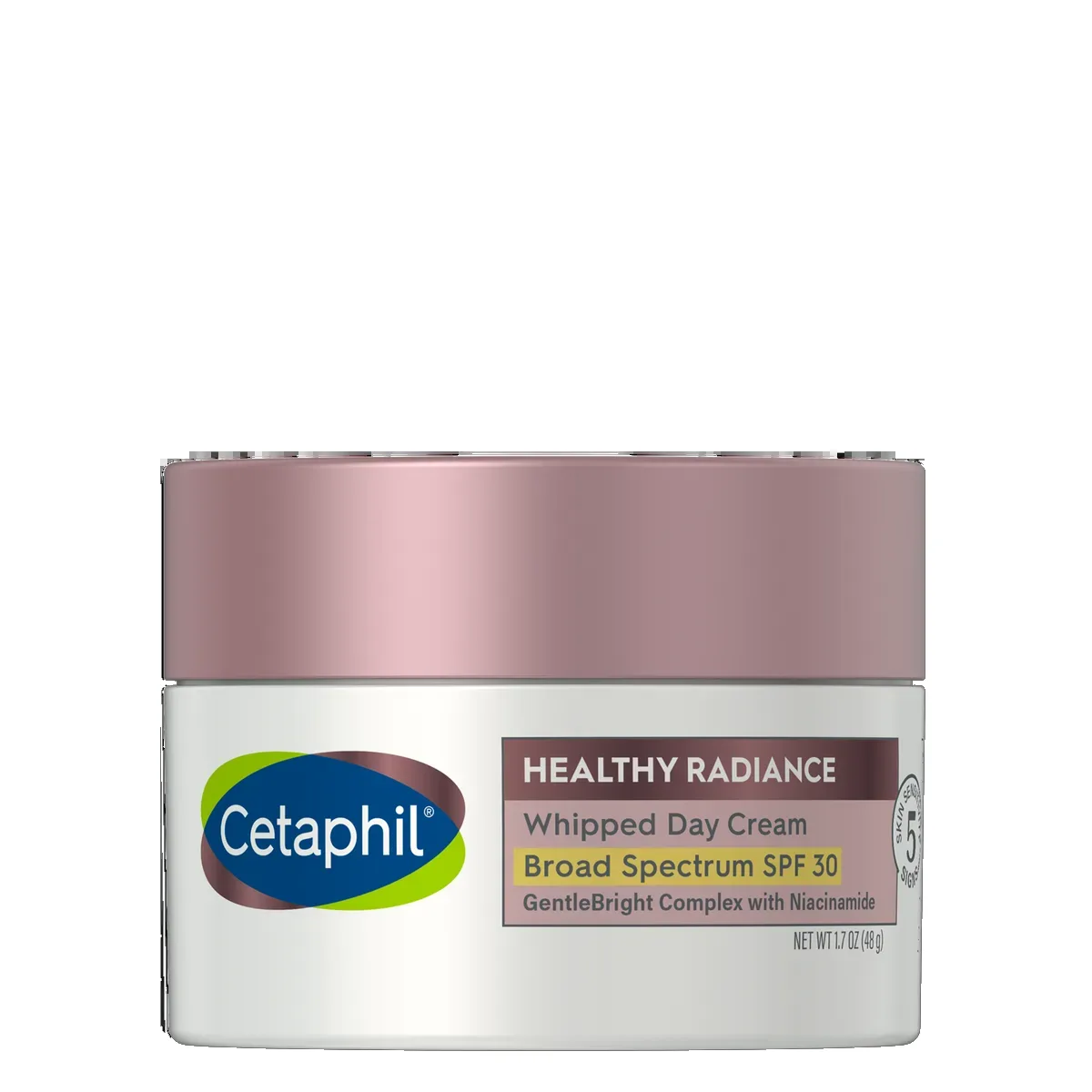 Brightening Multitasker
 Healthy Radiance Whipped Day Cream SPF 30
A genuinely multifunctional product that combines clinical brightening actives with broad-spectrum SPF 30 and instant optical luminosity — three products in one jar. The formulation sophistication is real, but the small size, chemical sunscreen filters, and insufficient moisture for dry skin narrow its ideal audience.
 SPF 50 + Coverage
 Flawless Complexion Tinted SPF 50
Flawless Complexion is what happens when Cotz leans just a little into cosmetic elegance without breaking its dermatologist-friendly formulation discipline. SPF 50, visible-light protection from a generous iron oxide load, and a mica-enhanced finish that lets the product double as light foundation for users with minimal blemishes. The price premium over the SPF 35 version is small enough that anyone with serious sun exposure or melasma concerns should probably upgrade to this one.
 J-Beauty Glow Sunscreen
 UV Aqua Rich Light Up Essence SPF 50+
A genuinely clever dual-purpose sunscreen that delivers robust four-filter UV protection while making your skin look like it has a ring light pointed at it. The alcohol and fragrance limit its audience, but for normal-to-combination skin types who want sun protection and instant radiance in one step, this is a standout.
 Brightening Sunscreen Primer
 UV Bright Face Milk SPF 50+
A clever dual-purpose product that embeds tone correction directly into your sunscreen step — the pinkish tint brightens sallow complexions while five UV filters deliver serious SPF 50+ protection. Best for oily, light-to-medium skin types who want their SPF to double as a matte primer.
 K-Beauty Glow Sunscreen Primer
 Vegan Primer Glow Sun Cream SPF 50+
A sunscreen-primer hybrid that earns both halves of its name. Modern European UV filters paired with titanium dioxide deliver SPF 50+ PA++++ without the white cast, while mica and a soft-focus polymer give a genuine luminous primer finish. Niacinamide adds skincare value. At $20, it's a smart morning-step shortcut — just not for matte-finish devotees.
 D-Bronzi Drugstore Dupe
 Bronzing Drops
e.l.f. Skin Bronzing Drops deliver iconic Drunk Elephant D-Bronzi chemistry at $12 vs. Drunk Elephant's $38 — multi-oil chassis (sunflower + marula + raspberry seed) plus vitamin E plus CoQ10 plus bronzing pigment complex. Fragrance-free and vegan. Mix into moisturizer for customizable bronze tint.
 Glow Finish Sunscreen
 Super Moisture UV Light Up Essence SPF 50+
A pretty, hydrating glow sunscreen that protects far better than its price suggests. A modern, photostable filter system sits in a lightweight, hyaluronic-acid-rich essence, finished with pearlescent pigments for a soft lit-from-within radiance. The glow is a personal-taste call, and alcohol plus fragrance keep it off the list for sensitive skin — but as a budget radiant sunscreen, it delivers.
 Sensitive Skin Staple
 Original Loose Mineral Foundation SPF 15
The original QVC darling still holds up because it's honest about what it is: mica, two mineral filters, bismuth oxychloride, and pigment — no water, no preservatives, no drama. On oily, sensitive, or rosacea-prone skin it's quietly excellent. On dry or mature skin, it behaves like exactly what it is: a powder that will find every flake and cling to it.
 Japanese Clean-Beauty Mineral UV Cushion
 Mineral Glow Skin Cushion
Japanese clean-beauty mineral cushion sunscreen with SPF 32 PA+++ protection, iron oxide tints for blue light defense, and ETVOS treatment depth (dual ceramide, niacinamide, HA). Earns its place for users wanting combined sunscreen and light makeup function with clean-beauty discipline.
 Best-Value Japanese Tone-Up SPF
 Sunplay Skin Aqua Tone Up UV Essence SPF 50+ PA++++
Rohto's Sunplay Skin Aqua Tone Up combines Japan/EU-only newer-generation UV filters (Tinosorb S, Uvinul A Plus) with mint green color correction and a polymer film system at drugstore pricing — making it one of the best-engineered sunscreens at any price tier on the Asian market. The alcohol, fragrance, BHT, and synthetic colorants are real limitations, but the price-to-formulation-quality ratio is genuinely outstanding.
 Ice Cube on a Stick
 Reviving Eye Stick
A ten-ingredient, fragrance-free glycerin-gel stick with caffeine high enough to matter and a genuinely cold, reviving glide — the most stripped-down and most honest eye product Nuxe sells, and priced like it. It de-puffs fluid-type morning swelling for a few hours and hydrates for fewer; it does nothing lasting for dark circles, leaves a faint soap-gel film, and its evidence is brand-new and panel-sized.
 K-Beauty Glow Primer
 Artless Glow Base SPF 50+
A clever K-beauty multi-tasker that genuinely delivers on its three-in-one promise — luminous primer, high-SPF sunscreen, and skincare base in a single elegant tube. The glow is real, the protection is serious, and the price undercuts luxury dupes by miles. Just know the 40ml tube disappears fast.
 K-Beauty Under-Eye Treat
 Gold & Snail Hydrogel Eye Patch
One of the patches that defined the hydrogel eye-mask category, and it still earns its cult status: cooling gold jelly that floods the under-eye with moisture and leaves it instantly plumper, dewier, and de-puffed, at a friendly price per pair. The gold is cosmetic and the results are temporary, and the alcohol-and-fragrance formula means very sensitive eyes should approach with a little caution.
 Highlighter in a Bottle
 Huile Prodigieuse® Or
The classic Huile Prodigieuse with a fine gold pearl stirred in: same seven oils, same dry ester base, same all-day sunlit scent, plus mica, mineral pigments and a castor-derived film former to hold the shimmer. It gives bare legs and shoulders a warm, expensive-looking glow and still moisturises underneath, but it is a cosmetic product with a laundry problem, priced above the original and carrying its full fragrance load, so it belongs on visible body skin for occasions rather than in a daily routine.
 Illuminator in Skincare Clothes
 The Radiance Eye Balm
A rich, comfortable, faintly shimmering balm that makes dry, tired under-eyes look brighter the moment it goes on — because it contains mica and iron oxide, not because anything in it treats the eye area. It is a luxurious under-eye illuminator for mature dry skin, well tolerated and pleasant, and at seventy-two dollars for a 15 ml jar it asks a treatment price for a makeup effect.
 Rose-Gold Occasion Oil
 Huile Prodigieuse® Or Florale
Florale's seven oils and fresh magnolia-musk scent with the gold version's pearl tuned rose-gold: a well-made, pretty occasion oil that moisturises under the shimmer and smells lighter than Or. It is the newest and narrowest Huile Prodigieuse, sold only in 50 ml at the highest price per millilitre in the range, and it keeps the family's fragrance caveats, so it is a summer-bag treat for resilient body skin rather than anything a routine needs.
 Wake-Up Eye Pick
 Pure Shots Y Shape Eye Reboot Cream
The Y Shape Eye Reboot Cream is a smart, lightweight de-puffing eye cream that pairs a 1% dual-caffeine complex and firming peptides with instant light-diffusing pearls, so tired eyes look brighter the moment you pat it on. It genuinely refreshes a fatigued morning gaze. The honest catch: it manages the look of dark circles rather than curing them, and 15ml at this price is a luxury indulgence.
 Caffeine-Forward Eye Gel
 Targeted Eye Depuffer
One of the more serious caffeine eye gels on the market: caffeine second in the list, a real penetration enhancer to carry it, a lymphatic botanical trio and an Acmella tightener, plus pearl pigments and a cooling metal tip, all in a fragrance-free, oil-free base. It flattens morning bags within the hour and the effect fades by evening, as caffeine does. The over-time tightening is modest, it is not a moisturizer, and $68 for 15 ml is a premium; but for the fluid-puffiness job it was built for, it is well made.
 Pink-Pearl Glow Concentrate
 The Illuminating Concentrate
A pink-pearl highlighter with a hydrating serum's ingredient list beneath the shimmer — mica for the instant glow, hyaluronic acid and polyglutamic acid for a modest, genuine plumping — from a brand that footnotes its small usage tests honestly. Lovely as a daytime glow step, fifty dollars for an effect that washes off, and scented with eleven declared allergens. New, unreviewed, and exactly what it says it is.
 Glow Primer Hybrid
 Cell Rejuvenating Illuminator
A genuinely pretty skincare-makeup hybrid: a fragrance-free, hydrating base of niacinamide, ectoin, peptides, and multi-weight hyaluronic acid carrying light-reflecting minerals for an instant lit-from-within glow. It's flattering and gentle and gives a lovely primed canvas — just understand that the signature radiance is optical, and $80 for 20ml is luxury pricing for a glow.
 Luxe Tinted Lip Balm
 Lip Glorifier
A genuinely lovely, deeply nourishing tinted lip balm: a blend of argan, rosehip, camellia, and jojoba oils plus shea conditions the lips beautifully while a luminous sheer tint makes them look fuller and radiant, and it doubles as a smoothing lip primer. The moisture and glow are real and gorgeous. The caveats are a steep $52 luxury price for a tinted balm, no SPF, and 'fuller lips' that are optical, not actual plumping.
 Glow-Boosting Hydration Mist
 Plump & Glow Hydrating Facial Mist
A genuinely lovely hydrating mist that earns the 'glow' in its name with light-reflecting mica, layered over a solid humectant base and a touch of antioxidant fern. It refreshes and subtly brightens in one spritz — just know it's a fragranced, largely cosmetic step priced at a premium, so the value depends on how much you love a good mist.
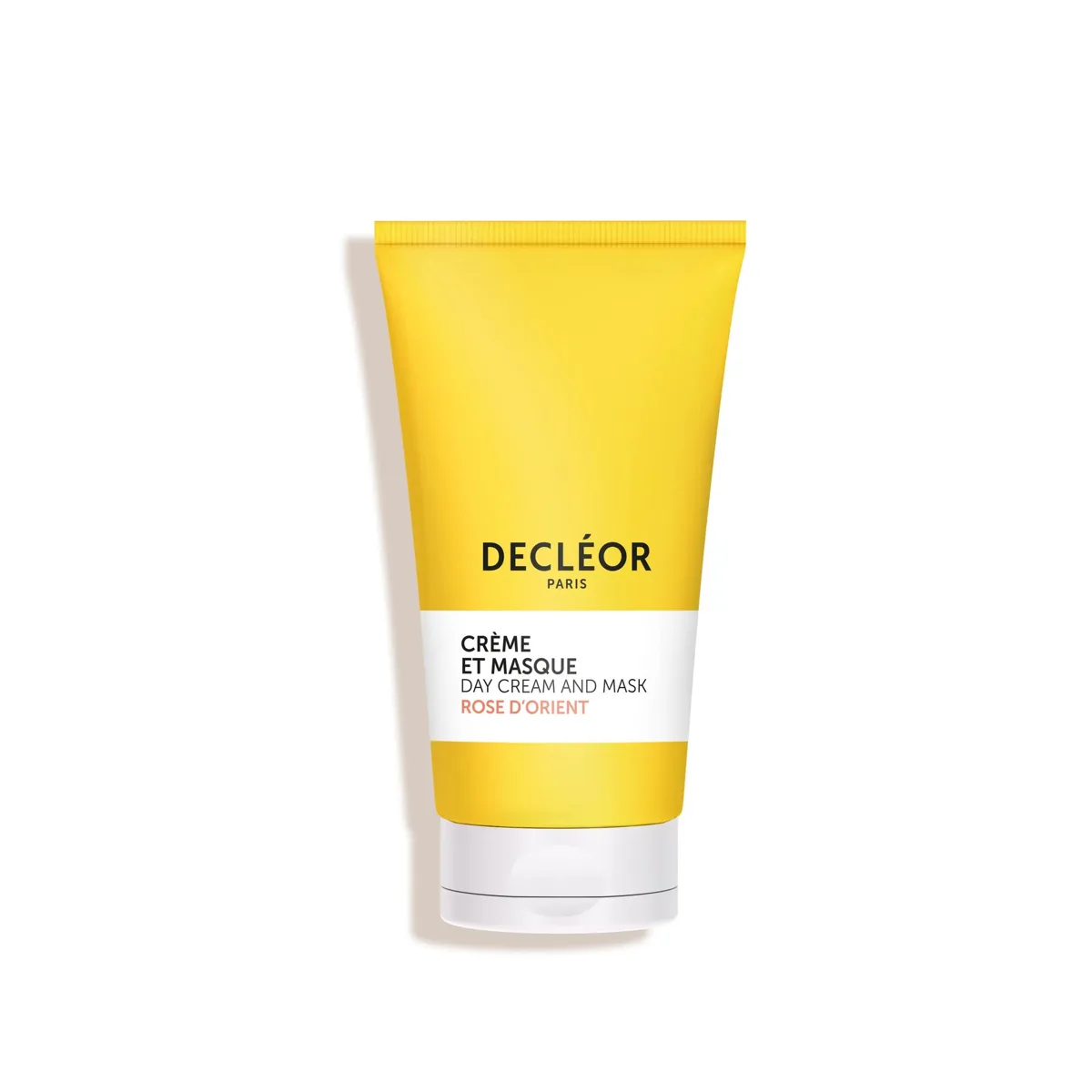 Rose Glow Day Cream
 Rose d'Orient Soothing Cream
Decleor's Rose d'Orient is a pretty, rose-scented organic day cream that doubles as a soothing mask and leaves skin with a fresh, subtly radiant finish thanks to a touch of mica. It contains genuinely calming centella-derived madecassoside — but it's marketed to sensitive skin while carrying denatured alcohol, added fragrance and a long list of rose allergens, a contradiction that defines the whole product.
 Gilded Honey Gloss
 Gold Honey Lip Care
The clear honey lip oil with a warm gold pearl and a thicker plant-polyester film, so it wears a little longer, looks a little fuller and catches light without grit. It is a very good shimmer gloss with conditioning oils underneath, sold at $28.50 for 10 ml, which is prestige-makeup money for a product that comforts rather than repairs; buy it for evenings and nude-lipstick days, and keep a balm for the nights your lips actually need help.
 Pearl-and-Caffeine Morning Eye Gel
 Brightening Eye Gel
A cooling morning eye gel that does exactly what its careful wording promises: mica and titanium dioxide scatter light over dark circles so they look lighter at once, caffeine and a cold metal tip depuff for an hour or two, and concealer sits well on top. It changes nothing beneath the pearl, it carries two essential oils with seven declared allergens on the most reactive skin on the face, and $76 for 15 ml is luxury pricing for an effect a tinted caffeine gel delivers for a fraction; a pleasant cosmetic with an honest claim and a hard price.
 Optical Blurring Classic
 A.G.E. Eye Complex
A long-running classic in the SkinCeuticals lineup that delivers immediate visible blurring through optical diffusers and a well-loved metal applicator tip, with a slower anti-glycation story that's less compelling than in the newer A.G.E. Advanced Eye. Fine as an optical-effect eye cream, but there are better-formulated options at this price.
 Pocket Glow Balm
 Retino Collagen Small Molecule 300 Glow Stick
A handy, pocket-sized glow balm that delivers an instant dewy sheen and softens dry patches, even over makeup. But the glow comes from sunflower oil and synthetic mica, not from collagen, peptides or the trace of retinal the name trades on, and a fragrant essential-oil blend makes it a risky pick for sensitive or acne-prone skin.
 Bakuchiol Glow Mask
 Bio-Retinol Gold Mask
Evolve's Bio-Retinol Gold Mask is a nourishing, sensory bakuchiol oil mask that firms gently and delivers an instant golden glow — a lovely, retinol-free natural treatment for dry skin and pre-event radiance. Just know the gold is purely cosmetic, the bakuchiol is gentle rather than powerful, and the added fragrance and almond oil complicate its 'all skin types' billing.
 Dissolving Sugar Scrub, Luxury Tube
 The Renewal Oil Exfoliator
A genuinely well-engineered sugar-and-sea-salt scrub in a gelled oil of triglyceride, meadowfoam and mango and cupuaçu butters that melts under the hands, polishes with a fine grit that dissolves in water and rinses, through a mild emulsifier, to skin that is immediately smoother and softly oiled. It suits dry, rough and winter skin and leaves a film on oily skin, it carries a parfum and eucalyptus onto freshly abraded skin, and a hundred and seventy dollars buys the Miracle Broth, kelp, honey, diamond powder and the tube over a mechanism that sugar scrubs sell for fifteen.
 Rose-Wax Eye Balm, Pearl-Lit
 The Rejuvenating Eye Cream
A dense, rose-waxed shea eye balm with the Miracle Broth, a three-peptide complex, caffeine, a vitamin C salt and three pearlescent pigments, which cushions dry orbital skin beautifully and makes the under-eye look brighter the instant it sets, because it is lit with mica. The rejuvenation is a rich seal plus optics, the peptides are supplier-evidenced garnish, and the formula puts a seven-allergen fragrance, two citrus oils and alcohol millimetres from the eye, for two hundred and forty-five dollars per 15 mL.
The full shimmer pigments guide
Light doesn't lie — and shimmer pigments know it.
These finely milled, plate-like particles exploit the physics of light interference to create a glow that reads as healthy skin rather than glitter, while their soft-focus optical properties scatter light away from fine lines and uneven texture. They're not skincare actives in the classical sense, but on a sunscreen or eye cream, their contribution to the visible result is something chemistry alone struggles to replicate.
How it's regulated in the US
FDA does not classify ingredients — it classifies products, by what they are sold to do. The same molecule can be a drug active in one product and a cosmetic ingredient in the next, and only the claim on the label decides which. What follows is a statement about that legal standing, not about whether it works — the evidence question is answered separately above.
Color additive Mica and the other pearlescent pigments are listed color additives, pre-approved by regulation for cosmetic use. The listing governs identity, purity and where the pigment may be used — it says nothing about what a shimmering finish does for skin.
“Mica is safe for use in coloring cosmetics generally, including cosmetics applied to the area of the eye, in amounts consistent with good manufacturing practice.” — 21 CFR § 73.2496 (read the listing)
The optical mechanisms behind shimmer pigments are well-documented in cosmetic science, materials chemistry, and FDA color additive regulation — but that "well-established" status applies to the physics and the safety record, not to any skin benefit. Mica (CI 77019), the most common substrate, is FDA-approved for cosmetic use including the eye area under 21 CFR 73.2496, as are its common coatings: iron oxides (CI 77491, 77492, 77499) and titanium dioxide (CI 77891). Synthetic fluorphlogopite — laboratory-grown mica — has been reviewed for cosmetic safety by the Cosmetic Ingredient Review (CIR) Expert Panel. The soft-focus blurring effect, where fine platelet particles scatter incident light to soften the visual appearance of pores and lines, is described across cosmetic-industry formulation literature. There is no evidence that shimmer pigments change skin biology; their value is entirely optical and cosmetic. The most-discussed concern is not safety but supply chain: natural mica mining has been linked to child labor in India, which has driven adoption of certified and synthetic alternatives.
How it works
The core trick is controlled light interference. Each particle is built like a tiny laminated sandwich — a transparent mica or synthetic fluorphlogopite platelet at the center, coated with thin layers of metal oxides, usually titanium dioxide or iron oxides. When light hits these stacked surfaces, part of it reflects off the top coating while the rest passes through and bounces off the underlying mica. Those two reflected beams recombine slightly out of phase, producing interference colors — the iridescent, shifting quality that separates a pearl-like sheen from flat sparkle. Platelet geometry does a lot of the work. Because mica cleaves naturally into flat plates, the particles tend to lie parallel to the skin surface, maximizing reflection in one direction. Coarser particles throw a more obvious metallic sparkle; ultrafine grades give a softer, diffused glow often described as lit-from-within. Formulators tune particle size, measured in micrometers, to dial in the finish they want. The soft-focus effect rides along on that same geometry: the platelets also scatter a portion of light in multiple directions, softening the sharp light-and-shadow contrast that makes pores and fine lines stand out. Crucially, all of this is a surface phenomenon. It lasts exactly as long as the product sits on your skin and vanishes the moment you cleanse it off. Nothing about it touches the underlying biology — no collagen, no cell turnover, no barrier change.
Key benefits
- Creates a lit-from-within glow through light-interference physics
- Optically softens the look of fine lines and uneven texture by scattering light
- Delivers instant radiance with no stimulation or irritation of skin tissue
- Very low sensitization potential, suitable across essentially all skin types
- Finish color can be tuned via iron oxide and titanium dioxide coating ratios
- Lends an even-toned appearance to tinted sunscreens and hybrid skincare-makeup formulas
Concentration & usage
Unlike actives such as niacinamide or retinol, there are no published efficacy concentration ranges — the only trade-off is aesthetic. On an INCI list, scan for Mica (CI 77019), Synthetic Fluorphlogopite, and the coating pigments CI 77891 (Titanium Dioxide) and CI 77491/77492/77499 (Iron Oxides); the more of these, and the higher they sit, the stronger the shimmer. Pearlescent pigments in facial skincare commonly land in the low single digits up to roughly 10%, with luminizing primers and highlighter-leaning formulas going higher. There's no minimum needed for the effect to appear — more pigment simply means a more pronounced glow.
Who it's for & who should be cautious
Who it's for
Anyone after an instant, no-effort radiance boost, especially dry or mature skin where the glow reads as plumpness and the soft-focus scatter draws the eye away from texture. Also a good match for people who like a moisturizer, eye cream, or sunscreen that does double duty.
Who should be cautious
People who dislike any luminosity in their finish, very oily skin prone to looking greasy over a shiny T-zone, and anyone applying creams directly over active, inflamed breakouts. Those with ethical-sourcing concerns should seek synthetic fluorphlogopite or RMI-certified mica.
Pairs with & conflicts
Pairs well with: Hyaluronic Acid, Glycerin, Vitamin E (Tocopherol), Titanium Dioxide, Iron Oxides, Silica (Silicon Dioxide), Dimethicone, Squalane
Myths & facts
Myth: Shimmer pigments are basically glitter — they clog pores and trigger breakouts.
Reality: Mica and synthetic fluorphlogopite are chemically inert and not considered comedogenic; they don't interact with sebum or follicular keratin the way heavy oils can. When people see pore issues with a shimmer product, the culprit is usually the surrounding formula, not the pigment. Finely milled shimmer in a well-built, non-comedogenic base is generally fine for acne-prone skin.
Myth: If a shimmer product makes skin glow, it must be doing something good for it biologically.
Reality: The glow is purely optical and exists only while the product is on your face. Shimmer pigments don't build collagen, speed cell turnover, reinforce the barrier, or change any skin function, and the effect washes off completely. A product that pairs shimmer with real actives (say, a luminizing mineral SPF with zinc oxide) gives you both — but the shimmer itself contributes nothing to the biology.
Myth: Synthetic mica is a cheap, lower-quality stand-in for the natural mineral.
Reality: For cosmetic use it's often the reverse. Synthetic fluorphlogopite is more uniform in particle size, free of the trace heavy-metal contamination that can turn up in mined mica, and sidesteps the labor concerns tied to natural mica. The CIR has reviewed it as safe for cosmetics, and many formulators now prefer it specifically for its cleaner, brighter, more consistent optical output.
Frequently asked questions
Is shimmer from mica or pearl pigments safe to wear close to the eyes?
Yes — mica (CI 77019) and its usual coatings, iron oxides and titanium dioxide, are all FDA-approved for cosmetics applied to the eye area under 21 CFR 73.2496 and related listings. Eye creams and eyeshadows have relied on these pigments for decades with a solid safety record. The only real caveat is mechanical: you don't want coarse, glitter-grade particles directly in the eye, but the ultrafine grades used in eye creams are generally too small to cause that kind of irritation.
Does the shimmer in my sunscreen change how well it shields me from UV?
Not in any meaningful way. Shimmer pigments in a sunscreen sit at cosmetic, not functional, levels, so they neither boost nor weaken the SPF — that protection comes from the actual UV filters like zinc oxide, titanium dioxide at filter-grade concentrations, or organic filters. The titanium dioxide coating on mica platelets might scatter a sliver of UV incidentally, but it's not the basis for any sun-protection claim.
What actually separates cosmetic shimmer from glitter?
Mostly particle size and what the particle is made of. Cosmetic shimmer pigments are typically ultrafine — often well under 150 micrometers — so they create diffused effects that blend into skin. Glitter is coarser and is frequently a plastic film rather than a mineral platelet. Regulation-wise, mica-based shimmer is cleared for skin and eye use, whereas large plastic glitter isn't meant for the skin. The practical upshot: fine shimmer reads as a glow, while coarse glitter reads as decoration.
Can natural mica in my products be considered ethically sourced?
Not automatically — it's a genuine, unresolved issue. A meaningful share of the world's natural mica comes from informal mines in Jharkhand and Bihar, India, where child labor has been heavily documented. The Responsible Mica Initiative, launched in January 2017, is working to clean up the Indian supply chain but hasn't fully eliminated the problem. Brands that take sourcing seriously will usually call out either synthetic fluorphlogopite or RMI-certified mica in their transparency information.
Will shimmer in a moisturizer look glittery or obvious on mature skin?
It comes down to particle size and format. Ultrafine pearlescent pigments in a moisturizer or primer base read as a soft, skin-blending luminosity — closer to 'well-rested' than 'covered in highlighter.' If you have pronounced texture, lean toward liquid or cream formulas with the finest-grade mica, which optically blur texture rather than catch on it the way large-particle powders can.
Is shimmer okay for sensitive or rosacea-prone skin?
Usually, yes. Mica and synthetic fluorphlogopite are among the lowest-risk cosmetic ingredients for irritation and sensitization because they're chemically inert and don't set off the inflammatory responses that acids or fragrance can. The thing to watch isn't the pigment but the rest of the formula — fragrance, essential oils, or heavy preservative loads — so read the full INCI list rather than fixating on the shimmer alone.
Sources
- https://www.fda.gov/cosmetics/cosmetic-ingredient-names/color-additives-permitted-use-cosmetics
- https://incidecoder.com/ingredients/mica
- https://www.cosmeticsandtoiletries.com/formulas-products/color-cosmetics/article/21837095/zooming-in-on-hd-cosmetics-softfocus-effects
- https://responsible-mica-initiative.com/
- https://www.ctpa.org.uk/mica