




What a Long List of Plant Extracts Actually Buys You
Eighteen botanicals reads as generous. Find where the preservative sits on the list and the arithmetic changes considerably.
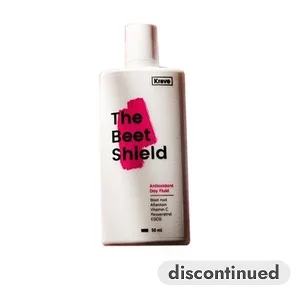
This was KraveBeauty's brief alcohol-free iteration of their next-gen UV filter sunscreen — the same Tinosorb S and Uvinul A Plus filter system as the original Beet Shield, but with the alcohol replaced by a more nourishing base featuring rice bran extract, lysolecithin, and macadamia oil. It represented the best of both worlds before it was discontinued.
The brief, brilliant middle child of KraveBeauty's sunscreen lineage — combining next-gen UV filters with an alcohol-free base that fixed the original's biggest flaw, only to be discontinued before most people knew it existed.
Note: This lotion had a limited market presence before being discontinued in 2021. Our assessment is based primarily on ingredient analysis and the limited user feedback available. The SPF testing controversy that led to its discontinuation primarily targeted the original SPF 50+ formula, and specific test data for this SPF 47 version is not publicly available.
The case for it
What would change this: A declared concentration would move this to a firmer reading of the dose.
Same rule for everyone. “Full protection” is the verdict on 2,288 of 45,024 concern verdicts across the catalog; rule P1 decided 2,232 of them. Unchanged since September 5, 2026, engine 5.1.1.
Brand or formulator? Disclose a concentration or correct a fact →
The studies behind the evidence row
The case for it
What would change this: A researched evidence row for the lead active would replace this with a verdict.
Same rule for everyone. “Full protection” is the verdict on 2,288 of 45,024 concern verdicts across the catalog; rule P1 decided 2,232 of them. Unchanged since September 5, 2026, engine 5.1.1.
Brand or formulator? Disclose a concentration or correct a fact →
The case for it
What would change this: A researched evidence row for the lead active would replace this with a verdict.
Same rule for everyone. “Full protection” is the verdict on 2,288 of 45,024 concern verdicts across the catalog; rule P1 decided 2,232 of them. Unchanged since September 5, 2026, engine 5.1.1.
Brand or formulator? Disclose a concentration or correct a fact →
Also listed for Dullness and Dryness — the actives here (Botanical Extracts, Uvinul A Plus (DHHB) are in our research queue for those concerns; there is no verdict until their evidence rows are written. That is a gap in our table, not a mark against the product.
Does the jobDoes what a sunscreen is for: UVA coverage, kind to the skin wearing it. Not measured from the label: pleasant enough to actually use.
A verdict is DermApproved’s assessment of how well a product’s ingredients fit a concern — never a claim about what the product treats. Evidence dots and collected reviews sit beside it and are never blended in. Rules 0.5.1 · evidence table ev-2026.09-r228 · how we decide
In the short, eventful history of KraveBeauty's sunscreen endeavors, the Beet The Sun SPF 47 PA++++ occupies a peculiar position: it was arguably the best version of the product that ever existed, and almost nobody got to use it. Launched as a mid-cycle reformulation sometime around 2020, it addressed the single most common criticism of the original Beet Shield — the prominent alcohol content — while keeping everything that made the original special. Then, barely a year later, it was swept up in the same SPF testing controversy that killed the original and disappeared from shelves.
The formula tells the story of a brand that was genuinely listening. The core UV filter system is identical to the original Beet Shield: diethylamino hydroxybenzoyl hexyl benzoate for UVA, bis-ethylhexyloxyphenol methoxyphenyl triazine for broad-spectrum coverage, and ethylhexyl triazone plus isoamyl p-methoxycinnamate and polysilicone-15 for UVB. These are the same next-generation filters that made the original exciting — photostable, broad-spectrum, and elegant in a way that older FDA-approved filters simply are not.
What changed was everything around them. The alcohol that sat fourth on the original's ingredient list is gone, replaced by ethanolamine as a pH adjuster — a fundamentally different function at a much lower concentration. In its place, the formula gained lysolecithin, an emollient phospholipid; lauric acid, a fatty acid skin conditioner; rice bran extract for antioxidant and soothing support; and macadamia seed oil, rich in palmitoleic acid. Butyloctyl salicylate and dibutyl adipate carry the filters in solution, an inulin lauryl carbamate helps them lay down evenly, and methyl methacrylate crosspolymer and polymethylsilsesquioxane soften the finish. The result was a sunscreen that felt noticeably creamier and more skin-nourishing than the original, without sacrificing the lightweight character that made the Beet Shield popular.
A reasonable person might suspect that pulling the alcohol weakened the protection. It didn't, and the reason is worth understanding. Alcohol in a sunscreen is a solvent and a texture device — it dissolves the filters, thins the fluid, and flashes off your skin to leave a dry finish in seconds. It absorbs no ultraviolet light whatsoever. Swapping it for emollient carriers changes how a sunscreen feels and how quickly it sets, and leaves the actual photoprotective chemistry entirely untouched. If anything, the lysolecithin may help the filters distribute more evenly across the skin, and an even film is what protection actually depends on.
The number on the bottle invites the same confusion. SPF 47 sounds like a meaningful step down from SPF 50+, and in filtration terms it is the difference between roughly 97.9 and 98 percent of UVB blocked — a gap smaller than the error introduced by applying the product slightly unevenly. The filters were the same. The claim was simply measured, and stated, differently.
The antioxidant complex survived intact. Beetroot extract, EGCG, resveratrol, and sodium ascorbyl phosphate all made the transition, providing the same layered philosophy: filters prevent most of the damage, and four antioxidant pathways clean up whatever gets through. Each works differently — betalains scavenging radicals broadly, EGCG blunting the enzymes that degrade collagen, resveratrol nudging cellular repair signaling. Allantoin rounds out the soothing component.
Texturally, the SPF 47 split the difference between the ultra-light, dewy original and a traditional moisturizing sunscreen. Without alcohol to drive rapid evaporation, it sat on skin a few seconds longer during absorption but ultimately settled into a comfortable, natural-looking finish that was neither greasy nor matte. A nickel-sized amount for the face, set for about forty-five seconds, and makeup went on cleanly over it. For dry skin that found the original too drying, this was exactly the right compromise. For oily skin that loved the original's quick-dry elegance, it felt slightly heavier — a fair trade-off that came down to preference.
The lauric acid is the one formulation choice that warrants caution. It has antimicrobial properties and conditions skin well, but it rates as moderately comedogenic and can trigger breakouts in congestion-prone individuals. It also, along with the polysorbate 80, ruled the product out for anyone managing fungal acne. Vegan, cruelty-free, fragrance-free, and safe in pregnancy otherwise.
At the same twenty-dollar price as the original, this represented outstanding value — next-generation filters, a multi-antioxidant complex, and a gentler base for what a basic drugstore sunscreen costs. The compact packaging maintained the brand's environmental commitments, and the company went on to earn B Corp certification in 2024.
The tragedy of the Beet The Sun SPF 47 is one of timing. It fixed the right problems, kept the right innovations, and arrived as the brand was building genuine trust with an increasingly ingredient-savvy audience. Then the third-party SPF testing results landed, and KraveBeauty made the principled but painful choice to pull everything rather than defend a potentially compromised product. Whether this version specifically underperformed its claim remains unclear — the controversy centered on the original SPF 50+ formula — but the brand chose a clean break over a selective defense. It is worth saying that the couple of hundred reviews this product ever accumulated are far too few to establish anything, and much of what can be said about it rests on reading the ingredient list rather than on evidence of how it performed.
For the historical record, this was a genuinely good sunscreen: modern filters, thoughtful antioxidant support, alcohol-free comfort, and an honest price. Its short lifespan tells us more about the volatility of the sunscreen market, and about the courage required to prioritize consumer safety over inventory, than it does about any flaw in the formula itself.
The hero actives that drive this product's performance.
| Ingredient | Function | Evidence |
|---|---|---|
| Bis-Ethylhexyloxyphenol Methoxyphenyl Triazine (Tinosorb S) | Provides the broadest spectral coverage in this formula, absorbing across both UVA and UVB wavelengths (280-400nm) while stabilizing the other filters — critical for maintaining the SPF 47 rating throughout wear time. | Regulator-approved for Sun Damage · limited certainty |
| Diethylamino Hydroxybenzoyl Hexyl Benzoate (Uvinul A Plus) | Dedicated UVA absorber working in the 320-400nm range, providing the deep UVA protection that prevents photoaging. Its photostability means it does not degrade during exposure, complementing Tinosorb S for comprehensive long-wave UV coverage. | Regulator-approved for Sun Damage · limited certainty |
| Beta Vulgaris (Beet) Root Extract | The signature beetroot antioxidant positioned prominently in this formula, providing betalain-based free radical scavenging that addresses oxidative damage UV light generates even after passing through the filter system. | Not yet assessed |
| Epigallocatechin Gallate (EGCG) | A potent catechin antioxidant that targets UV-induced matrix metalloproteinase activation alongside the beet extract's general radical scavenging — two different mechanisms of photoprotection working together. | Not yet assessed |
| Resveratrol | Activates cellular repair pathways via sirtuin signaling, adding a damage-repair dimension to the formula's antioxidant strategy beyond the prevention-focused activity of the beet and green tea extracts. | Not yet assessed |
| Allantoin | Provides soothing and skin-conditioning benefits that help the formula feel comfortable on skin, while also supporting cell proliferation to complement the antioxidant protection with gentle repair activity. | Not yet assessed |
Ingredient standings describe the active at treatment-level doses and vehicles; this product's own condition grades weigh its actual formula.
Water, Butyloctyl Salicylate, Dibutyl Adipate, Beta Vulgaris (Beet) Root Extract, Ethanolamine, Diethylamino Hydroxybenzoyl Hexyl Benzoate, Bis-Ethylhexyloxyphenol Methoxyphenyl Triazine, Ethylhexyl Triazone, Glycerin, Lysolecithin, Lauric Acid, Oryza Sativa (Rice) Bran Extract, Macadamia Ternifolia Seed Oil, Isoamyl p-Methoxycinnamate, Polysilicone-15, Inulin Lauryl Carbamate, Methyl Methacrylate Crosspolymer, Sodium Acrylate/Sodium Acryloyldimethyl Taurate Copolymer, Acrylates/C10-30 Alkyl Acrylate Crosspolymer, Tromethamine, Methylpropanediol, Isohexadecane, Caprylyl Glycol, Glyceryl Caprylate, Polymethylsilsesquioxane, 1,2-Hexanediol, Polysorbate 80, Sorbitan Oleate, Ethylhexylglycerin, Allantoin, Epigallocatechin Gallate, Sodium Ascorbyl Phosphate, Butylene Glycol, Resveratrol
sunscreen
AM
Apply as the last skincare step before makeup. The slightly richer texture compared to the original Beet Shield makes this version especially comfortable for normal to dry skin. Allow a minute to set for best results under makeup.
Immediate UV protection upon application. Antioxidant benefits from the beet-EGCG-resveratrol complex accumulate with consistent daily use over 4-8 weeks.
The UV filter system in the SPF 47 version is functionally identical to the original Beet Shield, built on three next-generation organic filters. Bis-Ethylhexyloxyphenol Methoxyphenyl Triazine (Tinosorb S) provides the broadest coverage, absorbing across 280-400nm with exceptional photostability — BASF data shows 98.4% filter integrity after 50 minimal erythemal doses. Diethylamino Hydroxybenzoyl Hexyl Benzoate (Uvinul A Plus) adds dedicated UVA absorption in the 320-400nm range, while Ethylhexyl Triazone delivers potent UVB coverage. All three filters are photostable, meaning they maintain their protective capacity without degrading under UV exposure — a significant advantage over avobenzone-based systems that require stabilizers.
The reformulation's shift from alcohol to emollient carriers had implications beyond comfort. Lysolecithin — a phospholipid emollient — can enhance the penetration and even distribution of UV filters across the skin surface, potentially improving actual on-skin protection. Oryza Sativa rice bran extract contributes gamma-oryzanol, a compound with demonstrated antioxidant and UV-absorbing properties studied in the Journal of Cosmetic Dermatology. The antioxidant complex — EGCG, resveratrol, sodium ascorbyl phosphate, and beet extract — remained unchanged from the original, providing multi-pathway photoprotection that targets different aspects of UV-induced oxidative damage.
Dermatologists widely regard the Tinosorb S and Uvinul A Plus filter combination as among the most effective and photostable options available globally. Practitioners have noted that the removal of alcohol from this reformulation would make it more suitable for patients with compromised skin barriers, eczema-prone skin, or those using concurrent irritating treatments like retinoids and AHAs. The addition of emollient ingredients like macadamia oil and lysolecithin aligns with dermatological recommendations to pair sun protection with barrier support. Dermatologists frequently point to this type of formulation — effective filters, antioxidant support, minimal irritation potential — as the ideal approach to photoprotection.
Applied as the final skincare step before makeup in the morning. Generous application was essential — approximately a nickel-sized amount for the face. The slightly creamier texture spread easily and set within about 45 seconds. Reapplication every two hours during sun exposure was recommended.
At $20 for 50 mL, the SPF 47 version offered the same excellent value as the original Beet Shield — next-generation UV filters, a four-component antioxidant system, and added skin-nourishing ingredients at a price point that undercut most European pharmacy sunscreens using similar filter technology. The improved base formula with rice bran extract and macadamia oil arguably made this an even better value proposition than the original, as the gentler formulation expanded the potential user base significantly.
This product is no longer available. Historically, it was best suited for skincare enthusiasts who wanted cutting-edge UV filter technology in an alcohol-free, skin-nourishing base — particularly those with normal, combination, or dry skin who found the original Beet Shield too drying.
Everyone — this product is discontinued and no longer manufactured. Any remaining stock would be expired. Those with acne-prone skin would also have wanted to be cautious due to the lauric acid content.
Ready to try Krave Beauty Beet The Sun SPF 47?
Buy at Amazon ♥Lightweight fluid lotion with a slightly creamier body than the original SPF 50+ version. The absence of alcohol gives it a softer, more emollient feel on skin.
No added fragrance. Minimal inherent scent from the formula base.
50 mL squeeze bottle. Standard KraveBeauty green and beet-colored branding.
Applies smoothly without the cooling alcohol sensation of the original Beet Shield. Sets into a comfortable, slightly dewy finish within about 45 seconds. No stinging or tingling. The rice bran extract and macadamia oil give it a slightly more nourishing feel than a typical chemical sunscreen.
Around 2-3 months when applied daily to the face
All Year
The SPF 47 version was a mid-cycle reformulation that addressed the most common complaint about the original Beet Shield — the high alcohol content. By swapping alcohol for gentler carriers and adding rice bran extract and macadamia oil, KraveBeauty created a version that was both skin-friendly and technologically advanced. It was discontinued alongside the original during the 2021 SPF testing controversy.
KraveBeauty was founded in 2017 by Liah Yoo, a former AmorePacific strategist and skincare YouTube educator. The brand earned B Corp certification in 2024 and is known for its minimalist, essentials-focused product lineup.
The SPF 47 version provided less protection than the SPF 50+ original.
The difference between SPF 47 and SPF 50 is negligible in real-world use — approximately 97.9% vs 98% UVB filtration. The reformulation used the same UV filter technology at similar concentrations.
Removing the alcohol from the formula weakened the sunscreen's UV protection.
Alcohol in sunscreens primarily serves as a solvent and texture enhancer — it helps the formula spread and dry quickly but does not contribute to UV filtration. The UV filters themselves were unchanged.
No. The SPF 47 version was discontinued in 2021 along with the original Beet Shield. KraveBeauty has since released a completely reformulated Beet The Sun SPF 40 using FDA-approved UV filters.
The SPF 47 reformulation removed the alcohol from the original Beet Shield formula and replaced it with a more nourishing base featuring rice bran extract, lysolecithin, and macadamia oil. It kept the same next-generation UV filters (Tinosorb S, Uvinul A Plus, Ethylhexyl Triazone).
It was pulled alongside the original Beet Shield in 2021 when independent SPF testing raised questions about the actual protection level of KraveBeauty's sunscreen formulations. The brand chose to reformulate entirely with FDA-compliant filters.
Yes. The removal of alcohol and addition of soothing ingredients like allantoin and rice bran extract made the SPF 47 version significantly gentler. However, the lauric acid in the formula could trigger breakouts in acne-prone skin.
The product is no longer manufactured or officially sold. Any remaining stock found through third-party sellers would be expired and should not be used. The current Beet The Sun SPF 40 is the brand's active sunscreen offering.
Recurring themes our editors read across retailer reviews of this product — summaries in our words, not quotations, and not a substitute for your own patch test.
Improved texture over the original without the alcohol sting
Excellent antioxidant-enriched formula
No white cast with a natural finish
Comfortable enough for daily wear on dry skin
Short market lifespan before discontinuation
Difficult to find after being pulled from shelves
Lauric acid may cause breakouts for acne-prone skin
Slightly richer texture than the original felt heavy to oily skin users
Verified answers from our questions library — the nuance a product page cannot carry.