


Why Korean Sunscreens Outclass American Ones — and the 1999 Rule That's to Blame
It isn't chemistry. It's paperwork: the US spent a quarter-century unable to approve the filters Seoul and Paris have used since the Bush administration.
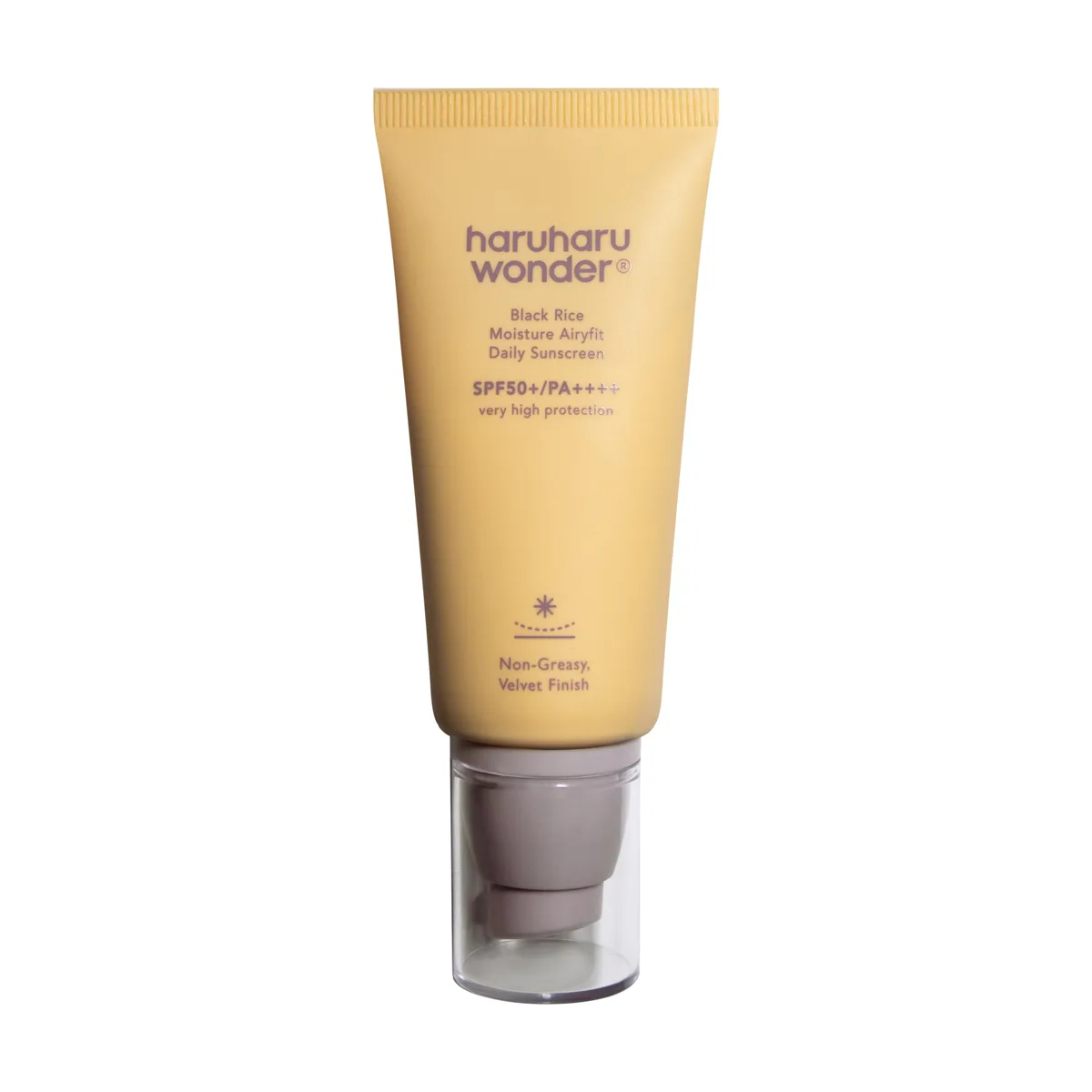
The filter stack is the real story here. Ethylhexyl Triazone, Mexoryl SX, Uvinul A Plus, and Tinosorb S together represent the modern standard for chemical sunscreen formulation — a combination that's impossible to achieve in U.S.-legal sunscreens because the FDA hasn't approved these filters. Combined with K-beauty-grade texture work and niacinamide and ceramide supporting actives, this is a genuinely globally competitive daily SPF.
Haruharu Wonder's Airyfit Daily Sunscreen is one of the best K-beauty SPF 50+ options on the global market, built around a modern four-filter stack (Ethylhexyl Triazone, Mexoryl SX, Uvinul A Plus, Tinosorb S) that genuinely outperforms most U.S.-available chemical sunscreens. Lightweight, invisible on all skin tones, reasonably priced, and supported by niacinamide and ceramide — it's a near-ideal daily sunscreen if you can import it.
Note: This sunscreen launched in 2022 and has moderate independent review volume. Our scoring reflects ingredient analysis supported by early real-world feedback. We'll revisit as long-term data accumulates.
The case for it
What would change this: A declared concentration would move this to a firmer reading of the dose.
Same rule for everyone. “Full protection” is the verdict on 2,288 of 45,024 concern verdicts across the catalog; rule P1 decided 2,232 of them. Unchanged since September 5, 2026, engine 5.1.1.
Brand or formulator? Disclose a concentration or correct a fact →
The studies behind the evidence row
The case for it
What would change this: A declared concentration would move this to a firmer reading of the dose.
Same rule for everyone. “Full protection” is the verdict on 2,288 of 45,024 concern verdicts across the catalog; rule P1 decided 2,232 of them. Unchanged since September 5, 2026, engine 5.1.1.
Brand or formulator? Disclose a concentration or correct a fact →
The studies behind the evidence row
The case for it
What would change this: A declared concentration would move this to a firmer reading of the dose.
Same rule for everyone. “Full protection” is the verdict on 2,288 of 45,024 concern verdicts across the catalog; rule P1 decided 2,232 of them. Unchanged since September 5, 2026, engine 5.1.1.
Brand or formulator? Disclose a concentration or correct a fact →
The studies behind the evidence row
The case for it
What would change this: A researched evidence row for the lead active would replace this with a verdict.
Same rule for everyone. “Good choice” is the verdict on 1,938 of 45,024 concern verdicts across the catalog; rule F2 decided 1,938 of them. Unchanged since September 5, 2026, engine 5.1.1.
Brand or formulator? Disclose a concentration or correct a fact →
Does the jobDoes what a sunscreen is for: UVA coverage, kind to the skin wearing it. Not measured from the label: pleasant enough to actually use.
A verdict is DermApproved’s assessment of how well a product’s ingredients fit a concern — never a claim about what the product treats. Evidence dots and collected reviews sit beside it and are never blended in. Rules 0.5.1 · evidence table ev-2026.09-r228 · how we decide
The FDA hasn't approved a new UV filter for sunscreen use since 1999. That's not a typo. Every new filter developed by cosmetic chemistry over the last two and a half decades — the photostable UVA workhorses that make modern Asian and European sunscreens feel weightless, work brilliantly, and leave no white cast — sits in regulatory limbo in the United States. American consumers have been stuck with homosalate, oxybenzone, avobenzone, and octocrylene while everyone else is building with Tinosorb, Mexoryl, Uvinul, and a growing list of better tools. Haruharu Wonder's Airyfit Daily Sunscreen is a good way to show what that gap looks like in practice.
Open the INCI list and the filter stack reveals itself quickly. Ethylhexyl Triazone (Uvinul T 150) is one of the most efficient UVB filters ever developed — it absorbs at high extinction in the UVB range, which means you need less of it to reach SPF 50+. Terephthalylidene Dicamphor Sulfonic Acid (Mexoryl SX) is a photostable UVA filter originally developed by L'Oréal for the European market. Diethylamino Hydroxybenzoyl Hexyl Benzoate (Uvinul A Plus, or DHHB) covers the long-UVA range most implicated in photoaging and pigment damage. Bis-Ethylhexyloxyphenol Methoxyphenyl Triazine (Tinosorb S) is a broad-spectrum photostabilizer that covers both UVA and UVB and keeps the rest of the filter system stable under UV exposure. These four ingredients together form the modern gold-standard filter stack. You cannot build this sunscreen in the United States legally, because three of the four filters haven't been FDA-approved.
Two other names in the list are quietly doing filter-adjacent work. Butyloctyl salicylate is a solvent that keeps the crystalline filters dissolved rather than gritty, and it lends a small SPF boost of its own. Polysilicone-15 is a UV-absorbing polymer that reinforces the UVB end of the spectrum. Neither gets marketing attention, and both are part of why this formula reaches its rating without feeling like it.
The practical consequence of using better filters is that the formula can be lighter. A U.S. SPF 50 chemical sunscreen typically loads up on homosalate and octocrylene because those are the only tools on the menu — the result is heavier, oilier, and often reactive on sensitive skin. This formula uses lower total filter load to achieve the same protection, which is why it feels like the 'airy' in Airyfit is earned rather than marketing language. It spreads like a lotion, absorbs in under a minute, and leaves a soft velvety finish with zero white cast on any skin tone. It also puts paid to the lazy shorthand that chemical filters are inherently irritating: what irritates skin is a specific molecule at a specific concentration, and the modern filters here have a tolerability record that older U.S.-legal ones cannot match.
The supporting cast is where the formula shifts from 'competent modern sunscreen' to 'actually thoughtful skincare'. Niacinamide sits high on the INCI list at what looks like a functional concentration, contributing brightening, anti-inflammatory action, and a post-UV recovery angle that pairs well with photoprotection. Ceramide NP and phytosphingosine reinforce the barrier — a meaningful addition because chemical filter systems can sometimes feel stripping on compromised skin. Adenosine sits at the Korean regulatory anti-wrinkle concentration. Moringa seed oil and rice bran oil contribute mild emollience, biosaccharide gum-1 adds a soft hydrating film, and a small set of mineral salts — potassium, sodium, phosphate — nods at the sports-drink logic of replenishing what sun exposure depletes. Hidden further down are a cluster of botanical extracts — chickweed, houttuynia cordata, daisy flower, lingonberry — that are K-beauty standards for soothing action. Tocopherol handles oxidative stability of the oil phase.
Texture is genuinely pleasant. It doesn't feel like a sunscreen at all, which is both the point and a minor risk — you may find yourself applying too little because there's no 'sunscreen weight' to alert you to proper dosing. The labeled protection requires a full quarter-teaspoon on the face, and the airy texture means many users under-apply. This is the single most consequential thing in this review: an SPF 50 applied at half the tested dose is not an SPF 25, it is considerably worse than that, and the elegance of a formula is precisely what tempts people into the mistake. Measure it, pat it in rather than scrubbing it around, and reapply every two hours in real sun.
Honest limitations. The phenethyl alcohol preservation can sting if the product migrates into eyes, which is a known complaint in some reviews. It's fragrance-free in terms of added scent, but the botanical extracts contribute a slight natural formula smell that bothers a small number of fragrance-averse users. Fatty alcohols and emollients rule it out for anyone managing Malassezia. The 50ml tube is small for the daily application quantity you need for proper protection — expect to go through it in six to eight weeks at full dosing, which makes the per-month cost higher than drugstore options. And because it's not FDA-approved, buying it in the U.S. means importing rather than walking into a store.
None of those caveats are deal-breakers. For most skin types on most days, this is a significantly better daily sunscreen than anything you can buy off a U.S. shelf — a view shared by some thirty-five hundred reviewers averaging 4.5 stars, whose praise converges with unusual consistency on the same two things: no cast, no weight. It's reasonably priced for what it delivers, built on ingredient science that the American regulatory apparatus is decades behind on, and finished with a skincare sensibility that makes wearing it every day pleasant. If you're willing to import, this is one of the cleanest recommendations in the global sunscreen category — the rare K-beauty product where the hype is justified by the underlying formulation.
The hero actives that drive this product's performance.
| Ingredient | Function | Evidence |
|---|---|---|
| Ethylhexyl Triazone (Uvinul T 150) | One of the strongest UVB filters available, approved in Asia and Europe but not FDA-approved in the U.S. In this formula it provides the backbone of the SPF 50+ rating and is paired with Mexoryl SX and Tinosorb S to give genuine broad-spectrum coverage without the high load of older U.S.-legal filters. | Regulator-approved for Sun Damage · limited certainty |
| Terephthalylidene Dicamphor Sulfonic Acid (Mexoryl SX) | A photostable UVA filter developed by L'Oréal and now widely used across modern Asian and European sunscreens. It covers the shorter UVA range and works alongside DHHB (Uvinul A Plus) to give the PA++++ rating without destabilizing the rest of the filter system. | Regulator-approved for Sun Damage · limited certainty |
| Diethylamino Hydroxybenzoyl Hexyl Benzoate (Uvinul A Plus / DHHB) | A photostable long-UVA filter that covers the deeper UVA range most implicated in photoaging. Paired with Mexoryl SX and Tinosorb S in this formula, it forms part of a modern filter stack that's genuinely superior to the homosalate-heavy systems used in most U.S. sunscreens. | Regulator-approved for Sun Damage · limited certainty |
| Bis-Ethylhexyloxyphenol Methoxyphenyl Triazine (Tinosorb S) | A highly photostable broad-spectrum UV filter that covers both UVA and UVB. Its inclusion alongside Mexoryl SX and DHHB is the hallmark of a well-designed non-U.S. sunscreen, providing stability and coverage that the older FDA-approved filters can't match. | Regulator-approved for Sun Damage · limited certainty |
| Niacinamide | Sits high on the INCI list and contributes brightening, barrier support, and anti-inflammatory action. In a daily sunscreen context, niacinamide pairs particularly well with the photoprotection by reducing post-UV oxidative inflammation. | Emerging for Hyperpigmentation |
| Ceramide NP | Included at a supportive level to reinforce the stratum corneum barrier. In the Airyfit context, it helps the sunscreen feel hydrating rather than drying, which matters because chemical filter systems can sometimes feel stripping on reactive skin. | Not yet assessed |
Ingredient standings describe the active at treatment-level doses and vehicles; this product's own condition grades weigh its actual formula.
Water, Dibutyl Adipate, Propanediol, Butyloctyl Salicylate, Ethylhexyl Triazone, Terephthalylidene Dicamphor Sulfonic Acid, Glycerin, Niacinamide, Tromethamine, Polyglyceryl-3 Distearate, 1,2-Hexanediol, Pentylene Glycol, Diethylamino Hydroxybenzoyl Hexyl Benzoate, Cetearyl Alcohol, Caprylyl Methicone, Polysilicone-15, Stellaria Media (Chickweed) Extract, Helianthus Annuus (Sunflower) Flower Extract, Vaccinium Vitis-Idaea Fruit Extract, Oryza Sativa (Rice) Extract, Bellis Perennis (Daisy) Flower Extract, Houttuynia Cordata Extract, Oryza Sativa (Rice) Bran Oil, Hydrogenated Lecithin, Polymethylsilsesquioxane, Palmitic Acid, Butylene Glycol, Stearic Acid, Glyceryl Stearate, Bis-Ethylhexyloxyphenol Methoxyphenyl Triazine, Potassium Cetyl Phosphate, Poly C10-30 Alkyl Acrylate, Methylpropanediol, Carbomer, Ammonium Acryloyldimethyltaurate/VP Copolymer, Acrylates/C10-30 Alkyl Acrylate Crosspolymer, Glyceryl Stearate Citrate, Ethylhexylglycerin, Adenosine, Polyether-1, Myristic Acid, Biosaccharide Gum-1, Tocopherol, Moringa Oleifera Seed Oil, Ceramide NP, Phytosphingosine, Phenethyl Alcohol, Sodium Chloride, Disodium Phosphate, Potassium Chloride, Potassium Phosphate
sunscreen
AM
Save this for the last step of your morning routine, using a full quarter-teaspoon for face. Reapply every two hours with sun exposure. Sits under makeup without pilling for most users.
Photoprotection is immediate from the moment of proper application. Visible tone and texture improvements accrue over 4-8 weeks of consistent daily use, with long-term photoaging protection accumulating over months and years.
The photoprotection case for this sunscreen rests on four well-studied modern UV filters. Ethylhexyl Triazone is one of the most extinction-efficient UVB filters in cosmetic chemistry — it absorbs strongly across the UVB range and allows formulators to reach SPF 50+ with lower total filter loads than older FDA-approved alternatives. It has strong photostability and a decades-long safety record in Asian and European sunscreens.
Terephthalylidene Dicamphor Sulfonic Acid (Mexoryl SX) was developed by L'Oréal in the 1980s and has been widely studied as a photostable short-UVA filter. Clinical data supports its contribution to preventing UVA-induced photoaging and DNA damage. Diethylamino Hydroxybenzoyl Hexyl Benzoate (DHHB, Uvinul A Plus) is a long-UVA filter with peak absorption near 354nm, covering the deeper UVA range implicated in photoaging and pigmentation changes. DHHB is notable for its high photostability and low reactivity with other filters.
Bis-Ethylhexyloxyphenol Methoxyphenyl Triazine (Tinosorb S, bemotrizinol) is a broad-spectrum filter that covers both UVA and UVB ranges and is considered one of the most photostable UV filters in current use. In addition to its own protective activity, it stabilizes co-formulated filters, which is why it appears so consistently in well-designed modern sunscreens. None of these three filters (Mexoryl SX, DHHB, Tinosorb S) is FDA-approved for U.S. sale, though they have approval across most of the rest of the developed world and extensive post-market safety data.
The niacinamide supporting role is grounded in a substantial dermatological literature showing barrier improvement, anti-inflammatory action, and mild brightening at concentrations of 2-5%. Ceramide NP has strong evidence for stratum corneum barrier repair. Together, these actives transform the sunscreen from pure photoprotection into a genuine skincare-plus-SPF hybrid.
Dermatologists increasingly acknowledge the gap between FDA-approved sunscreen chemistry and the modern filters available in the rest of the world. Dermatology practitioners commonly emphasize that Asian and European sunscreens formulated with Tinosorb, Mexoryl, and Uvinul filters offer advantages in UVA coverage, photostability, and cosmetic elegance over legacy U.S.-approved chemistries. For patients with melasma, post-inflammatory hyperpigmentation, or photoaging concerns, dermatologists often recommend imported Asian or European sunscreens with modern filter stacks as the gold standard of daily photoprotection. The core message dermatologists emphasize is that the best sunscreen is the one applied in proper quantity every day, and products like this one remove most of the cosmetic excuses for under-application.
Apply as the final step of your morning routine. Dispense a full quarter-teaspoon (roughly a large pea to a nickel) for the face alone — this is the labeled quantity required to achieve SPF 50+ protection. Pat and press into skin rather than aggressively rubbing; the airy texture means it absorbs fully within 60 seconds. Reapply every two hours with direct sun exposure, and more frequently if swimming or sweating. For touch-ups over makeup, a powder or spray SPF is more practical than reapplying cream.
At $22 for 50ml (roughly $0.44 per milliliter), this sunscreen is priced competitively for its category. Factoring in the proper application quantity, a tube lasts six to eight weeks of daily face use, or about $11-15 per month. That's comparable to a U.S. drugstore SPF 50 in raw dollars, but you're getting substantially better underlying filter chemistry. For most K-beauty-comfortable shoppers willing to import, the value is excellent — there's very little in this price range that formulates with Mexoryl SX, DHHB, and Tinosorb S simultaneously. If you prefer to buy sunscreen in a U.S. store without the import friction, you're stuck with the older filter set.
Anyone who wants a genuinely modern daily chemical sunscreen with best-in-class filter chemistry and doesn't mind importing. It's particularly strong for sensitive skin, people concerned about photoaging and hyperpigmentation, darker skin tones that need zero white cast, and anyone who finds U.S. chemical sunscreens too heavy.
Give it a miss if you can't or won't import non-FDA-approved products. Skip it if you have a history of stinging eyes with chemical sunscreens — the phenethyl alcohol can be a problem. Fungal-acne-strict users should also look elsewhere.
Ready to try Haruharu Wonder Black Rice Moisture Airyfit Daily Sunscreen SPF 50+?
Buy at Amazon ♥Lightweight airy cream that spreads like a lotion and absorbs into a soft, non-greasy, velvety finish.
Fragrance-free with a faint neutral formula smell.
Slim white squeeze tube with minimalist black typography in the brand's clean apothecary aesthetic.
First use feels light and non-greasy immediately. No white cast, no adjustment period. Most users apply it directly under makeup without pilling. A small portion of sensitive-eye users report mild stinging if sweat causes migration.
Approximately 1-2 months with full-face daily use at proper quarter-teaspoon quantity.
All Year
Haruharu Wonder launched in 2019 building its brand identity around fermented black rice. This sunscreen joined the lineup in 2022 as the brand's answer to the growing demand among international K-beauty buyers for breathable daily SPFs using the modern Asian filter stack. It's become one of their best-reviewed products across retailers outside Korea.
Haruharu Wonder is an emerging Korean brand founded in 2019 built around fermented black rice. It holds EWG Green grades and has a growing following among K-beauty sunscreen enthusiasts, though it has a shorter clinical track record than legacy Korean derm brands.
U.S.-approved sunscreens are just as effective as Asian and European ones.
The FDA hasn't approved a new UV filter since 1999. Modern filters available in Korea, Japan, and Europe — like the ones in this product — offer better UVA coverage, higher photostability, and lower required loads than the older U.S.-legal filters.
Chemical sunscreens are bad for sensitive skin.
The filters in this product (especially Tinosorb S and Mexoryl SX) have an excellent safety and tolerability record in clinical use. Chemical doesn't mean irritating — it depends entirely on which chemicals are used.
It contains UV filters (Ethylhexyl Triazone, Mexoryl SX, Uvinul A Plus, Tinosorb S) that haven't been approved by the FDA. It's legal to import for personal use, but it can't be sold as a sunscreen in the U.S. without FDA approval.
No — it uses exclusively chemical filters, so there's no mineral pigment to go ashy. It finishes fully invisible on all skin tones.
It uses a fundamentally more modern filter stack than anything available in the U.S. The Asian and European filter set offers broader UVA coverage, better photostability, and typically feels lighter on skin. For most skin types, this product will outperform a typical U.S. SPF 50 chemical sunscreen.
Yes. The airy, non-greasy finish sits well under most foundations and concealers. Wait about a minute after application before layering makeup to minimize pilling.
A full quarter-teaspoon for the face to achieve the labeled SPF 50+ protection. Most people under-apply, which cuts effective protection significantly. Set a visual benchmark so you're not shortchanging yourself.
Tinosorb S, Mexoryl SX, and Ethylhexyl Triazone are not on the Hawaii reef-safe exclusion list, but reef safety regulations vary by jurisdiction. For swimming in protected marine areas, check local rules or use a mineral alternative.
Some dermatologists recommend mineral sunscreens during pregnancy out of caution. The filters in this product have strong safety records, but if you have specific concerns, ask your OB and consider a zinc oxide option for pregnancy.
Recurring themes our editors read across retailer reviews of this product — summaries in our words, not quotations, and not a substitute for your own patch test.
No white cast on any skin tone
Genuinely lightweight and breathable
Plays well under makeup
Strong broad-spectrum protection
Pleasant non-greasy finish
Not sold directly in the U.S., often imported
Can sting if it migrates into eyes
50ml tube feels small at the price
Verified answers from our questions library — the nuance a product page cannot carry.