Mexoryl SX (Ecamsule)
Products with Mexoryl SX (Ecamsule)
 One Bottle, Face and Body
Black Bamboo Top-to-Toe SPF Veil SPF 50+/PA++++
A face-grade Korean sunscreen sold in a body-sized bottle: five photostable organic filters with ethylhexyl triazone third on the list, niacinamide ninth, no cast, no stickiness and a forty-second dry-down. The triple hyaluronic acid on the box is the last three ingredients, the SPF is Korean labelling without a published test, and $34 is fair for face and arms and steep for daily whole-body use. A very good bottle for the parts of you that see the sun every day.
 Modern Filter Pick
UV Defense Moist Cream SPF 50+
A genuinely modern broad-spectrum sunscreen that runs three of the best UVA filters in the world simultaneously — Uvinul A Plus, Tinosorb S, and Mexoryl SX — in a moisturizing cream base that doubles as a daytime moisturizer. The white cast and the fungal-acne incompatibility limit its audience, but for normal-to-dry skin in the US frustrated by the FDA's old filter list, this is a serious upgrade.
 Post-Scandal Tested Sun Cream
SoonJung Director's Moisture Sun Cream
A light, essence-like, fragrance-free chemical sunscreen built from five modern photostable filters and finished with SoonJung's centella, panthenol and allantoin, it dries clear and faintly matte, sits well under makeup and is tolerated by reactive skin that has failed heavier formulas. The 'tested' SPF is a brand-paid test rather than an independent one, the hydration is lighter than the name promises, and it is not water-resistant, but as a daily sensitive-skin sunscreen it is a strong one.
 Hydrating Everyday Sunscreen
DIVE-IN Watery Fit Sun Serum SPF 50+
Torriden's DIVE-IN Watery Fit Sun Serum extends the brand's hydration obsession into sun care: a modern five-filter system in a fragrance-free, alcohol-free, watery serum loaded with hyaluronic acid. It absorbs fast, leaves no cast, and suits nearly every skin type, dry and sensitive especially. The nine HA forms are partly marketing, but the protection is genuinely excellent and the texture is a pleasure.
 Modern K-Beauty Filter Palette + Easy Removal
Mild Easy Wash Sun Cream SPF 50+
An $18 K-beauty sunscreen punching well above its price: a modern multi-filter palette of Tinosorb S, Uvinul A Plus, and Mexoryl SX delivers broad-spectrum SPF 50+ with UVA coverage US sunscreens cannot match, and it genuinely washes off with a regular cleanser. The fragrance and several comedogenic fatty alcohols are the trade-offs to weigh.
 Hydrating Sun Serum Pick
Heartleaf Soothing Hyaluron Sun Serum
One of the better-filtered sun serums under twenty-five dollars, with Mexoryl SX, Tinosorb S and ethylhexyl triazone in an alcohol-free base that feels like a hydrating lotion and vanishes on every skin tone. The hydration is real; the ten hyaluronic acids providing it are not, and the label admits as much. Six essential oils keep it from being the fully safe choice for reactive skin its name implies.
 Rosy Tone-Up SPF
Rose Collagen Tone-up UV Protector
A pretty, fragrance-free tone-up sunscreen with an unusually strong UVA line-up, Uvinul A Plus, Tinosorb S and both Mexoryls, plus niacinamide and a rose-water base. It brightens sallow skin instantly and protects well; the rosy tint suits fair to medium skin far better than deep, and it is priced at the upper end for its type.
 Next-Gen SPF Redemption
Beet The Sun SPF 50 Sunscreen
KraveBeauty's redemption arc arrives in a 50 mL tube — five next-gen UV filters, eight forms of hyaluronic acid, and a formula that finally earns the hype the original promised. The best Beet The Sun has ever been, now available only to those outside the US.
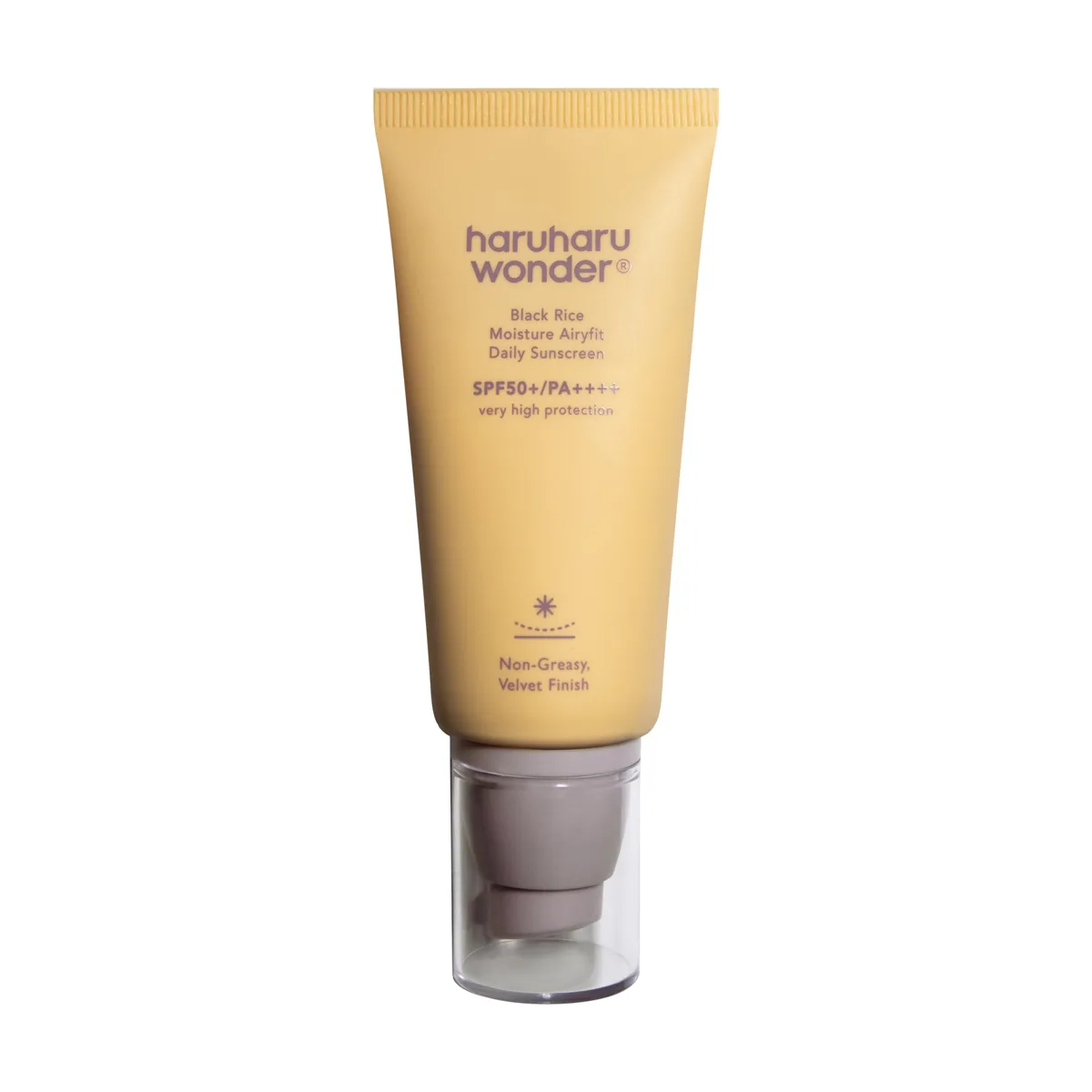 Modern Filter K-Beauty Daily SPF
Black Rice Moisture Airyfit Daily Sunscreen SPF 50+
Haruharu Wonder's Airyfit Daily Sunscreen is one of the best K-beauty SPF 50+ options on the global market, built around a modern four-filter stack (Ethylhexyl Triazone, Mexoryl SX, Uvinul A Plus, Tinosorb S) that genuinely outperforms most U.S.-available chemical sunscreens. Lightweight, invisible on all skin tones, reasonably priced, and supported by niacinamide and ceramide — it's a near-ideal daily sunscreen if you can import it.
 Modern-Filter Glow SPF
Glow+ Dewy Sunscreen SPF 50+
A genuinely modern, fragrance-free sunscreen at a budget price — its filter blend (Mexoryl SX, Tinosorb M, and more) is more advanced than what many Western brands can offer, and the dewy, no-white-cast glow is lovely on normal and drier skin. The honest asterisks: dewy finish isn't for very oily skin, and like several Indian sunscreens, its real-world SPF deserves caution, so apply and reapply generously.
 Oily-Skin Sunscreen Pick
Water Splash Sun Cream Fresh Cica SPF50+ PA++++
A surprisingly advanced chemical sunscreen hiding behind a makeup brand's label, built on a five-filter system led by Mexoryl SX that protects without a trace of cast. The denatured-alcohol base gives it a fresh, matte, makeup-ready finish oily skin will adore — but that same alcohol, plus fragrance, makes it the wrong call for reactive or very dry complexions.
 Featherweight UVA Defender
Water Splash Sun Cream Fresh SPF50+ PA++++
The Fresh is the enthusiast's pick of the Water Splash line: a weightless gel built on a genuinely high-end five-filter system, Mexoryl SX, Uvinul T 150, Tinosorb S and more, that earns PA++++ with zero white cast, plus a bonus of niacinamide. The denatured alcohol and fragrance are the catch, and the reason dry or sensitive skin should hesitate.
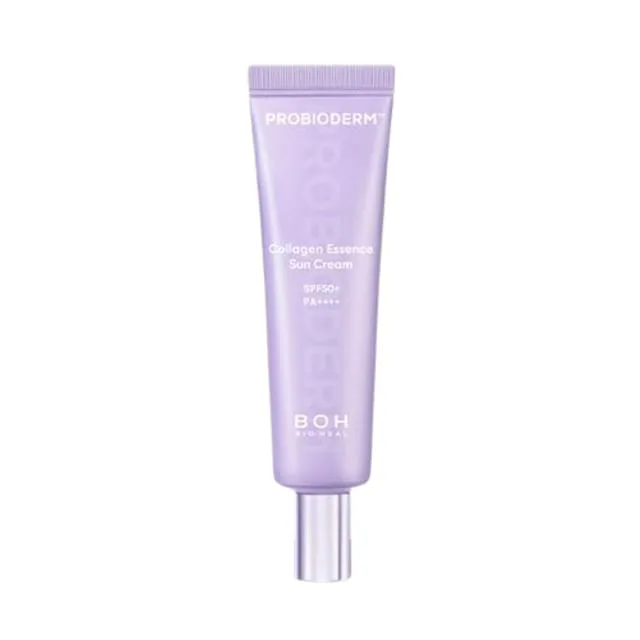 Five-Filter Essence Sunscreen
Probioderm Collagen Essence Sun Cream SPF 50+ PA++++
One of the better-engineered chemical sunscreens in the Korean mid-market: five photostable filters split across the water and oil phases, including a rare Mexoryl SX, a genuinely useful niacinamide placement and a fragrance-free essence base that disappears under makeup. The collagen at 0.01 percent and the twelve trace peptides are the label's theatre. At around forty dollars for 50 ml it is priced for the filters, and the filters earn it.
 Summer Commute Sunscreen
UV Perfect Air Cool Sun Cream SPF 50+
A genuinely modern, five-filter chemical sunscreen that feels cool, sets fast and leaves no white cast, with niacinamide as a bonus, for about twenty dollars. It is built for oily skin in hot weather. The trade-off is denatured alcohol high in the list plus fragrance and mint, which make it a risky choice for sensitive, dry or rosacea-prone skin.
 Modern-Filter Daily SPF
Glow Screen Sun Gel SPF50+ PA++++
A genuinely well-built daily sunscreen that shows off the Korean advantage: a sophisticated four-filter modern system — ethylhexyl triazone, Mexoryl SX, Uvinul A Plus and Tinosorb S — delivering true broad-spectrum protection with a glowy, no-white-cast finish at a budget price, plus a niacinamide bonus. The only real blemish is an avoidable citrus fragrance and limonene in an otherwise excellent SPF.
 Capsule Sun Serum
Probioderm 3D Lifting Capsule Sun Serum SPF 50+ PA++++
The same five-filter, Mexoryl-SX-anchored protection as the brand's excellent Essence sun cream, poured into a thinner capsule serum that sets faster and tightens as it dries, with niacinamide and ectoin placed to matter. It is a good, light chemical sunscreen for combination and oily skin. It is also fragranced, its collagen is declared down to a hundred-millionth of a percent, and 'lifting' is the film setting; buy it for the filters.
 Clear Five-Filter Daily SPF
Melatonin Shot Watery Sunscreen RX
A genuinely well-engineered clear sunscreen: five photostable organic filters split between water and oil phases deliver SPF50+ PA++++ in a fluid lotion that leaves no cast on any skin tone. The fragrance is an avoidable drawback and the melatonin is a 100 ppm name-check, but for oily, combination and normal skin it is an excellent daily shield.
 Pore-Blurring Tone-Up SPF
Pore Tightening Tone-Up Sun Cream Bllymi Fyldig
A technically strong six-filter tone-up sunscreen from Cosmax that brightens, blurs pores and preps skin for makeup in one step, with niacinamide and adenosine for good measure. The pore 'tightening' is optical, the fragrance carries six declared allergens and the tone-up will not suit deeper skin, but for fair-to-medium, oily or combination skin it is an excellent daily base.
 Urban Shield SPF
Capital Soleil UV Protect SPF 50
A six-filter hybrid sunscreen with a genuine differentiator — Baicalin anti-pollution protection that addresses urban environmental damage beyond UV. The Mexoryl-powered filter system is excellent, but a heavy fragrance load and several potential irritants make this a product that works best for normal-to-combination skin in high-pollution environments. Limited global availability narrows the audience further.
The full mexoryl sx (ecamsule) guide
Most sunscreen filters handle UVB reasonably well — it's the UVA side of the spectrum where the historical gaps appear, and ecamsule was engineered specifically to plug one of them.
Developed by L'Oréal and patented in 1982, this filter (trade name Mexoryl SX) targets the shorter-wave UVA band, with peak absorption around 345 nm and a photostability that many older organic filters can't match. It reached the US market in 2006 — the first new sunscreen active the FDA had cleared since 1988 — after already circulating in Europe and Canada since the early 1990s.
Where the evidence stands, by concern
Evidence for an ingredient is not one grade — it differs concern by concern. Each row below was researched separately against regulatory approvals, clinical guidelines, and trials our team opened and verified; the band and dots rank how central mexoryl sx (ecamsule) is to treating that concern, from first-line therapy down to supportive care, at treatment-level doses and vehicles. A product's own grade weighs its actual formula.
How it's regulated in the US
FDA does not classify ingredients — it classifies products, by what they are sold to do. The same molecule can be a drug active in one product and a cosmetic ingredient in the next, and only the claim on the label decides which. What follows is a statement about that legal standing, not about whether it works — the evidence question is answered separately above.
Approved drug Mexoryl SX (ecamsule) is not a monograph filter — it reached the US the hard way, through full drug approval, and only inside four specific L'Oréal applications. That is why it has never appeared in a sunscreen from any other brand on a US shelf.
- sun protection FDA-approved 2 to 3 percent in the approved formulations
Approved by FDA under a New Drug Application
Permitted label wording “Helps prevent sunburn”
Four approved OTC applications, all held by L'Oréal USA: NDA021471, NDA021501, NDA021502 and NDA022009. The approval attaches to those finished products, not to the molecule — nobody else may use it.
Human clinical work, not just bench data, anchors the case here. A 2008 review by Fourtanier, Moyal, and Seité in Photodermatology, Photoimmunology & Photomedicine (PMID 18717957) pooled results across numerous human volunteer studies and reported that ecamsule-containing formulations reduced UV-induced pigmentation, DNA lesion formation, immunosuppression markers, and several photoaging biomarkers — even when compared against sunscreens of matched SPF. An earlier 13-week human study (PMID 9745729) found a 5% formulation prevented skin changes from repeated suberythemal UVA doses, including shifts in hydration and elasticity. A percutaneous absorption study in human volunteers (PMID 14528058) measured systemically absorbed ecamsule at under 0.1%, concluding systemic exposure is negligible. The one honest caveat: most of this clinical work was funded by or conducted at L'Oréal Recherche. That's standard for a proprietary, patent-protected ingredient, but it's worth knowing the research lineage isn't fully independent.
How it works
Picture a UV photon heading for a skin cell; ecamsule's job is to catch it first, particularly in the shorter-wave UVA band where many chemical filters thin out. Structurally, it's a benzylidene camphor derivative built on a rigid bicyclic camphor backbone, and that rigidity is the source of its headline trait: photostability. When UV energy hits the molecule, it undergoes reversible photoisomerization — it jumps to an excited state, sheds the absorbed energy as harmless heat, then snaps back to its starting configuration. Many organic absorbers degrade irreversibly under sustained sun and lose potency over a long day outdoors; ecamsule keeps cycling through absorb-and-recover without breaking apart. It's also water-soluble (unlike its oil-soluble counterpart Mexoryl XL, drometrizole trisiloxane), so it slots into the aqueous phase of an emulsion and tends to sit at or near the skin surface rather than partitioning into deeper lipid layers — consistent with its very low measured percutaneous absorption. One practical consequence: it's rarely used solo. Its strength is UVA2 coverage, and its UVB absorption is minimal, so formulators almost always combine it with a dedicated UVB filter and frequently with Mexoryl XL or avobenzone to push coverage further into UVA1 and build the continuous broad-spectrum curve modern photoprotection expects.
Key benefits
- Absorbs across the UVA range with peak coverage near 345 nm, anchoring strong UVA2 protection
- Highly photostable — keeps working through prolonged sun exposure rather than degrading over hours
- Water-soluble chemistry that sits near the surface, with negligible systemic absorption in human studies
- Human trials link it to reduced UV-induced DNA damage markers and excess pigmentation
- Complements avobenzone and Mexoryl XL to fill UVA1 gaps in multi-filter formulas
- Cleared through the FDA's rigorous New Drug Application route, uncommon for a chemical sunscreen active
Concentration & usage
In approved formulations, ecamsule typically appears between 1% and 10%, with the original FDA-approved Anthelios SX formula listing it around 2–3% alongside avobenzone (2%) and octocrylene (10%) for continuous broad-spectrum coverage. On an INCI list, scan for "Ecamsule" (the USAN) or the full chemical name "Terephthalylidene Dicamphor Sulfonic Acid" — both name the same molecule. Because it's a patent-protected L'Oréal compound, it shows up almost exclusively in L'Oréal-family products such as La Roche-Posay Anthelios. In the US specifically, it's legal only in formulas registered under the FDA's New Drug Application pathway rather than the general OTC sunscreen monograph, which is the main reason it remains confined to that brand family on American shelves.
Who it's for & who should be cautious
Who it's for
If reliable UVA defense is high on your list — especially if photoaging or stubborn hyperpigmentation is your main concern — this filter is worth seeking out, since UVA1 and UVA2 rays drive much of the collagen breakdown and uneven tone people are trying to prevent. It also suits sensitive-skin users who want a photostable chemical option: its low skin penetration and reassuring human safety data make it one of the gentler filters in its class. And anyone logging long hours outdoors or spending time at altitude benefits from protection that holds up over a full day instead of fading the way unstabilized avobenzone can.
Who should be cautious
Sensitization is uncommon, but documented contact allergy to ecamsule does exist, so anyone who has previously reacted to a Mexoryl SX sunscreen should patch test before going back to it. The filter is formulated as an acid and usually neutralized with triethanolamine (TEA); a reaction may trace to TEA or other formula components rather than ecamsule itself, which is why reading the full INCI matters. And because it lives almost entirely within L'Oréal-owned brands, anyone wanting to avoid that corporate family will find very few alternatives carrying this specific filter.
Pairs with & conflicts
Myths & facts
Myth: Mexoryl SX and Mexoryl XL are the same ingredient under different product names.
Reality: They're chemically distinct molecules that share a trade-name family. Mexoryl SX (ecamsule) is water-soluble and covers mainly UVA2; Mexoryl XL (drometrizole trisiloxane) is oil-soluble and reaches into UVA1 plus some UVB. Many Anthelios formulas run both together precisely because their coverage ranges complement rather than duplicate each other.
Myth: Being a chemical filter, Mexoryl SX must break down in sunlight the way avobenzone does.
Reality: Photostability varies widely among chemical absorbers, and ecamsule sits at the stable end. Its camphor backbone allows reversible photoisomerization — it absorbs UV, releases it as heat, and returns to its original structure ready to absorb again, which is fundamentally different from avobenzone's irreversible breakdown when used without a stabilizer.
Myth: Mexoryl SX delivers full broad-spectrum protection on its own.
Reality: Its UVA coverage is strong, but its UVB absorption is minimal. Genuine broad-spectrum protection requires pairing it with UVB filters — which is why every product containing it lists additional actives. The original Anthelios SX formula, for instance, combined it with avobenzone and octocrylene to cover the spectrum continuously.
Frequently asked questions
Why is ecamsule so hard to find in US sunscreens?
The US route for a new sunscreen active runs through a New Drug Application rather than the simpler OTC monograph used for older filters like zinc oxide. L'Oréal completed that process in 2006, but the approval was tied to its specific Anthelios SX product registration — not to ecamsule as a general OTC ingredient. So in the US it appears almost exclusively in L'Oréal-owned brands, while European and Canadian formulas have used it freely since the 1990s.
Is it safe to use a Mexoryl SX sunscreen on my face every day?
Human absorption studies have measured systemic uptake of ecamsule at under 0.1% under realistic use, so it doesn't meaningfully penetrate the skin, and the FDA reviewed that safety data before approval. Contact allergy is rare but documented, so a quick patch test is sensible if you've reacted to chemical sunscreen ingredients before.
Does this filter protect against the UV rays that cause aging?
Yes — UVA radiation, particularly the UVA1 and UVA2 bands, is the main driver of photoaging, collagen loss, and pigment changes, and ecamsule was engineered specifically for that range. Human studies in Photodermatology, Photoimmunology & Photomedicine found ecamsule formulations reduced biomarkers of UVA-induced damage, including signs of pigmentation and matrix breakdown, in volunteers.
Can I layer a Mexoryl SX sunscreen over my morning vitamin C serum?
Yes, and they actually complement each other. Vitamin C works as an antioxidant that mops up reactive oxygen species generated by UV exposure, while ecamsule absorbs the UV photons directly — two different mechanisms with no known antagonism. Apply the vitamin C first, let it settle, then your sunscreen on top.
Is ecamsule considered a reef-safe sunscreen ingredient?
Its environmental profile hasn't been studied as heavily as oxybenzone or octinoxate, the two filters currently restricted in some reef-protection laws. Ecamsule isn't on major restricted-ingredient lists for marine environments, but comprehensive aquatic toxicology data for it is genuinely limited. If reef impact is your priority, mineral filters like zinc oxide and titanium dioxide remain the better-documented choice.
What changes when a product lists both Mexoryl SX and Mexoryl XL instead of just one?
Ecamsule alone covers UVA2 (the shorter-wave UVA band) well but leaves gaps further into UVA1. Pairing it with Mexoryl XL produces broader, more uniform UVA coverage across the full range — the approach used in most current Anthelios formulas. If complete UVA protection is the goal, a label listing both will generally outperform one carrying only a single Mexoryl filter.