One of very few sunscreens sold in the US that contains both Mexoryl XL and Tinosorb S — filters most US sunscreens cannot access. Combined with high-position niacinamide and the probiotic-ferment component, this is a sunscreen designed as a daily anti-aging product rather than a beach SPF. The combination is uncommon at any price tier on US shelves.
Among the very best sunscreens currently sold on US shelves for combined sun protection and anti-aging — Mexoryl XL plus Tinosorb S in a US-available formula is rare, and the working-concentration niacinamide takes this beyond a filter delivery vehicle. Held back from a top score by the fragrance and alcohol-denat that disqualify it for sensitive routines.
Full protectionfor AgingIn your profileYou chose · Broad-spectrum SPF 60 with Mexoryl XL, bemotrizinol (Tinosorb S), avobenzone: the protection aging calls for.Moderate evidenceStandard tolerabilityNo reviews collected yet
The case for it
Niacinamide has early or mechanistic evidence for this concern, not trial-backed standing.
It is plausibly present at a working level, though the concentration is not declared.
The formula carries no trigger this concern is sensitive to, with the cautions noted.
What would change this: A declared concentration would move this to a firmer reading of the dose.
Same rule for everyone. “Full protection” is the verdict on 2,288 of 45,024 concern verdicts across the catalog; rule P1 decided 2,232 of them.
Unchanged since September 5, 2026, engine 5.1.1.
P1 — Photoprotection standing is regulatory (M020 / Annex VI filters; 21 CFR 201.327 attaches the early-skin-aging claim to tested broad-spectrum SPF 15+). SPF 30 is the AAD daily-use bar. · the full register
Carrying active
Niacinamide
Standing
plausible — trials support it
Form
plausible — studied range 4–5%, from the trials on the row; needs leave-on contact; judge it after ~8 weeks
Tolerability
standard
Row checked
against its sources on July 17, 2026 (evidence table ev-2026.09-r228)
Full protectionfor HyperpigmentationIn your profileYou chose · Broad-spectrum SPF 60 with Mexoryl XL, bemotrizinol (Tinosorb S), avobenzone: the protection hyperpigmentation calls for.Moderate evidenceStandard tolerabilityNo reviews collected yet
The case for it
Niacinamide has trial-supported standing for this concern.
It is plausibly present at a working level, though the concentration is not declared.
The formula carries no trigger this concern is sensitive to, with the cautions noted.
What would change this: A declared concentration would move this to a firmer reading of the dose.
Same rule for everyone. “Full protection” is the verdict on 2,288 of 45,024 concern verdicts across the catalog; rule P1 decided 2,232 of them.
Unchanged since September 5, 2026, engine 5.1.1.
P1 — Photoprotection standing is regulatory (M020 / Annex VI filters; 21 CFR 201.327 attaches the early-skin-aging claim to tested broad-spectrum SPF 15+). SPF 30 is the AAD daily-use bar. · the full register
Carrying active
Niacinamide
Standing
supported — trials support it
Form
plausible — studied range 2–5%, from the trials on the row; needs leave-on contact; judge it after ~8 weeks
Tolerability
standard
Row checked
against its sources on July 17, 2026 (evidence table ev-2026.09-r228)
Full protectionfor Sun DamageIn your profileYou chose · Broad-spectrum SPF 60 with Mexoryl XL, bemotrizinol (Tinosorb S), avobenzone: the protection sun damage calls for.Moderate evidenceStandard tolerabilityNo reviews collected yet
The case for it
Mexoryl XL is a first-line active — approved, monograph-listed or named in current guidelines — for this concern.
It is plausibly present at a working level, though the concentration is not declared.
The formula carries no trigger this concern is sensitive to, with the cautions noted.
What would change this: A declared concentration would move this to a firmer reading of the dose.
Same rule for everyone. “Full protection” is the verdict on 2,288 of 45,024 concern verdicts across the catalog; rule P1 decided 2,232 of them.
Unchanged since September 5, 2026, engine 5.1.1.
P1 — Photoprotection standing is regulatory (M020 / Annex VI filters; 21 CFR 201.327 attaches the early-skin-aging claim to tested broad-spectrum SPF 15+). SPF 30 is the AAD daily-use bar. · the full register
Full protectionfor Dark SpotsIn your profileYou chose · Broad-spectrum SPF 60 with Mexoryl XL, bemotrizinol (Tinosorb S), avobenzone: the protection dark spots calls for.Moderate evidenceStandard tolerabilityNo reviews collected yet
The case for it
Niacinamide has early or mechanistic evidence for this concern, not trial-backed standing.
It is plausibly present at a working level, though the concentration is not declared.
The formula carries no trigger this concern is sensitive to, with the cautions noted.
What would change this: A declared concentration would move this to a firmer reading of the dose.
Same rule for everyone. “Full protection” is the verdict on 2,288 of 45,024 concern verdicts across the catalog; rule P1 decided 2,232 of them.
Unchanged since September 5, 2026, engine 5.1.1.
P1 — Photoprotection standing is regulatory (M020 / Annex VI filters; 21 CFR 201.327 attaches the early-skin-aging claim to tested broad-spectrum SPF 15+). SPF 30 is the AAD daily-use bar. · the full register
Carrying active
Niacinamide
Standing
plausible — trials support it
Form
plausible
Tolerability
standard
Row checked
against its sources on July 17, 2026 (evidence table ev-2026.09-r228)
Full protectionfor Post-ProcedureIn your profileYou chose · Broad-spectrum SPF 60 with Mexoryl XL, bemotrizinol (Tinosorb S), avobenzone: the protection post procedure calls for.Not yet assessedCarries a triggerNo reviews collected yet
The case for it
Mexoryl XL has no evidence row yet for this concern — it is in the research queue.
The formula carries a known trigger for this concern, which decides the verdict before any efficacy question.
What would change this: A researched evidence row for the lead active would replace this with a verdict.
Same rule for everyone. “Full protection” is the verdict on 2,288 of 45,024 concern verdicts across the catalog; rule P1 decided 2,232 of them.
Unchanged since September 5, 2026, engine 5.1.1.
P1 — Photoprotection standing is regulatory (M020 / Annex VI filters; 21 CFR 201.327 attaches the early-skin-aging claim to tested broad-spectrum SPF 15+). SPF 30 is the AAD daily-use bar. · the full register
Does the jobDoes what a sunscreen is for: UVA coverage, holds up in sunlight. Not measured from the label: pleasant enough to actually use.
A verdict is DermApproved’s assessment of how well a product’s ingredients fit a concern — never a claim about what the product treats. Evidence dots and collected reviews sit beside it and are never blended in.
Rules 0.5.1 · evidence table ev-2026.09-r228 · how we decide
Assessment
Pros & Cons
Pros
✓ Mexoryl XL and Tinosorb S in a US-available sunscreen — a regulatory rarity at drugstore pricing
✓ Layered photostable filter system covers the full 290-400 nm UVA-UVB window
✓ Niacinamide at working concentration adds genuine anti-aging activity beyond filters
✓ Lightweight milky-lotion texture absorbs fast and sits invisibly under makeup
✓ Probiotic ferment and hyaluronic acid round out a thoughtful supporting active cast
✓ Strong cross-skin-tone invisibility at face-only dosing
✓ Documented user satisfaction across thousands of reviews over four years on US market
Cons
✗ Fragranced — disqualifies it for fragrance-reactive routines
✗ Alcohol denat third on INCI can trigger rosacea-prone skin
✗ 40 mL size is small for the price compared to larger US drugstore SPFs
✗ Octocrylene content makes it environmentally inappropriate for reef-area swimming
✗ Mild white-cast risk on very deep skin tones with heavy application
Review
Full Review
The strangest thing about Vichy Capital Soleil UV-Age Daily SPF 60 is that it exists at all on a US shelf. The FDA hasn't approved most modern UVA filters under its decades-old sunscreen monograph process, which is why American shoppers chasing European-tier sun protection routinely smuggle La Roche-Posay tubes home from Paris or pay import markups online. Mexoryl XL has been on Health Canada's approved list since 2006 and on European pharmacy shelves since the early 1990s. Tinosorb S has been available in the EU since 2000. In the US, both filters sit in a regulatory gray zone — and yet here they are, in a Vichy sunscreen sold at CVS and Ulta, alongside avobenzone, octocrylene, ethylhexyl salicylate, and a niacinamide concentration high enough to actually do work.
The how-it-got-here is a quiet story of cross-border registration work. The US-formulated version of Capital Soleil UV-Age Daily ships through a combination of pre-existing filter approvals, drug-monograph-adjacent positioning, and the kind of regulatory paperwork that takes a brand with Vichy's resources to navigate. The result for the shopper is a sunscreen with a filter chemistry profile most US drugstore sunscreens simply cannot match — the kind of formula that elsewhere requires either a $90 prestige price tag or a transatlantic flight.
The filter system itself is layered with intent. Mexoryl XL sits second on the INCI, providing the long-UVA-resistant silicone-anchored backbone that makes this product's anti-aging case credible. Tinosorb S backstops the broad-spectrum protection and stabilizes the more fragile avobenzone — without that stabilization, avobenzone degrades within hours of UV exposure and loses its UVA protection. Octocrylene contributes additional photostability. Ethylhexyl salicylate fills the UVB middle. Phenylbenzimidazole sulfonic acid (ensulizole) adds water-soluble UVB protection. Homosalate rounds out the UVB side. The result is a filter combination that covers the full 290-400 nm window at SPF 60 strength, which is technically harder than just slapping high SPF on avobenzone and calling it a day.
What takes this beyond a pure sunscreen is the niacinamide at position four — high enough on the INCI to suggest a working concentration of likely 4-5%, the range where published research supports tone evening, barrier support, and anti-inflammatory effects. That's a meaningful active to layer onto sun protection. The probiotic ferment (Vitreoscilla) supports the skin barrier and biome story Vichy has built into the broader Capital Soleil franchise. Two molecular weights of hyaluronic acid late in the INCI add hydration that offsets the alcohol-denat solvent early in the formula. Adenosine, glycerin, and tocopherol round out the supporting cast.
The texture is where the formulation gets the user-experience right. The milky lotion absorbs in about ninety seconds without the slick, sticky finish most chemical SPFs leave behind. The finish is satin and surprisingly invisible across a wide range of skin tones — independent reviews repeatedly note no white cast on light-to-medium skin and minimal cast on deep skin tones at face-only dosing. The pilling resistance under foundation is reliably reported as one of the cream's strongest features. This is a sunscreen that actually behaves like the daily anti-aging product it markets itself as.
The gripes are the standard French pharmacy ones. Alcohol denat sits third on the INCI as a solvent and texture aid, contributing to the lightweight feel but irritating to rosacea-prone and reactive sensitive skin. The fragrance is present and detectable on application — restrained by European standards but obvious to anyone coming from a fragrance-free routine. The 40 mL size is small for the price; at proper two-finger face-and-neck daily dosing, a tube lasts five to six weeks. None of these are formulation failures — they're choices that reflect Vichy's positioning toward general consumers rather than dedicated sensitive-skin shoppers.
The value proposition is unusually strong for this filter quality. At roughly $38 for 40 mL, this lands at the top end of drugstore pricing but well below the prestige sunscreen tier ($60-90) where comparable filter chemistry typically lives. The European Anthelios UVMune 400 imports run $35-39 plus shipping; the US-available UV-Age Daily delivers close to the same UVA breadth without the import friction. For US shoppers, this is the highest-filter-quality SPF currently on a drugstore shelf with the right anti-aging supporting cast.
The place this lands cleanly is for users who want a single daily SPF that does serious sun protection and meaningful anti-aging in one step. For users specifically managing hyperpigmentation, sun damage, or daily anti-aging concerns, the Mexoryl-Tinosorb-niacinamide combination is hard to beat on a US shelf. For sensitive skin or fragrance-reactive routines, the unfragranced LRP Anthelios variants are the safer choice. For ocean swimmers in reef-protected waters, the octocrylene content makes a mineral-only sunscreen the environmentally appropriate option.
Where it lives in the broader sunscreen landscape: this is the answer when someone asks 'what's the best SPF I can buy at CVS for daily anti-aging?' The combination of Mexoryl XL, Tinosorb S, working-concentration niacinamide, and a wearable lightweight finish at drugstore pricing is genuinely uncommon. The fragrance and alcohol limit the audience around the edges, but for the broad center of users — normal-to-combination skin focused on photoaging prevention — this is one of the most thoughtful daily sunscreens currently sold in the US.
Formula
Key Ingredients
The hero actives that drive this product's performance.
Sits second on the INCI — an unusually high position for a filter that signals this is Vichy's serious UVA bet. Mexoryl XL is the silicone-anchored L'Oréal-patented filter that resists wash-off and covers a broad UVA range, here providing the long-wavelength backbone of the product's anti-aging case. Pairing it with Tinosorb S and avobenzone creates the kind of layered filter system more common in European pharmacy SPFs than US ones.
Regulator-approvedfor Sun Damage · limited certainty
Photostable broad-spectrum filter that backstops the Mexoryl XL across the full UVA-UVB range. Notably present in the US-formulated version of this product, which is rare given FDA monograph limitations — its inclusion reflects this being a Health-Canada-and-Mexico cross-registered formula that ships into the US with broader filter access than typical US sunscreens.
Regulator-approvedfor Sun Damage · limited certainty
Traditional UVA workhorse, stabilized here by the combination of octocrylene and Tinosorb S — without that pairing, avobenzone degrades quickly under UV and loses its protection within hours. The filter combination is specifically engineered for photostability over an all-day wear window.
Regulator-approvedfor Sun Damage · emerging certainty
Position fourth on the INCI suggests a working concentration — uncommonly high for a sunscreen. Acts as the formula's anti-aging supporting active behind the filter system, addressing tone evening and barrier support beyond what filters alone do. This is the pairing that makes 'UV-Age Daily' more than marketing language.
Probiotic-fraction ingredient derived from Vichy's volcanic water research that contributes to the formula's skin-barrier and microbiome story. A supporting role rather than a marquee active, but distinguishes this formula from chemistry-only sunscreens that ignore the long-term effect of daily sun exposure on the skin biome.
Two molecular weights of HA late in the INCI provide surface and deeper hydration support, balancing the alcohol-denat early in the formula and contributing to the lightweight finish that makes this comfortable as a daily SPF rather than a beach product.
Not yet assessed
Ingredient standings describe the active at treatment-level doses and
vehicles; this product's own condition grades weigh its actual formula.
The final morning skincare step before makeup. Layer over vitamin C, niacinamide, or peptide serums and your usual moisturizer. The lightweight lotion sits well under foundation but benefits from a minute of absorption before makeup application.
Results Timeline
Sun protection is immediate once the filter film sets, about 15 minutes after application. The niacinamide and HA contribute to skin tone and hydration improvements that register over weeks of consistent daily use. The anti-aging case takes the long view — months and years of compliance prevent photoaging that no topical treatment can reverse.
Vichy Capital Soleil UV-Age Daily Sunscreen SPF 60
Sample PM Routine
Double cleanse
Treatment serum
Retinoid (alternating nights)
Moisturizer
Evidence
Science & Expert Perspective
The Science
The technical case for this sunscreen rests on its filter combination and the active stack layered on top. Mexoryl XL, chemically drometrizole trisiloxane, is a silicone-anchored UVA/UVB filter with absorption maxima at 303 and 344 nm — coverage across the UVB and most of the UVA range. Its silicone anchor produces unusually good water resistance and skin retention. Published photostability and protection studies, including work in the Journal of the American Academy of Dermatology, have characterized its broad-spectrum performance over multi-hour UV exposure. Tinosorb S (bis-ethylhexyloxyphenol methoxyphenyl triazine) extends coverage further into the long-UVA range and crucially stabilizes the avobenzone-octocrylene pairing also present in this formula. Without Tinosorb S, avobenzone degrades by approximately 50-90% in the first hour of UV exposure depending on the formulation; with Tinosorb S, photostability is maintained across all-day wear.
The anti-aging side of the formula rests on documented topical actives rather than marketing language. Niacinamide at the concentrations suggested by its INCI position has well-established effects on barrier function, transepidermal water loss, melanosome transfer (which is relevant to tone evening), and inflammatory markers. Studies in journals including the British Journal of Dermatology have characterized these effects at concentrations of 2-5% — the range this formula most likely targets.
Adenosine in the formula contributes fine-line reduction activity, with multiple peer-reviewed studies supporting topical effects at low concentrations. The probiotic-ferment component (Vitreoscilla) has emerging support for barrier and biome effects, though the literature is younger and less independent than for the other actives.
The overall formulation thesis — combining one of the most sophisticated US-available filter systems with working-concentration niacinamide and a supporting active cast — produces a sunscreen with both immediate UV protection and accumulating skin-quality effects, addressing the structural goals of daily anti-aging in a single product.
References
UV-A photoprotection: clinical effects of broad-spectrum sunscreens — Journal of the American Academy of Dermatology (2002)
In US-based dermatology practice, the Capital Soleil UV-Age Daily SPF 60 has earned a position as one of the most commonly recommended drugstore sunscreens for patients with anti-aging or hyperpigmentation concerns. The combination of Mexoryl XL and Tinosorb S in a US-available formulation is something most clinicians flag specifically when asked about UVA protection beyond what standard US sunscreens deliver. The niacinamide concentration is typically called out as a useful supporting active for patients with tone-evening goals or post-inflammatory hyperpigmentation. Dermatologists generally recommend this product paired with a separate vitamin C antioxidant serum in the morning, with retinol or retinoid use reserved for nights. The fragrance and alcohol-denat lead clinicians to redirect rosacea, perioral dermatitis, and contact-allergy patients to the unfragranced La Roche-Posay Anthelios Melt-in Milk or Mineral Tinted as alternatives.
Guidance
Usage & Recommendations
How to Use
Apply two finger-lengths of lotion as the final step of morning skincare, after moisturizer and at least 15 minutes before sun exposure. Spread evenly across face, neck, and ears — underapplication is the single biggest gap between lab SPF and real-world protection. Allow about a minute for the filter film to set before applying makeup. Reapply every two hours during direct sun exposure or after swimming. For indoor desk days, a single morning application is reasonable. Layer over vitamin C serum and any treatment serums in your morning routine. Avoid getting into the eyes — the chemical filters can sting ocular tissue.
Value Assessment
$38 for 40 mL puts this at the top of drugstore SPF pricing — comparable to EltaMD UV Clear at the dermatology-office tier and to Supergoop Unseen Sunscreen at the prestige tier. The case for the price is the filter system. Most US sunscreens at this price use avobenzone, homosalate, octisalate, and octocrylene without Mexoryl or Tinosorb access. Getting both Mexoryl XL and Tinosorb S in a US-available formula at this price is genuinely uncommon, and the working-concentration niacinamide is a meaningful add. The 40 mL size lasts five to six weeks at proper dosing, putting the per-day cost at around $1 — reasonable for a daily anti-aging product. For users who are committed to daily sun protection as their primary anti-aging strategy, the math works. For occasional sun protection, a less filter-sophisticated drugstore option will deliver more product per dollar.
Who Should Buy
Normal-to-combination skin focused on daily anti-aging, hyperpigmentation prevention, or photoaging concerns. Particularly strong for US shoppers who want European-tier filter chemistry without the import hassle. Users currently using retinoids or vitamin C will find this an obvious daily SPF pairing. Anyone over 30 looking to make sun protection central to their anti-aging strategy.
Who Should Skip
Fragrance-reactive routines should pass and look at the unfragranced LRP Anthelios variants. Rosacea-prone users may find the alcohol-denat triggers flushing — a mineral-only sunscreen like EltaMD UV Physical or LRP Anthelios Mineral Tinted is the safer choice. Ocean swimmers in reef-protected waters should avoid the octocrylene content. Anyone wanting a larger value-size SPF for body-and-face use will find this small.
Ready to try Vichy Capital Soleil UV-Age Daily Sunscreen SPF 60?
Lightweight milky lotion that absorbs in about ninety seconds without leaving the slick or sticky finish of typical chemical SPF. Sets to a satin finish that takes makeup well.
Scent
Light Vichy fragrance with an alcohol top-note on first application that dissipates within minutes. Less perfumed than typical European pharmacy SPFs but more than fragrance-free competitors.
Packaging
40 mL slim plastic tube with a flip cap. Easy to apply, portable, but on the smaller side for a daily face SPF — five to six weeks of use at proper dosing.
Finish
satinnon-greasyinvisiblelightweight
What to Expect on First Use
First application feels remarkably lightweight for an SPF 60 with this much filter content. There's a cool sensation from the alcohol-denat that fades fast. No tingling expected on intact skin. Plays well with makeup from day one — minimal pilling and reasonable wear time. The fragrance is the most prominent thing on initial impression and the most common adjustment point for users coming from fragrance-free routines.
How Long It Lasts
Roughly five to six weeks with the proper two-finger face-and-neck dose applied daily.
Vichy's Capital Soleil franchise has run since the 1990s, but the UV-Age Daily platform launched as a specific answer to growing dermatologist demand for sunscreens that delivered serious UVA protection plus anti-aging support in a single daily product. The SPF 60 version expanded the line in 2022 with both Mexoryl XL and Tinosorb S in the US formulation — a regulatory achievement that required cross-border registration work because both filters sit outside the standard FDA monograph approval pathway. The result is one of the most filter-sophisticated sunscreens available on a US drugstore shelf.
About Vichy Legacy Brand (20+ years)
Vichy launched in 1931 and the Capital Soleil franchise has been one of the longest-running pharmacy sun-care lines, with the UV-Age platform specifically engineered against long-UVA-driven photoaging using L'Oréal's filter chemistry library.
Brand founded: 1931 · Product launched: 2022
Myth vs. Reality
Common Myths
Myth
All SPF 60 sunscreens block the same amount of UV.
Reality
SPF is a UVB measurement, but UVA protection — the wavelengths most responsible for photoaging and pigmentation — varies enormously by filter system. A US SPF 60 with avobenzone alone offers very different UVA breadth than this formula, which adds Mexoryl XL and Tinosorb S to push the protection window deeper into the long-UVA range.
Myth
Niacinamide in sunscreen is just marketing.
Reality
Niacinamide at the position it occupies in this INCI is at working concentration. Published research supports its tone-evening, barrier-supporting, and anti-inflammatory effects at the concentrations found in this formula. It's not marketing — it's a functional active layered on top of the filter system.
FAQ
Frequently Asked Questions
How is Vichy UV-Age Daily different from La Roche-Posay Anthelios?
Both are L'Oréal-owned and share filter chemistry, but the formulations target slightly different priorities. UV-Age Daily emphasizes the niacinamide-and-probiotic anti-aging story alongside Mexoryl XL and Tinosorb S; Anthelios tends to be more filter-focused without the same explicit anti-aging actives. For users specifically wanting niacinamide built into their sunscreen, UV-Age is the choice.
Does Vichy UV-Age Daily contain Mexoryl 400?
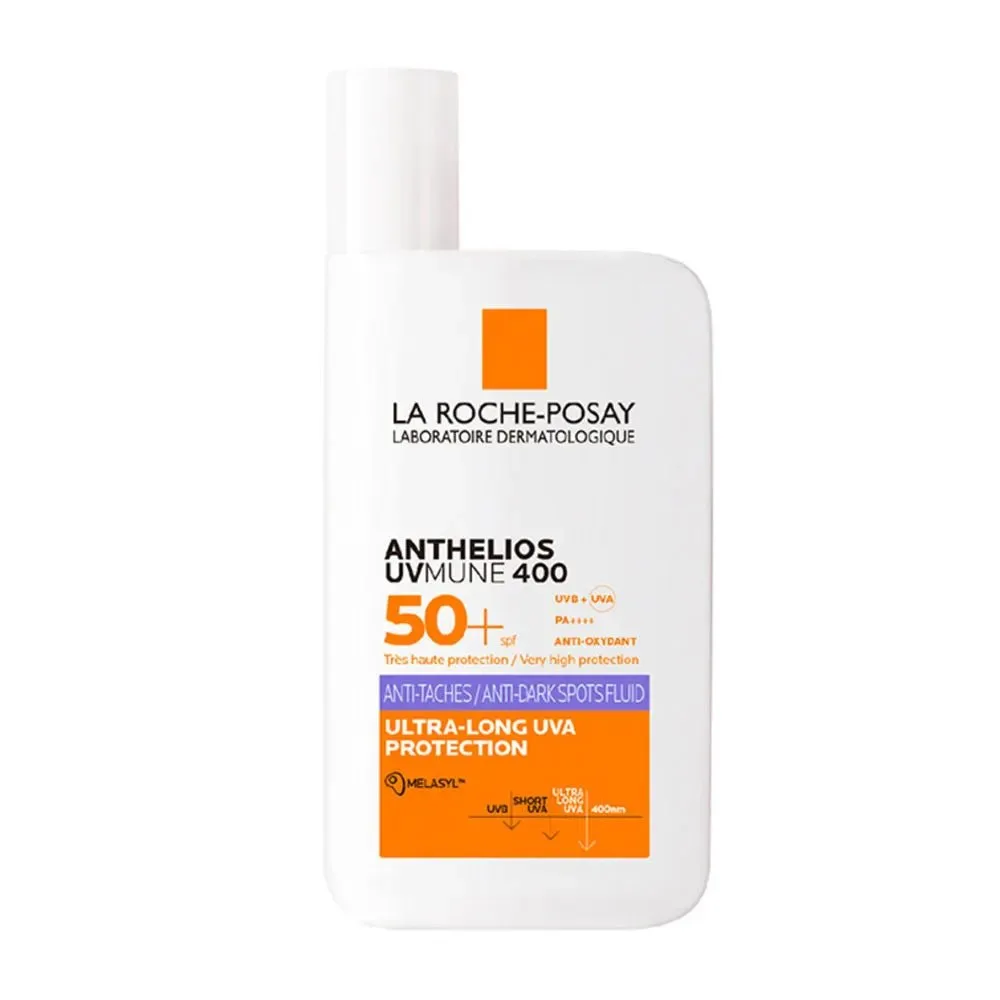
No — it contains Mexoryl XL, the older L'Oréal-patented filter, plus Tinosorb S and avobenzone. Mexoryl 400 is the newer filter found in La Roche-Posay Anthelios UVMune 400 (European-only) and not currently in this US-available product. UV-Age still offers among the strongest UVA protection available on a US shelf.
Is Vichy UV-Age Daily SPF 60 safe for sensitive skin?
It can be, but with consideration. The alcohol-denat early in the formula and the fragrance can trigger reactive skin or rosacea. For genuinely sensitive users, the unfragranced La Roche-Posay Anthelios variants are the safer entry point at a similar filter quality. For mild sensitivity without flare history, this is usually well-tolerated.
Will Vichy UV-Age Daily SPF 60 leave a white cast?
Generally no on light-to-medium skin tones. On very deep skin tones it can leave a mild cast in heavy application, but at proper face-only dosing it disappears for most users. The filter system is entirely organic — no zinc or titanium dioxide — which helps with invisibility.
Can you use Vichy UV-Age Daily SPF 60 with retinol or vitamin C?
Yes — and these are common pairings. Apply vitamin C serum first, allow it to absorb, then layer this sunscreen over the top in the morning. Retinol should be reserved for nights to avoid layering interactions, but using both daily with this sunscreen on top is a standard anti-aging routine.
Is Vichy UV-Age Daily SPF 60 reef-safe?
Vichy doesn't make a reef-safe claim, and the filter system contains octocrylene which is one of the filters restricted in some marine-conservation regulations. For ocean swimming in reef areas, a mineral-only sunscreen is the safer environmental choice. For daily land-based use, the formula is appropriate.
Reviews
What Reviewers Tend to Say
Recurring themes our editors read across retailer reviews of this product — summaries in our words, not quotations, and not a substitute for your own patch test.
Common Praise
Users consistently praise the invisible finish on a wide range of skin tones
No greasy or pilling issues under makeup
Visible improvement in skin tone evenness with daily use over months
Strong UVA protection feel for a US-available SPF
Common Complaints
Some users find the alcohol-denat smell sharp on application
40 mL size is small for the price tier
Fragrance present, which disqualifies it for sensitive users
Has some white-cast risk on very deep skin tones in heavy application
Notable Endorsements
Allure Best of Beauty winner for daily anti-aging SPFFrequently cited by US dermatologists as the best US-available sunscreen with Mexoryl XL and Tinosorb SFeatured in The New York Times Wirecutter sunscreen recommendations
It was invented to stop bleeding during surgery. In 2026 it's in dozens of brightening serums — and the evidence is better than most trend ingredients can claim.
IPL is a filtered flashlamp, a true vascular laser is one wavelength aimed at haemoglobin, and the choice between them turns on a distinction almost no consult makes: whether your redness is vessels or a state.
Body grooming produces the same four complications in the same order, in a predictable population — and almost every fix is upstream of the razor rather than downstream of it.
We have spent years praising Japanese filter chemistry while ignoring that the filter is the last line of a system built out of fabric, shade and timing — the part that needs no importing and does not depend on you remembering to reapply.
Aug 28, 2026· 10 min
Questions people ask about Hyperpigmentation
Verified answers from our questions library — the nuance a product page cannot carry.
Products, answers, therapy guides, tools and articles in one search. Brand names,
slang and abbreviations all work — accutane finds isotretinoin, bacne finds truncal acne.