


Octocrylene and Homosalate: The Filters America Is Stuck With
The critics are right about the data gap, and they are right that it took two decades to move. What follows from that is not the conclusion most people draw.
While the U.S. sunscreen market remains stuck with FDA filter approvals from the 1980s, this formula uses Tinosorb M, Tinosorb S, and avobenzone — the modern photostable filter trio that defines European high-protection sunscreens. The Tinosorbs both absorb UV and stabilize the avobenzone, which means this formula delivers genuine photostable broad-spectrum protection rather than the rapid-degradation profile of avobenzone-only U.S. sunscreens. For melasma, post-laser, and photosensitive-medication users, this is one of the better options available globally.
One of the better-formulated daily sunscreens available globally, with Tinosorb M, Tinosorb S, and avobenzone delivering modern photostable broad-spectrum protection that U.S. shoppers struggle to find domestically. Held back from a perfect score by the fact that it isn't FDA-approved and requires importing, plus a base that runs slightly rich for oily skin.
The case for it
What would change this: A declared concentration would move this to a firmer reading of the dose.
Same rule for everyone. “Full protection” is the verdict on 2,288 of 45,024 concern verdicts across the catalog; rule P1 decided 2,232 of them. Unchanged since September 5, 2026, engine 5.1.1.
Brand or formulator? Disclose a concentration or correct a fact →
The studies behind the evidence row
The case for it
What would change this: A researched evidence row for the lead active would replace this with a verdict.
Same rule for everyone. “Full protection” is the verdict on 2,288 of 45,024 concern verdicts across the catalog; rule P1 decided 2,232 of them. Unchanged since September 5, 2026, engine 5.1.1.
Brand or formulator? Disclose a concentration or correct a fact →
The case for it
What would change this: A researched evidence row for the lead active would replace this with a verdict.
Same rule for everyone. “Basic protection” is the verdict on 175 of 45,024 concern verdicts across the catalog; rule P3 decided 68 of them. Unchanged since September 5, 2026, engine 5.1.1.
Brand or formulator? Disclose a concentration or correct a fact →
The case for it
What would change this: A researched evidence row for the lead active would replace this with a verdict.
Same rule for everyone. “Full protection” is the verdict on 2,288 of 45,024 concern verdicts across the catalog; rule P1 decided 2,232 of them. Unchanged since September 5, 2026, engine 5.1.1.
Brand or formulator? Disclose a concentration or correct a fact →
The case for it
What would change this: A researched evidence row for the lead active would replace this with a verdict.
Same rule for everyone. “Full protection” is the verdict on 2,288 of 45,024 concern verdicts across the catalog; rule P1 decided 2,232 of them. Unchanged since September 5, 2026, engine 5.1.1.
Brand or formulator? Disclose a concentration or correct a fact →
Does the jobDoes what a sunscreen is for: UVA coverage, kind to the skin wearing it. Not measured from the label: pleasant enough to actually use.
A verdict is DermApproved’s assessment of how well a product’s ingredients fit a concern — never a claim about what the product treats. Evidence dots and collected reviews sit beside it and are never blended in. Rules 0.5.1 · evidence table ev-2026.09-r228 · how we decide
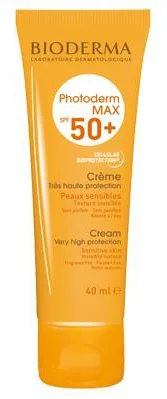
The U.S. sunscreen market has a quiet problem that most American consumers don't know about. The FDA classifies sunscreens as over-the-counter drugs rather than cosmetics, which means every new UV filter requires extensive safety and efficacy data and a slow regulatory approval process. The last new sunscreen filter approved in the U.S. was avobenzone in 1988. Since then, while Europe, Australia, Japan, and most of Asia have approved a handful of modern filters — Tinosorb M, Tinosorb S, Uvinul A Plus, DHHB, Mexoryl XL — the U.S. has been stuck with the same filter palette for over three decades. Bioderma's Photoderm MAX Crème SPF 50+, formulated for the European market with the modern filter palette, represents what serious daily sun protection looks like outside the FDA-frozen U.S. catalog.
The filter system is what distinguishes this product from anything legally sold in U.S. pharmacies. Tinosorb M (methylene bis-benzotriazolyl tetramethylbutylphenol) is a hybrid filter that both absorbs and scatters UV — functionally a bridge between chemical and mineral approaches. Tinosorb S (bis-ethylhexyloxyphenol methoxyphenyl triazine) is a pure-absorption filter that covers the full UVA and UVB spectrum with exceptional photostability. The two work together to deliver broad-spectrum protection across all UV wavelengths, and Tinosorb S also acts as a photostabilizer for the avobenzone in the formula, which means the avobenzone doesn't degrade rapidly on the skin the way it does in older avobenzone-only sunscreens.
The practical consequence is meaningful. American sunscreens that combine avobenzone with octocrylene degrade measurably during a day of sun exposure — by mid-afternoon, the UVA protection has dropped significantly. Tinosorb-stabilized formulas like Photoderm MAX maintain near-full protection throughout the day. For users managing melasma, post-laser recovery, or photosensitive medications (tetracyclines, isotretinoin, some antibiotics), this photostability difference translates to real clinical outcomes. The European dermatology community has been recommending Tinosorb-based sunscreens for high-risk patients for nearly two decades.
Underneath the filter layer, the formula includes ectoin — a natural extremolyte produced by extremophile bacteria living in salt lakes and deserts. Ectoin has been studied for its ability to stabilize cellular membranes under stress, reduce UV-induced DNA damage, and protect against oxidative damage. The evidence base is younger than for established antioxidants like vitamin E, but the mechanism is interesting and the data is promising. In a daily sunscreen, ectoin functions as a supplement to the surface UV filtering — addressing the cellular damage that gets through despite SPF protection.
The D.A.F.-style polyol-and-prebiotic complex (mannitol, xylitol, rhamnose, fructooligosaccharides) appears here as well, doing the barrier-support work Bioderma builds across its lines. Laminaria ochroleuca extract contributes additional anti-inflammatory activity. The base is built on silicone elastomers (cyclopentasiloxane, cyclohexasiloxane) which give the formula its light, fast-absorbing texture without the chalky finish that plagues high-SPF mineral options.
In use, the cream absorbs in under a minute to a satin finish that doesn't catch on dry patches or leave any visible cast. No white residue on any skin tone — the chemical filter system means the formula goes on clear. Wearing makeup over this is straightforward; the dry-down doesn't pill or roll under foundation. The fragrance-free formulation is well-tolerated by sensitive and post-procedure skin, which is part of why French dermatologists routinely recommend it for patients with reactive baselines.
The limitations are honest. The 40 ml standard tube is small for a daily-use product at the recommended two-finger-length application dose — call it two months of consistent face-only use, less if you're applying to a larger field. The cream's silicone-emollient base runs slightly rich for the oiliest skin types; for those users, the Photoderm MAX Aquafluide variant is a better-matched texture. The octocrylene content disqualifies the formula from reef-safer status under Hawaii and Florida regulations, which matters for travelers to those destinations.
The biggest practical limitation is U.S. availability. The Tinosorb filters that make this formula sophisticated also keep it out of the FDA approval pipeline, which means the product is sold through European pharmacies, online specialty importers, and gray-market U.S. retailers. Most U.S. consumers don't know this product exists. Those who do tend to import it through services like SkinSORT, Le Forum Beauté, or international online pharmacies, paying a small premium over European retail prices.
Who should buy this? Users managing melasma, post-procedure photosensitivity, photosensitive medications, or aggressive photoaging concerns who want the most photostable broad-spectrum protection available globally. Especially valuable for users in high-UV climates or with outdoor lifestyles. Less critical for users with low UV exposure and no specific photosensitivity concerns — for them, a quality U.S. mineral sunscreen like EltaMD UV Pure or La Roche-Posay Anthelios Mineral is adequate.
For users with realistic access to European pharmacy purchases — through travel, friends, or import services — this remains one of the better-formulated daily sunscreens in production. The Tinosorb-based protection is a meaningful upgrade over American filter options, the fragrance-free formulation is well-tolerated, and Bioderma's nearly thirty-year track record in the Photoderm category backs the brand authority. The U.S. sunscreen market may catch up to European standards eventually; until then, this is what serious daily protection looks like.
The hero actives that drive this product's performance.
| Ingredient | Function | Evidence |
|---|---|---|
| Tinosorb M (Methylene Bis-Benzotriazolyl Tetramethylbutylphenol) | A modern broad-spectrum UV filter that both absorbs and scatters UV — functionally a hybrid between chemical and mineral approaches. Approved in Europe since the early 2000s, it sits in this formula as the primary UVA workhorse, providing the deep-UVA coverage that octocrylene and avobenzone alone don't fully deliver. | Regulator-approved for Sun Damage · limited certainty |
| Tinosorb S (Bis-Ethylhexyloxyphenol Methoxyphenyl Triazine) | Pairs with Tinosorb M to deliver photostable broad-spectrum protection across the full UVA and UVB spectrum. Also acts as a photostabilizer for the avobenzone, preventing the rapid degradation that limits avobenzone-only sunscreens. The Tinosorb M + Tinosorb S + avobenzone trio is what makes this one of the more sophisticated UV filter systems available. | Regulator-approved for Sun Damage · limited certainty |
| Avobenzone (Butyl Methoxydibenzoylmethane) | Classic UVA filter — covers the longer UVA wavelengths that contribute to photoaging and pigmentation. In this formula it's stabilized by the Tinosorbs, which means it doesn't degrade on the skin the way it does in older avobenzone-only formulations. | Regulator-approved for Sun Damage · emerging certainty |
| Octocrylene | Primary UVB filter that also contributes photostabilization to the avobenzone. The use of octocrylene has become controversial due to its tendency to form benzophenone over time in old or sun-exposed product — though this is more relevant for old formulas than for a freshly-purchased product. | Regulator-approved for Sun Damage · limited certainty |
| Ectoin | Natural extremolyte that protects skin cells from environmental and UV-induced stress at the cellular level. Studied for its ability to reduce DNA damage and stabilize cellular membranes under UV exposure — a meaningful supplement to the surface-level UV filtering provided by the chemical actives. | Not yet assessed |
Ingredient standings describe the active at treatment-level doses and vehicles; this product's own condition grades weigh its actual formula.
Aqua/Water, Dicaprylyl Carbonate, Octocrylene, Methylene Bis-Benzotriazolyl Tetramethylbutylphenol [Nano], Butyl Methoxydibenzoylmethane, Bis-Ethylhexyloxyphenol Methoxyphenyl Triazine, Cyclopentasiloxane, C20-22 Alkyl Phosphate, Glyceryl Stearate, PEG-100 Stearate, Ectoin, Mannitol, Xylitol, Rhamnose, Fructooligosaccharides, Laminaria Ochroleuca Extract, C20-22 Alcohols, Decyl Glucoside, Cyclohexasiloxane, Hydroxyethyl Acrylate/Sodium Acryloyldimethyl Taurate Copolymer, Pentylene Glycol, Xanthan Gum, Propylene Glycol, Citric Acid, Caprylic/Capric Triglyceride, Sodium Hydroxide, Disodium EDTA, Phenoxyethanol, Chlorphenesin
sunscreen
AM
Apply as the final morning skincare step, two finger-lengths for the face and neck. Wait for absorption before applying makeup. Reapply every two hours of sun exposure or after swimming/sweating. Pair with the matching Photoderm AKN Mat for oily-skin SPF needs or the Photoderm Pediatrics for children.
Sun protection immediate. Pigment-prevention benefits compound over weeks to months of daily use. Ectoin's UV-induced DNA damage reduction accumulates over consistent daily exposure.
The case for the Tinosorb-based filter system rests on extensive European clinical and regulatory literature. A 2010 review in the British Journal of Dermatology characterized the photostability profile of Tinosorb M and Tinosorb S, documenting their ability to maintain protection across full-day UV exposure without significant degradation — a marked improvement over the avobenzone-only formulations that dominated the previous generation of sunscreens. Tinosorb M specifically has been studied for its broad-spectrum coverage extending into UVA I (340-400 nm), the wavelengths most strongly implicated in photoaging and melasma.
The photostabilization effect of Tinosorb S on avobenzone is mechanistically straightforward. Avobenzone alone has a documented degradation pattern in UV exposure, losing significant absorption capacity within an hour or two. Adding photostabilizers — Tinosorb S being among the most effective — restores avobenzone's all-day performance. A 2008 study in Photochemistry and Photobiology demonstrated that Tinosorb S-stabilized avobenzone maintained over 90% of its initial absorption capacity after 8 hours of UV exposure, compared to under 60% for unstabilized avobenzone.
The ectoin component is supported by emerging but growing evidence. A 2014 study in the Journal of Photochemistry and Photobiology B characterized ectoin's protective effects on skin fibroblasts under UV exposure, documenting reduced DNA damage, membrane stabilization, and decreased inflammatory cytokine release. The magnitude of ectoin's effect in topical application is modest but consistent across multiple studies, and the inclusion in this formula serves as a meaningful supplement to the surface UV filtering.
The broader formulation reflects Bioderma's pattern of building sunscreens around proven actives with intentional supporting ingredients. The polyol-and-prebiotic D.A.F. complex supports the barrier during UV exposure; laminaria ochroleuca contributes anti-inflammatory activity; the silicone elastomer base provides the wearable texture that drives daily compliance. The result is a product that performs across the full eight-to-ten-hour daily wear window rather than degrading by mid-afternoon.
European dermatologists routinely recommend Tinosorb-based sunscreens as first-line photoprotection for patients with melasma, post-procedure sensitivity, photosensitive medication use, and aggressive photoaging concerns. Bioderma Photoderm MAX comes up frequently in patient counseling at French and continental European dermatology clinics, alongside La Roche-Posay Anthelios Ultra Crème and Avène Cleanance Solaire as the typical premium options. Dermatologists in everyday practice practicing in the U.S. who have access to European inventory through clinical exchanges or personal use have publicly endorsed Tinosorb-based sunscreens as the standard of photoprotection for high-risk patients, noting the meaningful photostability advantage over FDA-approved filter combinations. Dermatologists also emphasize that the practical limitation of U.S. unavailability means American patients with serious photoprotection needs often have to balance import logistics against using domestically available mineral alternatives like EltaMD UV Pure or La Roche-Posay Anthelios Mineral.
Apply two finger-lengths to face and neck as the final morning skincare step. Wait 60 seconds for absorption before applying makeup. Reapply every two hours during sun exposure or after swimming or heavy sweating. For typical office days with intermittent indoor sun, a morning application plus midday touch-up with a setting powder or stick SPF is generally sufficient. Pair with the Hydrabio Serum underneath for users with dehydrated skin, or with a vitamin C serum for synergistic antioxidant + UV protection.
At European pharmacy retail (around eighteen to twenty-five euros for the 40 ml SKU, equivalent to roughly twenty to twenty-eight dollars), the per-application cost is reasonable for a premium daily sunscreen. U.S. gray-market and import pricing typically runs thirty to forty-five dollars, which still works out to under forty cents per application for a face-only routine. Compared to FDA-approved premium U.S. sunscreens like SkinCeuticals Brush-On Shield (around thirty-five dollars), the value math is competitive. The premium over drugstore U.S. options like CeraVe Hydrating Mineral Sunscreen (around fifteen dollars) is justified for users specifically wanting the Tinosorb-based filter system; for everyday low-UV exposure, the drugstore option remains the budget-favorable choice.
Users managing melasma, post-procedure photosensitivity, photosensitive medications, or aggressive photoaging who want the most photostable broad-spectrum protection available globally. Especially valuable in high-UV climates or for outdoor lifestyles. Worth the import effort for users who specifically need the Tinosorb-based filter system.
U.S. users with low UV exposure and no specific photosensitivity concerns may find FDA-approved alternatives (EltaMD UV Pure, La Roche-Posay Anthelios Mineral) more practical. Travelers to Hawaii or Florida should choose a reef-safer mineral alternative. Oily skin types should consider the Photoderm MAX Aquafluide variant for a lighter texture.
Ready to try Bioderma Photoderm MAX Crème SPF 50+?
Buy at Amazon ♥Light cream with a soft slip from the silicone elastomers. Absorbs quickly without leaving residue.
Essentially scentless — no added fragrance.
White-and-orange squeeze tube with screw cap. Standard pharmacy format, travel-friendly.
First application feels comfortable and absorbs noticeably faster than U.S. mineral sunscreens with similar SPF. No white cast on any skin tone — the chemical filter system means the formula goes on clear. Most users notice they can wear makeup over this without the dry-down catching or pilling.
About 2 months with daily face-only use; less for body application or outdoor recreation days.
All Year
Bioderma launched the Photoderm range in 1995, two decades before the broader American beauty internet started talking seriously about photoaging and UV protection. The line has been iteratively reformulated as new UV filters received European approval, with the current MAX SPF 50+ formula incorporating Tinosorb M (approved EU 2000) and Tinosorb S (approved EU 2000). The product is widely stocked in European pharmacies and is a go-to recommendation by French dermatologists for patients with melasma, post-procedure photosensitivity, or chronic photodamage management.
Bioderma launched the Photoderm range in the mid-1990s and has been iterating the formulations across multiple textures (cream, fluid, spray, stick) ever since. The Photoderm MAX Crème SPF 50+ specifically targets normal-to-dry skin needing maximum daily UV protection. Note: this formulation uses Tinosorb M and Tinosorb S — modern UV filters approved across Europe but not currently FDA-approved in the United States, so the product is sold mainly through European pharmacies and gray-market U.S. retailers.
U.S. sunscreens are just as good as European sunscreens.
The U.S. FDA hasn't approved new sunscreen filters since 1999, which means American sunscreens still rely on octocrylene, avobenzone, and homosalate. European sunscreens have access to modern filters (Tinosorb M, Tinosorb S, DHHB, Uvinul A Plus) that are more photostable, broader-spectrum, and better tolerated. The gap is real and clinically meaningful for high-risk patients.
Chemical sunscreens damage your skin or your hormones.
The data on hormonal effects of approved chemical UV filters in real-world use is weak. Most concerns come from in vitro or animal studies at concentrations far above what topical use delivers. For patients managing photosensitivity disorders or post-laser care, the documented harm from inadequate UV protection vastly outweighs the speculative harm from approved chemical filters.
The formula uses Tinosorb M and Tinosorb S — UV filters approved in Europe but not yet FDA-approved in the U.S. The FDA classification of sunscreens as over-the-counter drugs (rather than cosmetics) has slowed approval of newer filters. The product is available through European pharmacies, online specialty importers, and gray-market U.S. retailers.
The Crème has a richer texture suited for normal-to-dry skin. The Aquafluide is a lighter, faster-absorbing fluid for oily or combination skin, often preferred in hot climates. Both share the same Tinosorb-based filter system.
Not by Hawaii and Florida standards — the formula contains octocrylene, which is restricted in those locations. For reef-safer protection while traveling to restricted destinations, choose a mineral sunscreen like Bioderma Photoderm Spot SPF 50+ Mineral or a U.S. brand like EltaMD UV Pure.
Yes — Tinosorb M, Tinosorb S, avobenzone, and octocrylene are all considered safe for use during pregnancy by major obstetric and dermatologic associations. The formula contains no retinoids, salicylates, or other flagged actives.
No — the chemical filter system means the formula absorbs into the skin without the visible mineral cast common with zinc oxide and titanium dioxide sunscreens. This makes it well-suited for users with deeper skin tones who struggle to find non-chalky mineral options.
It's one of the better options globally for melasma-prone skin. The Tinosorb-based broad-spectrum protection covers the UVA wavelengths that drive melasma, and the formula is fragrance-free and well-tolerated. For maximum melasma protection, pair with a tinted sunscreen that adds iron oxide visible-light defense (bareMinerals Complexion Rescue or ISDIN Eryfotona).
Every two hours during sun exposure, and immediately after swimming or heavy sweating. For typical office days with intermittent indoor sun, a morning application supplemented by a midday touch-up with a setting powder or stick SPF is generally sufficient.
Recurring themes our editors read across retailer reviews of this product — summaries in our words, not quotations, and not a substitute for your own patch test.
Modern photostable UV filters — no white cast and no rapid degradation
Tinosorb-based protection feels lighter than U.S. mineral options
Doesn't sting eyes or trigger redness on sensitive skin
Fragrance-free formulation tolerated by most reactive skin types
Doesn't pill under makeup
Not officially sold in the U.S. — requires importing
Silicone-and-emollient base too rich for the oiliest skin types
40 ml size finishes faster than expected at the right two-finger-length application dose
Bottle isn't reef-safer per Hawaii standards due to octocrylene
Verified answers from our questions library — the nuance a product page cannot carry.