Tranexamic Acid: The Surgical Drug Quietly Taking Over the Dark-Spot Aisle
It was invented to stop bleeding during surgery. In 2026 it's in dozens of brightening serums — and the evidence is better than most trend ingredients can claim.
Read the preview
From the DermApproved blog, in Ingredient Science: tranexamic acid, the surgical anti-bleeding drug quietly taking over the dark-spot aisle. Strange origin, real results. It calms the UV-triggered signal that tells your skin to over-produce pigment, which is why it pairs so beautifully with niacinamide for melasma and stubborn spots. The topical serums are well-tolerated and genuinely promising. The pills? Prescription-only, with real clot risk — please don't DIY that one. Give it eight to twelve weeks, and never skip sunscreen. For the full breakdown, visit dermapproved.com/blog.
From the operating room to your bathroom shelf
Tranexamic acid has one of the stranger origin stories in skincare. It isn't a botanical or a vitamin — it's a synthetic antifibrinolytic drug, developed decades ago to stop excessive bleeding, still used in surgery, trauma care, and heavy menstrual bleeding. The pivot to pigmentation happened partly by accident: patients taking oral TXA for bleeding noticed their melasma fading.
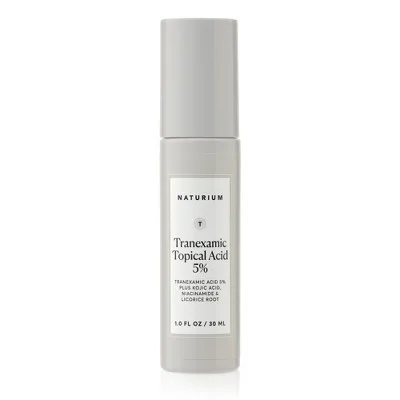
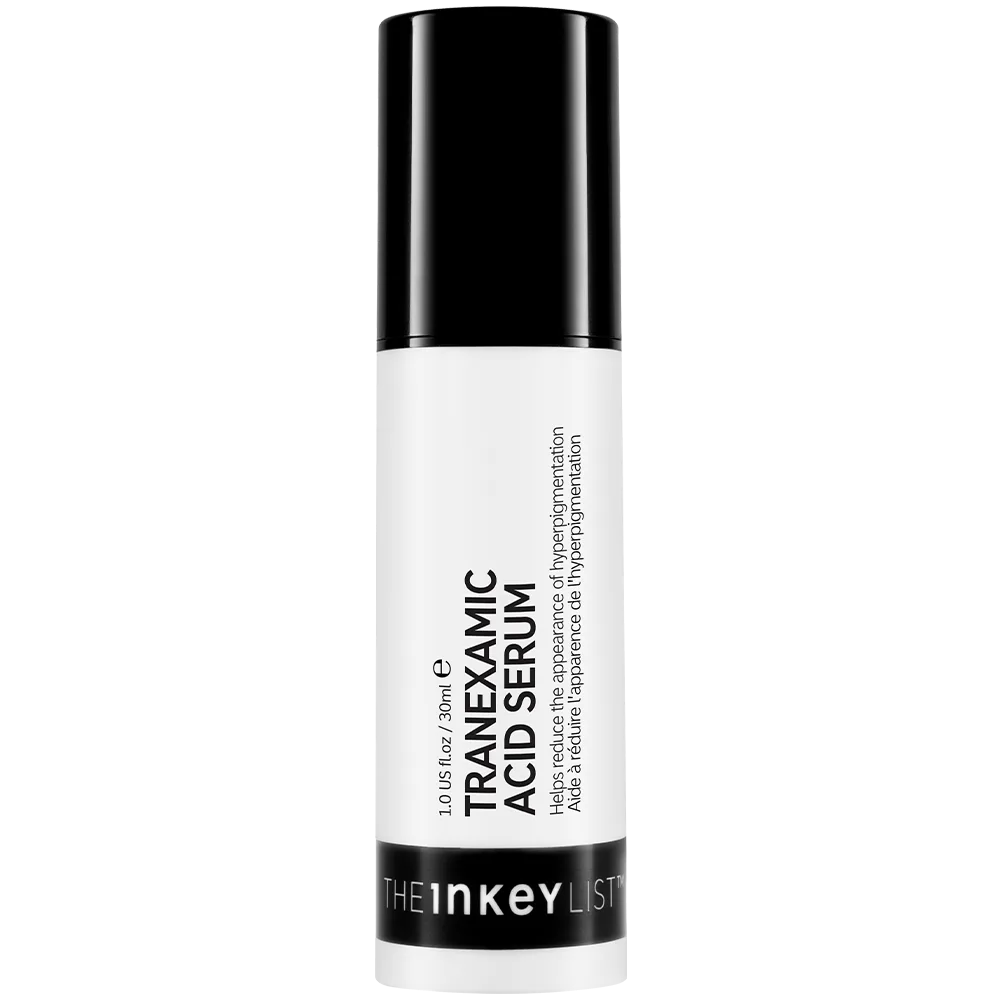
That serendipity has now hardened into a category. Walk the dark-spot aisle in 2026 and tranexamic acid is everywhere — Naturium's Tranexamic Topical Acid 5%, The INKEY List's overnight treatment, Anua's Niacinamide 10% + TXA 4% serum, even pharmacy stalwarts like Vichy's LiftActiv B3 building around it. A surgical hemostatic agent has become a mainstream brightening ingredient, and it happened fast.
Why the sudden ubiquity
Two forces are driving it. The first is demand: melasma and stubborn post-inflammatory hyperpigmentation are among the most frustrating things a dermatologist treats, notoriously prone to relapse, and the market has been hungry for anything beyond hydroquinone.
The second is mechanism, and it's the genuinely interesting part. Most brightening actives either block the tyrosinase enzyme (vitamin C, arbutin) or speed up cell turnover (acids, retinoids). Tranexamic acid works further upstream. UV exposure ramps up plasmin activity in skin cells, which releases arachidonic acid and prostaglandins that, in turn, switch on melanocytes to make more pigment. TXA inhibits plasmin and short-circuits that signaling loop — calming the instruction to pigment rather than just mopping up the result. Because it attacks a different step, it stacks rather than competes: it layers cleanly with niacinamide (which reduces pigment transfer to skin cells), azelaic acid, and kojic acid. That combinability is exactly why formulators love it — a serum like Anua's pairs it with a high dose of niacinamide precisely because the two hit different points in the same pathway.
What the evidence actually supports
This is where TXA earns more respect than the average viral ingredient. The oral evidence is strong: multiple systematic reviews and meta-analyses show oral tranexamic acid meaningfully reduces melasma severity. The topical and OTC picture is smaller but real — meta-analyses comparing oral, topical, and intradermal delivery find topical TXA significantly reduces pigmentation indices, and literature reviews identify roughly 2–5% as the effective topical range with a clean safety profile and no serious adverse effects.
So the honest framing: this isn't a hype molecule with a nice story and no data behind it. It's a well-studied drug whose oral use for pigmentation is well established and whose topical OTC use is supported by a growing, encouraging evidence base. Expect gradual fading over about 8 to 12 weeks of consistent use — and pair it with daily sunscreen, because UV is the trigger the whole mechanism is fighting. If you're stacking it into a routine, our conflict checker and ingredient decoder will tell you what plays nicely with it.
The one line you must not cross
Here's the caveat that matters more than any efficacy number. Topical tranexamic acid — the 2–5% you find in serums — is well-tolerated and safe for the vast majority of people; a quick patch test covers the occasional sensitivity. Oral tranexamic acid is a different animal entirely. It is a prescription-only drug because, as an antifibrinolytic, it can raise the risk of blood clots, and it is not appropriate for everyone — particularly anyone with clotting risk factors. The fact that oral TXA has the strongest melasma data does not mean you should buy it online and self-dose. That's a conversation for a physician who can weigh your personal risk, full stop. Use the serum freely; treat the pills as medicine, because they are.
Products mentioned
Independently reviewed and scored — the real products behind this piece.



References
- Efficacy of Oral, Topical, and Intradermal Tranexamic Acid in Patients with Melasma — A Systematic Review and Meta-Analysis — Clinical, Cosmetic and Investigational Dermatology, 2024
- Tranexamic Acid for Adults with Melasma: A Systematic Review and Meta-Analysis — BioMed Research International, 2018
- Tranexamic Acid for Hyperpigmentation Disorders: A Literature Review on Efficacy and Safety in Melasma and PIH — Clinical, Cosmetic and Investigational Dermatology, 2026
Every cited link is verified to resolve to the paper named. Where a source could not be independently confirmed, it is listed without a link rather than pointing you somewhere wrong.
Frequently asked
What does tranexamic acid do for skin?
Topical tranexamic acid fades melasma and stubborn dark spots by interrupting the UV-triggered signal that tells pigment cells to overproduce melanin. Unlike vitamin C or acids, it works upstream on the plasmin pathway, which is why it pairs so well with other brighteners rather than duplicating them.
How is it different from vitamin C or niacinamide?
Vitamin C blocks the tyrosinase enzyme and niacinamide reduces pigment transfer to skin cells; tranexamic acid dampens the inflammatory signaling that switches melanocytes on in the first place. Because they act at different points, layering TXA with niacinamide is complementary, not redundant.
Is topical tranexamic acid safe to use every day?
For most people, yes — topical TXA at 2–5% is well-tolerated with no serious adverse effects reported in the literature, and a quick patch test flags the rare sensitivity. This is entirely different from oral tranexamic acid, which is a prescription drug.
Can I just take tranexamic acid pills for my melasma?
No — not on your own. Oral tranexamic acid has the strongest melasma evidence but is prescription-only because it can increase blood-clot risk and isn't safe for everyone. If you're considering the oral route, that's a decision for a physician who can assess your personal risk factors.
How long until I see results?
Expect gradual improvement over roughly 8 to 12 weeks of consistent use, and only if you wear daily sunscreen — UV is the trigger the ingredient is working against, so skipping SPF undermines the whole effort.