Hydroquinone: The Most Effective Dark-Spot Treatment and the Most Feared
It's the benchmark every other brightener is measured against — and the one you can no longer grab off a US drugstore shelf. Here's the clear-eyed version.
Read the preview
From the DermApproved blog, in Treatments and Procedures: hydroquinone — the most effective dark-spot fader ever made, and somehow the most feared. Here's the paradox at the heart of it. This molecule is so good that every rival brightener on the market has to prove itself by going head-to-head against it in a trial. It's the benchmark. And yet you can't just grab it off a US drugstore shelf anymore — it quietly vanished a few years back, and the reason why is stranger and more bureaucratic than you'd ever guess. Then there's the scare word that trails it everywhere: a skin discoloration that can be permanent. Is that risk real? Yes, absolutely. Is it as common as the internet insists? Not even close. We size that fear honestly, explain exactly where the molecule went, and map the gentler, legal alternatives worth trying first. The full clear-eyed verdict is at dermapproved.com/blog.
Why it became the molecule everything else is measured against
In pigment research there's a quiet convention: when a new brightening ingredient wants to prove itself, it runs a trial against 4% hydroquinone. That's the tell. Hydroquinone isn't the benchmark because of marketing — it's the benchmark because for decades nothing has reliably beaten it at fading melasma and stubborn dark spots.
Mechanistically, hydroquinone doesn't just politely slow pigment production. It suppresses the melanocytes themselves — the cells that manufacture melanin — interfering with tyrosinase, the key enzyme in the melanin pathway, and reducing melanocyte activity more aggressively than gentler agents. Recent mechanistic work in the International Journal of Molecular Sciences describes how tyrosinase actually metabolizes hydroquinone inside the skin, a detail that matters for both its potency and its rare downside. The practical upshot is speed and strength: visible fading often begins within weeks, faster than most alternatives can manage. This is why dermatologists have reached for it for melasma, post-inflammatory hyperpigmentation, and sun-driven dark spots for two generations. It is, unambiguously, the most effective topical depigmenting agent in wide use. Everything that follows — the fear, the regulation, the 'natural alternative' marketing — is a reaction to a molecule that simply works, and the tension of the whole hydroquinone story is that its greatest strength and its scariest reputation come from the very same aggressive mechanism.
The ochronosis fear, sized honestly
The word that haunts hydroquinone is ochronosis — specifically exogenous ochronosis, a paradoxical bluish-black or gray discoloration that can appear in skin that's been treated with hydroquinone, sometimes permanently. It's the nightmare scenario in every cautionary post, and it is real. But 'real' and 'common' are different things, and the fear is badly out of proportion to the frequency.
Here's the honest sizing. Exogenous ochronosis is rare in the context of appropriate use. The reported risk clusters around specific conditions: high concentrations, very long uninterrupted use measured in many months to years, and darker skin phototypes, which carry higher susceptibility. Crucially, the timelines differ — melanin suppression happens within weeks, while ochronosis develops only over prolonged exposure, evidence that they're distinct processes. That difference is exactly why the standard dermatological approach isn't 'use forever' but cycling: a defined treatment course of a few months, then a break, often maintaining with non-hydroquinone agents in between. Used that way, under guidance, hydroquinone's risk profile is far more reassuring than its reputation suggests. The genuine danger lives at the extremes — unregulated overseas creams with undisclosed high concentrations, applied indefinitely without oversight. The molecule didn't earn its fear from dermatologist-guided courses; it earned it from misuse.
How it vanished from the drugstore shelf
If you went looking for hydroquinone at a US drugstore recently and came up empty, you weren't imagining it. Its regulatory status has been a decades-long saga. The FDA floated restricting OTC hydroquinone back in 2006 after animal data raised carcinogenicity questions, but the proposal sat in limbo for years.
The 2020 CARES Act resolved that limbo in an unexpected way. Tucked into that pandemic-era law was a reform of how OTC drugs are regulated, and one consequence was that OTC skin-lightening products containing hydroquinone became classified as unapproved new drugs — effectively pulling them from legal US sale as of September 2020. Today the only FDA-approved hydroquinone product is Tri-Luma, a prescription triple-combination cream for melasma. So in the US, hydroquinone shifted from 'grab a 2% cream at the pharmacy' to 'prescription-only.' That change had a messy side effect worth knowing: a 2025 study in the Journal of Cosmetic Dermatology surveyed stores and found skin-lightening products still being sold containing prescription ingredients post-ban — a reminder that a regulatory line on paper doesn't instantly clear shelves, and that unregulated products are exactly the ones most likely to carry undisclosed, higher-risk formulations. The legal route now runs through a clinician, which is arguably how a molecule this potent should have been handled all along.
The alternatives: gentler, legal, slower
Because hydroquinone now requires a prescription in the US and makes plenty of people nervous, the non-hydroquinone brighteners have become the everyday toolkit — and several are genuinely good, just working by gentler mechanisms and generally over longer timelines. Think of them as the maintenance-and-mild-cases tier, and often the smart bridge between hydroquinone courses.
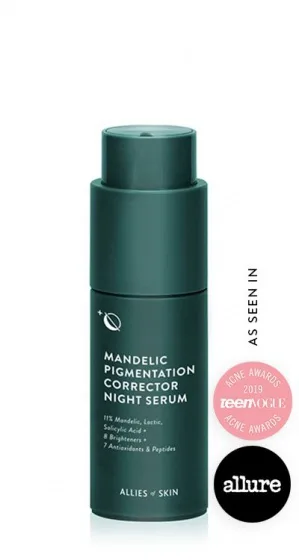
Tranexamic acid has emerged as a standout for melasma, tackling the vascular and inflammatory side of pigment that hydroquinone doesn't; an affordable option like Good Molecules Discoloration Correcting Serum makes it easy to trial. Multi-ingredient formulas stack mechanisms — SkinCeuticals Discoloration Defense combines tranexamic acid with kojic acid and a resorcinol derivative, while an exfoliating-plus-brightening approach like Allies of Skin Mandelic Pigmentation Corrector Night Serum layers mandelic and azelaic acids with tranexamic acid. Azelaic acid deserves special mention as the pregnancy-friendly choice, since hydroquinone and retinoids are off the table then. Arbutin (a naturally hydroquinone-derived but far milder molecule), kojic acid, and niacinamide round out the field. None will match hydroquinone's raw speed on entrenched melasma — that's the honest trade — but they're accessible, better tolerated, and safe for indefinite use. Run any new combination through our conflict-checker and ingredient-decoder so you don't accidentally stack too many actives and irritate the very skin you're trying to even out.
The rule that decides whether any of it works
Here's the part that outranks the choice of active entirely: none of these treatments — not hydroquinone, not tranexamic acid, not the fanciest resorcinol blend — will hold if you skip daily sun protection. Melasma and most hyperpigmentation are driven and reactivated by ultraviolet and even visible light. Treating pigment without rigorous photoprotection is bailing water out of a boat while the tap runs at full blast.
That means broad-spectrum SPF every single morning, reapplied, ideally a high-protection formula, and for melasma specifically a tinted mineral sunscreen whose iron oxides also block the visible light that plain SPF misses. Beyond that, patience and restraint: introduce one brightening active at a time, patch-test it first — our patch-test tool walks through the timing — and give any regimen the two to three months it needs before judging results, because pigment fades slowly and impatient stacking causes the irritation that triggers more pigment. If you're considering hydroquinone, that conversation belongs with a dermatologist who can prescribe it, set the cycling schedule, and monitor you. The clear-eyed verdict: hydroquinone is the most effective tool in the drawer, the fear around it is real but oversized, and its power is best respected with medical guidance, a defined course, and sunscreen you never, ever skip.
Products mentioned
Independently reviewed and scored — the real products behind this piece.


References
- Mechanistic Insights into Tyrosinase-Catalyzed Metabolism of Hydroquinone: Implications for the Etiology of Exogenous Ochronosis and Cytotoxicity to Melanocytes — International Journal of Molecular Sciences, 2025
- Prescription Ingredients in Skin-Lightening Products Found Over-the-Counter Post–Hydroquinone Ban: Cross-Sectional Study of 70 Stores in the Twin Cities — Journal of Cosmetic Dermatology, 2025
- FDA works to protect consumers from potentially harmful OTC skin lightening products — U.S. Food and Drug Administration, 2022
Every cited link is verified to resolve to the paper named. Where a source could not be independently confirmed, it is listed without a link rather than pointing you somewhere wrong.
Frequently asked
Is hydroquinone still legal to buy in the United States?
Not over the counter. Since the 2020 CARES Act, OTC hydroquinone skin-lighteners are classified as unapproved new drugs and were pulled from legal US sale. It's now effectively prescription-only, with Tri-Luma the sole FDA-approved hydroquinone product. Any OTC product still claiming to contain it is operating outside that framework.
How likely is hydroquinone to cause ochronosis?
It's genuinely rare with appropriate use. Exogenous ochronosis is associated with high concentrations, prolonged uninterrupted use over many months to years, and darker skin phototypes. Because melanin suppression happens within weeks while ochronosis takes far longer to develop, dermatologists cycle hydroquinone in short courses rather than using it continuously, which keeps the risk low.
What's the best hydroquinone alternative for dark spots?
It depends on your goal. Tranexamic acid is a strong melasma option, azelaic acid is the pregnancy-safe choice, and kojic acid, arbutin, and niacinamide round out the toolkit. None match hydroquinone's raw speed on entrenched pigment, but they're OTC-legal, better tolerated, and safe for long-term maintenance use.
How long should you use hydroquinone before stopping?
The standard dermatological approach is cycling: a defined course of roughly a few months, followed by a break, often maintaining results with non-hydroquinone brighteners in between. Continuous indefinite use is what raises the ochronosis risk, so a clinician-set schedule with monitoring is the safe way to use it.
Do I still need sunscreen if I'm using a brightening treatment?
Absolutely — it's the single most important step. Melasma and most hyperpigmentation are driven by UV and visible light, so any brightener works against a stacked deck without daily broad-spectrum SPF. For melasma specifically, a tinted mineral sunscreen with iron oxides blocks the visible light that regular sunscreen misses.