Azelaic Acid: The Most Underrated Active in Skincare
It treats acne, rosacea, and dark spots at once, it's pregnancy-safe, and it rarely irritates. So why is almost nobody reaching for it first?
Read the preview
From the DermApproved blog, in Ingredient Science: azelaic acid, the most underrated active in skincare. Picture one ingredient that fights acne, calms rosacea, fades dark spots, and is safe in pregnancy — that's azelaic acid, quietly doing the work of three products. It's antibacterial, anti-inflammatory, and blocks the enzyme behind excess pigment, and the 20% version rivals hydroquinone for melasma. So why the obscurity? It's just too modest to market: no origin story, no overnight drama, works slow and steady. Give it eight to twelve weeks and wear your sunscreen. The full case for the underdog is at dermapproved.com/blog.
The active that does three jobs at once
Most skincare problems get solved by stacking products: a salicylic acid for breakouts, a niacinamide or vitamin C for tone, something soothing for redness. Azelaic acid is the rare ingredient that collapses much of that stack into a single molecule. It's a naturally-occurring dicarboxylic acid (found in grains like wheat and barley) that dermatologists use across a genuinely unusual range of conditions: inflammatory acne, rosacea, melasma, and post-inflammatory hyperpigmentation — the dark marks left behind after a breakout heals.
That breadth is the whole pitch. If your skin is the common, frustrating combination of acne-prone and prone to leaving marks, or rosacea-prone and blotchy, azelaic acid addresses the tangle from several angles at once instead of asking you to referee three competing actives. It's the closest thing skincare has to a Swiss Army knife that's actually sharp on every tool.
Why it works: several mechanisms, one molecule
Azelaic acid earns its versatility through a genuinely multi-pronged mechanism, which is unusual. It has antibacterial activity against the bacteria implicated in acne, and it's anti-inflammatory — calming the redness and papules that drive both acne and rosacea. On the pigment side, it inhibits tyrosinase, the key enzyme in melanin production, and appears to preferentially target overactive melanocytes, which is why it fades dark spots without bleaching normal skin. Its antioxidant properties add to the anti-inflammatory effect, reducing the oxidative damage that fuels post-inflammatory marks.
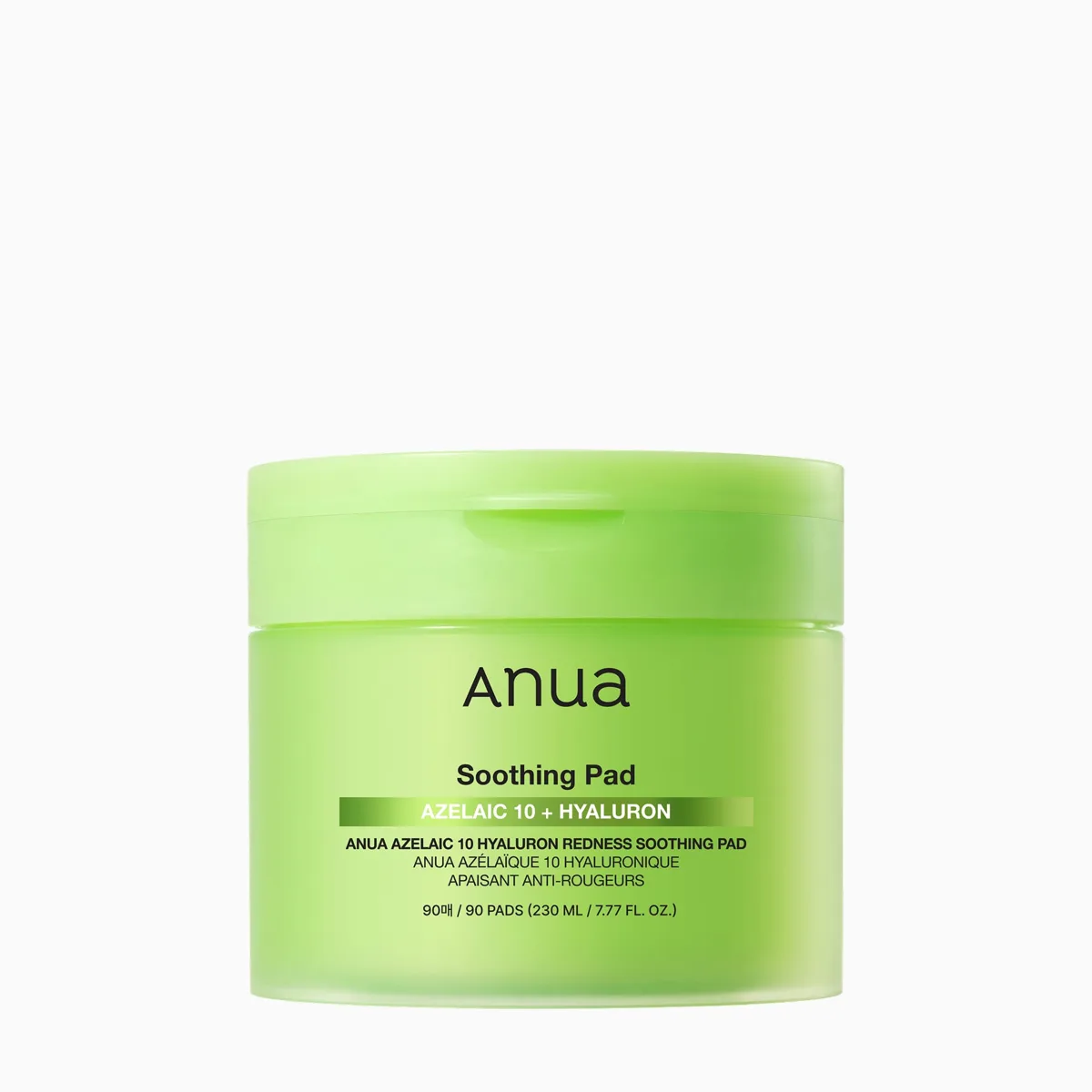
The clinical record backs the versatility. In rosacea, azelaic acid significantly improves redness and inflammatory lesions versus placebo, and in head-to-head data it has held its own against standard prescription options. In acne, its reduction in inflammatory and non-inflammatory lesions has been comparable to topical retinoids in some studies, often with better tolerability. And for pigmentation, the 20% cream has shown efficacy similar to hydroquinone with a friendlier safety profile — a serious claim, given hydroquinone is the benchmark. A well-formulated OTC ampoule like SKIN1004's Azelaic Acid 10 Ampoule or a soothing pad like Anua's Azelaic 10 redness-soothing pads puts a meaningful dose of this into an easy daily step.
The pregnancy-safe brightener almost nobody mentions
Here's a genuinely valuable niche that gets buried: azelaic acid is one of the very few actives that both brightens and fights acne while being generally considered safe to use during pregnancy and breastfeeding. Pregnancy knocks out most of the heavy hitters — retinoids are off the table, hydroquinone is usually avoided, high-dose salicylic is discouraged — right when many people develop melasma ('the mask of pregnancy') and hormonal breakouts. Azelaic acid steps into exactly that gap.
That alone should make it a first-line recommendation far more often than it is. Anyone pregnant and battling new pigmentation or acne, anyone breastfeeding, or anyone who simply wants to avoid the stronger actives has, in azelaic acid, a legitimately effective option rather than a resigned 'just wait it out.' It's the answer to one of the most common questions dermatologists field — 'what can I actually use right now?' — and it rarely gets top billing. (As always, run any pregnancy routine past your own doctor, but azelaic acid is usually on the yes list.)
So why is it overlooked — and how to use it
If azelaic acid is this good, why isn't it a household name like retinol or vitamin C? A few unglamorous reasons. It's not sexy — no viral origin story, no luxury branding, no dramatic 'purge then glow' arc. It works gradually, and in a culture trained to want overnight results, slow-and-steady loses the marketing war. Some traditional formulations feel slightly gritty or gel-heavy, and a minority of people get transient tingling or mild irritation early on. None of these are dealbreakers; they're just enough friction to keep it off the trend cycle.
Using it is simple. OTC strengths cluster around 10%, which is plenty for maintenance and mild-to-moderate concerns; prescription strengths of 15-20% are available through a doctor for tougher cases. It layers comfortably with most routines — niacinamide, gentle hydrators, sunscreen — and modern formats like the derivative-based Geek & Gorgeous aPAD azelaic serum or the calming Aromatica azelaic serum feel far more elegant than the old prescription gels. Start once daily (or every other day if you're sensitive), give it a genuine 8-12 weeks, and keep wearing sunscreen so it isn't fighting fresh UV damage. Do that, and azelaic acid quietly outperforms its reputation — which is precisely the problem: it's too modest to sell itself.
How it stacks up against the usual suspects
To see why azelaic acid deserves more shelf space, put it next to the actives people reach for instead. For acne, benzoyl peroxide and retinoids are excellent but drying and, in the case of retinoids, off-limits in pregnancy; azelaic delivers meaningful lesion reduction with gentler tolerability and no pregnancy asterisk. For pigmentation, hydroquinone is the benchmark but carries a rest-period ritual and ochronosis worries at long use, while vitamin C is fussy and unstable — azelaic brightens through tyrosinase inhibition without either headache, and the prescription 20% has gone toe-to-toe with hydroquinone in melasma. For rosacea, it's not a compromise pick at all; it's genuinely first-line, with data rivalling the standard prescriptions.
Where azelaic loses is speed and drama. A retinoid remodels skin more profoundly over time; benzoyl peroxide clears an angry breakout faster; a strong acid resurfaces texture more visibly. Azelaic rarely wins a single category outright — it wins the aggregate, by being good-to-very-good at several things at once with minimal downside. That's an unglamorous kind of excellence that the trend cycle can't package.
The smartest way to think about it: azelaic acid is the ideal 'and also' active, and often a superb solo choice for sensitive, reactive, pregnant, or overwhelmed skin that can't juggle a five-step active routine. If you've been quietly struggling with the acne-plus-marks-plus-redness trifecta and bouncing between single-purpose products, this is the one bottle most likely to calm the whole picture down. That it does so without asking to be the main character is exactly why it's earned the title of skincare's most underrated active.
One practical caveat worth naming: azelaic acid can be a slightly awkward layering partner in texture terms. Traditional 15-20% prescription formulas are thick and can pill under sunscreen or makeup if you're heavy-handed, and a few people find the initial tingling off-putting. The fix is mundane — use a pea-sized amount, let it settle for a minute, and choose one of the newer serum or pad formats if the classic gel doesn't agree with you. None of that changes the underlying point: for the money and the risk, few actives return as much across as many concerns.
Products mentioned
Independently reviewed and scored — the real products behind this piece.



References
- A Comprehensive Review of Azelaic Acid Pharmacological Properties, Clinical Applications, and Innovative Topical Formulations — Pharmaceuticals, 2025
- Azelaic Acid in Dermatology: A Review of Its Mechanism of Action — Clinical, Cosmetic and Investigational Dermatology, 2025
Every cited link is verified to resolve to the paper named. Where a source could not be independently confirmed, it is listed without a link rather than pointing you somewhere wrong.
Frequently asked
What does azelaic acid treat?
It's used for inflammatory acne, rosacea, melasma, and post-inflammatory hyperpigmentation. That multitasking range — calming breakouts and redness while fading dark marks — is exactly what makes it so useful and so underrated.
Is azelaic acid safe during pregnancy?
It's one of the few brightening and anti-acne actives generally considered safe in pregnancy and breastfeeding, which makes it a valuable option when retinoids and hydroquinone are off-limits. As with any pregnancy routine, confirm with your own doctor, but it's usually on the approved list.
What strength of azelaic acid should I use?
OTC products typically contain around 10%, which suits maintenance and mild-to-moderate concerns, while prescription strengths run 15-20% for tougher cases. The 20% cream has shown melasma results comparable to hydroquinone, so higher strengths are worth a dermatologist visit if OTC isn't enough.
How long does azelaic acid take to work?
It works gradually — expect a genuine 8-12 weeks of consistent use for pigmentation and rosacea improvements, and keep wearing sunscreen so it isn't undone by fresh UV. Its slow pace is part of why it's underhyped, not a sign it isn't working.