



Azelaic Acid Should Be Far More Popular Than It Is
It treats acne, rosacea and pigment simultaneously, survives pregnancy, and fights with almost nothing in your routine. Its problem is texture and the absence of a marketing budget.
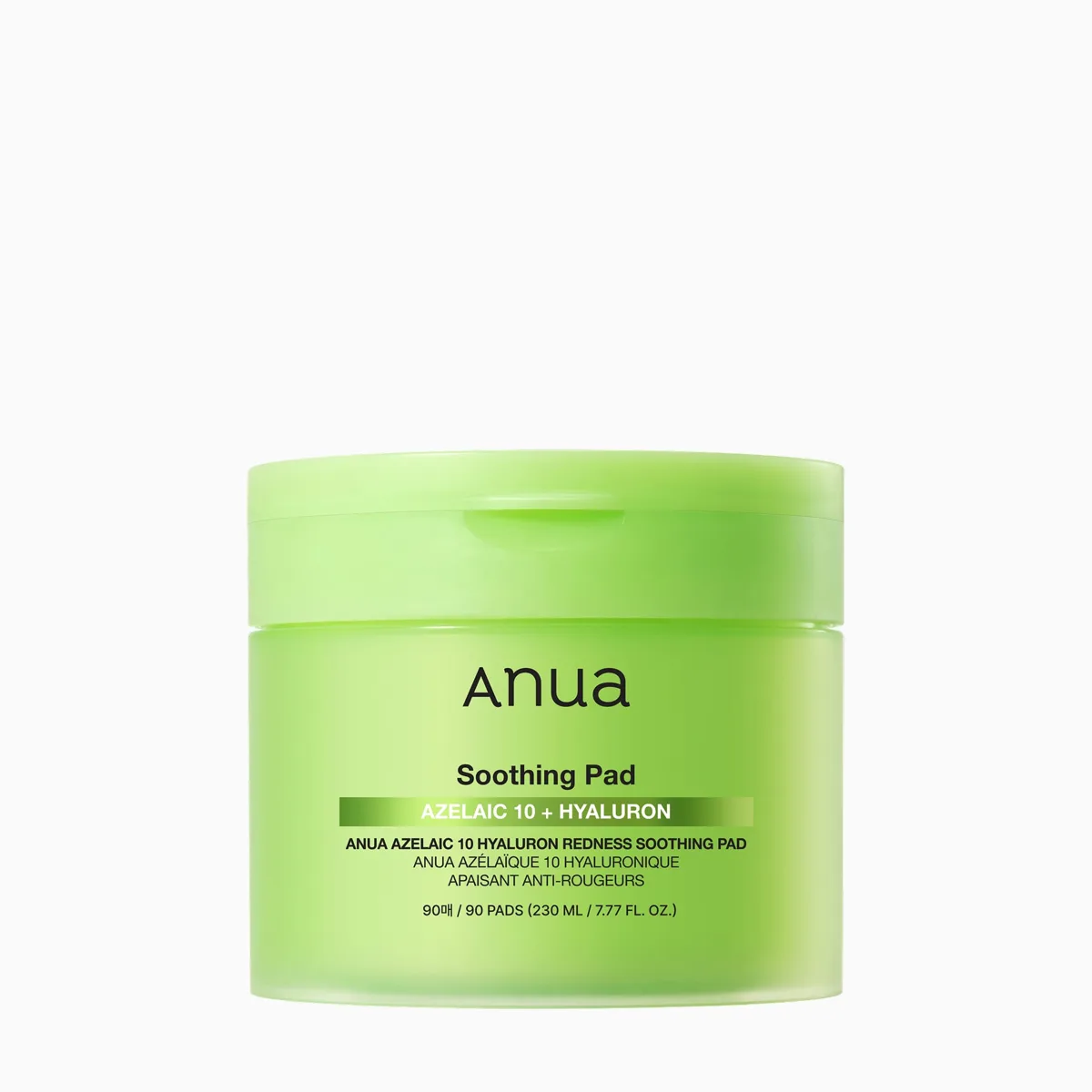
Azelaic acid is one of dermatology's quiet multitaskers, but it is notoriously awkward to formulate — high-percentage versions can be gritty and stinging. This pad takes the opposite tack: a low, comfortable azelaic dose woven into a seven-input centella complex with licorice and bisabolol, turning a finicky active into a frictionless daily soothing step for redness-prone skin.
A gentle, well-judged soothing pad for redness-prone skin that pairs a low, comfortable dose of azelaic acid with a full centella complex, bisabolol and licorice, all fragrance-free. It genuinely calms everyday redness and hydrates without any sting — provided you understand it is a comfort step, not a treatment-strength azelaic product.
About a year of availability gives a moderate feedback pool to work from. The rating may firm up as a fuller set of reviews accumulates.
The case for it
What would change this: A declared concentration would move this to a firmer reading of the dose.
Same rule for everyone. “Good choice” is the verdict on 1,938 of 45,024 concern verdicts across the catalog; rule F2 decided 1,938 of them. Unchanged since September 5, 2026, engine 5.1.1.
Brand or formulator? Disclose a concentration or correct a fact →
The studies behind the evidence row
The case for it
What would change this: A concentration inside the studied range would raise this a step.
Same rule for everyone. “Good choice” is the verdict on 9,564 of 45,024 concern verdicts across the catalog; rule R4 decided 84 of them. Unchanged since September 5, 2026, engine 5.1.1.
Brand or formulator? Disclose a concentration or correct a fact →
The studies behind the evidence row
The case for it
What would change this: A declared concentration would move this to a firmer reading of the dose.
Same rule for everyone. “Good choice” is the verdict on 9,564 of 45,024 concern verdicts across the catalog; rule R5 decided 9,072 of them. Unchanged since September 5, 2026, engine 5.1.1.
Brand or formulator? Disclose a concentration or correct a fact →
The studies behind the evidence row
Also listed for Excess Oiliness and Large Pores — the actives here (Hyaluronic Acid, Azelaic Acid, Bisabolol, Centella Asiatica) are in our research queue for those concerns; there is no verdict until their evidence rows are written. That is a gap in our table, not a mark against the product.
Does the jobDoes what a toner is for: not alcohol-driven, adds something real. Not measured from the label: restores skin pH, plays well with what follows.
A verdict is DermApproved’s assessment of how well a product’s ingredients fit a concern — never a claim about what the product treats. Evidence dots and collected reviews sit beside it and are never blended in. Rules 0.5.1 · evidence table ev-2026.09-r228 · how we decide
Azelaic acid occupies a strange spot in skincare. Dermatologists genuinely love it — it is one of the few actives that quietly does several useful things at once, calming inflammation, evening tone, helping with breakouts and the redness around them. And yet for all that goodwill, it has never become a casual, beloved shelf staple the way niacinamide or hyaluronic acid have. The reason is mostly texture and tolerance. Treatment-strength azelaic, at 10 to 20%, has a long-standing reputation for being gritty, thick, occasionally stinging, and generally a bit of a chore to live with. It is a brilliant ingredient trapped in awkward formulations. Anua's Azelaic 10 Hyaluron Redness Soothing Pad is interesting because it sidesteps that problem entirely — by deciding not to be a treatment at all.
Here is the honest framing the product name slightly obscures. The 'Azelaic 10' refers to Anua's line naming, not a 10% concentration. On the ingredient list, azelaic acid sits mid-formula, well below where a treatment-level dose would appear. So this is not a product that will clear acne or fade established dark spots — and it is important to say that plainly, because the azelaic association will lead some people to expect exactly that. What the low dose does deliver is a gentle, sting-free calming and tone-supporting touch, dosed for comfort and daily use rather than clinical force. That is a deliberate trade, and whether it is the right product for you depends entirely on understanding it.
What actually carries the soothing here is the centella. The pad contains a genuinely complete cica complex — seven separate inputs, counting the whole-plant, leaf and root extracts plus the four isolated triterpene actives asiaticoside, madecassoside, asiatic acid and madecassic acid. Centella is one of the better-evidenced calming botanicals in skincare, and madecassoside in particular has research behind it for settling visible redness and improving comfort in irritated skin. Getting the full spectrum of it, rather than a single token extract, is what makes this pad reliably calming. Azelaic acid may be the name on the tub, but centella is the engine.
The supporting cast is sensible and layered. Bisabolol, derived from chamomile, adds an anti-inflammatory route distinct from centella's. Licorice root extract, present as dipotassium glycyrrhizate, contributes its own calming and gentle tone-evening activity, reinforcing the azelaic acid from a complementary angle. Allantoin and panthenol smooth and comfort. And there is a barrier ceramide tucked in, which matters more than it sounds: persistent facial redness very often sits on top of a weakened, leaky barrier, so leaving a trace of barrier support behind, rather than just swiping and stripping, is the right instinct for a pad used twice a day.
The long tail of the INCI has a few quiet signatures worth noticing: neem leaf and flower extracts — a botanical Anua leans on across its calming lines — plus trace appearances from cocoa seed and corn kernel extracts. None of it changes the analysis; it's simply the texture of a modern K-beauty list, where even the garnish is chosen to sound soothing.
The hydration is real, too. Multiple weights of hyaluronic acid, backed by glycerin, betaine and hydroxyethyl urea, keep the essence genuinely moisturizing — and since irritated skin is so frequently dehydrated skin, rehydrating it is itself part of how the formula calms the look of redness. The pads are soft, the watery essence absorbs quickly with just a faint slip and no tackiness, and the whole thing is fragrance-free, which is the only acceptable choice for a product aimed squarely at reactive skin. The first swipe is quietly reassuring: cool, hydrating, no sting whatsoever, and skin that looks a shade less flushed almost immediately.
In practice it slots in as the toner step — after cleansing, before serums — swiped gently over the flush-prone zones rather than scrubbed across the whole face. Two technique upgrades: press a soaked pad onto a hot cheek for a minute as a targeted compress, and pat the leftover essence in instead of wiping it off, since the essence is where the actives live. Expect everyday trigger-redness — weather, friction, a harsh product — to settle within a week or two of twice-daily use; true condition-driven redness like established rosacea moves slowly if at all, and belongs under medical care with this as a supporting comfort. It's pregnancy-safe, and the six-month period-after-opening is no concern when a tub empties in about six weeks.
The limitations are honest and few. The headline one is the azelaic expectation gap already covered — if you came for acne or pigmentation results, this is the wrong product, and a treatment-strength azelaic serum or prescription is what you need. Beyond that, 90 pads is a slightly modest count for the roughly twenty-four-dollar price, a touch less generous per pad than some sibling pads in the lineup. The tub is bulky to travel with, and the top pads will dry out if you are careless with the lid. None of these are dealbreakers.
Context makes the product's polish less surprising: this 2025 release comes from a brand that went from a 2019 startup to more than half a billion dollars in retail sales on the strength of exactly this kind of soothing-first formulation. The early record — nine hundred reviews averaging 4.4, shelf space at Ulta and iHerb — repeats the same two sentences in different accents: reactive skin tolerates it beautifully, and anyone who arrived expecting azelaic-treatment results leaves disappointed.
The right way to see this pad is as a comfort step, not a corrective one. For skin that flushes easily, that reacts to weather, friction, stress and the wrong product, that wants something genuinely calming to swipe on twice a day without thinking hard about it — this is a smart, gentle, low-risk choice, and the centella-led formula earns its soothing claim. Just buy it for what it is: a frictionless daily way to keep redness-prone skin calm and hydrated, with azelaic acid playing a gentle supporting role rather than the lead its name implies.
The hero actives that drive this product's performance.
| Ingredient | Function | Evidence |
|---|---|---|
| Azelaic Acid | The pad's namesake, used here at a low, comfort-level dose rather than the 10-20% of treatment products — it appears mid-formula. At this gentle level it lends a calming, redness-reducing and tone-supporting touch suited to daily swiping, trading the clinical punch of a high-percentage azelaic product for tolerability on reactive skin. | Regulator-approved for Rosacea · well-established certainty |
| Centella Asiatica Complex (7-Cica) | Seven centella inputs — whole-plant, leaf and root extracts plus asiaticoside, madecassoside, asiatic acid and madecassic acid — form the real soothing backbone of this pad. While azelaic acid gets the name, it is this full cica complex that does most of the visible-redness calming. | Limited for Rosacea |
| Hyaluronic Acid Complex | Multiple molecular weights of hyaluronic acid, backed by glycerin, betaine and hydroxyethyl urea, keep the pad genuinely hydrating — important because irritated, redness-prone skin is often dehydrated, and rehydrating it is part of how the formula calms the look of redness. | Established mechanism for Dehydration · established mechanism |
| Bisabolol | A chamomile-derived anti-inflammatory that gives the formula a soothing route distinct from centella — useful in a pad meant to be swiped over flushed, easily provoked skin twice a day. | Not yet assessed |
| Licorice Root Extract (Dipotassium Glycyrrhizate) | A licorice-derived calming agent that adds anti-inflammatory and gentle tone-evening activity, reinforcing the azelaic acid's work on redness and discoloration from a complementary angle. | Limited for Rosacea |
| Ceramide | A barrier ceramide that, with panthenol and allantoin, leaves a trace of barrier support behind — keeping twice-daily swiping from quietly weakening the already-fragile barrier that often underlies persistent facial redness. | Not yet assessed |
Ingredient standings describe the active at treatment-level doses and vehicles; this product's own condition grades weigh its actual formula.
Water, Butylene Glycol, Dipropylene Glycol, Propanediol, Glycerin, Betaine, Diglycerin, Methylpropanediol, Hydroxyethyl Urea, 1,2-Hexanediol, Hydroxyacetophenone, Glycereth-25 PCA Isostearate, Panthenol, Melia Azadirachta Leaf Extract, Xanthan Gum, Ethylhexylglycerin, Disodium EDTA, Melia Azadirachta Flower Extract, Allantoin, Sodium Polyacrylate, Glyceryl Acrylate/Acrylic Acid Copolymer, PVM/MA Copolymer, Theobroma Cacao (Cocoa) Seed Extract, Dextrin, Hydrolyzed Hyaluronic Acid, Hyaluronic Acid, Sodium Hyaluronate, Azelaic Acid, Bisabolol, Dipotassium Glycyrrhizate, Zea Mays (Corn) Kernel Extract, Centella Asiatica Extract, Centella Asiatica Leaf Extract, Centella Asiatica Root Extract, Asiatic Acid, Asiaticoside, Madecassic Acid, Madecassoside, Ceramide
toner
AM & PM
Use after cleansing as your toner step, before serums and moisturizer. Swipe gently over redness-prone zones — cheeks, nose, chin — or press a pad on as a short targeted compress. Pat in the leftover essence rather than wiping it away.
Immediate: skin feels calmer, cooler and more hydrated after the first swipe. Visible redness from everyday triggers tends to settle within 1-2 weeks of twice-daily use. Persistent, condition-driven redness improves more gradually, if at all, and is best managed alongside medical care.
The soothing claim of this pad rests primarily on centella asiatica, not on its namesake azelaic acid. Centella's calming activity is attributed to its triterpenoid constituents — asiaticoside, madecassoside, asiatic acid and madecassic acid, all individually present here. Research on these compounds documents anti-inflammatory activity, support for collagen synthesis and wound healing, and, for madecassoside specifically, studies indicating reduced redness and improved barrier recovery in irritated or compromised skin. Delivering all four actives plus whole-plant extracts gives a broader soothing effect than a single isolated fraction.
Azelaic acid itself has a strong evidence base — but at treatment concentrations. Controlled studies and clinical use support 10-20% azelaic acid for inflammatory acne, papulopustular rosacea and post-inflammatory hyperpigmentation, via antimicrobial, anti-inflammatory and tyrosinase-inhibiting actions. In this pad, however, azelaic acid appears mid-formula at what is clearly a sub-treatment dose; its evidence at such low concentrations is limited to general comfort and minor tone support, and it should not be expected to reproduce the documented clinical effects.
The remaining soothing ingredients have supporting evidence: bisabolol is a recognized anti-inflammatory, and glycyrrhizate compounds from licorice have research behind their anti-inflammatory and mild brightening activity. Hyaluronic acid is a benchmark humectant, and ceramides are well-established barrier lipids.
The core limitation is format and dose. A swipe-on pad offers brief contact and lower active delivery than a leave-on product, and the azelaic acid here is intentionally gentle. The realistic, evidence-aligned outcome is meaningful soothing and hydration for redness-prone skin, not the clinical results of treatment-strength azelaic acid.
Azelaic acid is well regarded in dermatology as a versatile, generally well-tolerated active, and it is a recognized option for papulopustular rosacea and inflammatory acne — but clinical guidance is consistent that these benefits come from treatment concentrations of 10-20%, typically in prescription or dedicated OTC formulations. A pad carrying a low cosmetic dose is best understood, in clinical terms, as a soothing product rather than a treatment. Centella asiatica, by contrast, is widely cited in clinical skincare for calming reactive, post-procedure and barrier-impaired skin, and a formula delivering its full triterpene complex fits that use well. Skin specialists frequently emphasize that redness-prone skin benefits from fragrance-free formulations, gentle handling and barrier support, all of which this pad provides. Practitioners also routinely distinguish cosmetic soothing from medical treatment: facial redness with a clear pattern of flushing, papules or persistence warrants evaluation for rosacea or other conditions, and a calming pad is a reasonable supportive measure alongside, not instead of, that care. Daily sunscreen is consistently stressed for redness-prone skin, as UV is a common aggravator.
After cleansing, take one pad and gently swipe it across the face as your toner step, concentrating on redness-prone zones such as the cheeks, nose and chin. For areas that feel especially irritated, press a pad on as a short two-to-three-minute compress. Use a light touch — there is no need to rub. Pat any remaining essence into the skin rather than wiping it off, then follow with a soothing serum and moisturizer. Use morning and evening, and apply sunscreen in the daytime. Close the lid firmly to keep the remaining pads saturated.
At around $24 for 90 pads, this works out to roughly twenty-five to thirty cents per pad — fair for a fragrance-free soothing pad with a full centella complex, though slightly less generous per pad than some sibling products in Anua's pad lineup. A tub lasts about a month and a half at one to two pads daily, a reasonable run for a daily toner step. There is no larger size or refill noted, which limits the per-unit value for committed users. Compared with Western soothing toner pads, which often run higher for fewer pads, the pricing is competitive, and the ingredient depth — centella, bisabolol, licorice, a ceramide and multiple HA weights — genuinely supports it. The one caveat for value is expectation: priced and named around azelaic acid, it delivers soothing rather than treatment, so its worth depends on buying it as a comfort step, not an active treatment.
Anyone with redness-prone, easily irritated or sensitive skin who wants a fast, gentle, fragrance-free soothing step they will actually use twice a day. It suits combination and oily skin well, works for dry skin, and is a low-risk way to fold a calming azelaic-and-centella pad into a routine.
Anyone hoping to treat active acne or fade dark spots should skip it and choose a treatment-strength 10-20% azelaic acid product instead. Those with diagnosed rosacea should treat this as a supportive comfort step alongside medical care, not a replacement for it, and shoppers wanting the most pads per dollar may prefer a more generously sized option.
Ready to try Anua Azelaic 10 Hyaluron Redness Soothing Pad?
Buy at Amazon ♥Soft cotton pads soaked in a lightweight, watery essence with a faint slip. The essence absorbs quickly and leaves a hydrated, non-tacky finish; the pads are supple and gentle against the skin.
No added fragrance; the botanical extracts give only a faint green note.
Round tub holding 90 pads stacked in essence, with a press-down inner lid to keep them saturated. Functional but bulky for travel, and the top pads can dry out if the lid is not firmly closed.
The first pass is quietly reassuring — the essence feels cool and hydrating, with no sting or tingle despite the azelaic acid, which sits at a comfort-level dose. Skin looks a touch less flushed and feels noticeably calmer and more comfortable straight away, while the bigger redness-calming effect builds with consistent use.
About 1.5 months using one or two pads daily
All Year
Anua built its reputation on calming sensitive skin, and this pad extends that focus into the toner-pad format with azelaic acid as the headline. Rather than chasing a treatment-strength dose, the brand positioned it as an accessible, low-commitment way for redness-prone users to fold a gentle azelaic-and-centella step into a routine without committing to a potent leave-on treatment.
Anua was founded in 2019 by the Korean brand incubator The Founders and has rapidly become one of the top-ranked K-beauty brands globally, exceeding $500 million in retail sales. Its soothing-focused ranges, built on heartleaf and centella, have established the brand as a go-to for sensitive, redness-prone skin.
The Azelaic 10 in the name means the pad contains 10% azelaic acid.
Azelaic acid sits mid-formula on the ingredient list, well below the position a 10% active would occupy, indicating a low, soothing-level dose. The 10 refers to Anua's product line naming, not the concentration. For documented azelaic results on acne or pigmentation, a treatment-strength 10-20% product is needed.
A soothing pad can treat rosacea.
This pad can genuinely calm the look of everyday redness and support a fragile barrier, which helps redness-prone skin feel and look more comfortable. But rosacea is a medical condition with specific triggers and treatments; a cosmetic pad is a supportive comfort step, not a substitute for dermatological care.
It can calm the look of everyday, trigger-related redness through its centella complex, bisabolol, licorice and a low dose of azelaic acid, with most users noticing calmer skin within one to two weeks. For persistent, condition-driven redness such as rosacea, the pad offers comfort and support rather than treatment, which should be managed with a dermatologist.
The exact concentration is not disclosed, but azelaic acid appears mid-list on the ingredients, indicating a low, soothing-level amount rather than the 10-20% used in treatment products. It contributes a gentle calming and tone-supporting effect suitable for daily use, not the clinical strength of a dedicated azelaic serum or prescription.
Yes — it is designed for it. The formula is fragrance-free and built around soothing ingredients, with azelaic acid kept at a low, comfortable dose so it does not sting. Sensitive skin should still swipe gently and patch test, but the pad is among the more reassuring azelaic-containing products for reactive skin.
Not meaningfully. Azelaic acid is well-proven for acne and post-inflammatory pigmentation, but only at treatment concentrations of 10-20%. The trace amount in this pad supports a calmer, slightly more even tone but will not clear breakouts or fade established dark spots — that requires a dedicated high-percentage azelaic product.
Use it after cleansing as your toner step, morning and evening, before serums and moisturizer. Swipe gently over redness-prone areas, or press a pad on as a short compress where skin feels irritated. Always follow with moisturizer and, in the morning, sunscreen, since calm skin still needs UV protection.
Recurring themes our editors read across retailer reviews of this product — summaries in our words, not quotations, and not a substitute for your own patch test.
Many reviewers report calmer, less flushed-looking skin with regular use
Soothing and hydrating without any sting, even on reactive skin
Convenient pad format makes a soothing step quick and consistent
Fragrance-free and gentle enough for compromised, irritated skin
Azelaic dose is too low for treating acne or stubborn pigmentation
90 pads is fewer than some competing tubs at a similar price
Soothing rather than corrective for condition-driven redness
Pads can dry out near the top if the lid is not sealed firmly
Verified answers from our questions library — the nuance a product page cannot carry.