"Clinically Proven" Is Not a Tier. Here Is What We Use Instead.
The same two words get attached to a twelve-person unblinded study and to a Cochrane review — so we stopped grading ingredients and started grading ingredient-and-claim pairs.
Read the preview
From the DermApproved blog, in How We Rate: clinically proven gets attached to a twelve-person questionnaire and to a Cochrane review with equal confidence — so we stopped using it. Evidence is graded per ingredient and per claim, because what a molecule proved for one job it hasn't for another. And no human types the tier. For the full breakdown, visit dermapproved.com/blog.
Two words that survived contact with reality by meaning nothing
"Clinically proven" is doing no work. It is applied to a twelve-person unblinded in-house study with a satisfaction questionnaire, and to a systematic review pooling thousands of randomised patients, and nothing in the phrase distinguishes them. Neither does "dermatologist tested," which describes who was in the room rather than what happened. Neither does "proven to," "shown to," or a footnote pointing at an instrumental measurement on eleven volunteers.
The fix is not a better adjective. It is refusing to grade an ingredient at all, and grading an ingredient for a specific job instead. Every row in the table underneath our scoring answers exactly one question: what does the published literature say about this ingredient, for this claim? Both halves are controlled — the ingredient resolves to a canonical slug, and the claim has to come from a closed vocabulary with a written definition of what counts as evidence for it.
That second constraint is stricter than it sounds. Evidence for post-inflammatory hyperpigmentation is not admitted as evidence for melasma. Evidence for photoaging texture change is not admitted as evidence for "skin tone." A study only enters a row if its endpoint matches the claim's defined endpoint, which disqualifies a great deal of what gets cited in marketing.
The same molecule, two jobs, two answers
Take azelaic acid, which is a genuinely good ingredient and a useful demonstration of why one label per ingredient would be a lie.
For rosacea, it sits at the top tier. The evidence is consistent, there is meta-analysis behind it, it has been replicated by groups with no commercial stake, and an external GRADE assessment rates the certainty high. For acne, the same molecule sits one tier down — consistent evidence, conditional endorsement in guideline terms, a strong showing but not the same standing as the rosacea case. Move to pigmentation claims and it drops again, because the trials are thinner and the endpoints are messier.
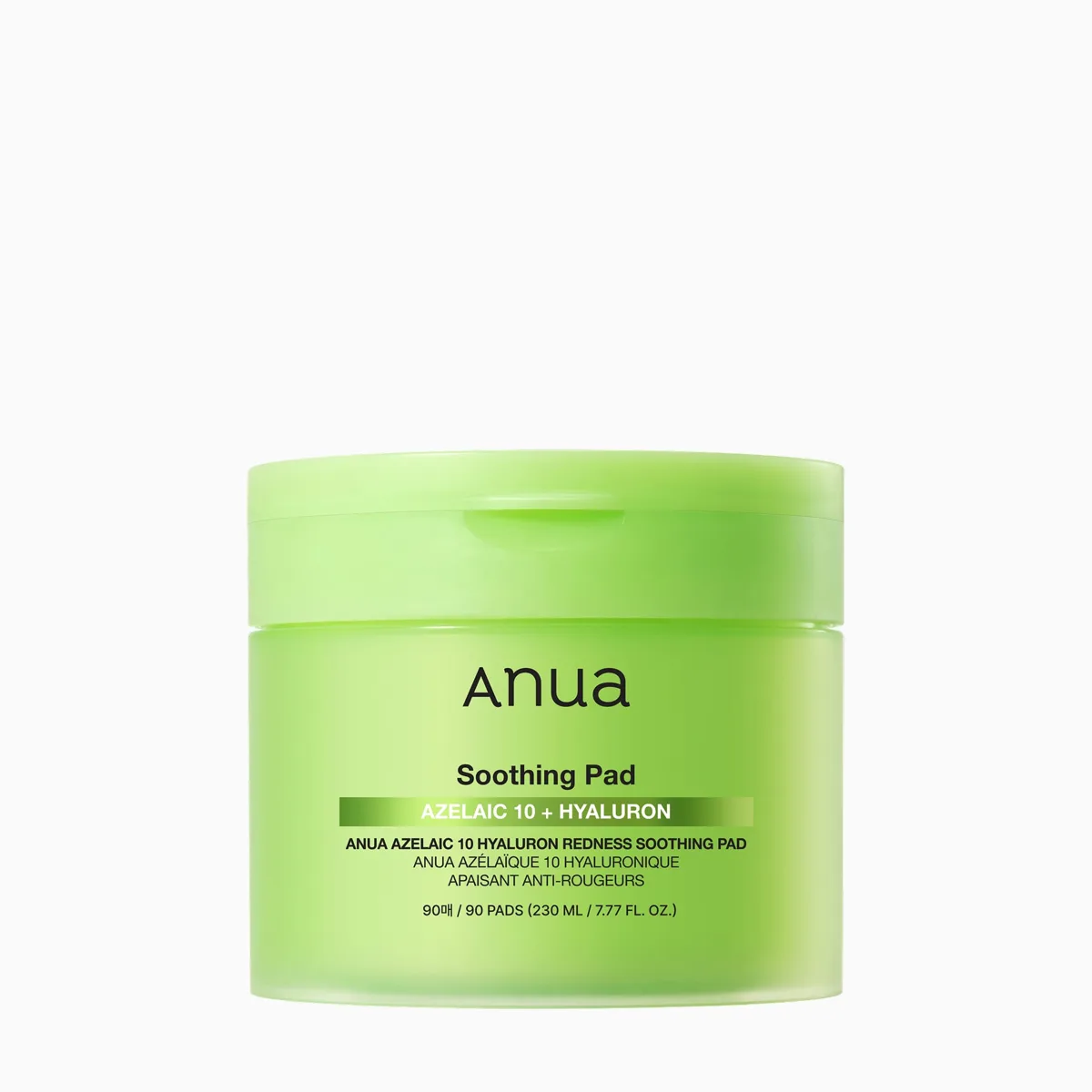
One molecule, three answers, and none of them transfers to the others. A product built around Paula's Choice 10% Azelaic Acid Booster or Anua Azelaic 10 Hyaluron Redness Soothing Pad does not carry the rosacea evidence into a pigmentation claim just because the tube is the same.
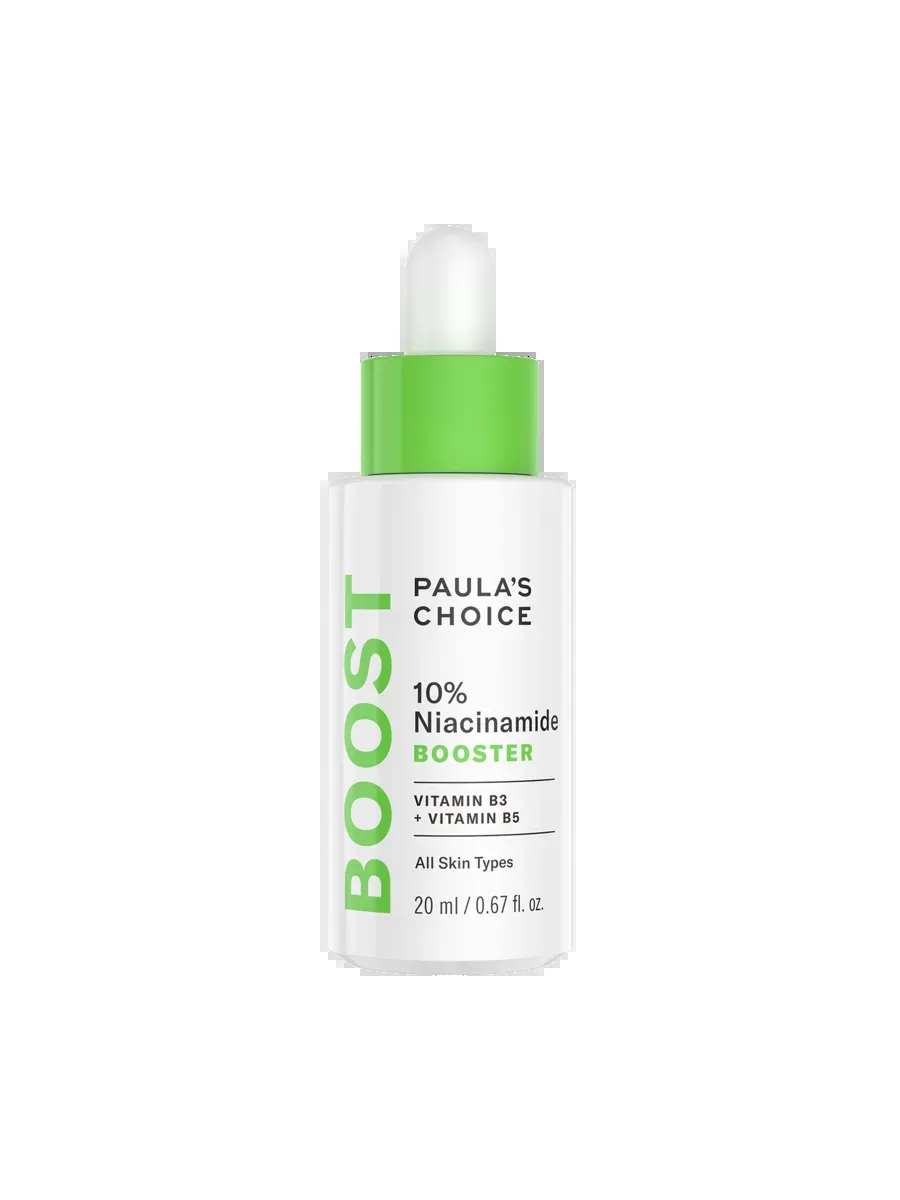
Niacinamide makes the point at greater scale. It carries more rows than almost anything else in the table, spread across barrier support, pigment, oiliness, pore appearance, ageing and several more — and those rows land on at least four different tiers. Its barrier row and its pore row are not remotely the same claim, and a formula like Naturium Niacinamide Serum 12% Plus Zinc 2% or Paula's Choice 10% Niacinamide Booster inherits each row separately, for the specific job being assessed. The niacinamide ingredient page shows the full spread rather than a single verdict, which is the honest way to display an ingredient that is well studied for some things and barely studied for others.
The tier is computed, not chosen
What matters most for trust is structural rather than rhetorical: nobody types a tier.
Each row stores countable, sourced metadata. How many randomised controlled trials exist on the finished-product class for this specific claim, with an endpoint matching the claim's definition. How many participants those trials pool. Whether an independent group with no commercial stake has replicated the result. Whether a guideline body endorses it, and at what strength. Whether a meta-analysis exists. Whether the results are consistent, mixed, conflicting, or — with a single trial — genuinely unassessable. Then the standard GRADE downgrade reasons: risk of bias, inconsistency, imprecision, publication bias, and indirectness, which is split into four separate flags because prescription evidence applied to an over-the-counter dose, and an in-vitro surrogate applied to a visible claim, are materially different failures that one flag was quietly conflating.
The tier falls out of that metadata by a published rule. The human job is filling in the countable parts with receipts attached — not deciding how impressive the literature feels. That is what "judgment happens once, in the open, on the record" means when you build it rather than say it.
It also means a low tier is frequently a statement about our current knowledge rather than about the ingredient. A row whose numeric fields have not yet been researched derives to a cautious tier by design, because the rule refuses to let a plausible-sounding label be asserted without the metadata to earn it. Rows move through a lifecycle — drafted, then researched with sources cited, then reviewed and signed off — and only reviewed rows are eligible to be scored against.
When 'no guideline endorsement' means the guideline does not exist
Guideline endorsement is the strongest single signal available, because a guideline is a body of clinicians reading the whole literature rather than one trial reading itself. When the American Academy of Dermatology strongly recommends something for acne, that carries information no individual study can.
But the absence of endorsement is nearly meaningless on its own, and this is where a naive rule goes badly wrong. There is no dedicated body-level guideline for rosacea in the way there is for acne, and there is no photoaging guideline anywhere. Score those categories on guideline endorsement alone and the answer comes back "none" for entire fields of dermatology — not because the treatments are unsupported, but because nobody has published the document that would say so.
That failure mode is the reason external GRADE certainty is anchored as its own input rather than folded into the guideline field. Where an independent body has already run a formal GRADE assessment and rated the certainty high, that rating maps across directly and skips our own downgrade step, because the downgrades have already been applied by the people who did the assessment. Charging a row twice for the same weakness is a real and easy mistake, and the rule is written specifically to avoid it.
Nobody ran the trial, versus the trial found nothing
These are opposite claims and the system keeps them apart, because collapsing them is how skincare arguments go wrong in both directions.
An ingredient with no admissible trial on a claim, and no documented mechanism acting on the primary driver of that claim's endpoint, gets a no evidence state. It is not being accused of anything. Nobody has run the study.
An ingredient with credible evidence of no effect is a different label entirely — and it is the only one that reaches outward and caps a product's overall score, which is why it carries the heaviest evidentiary burden in the whole table rather than the lightest. Declaring something contradicted requires top-tier sources, not a blog post and a hunch. Getting that asymmetry backwards would let a weak citation do more damage than a strong one.
There is a third state that the internet handles worst of all. When credible studies genuinely point both ways, the row's consistency is marked conflicting, which caps the tier and flags the pair as contested wherever it appears. We do not adjudicate it. Marking a question as unsettled is more accurate than picking the side that suits the product, and a reader who knows an argument is live can weigh it themselves. There are very few such rows, and every one of them is a place where confident copy elsewhere on the internet is overstating what is known.
The dose trap, and why the vehicle is not a footnote
A tier is about whether an ingredient works for a job. It says nothing about whether this product delivers it, which is a separate leaf and a separate common failure.
Azelaic acid again, because it is the cleanest example in the table. The prescription rosacea presentation is a fifteen per cent gel. The prescription acne presentation is a twenty per cent cream. Those two numbers look like a ladder and are not: the gel vehicle raises bioavailability, which is precisely why the lower nominal percentage carries the rosacea indication. Reading them as a dose ranking is a category error.
Which makes the common over-the-counter move — a ten per cent leave-on in an unrelated base — something that cannot inherit the trial evidence by arithmetic. It might work. The trials do not say so, because the trials were run on a different concentration in a different vehicle for a different endpoint. That is exactly the indirectness flag doing its job, and it is why every row carries the studied dose range alongside the tier. Our ingredient-decoder tool exists for the other half of the problem: reading where an active actually sits in an INCI list, which is what separates a formulated dose from a label decoration.
What makes a tier move
Evidence tables rot if nobody tends them, so rows carry a review date and a next-review date. The routine cadence is annual. Four things trigger an immediate re-review instead: a new guideline edition, a new systematic review or meta-analysis, a regulator action touching the ingredient, and a credible replication — or failure to replicate.
That last trigger is the one worth dwelling on, because it cuts against commercial interest. A well-conducted systematic review concluding that the positive trials for an ingredient were methodologically weak is exactly as much of an event as a new trial showing benefit, and it moves the row in the direction nobody selling anything wants it to move.
When a row changes, the table version changes with it, and every assessment records the table version it was computed against. So "why did this grade change?" always resolves to a specific, public answer rather than a shrug.
One last discipline, and it is the one we would defend hardest. A source URL may be recorded only if it was opened and seen to resolve to that exact paper. A reference with no link renders perfectly well as a plain-text citation — title, journal, year. A plausible-looking identifier attached to the wrong paper does not render as anything except authority, and it is undetectable by reading. Fewer links, all real, beats more links and one wrong one. Set a saved profile in My Skin and the tiers stop being an abstraction: you see the evidence standing for the specific jobs you are asking a product to do, which is the only version of this that changes a decision. The azelaic acid page is a good place to see what one ingredient's spread actually looks like.
Products mentioned
Independently reviewed and scored — the real products behind this piece.


Frequently asked
Why does one ingredient have several different evidence tiers?
Because evidence is assessed per ingredient and per claim, and it does not transfer between claims. Azelaic acid's standing for rosacea rests on consistent replicated trials and a high external certainty rating; its standing for pigmentation rests on far thinner data. Giving the molecule one label would mean overstating one claim or understating another.
What is the difference between 'no evidence' and 'contradicted'?
No evidence means nobody has run an admissible trial on that claim and no documented mechanism acts on the endpoint in question. Contradicted means credible evidence found the ingredient does not work for that claim. The second is a much stronger statement, it is the only label that caps a product's overall score, and it therefore requires top-tier sources.
Doesn't a lack of guideline endorsement mean an ingredient isn't recommended?
Often it means the guideline does not exist. There is no dedicated body-level rosacea guideline and no photoaging guideline at all, so endorsement alone returns 'none' across entire areas of dermatology. That is why an independent GRADE certainty rating is treated as its own separate input rather than being folded into the guideline field.
What happens when studies disagree?
The row is marked conflicting, which caps its tier and flags the pair as contested wherever it is displayed. We do not pick a winner. A reader is better served by knowing a question is genuinely live than by a confident label that quietly discards half the literature.
Does a high tier mean the product I'm holding will work?
No — the tier is about the ingredient for that job, and delivery is assessed separately. A concentration outside the studied range, or the studied active in an unrelated vehicle, is not covered by the trial evidence. That gap is flagged rather than assumed away, which is why every row records the studied dose range next to the tier.