

Octocrylene and Homosalate: The Filters America Is Stuck With
The critics are right about the data gap, and they are right that it took two decades to move. What follows from that is not the conclusion most people draw.

Neutrogena's proprietary Helioplex technology stabilizes avobenzone far longer than standard formulations, while the combination of aluminum starch octenylsuccinate and silica creates genuinely matte oil control rather than just an 'oil-free' label. The unusual inclusion of antimicrobial botanicals like cinnamon bark and purslane extract actively works against breakout conditions rather than simply avoiding them.
A genuinely useful drugstore sunscreen for oily and acne-prone skin that backs up its 'breakout free' promise with real formulation choices — oil-absorbing starches, antimicrobial botanicals, and a water-light texture that disappears on skin. Not for the sensitive-skinned, but for those battling both breakouts and UV damage, it's a reliable daily shield at a fair price.
The case for it
Cautions: fragrance; known irritants.
What would change this: A researched evidence row for the lead active would replace this with a verdict.
Same rule for everyone. “Supporting role” is the verdict on 8,197 of 45,024 concern verdicts across the catalog; rule R8 decided 4,250 of them. Unchanged since September 5, 2026, engine 5.1.1.
Brand or formulator? Disclose a concentration or correct a fact →
The case for it
Same rule for everyone. “Full protection” is the verdict on 2,288 of 45,024 concern verdicts across the catalog; rule P1 decided 2,232 of them. Unchanged since September 5, 2026, engine 5.1.1.
Brand or formulator? Disclose a concentration or correct a fact →
The studies behind the evidence row
Also listed for Excess Oiliness and Large Pores — the actives here (Avobenzone, Homosalate, Octocrylene, Starches & Absorbent Powders) are in our research queue for those concerns; there is no verdict until their evidence rows are written. That is a gap in our table, not a mark against the product.
Does the jobDoes what a sunscreen is for: UVA coverage, holds up in sunlight. Not measured from the label: pleasant enough to actually use.
A verdict is DermApproved’s assessment of how well a product’s ingredients fit a concern — never a claim about what the product treats. Evidence dots and collected reviews sit beside it and are never blended in. Rules 0.5.1 · evidence table ev-2026.09-r228 · how we decide
There's a particular kind of dread that comes with being acne-prone and knowing you need sunscreen. You've done the math: UV damage is real, photoaging is cumulative, post-inflammatory hyperpigmentation gets worse without protection. But every sunscreen you've tried has left you looking like you dunked your face in a deep fryer by noon, or worse, gifted you a fresh constellation of closed comedones as a thank-you for being responsible. Neutrogena built the Clear Face line to break that cycle, and the SPF 50 version represents over a decade of refinement aimed squarely at the oily-skinned sun avoider.
The formula is a chemical sunscreen through and through — avobenzone at 3%, homosalate at 10%, octisalate at 5%, and octocrylene at 10%. That's a robust four-filter system delivering broad-spectrum SPF 50 with 80 minutes of water resistance. The real story, though, is Helioplex. Neutrogena's proprietary stabilization technology pairs octocrylene with avobenzone to prevent the photodegradation that plagues unstabilized avobenzone formulas. In plain terms: your UVA protection doesn't quietly clock out after two hours in the sun while you think you're still covered.
But UV filters are only half the equation when your target audience has skin that treats most topicals like an invitation to break out. The vehicle — the stuff carrying those UV filters — is where Clear Face earns its name. Cetyl dimethicone and dimethicone form a silicone-based vehicle that feels nothing like traditional sunscreen. It's thin, almost watery, spreading across skin with zero resistance. Aluminum starch octenylsuccinate and silica then do the heavy lifting on oil control, absorbing sebum throughout the day and delivering a matte finish that actually holds.
What's genuinely interesting is buried deeper in the ingredient list. Cedrus atlantica bark extract, cinnamomum zeylanicum bark extract, and portulaca oleracea extract form a quiet antimicrobial and anti-inflammatory trio. Paired with capryloyl glycine and sarcosine — amino acid derivatives with sebum-regulating properties — this isn't just a sunscreen that avoids causing breakouts. It's a sunscreen that actively creates conditions hostile to the bacteria and excess oil that cause them. Most 'acne-safe' sunscreens simply remove the bad stuff; this one adds ingredients that fight back.
On the skin, it delivers exactly what the texture promises. The liquid-lotion format is noticeably thinner than anything labeled 'lotion' has a right to be. It absorbs in under a minute, dries matte, and leaves no white cast whatsoever — a genuine advantage of the all-chemical filter system, especially for deeper skin tones tired of mineral sunscreens turning them ashy. Under makeup, it behaves well as long as you give it a minute to set and avoid layering silicone-heavy primers on top.
The matte finish is real. Not 'matte for a sunscreen' — actually matte. On oily skin, it holds reasonably well through a morning, though the truly oil-productive among us will still see some shine by early afternoon. This isn't a mattifying primer; it's a sunscreen that happens to control oil well, which is a meaningful distinction.
Honesty requires acknowledging where this formula stumbles. The chemical UV filter system, while effective and cosmetically elegant, is not friendly to everyone. Eye stinging is the most common complaint, and it's legitimate — avobenzone in particular is notorious for migrating into the eyes during sweating and causing a burning sensation. If you exercise outdoors, this is worth knowing. The product also contains cinnamon bark extract, which is a known sensitizer. For genuinely sensitive or rosacea-prone skin, this is not your sunscreen. The 'Clear Face' name targets acne-prone skin, not sensitive skin, and that distinction matters.
Dry-skinned folks will also want to look elsewhere. There are no significant moisturizing agents here — no hyaluronic acid, no ceramides, no glycerin in meaningful amounts. This is deliberate. Every formulation choice prioritizes oil control and breakout prevention over hydration. If your skin is already producing plenty of oil, that's perfect. If it's not, you'll feel tight and parched.
The reformulation around 2020 to remove oxybenzone was a smart move, addressing both environmental concerns and consumer wariness about that particular filter. The current formula complies with Hawaii's reef-protection laws, though it still contains octocrylene and homosalate, which stricter environmental advocates flag. It's progress, not perfection.
At roughly twelve to thirteen dollars for three ounces, the value proposition is strong. This is meaningfully cheaper than most comparable acne-safe sunscreens, and the drugstore availability means you can actually find it without waiting for a shipment. For a product you need to use daily and reapply generously, affordability matters more than with any other skincare category.
Neutrogena's legacy as the number-one dermatologist-recommended suncare brand in America isn't just marketing — it reflects decades of investment in sun protection technology. Helioplex has been validated since 2005, and the Clear Face line has over a decade of real-world consumer testing behind it. You're not beta-testing someone's Kickstarter project.
The bottom line is straightforward. If you have oily or acne-prone skin and you've been treating sunscreen as optional because every one you've tried broke you out or turned you into a grease slick, this formula directly addresses both problems. It's not luxurious, it's not exciting, and it won't win any packaging awards. But it does exactly what it promises — protect your skin from UV damage without punishing you for having overactive sebaceous glands. Sometimes that's exactly enough.
The hero actives that drive this product's performance.
| Ingredient | Function | Evidence |
|---|---|---|
| Avobenzone (3%) | Primary UVA filter stabilized by Neutrogena's Helioplex technology using octocrylene in this formula, which prevents avobenzone from degrading under sun exposure — a common problem in sunscreens without dedicated stabilization systems. | Regulator-approved for Sun Damage · emerging certainty |
| Homosalate (10%) | UVB filter that works within the Helioplex system alongside octocrylene and octisalate to deliver broad-spectrum SPF 50 protection while maintaining the lightweight liquid texture this product is known for. | Regulator-approved for Sun Damage · limited certainty |
| Octocrylene (10%) | Serves a dual role in this formula as both a UVB filter and a critical avobenzone stabilizer, absorbing excess energy from avobenzone during UV exposure to prevent photodegradation — the backbone of Helioplex technology. | Regulator-approved for Sun Damage · limited certainty |
| Aluminum Starch Octenylsuccinate | Oil-absorbing modified starch that creates the matte, sebum-controlling finish central to the Clear Face positioning, working alongside silica to keep oily and acne-prone skin shine-free throughout the day. | Not yet assessed |
| Bisabolol | Chamomile-derived anti-inflammatory agent included to counteract potential irritation from the four chemical UV filters, providing a soothing buffer that helps this sunscreen stay comfortable on breakout-prone skin. | Not yet assessed |
Ingredient standings describe the active at treatment-level doses and vehicles; this product's own condition grades weigh its actual formula.
Active Ingredients: Avobenzone 3%, Homosalate 10%, Octisalate 5%, Octocrylene 10%. Inactive Ingredients: Water, Silica, Cetyl Dimethicone, Styrene/Acrylates Copolymer, C12-15 Alkyl Benzoate, Steareth-100, Ethylhexylglycerin, Aluminum Starch Octenylsuccinate, Phenoxyethanol, Caprylyl Glycol, Sodium Polyacrylate, Dimethicone, Steareth-2, Polyester-7, Chlorphenesin, Ethylhexyl Stearate, Disodium EDTA, Propylene Glycol, Neopentyl Glycol Diheptanoate, Bisabolol, Acrylates/Dimethicone Copolymer, Butylene Glycol, Mannan, Xanthan Gum, BHT, Capryloyl Glycine, Trideceth-6, Sarcosine, Cedrus Atlantica Bark Extract, Cinnamomum Zeylanicum Bark Extract, Portulaca Oleracea Extract
sunscreen
AM
Apply as the final step of your morning skincare routine, after moisturizer. The matte finish layers well under makeup without pilling if you allow 1-2 minutes to set. Reapply every two hours during sun exposure.
Sun protection is immediate upon application. Oil-controlling matte finish is noticeable from first use. Over weeks of consistent daily use, you'll notice reduced sun damage accumulation and more even skin tone.
The Helioplex system at the core of this sunscreen addresses one of the most persistent problems in chemical sun protection: avobenzone photodegradation. Avobenzone is the most widely used UVA filter in the United States, but it's inherently unstable — absorbing UV energy causes it to break down, losing protective capacity. A study reported in the Journal of the American Academy of Dermatology (2006) demonstrated that Helioplex-stabilized avobenzone maintained significantly higher UVA protection after UV exposure compared to unstabilized formulations, with photostability testing showing maintained protection even after extended irradiation periods.
The four-filter system — avobenzone, homosalate, octisalate, and octocrylene — provides overlapping UVA and UVB coverage. Octocrylene serves double duty: it absorbs UVB radiation directly while also acting as a photostabilizer for avobenzone by quenching the excited-state energy that would otherwise cause degradation. This synergistic approach means the SPF 50 rating holds up better in real-world conditions than the same SPF from an unstabilized formula.
The antimicrobial botanical complex is more than decoration. Cinnamomum zeylanicum (cinnamon) bark extract has demonstrated antimicrobial activity against Cutibacterium acnes in vitro, as documented in research published in the Journal of Cosmetic Dermatology. Portulaca oleracea extract has shown anti-inflammatory properties in dermatological research, potentially helping to calm the inflammatory cascade that turns clogged pores into full-blown acne lesions. Combined with capryloyl glycine and sarcosine — amino acid derivatives that help regulate sebum composition and pH — the formula creates an environment less hospitable to the microbial overgrowth that drives acne.
Aluminum starch octenylsuccinate, the primary oil-absorbing agent, works through physical adsorption of sebum onto its modified starch particles. Unlike alcohol-based mattifying agents that strip oil and trigger rebound production, starch-based absorption manages surface oil without disrupting the skin's lipid balance — a critical distinction for acne-prone skin where barrier disruption can worsen breakouts.
Dermatologists frequently recommend this sunscreen to patients with oily and acne-prone skin who have historically avoided daily sun protection. Dermatology practitioners often find that the non-comedogenic, oil-free formulation addresses the primary barrier to sunscreen compliance in acne patients — the fear of triggering new breakouts. The Helioplex-stabilized avobenzone system is recognized in dermatological practice as providing more reliable UVA protection than unstabilized alternatives. Dermatologists typically advise patients to apply this as the final morning skincare step, allowing acne treatments like benzoyl peroxide or retinoids to be used in the evening routine. For patients on isotretinoin or other photosensitizing acne medications, consistent broad-spectrum SPF 50 protection like this becomes especially important.
Apply liberally to face and neck 15 minutes before sun exposure. Use approximately a nickel-sized amount for the face alone — most people underapply by half. Spread evenly and allow 1-2 minutes to dry to a matte finish before applying makeup. Reapply every two hours during sun exposure, or immediately after swimming, heavy sweating, or towel-drying. For best results, pair with an oil-free moisturizer underneath if your skin needs hydration. Remove thoroughly at night with a double-cleansing method — an oil cleanser or micellar water first, followed by your regular cleanser.
At approximately $12-13 for 3 fl oz at major retailers, this sits at the affordable end of the facial sunscreen spectrum. The value proposition is particularly strong considering the Helioplex stabilization technology, the specialized oil-control formulation, and the SPF 50 broad-spectrum protection. For a product that requires daily use and frequent reapplication, the drugstore price point means you won't ration it — and generous application is the single most important factor in sunscreen efficacy. The only size available is 3 fl oz, which lasts roughly 6-8 weeks with daily facial use. No larger economy size exists for this specific variant, which is a minor missed opportunity for better per-ounce value.
If you have oily or combination skin that breaks out from most sunscreens, this was literally designed for you. It's also ideal for anyone wanting a no-white-cast, matte-finish SPF 50 at a drugstore price they won't feel guilty reapplying generously.
Give it a miss if you have dry skin that needs moisturizing ingredients in your sunscreen, or if you have sensitive skin or rosacea — the chemical UV filters and cinnamon bark extract are likely to cause irritation. Also avoid if you're prone to eye stinging during outdoor exercise.
Ready to try Neutrogena Clear Face Break-Out Free Liquid Lotion Sunscreen SPF 50?
Buy at Amazon ♥Water-light, thin liquid lotion with an almost watery consistency that spreads easily and absorbs quickly — distinctly lighter than traditional sunscreen lotions.
Fragrance-free with a faint chemical sunscreen smell that dissipates within minutes of application.
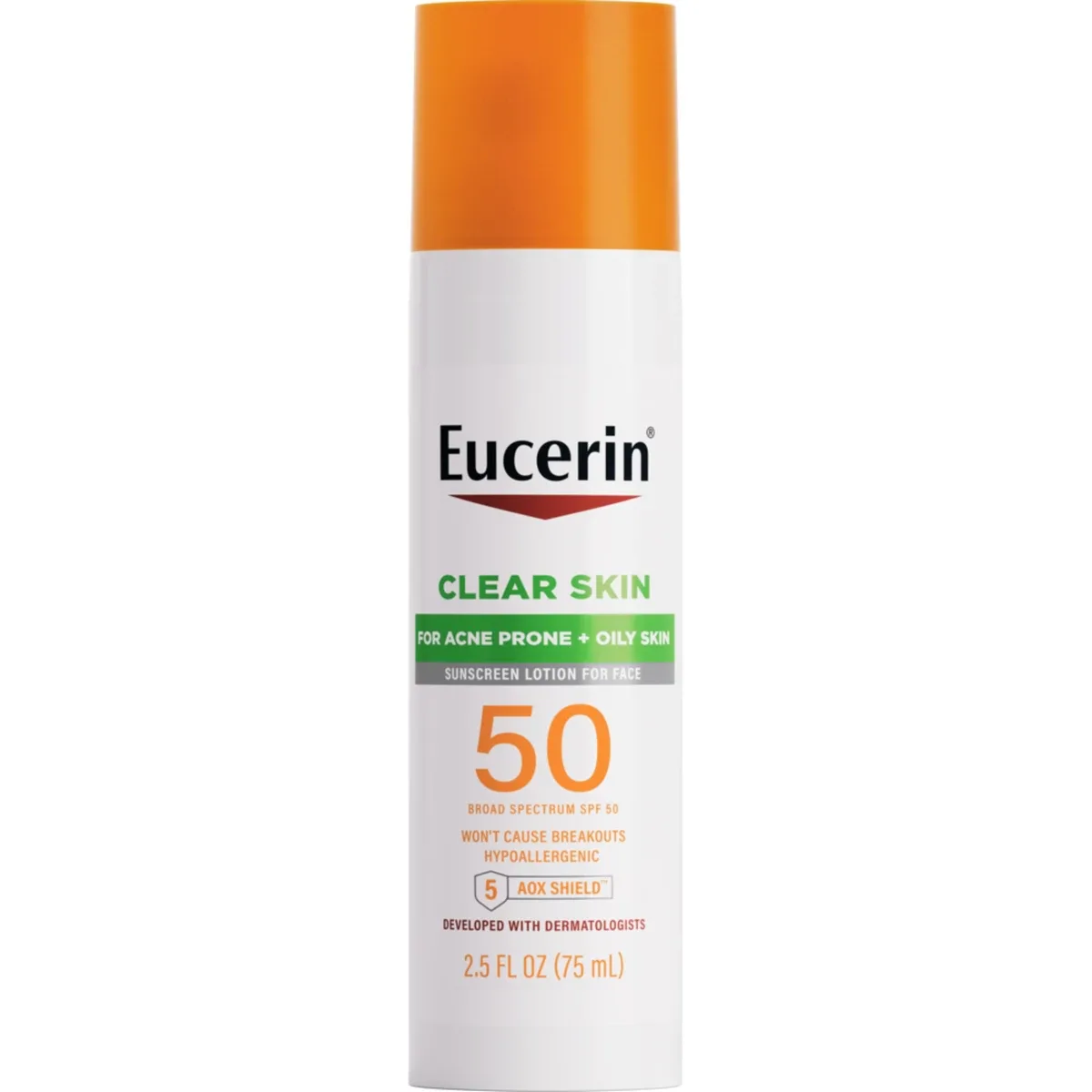
White and light blue squeeze tube with flip-top cap. Standard 3 fl oz plastic tube, travel-friendly size that's easy to toss in a bag.
On first application, the liquid lotion feels noticeably thinner than most sunscreens. It spreads like water across the skin and dries down to a matte finish within 1-2 minutes. No adjustment period — the oil-control effect is immediate. Some users with sensitive eyes may notice mild stinging if the product migrates during sweating.
6-8 weeks with daily facial application and regular reapplication during sun exposure
spring summer
Born from Neutrogena's recognition that acne-prone consumers were skipping sunscreen entirely because most formulas felt heavy and triggered breakouts. The Clear Face line was engineered specifically to remove every excuse for not wearing SPF — oil-free, non-comedogenic, lightweight, and actively breakout-fighting. The current SPF 50 formula was reformulated around 2020 to remove oxybenzone in response to both environmental concerns and Hawaii's reef-protection legislation.
Neutrogena was founded in 1930 and is the #1 dermatologist-recommended suncare brand in the United States. Its sunscreen formulations, particularly those using proprietary Helioplex technology, have been widely used in clinical and consumer settings for nearly two decades.
Chemical sunscreens always cause breakouts on acne-prone skin.
This formula's silicone-based vehicle, oil-absorbing starches, and antimicrobial botanical complex are specifically engineered to prevent the pore-clogging and bacterial proliferation that cause sunscreen-related breakouts. The issue is usually the vehicle, not the UV filters themselves.
SPF 50 is overkill for daily use.
Most people apply only 25-50% of the recommended amount of sunscreen. SPF 50 provides a meaningful safety margin for under-application, delivering roughly SPF 15-25 protection at typical real-world usage levels.
This formula is specifically designed to prevent breakouts with its oil-free, non-comedogenic base, aluminum starch for oil absorption, and antimicrobial botanical extracts. However, individual reactions vary — a small percentage of users with highly reactive skin have reported breakouts, likely due to sensitivity to the chemical UV filters rather than pore-clogging.
The current formulation is oxybenzone-free and octinoxate-free, making it compliant with Hawaii's reef protection legislation (Act 104). However, it does contain octocrylene and homosalate, which some environmental groups flag as potentially harmful to marine life. It's a step toward reef safety but not fully reef-safe by the strictest definitions.
Yes — the matte, quick-drying finish makes it a solid makeup base. Allow 1-2 minutes for the sunscreen to fully set before applying primer or foundation. Some users report pilling with silicone-heavy primers, so a water-based primer tends to layer better over this formula.
No. This is a fully chemical (organic) UV filter sunscreen with no zinc oxide or titanium dioxide, so it leaves absolutely no white cast on any skin tone. It dries down completely clear.
Every two hours during direct sun exposure, or immediately after swimming, sweating heavily, or towel-drying. The formula is water-resistant for 80 minutes, but reapplication is essential for maintained protection — no sunscreen lasts all day from a single application.
This formula is better suited for oily and acne-prone skin than sensitive skin. The four chemical UV filters (avobenzone, homosalate, octisalate, octocrylene) and cinnamon bark extract can cause stinging or irritation on sensitive skin. If you have sensitive skin, a mineral sunscreen with zinc oxide would be a gentler choice.
Helioplex is Neutrogena's proprietary system that stabilizes avobenzone — the primary UVA-blocking ingredient — by pairing it with octocrylene. Without stabilization, avobenzone degrades within hours of sun exposure, losing UVA protection. Helioplex keeps avobenzone effective significantly longer than unstabilized formulations.
Recurring themes our editors read across retailer reviews of this product — summaries in our words, not quotations, and not a substitute for your own patch test.
Does not cause breakouts on acne-prone skin
Lightweight, non-greasy texture
No white cast on any skin tone
Matte finish controls oil throughout the day
Great drugstore price point for SPF 50
Layers well under makeup
Can sting or burn the eyes during sweating
Some users still experienced breakouts despite claims
May pill under certain foundations
Can feel drying on non-oily skin types
Needs frequent reapplication during heavy activity
Verified answers from our questions library — the nuance a product page cannot carry.