


Octocrylene and Homosalate: The Filters America Is Stuck With
The critics are right about the data gap, and they are right that it took two decades to move. What follows from that is not the conclusion most people draw.
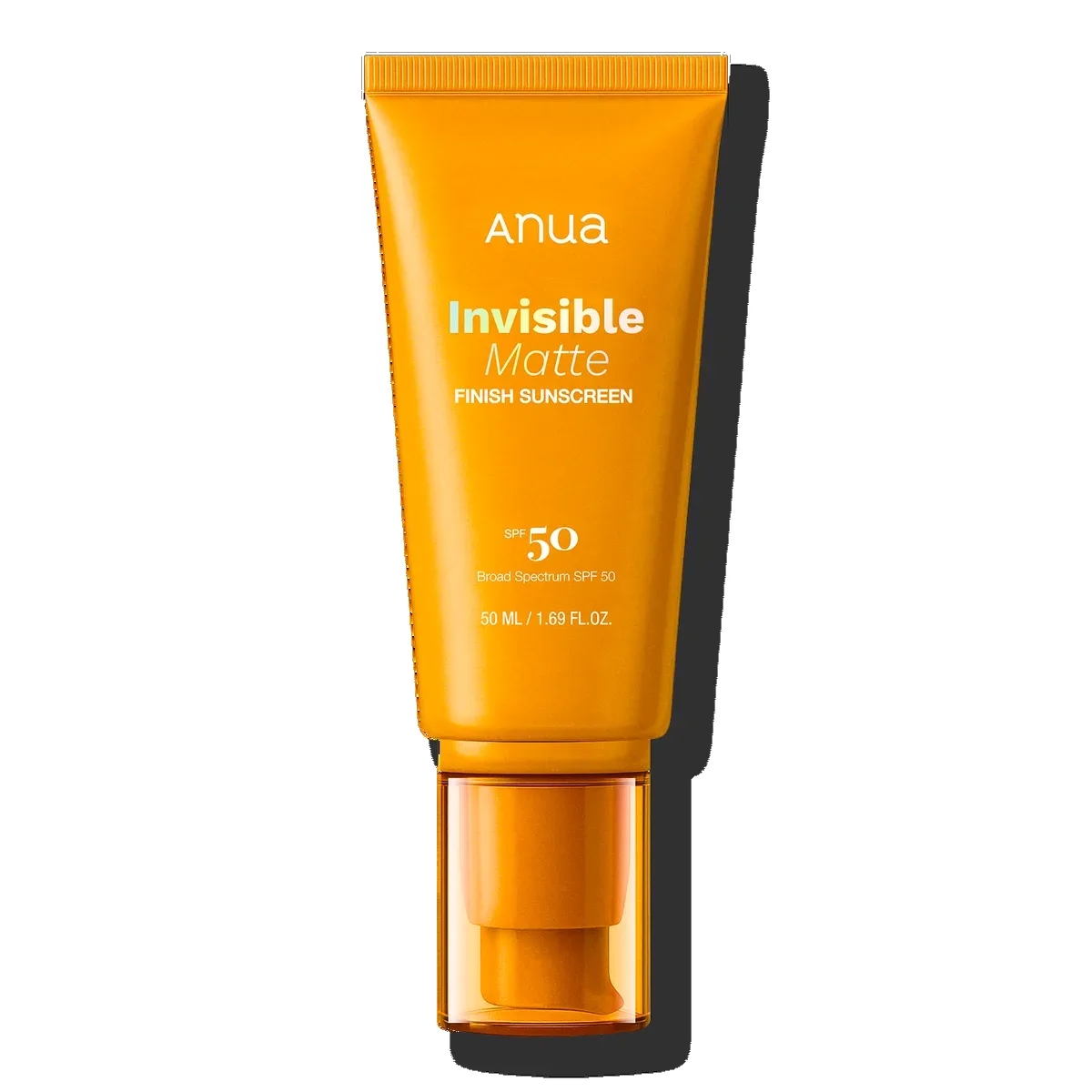
Most facial sunscreens skew dewy, which leaves oily skin shiny by mid-morning. This one is built the opposite way: an anhydrous base loaded with mattifying polyamide and silica-type polymers so it behaves like a blurring primer and a sebum-control step while still delivering a photo-stabilized SPF 50 PA+++. It is sun protection designed around the oily-skin complaint.
A matte chemical sunscreen built specifically for the oily-skin complaint — a photo-stabilized four-filter SPF 50 PA+++ in an anhydrous, pore-blurring base that doubles as a makeup primer. It controls shine genuinely well and stays invisible on all skin tones; dry skin and the comedogenic-wary should look elsewhere.
A February 2026 collaboration launch, this sunscreen has almost no independent reviews yet. The grade is built from the formula and Anua's record, and is genuinely provisional.
The case for it
Same rule for everyone. “Full protection” is the verdict on 2,288 of 45,024 concern verdicts across the catalog; rule P1 decided 2,232 of them. Unchanged since September 5, 2026, engine 5.1.1.
Brand or formulator? Disclose a concentration or correct a fact →
The studies behind the evidence row
The case for it
What would change this: A researched evidence row for the lead active would replace this with a verdict.
Same rule for everyone. “Full protection” is the verdict on 2,288 of 45,024 concern verdicts across the catalog; rule P1 decided 2,232 of them. Unchanged since September 5, 2026, engine 5.1.1.
Brand or formulator? Disclose a concentration or correct a fact →
Also listed for Excess Oiliness, Large Pores and Rough Texture — the actives here (Avobenzone, Homosalate, Octisalate, Octocrylene) are in our research queue for those concerns; there is no verdict until their evidence rows are written. That is a gap in our table, not a mark against the product.
Does the jobDoes what a sunscreen is for: UVA coverage, kind to the skin wearing it. Not measured from the label: pleasant enough to actually use.
A verdict is DermApproved’s assessment of how well a product’s ingredients fit a concern — never a claim about what the product treats. Evidence dots and collected reviews sit beside it and are never blended in. Rules 0.5.1 · evidence table ev-2026.09-r228 · how we decide
Here is a complaint that anyone with oily skin has voiced, probably more than once: nearly every facial sunscreen is too dewy. The K-beauty boom in particular gave us a glorious wave of glowy, hydrating, essence-textured sunscreens — and if you have dry or normal skin, they are a delight. If you have oily skin, they are a countdown timer to a shiny T-zone by 10 a.m. So it is worth recognizing what the Anua Invisible Matte Finish Sunscreen actually is before assessing it: not a general-purpose sunscreen, but one engineered around that single grievance.
The brand behind it moves fast. Anua emerged in 2019 from the Korean incubator The Founders and has since blown past half a billion dollars in retail sales, landing on Ulta shelves along the way — a trajectory that explains both the confident formulation work here and the pace at which the sun-care range keeps expanding.
The engineering is visible the moment you read the ingredient list. This is an anhydrous formula — no water at all. The base is built from isododecane, lightweight esters and silicones, and crucially a stack of mattifying and blurring polymers: methyl methacrylate crosspolymer, two polyamides, polymethylsilsesquioxane. These are the same soft-focus, oil-absorbing powders and polymers you would find in a good blurring primer. That is the whole concept here. The sunscreen behaves like a primer that happens to protect you from UV, smoothing texture, softening the look of pores, and absorbing sebum as it sets down to a genuine velvety matte finish. Notably, the matte comes entirely from those polymers — there is no drying alcohol anywhere in the formula, so the shine control doesn't arrive with the tight, stripped feeling that older mattifying sunscreens traded on.
None of that would matter if the sun protection were an afterthought, so it is reassuring that it is not. The filter system is a complete four-filter organic blend at disclosed working doses: avobenzone at 2.7% for UVA, homosalate at 6.6% and octisalate at 4.5% carrying the UVB load, and octocrylene at 5% contributing coverage. It is rated SPF 50 with PA+++, a high UVA designation. And the formula takes avobenzone's well-known photoinstability seriously — it stabilizes the UVA filter twice over, with octocrylene and with ethylhexyl methoxycrylene further down the list, plus a couple of dedicated antioxidant photo-protectants and a dose of tocopherol backing them up. This is a properly constructed sunscreen, not a primer with a token SPF claim stapled on — and the finish has no bearing on the protection, provided you apply the honest amount: two finger-lengths for face and neck, with a minute to set before foundation and a top-up every couple of hours in real sun.
Because every filter is organic rather than mineral, there is no meaningful white cast. That makes it a genuinely good option for medium and deep skin tones, who are too often left choosing between an ashy mineral sunscreen and none at all. There is a small, almost sentimental touch at the very end of the ingredient list — three isolated centella actives, asiaticoside, madecassic acid and asiatic acid, a nod to Anua's roots in calming skincare. Their dose is modest and you should not buy this for the cica; but it adds a little comfort to a formula that is otherwise all filters and polymers. It is also fragrance-free, which is the right call, and considered pregnancy-safe.
The limitations follow directly from the design. First: this is a matte sunscreen, and matte is a finish, not a virtue. On oily and combination skin it looks fantastic. On dry skin, that same flat, velvety finish can read as tight or accentuate dry patches — dry skin will simply be happier with a dewier formula, and there is no fault in that, just a mismatch. Second, and more important: the ingredient list contains isopropyl palmitate, an ester with a moderate reputation for clogging pores. For a product aimed squarely at oily, often breakout-prone skin, that is a slightly awkward inclusion. Most people will be fine, but if you are genuinely acne-reactive, patch test before committing this to daily use. The formula is also not fungal-acne safe, owing to a few of its esters. And the silicone-rich, anhydrous texture clings — you will want a proper oil cleanser or double cleanse to remove it fully at night. A petty but real packaging gripe: the slim opaque tube — dressed in the collaboration artwork — gives no hint how much product remains, which matters for something you should be burning through in one to two months at proper doses.
At twenty-two dollars for 50 mL, the value is sound for an SPF 50 PA+++ that also genuinely functions as a blurring primer — two steps for one price, if your skin type matches. It launched in February 2026 within Anua's KPop Demon Hunters collaboration, so long-term reviews are still thin — a couple hundred so far, averaging 4.3, with early adopters confirming the matte finish delivers on oily skin but nobody yet able to vouch for years of wear — and the score leans on the formulation and Anua's track record rather than accumulated feedback. But the concept is executed with real intent. If you have oily skin and have spent years resenting your sunscreen for making you shiny, this was, quite literally, made for you.
The hero actives that drive this product's performance.
| Ingredient | Function | Evidence |
|---|---|---|
| Avobenzone 2.7% (2.7%) | The UVA filter behind the SPF 50 PA+++ rating's long-wavelength protection. In this anhydrous matte base it is double-stabilized — by octocrylene and by ethylhexyl methoxycrylene further down the list — so the UVA cover holds up rather than degrading through the day. | Regulator-approved for Sun Damage · emerging certainty |
| Homosalate 6.6% (6.6%) | The primary UVB filter carrying most of the SPF 50 rating. It also acts as a solvent for the filter system, helping the formula spread thinly and set down to the smooth, matte finish that defines this sunscreen. | Regulator-approved for Sun Damage · limited certainty |
| Octisalate 4.5% (4.5%) | A secondary salicylate UVB filter that broadens UVB coverage and, like homosalate, helps dissolve the filter blend into the lightweight, blurring texture. | Regulator-approved for Sun Damage · limited certainty |
| Octocrylene 5% (5%) | Contributes UVB and short-UVA coverage and serves as avobenzone's primary photo-stabilizer, absorbing energy that would otherwise break the UVA filter down — essential to keeping the SPF 50 rating meaningful over a full day. | Regulator-approved for Sun Damage · limited certainty |
| Centella Triterpene Complex (Asiaticoside, Madecassic Acid, Asiatic Acid) | Three isolated centella actives at the tail of the formula — a small soothing touch that nods to Anua's calming-skincare roots. Their dose is modest, but they add a measure of comfort to a sunscreen otherwise built around filters and mattifying polymers. | Not yet assessed |
Ingredient standings describe the active at treatment-level doses and vehicles; this product's own condition grades weigh its actual formula.
Avobenzone, Homosalate, Octisalate, Octocrylene, Isododecane, Isopropyl Palmitate, Butyloctyl Salicylate, Methyl Methacrylate Crosspolymer, Dimethicone/Bis-Isobutyl PPG-20 Crosspolymer, Caprylic/Capric Triglyceride, Polyamide-8, Isohexadecane, Polymethylsilsesquioxane, Benzotriazolyl Dodecyl P-Cresol, Dextrin Palmitate, Ethylhexyl Methoxycrylene, Polyamide-3, Pentaerythrityl Tetra-Di-T-Butyl Hydroxyhydrocinnamate, Tocopherol, Asiaticoside, Madecassic Acid, Asiatic Acid
sunscreen
AM
Make it the last morning step, over moisturizer, using two finger-lengths for the face and neck to reach the labeled SPF. It doubles as a blurring makeup primer — let it set for a minute before foundation. Top up every couple of hours of sun exposure.
UV protection is immediate on application, given enough product. The matte, pore-blurring, sebum-controlling effect is also immediate and lasts several hours; oily skin typically sees less midday shine with daily use. Photoaging prevention accrues invisibly over months and years.
The protective backbone of this sunscreen is a four-filter organic system rated SPF 50 PA+++. Avobenzone is the only widely available organic UVA filter approved in the US, and its key vulnerability is photodegradation under UV exposure. This formula addresses that with two stabilizers: octocrylene, the established avobenzone photo-stabilizer shown in formulation research to substantially slow its breakdown, and ethylhexyl methoxycrylene, a dedicated stabilizer designed to preserve both avobenzone and octinoxate-class filters. Two further antioxidant photo-protectants — benzotriazolyl dodecyl p-cresol and a hindered-phenol antioxidant — add to the photostability strategy. Homosalate and octisalate are salicylate UVB filters that also act as solvents, improving the spread and feel of the blend.
The matte finish is a function of formulation physics rather than an active. The anhydrous base eliminates the water phase that makes most sunscreens feel dewy, and the polyamide, methyl methacrylate crosspolymer and polymethylsilsesquioxane polymers provide soft-focus light diffusion and sebum absorption — the same principles used in cosmetic blurring primers.
The centella triterpenes — asiaticoside, madecassic acid and asiatic acid — have a reasonable evidence base for anti-inflammatory and soothing activity, but they appear last on the ingredient list, indicating a low concentration with a correspondingly minor contribution.
The central, format-independent caveat for any sunscreen is application dose. SPF testing uses 2 mg/cm2, roughly two finger-lengths for a face, and real-world studies consistently show people apply far less, with protection dropping sharply as the layer thins. The filter system here is well constructed; the protection it delivers in practice depends on applying enough and reapplying.
Daily broad-spectrum sunscreen is strongly and near-universally endorsed in dermatology for preventing photoaging and skin cancer, and clinicians generally welcome cosmetically elegant formats that improve the odds people will actually wear sunscreen — a matte option for oily skin among them. Skin specialists frequently note that finish preference is a major driver of sunscreen adherence, and that oily skin tends to abandon dewy formulas, so a well-made matte sunscreen serves a genuine purpose. Organic-filter sunscreens are widely regarded as cosmetically preferable for medium and deep skin tones because they avoid the white cast of mineral filters. On the comedogenic question, dermatology guidance is measured: ingredient comedogenicity ratings are imperfect predictors of real-world breakouts, but for patients who are genuinely acne-reactive, clinicians commonly advise patch testing a new product before daily facial use. The standard clinical reminders apply — apply the full recommended amount, reapply every two hours of sun exposure, and remove sunscreen thoroughly at night.
Make this the closing step of your morning skincare, after moisturizer. Dispense roughly two finger-lengths of product and spread evenly over the face and neck — applying this full amount is essential to reach the labeled SPF 50. Allow about a minute for it to set into its matte finish; this also primes the skin if you are wearing makeup. Top it up about every two hours of prolonged sun exposure. At night, remove it thoroughly with an oil cleanser or a double cleanse, since the silicone-rich anhydrous base clings to the skin.
At $22 for 50 mL, this sunscreen is fairly priced, and its value case strengthens if you factor in its dual role: for oily and combination skin it functions as both an SPF 50 PA+++ sunscreen and a blurring makeup primer, effectively folding two products into one $22 tube. The 50 mL size lasts roughly one to two months with correct daily application to the face and neck. There is no larger size, so committed users cannot trade up for better per-milliliter value. Compared with standalone matte facial sunscreens and primer-sunscreens from Western brands, which often run $30 to $45, Anua's pricing is competitive. The value verdict is firmly skin-type dependent — excellent for oily skin that will use the matte-and-primer function, ordinary for dry skin that would be better served by a different finish.
Oily and combination skin that wants sun protection with a genuine matte, shine-controlling finish — especially anyone frustrated by dewy sunscreens, or who wants a sunscreen that doubles as a pore-blurring makeup primer. It is also a strong no-white-cast option for medium and deep skin tones.
Dry skin will likely find the matte finish flat or tight and should choose a dewier sunscreen. Anyone who is highly acne-reactive should patch test first, given the isopropyl palmitate, and those who specifically need a fungal-acne-safe or silicone-free formula should look elsewhere.
Ready to try Anua Invisible Matte Finish Sunscreen?
Buy at Amazon ♥A lightweight, silicone-and-ester-based anhydrous cream that glides on with a soft, slippery, primer-like feel and sets down quickly to a smooth, velvety matte finish. It blurs pores and texture as it dries.
Fragrance-free; only the faint smell of the raw filters themselves.
Slim squeeze tube in Anua's minimalist design, with KPop Demon Hunters collaboration artwork. Practical and travel-friendly; the opaque tube hides how much product remains.
First use feels more like a blurring primer than a sunscreen — it spreads thinly, sets fast, and leaves skin looking smoother and matte with pores visibly softened. It does not sting or tingle, leaves no heavy white cast, and never feels greasy. Oily skin will notice the shine-control effect immediately.
About 1-2 months with daily face-and-neck application at the recommended amount
All Year
Anua launched this matte sunscreen in February 2026 as part of its KPop Demon Hunters collaboration, the hit film's first official K-beauty line. It targets a specific gap in the brand's sun range — a shine-controlling, makeup-friendly option for oily and combination skin tired of dewy-finish sunscreens.
Anua was founded in 2019 by the Korean brand incubator The Founders and has rapidly become one of the top-ranked K-beauty brands globally, exceeding $500 million in retail sales. Its sunscreen range has expanded quickly, and this matte finish formula launched as part of Anua's KPop Demon Hunters collaboration.
A matte sunscreen dries out or strips the skin.
This sunscreen's matte finish comes from blurring polymers and an anhydrous base, not from drying alcohol or astringents — there is no alcohol high in the formula. It controls surface shine and absorbs sebum, but it does not dehydrate the skin. Dry skin may simply prefer a dewier finish for cosmetic reasons.
Sunscreen with a primer-like finish protects less than a regular sunscreen.
Protection depends on the filter system and application amount, not on the finish. This formula carries a full photo-stabilized four-filter SPF 50 PA+++ system. The matte, blurring texture is a cosmetic feature layered on top of genuine broad-spectrum protection — provided you apply the full recommended amount.
Yes — it is built for oily and combination skin. The anhydrous base and mattifying polymers control surface shine, blur pores and absorb sebum, giving a smooth matte finish that oily skin tends to prefer over dewy sunscreens. Dry skin may find the finish too flat.
No significant white cast. It uses only organic (chemical) UV filters — avobenzone, homosalate, octisalate and octocrylene — which are transparent on all skin tones. Reviewers describe an invisible, blurring finish, making it suitable for medium and deep skin tones.
Yes — it doubles effectively as a blurring primer. The polyamide and silica-type polymers smooth texture and soften pores, and the matte finish gives foundation something grippy to hold onto, helping makeup last. Let it set for about a minute before applying makeup.
It is rated broad-spectrum SPF 50 with PA+++. SPF 50 blocks roughly 98% of UVB when applied correctly, and PA+++ indicates high UVA protection. As with any sunscreen, the rating is only achieved if you apply the full recommended amount, about two finger-lengths for the face and neck.
Its sebum control suits oily, breakout-prone skin, but it does contain isopropyl palmitate, a moderately comedogenic ester, so very acne-prone skin should patch test. It is also not considered fungal-acne safe due to certain esters. For most oily skin, the matte finish is a benefit.
Recurring themes our editors read across retailer reviews of this product — summaries in our words, not quotations, and not a substitute for your own patch test.
Early reviewers note a genuine matte, shine-controlling finish on oily skin
Blurs pores and texture, doubling effectively as a makeup primer
Minimal white cast and an invisible, lightweight feel
Fragrance-free with a soft, smooth application
Matte finish can feel flat or tight on dry skin
Contains isopropyl palmitate, a moderately pore-clogging ester
Too few reviews so far to confirm all-day matte performance
Silicone-heavy texture needs thorough double cleansing to remove
Verified answers from our questions library — the nuance a product page cannot carry.