Bisabolol Is the Rare Soothing Claim With a Mechanism. It Also Comes From an Endangered Tree.
Chamomile's active fraction inhibits the same inflammatory pathways a steroid does, at a fraction of the strength — and the version that works best is grubbed out of Brazilian cerrado, while the synthetic substitute is half inactive by construction.
Read the preview
From the DermApproved blog, in Natural & Botanical: soothing is usually a word meaning nothing. Bisabolol is the exception — it shuts down the same inflammatory switchboard a steroid does, far more gently. A tidy story, except the potent version comes from a Brazilian tree that's disappearing, and the lab substitute has its own problem. For the full breakdown, visit dermapproved.com/blog.
A word that usually means nothing, attached to a molecule that does something
"Soothing" is the least regulated word in the industry. It appears on products containing nothing that has ever been shown to reduce inflammation, and it survives because the sensation of a cream feeling nice on angry skin is indistinguishable, to the person wearing it, from the cream doing something.
Alpha-bisabolol is the exception worth knowing, because the claim has a pathway attached. In macrophage work, (−)-α-bisabolol reduced lipopolysaccharide-induced production of nitric oxide and prostaglandin E2, and downregulated expression of the COX-2 and iNOS genes responsible for making them. The upstream mechanism is specific: it suppressed activation of the NF-κB and AP-1 promoters and reduced phosphorylation of IκBα — the step that normally releases NF-κB to enter the nucleus and switch on inflammatory transcription. Applied topically in mice, it inhibited TNF-α and IL-6 production and reduced TPA-induced ear swelling, weight and lipid peroxidation. A 2022 study extended this into an atopic dermatitis model, reporting inhibition of MAPK and NF-κB signalling in mast cells.
If that pathway list sounds familiar, it should. NF-κB suppression is a large part of how a topical corticosteroid works. Bisabolol is not a steroid, it is orders of magnitude weaker, and nobody should read this as an equivalence — but it means that when a formulator adds bisabolol to a redness product, they are acting on the same switchboard rather than adding a pleasant smell.
The honest limit belongs in the same breath, because this field is full of people who quote the mechanism and stop. Almost all of that evidence is preclinical: cell lines and mouse ears, not randomised human trials on human faces. What exists in humans is largely tolerance and irritation-model data. So the correct claim is "there is a real mechanism and a plausible, small clinical effect," not "clinically proven to calm skin." Our bisabolol page sets out where that evidence sits.
Chamomile is not one ingredient, and the extraction decides everything
Bisabolol reaches most formulas through chamomile, which is where the picture gets muddy, because "chamomile" on a label can mean several materially different things.
The first split is botanical. German chamomile, Matricaria recutita, is the one that carries bisabolol and the azulenes. Roman chamomile, Anthemis nobilis, is a different plant with a different profile and very little bisabolol — and it appears on plenty of products marketed on chamomile's calming reputation. Be Plain's Chamomile pH-Balanced Toner is built on the Roman species, which is a legitimate ingredient choice but not the same proposition as the German one.
The second split is the extraction, and it changes the chemistry rather than just the yield. Steam distillation of German chamomile converts matricine, a compound present in the flower, into chamazulene — the deep blue pigment that gives chamomile oil its startling colour and gives blue-tinted products their look. Aesop's Blue Chamomile Facial Hydrating Masque wears that chemistry on the outside. Supercritical CO2 extraction, used in Pai's Calming Day Cream, pulls a different and generally richer profile of the lipophilic actives without the thermal conversion. A water or glycerin infusion — the cheapest and most common route — extracts the water-soluble flavonoids such as apigenin and very little of the lipophilic bisabolol at all.
Some brands sidestep the plant entirely. Banila Co's Clean It Zero Calming Cleansing Balm uses guaiazulene, a synthesised azulene relative that delivers the blue colour and a comparable anti-inflammatory story with none of the extraction variability.
The practical consequence is that "Chamomilla recutita flower extract" sitting low on an ingredient list tells you approximately nothing about how much active is present. It could be a CO2 extract at a functional level or a trace of flower water added for the label. Our ingredient decoder will at least tell you where in the list it sits, which is the only free information available. Our chamomile page separates the species and the extraction routes.
Where it stops being decorative
Bisabolol is typically used somewhere between a tenth of a percent and one percent, and the interesting question is which side of that range a given product sits on — because at the bottom it is a claims ingredient and near the top it is a functional one.
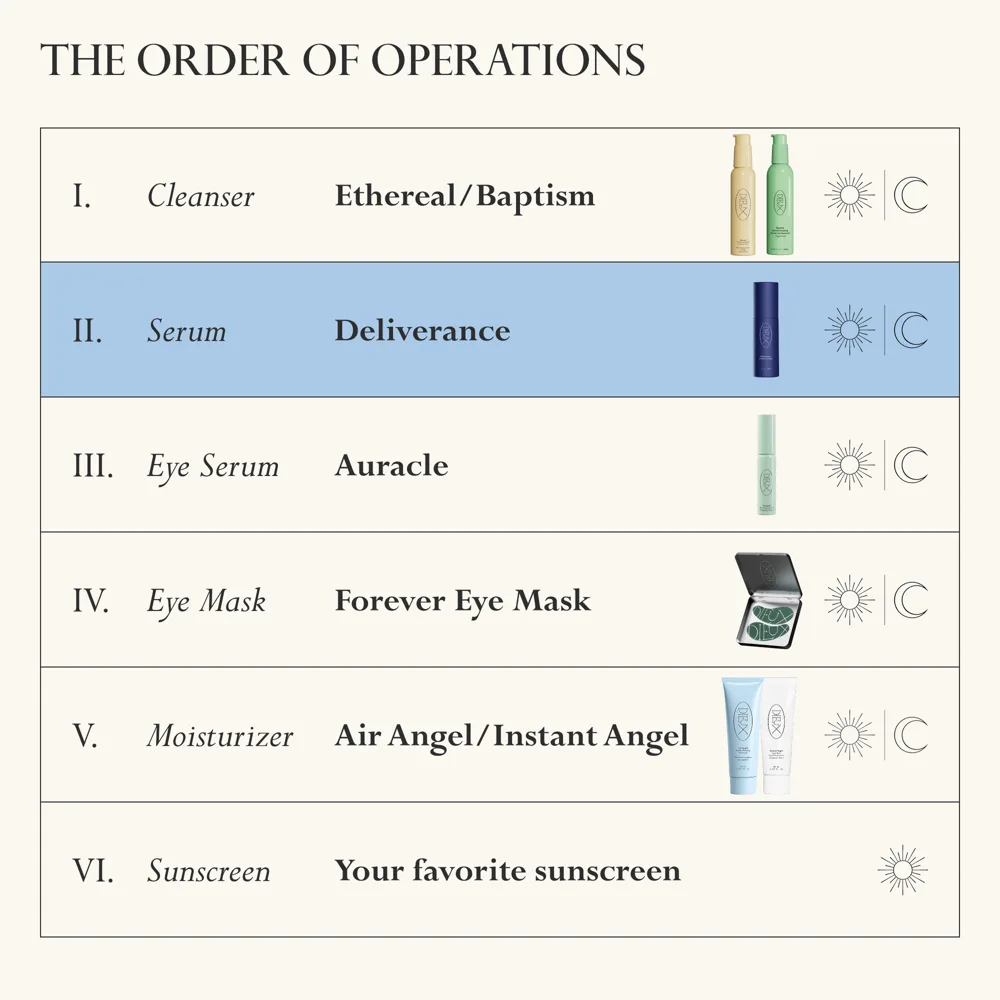
Very few brands declare the number, which makes the ones that do worth noticing. Acnemy's Zitcalm Anti-Redness Calming Moisturizer states bisabolol at two percent and builds the product around it, which is unusually high and unusually transparent. A-Derma's Rheacalm Soothing Cream runs it high in the list in a pharmacy-brand formula aimed squarely at reactive skin. In serums, Dieux's Deliverance Serum and Darphin's Intral Redness Relief Soothing Serum both use it as part of a calming stack rather than the headline, which is the more common and more sensible construction.
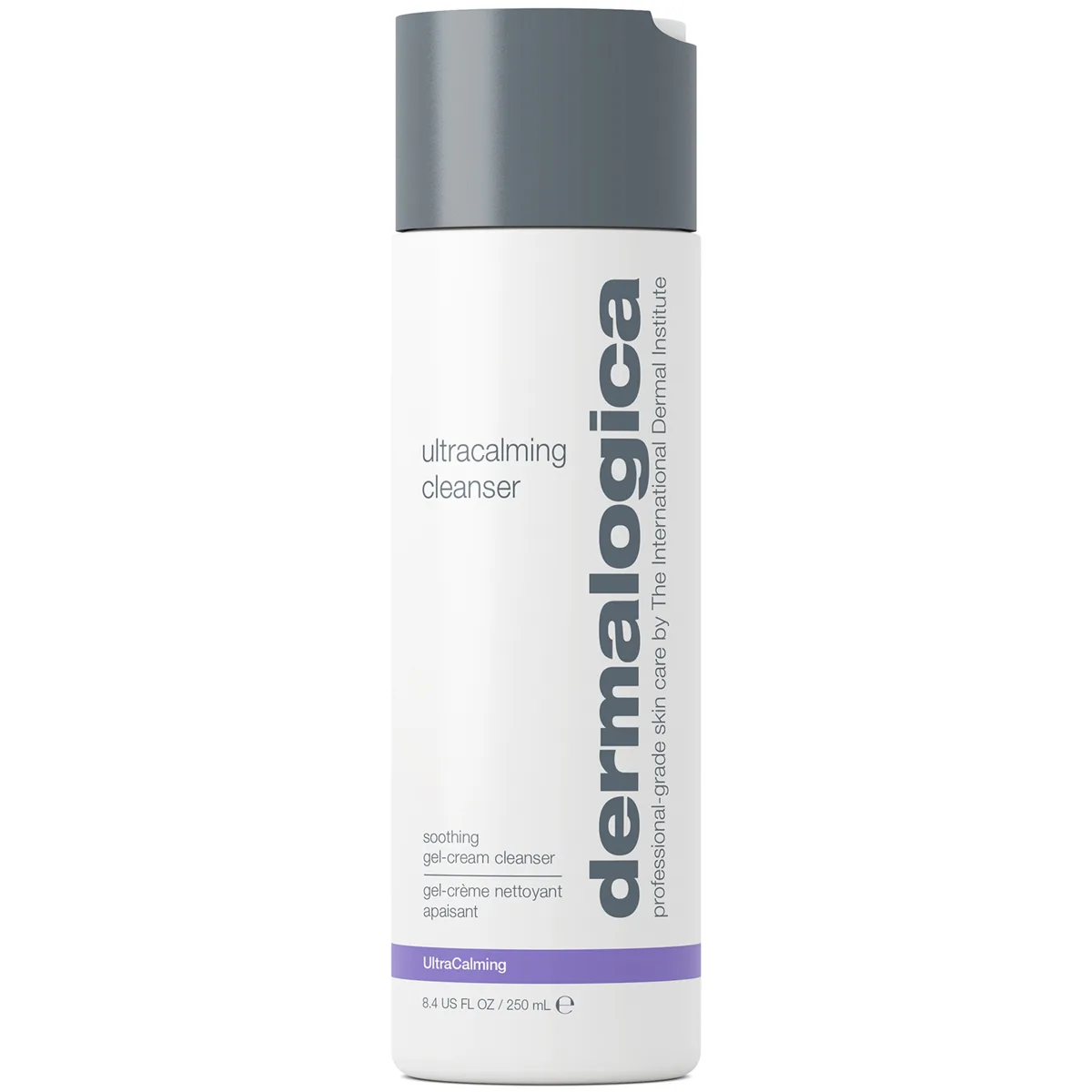
Then there is the format problem that applies to every anti-inflammatory botanical and is almost never raised. Dermalogica's UltraCalming Cleanser leads with bisabolol — in a product that is on the face for perhaps forty seconds before being rinsed down a drain. A molecule that works by modulating intracellular transcription factors needs to get into living cells and stay there long enough to act. A cleanser gives it neither the contact time nor, after rinsing, the residence. This is not a criticism of that specific formula so much as of a category convention: soothing actives in rinse-off products are mostly there to make the ingredient list look reassuring. If you want bisabolol to do anything, buy it in something that stays on.
And keep the expectation calibrated. Even at a functional concentration in a leave-on, this is a mild anti-inflammatory. It is a good supporting player alongside things with human trial data — centella asiatica has considerably more clinical work behind it for barrier and redness endpoints — and a poor substitute for treatment when the underlying problem is rosacea or eczema rather than transient irritation.
The part the natural-beauty aisle would rather not print
Here is where this ingredient stops being a pleasant story about chamomile.
The commercially important source of natural (−)-α-bisabolol is not chamomile at all. It is candeia, Eremanthus erythropappus, a tree of the Brazilian cerrado whose wood essential oil runs at 66 to 91 percent (−)-α-bisabolol — an extraordinary concentration that makes it the obvious industrial feedstock. The problem is what extracting it requires. Economic quantities can only be distilled from trees older than ten years, and the material has been predominantly collected by grubbing trees out of the wild rather than from managed plantations.
The numbers, from a 2018 paper in Frontiers in Plant Science whose authors sequenced the plant's bisabolol synthase gene specifically because the supply situation demanded alternatives: up to 250 tons of candeia oil were harvested between 1980 and 2010. Sustaining annual oil production requires at least 30,000 cubic metres of candeia wood — equivalent to roughly 1,000 hectares of forest. Illegal logging of wild material was continuing at the time of writing, and the species is described as at risk of extinction.
Sit that beside the marketing. A brand describing its soothing cream as containing "naturally derived bisabolol" is, quite possibly, describing a slow-growing tree cut down and distilled, from a genus under conservation pressure, to supply an ingredient whose function in that formula may be decorative. The clean-beauty framework has no vocabulary for this, because its axis runs from synthetic to natural and this problem runs perpendicular to it. Natural here is the ecologically expensive option.
There is genuine work in the other direction — the same researchers propose hairy-root cultures as a route to the molecule without the forest, and managed candeia stands have been argued to be economically viable — but the shopper cannot see any of it from the shelf.
And the twist: the synthetic version is genuinely worse
The reflexive counterargument writes itself. If the tree is the problem, use the lab version — synthetic and natural molecules being identical is one of the soundest positions in cosmetic chemistry, and the natural-beauty aisle is usually wrong to resist it.
Except here the chemistry does not cooperate. Bisabolol has stereochemistry, and biology cares. The plant makes a single enantiomer, (−)-α-bisabolol. Conventional chemical synthesis produces racemic mixtures containing both the active levorotatory form and its far less active mirror image, and the candeia paper states the consequence plainly: chemically synthesised bisabolol yields racemic mixtures with lower bioactivity than the candeia oil ingredient. Suppliers reflect this in their specifications — natural material is sold as almost entirely the active isomer, while standard synthetic material contains roughly half as much of it by weight.
So the usual shortcut fails in both directions at once. "Natural is better" is, unusually, chemically correct on potency and ethically uncomfortable on sourcing. "Synthetic is identical" is the generally-right principle landing on one of its genuine exceptions, because the racemate is not the same molecule population as the single enantiomer.
The resolution is not a slogan, it is a third option: enantioselective and biotechnological routes to (−)-α-bisabolol exist, producing the active form without felling anything. That is the material a brand ought to be buying and, if it were doing so, ought to be saying. Almost none do, because the INCI name is simply "bisabolol" and it covers the racemate, the candeia distillate, and the enantioselective synthetic without distinction. The ingredient list cannot answer the only two questions that matter about this molecule.
Which is our position, and it is a demand rather than a recommendation: this is one of the few ingredients where the source and the isomer genuinely change both the efficacy and the ethics, and the disclosure that would let anyone act on that does not exist. Brands making a sustainability claim on a bisabolol product should be asked which one they are using. Most cannot answer.
Who should be careful, and the distinction that matters
Botanical soothers have an irony built into them: the plants most often used to calm reactive skin belong to the family most associated with contact allergy.
Chamomile is an Asteraceae, or Compositae, and that family's characteristic allergens are sesquiterpene lactones. The reactive part is an α-methylene-γ-lactone ring, which forms covalent bonds with nucleophilic residues on skin proteins — the classic hapten mechanism — and produces allergic contact dermatitis that is frequently airborne in presentation. Sensitised people typically react across the family: arnica, feverfew, yarrow, marigold, ragweed, and chamomile itself, including in herbal teas. Researchers have patch tested sesquiterpene-lactone-allergic patients using thin-layer chromatograms of chamomile tea to demonstrate exactly this. If you have a known Compositae allergy, chamomile extract is not a calming ingredient for you; it is your allergen with a soothing label on it.
Now the distinction that is actually useful, and that gets lost when everything is grouped as "chamomile derivatives." Bisabolol is a sesquiterpene alcohol, not a sesquiterpene lactone. It does not carry the α-methylene-γ-lactone ring that drives Compositae sensitisation. Which means an isolated bisabolol in a formula is a chemically different proposition from a whole chamomile flower extract, and someone who reacts to the extract may tolerate the isolate perfectly well. That is not a guarantee and it is not a substitute for patch testing, but it explains a pattern that otherwise looks random and it is a reason to read past the word "chamomile" on a label.
Where this all lands: bisabolol earns its place among soothing ingredients on mechanism, and it is one of the very few that does. Buy it in a leave-on product, prefer formulas where it is high enough in the list to be doing work, treat it as a supporting act rather than a treatment, and — if a brand is going to sell you the botanical story — ask them which molecule and which forest.
Products mentioned
Independently reviewed and scored — the real products behind this piece.






- Ingredient Bisabolol (Alpha-Bisabolol) Where the mechanism evidence sits, and how much of it is preclinical.
- Ingredient Chamomile Extract German versus Roman species and what each extraction route actually delivers.
- Ingredient Centella Asiatica (Cica) The comparison soother with substantially more human clinical work behind it.
References
- Inhibitory effects of (-)-α-bisabolol on LPS-induced inflammatory response in RAW264.7 macrophages — Food and Chemical Toxicology, 2011
- α-(-)-bisabolol reduces pro-inflammatory cytokine production and ameliorates skin inflammation — Current Pharmaceutical Biotechnology, 2014
- (-)-α-Bisabolol Alleviates Atopic Dermatitis by Inhibiting MAPK and NF-κB Signaling in Mast Cell — Molecules, 2022
- Identification of the Bisabolol Synthase in the Endangered Candeia Tree (Eremanthus erythropappus (DC) McLeisch) — Frontiers in Plant Science, 2018
- Patch testing with thin-layer chromatograms of chamomile tea in patients allergic to sesquiterpene lactones — Contact Dermatitis, 2007
- Quantification of Sesquiterpene Lactones in Asteraceae Plant Extracts: Evaluation of their Allergenic Potential — Scientia Pharmaceutica, 2013
Every cited link is verified to resolve to the paper named. Where a source could not be independently confirmed, it is listed without a link rather than pointing you somewhere wrong.
Frequently asked
Does bisabolol actually calm skin, or is that marketing?
There is a real mechanism: it suppresses NF-κB and AP-1 activation and downregulates COX-2 and iNOS, the same switchboard a topical steroid acts on, far more weakly. The caveat is that most of that work is in cell lines and mouse models, so the honest claim is a plausible mild effect rather than clinical proof.
Is natural bisabolol better than synthetic?
On potency, yes — unusually. Plants make a single active enantiomer, while conventional synthesis yields a racemic mixture with lower bioactivity, roughly half of it the less active mirror image. The complication is that natural commercial bisabolol mostly comes from a Brazilian tree under conservation pressure.
Why is chamomile oil blue?
Steam distillation of German chamomile converts matricine in the flower into chamazulene, a deep blue azulene. The colour is a by-product of the extraction rather than something present in the living plant, which is why differently extracted chamomile materials are not blue.
Is German chamomile different from Roman chamomile?
Chemically, substantially. German chamomile carries bisabolol and the azulenes that the anti-inflammatory research concerns; Roman chamomile is a different species with a different profile and very little bisabolol. Products are frequently marketed on one plant's reputation while containing the other.
Can I use chamomile products if I am allergic to ragweed?
Treat it with caution. Ragweed and chamomile are both Asteraceae, and sesquiterpene lactone sensitisation typically cross-reacts across the family. Isolated bisabolol is a different chemical class — a sesquiterpene alcohol without the reactive lactone ring — and may be tolerated where the whole extract is not.
How much bisabolol does a product need to be worth buying?
Usable levels sit roughly between a tenth of a percent and one percent, and very few brands disclose theirs. Position in the ingredient list is the only free clue. More decisive than the number: choose a leave-on product, since a rinse-off gives an intracellular-acting molecule neither contact time nor residence.