Your Witch Hazel Is 14% Alcohol and Almost No Witch Hazel
The supplier specification for standard witch hazel water caps the tannin content — the fraction all the research is about — at a level indistinguishable from none. The tightness you feel is the solvent.
Read the preview
From the DermApproved blog, in Natural & Botanical: the witch hazel in your bathroom is fourteen percent alcohol — and, by its own supplier specification, contains almost none of the compound the entire argument is about. Steam distillation leaves it in the pot. So that tightening you read as it working? Something else entirely. For the full breakdown, visit dermapproved.com/blog.
Read the specification, not the label
Witch hazel occupies a strange position: simultaneously the folk remedy your grandmother kept by the sink and the ingredient skincare forums warn you off as a barrier-wrecking astringent. Both camps are arguing about a name rather than a substance, and the substance question has a documented answer.
The Cosmetic Ingredient Review's safety assessment records what suppliers actually ship. Hamamelis Virginiana (Witch Hazel) Water is supplied at roughly 85–86% distillate with 14–15% grain alcohol or ethanol added to the final product. That much is widely known. The line that reframes everything sits a few paragraphs later in the same document, in the specification for that ingredient: tannins are limited to less than 0.03 mg/mL.
Hold that against the plant. Witch hazel bark contains between 4% and 12% tannins by the same assessment; the leaves up to 3%. Hamamelitannin — the hydrolysable tannin that carries the plant's name and most of its pharmacological interest — runs at 10,000 to 30,000 ppm in bark. Those numbers describe a genuinely tannin-rich botanical. The distillate contains effectively none of it, because tannins are large, non-volatile polyphenols and steam distillation carries over the volatile fraction and leaves the polyphenols in the pot. The CIR document states the consequence flatly: the method of manufacture significantly impacts composition, and distilled ingredients have fewer astringent tannins than a water extract.
So the pharmacy bottle labelled "witch hazel astringent" is, chemically, a dilute ethanol solution carrying a small aromatic fraction, with the astringent compounds the word "astringent" refers to almost entirely absent. The astringency is the ethanol. This is not a scandal — it is a hundred-and-fifty-year-old preparation doing exactly what its process implies — but it means the two loudest positions in the argument are both talking past the product. The people who love witch hazel are crediting tannins that are not there. The people who say witch hazel destroys the barrier are indicting a plant for what a solvent did.
What the tannins do when they are actually present
This matters because the hamamelis research is not thin. It is small, old, mostly German, and reasonably clean — and it was done on preparations formulated to contain the distillate at meaningful concentration in a cream or lotion base, not on the neat bottle.
Work through the sequence. A 1993 study established anti-inflammatory activity of hamamelis distillate applied topically, and specifically examined how vehicle and dose changed the result — an unusually careful question for a botanical. A 1998 UVB erythema test found an anti-inflammatory effect for a hamamelis lotion in an experimentally induced inflammation model. And a 2002 study went further, comparing lotions containing 10% hamamelis distillate from three different suppliers against two vehicles, a dimethindene gel, and two strengths of hydrocortisone across three UV doses in 40 volunteers, applied under occlusion for 48 hours after irradiation.
The results are worth reporting exactly as they came out, because the honest version is more useful than either the botanical-brand version or the dismissal. All three hamamelis lotions showed an anti-inflammatory effect. So did the vehicles. And the hydrocortisone formulations were the most effective at suppressing erythema, by a clear margin.
That is a real but modest signal, in a model designed to detect modest signals, from a preparation containing an order of magnitude more of the plant than the astringent in your bathroom cabinet. It supports "hamamelis has mild anti-inflammatory activity." It does not support "witch hazel calms skin" as a functional claim on a toner whose active fraction was distilled away. Our witch hazel ingredient page separates the preparations, which is the distinction the whole subject turns on.
The trial where it did nothing
One study deserves its own space, because it is the sort of result that gets left out of ingredient marketing and belongs in any honest account.
In 1995, researchers in Munich ran a double-blind, randomised, paired trial over fourteen days in 72 patients with moderately severe atopic eczema. Three arms: a hamamelis distillate cream, the identical drug-free vehicle, and 0.5% hydrocortisone cream. Thirty-six patients per group, powered to detect a ten-point percentage difference — a confirmatory design rather than a pilot.
Everything reduced itching, erythema and scaling after a week, which is what happens when you put any cream on eczematous skin. Hydrocortisone was clearly superior. And hamamelis distillate cream did not differ from its own vehicle. The authors' conclusion is worth quoting in substance: the mild but unmistakable anti-inflammatory effect seen in experimental models of skin inflammation was not reflected in patients with atopic eczema beyond what the base preparation achieved on its own.
That is the shape of a lot of botanical evidence and it is rarely stated plainly. An ingredient can be genuinely active in a controlled irritation model and still add nothing measurable to a moisturising base in real disease. Both facts are true, they are not in conflict, and only one of them is going to appear on a bottle.
The reasonable position, then: hamamelis is a mild anti-inflammatory with real but small effects, delivered in most retail products in a form stripped of the compounds responsible. It is neither the hero nor the villain of anyone's routine.
Why a witch hazel toner feels like it is working
If the active fraction is absent and the anti-inflammatory effect is modest, the obvious question is why so many people are certain their witch hazel toner does something. The sensory experience is not imaginary; it is just not what they think it is.
Three things happen when ethanol-containing witch hazel hits skin. It dissolves surface sebum, so the skin genuinely is degreased and the cotton pad genuinely comes away discoloured — proof of a kind, and proof of the least important kind. It evaporates rapidly, producing a cooling sensation and a tightening of the surface that the brain reads as pores closing. And in many formulas, menthol or eucalyptol is added on top to amplify the cold. Bioré's Witch Hazel Pore Clarifying Toner pairs witch hazel with salicylic acid and menthol; Dickinson's Deep Cleansing Astringent runs denatured alcohol with menthol and eucalyptol. Both feel decisive. Only one of the ingredients in either is doing measurable work on a pore, and it is the salicylic acid.
The tightening is worth naming precisely, because it is the single most misread signal in skincare. Skin feeling tight after cleansing or toning is not skin that has been cleaned well; it is skin whose stratum corneum has been transiently dehydrated and whose surface lipids have been reduced. Do it twice daily for months and the plausible outcomes are a compromised barrier, an increase in transepidermal water loss, and — in oily skin especially — the rebound sebum production that keeps the cycle running. The denatured alcohol page covers where the evidence on this sits, including the fair counterpoint that alcohol as a minor formulation solvent in a well-built product is a different proposition from alcohol as the second ingredient.
Pore size, meanwhile, is governed by sebum output, follicular contents and dermal support. Nothing evaporating off the surface changes any of the three for longer than the sensation lasts.
One word on the label separates the two products
Here is the practical payoff, and it is unusually clean for a botanical argument: the same brand will sell you both versions, and the distinguishing word is printed on the front.
Dickinson's Alcohol Free Hydrating Toner with Rosewater is built on witch hazel with rose water, hyaluronic acid and aloe, and behaves like a hydrating toner. Dickinson's Gentle Balancing Toner takes the same botanical and preserves it conventionally with phenoxyethanol rather than leaning on ethanol. Sitting beside them on the same shelf is the deep cleansing astringent described above. Same plant, same brand, opposite propositions — and the only reliable way to tell them apart is the ingredient list, which our ingredient decoder will parse for you if the front of the bottle is being coy.
Thayers built an entire business on this distinction, which is why Thayers Unscented Facial Toner is the version worth knowing: witch hazel with glycerin and aloe, no added ethanol, no fragrance. Thayers Rose Petal Facial Toner is the same construction with rose scent, which is a genuine consideration for anyone whose skin reacts to fragrance materials rather than to alcohol — swapping one irritant class for another is a lateral move, not an upgrade.
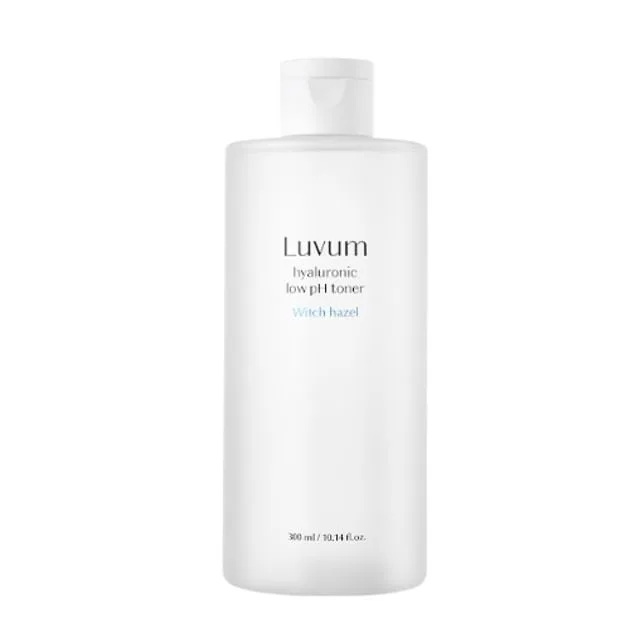
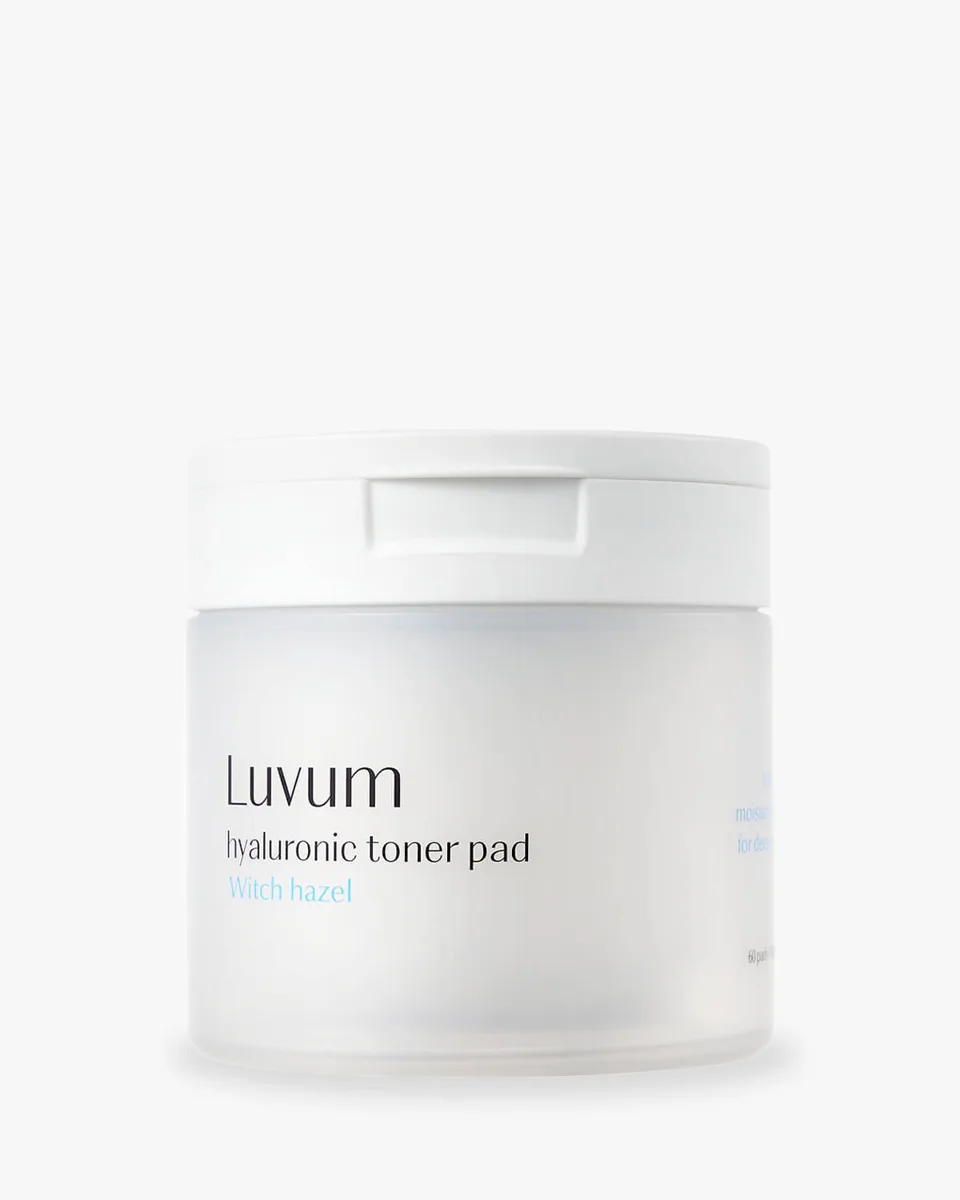
The most defensible way to use witch hazel today is as a minor component of a formula whose actual actives are things with better evidence. Luvum's Witch Hazel Hyaluronic Low pH Toner puts it alongside hyaluronic acid and green tea at a skin-appropriate pH, and Luvum's Witch Hazel Hyaluronic Toner Pad adds niacinamide and gluconolactone — which is the honest architecture, since niacinamide has the sebum-regulating and barrier-supporting evidence that witch hazel is usually being asked to supply.
Who should actually avoid it, and who can stop worrying
Blanket rules fail here because the ingredient is two different things. Sort by preparation instead.
Skip ethanol-forward witch hazel entirely if you have rosacea, where alcohol is a recognised flushing trigger and the vasodilatory response outlasts the cooling; if you have eczema or any actively compromised barrier, where the last thing a leaky stratum corneum needs is a solvent; if you are running retinoids, benzoyl peroxide or acids, where you are already spending your irritation budget and a defatting toner buys nothing; or if your skin is dry or dehydrated, where the tight feeling is the problem rather than the result. Oily skin is the group most likely to enjoy it and among the most likely to be harmed by it over months, because the immediate matte is genuinely satisfying and the rebound is slow enough not to be attributed to its cause.
Everyone else can relax considerably. Contact allergy to witch hazel exists but is not common, and an alcohol-free formula in which hamamelis sits among humectants is an unremarkable, mild product that will neither transform nor damage a normal barrier. If you like the feel of a toner and want a botanical in it, this is a perfectly reasonable one to have. Our my skin profile is where you can record ingredients you want filtered out of recommendations, which is more useful than trying to remember which of two nearly identically branded bottles was the one that stung.
The conclusion this piece has been driving toward is smaller than the argument that surrounds the ingredient, which is usually a sign it is right. Witch hazel is a mildly anti-inflammatory plant, sold mostly in a preparation that has had the anti-inflammatory part distilled out of it and replaced with a solvent that produces a sensation people mistake for efficacy. It is not a wonder botanical and it is not a barrier assassin. It is an ingredient whose entire character is decided at the factory, and the one word on the label that tells you which factory decision you are buying is worth more than everything else printed there.
Products mentioned
Independently reviewed and scored — the real products behind this piece.
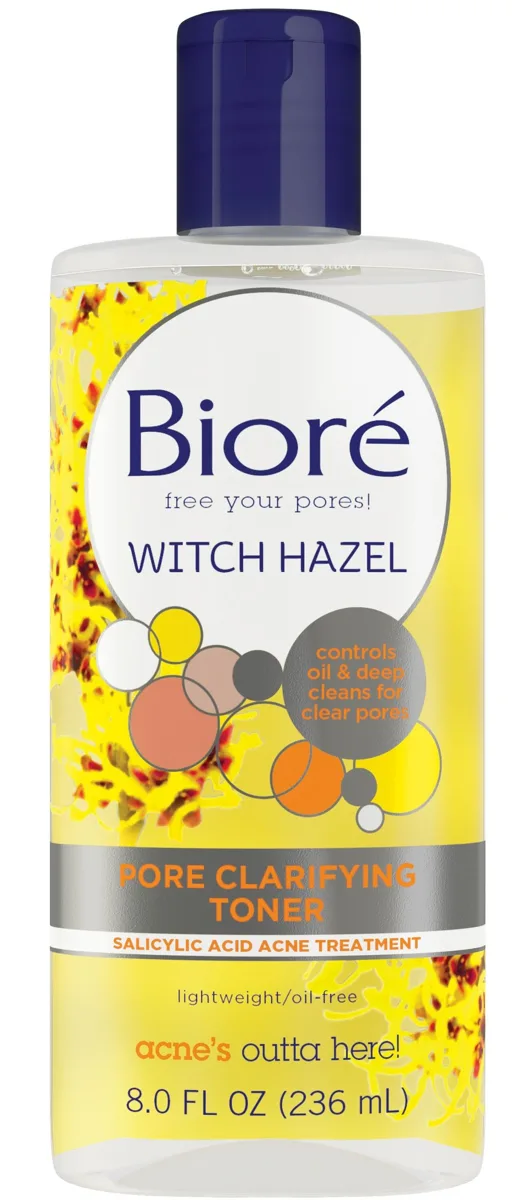
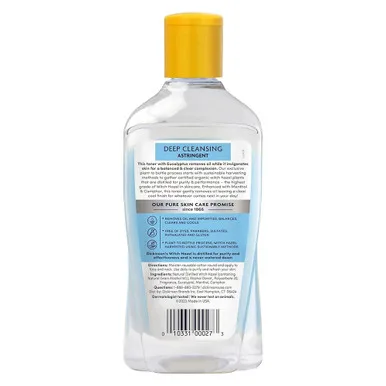
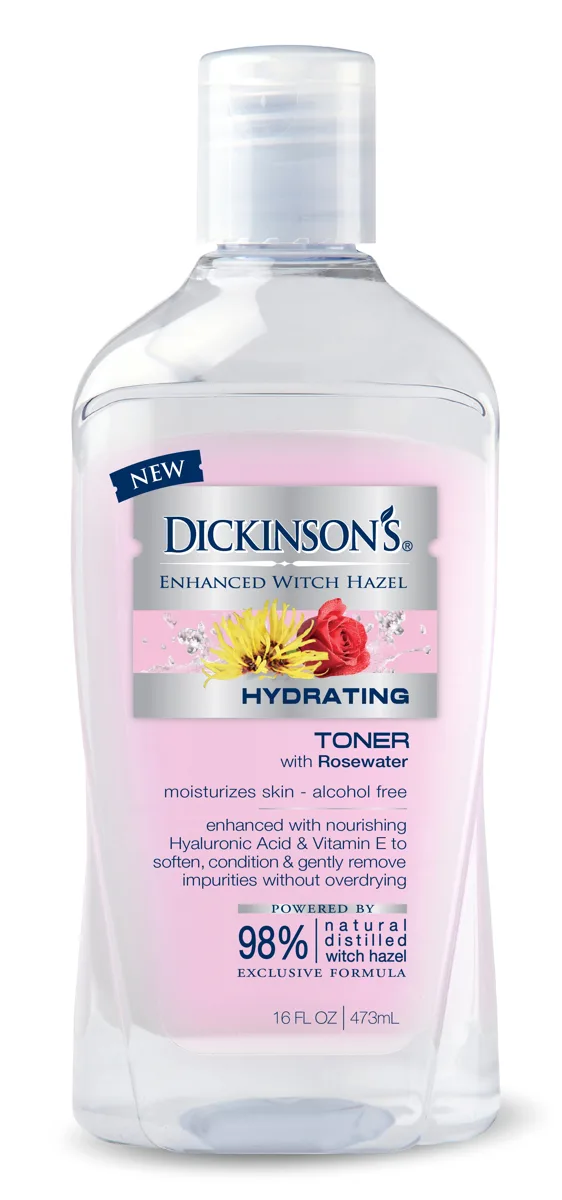
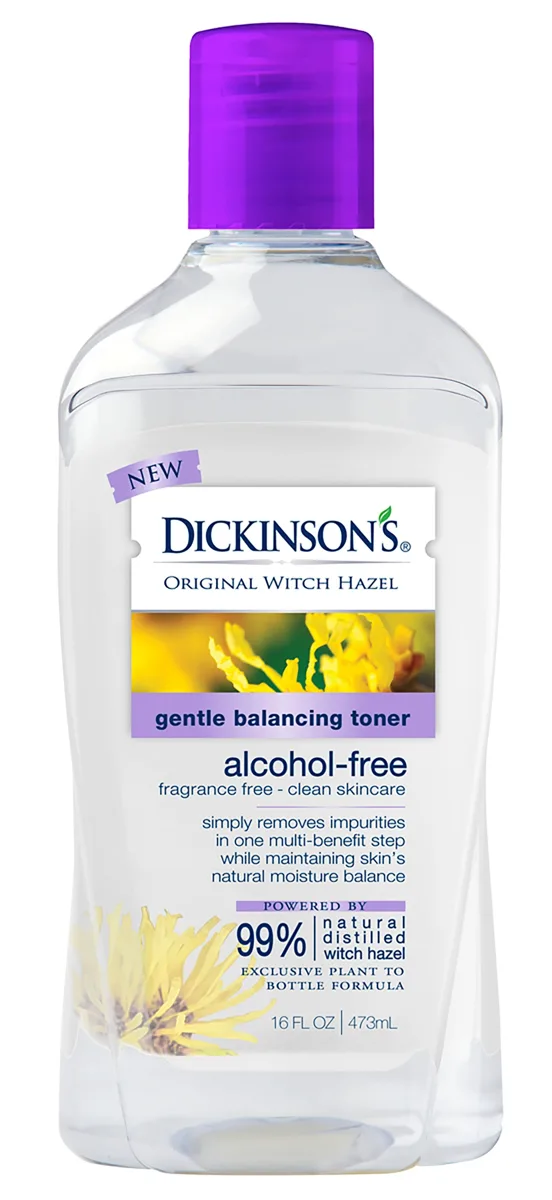


- Ingredient Witch Hazel Where the evidence sits, separated by preparation.
- Ingredient Alcohol Denat. (Denatured Alcohol) The solvent responsible for the sensation, and the fair counterpoint about minor-component use.
- Ingredient Niacinamide (Vitamin B3) Has the sebum and barrier evidence witch hazel gets credited with.
References
- Anti-inflammatory efficacy of topical preparations with 10% hamamelis distillate in a UV erythema test — Skin Pharmacology and Applied Skin Physiology, 2002
- Anti-inflammatory effect of hamamelis lotion in a UVB erythema test — Dermatology, 1998
- Comparative efficacy of hamamelis distillate and hydrocortisone cream in atopic eczema — European Journal of Clinical Pharmacology, 1995
- Anti-inflammatory activity of hamamelis distillate applied topically to the skin. Influence of vehicle and dose — European Journal of Clinical Pharmacology, 1993
- Safety Assessment of Hamamelis virginiana (Witch Hazel)-Derived Ingredients — Cosmetic Ingredient Review, 2017
Every cited link is verified to resolve to the paper named. Where a source could not be independently confirmed, it is listed without a link rather than pointing you somewhere wrong.
Frequently asked
Is witch hazel bad for your skin?
The plant is not the problem; the preparation usually is. Standard witch hazel water carries 14–15% added grain alcohol, and that solvent is what dehydrates and defats skin. An alcohol-free formulation with the same botanical behaves like an ordinary mild toner.
Does witch hazel actually shrink pores?
No. Pore appearance is driven by sebum output, follicular contents and dermal support, none of which a rapidly evaporating liquid changes. The tightening you feel is transient surface dehydration from ethanol, and it lasts about as long as the sensation does.
What is the difference between witch hazel distillate and witch hazel extract?
Distillate is produced by steam distillation, which carries over volatile compounds and leaves the large tannins behind — supplier specifications cap tannins in witch hazel water below 0.03 mg/mL. A water or hydroalcoholic extract retains the tannins that all the anti-inflammatory research concerns.
Does witch hazel help eczema?
The one properly powered trial says not meaningfully. In 72 patients with moderate atopic eczema, hamamelis distillate cream was clearly beaten by low-dose hydrocortisone and performed no better than its own drug-free base. Any benefit patients felt came from the moisturising vehicle.
Can I use witch hazel with retinol or acids?
You can, but an alcohol-forward version is a poor pairing — you are spending irritation budget on a step that adds nothing your active is not already doing. If you want a toner in that routine, choose an alcohol-free formulation, ideally one built around niacinamide or humectants.
How do I tell which kind I am buying?
Check the ingredient list rather than the front label. If alcohol denat. or ethanol appears high in the list, you have the astringent version; if the formula is preserved conventionally and paired with glycerin, aloe or hyaluronic acid, you have the hydrating one. Brands frequently sell both.