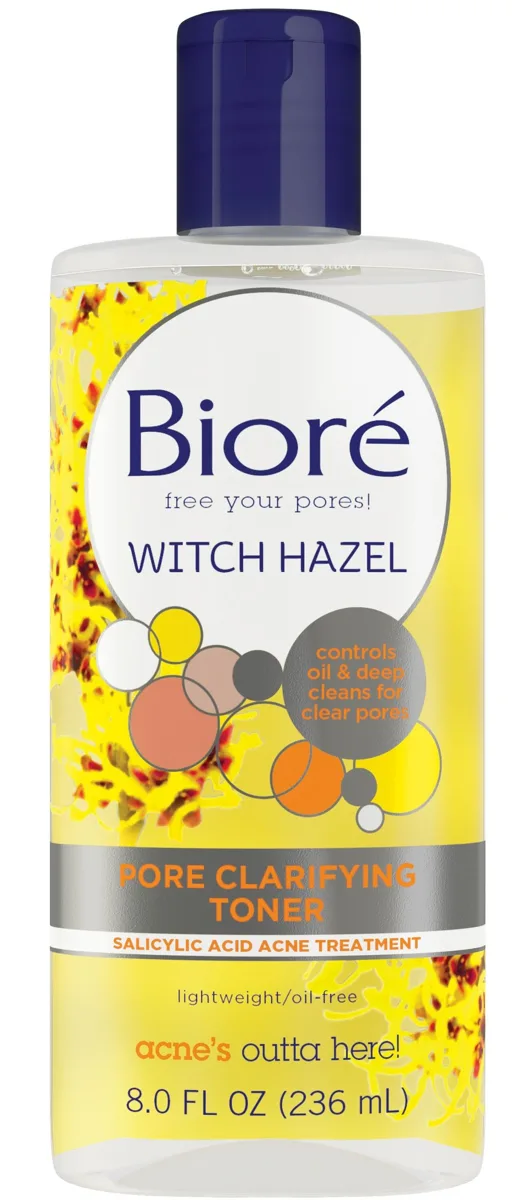
It delivers a genuinely effective leave-on 2% salicylic acid — which has real acne benefit — but in one of the harshest, most dated bases around: two drying alcohols plus witch hazel and menthol. It stands out as a relic of the strip-your-skin-to-fight-acne era, effective for the toughest oily skin but needlessly punishing for nearly everyone else when gentle 2% salicylic acid options exist.
An effective leave-on 2% salicylic acid trapped in one of the harshest, most dated bases on the shelf: two drying alcohols, witch hazel, and menthol. The acid genuinely helps clear pores and breakouts, but the stripping vehicle over-dries and irritates nearly everyone but the toughest oily skin. The tight, stinging 'clean' feel is over-stripping, not efficacy. You can get the same active far more gently elsewhere — this is a relic worth skipping for almost everyone.
Strong choicefor AcneIn your profileYou chose · Salicylic Acid is an approved or monograph active for acne; this liquid carries it at 2%.Moderate evidenceStandard tolerabilityNo reviews collected yet
The case for it
Salicylic Acid is a first-line active — approved, monograph-listed or named in current guidelines — for this concern.
It is present at an effective concentration, declared or high in the ingredient list.
The formula carries no trigger this concern is sensitive to, with the cautions noted.
Cautions: fragrance; known irritants; fungal-acne triggers.
Same rule for everyone. “Strong choice” is the verdict on 1,459 of 45,024 concern verdicts across the catalog; rule R2 decided 892 of them.
Unchanged since September 5, 2026, engine 5.1.1.
R2 — A regulator- or guideline-recognised first-line active, declared at an effective strength, in a form the claim supports. · the full register
Carrying active
Salicylic Acid
Standing
first line — a regulator recognises it for this use; trials support it · per § 333.310 Acne active ingredients. (U.S. Food and Drug Administration — 21 CFR Part 333 Subpart D (Topical Acne Drug Products), Code of Federal Regulations via GovInfo), opened July 27, 2026
Form
adequate (declared 2%) — studied range 0.5–2%, from the OTC monograph or label; judge it after ~6 weeks
Tolerability
standard — fragrance load, irritant load, fungal triggers
Row checked
against its sources on July 27, 2026 (evidence table ev-2026.09-r228)
Unprovenfor Excess OilinessIn your profileYou chose · Salicylic Acid has early or mechanistic evidence for excess oiliness — a reasonable bet, not a recommendation; the other actives here are not yet assessed for it.Moderate evidenceStandard tolerabilityNo reviews collected yet
The case for it
Salicylic Acid has early or mechanistic evidence for this concern, not trial-backed standing.
It is present below the studied range.
The formula carries no trigger this concern is sensitive to, with the cautions noted.
Cautions: fungal-acne triggers.
What would change this: A concentration inside the studied range would raise this a step.
Same rule for everyone. “Unproven” is the verdict on 1,111 of 45,024 concern verdicts across the catalog; rule R9 decided 1,111 of them.
Unchanged since September 5, 2026, engine 5.1.1.
R9 — Plausible-tier actives alone do not earn a recommendation, and 'not for this' would overstate the case against them. 'Unproven' with the evidence dots lets the reader judge the bet (added 0.2.0 after the first shadow run put a 10% niacinamide serum at 'not for this' for hyperpigmentation). 0.5.0: the closing clause reads the other heroes — "nothing else here addresses it" only when every other active has a researched 'none' row; "not yet assessed" when that is the truth. Rows whose dots read moderate or better now reach R9p first. · the full register
Carrying active
Salicylic Acid
Standing
plausible — trials support it
Form
sub threshold (declared 2%) — studied range 30%, from the trials on the row; needs leave-on contact; judge it after ~6 weeks
Tolerability
standard — fungal triggers
Row checked
against its sources on July 17, 2026 (evidence table ev-2026.09-r228)
Strong choicefor BlackheadsIn your profileYou chose · Salicylic Acid is an approved or monograph active for blackheads; this liquid carries it at 2%.Moderate evidenceStandard tolerabilityNo reviews collected yet
The case for it
Salicylic Acid is a first-line active — approved, monograph-listed or named in current guidelines — for this concern.
It is present at an effective concentration, declared or high in the ingredient list.
The formula carries no trigger this concern is sensitive to, with the cautions noted.
Cautions: fungal-acne triggers.
Same rule for everyone. “Strong choice” is the verdict on 1,459 of 45,024 concern verdicts across the catalog; rule R2 decided 892 of them.
Unchanged since September 5, 2026, engine 5.1.1.
R2 — A regulator- or guideline-recognised first-line active, declared at an effective strength, in a form the claim supports. · the full register
Carrying active
Salicylic Acid
Standing
first line — a regulator recognises it for this use; trials support it · per 21 CFR § 333.350 - Labeling of acne drug products. (US Code of Federal Regulations (Legal Information Institute, Cornell Law School)), opened July 27, 2026
Form
adequate (declared 2%) — studied range 0.5–2%, from the OTC monograph or label; judge it after ~6 weeks
Tolerability
standard — fungal triggers
Row checked
against its sources on July 27, 2026 (evidence table ev-2026.09-r228)
The studies behind the evidence row
OTC monograph, Topical Acne Drug Products — salicylic acid 0.5–2% recognized as an acne treatment active — US Food and Drug Administration
Not for thisfor Large PoresIn your profileYou chose · The actives here have been researched for large pores and the evidence does not support the claim.Not yet assessedStandard tolerabilityNo reviews collected yet
The case for it
Salicylic Acid has been researched for this concern and the evidence does not support it.
It is present at an effective concentration, declared or high in the ingredient list.
The formula carries no trigger this concern is sensitive to, with the cautions noted.
Same rule for everyone. “Not for this” is the verdict on 488 of 45,024 concern verdicts across the catalog; rule R10 decided 488 of them.
Unchanged since September 5, 2026, engine 5.1.1.
Does the jobDoes what a toner is for: adds something real. Not measured from the label: restores skin pH, plays well with what follows.
A verdict is DermApproved’s assessment of how well a product’s ingredients fit a concern — never a claim about what the product treats. Evidence dots and collected reviews sit beside it and are never blended in.
Rules 0.5.1 · evidence table ev-2026.09-r228 · how we decide
✓ Longer skin contact than a rinse-off cleanser, so the BHA works well
✓ Degreases and mattifies very oily skin decisively
✓ Oil-free, fungal-acne safe, and cruelty-free
✓ Cheap and long-lasting (8 oz bottle)
✓ A real active for those who genuinely tolerate the base
Cons
✗ Two drying alcohols plus witch hazel and menthol — aggressively stripping
✗ Over-dries and irritates nearly everyone but the toughest oily skin
✗ Stinging, tight 'clean' feel is over-stripping, not efficacy
✗ Dated, harsh formula; can backfire and worsen oily skin
✗ Fragranced; unsuitable for dry, sensitive, normal, or combination skin
Review
Full Review
This toner is a time capsule. It comes from the era — not that long ago — when fighting oily, acne-prone skin meant stripping it as hard as possible, when 'clarifying' meant a cotton pad soaked in alcohol and witch hazel and the sting was taken as proof that something was working. Skincare has largely moved on from that philosophy, because we now understand it often backfires, but this formula hasn't. It pairs a genuinely useful active with an aggressively harsh base, and reviewing it fairly means pulling those two apart and being honest that, for almost everyone, the harm outweighs the help.
The one good thing is real and worth naming. The active is 2% salicylic acid, and crucially, this is a leave-on toner, not a rinse-off — so the BHA has extended contact with the skin and works effectively to clear pores, reduce blackheads, and help prevent breakouts. A leave-on 2% salicylic acid is a legitimately effective acne tool, and at eight dollars for a big bottle, that part is good value. If this active lived in a modern, gentle base, the toner would be easy to recommend. It doesn't, and that's the whole problem.
Because around that good active is a base that reads like a warning label. There are two drying alcohols — alcohol denat. and isopropyl alcohol — plus astringent witch hazel, all working to strip oil aggressively for that 'squeaky clarified' feel. Then there's menthol for a cooling tingle, and fragrance on top. This is the harshest combination in Bioré's already-harsh cleanser-and-toner lineup, and it's harsh by design, built to deliver the stripped, tight, stinging sensation that older skincare equated with cleaning. The trouble is that sensation is exactly backwards: the tightness is over-stripping, the sting is irritation, and neither is a sign of efficacy. Your skin isn't being clarified; it's being damaged into feeling 'clean.'
The consequences matter, especially for the oily, acne-prone people most likely to reach for this. Stripping the skin's oils with alcohol disrupts the barrier, and a disrupted barrier can trigger rebound oil production and more irritation — making oily, breakout-prone skin worse over time, not better. The very people this toner targets are often the ones it can quietly sabotage. And for anyone whose skin isn't bulletproof — dry, sensitive, normal, combination, rosacea-prone — the double-alcohol-and-menthol base is a near-guarantee of tightness, stinging, dryness, and flaking. The pool of skin that genuinely tolerates this is small: resilient, very oily skin, used sparingly.
So the honest verdict is that the active deserves better company than it keeps here. There is no reason, in 2026, to accept two alcohols, witch hazel, menthol, and fragrance to get a 2% salicylic acid you can have in a gentle, fragrance-free, alcohol-light formula at a similar price. Modern oil control is about effective actives in non-damaging bases, not about how hard you can strip your face. This toner is the opposite of that, and recommending it broadly would be recommending a step backward.
If you are in its narrow lane — genuinely tough, very oily skin that specifically wants an old-school astringent and tolerates it — there are ways to limit the damage: use it only on the oily T-zone, not all over and never on dry areas; start once daily; always follow with a moisturizer; don't stack it with other acids or retinoids carelessly; and wear daily sunscreen, since salicylic acid increases photosensitivity. Stop at the first sign of tightness or flaking. It is at least oil-free and fungal-acne safe.
Where it lands is a rare near-skip. For the small minority of resilient, very oily skin that wants an aggressively clarifying astringent toner and tolerates the harsh base, it's a cheap, effective-enough source of leave-on salicylic acid, used carefully. For essentially everyone else — and that's most people, including most oily skin — it's the wrong product: a good active in a punishing, outdated vehicle, easily and comprehensively beaten by a gentle 2% salicylic acid toner at the same price. Take the salicylic acid; leave the alcohol, the witch hazel, and the sting in the past where they belong. If there's a single takeaway, it's that 'clarifying' has become one of skincare's most misleading words, often a polite synonym for 'stripping.' A genuinely clarifying product clears pores while leaving the skin intact; a stripping one clears pores by leaving the skin worse off, and trusts the temporary squeaky feeling to keep you from noticing the difference. This toner is firmly the second kind. The 2% salicylic acid is real and it's the part doing the clarifying; everything else is the strip. Buy the acid in better company, and your oily skin will be both clearer and calmer — which, it turns out, was always the actual goal, not the sting that a previous generation of skincare mistook for it.
Formula
Key Ingredients
The hero actives that drive this product's performance.
The registered active and the one genuinely worthwhile ingredient. At 2% in a leave-on toner, salicylic acid has more skin-contact time than in a rinse-off cleanser, so it works effectively to clear pores, reduce blackheads, and help prevent breakouts. This BHA is doing the real acne work — it's the reason the toner does anything beneficial at all.
The aggressively-degreasing, drying base — and the formula's defining problem. Two drying alcohols (denatured and isopropyl) plus astringent witch hazel strip oil hard for that 'squeaky clarified' feel, but this is the dated, harsh approach to oil control: it disrupts the barrier, can over-dry, and often backfires by triggering more oil and irritation.
The cooling sensory additive that completes the old-school 'astringent toner' experience. Menthol provides a tingly, 'working' sensation with no skincare benefit and real sensitizing potential — piling more irritation onto an already-harsh base, purely for feel.
Not yet assessed
Ingredient standings describe the active at treatment-level doses and
vehicles; this product's own condition grades weigh its actual formula.
Sweep over cleansed skin with a cotton pad, ideally only on oily zones (T-zone), once daily to start — not over the whole face, and not over dry areas. Given the 2% acid plus two alcohols, witch hazel, and menthol, always follow with moisturizer, avoid stacking other strong acids, and use daily sunscreen. Most skin should choose a gentler toner.
Results Timeline
Immediately degreased, matte, tingly skin; clearer pores and fewer breakouts can build over 2-6 weeks from the salicylic acid — if your skin tolerates the harsh base without over-drying or irritation, which many won't.
Pairs Well With
a moisturizer after (essential)sunscreen on top (AM)spot use on the oily T-zone only
The toner's active is 2% salicylic acid, a lipophilic BHA that penetrates sebum-filled follicles to reduce comedones and inflammatory lesions; as a leave-on, it has prolonged contact and meaningful anti-acne efficacy. The vehicle, however, is aggressively drying: it contains two volatile alcohols (alcohol denat. and isopropyl alcohol) plus witch hazel (an astringent), which strip surface lipids and can disrupt the stratum-corneum barrier, increasing trans-epidermal water loss and irritation. Repeated barrier disruption can paradoxically stimulate compensatory sebum production, undermining oil control over time.
Menthol adds a cooling trigeminal sensation with no therapeutic benefit and recognized sensitizing potential, and added fragrance further raises irritation risk. The post-application tight, tingling feeling reflects acute barrier stripping and irritation rather than effective cleansing — toners do not 'open' or deep-clean pores.
The formulation is oil-free and malassezia-safe, and salicylic acid is photosensitizing (daily sunscreen advised). The scientific bottom line is an effective salicylic acid delivered in a harsh, dated, alcohol-and-astringent base poorly aligned with current understanding of barrier-respecting acne care: suitable only for resilient, very oily skin used sparingly, while the identical active is available in gentle, non-drying formulations that are preferable for essentially all skin types.
Dermatologist Perspective
Salicylic acid is a legitimate, evidence-supported acne ingredient, and a leave-on 2% formulation can be effective, so the active here is sound. However, dermatologists broadly discourage high-alcohol astringent toners: two drying alcohols plus witch hazel and menthol strip the barrier, cause irritation, and can worsen oily skin through rebound sebum, reflecting an outdated approach to acne care. Current guidance favors barrier-respecting oil control — effective actives in gentle, non-drying, fragrance-free bases. Clinical advice for this product would be to reserve it for resilient, very oily skin, use it sparingly on the T-zone with a follow-up moisturizer, avoid combining with other actives carelessly, and use daily sunscreen — while noting that a gentle 2% salicylic acid toner delivers the same benefit far more safely for the great majority of skin.
Guidance
Usage & Recommendations
How to Use
Sweep over cleansed skin with a cotton pad, ideally only on oily zones like the T-zone, once daily to start — not over the whole face and never on dry areas. Always follow with a moisturizer to offset the stripping, avoid stacking other strong leave-on acids or retinoids on the same area, and use daily broad-spectrum sunscreen, since salicylic acid increases sun sensitivity. Stop immediately if you experience tightness, stinging, or flaking, and consider a gentler salicylic acid product instead.
Value Assessment
At around $8 for a large 8 oz bottle, the toner is cheap and the 2% salicylic acid is effective, but value is undercut by suitability. For resilient, very oily skin that tolerates the harsh base, it's an inexpensive source of leave-on salicylic acid. For everyone else — most people, including most oily skin — it's poor value at any price, because the alcohol-and-witch-hazel base causes irritation without benefit, and the identical active is available in gentle, fragrance-free toners at similar cost. The smart spend is a barrier-respecting salicylic acid toner, which delivers the genuine benefit without the dated, stripping vehicle.
Who Should Buy
Only resilient, very oily, acne-prone skin that specifically wants an old-school astringent toner, tolerates a strongly alcohol-and-menthol base, and will use it sparingly on the T-zone with a moisturizer. A cheap source of leave-on salicylic acid for the toughest oily skin.
Who Should Skip
Almost everyone else — dry, sensitive, normal, combination, or rosacea-prone skin, and even most oily skin — for which the two alcohols, witch hazel, menthol, and fragrance are needlessly stripping and irritating. Choose a gentle, fragrance-free, alcohol-light 2% salicylic acid toner instead for the same benefit.
Ready to try Bioré Witch Hazel Pore Clarifying Toner?
A thin, watery, fast-evaporating liquid applied with a cotton pad, leaving a matte, degreased, cooling finish.
Scent
Fragranced, with a sharp menthol-and-alcohol scent.
Packaging
A standard 8 oz bottle in Bioré's drugstore style. Practical and cheap; the large size lasts a long time.
Finish
mattedegreasedtight
What to Expect on First Use
Swept on with a cotton pad, it evaporates fast and leaves skin matte, degreased, and cool-tingling from the menthol — the very 'stripped clean' feeling that defined astringent toners of decades past. On very oily skin that can read as satisfying; for most skin it's a warning sign, often followed by tightness, stinging, dryness, or flaking as the double-alcohol base over-strips.
A long-running Bioré astringent toner, it pairs an FDA-monograph 2% salicylic acid with the classic drugstore-astringent base of alcohol, witch hazel, and menthol — a formula rooted in the older belief that fighting oil and acne meant stripping the skin as hard as possible.
About Bioré Legacy Brand (20+ years)
Bioré, Kao's drugstore brand, makes this as a registered OTC acne treatment — a 2% salicylic acid astringent toner. It is an effective but old-school formula: the genuine acne active sits in a heavily alcohol-and-witch-hazel base that reflects the dated 'strip the skin to fight acne' approach more than modern gentle dermatology.
Brand founded: 1980 · Product launched: 2018
Myth vs. Reality
Common Myths
Myth
An astringent toner that stings and tingles is deep-cleaning your pores.
Reality
The sting is alcohol and menthol irritating your skin, and the tight feeling is over-stripping, not deep cleaning. Toners don't 'open' or 'deep clean' pores, and harshness isn't efficacy. The only genuinely cleansing-and-clearing ingredient here is the salicylic acid; the rest is irritation dressed up as a clean feeling.
Myth
Oily skin needs alcohol-heavy toners to control oil.
Reality
Stripping oil with alcohol often backfires — a disrupted barrier can trigger rebound oil and more irritation, making oily skin worse, not better. Modern dermatology favors gentle oil control (like leave-on salicylic acid in a non-drying base). You can get this toner's real benefit without the double-alcohol punishment.
FAQ
Frequently Asked Questions
Does the Bioré Witch Hazel Toner work for acne?
Yes, the active does — it's a leave-on 2% salicylic acid, which genuinely helps clear pores and reduce blackheads and breakouts. The problem is the base: two drying alcohols, witch hazel, and menthol make it harsh and stripping. The salicylic acid works, but you can get it in far gentler products without the irritation.
Is it too drying?
For most skin, yes — it contains alcohol denat., isopropyl alcohol, witch hazel, and menthol, an aggressively degreasing, drying combination. Only resilient, very oily skin tends to tolerate it, and even then it's best used sparingly on the T-zone with a moisturizer to follow. Dry, sensitive, normal, or combination skin should avoid it.
Why does it sting and tingle?
The sting is from the alcohols and the tingle is menthol — both irritate the skin, and neither is a sign the toner is working. That 'clean,' tight, cool feeling is actually over-stripping and irritation. The acne benefit comes entirely from the salicylic acid, not the stinging base.
How should I use it if I do buy it?
Use it only on oily zones (the T-zone), once daily to start, swept on with a cotton pad — not all over and not on dry areas. Always follow with a moisturizer to offset the stripping, avoid stacking other strong acids, and wear daily sunscreen. If you experience tightness or flaking, stop and switch to a gentler salicylic acid product.
Is there a better option?
Yes — a leave-on 2% salicylic acid in a modern, alcohol-light, fragrance-free base gives you the same acne benefit without the harshness, and there are many at similar prices. This toner is only worth considering for the toughest oily skin that specifically wants an old-school astringent.
Reviews
What Reviewers Tend to Say
Recurring themes our editors read across retailer reviews of this product — summaries in our words, not quotations, and not a substitute for your own patch test.
The supplier specification for standard witch hazel water caps the tannin content — the fraction all the research is about — at a level indistinguishable from none. The tightness you feel is the solvent.
The whole case for salicylic acid rests on one unglamorous fact of chemistry: it dissolves in oil. Understand that, and you know exactly when it beats a glycolic acid — and when it's overkill.
Those tiny dots on your nose are almost certainly not blackheads — they're normal, functional plumbing you will never 'clear,' and the extraction obsession is quietly wrecking the skin around them.
Jun 6, 2026· 6 min
Questions people ask about Acne
Verified answers from our questions library — the nuance a product page cannot carry.
Products, answers, therapy guides, tools and articles in one search. Brand names,
slang and abbreviations all work — accutane finds isotretinoin, bacne finds truncal acne.