The Truth About Pore Strips, Pore Vacuums, and 'Shrinking' Your Pores
You cannot shrink a pore. But you can change how visible it is — and almost everything sold to 'minimize' pores is pulling the wrong lever.
Read the preview
From the DermApproved blog, in Pores and Texture: the truth about pore strips, pore vacuums, and 'shrinking' your pores. Start with a fact that quietly demolishes half the pore aisle — a pore has no muscle. Nothing to tighten, no drawstring, no way to shrink and stay shrunk. So that verb printed on every serum and gadget? It describes something your skin literally cannot do. But you're not helpless, and that's the interesting part — pore visibility is real and changeable, just never the way the marketing implies. There are three levers that actually decide how big a pore looks, and the strips and vacuums miss all of them while one of them can quietly make things worse. We name the levers, the actives that move them, and the expectation nobody will sell you honestly. That's at dermapproved.com/blog.
The claim that was never physically possible
Let's start with the anatomy, because it quietly demolishes half the pore-care aisle. A pore is the opening of a hair follicle and its attached sebaceous gland. It has no muscle around it, no drawstring, no mechanism by which it could tighten and stay tightened. So the entire premise of "shrinking" your pores — the verb printed on countless serums, primers, and gadgets — describes something your skin cannot do.
That's not the same as saying you're helpless. Pore visibility is real and it's changeable. It just doesn't change the way the marketing implies. You're not shrinking a hole; you're altering the factors that make a hole look bigger or smaller. Once you know what those factors are, you can tell instantly which products are working on the real problem and which are selling you a temporary illusion or a cosmetic blur.
And the mechanical gadgets — the strips, the suction vacuums — are the clearest example of aiming at the wrong target entirely.
What actually makes a pore look big
Research on facial pores keeps landing on the same short list of culprits, and none of them is 'pore muscle tone.'
First and biggest: sebum. A study of sebum output found that increased pore size was significantly associated with increased sebum output — of the measured factors, oil production had the strongest correlation with how large pores appear. More sebum fills and dilates the pore opening, and the effect is stronger in men, tracking with higher sebum levels. This is why oily skin and visible pores travel together.
Second: skin elasticity, which is where aging and sun damage enter. The pore is held open by the follicle wall, and that wall is supported by the collagen and elastin around it. As that scaffolding weakens, pores lose their taut round shape and start to sag into a stretched, teardrop look. A study on sebum and elasticity concluded that enhancing skin elasticity is a fundamental strategy for preventing the size and count of visible facial pores — and chronic UV exposure is a prime driver of the elastin breakdown (solar elastosis) that slackens pore walls. Sunscreen, in other words, is a pore treatment.
Third: how clogged the pore is. A pore packed with oxidized sebum and dead cells — a blackhead — reads as a bigger, darker dot than the same clean pore. Keeping the pore clear genuinely reduces its apparent size. Baseline diameter is largely genetic and not up for negotiation; but sebum, elasticity, and clogging are all levers you can actually move.
Why strips and vacuums don't do what you think
Now hold those three levers next to what a pore strip or a pore vacuum actually does. A strip glues to the plug of sebum and keratin sitting in the pore and yanks it out. A suction vacuum pulls the same plug out with negative pressure. Both can produce that satisfying instant result — a cleaner-looking pore, a strip covered in little sebaceous filaments you can inspect with horror and pride.
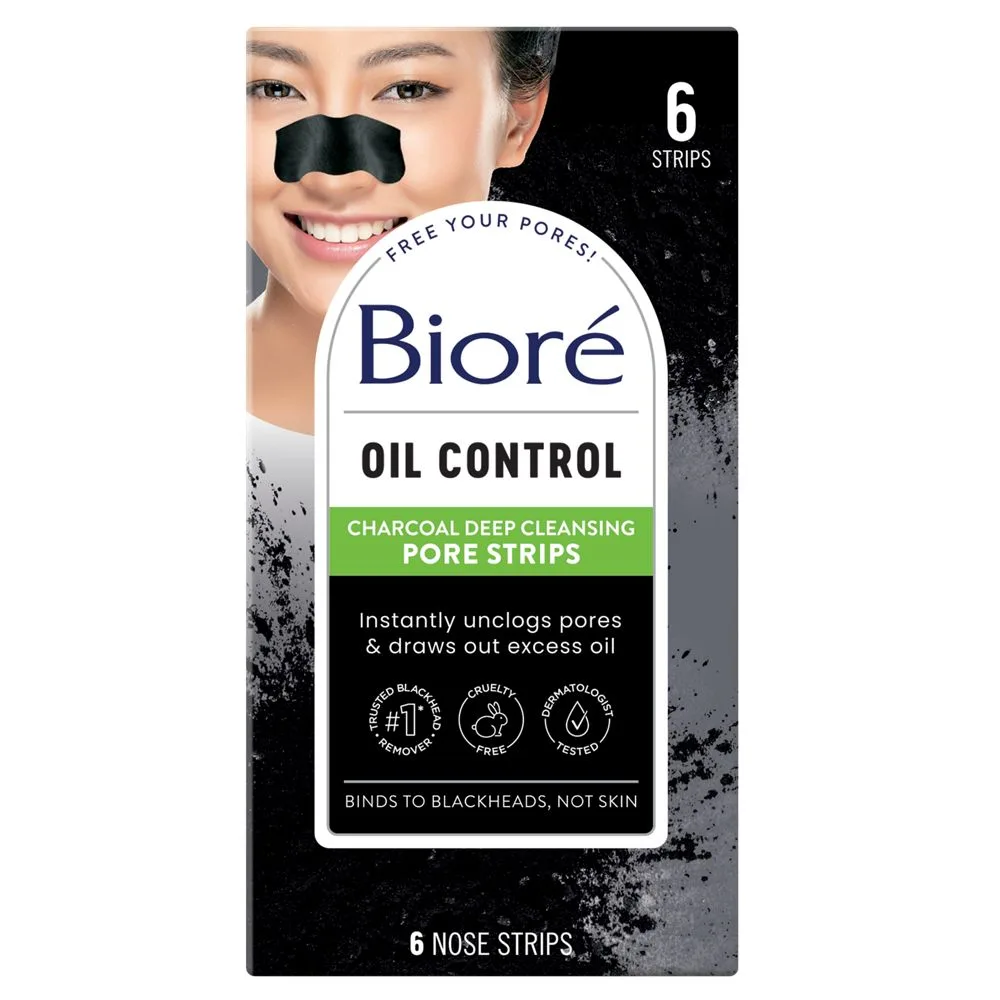
But notice what neither one touches. They don't reduce sebum production, so the pore refills within days. They don't improve elasticity, so a slack pore stays slack. They physically empty the pore for a moment, which is the one lever they hit — clogging — but only temporarily and often by force. A strip like Biore Deep Charcoal Pore Strips can lift the top of a blackhead, yet the pore's actual size is completely unchanged; you've decapitated the plug, not shrunk anything. And much of what strips remove aren't even blackheads but sebaceous filaments — normal, healthy structures that refill as a matter of course.
The aggressive versions carry real downside. Over-enthusiastic pore vacuums can bruise skin, break surface capillaries, and with enough repeated suction contribute to the very laxity that makes pores look worse long-term. Ripping strips off can irritate and, ironically, stress the skin around the pore. You're paying — sometimes in capillary damage — for a result measured in hours.
The actives that move the real levers
If the gadgets aim at the wrong target, what hits the right ones? Ingredients that address sebum, elasticity, and clogging — the three things that genuinely govern visibility.
Salicylic acid is the clog specialist. As an oil-soluble beta-hydroxy acid, it penetrates into the sebum-filled pore and clears out the mix of oil and dead cells, so pores read smaller because they're actually emptier — and unlike a strip, it keeps them clearer with regular use. A BHA serum like Cos De BAHA BHA 2% Pore Care Serum pairs salicylic acid with niacinamide, and a gentler multi-acid option such as Versed Skin Refine Gentle Pore-Clearing Serum combines salicylic with mandelic and lactic for the same clearing effect on more sensitive skin.
Niacinamide works the sebum lever, with data behind it: topical niacinamide has been shown to reduce sebum output and, over weeks, the appearance of enlarged pores. Retinoids work the elasticity lever, the long game — by driving collagen production and normalizing how skin cells shed, they help firm the follicle wall and reduce visible pore size over months of use. An accessible retinoid like Differin Adapalene Gel 0.1% is a legitimate pore play, not just an acne one, precisely because it targets both clogging and the underlying skin quality.
Because you may be combining a BHA, a niacinamide, and a retinoid, spacing matters — run any new stack through our [conflict-checker](/tools/conflict-checker/) so you're not layering irritants on the same night.
Setting honest expectations
Here's the part the industry hates to say out loud: you will never make a genetically large pore genetically small. If your parents have prominent pores and you inherited oily, thick skin, no serum, strip, or gadget will give you the poreless finish of a filtered photo. Anyone promising that is selling the illusion, not the outcome.
What's realistically achievable is meaningful and worth doing: keep pores clear with a BHA so they don't read as dark, congested dots; manage sebum with niacinamide so they don't dilate and fill; protect and rebuild elasticity with daily sunscreen and a retinoid so the walls stay taut instead of sagging with age. Do those consistently and pores genuinely look smaller and less noticeable — you've moved every lever that actually moves.
And for the days you want a truly poreless look right now, that's a job for a silicone-based blurring primer or makeup, which fills the pore optically — an honest cosmetic effect, not a treatment claim. The mistake is confusing that instant blur (or a strip's instant empty) with a permanent change to your skin. If you want a routine built around your actual skin type and pore situation rather than the gadget of the week, save your profile to [my-skin](/my-skin/) and let the recommendations follow the science instead of the hype.
Products mentioned
Independently reviewed and scored — the real products behind this piece.


References
- Sebum output as a factor contributing to the size of facial pores — British Journal of Dermatology, 2006
- Skin sebum and skin elasticity: Major influencing factors for facial pores — Journal of Cosmetic Dermatology, 2019
Every cited link is verified to resolve to the paper named. Where a source could not be independently confirmed, it is listed without a link rather than pointing you somewhere wrong.
Frequently asked
Can you actually shrink your pores permanently?
No — pores have no muscle to tighten, and baseline pore size is largely genetic. What you can change is how visible they look by managing the three real drivers: sebum output, skin elasticity, and how clogged the pore is. Consistent treatment makes pores look smaller, but it doesn't physically shrink a genetically large one.
Do pore strips make pores smaller?
No. A strip yanks out the plug of oil and dead cells sitting in the pore, which looks satisfying, but the pore's size is unchanged and it refills within days. Much of what strips remove are sebaceous filaments — normal structures — not blackheads, and the mechanical pulling doesn't touch sebum production or elasticity.
Are pore vacuums safe to use?
Used gently and occasionally, they mostly just empty pores temporarily. The risk is overuse and too much suction, which can bruise skin, break surface capillaries, and over time contribute to the laxity that makes pores look worse. Like strips, they only address clogging briefly and do nothing for the underlying causes.
What actually reduces the appearance of large pores?
Actives that hit the real levers: salicylic acid keeps pores clear so they read smaller, niacinamide reduces sebum output and pore appearance over weeks, and retinoids improve skin elasticity and turnover over months. Daily sunscreen matters too, because UV degrades the collagen and elastin that keep pore walls taut.
Why do my pores look bigger as I get older?
Because the collagen and elastin supporting the follicle wall weaken with age and sun exposure, so pores lose their taut shape and sag into a stretched, more visible look. Studies point to declining skin elasticity as a fundamental factor in pore size, which is why sun protection and elasticity-building retinoids help.