Comedogenic Ratings Are Rabbit-Ear Data From the 1970s — Here's What to Use Instead
The 0-to-5 scale governing half of all skincare shopping advice was generated on animal ears at concentrations no product uses. The worry is real; the number is not.
Read the preview
From the DermApproved blog, in Pores and Texture: the comedogenic scale everyone shops by. It was built by packing raw ingredients into rabbit ears — undiluted, for weeks, on an animal more reactive than a human face. One thing the assay flagged as pore-clogging was a prescription acne treatment. The better approach isn't a number. For the full breakdown, visit dermapproved.com/blog.
The number came from an ear
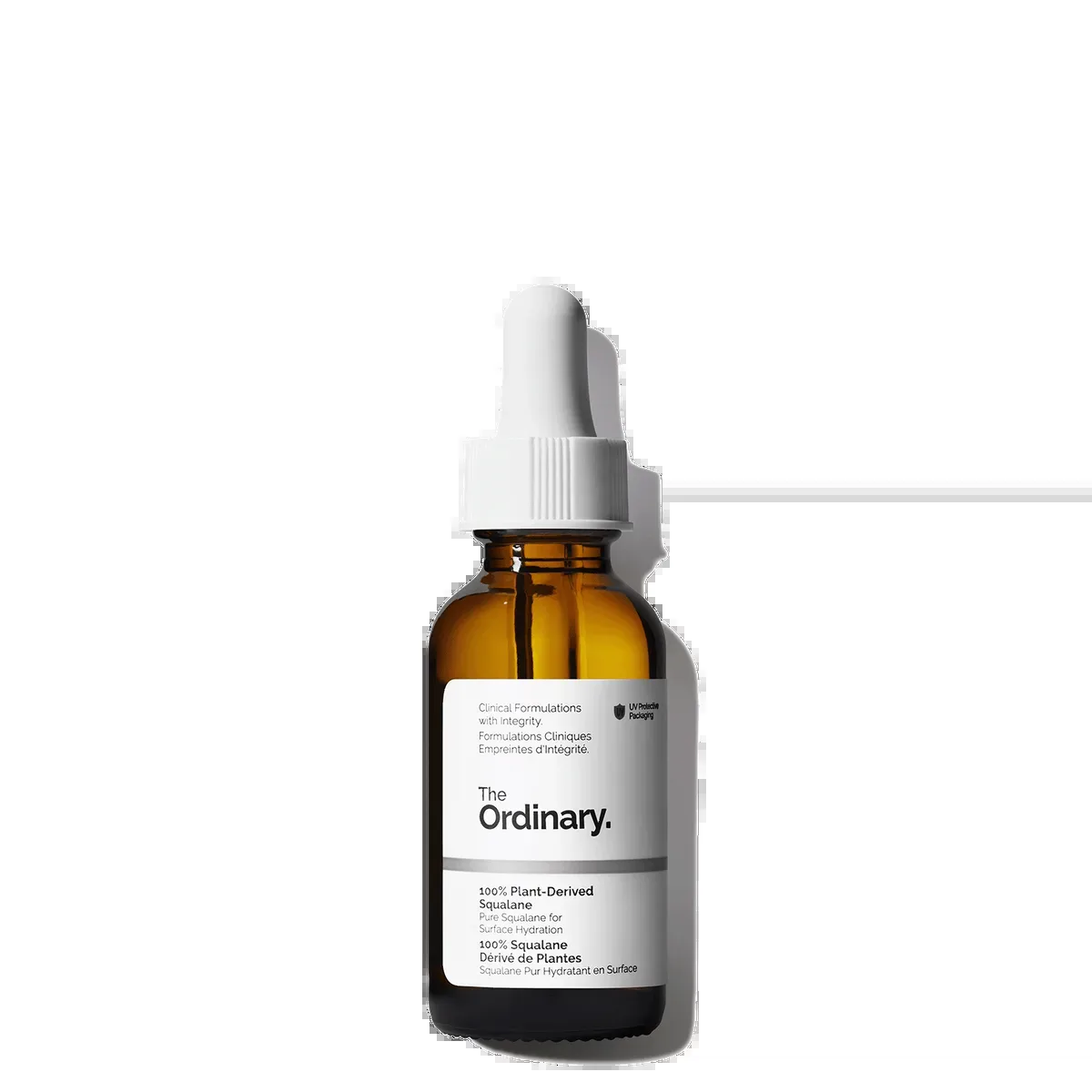
Somewhere between the ingredient list and the checkout button, a lot of skincare shopping turns into arithmetic. Coconut oil is a 4. Isopropyl myristate is a 5. Squalane is a 0, or maybe a 1, depending on which chart got screenshotted. The charts circulate as if they were pharmacology — a settled physical property of the molecule, like a melting point.
They are not. They are the residue of an animal assay.
The method traces to work at the University of Pennsylvania in the late 1960s, where researchers demonstrated that human sebum applied to the external ear canal of a rabbit would produce comedones — the plugged follicle at the root of acne. That paper was about the pathogenesis of acne, not about shopping. But the rabbit ear turned out to be a convenient, sensitive, cheap follicle to plug, and by the late 1970s and early 1980s it had been repurposed as a screening bioassay for cosmetic raw materials. Ingredients were applied to the ear, typically neat or at high concentration, repeatedly over a period of weeks, then the follicles were examined histologically for hyperkeratosis. What came out the other end was a tidy ordinal score. What went into it was a rabbit.
The list of raw materials that test positive has been reproduced many times and is largely consistent: isopropyl palmitate, isopropyl myristate, butyl stearate, isopropyl isostearate, decyl oleate, isostearyl neopentanoate, isocetyl stearate, myristyl myristate. Those findings are real findings about those substances in that model. The failure is everything that happened afterwards, when the model's outputs were lifted out of the lab and printed on the back of a face cream.
The assay flagged an acne drug
The clearest evidence that the scale doesn't map onto human faces is buried in the very paper that popularised it. When Fulton and colleagues published their 1984 survey of therapeutic products, cosmetics, and ingredients in the rabbit ear, they were candid about the model — "not an ideal animal model but is the best we have" — and then reported which finished products came back positive. Among them: Retin-A cream. Also several benzoyl peroxide and hydrocortisone preparations of the era. Their recommendation was that these products "should be reformulated."
Sit with that. Tretinoin is the most comedolytic molecule in routine dermatologic use. Its entire clinical job is normalising follicular keratinisation so microcomedones stop forming; it is the drug people are prescribed precisely to empty the pores that the rabbit assay measures. And in the assay, its vehicle scored as a pore-clogger.
This is not a gotcha about the researchers, who were working carefully with the tools available. It is a demonstration of what the assay is actually measuring: irritation-driven follicular hyperkeratosis in a hypersensitive animal follicle under aggressive exposure. That reading is a genuinely useful hazard signal in a formulation lab. It is close to useless as a purchase filter, because it cannot distinguish "this material provokes rabbit follicles at full strength" from "this product will break out your face at the dose and vehicle it ships in."
A 1982 review in the Journal of the American Academy of Dermatology asked whether the rabbit ear model, as then practised, was prophetic of acnegenicity at all. Its conclusion was blunt about the problems in the method, the lack of correlation with human experience, and the resulting limits on what a clinician could reasonably infer from a positive result.
Ingredients aren't formulas
The deeper structural error is that a rating attaches to a molecule while a breakout attaches to a product. Those are different objects, and the leap between them was an assumption rather than a finding — that a finished formula containing a comedogenic raw material would itself be comedogenic.
That assumption was tested directly. In 2006, Draelos and DiNardo adapted the Mills-Kligman human protocol to finished cosmetic products: participants with prominent follicular orifices and a demonstrated ability to form comedones wore patches saturated with real products on the upper back three times weekly for four weeks, after which cyanoacrylate follicular biopsies counted the microcomedones per square inch. The conclusion, stated plainly: finished products using comedogenic ingredients are not necessarily comedogenic.
Three variables do most of that work. Concentration, first — a rating derived from a neat application says nothing about the same ester sitting at one percent behind emulsifiers. Vehicle, second: the same lipid behaves differently dispersed in a water-continuous emulsion than smeared on as a film, which is why the ingredient list's order matters more than the ingredient's presence. And contact time, third — the variable people forget entirely. Squalane appears well down the list of Anua's 8 Hyaluronic Acid gel cleanser, where it is on your face for perhaps forty seconds before being rinsed into the sink. Treating that the same as a leave-on oil is a category error, and it is the single most common mistake in ingredient-list panic.
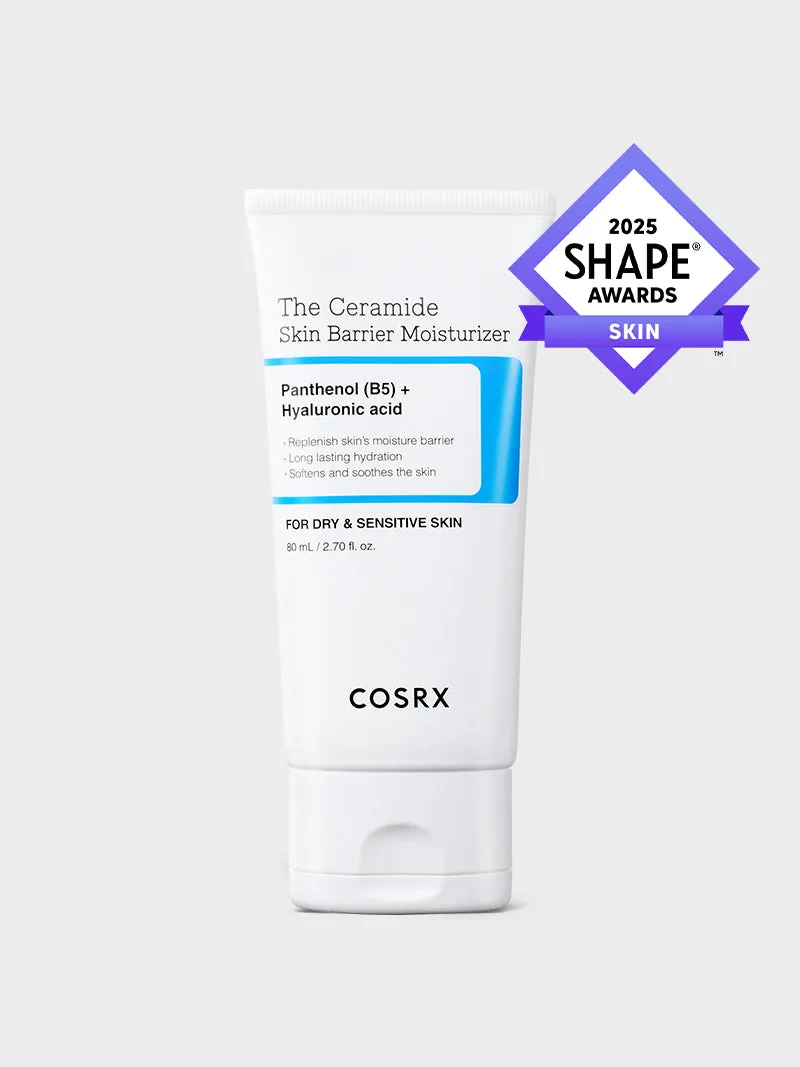
Read a genuinely good barrier cream with the tables open and the whole method collapses. COSRX's ceramide barrier moisturizer carries behenyl alcohol, a spread of long-chain fatty alcohols, palmitic acid, stearic acid and a branched isostearate ester — a rap sheet, by chart logic. It is also a well-built lamellar barrier repair formula whose fatty components are structural, not incidental. Vanicream's daily facial moisturizer, a product whose entire reason for existing is being tolerable to reactive skin, lists stearyl alcohol high and squalane second. The chart cannot tell you which of those facts matters.
The rabbit is more sensitive than you are
When Mills and Kligman built a human assay in 1982 to check the animal results, they reported something the ratings culture never absorbed: substances that were moderately to strongly comedogenic in the rabbit could induce comedones in humans, but the rabbit model is more sensitive than the human, and materials that were weakly comedogenic in the rabbit were probably safe for human use — with the caveat that acne-prone individuals are the exception.
That sentence is the honest version of the whole scale. The extremes carry some signal. The middle of the range — the 2s and 3s that drive most of the anxiety and most of the marketing — is noise amplified by a species difference and an exposure regime nobody replicates.
And then there is you. Comedone formation depends on sebum output, follicular size and density, androgen status, the composition of the skin's own lipids, the local microbiome, humidity, occlusion from a helmet or a mask or a pillow, and whatever hormonal weather you are having this month. The human protocols themselves recruited people selected for large follicles and a demonstrated ability to form comedones, because ordinary volunteers won't reliably comedone under a patch at all. Between-person variation of that size swamps the difference between a published 2 and a published 3. A rating is a population-free number applied to a problem that is almost entirely individual.
It is worth naming what the label does and doesn't promise, too. In the United States, "non-comedogenic" is not a regulated claim. There is no mandated assay behind it, no required substantiation, no agency reviewing it, and no post-market surveillance. It is a marketing word with a clinical accent.
What to read for instead
Discarding the number does not mean discarding the concern. Acne cosmetica is real, cosmetic-triggered flares happen, and some people demonstrably break out from specific products. The fix is to replace a lookup with a pattern read.
Four patterns are worth your attention, in rough order of how much they matter. Leave-on versus rinse-off — everything else is secondary to whether the formula stays on the skin for hours. Position in the list — a heavy ester or butter in the top five of a leave-on cream is a different proposition from the same material after the preservative. Occlusive film-formers on already-oily skin — thick waxes and butters trap the sebum that is already there, which is a mechanical problem rather than a chemical one. Long-chain fatty acids in facial oils, which is where the old charts are simultaneously most quoted and least useful: an oil blend like Byoma's Recovery Oil runs sunflower, macadamia, jojoba, sea buckthorn, olive and rosehip through one bottle, and every one of those carries a published rating that swings from innocuous to alarming depending on which chart you consult. Summing them tells you nothing. Knowing that heavy, oleic-dominant oils sit worse on oily, acne-prone skin than light linoleic-dominant ones tells you something.
There is also a genuinely separate axis that the comedogenic charts blur into acne and shouldn't. Malassezia folliculitis — the itchy, uniform, monomorphic bumps that don't respond to acne treatment — is fed by specific fatty acid chain lengths, esters and polysorbates, and it is a fungal problem, not a plugged-follicle problem. An ingredient can be irrelevant to comedones and highly relevant to Malassezia, or the reverse. Our Fungal Acne Checker and Pore-Clog Checker run those two questions separately, deliberately; the Pore-Clog Checker will show you exactly which ingredients score high on the historical tables and, in the same breath, what those decades-old numbers can and can't support. The Ingredient Decoder is the better first stop when you simply want to know what is in the bottle and where it sits.
Run the experiment on the only skin that matters
The alternative to a bad population statistic isn't a better population statistic. It's an n-of-1 trial, run with slightly more discipline than most people bring to it.
The discipline has three rules. Change one product at a time, because two new products introduced in the same week produce an uninterpretable result. Give it six to eight weeks, because a microcomedone takes weeks to become a visible lesion — which is also why the "it broke me out in two days" verdict is almost always describing irritation, contact dermatitis or a pustular flare rather than comedogenesis. And test on a real, representative site: for a leave-on product, a patch of the face that actually gets acne, not the inner forearm, whose follicles bear no resemblance to the ones you are worried about. Our Patch Test Log exists to hold that schedule so you aren't reconstructing it from memory four weeks later.
Which leaves the honest, slightly deflating position. If a product with a scary-looking ingredient list has been on your face for two months without incident, the chart is wrong about you and the skin is right. If a product that is immaculate by chart logic reliably produces closed comedones along your jaw, the chart is wrong about you in the other direction and the skin is still right. There is no version of this where the number outranks the evidence on your own face — and the short answer to what "non-comedogenic" actually means hasn't changed in forty years, whatever the packaging implies.
Buy the formula, not the rating. Then test it properly, and let the ingredient list tell you what to watch for rather than what to fear.
Products mentioned
Independently reviewed and scored — the real products behind this piece.



References
- Pathogenesis of acne vulgaris. I. Comedogenic properties of human sebum in external ear canal of the rabbit — Archives of Dermatology, 1968
- Is the rabbit ear model, in its present state, prophetic of acnegenicity? — Journal of the American Academy of Dermatology, 1982
- A human model for assessing comedogenic substances — Archives of Dermatology, 1982
- Comedogenicity of current therapeutic products, cosmetics, and ingredients in the rabbit ear — Journal of the American Academy of Dermatology, 1984
- A re-evaluation of the comedogenicity concept — Journal of the American Academy of Dermatology, 2006
- Comedogenicity in rabbit: some cosmetic ingredients/vehicles — Cutaneous and Ocular Toxicology, 2007
- Comedogenicity in cosmeceuticals: A review of clinical relevance, regulatory gaps, and future directions — JAAD Reviews, 2025
Every cited link is verified to resolve to the paper named. Where a source could not be independently confirmed, it is listed without a link rather than pointing you somewhere wrong.
Frequently asked
If comedogenic ratings are unreliable, why does the Pore-Clog Checker still show them?
Because they're the only published dataset that exists, and knowing an ingredient tested positive in the rabbit ear is still a piece of information — just not a verdict. The tool shows the score alongside what the assay actually measured, so you can weigh it against the things that matter more: whether the product is leave-on, and where the ingredient sits in the list.
Does a high rating mean an ingredient will definitely break me out?
No. The ratings were generated on raw materials at concentrations no finished formula uses, in an animal follicle that Mills and Kligman described as more sensitive than human skin. A 2006 human study of finished products found that formulas built with comedogenic ingredients were not necessarily comedogenic themselves.
Is coconut oil actually bad for acne-prone skin?
It's a heavy, oleic-dominant oil applied as a leave-on film, which is a reasonable mechanical concern for skin that already overproduces sebum — and that reasoning holds up better than the number attached to it. But the same logic says a small amount of coconut-derived surfactant in a cleanser you rinse off in under a minute is a different situation entirely.
How long should I test a new product before deciding it clogged my pores?
Six to eight weeks, changing one product at a time. A microcomedone needs weeks to become a visible lesion, so anything appearing within a day or two is far more likely to be irritation or a contact reaction than comedogenesis. Log the dates rather than reconstructing them later.
Is 'non-comedogenic' on a label regulated in the US?
No. There's no defined assay a company must run, no required substantiation, and no post-market check on the claim. Two products carrying the identical phrase may have been tested to completely different standards, or not tested at all.