We Could Publish a Pore-Clogging Score Tomorrow. We Won't.
It would be the most-clicked number on this site and one of the least defensible — because the data underneath it was never designed to grade a finished product.
Read the preview
From the DermApproved blog, in How We Rate: we could publish a pore-clogging score for every product tomorrow, and it would be the most-clicked number on the site. We won't. The ratings underneath it come from pure ingredients painted on rabbit ears at concentrations no product uses — and that isn't even the biggest problem with them. For the full breakdown, visit dermapproved.com/blog.
The number everybody wants
We could ship it this week. Every product in the catalogue has a parsed ingredient list; the classic comedogenicity table is a fixed reference; joining one to the other and printing a tidy figure between zero and five is an afternoon of work. It would immediately become the most-clicked number on the site, because it answers the question acne-prone shoppers actually have in the shape they want it answered.
We are not going to do it, and the reason is not caution for its own sake. It is that the number would be trusted far more than the evidence behind it can carry — and a confidently wrong figure attached to thousands of products does more harm than an honest absence. People would avoid perfectly good moisturisers and buy worse ones on the strength of a rating derived from an assay that was never meant to grade a finished formula.
So this piece is the argument for the gap. Here is where the data came from, why it does not survive the trip from ingredient to product, and what we publish instead.
Where the ratings actually came from
The concept is legitimate and it has a real clinical origin. Kligman and Mills described acne cosmetica in Archives of Dermatology in the early seventies, documenting low-grade persistent comedonal acne in adult women that tracked with cosmetic use rather than with anything hormonal. That observation was correct and worth acting on.
The screening method that followed is the problem. The external rabbit ear canal is unusually prone to forming comedones, which made it a fast and sensitive screen for raw materials — the same journal published rabbit-model comedogenicity work on sunscreens in the early eighties. Sensitive, though, means it flags things human skin shrugs off. A later human model, applying substances under occlusion to the upper back and sampling follicles by biopsy, was a genuine improvement and still tested materials pure and occluded on a body site that is not the face.
That is the provenance of the zero-to-five scale in circulation today: individual ingredients, undiluted, held against skin for days, frequently in another species. It was built to decide which raw materials deserve a closer look. It was never built to rank the bottle on your shelf, and reading it as though it were is the category error the whole industry keeps making.
A formula is not the sum of its ingredients
Even granting the ratings, the arithmetic does not work.
Concentration is the obvious term. An ester carrying a mid-range rating at a few percent inside an emulsion is a different proposition from that same ester applied neat, and the classic table has no concentration axis at all. Contact time is the next: a flagged surfactant in a cleanser that is on the skin for forty seconds cannot be equated with the same molecule in an overnight cream. Then the vehicle, which changes penetration and occlusion; then the rest of the formula, which may include ingredients that actively reduce follicular plugging. A re-evaluation of the comedogenicity concept published in the Journal of the American Academy of Dermatology made the point plainly — the meaningful test is of the finished product, not of a list.
The label offers no rescue. A study in JAMA Dermatology examining comedogenicity product labelling found the claim to be essentially unregulated: no agency specifies the test a product must pass before printing "non-comedogenic" on the carton. It is a marketing term with the cadence of a certification.
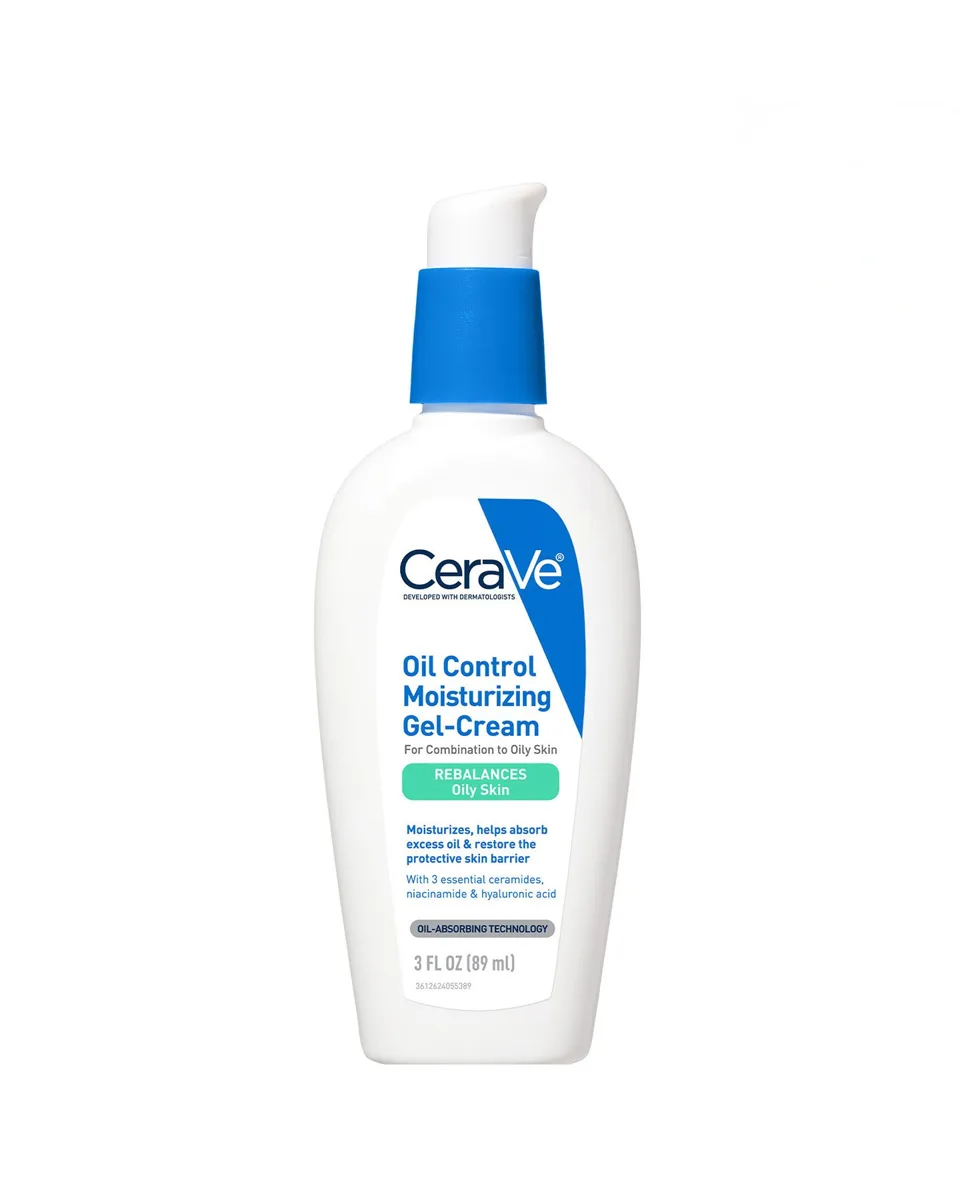
A worked example makes the shape of the error obvious. Coconut oil is one of the few ingredients whose clog-prone reputation is genuinely repeated in clinical experience, and neat coconut oil on acne-prone facial skin is a real risk. But SheaMoisture's Virgin Coconut Oil Body Lotion and Palmer's Coconut Oil Formula Body Lotion are body products, at a fraction of the neat concentration, on skin whose follicles behave differently from facial ones. Meanwhile CeraVe Oil Control Moisturizing Gel-Cream contains an isopropyl ester that appears on the flag list and is built specifically for oily, congestion-prone skin. Ingredient arithmetic gets both of those backwards.
Individual variation is the dominant term
One problem would still sink a product-level score even if the ingredient data were perfect: the same formula produces different outcomes on different faces, and the spread between people is larger than the spread between products.
Sebum output, follicular anatomy, keratinocyte behaviour, hormonal state, climate and what else is in the routine all move the result. Work on instrumental comedogenicity assessment, counting comedones and measuring sebum and porphyrin across face and body, exists precisely because visual judgement of who is reacting to what is unreliable. Any single figure printed on a product page is implicitly a claim about an average person who does not exist.
There is also a diagnostic trap sitting underneath the whole question. A substantial share of what people treat as cosmetic-triggered acne is Malassezia folliculitis — a yeast-driven eruption that mimics acne closely enough that a European position statement exists on distinguishing and treating it. It is monomorphic, itchy, and it responds to antifungal treatment rather than to anything an ingredient rating tracks. Someone chasing a lower comedogenic score through a dozen moisturisers when the actual problem is fungal will keep failing, and the number will have helped them fail more systematically.
What we publish instead, and why it looks like that
Our assessment engine does read the ingredient list for comedogenic hits. What it does with them is the part worth explaining.
The hits are surfaced as a named, provenance-labelled signal, tagged low-confidence by design, and marked display-only — meaning they are shown to you and are explicitly excluded from the product's score. That is a written rule in the methodology rather than an oversight, and it exists because a low-trust input that quietly moves a score is worse than no input at all: it launders weak evidence into an authoritative-looking figure. Only ingredients with a genuinely repeated clinical reputation are carried in that list; most of the legacy table was deliberately not ported, because porting it would have meant importing the rabbit ear wholesale.
The tools follow the same principle. Our pore-clog-checker takes any pasted ingredient list, matches it with word-boundary precision so that ethylhexylglycerin never trips a glycerin flag, and returns the hits with their ratings and an explicit account of what those ratings can and cannot prove. The ingredient-decoder does the wider version of the same job across the whole INCI list. Both are built to start a decision, not to end one. If you want the short version of the labelling problem, our answer on whether "non-comedogenic" means anything covers it, and the coconut oil ingredient page handles the most-argued single case.
The trial of one, done properly
If no table can answer the question for your face, the answer has to come from your face. That is less satisfying than a number and considerably more accurate.
The method is unglamorous. Introduce one new leave-on product at a time — cleansers and other rinse-offs are far weaker suspects and are rarely worth the trial slot. Apply it to a defined area you can compare against untreated skin: along one jawline, or one side of the forehead, both regions where comedonal acne shows up readily. Give it at least two weeks and preferably four, because comedones form slowly and a reaction at day three is more likely irritation than clogging. Change nothing else in the routine during that window, which is the instruction everyone breaks and the reason most self-testing produces uninterpretable results. Our patch-test tool structures the timing if you would rather not run it from memory.
And hold one caveat firmly: if breakouts persist regardless of what you use, the variable is probably not the moisturiser. Persistent inflammatory acne is a treatment question, not a shopping question, and the most useful thing an ingredient checker can do at that point is tell you to stop optimising the routine and go get the diagnosis. That is exactly the moment a confident pore-clogging score would have kept someone busy for another six months — which is, in the end, the whole reason we do not publish one.
Products mentioned
Independently reviewed and scored — the real products behind this piece.



References
- Acne cosmetica — Archives of Dermatology, 1972
- Comedogenicity of sunscreens. Experimental observations in rabbits — Archives of Dermatology, 1982
- A human model for assessing comedogenic substances — Archives of Dermatology, 1982
- A re-evaluation of the comedogenicity concept — Journal of the American Academy of Dermatology, 2006
- Analysis of comedone, sebum and porphyrin on the face and body for comedogenicity assay — Skin Research and Technology, 2016
- Myths, Truths, and Clinical Relevance of Comedogenicity Product Labeling — JAMA Dermatology, 2018
- Position statement: Recommendations on the diagnosis and treatment of Malassezia folliculitis — Journal of the European Academy of Dermatology and Venereology, 2023
Every cited link is verified to resolve to the paper named. Where a source could not be independently confirmed, it is listed without a link rather than pointing you somewhere wrong.
Frequently asked
Why not publish the comedogenic rating with a disclaimer attached?
Because a number outlives its caveat. Ratings get screenshotted, quoted and sorted; the paragraph explaining that the figure came from occluded pure ingredients on rabbit ears does not travel with it. We surface the individual ingredient hits with their provenance instead, which is harder to strip of context.
Does 'non-comedogenic' on a label mean anything?
Not in any enforceable sense. Research examining comedogenicity labelling found no regulatory definition and no required test behind the claim. Brands that do test finished products responsibly exist, but you cannot tell them apart from the ones that simply printed the word.
So should I ignore comedogenic ratings entirely?
No — treat them as a weak prior rather than a verdict. A handful of ingredients have a repeated clinical reputation worth knowing about, especially when applied neat or high in an ingredient list. What the rating cannot do is tell you how a finished formula containing a small amount of that ingredient will behave on your skin.
If a product breaks me out, was it the comedogenic ingredients?
Often not. Fragrance sensitivity, occlusion, irritation, hormonal timing and Malassezia folliculitis all produce eruptions that get blamed on pore-clogging. The yeast-driven one matters most because it responds to antifungal treatment and to nothing an ingredient table tracks — chasing a lower rating will simply prolong it.
How do I test a product on myself properly?
One new leave-on at a time, on a defined area such as one jawline, for two to four weeks, with nothing else in the routine changing. Comedones form slowly, so a reaction in the first few days is more likely irritation. Rinse-off products are weak suspects and rarely worth a trial slot.
Does the comedogenic flag affect a product's score on this site?
No. It is carried as a display-only, low-confidence signal and is explicitly excluded from scoring. That is a deliberate methodology rule: allowing a weak input to move a score would give the underlying data more authority than it has earned, which is the exact failure this article is about.