Aloe Won Its Argument on Burns. Everything Else Is Borrowed Credibility.
The burn trials are real and the skeptics who dismiss aloe as folklore are wrong — but the same substance has delayed healing in other wounds, and none of it says anything about what a soothing gel does to intact skin.
Read the preview
From the DermApproved blog, in Natural & Botanical: aloe actually won. Randomised trials, meta-analyses, burns healing days faster — the grandmother with the cut leaf was right, and dermatology's eye-rolling wasn't evidence either. But the same gel has been shown to slow other wounds badly, and the number on the front of the bottle measures something else entirely. For the full breakdown, visit dermapproved.com/blog.
Give the folk remedy its win first
It is fashionable in evidence-minded skincare writing to treat every plant claim as marketing until proven otherwise. On aloe that stance is simply wrong, and pretending otherwise costs credibility with the exact readers who should trust us.
For second-degree burns, aloe has been studied in randomised controlled trials repeatedly, and the pooled results are not ambiguous. A 2022 meta-analysis and systematic review of second-degree burns found aloe significantly reduced mean wound-healing time compared with other topical treatments — by 3.76 days. A separate meta-analysis published the same year comparing aloe directly with silver sulfadiazine, the long-standing pharmaceutical standard in burn care, found time to wound healing favoured aloe. And a 2024 meta-analysis of randomised trials reported no significant difference in wound infection risk between aloe and controls, which matters because the obvious objection to a plant gel on a burn is that you have introduced a microbial substrate onto damaged skin.
That is a real result about a real plant, obtained the proper way. A grandmother who cut a leaf open and pressed it onto a scald was doing something defensible, and generations of dermatological eye-rolling at that practice were not evidence-based either. Say it plainly: on burns, the folk remedy was substantially right, and the mechanism — a moist wound environment plus glycoproteins with genuine anti-inflammatory activity on damaged tissue — is coherent rather than mystical.
Now the part that the supplement aisle never gets to.
The same gel has delayed healing, in trials nobody quotes
Evidence has a shape, and aloe's shape is narrow and uneven rather than broadly positive.
The Cochrane review of aloe for acute and chronic wounds pooled seven randomised trials across 347 participants and reached conclusions considerably cooler than the burn literature. Aloe mucilage did not increase burn healing compared with silver sulfadiazine in the trials available at that point. In chronic wounds, no significant difference appeared for pressure ulcers. And in surgical wounds healing by secondary intention, aloe significantly delayed healing — by a mean of 30 days. The reviewers noted that clinical heterogeneity precluded meta-analysis and that the quality of included trials was poor, which is the honest caveat cutting in both directions.
That delay finding is not an outlier. The trial underneath it followed women whose wounds required healing by second intention after caesarean delivery or gynaecological laparotomy. Standard management healed in a mean of 53 days; the aloe-treated group took 83. And an earlier controlled study of experimental second-degree burns reported that aloe gel hindered healing rather than helping it.
So the accurate summary is not "aloe heals wounds." It is: in superficial partial-thickness burns, pooled randomised evidence favours it by a few days; in deeper wounds closing by secondary intention, at least one trial found it materially worse than nothing; and the underlying trial quality across the field is weak enough that everyone should hold their position loosely. Anyone who tells you the aloe question is settled, in either direction, has not read past the abstract they preferred.
What follows practically is narrow and useful. Sunburn and minor superficial burns are the setting where the evidence points the right way. An open, deep, or surgical wound is not, and putting a botanical gel into one is a decision to make with a clinician rather than with a bottle. Our answer on whether one bad burn or lifetime exposure matters more covers what the sunburn itself is doing while you soothe it, which is the more consequential question.
Why a burn result cannot travel to a moisturiser
Here is the leap the industry makes and nobody audits: aloe was tested on damaged skin and is sold for intact skin, as though those were the same organ in two moods.
They are not. A second-degree burn is a wound with a disrupted or absent stratum corneum, ongoing inflammation, exposed viable tissue, and an active repair program running. Anything that keeps that surface moist, damps inflammatory signalling, and does not introduce infection can plausibly shorten the timeline, and that is the specific job aloe appears to do. Intact skin has none of those features. It has a functioning barrier whose water content is governed by lipid lamellae, natural moisturising factor, and whatever occlusive or humectant you apply on top. There is no mechanistic bridge from "accelerates re-epithelialisation of a burn" to "hydrates a normal face better than glycerin." The two claims share a plant and nothing else.
And measured as a hydrating ingredient, aloe is ordinary. Aloe barbadensis leaf juice is overwhelmingly water carrying a small fraction of polysaccharides, and those polysaccharides are mild humectants with a film-forming quality that reads as "soothing" on application. That is a pleasant contribution. It is not a competitive one. Glycerin is a smaller, cheaper, better-characterised humectant that does the water-binding job more effectively at a fraction of a percent, and panthenol has a considerably better evidence base for the specific "calming, barrier-supporting" property aloe is credited with. Our aloe vera ingredient page lays out where the evidence actually sits.
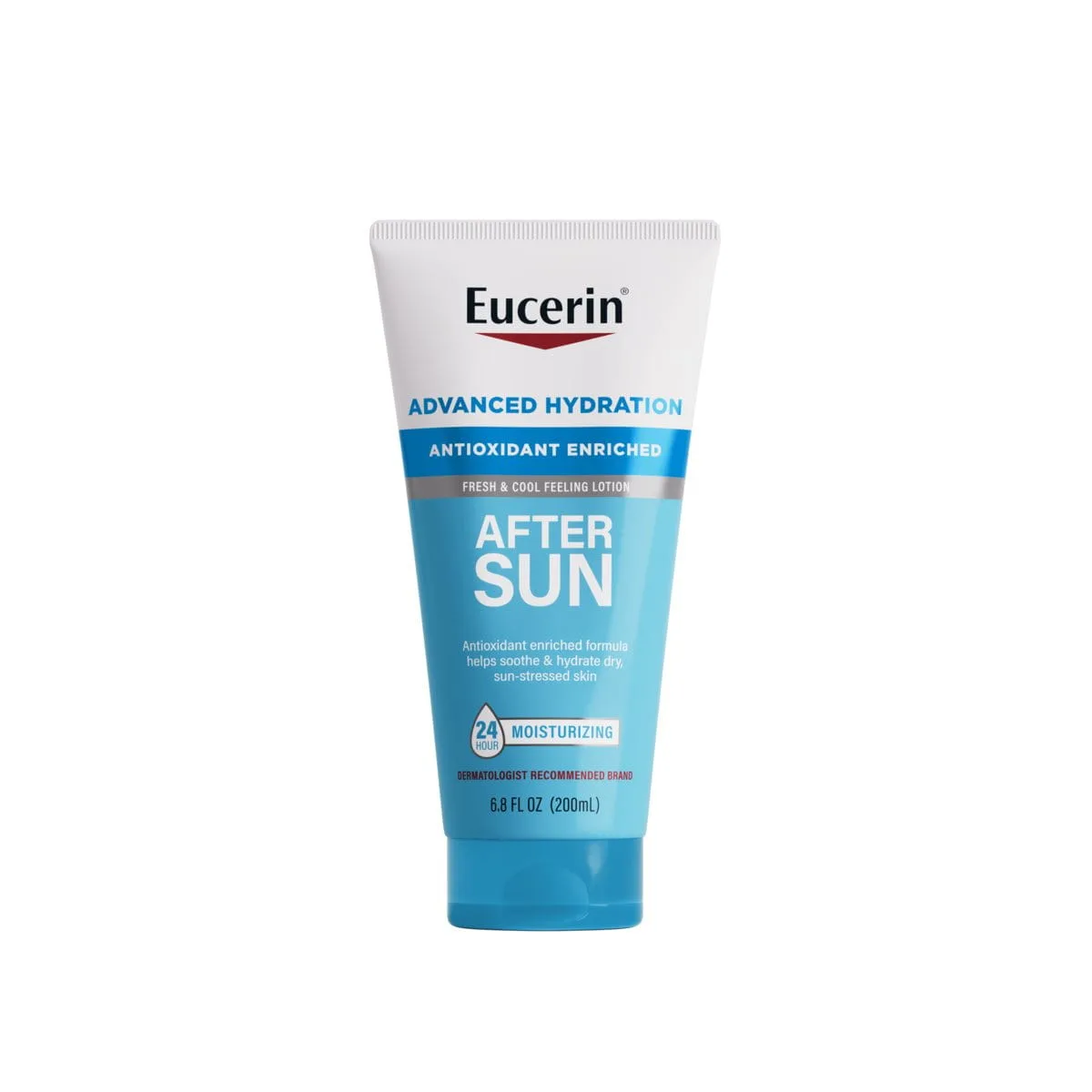
The most telling formulations are the ones that quietly agree. Cetaphil Soothing Gel-Cream with Aloe puts aloe on the front and allantoin, panthenol and glycerin in the formula doing the measurable work. Eucerin Advanced Hydration After Sun Lotion is an after-sun product built around panthenol and licorice root rather than an aloe percentage — which, given the category's conventions, is close to a statement of position. Blue Lizard After Sun Soothing Lotion runs aloe alongside panthenol, niacinamide and centella, which is the sensible construction: aloe for feel and the supporting cast for effect.
The number on the front of the bottle is a water percentage
Walk the K-beauty aisle and you will find soothing gels advertising aloe content the way a spirit advertises proof. It reads as a potency claim. It is not one.
In an INCI list, Aloe barbadensis leaf juice occupies the position water would otherwise hold — it is the aqueous phase, not an active dissolved in one. A gel declaring a very high aloe percentage is telling you that instead of starting with purified water, the formulator started with reconstituted or filtered aloe juice, which is mostly water. The percentage is real and the implication is false. Nobody prints "97% water" on a serum, and for the same reason nobody should read an aloe number as a dose.
There is a second wrinkle worth knowing, which our ingredient decoder makes easy to check on any specific bottle: much of the aloe used in cosmetics is reconstituted from spray-dried powder rather than pressed from a leaf that morning, and the polysaccharide content that the interesting research concerns is sensitive to processing. Two products can declare identical aloe percentages and contain materially different amounts of the fraction anyone studied.
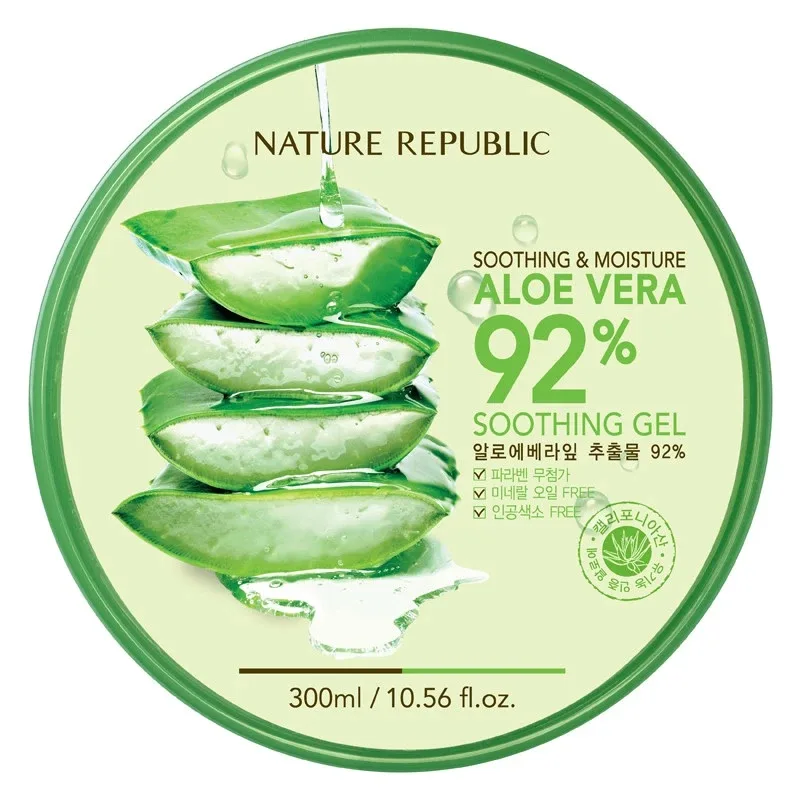
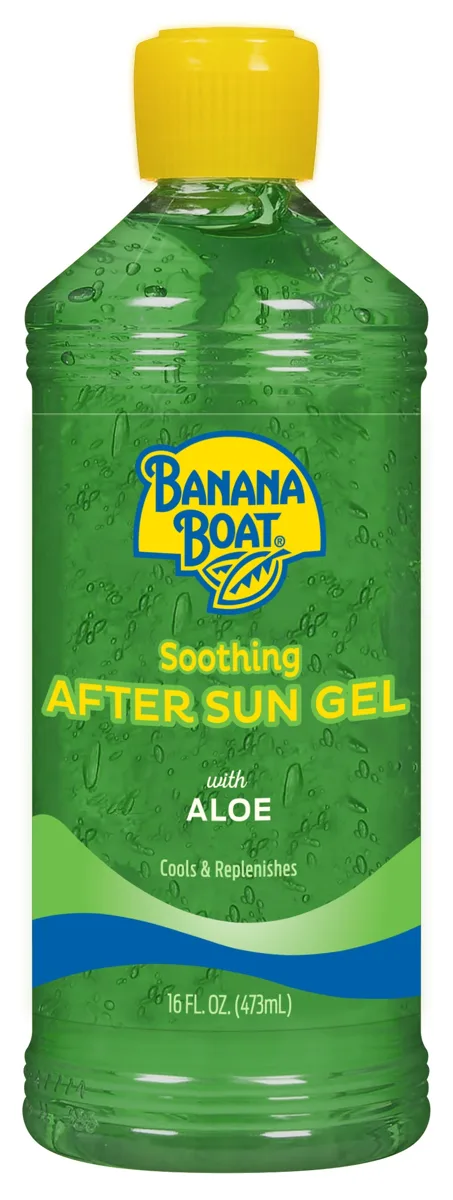
Then the detail that undercuts the "pure and gentle" positioning of the whole category. Look at what sits alongside the aloe in the cooling gels. Nature Republic's Soothing & Moisture Aloe Vera Gel and Banana Boat Soothing Aloe After Sun Gel both carry denatured alcohol, which is there for the fast-drying, instantly-cooling feel that makes an after-sun gel satisfying — and which is a poor companion for skin that has just been burned. Holika Holika's Aloe 99% Soothing Gel leads with a still higher number. The high percentage and the drying solvent are not in tension in the marketing, because the marketing is about the number. On sunburned skin they are absolutely in tension.
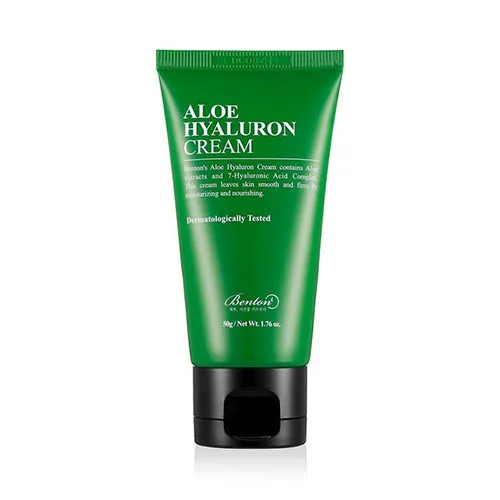
If you want the aloe experience without that, formulations that treat it as one ingredient among several — Isntree Aloe Soothing Gel or Benton Aloe Hyaluron Cream — pair it with hyaluronic acid, panthenol and centella and behave like moisturisers rather than like cold compresses that evaporate.
The preservation problem, and why fresh-from-the-plant is the worst option
A formula whose water phase is a dilute solution of plant polysaccharides is, from a microbiologist's point of view, a nutrient broth with a lid on it.
This is the structural difficulty with aloe-forward products and it explains a pattern shoppers notice without being able to name: aloe-heavy gels, particularly those marketed as minimally preserved or "clean," are disproportionately represented among products that go off, separate, smell wrong after a few months, or arrive already slightly fermented. Sugars feed organisms. A high-aloe formula has more of them and, if it is also avoiding the preservatives that work best, less defence. This is not an argument against aloe; it is an argument for taking the preservative system on an aloe product more seriously than on a plain emulsion, and for respecting the period-after-opening rather than keeping the tub for two summers.
Which brings us to the practice this whole subject invites, and where the honest advice runs against the romantic instinct. Cutting a leaf and applying the fresh gel to skin is the version people feel best about and the version with the most going against it. Fresh-cut aloe delivers not only the inner leaf gel but the bitter yellow latex directly beneath the rind, and that latex is where the anthraquinones — aloin and barbaloin — are concentrated. Those compounds carry real toxic potential, which is precisely why commercial processing removes them and why regulators have constrained their use. A home preparation is also unpreserved, unfiltered, and applied to skin that, in the sunburn scenario, has a compromised barrier. If you want aloe on a burn, a processed product is the safer delivery of the thing that was actually studied.
The allergy question has a surprising answer
Botanical ingredients earn a general reputation for sensitisation, and it is usually deserved — fragrance materials, essential oils and plant extracts account for a large share of cosmetic allergic contact dermatitis. Aloe is an interesting exception, and the exception is instructive about why.
Austrian researchers patch tested 702 consecutive patients against three preparations at once: an oily extract from aloe leaves, whole-plant aloe powder, and concentrated aloe vera gel. None of the 702 reacted to any of them. The explanation the authors give is chemically satisfying. Processed aloe gel from the leaf centre consists almost entirely of carbohydrates, and carbohydrates are poor haptens — they do not readily form the protein conjugates that contact sensitisation requires. The anthraquinone-bearing bark, the fraction with the pharmacological and toxic activity, is largely removed before the gel ever reaches a jar.
So when someone reacts to an aloe gel, the aloe is usually not the culprit. The fragrance is a better candidate, or the denatured alcohol, or a preservative that the aloe-rich formula needed at higher load. That distinction is worth making because "I'm allergic to aloe" tends to remove an ingredient that is rarely the problem while leaving the actual sensitiser in the next product.
The same researchers were careful to add something we should quote rather than bury: their negative allergy finding does not justify unrestrained promotion of aloe products, since studies supporting its wider claims are few and mostly unable to displace reasonable scepticism about miracle cures. Scientists writing that sentence in their own paper are modelling exactly the posture this topic deserves.
Where we land: aloe is a genuinely good ingredient with one well-supported use and an enormous halo built on top of it. Use it on a sunburn or a minor superficial burn, where the randomised evidence points the right way and the plant has earned its reputation. Do not choose a moisturiser because of it, do not read the percentage as potency, and do not put it in a deep or surgical wound. The claim that survived testing is narrow, real, and quite a lot more interesting than the vague soothing halo that gets sold instead.
Products mentioned
Independently reviewed and scored — the real products behind this piece.




- Ingredient Aloe Vera Where the evidence for aloe actually sits, use by use.
- Ingredient Glycerin The better-characterised humectant aloe is implicitly competing with.
- Ingredient Panthenol (Pro-Vitamin B5) Stronger evidence for the calming, barrier-supporting property aloe gets credited for.
- Question Was it one bad sunburn, or the whole lifetime of exposure? What the sunburn is doing while you soothe it — the more consequential question.
References
- Second-Degree Burns and Aloe Vera: A Meta-analysis and Systematic Review — Advances in Skin & Wound Care, 2022
- A Systematic Review and Meta-Analysis Comparing Burn Healing Outcomes Between Silver Sulfadiazine and Aloe vera — Cureus, 2022
- Effects of Aloe vera on Burn Injuries: A Systematic Review and Meta-Analysis of Randomized Controlled Trials — Journal of Burn Care & Research, 2024
- Aloe vera for treating acute and chronic wounds — Cochrane Database of Systematic Reviews, 2012
- Aloe vera dermal wound gel is associated with a delay in wound healing — Obstetrics and Gynecology, 1991
- Aloe vera gel hindered wound healing of experimental second-degree burns: a quantitative controlled study — The Journal of Burn Care & Rehabilitation, 1988
- Absence of contact sensitization to Aloe vera (L.) Burm. f. — Contact Dermatitis, 2005
Every cited link is verified to resolve to the paper named. Where a source could not be independently confirmed, it is listed without a link rather than pointing you somewhere wrong.
Frequently asked
Does aloe vera actually help a sunburn?
For superficial partial-thickness burns the randomised evidence points the right way — a 2022 meta-analysis found aloe shortened mean healing time by 3.76 days against other topicals, without raising infection risk. That is the one aloe claim with solid support, and sunburn is the everyday case it maps onto.
Is a 99% aloe gel stronger than a 92% one?
Neither number describes potency. Aloe leaf juice occupies the water phase of the formula, so a high percentage means the formulator started with reconstituted aloe instead of purified water. Judge the rest of the ingredient list — particularly whether denatured alcohol is present — rather than the figure on the front.
Can I use aloe straight from the plant?
It is the version with the most going against it. Fresh-cut leaf delivers the bitter latex beneath the rind along with the gel, and that latex carries the anthraquinones commercial processing deliberately removes. It is also unpreserved and unfiltered, applied to skin whose barrier is already compromised.
Is aloe a good moisturiser for normal skin?
It is a pleasant, mild one with no particular advantage. Its polysaccharides are weak humectants with a nice film-forming feel, and glycerin binds water more effectively at a fraction of the concentration. Nothing in the burn evidence predicts performance on an intact stratum corneum — different substrate, different problem.
Can you be allergic to aloe vera?
It happens, but far less often than the botanical reputation suggests. In a series of 702 consecutively patch-tested patients, none reacted to leaf extract, whole-plant powder or concentrated gel — processed gel is largely carbohydrate, a poor sensitiser. A reaction to an aloe product usually points to its fragrance, alcohol or preservative.
Should aloe go on a deep cut or a surgical wound?
No, not without clinical direction. The Cochrane review found aloe significantly delayed healing of surgical wounds closing by secondary intention, by a mean of 30 days, and the underlying trial reported a large difference in healing time. The burn evidence does not extend to that setting.