Colloidal Oatmeal Is the Only Pantry Ingredient With a Drug License
It sounds like a grandma remedy, but colloidal oatmeal is a legally recognized OTC drug with the eczema data to back it up.
Read the preview
From the DermApproved blog, in Natural and Botanical: colloidal oatmeal. It sounds like something your grandmother stirred into a bath — and yet it's one of the only pantry ingredients regulators actually license as a drug. That's the twist. This humble oat holds an official FDA skin-protectant designation, the single active allowed to claim it relieves eczema by name. So how did breakfast end up in the dermatology journals? There's a specific molecule in oats doing the anti-itch work, and the clinical trials found something surprising about what happens after you stop using it. We also settle the fight nobody wins — the DIY oatmeal bath versus the jar on the shelf — and there's one group that should still patch-test first. The gap between how humble this sounds and how legit it is might be the best story in skincare. Which side wins, and who should skip the bath entirely, at dermapproved.com/blog.
The remedy your regulator signed off on
Most of the 'natural' skincare aisle survives on vibes and folklore. Colloidal oatmeal is the strange exception: it carries a government drug designation. Under the FDA's over-the-counter monograph for skin protectant drug products, colloidal oatmeal is recognized as an active ingredient — and it is the only single skin-protectant active that can specifically claim to temporarily protect and relieve minor skin irritation and itching due to eczema. That is a regulatory sentence, not a marketing one. When a CeraVe or Aveeno box says 'protects and relieves,' it is speaking the FDA's language, not a copywriter's.
That distinction matters because 'skin protectant' is a legal drug category, the same one that covers petrolatum, dimethicone, and zinc oxide. To sit in it, an ingredient has to clear an evidence bar and appear on the box as an active ingredient with a percentage, usually 0.5% to 1% for oat. So the pantry-staple framing genuinely undersells it. Ground oats have been slapped on itchy skin since antiquity, but colloidal oatmeal earned its place through data, not tradition.
The catch worth stating up front: a drug designation for 'skin protectant' is a claim about relieving symptoms and shielding the barrier, not a promise to cure atopic dermatitis. Oat calms and protects. It does not replace a prescription steroid or a biologic in moderate-to-severe disease. Read the license for exactly what it says.
What 'colloidal' actually buys you
The word doing the heavy lifting is 'colloidal.' It means the whole oat grain — bran included — is milled into an ultrafine powder and processed so the particles stay suspended in water rather than sinking. That suspension is the point. When you disperse colloidal oatmeal in a bath or blend it into a cream, the fine particles spread into a thin, hydrated film across the skin surface. That film is what physically shields the barrier and holds water against the stratum corneum.
This is why tossing a scoop of breakfast oats into your tub is a pale imitation. Regular rolled or steel-cut oats are too coarse to suspend evenly; they settle, clump, and coat your drain more reliably than your skin. The particle engineering is the difference between a legal skin protectant and a bowl of sludge.
Chemically, oat brings three things to that film at once. Beta-glucans and other polysaccharides act as humectants and form the moisture-trapping layer. Oat lipids and proteins support the barrier. And a class of oat-specific polyphenols called avenanthramides delivers the anti-inflammatory and anti-itch punch. It's a genuine multi-tasker, which is why formulators reach for it in barrier and eczema creams rather than as a novelty.
Avenanthramides: the anti-itch chemistry
The star molecules are avenanthramides, and they are close to unique to oats. They are the reason a plant most people associate with breakfast ended up in dermatology journals. Research into oat's mechanism has shown that avenanthramides inhibit the activity of nuclear factor kappa B (NF-kB), a master switch that turns on inflammatory genes, and blunt the release of pro-inflammatory cytokines and histamine — the exact signals that drive redness, swelling, and the maddening itch of an eczema flare.
A 2010 review in the Journal of Drugs in Dermatology laid out this mechanism, describing how avenanthramides suppress tumor-necrosis-factor-driven NF-kB activity and cut the release of interleukin-8, a cytokine that recruits inflammatory cells. A 2015 study in the same journal took it further, testing oat extracts in the lab and on real skin: the extracts reduced pro-inflammatory cytokines in vitro, and a colloidal-oat lotion produced significant clinical improvements in dryness, scaling, roughness, and itch intensity on the legs of women with dry, itchy skin. Avenanthramides also mop up reactive oxygen species, adding a mild antioxidant effect on top of the anti-inflammatory one.
The honest scope note: these are real, measurable effects, but they are gentle ones. Avenanthramides calm a low-grade inflammatory signal. They are not immunosuppressants, and they will not muscle down a severe flare the way a topical corticosteroid does. Think of oat as the thing that keeps a quiet situation quiet, and takes the edge off a loud one.
What the eczema trials actually show
The most useful clinical data comes from a 2020 double-blind study in Clinical, Cosmetic and Investigational Dermatology on chronic irritant hand eczema — one of the most stubborn, treatment-resistant forms there is. Patients used 1% colloidal oatmeal cream as add-on therapy alongside standard corticosteroid treatment. The oatmeal group didn't just improve during treatment; the striking finding was what happened after. Symptoms in the oat group did not return to baseline the way the control group's did, and quality-of-life scores improved substantially more. In other words, oat helped hold the line once the steroid was tapered — exactly the maintenance role a gentle barrier active should play.
That framing is how to read all the oat evidence: it shines as a daily maintenance and adjunct ingredient, buffering the barrier so flares are milder and less frequent, rather than as a rescue treatment for an active, angry patch. A formula like CeraVe Baby Eczema Relief Cream pairs the 1% oat active with ceramides and shea butter for precisely this daily-barrier job, and it earns its National Eczema Association positioning honestly. A richer option like Prequel Barrier Therapy Skin Protectant Cream stacks colloidal oatmeal with the full ceramide-cholesterol-fatty-acid trio, which is the combination that actually rebuilds barrier lipids rather than just sitting on top of them. If you want to see how a given oat cream's supporting cast stacks up, our ingredient decoder tool breaks an INCI list into what each component is doing.
The DIY bath vs. the jar on the shelf
An oatmeal bath is a real thing, not a myth — a properly colloidal oat product dispersed in lukewarm water does coat and soothe irritated skin, and it's a legitimately good move for a flare covering large areas or for a child too itchy to tolerate anything rubbed on. The classic packet-in-the-tub product exists for exactly this reason.
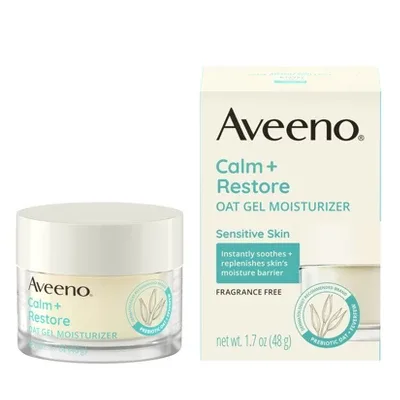
But for most people, most days, the formulated cream wins, and not by a little. A bath is a brief, rinse-off exposure; a leave-on cream keeps the oat film and its avenanthramides in contact with your skin for hours, which is where the anti-itch chemistry does its work. A modern oat moisturizer also arrives pre-loaded with a supporting cast a bath can't offer — humectants, ceramides, and occlusives that seal in the hydration. A gel-textured option like Aveeno Calm + Restore Oat Gel Moisturizer suits oily or combination skin that finds balms too heavy, while a genuinely rich cream like La Roche-Posay Lipikar Eczema Cream or the cult-favorite Topicals Like Butter Moisturizer is built for the dry, flared, cracked-skin end of the spectrum.
There's also a practical argument. Grinding your own oats risks an under-milled, non-suspending powder that does little and clogs plumbing, and homemade preparations have no preservative system — a warm, damp oat slurry is a fine place for microbes to grow. If you want oat's protectant benefit reliably, buy it formulated. Save the DIY bath for occasional flare relief, and if you're trying to judge whether your eczema is mild enough for oat-and-emollient maintenance or bad enough to warrant a derm visit, our eczema-severity tool can help you gauge where you sit before you self-treat.
Who oat is for, and where its limits are
Colloidal oatmeal is close to a default recommendation for sensitive, eczema-prone, and reactive skin because its risk profile is so low. It's suitable for infants, it layers under almost anything, and it plays well with actives — a common move is to use an oat cream as the buffering moisturizer on the nights you apply a retinoid or an acid, precisely because it calms without interfering.
The limits are real but narrow. Oat allergy exists, and while genuine contact allergy to colloidal oatmeal is uncommon, people with a known oat or gluten-cross-reactive sensitivity should patch-test first. Anyone with celiac disease reacting to topical oat is debated and rare, but caution costs nothing. And to say it once more: oat is a protectant and a soother, not a cure. If a flare is spreading, weeping, or not responding, oat is the supporting player, not the treatment.
Stripped of the wellness-aisle glow, colloidal oatmeal is one of the most quietly evidence-backed ingredients in skincare — a regulated drug active hiding behind a breakfast-food reputation. That gap between how humble it sounds and how legitimate it is might be the most interesting thing about it.
Products mentioned
Independently reviewed and scored — the real products behind this piece.




References
- Mechanism of action and clinical benefits of colloidal oatmeal for dermatologic practice — Journal of Drugs in Dermatology, 2010
- Anti-inflammatory activities of colloidal oatmeal (Avena sativa) contribute to the effectiveness of oats in treatment of itch associated with dry, irritated skin — Journal of Drugs in Dermatology, 2015
- The Efficacy of Colloidal Oatmeal Cream 1% as Add-on Therapy in the Management of Chronic Irritant Hand Eczema: A Double-Blind Study — Clinical, Cosmetic and Investigational Dermatology, 2020
Every cited link is verified to resolve to the paper named. Where a source could not be independently confirmed, it is listed without a link rather than pointing you somewhere wrong.
Frequently asked
Is store-bought colloidal oatmeal really better than grinding my own oats?
Yes, for reliable results. 'Colloidal' means the oat is milled ultra-fine and processed to stay suspended in water so it forms an even film on skin. Home-ground oats are usually too coarse to suspend, so they settle and clump instead of coating, and a homemade slurry has no preservative to stop microbial growth.
Can colloidal oatmeal actually treat my eczema or just soothe it?
It's a soother and barrier protectant, not a cure. It holds an FDA skin-protectant designation to relieve itch and minor irritation from eczema, and trials show it helps keep symptoms from bouncing back as maintenance. But for an active, spreading, or weeping flare it's an add-on to real treatment like a prescribed steroid, not a replacement.
What are avenanthramides and why do they matter?
Avenanthramides are polyphenols found almost exclusively in oats. Research shows they suppress NF-kB signaling and reduce pro-inflammatory cytokines and histamine release, which is the mechanism behind oat's anti-itch and anti-redness effects. They also have a mild antioxidant action. Their effect is gentle and calming rather than powerfully immunosuppressive.
Is colloidal oatmeal safe for babies and very sensitive skin?
It's one of the gentlest actives available and is used in infant eczema creams, which is why it's a common default for reactive skin. True oat allergy is uncommon but exists, so anyone with a known oat sensitivity should patch-test first. It also layers well under actives, making it a good buffering moisturizer on retinoid or acid nights.
What concentration of colloidal oatmeal should a product have?
Products making the FDA eczema-relief claim list colloidal oatmeal as an active ingredient, typically around 0.5% to 1%. If oat appears low on the ingredient list without an 'active ingredients' box, it's likely present at a token level for marketing rather than at a functional protectant dose.