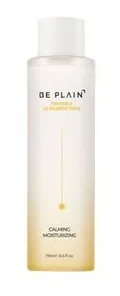
Roman chamomile extract at over 80% concentration is the defining feature — most chamomile toners use the extract as a low-position botanical at well under 1%. This toner uses chamomile as the actual base of the formula, replacing water entirely. That single decision is why the product behaves more like a treatment than a hydration step.
One of the best-formulated hydrating toners under twenty dollars, full stop. Roman chamomile at over 80% concentration is the kind of formulation choice most brands talk about and almost none actually make. Add Centella, purslane, licorice root, and a small ceramide boost in a fragrance-free, alcohol-free base, and you have a toner that quietly outperforms competitors at three times the price.
Good choicefor SensitivityIn your profileYou chose · No fragrance, drying alcohol, declarable allergens or sensitising preservatives in this liquid — the profile sensitive skin looks for.Not yet assessedGentleNo reviews collected yet
The case for it
Centella Asiatica Extract has been researched for this concern and the evidence does not support it.
It is plausibly present at a working level, though the concentration is not declared.
The formula carries none of the triggers this concern is sensitive to.
What would change this: A declared concentration would move this to a firmer reading of the dose.
Same rule for everyone. “Good choice” is the verdict on 1,938 of 45,024 concern verdicts across the catalog; rule F2 decided 1,938 of them.
Unchanged since September 5, 2026, engine 5.1.1.
Promisingfor RosaceaIn your profileYou chose · Centella Asiatica has trial-level evidence for rosacea but no guideline or regulatory standing yet — promising, short of a recommendation; the other actives here are not yet assessed for it.Moderate evidenceGentleNo reviews collected yet
The case for it
Centella Asiatica Extract has trial-level evidence for this concern but no guideline or regulatory standing yet.
It is plausibly present at a working level, though the concentration is not declared.
The formula carries none of the triggers this concern is sensitive to.
What would change this: A declared concentration would move this to a firmer reading of the dose.
Same rule for everyone. “Promising” is the verdict on 7,858 of 45,024 concern verdicts across the catalog; rule R9p decided 7,858 of them.
Unchanged since September 5, 2026, engine 5.1.1.
R9p — 0.5.0: 'Unproven' beside three filled dots read as one question answered twice with opposite words (7,018 rows). The chip measures standing, the dots measure trial volume; where the row carries at least one RCT or a tier-2 source (moderate dots) and the active is present at a working level, the honest word is Promising. Unproven is reserved for plausible-standing rows with limited or weak evidence, or an under-dosed form. Same rank as Unproven — a bet either way; the dots order them. · the full register
Carrying active
Centella Asiatica Extract
Standing
plausible — trials support it
Form
plausible
Tolerability
gentle
Row checked
against its sources on July 17, 2026 (evidence table ev-2026.09-r228)
Supporting rolefor DehydrationIn your profileYou chose · Nothing here targets dehydration directly; humectant hydration is the recognised companion to treating it, and this liquid does that without known triggers.Not yet assessedGentleNo reviews collected yet
The case for it
Portulaca Oleracea Extract has no evidence row yet for this concern — it is in the research queue.
The formula carries none of the triggers this concern is sensitive to.
What would change this: A researched evidence row for the lead active would replace this with a verdict.
Same rule for everyone. “Supporting role” is the verdict on 8,197 of 45,024 concern verdicts across the catalog; rule R8 decided 4,250 of them.
Unchanged since September 5, 2026, engine 5.1.1.
R8 — The category's job (barrier care, humectant hydration, gentle cleansing, photoprotection) is the documented supportive role for this concern. This is the honest verdict for a moisturizer on an acne page. · the full register
Good choicefor Compromised Skin BarrierIn your profileYou chose · Ceramides is a reference standard by mechanism for compromised skin barrier; this liquid carries it.Moderate evidenceGentleNo reviews collected yet
The case for it
Ceramide NP has trial-supported standing for this concern.
It is plausibly present at a working level, though the concentration is not declared.
The formula carries none of the triggers this concern is sensitive to.
What would change this: A declared concentration would move this to a firmer reading of the dose.
Same rule for everyone. “Good choice” is the verdict on 9,564 of 45,024 concern verdicts across the catalog; rule R5 decided 9,072 of them.
Unchanged since September 5, 2026, engine 5.1.1.
R5 — Trial-supported or guideline-supported active, adequately or plausibly dosed. · the full register
Carrying active
Ceramide NP
Standing
supported — its mechanism is established
Form
plausible — studied range 0.5–1%, from the trials on the row; needs leave-on contact; judge it after ~4 weeks
Tolerability
gentle
Row checked
against its sources on July 17, 2026 (evidence table ev-2026.09-r228)
The studies behind the evidence row
Elias PM, Skin Barrier / Coderch et al., ceramides and skin barrier function — ceramides ~50% of SC intercellular lipid mass, essential to the permeability barrier — reference work
Also listed for Acne — the actives here (Purslane Extract, Centella Asiatica, Ceramides, Chamomile Extract) are in our research queue for that concern; there is no verdict until their evidence rows are written. That is a gap in our table, not a mark against the product.
Does the jobDoes what a toner is for: not alcohol-driven, adds something real. Not measured from the label: restores skin pH, plays well with what follows.
A verdict is DermApproved’s assessment of how well a product’s ingredients fit a concern — never a claim about what the product treats. Evidence dots and collected reviews sit beside it and are never blended in.
Rules 0.5.1 · evidence table ev-2026.09-r228 · how we decide
Assessment
Pros & Cons
Pros
✓ Roman chamomile at 80.6% concentration replacing the water phase entirely
✓ Centella, purslane, and licorice root add complementary calming botanicals
✓ Ceramide NP at the bottom of the formula adds barrier support unusual for a toner
✓ Fragrance-free and alcohol-free with no sting-causing actives
✓ Fungal acne safe — no fatty acids or oils that feed Malassezia
✓ Watery, fast-absorbing texture layers cleanly under any subsequent product
✓ Excellent value at the price point — 190ml for under twenty dollars
Cons
✗ Faint natural herbal scent may bother very fragrance-sensitive users
✗ Watery texture runs off cotton rounds quickly — palm application is more efficient
✗ Limited US retail presence depending on region
✗ Does not contain exfoliating or brightening actives — strictly a hydration and calming step
✗ Plastic packaging is functional rather than premium
Review
Full Review
Look at the first ingredient on most chamomile toners and you will see water. Look at the chamomile slot, and you will usually find it in the bottom third of the INCI at well under one percent — present enough to put on the marketing copy, absent enough to do almost nothing. Now look at the Beplain Chamomile pH-Balanced Toner: Anthemis nobilis flower extract, position one, 80.6% concentration. The brand replaced the water entirely with Roman chamomile extract. That is not a subtle formulation choice. That is the kind of decision a brand makes when they want the hero ingredient to actually be the hero, and it is the reason this particular toner is one of the most-recommended products in K-beauty enthusiast communities.
Why chamomile, and why Roman chamomile specifically. Anthemis nobilis carries chamazulene and bisabolol, two of the more clinically substantiated botanical anti-inflammatory compounds in cosmetic formulating. Chamazulene is the deep blue compound responsible for the color of true chamomile essential oil, and it has been studied for its inhibition of the inflammatory enzymes that drive low-grade skin reactivity. Bisabolol, also found in chamomile, has its own body of evidence supporting its calming and barrier-protective effects. At a concentration that replaces the entire water phase of the formula, both of these compounds are present at meaningfully higher levels than in standard botanical-trace formulations.
The rest of the formula is built around the same logic. Centella asiatica extract adds the asiaticoside and madecassoside fraction of Centella, layering a second well-evidenced calming botanical alongside the chamomile. Purslane (Portulaca oleracea) brings omega-3 fatty acids and antioxidant compounds. Licorice root extract adds a mild brightening component for post-inflammatory marks — useful for anyone whose acne or rosacea leaves shadow patches behind. Phellodendron amurense bark extract is a traditional Asian herbal anti-inflammatory. And then, near the bottom of the INCI, ceramide NP shows up. A ceramide in a toner is unusual — it is an ingredient most brands save for creams and serums where the leave-on contact is longer — but it provides a small barrier-supporting boost that pushes this toner further into the territory of a treatment layer rather than just a hydration step.
The humectant scaffolding deserves a nod too, because it is what keeps an 80% botanical extract from behaving like flower tea on your face. Propanediol and methylpropanediol carry the extracts and evaporate cleanly. Glycerin, betaine, and trehalose form a three-way water-binding system, with trehalose in particular known for holding moisture stubbornly under dry conditions. Allantoin softens, hydrogenated lecithin helps the ceramide disperse into a water-based formula it would otherwise refuse to join, and cellulose gum gives the liquid just enough body to stay where you put it. Nineteen ingredients total. Not one of them is decorative.
The texture is appropriately watery. The toner absorbs almost instantly into damp skin without any tacky residue, which is the right behavior for a layering step that needs to disappear before the next product goes on. The scent is faint and naturally herbal, coming from the chamomile extract itself rather than any added fragrance. Some users find the herbal note pleasant; some find it unfamiliar; almost no one finds it offensive. The pH sits at 5.5, which is what the 'pH-balanced' name actually means — it does not mean the toner is restoring your skin's pH (your skin does that on its own within minutes regardless of what you apply), it means the product is formulated at a pH that does not stress the barrier in either direction.
There is a right way to use it and a wasteful one. The wasteful way is a cotton round, which drinks a startling proportion of a liquid this thin before any of it reaches your face. Pour a small pool into cupped palms instead and press it in, and on dry days go back for a second or third pass, waiting for each to sink in before the next. It is oil-free, fungal-acne-safe, vegan, and fine during pregnancy, which is a rare enough combination that it makes this toner a genuine default recommendation rather than a conditional one.
Let's address what this toner does not do. It does not exfoliate — there is no AHA, BHA, or PHA. It does not deliver high-concentration brightening actives — the licorice root is supportive, not starring. It does not function as a makeup remover — that is a different category entirely. What it does is hydrate, calm, and prepare the skin for everything that comes after. That focused job is the reason it works for almost every skin type. Sensitive skin gets the chamomile and Centella benefit. Oily skin gets a non-tacky hydration layer that doesn't add weight. Acne-prone skin gets calming support that pairs well with active treatments. Dry skin gets a leave-on humectant base that can be layered two or three times for deeper hydration. The breadth of suitability is one of the toner's quietest strengths. The calming is immediate; if you are using it to bring down a stretch of low-grade reactivity, give it a week or two of steady use before you judge.
Value is where the product becomes genuinely impressive. At eighteen dollars for 190ml, the per-milliliter cost is one of the lowest in the K-beauty hydrating-toner category, and the formulation is more thoughtful than most products at twice the price. A bottle runs two to three months at twice-daily use. Beplain's distribution outside of Korea has historically been patchier than the bigger K-beauty exports, though the toner is now widely available through international retailers. For shoppers building a sensitive-skin routine on a budget, this is one of the strongest formulation-to-price ratios in the entire toner category. There is no celebrity story, no proprietary peptide complex, no aspirational packaging — just a plastic bottle with a flip cap and thousands of reviews saying the same quiet thing: it doesn't sting, and my skin is calmer. It deserves the cult following it has earned.
Formula
Key Ingredients
The hero actives that drive this product's performance.
The defining ingredient — it sits at position one and replaces water as the base of the formula. Roman chamomile carries chamazulene and bisabolol, two of the most well-evidenced botanical anti-inflammatory compounds. At an 80%+ concentration, this is functioning as a leave-on calming layer rather than a token botanical extract.
Adds the asiaticoside and madecassoside fraction of Centella to the formula, layering a second well-evidenced anti-inflammatory and barrier-supporting botanical alongside the chamomile. The two work in complementary directions on irritated, reactive skin.
Purslane is rich in omega-3 fatty acids and antioxidant compounds. In a toner format it contributes additional soothing and a mild antioxidant layer that complements the chamomile and Centella.
An unusual but welcome inclusion in a toner. Ceramide NP at the bottom of the formula provides a small barrier-supporting boost as part of the broader hydrating layer, helping the toner do meaningful work beyond just wetting the skin.
Established mechanismfor Compromised Skin Barrier · established mechanism
Ingredient standings describe the active at treatment-level doses and
vehicles; this product's own condition grades weigh its actual formula.
Apply directly after cleansing on damp or dry skin — pat in with the palms or soak into a reusable cotton round. Layer two to three light passes for a deeper hydration boost on dry days.
Results Timeline
Calming and a hydration boost are immediate. Visible improvement in low-grade redness or sensitization develops over 1-2 weeks of consistent use.
The clinical case for this toner rests primarily on the chamomile content. Anthemis nobilis (Roman chamomile) carries two well-studied anti-inflammatory compounds: chamazulene and (-)-alpha-bisabolol. Chamazulene has been shown in laboratory studies to inhibit pro-inflammatory mediators, while bisabolol has accumulated peer-reviewed evidence supporting its anti-irritant, antimicrobial, and barrier-protective effects. Studies on bisabolol-containing formulations have demonstrated reductions in UV-induced erythema and improvements in sensitive skin tolerance. The unusual feature of this toner is that the chamomile sits at over 80% concentration as the formula's water replacement, which means both bisabolol and chamazulene are present at meaningfully higher levels than in standard botanical-trace formulations.
Centella asiatica adds a second layer of well-evidenced calming support. The asiaticoside and madecassoside fractions of Centella have been studied for anti-inflammatory and pro-healing effects, with clinical work supporting their use in barrier-compromised and post-procedure skin. While individual study magnitudes are modest, the consistency of evidence across multiple formulations supports Centella as one of the more credible botanical actives in modern dermatology.
Licorice root extract contributes glabridin and licochalcone A, two compounds with documented tyrosinase-inhibition activity that can contribute mild brightening and anti-inflammatory benefits. The concentration in this toner is supportive rather than treatment-level, but in combination with the chamomile and Centella the overall calming-and-tone-evening package is consistent with what dermatologists recommend for reactive, post-inflammatory pigmentation-prone skin.
The inclusion of ceramide NP is worth specific note. Ceramide NP is one of the most-studied ceramide subtypes in topical dermatology, with substantial evidence supporting its role in barrier repair and TEWL reduction. Including a ceramide in a toner is unusual — most ceramide-containing products are creams or serums where the leave-on contact time is longer — but it does push this product further into treatment territory rather than just hydration.
Dermatologist Perspective
Dermatologists managing sensitive, rosacea-prone, or barrier-compromised skin frequently recommend high-concentration chamomile and Centella formulations as part of a calming-focused routine. The combination of bisabolol-rich chamomile, asiaticoside-rich Centella, and the absence of fragrance and alcohol in this toner aligns with standard dermatologic guidance for daily use on reactive complexions. Korean indie brand products receive less direct dermatologist endorsement than legacy clinical brands, but the formulation principles in this product are consistent with what clinicians recommend for patients seeking gentle hydration and inflammation modulation. The most common clinical caveat is around expectations — toners in general are adjunctive products, and dermatologists remind patients that the heavy lifting in any routine should come from cleansers, moisturizers, sunscreens, and treatment serums.
Guidance
Usage & Recommendations
How to Use
Apply morning and night immediately after cleansing on damp or dry skin. Pour a small amount into the palms (more efficient than soaking a cotton round, given the watery texture) and pat into the face and neck until absorbed. For a deeper hydration boost, layer two or three light passes — wait for each to absorb before the next. Follow with serums, ampoules, eye cream, moisturizer, and SPF in your usual order. Suitable for daily long-term use without buildup or dependency.
Value Assessment
At $18 for 190ml the price is genuinely competitive — among the strongest formulation-to-price ratios in the K-beauty hydrating toner category. Per month with twice-daily use, the toner costs roughly $6-9, comparable to drugstore options and significantly less than equivalently formulated Western dermatologist-marketed toners. There is no larger size offered, so per-unit value cannot improve through bulk purchase. For shoppers building a sensitive-skin routine on a budget, this is one of the most defensible purchases in the entire toner category. The Beplain brand is emerging rather than legacy, but the simplicity and transparency of the formulation make the value proposition self-evident regardless of brand history.
Who Should Buy
Sensitive, normal, combination, oily, and acne-prone skin types looking for a fragrance-free hydrating toner with credible calming botanicals. Especially valuable for shoppers managing rosacea, post-inflammatory marks, or general reactivity who want a budget-friendly alternative to higher-priced sensitive-skin toners.
Who Should Skip
Very dry skin types who need a thicker, more emollient toner-essence hybrid, anyone looking for an exfoliating or actives-forward toner, and shoppers in regions where Beplain availability is limited and shipping costs erode the value math.
Ready to try Be Plain Chamomile pH-Balanced Toner?
Watery, lightweight toner that absorbs almost instantly into the skin without any tacky residue.
Scent
Faint natural chamomile note from the high-concentration extract — no added fragrance.
Packaging
Simple plastic bottle with a flip cap. Functional and unfussy, in line with the brand's minimalist positioning.
Finish
lightweightfast-absorbingnatural
What to Expect on First Use
First application feels immediately calming and slightly cooling. There is no tingling or sensation of any kind for most users — this is the kind of toner you barely notice on the skin, which is exactly the point on reactive complexions.
How Long It Lasts
A 190ml bottle lasts 2-3 months with twice-a-day use applied with the palms or a reusable cotton round.
Beplain launched the Chamomile pH-Balanced Toner shortly after the brand's 2017 founding, building the formulation around the idea of using a single hero botanical at near-replacement concentration rather than the typical fractional-percentage botanical-as-marketing approach. The toner became one of the brand's first international hits and helped establish Beplain in the broader K-beauty enthusiast community.
About Be Plain Established Brand (5–20 years)
Beplain is a Korean indie brand founded in 2017 around minimal, ingredient-led formulations. The Chamomile pH-Balanced Toner has become one of the brand's hero products with growing popularity in international K-beauty channels, though independent clinical research on the specific product is limited.
Brand founded: 2017 · Product launched: 2018
Myth vs. Reality
Common Myths
Myth
Toners are an unnecessary step in skincare.
Reality
Modern hydrating toners like this one are not the astringent, alcohol-stripped products of previous decades. At 80%+ chamomile concentration with added Centella and ceramides, this is a leave-on treatment layer that does meaningful work beyond just wetting the skin.
Myth
pH-balanced toners restore the skin's pH after cleansing.
Reality
Skin's natural acid mantle restores its own pH within minutes regardless of what you use. The 'pH-balanced' label here means the toner itself is at a skin-friendly pH so it doesn't disrupt the barrier — not that it actively rebuilds anything.
FAQ
Frequently Asked Questions
Is Be Plain Chamomile pH-Balanced Toner good for sensitive skin?
Yes — it is one of the best-suited toners on the market for sensitive and reactive skin. The formula is fragrance-free, alcohol-free, and built on over 80% Roman chamomile extract, which carries chamazulene and bisabolol, two well-evidenced anti-inflammatory compounds. There are no sting-causing actives at all.
Does this toner help with acne?
Indirectly. It does not contain salicylic acid or BHA, but the high-concentration chamomile and Centella combination calms the inflammation that drives acne flare-ups, and the licorice root extract contributes mild brightening for post-inflammatory marks. It pairs well with active acne treatments rather than replacing them.
Can I use this toner with retinol?
Yes. Apply this immediately after cleansing on damp skin, allow it to absorb, then proceed with your retinol or retinol-containing serum. The chamomile and Centella content makes it especially useful as a buffering layer on retinol nights.
Is this toner pregnancy-safe?
Yes. There are no retinoids, salicylates, or hormone-disrupting ingredients in the formula. The botanical-rich composition is appropriate for use throughout pregnancy and breastfeeding.
Is Chamomile pH-Balanced Toner fungal-acne (malassezia) safe?
Yes. The formula contains no fatty acids, esters, or oils that feed Malassezia, making it appropriate for people managing fungal acne.
How does this compare to Klairs Supple Preparation Toner?
Both are gentle, fragrance-free hydrating toners popular in K-beauty circles. The Beplain leans more heavily on a single botanical hero (chamomile at 80%+) while the Klairs uses a broader hydration-focused stack. Sensitive skin types tend to find the Beplain slightly more calming; dry skin types often prefer the Klairs.
How long does the bottle last?
About two to three months with twice-daily use. The 190ml bottle is a generous size for the price point and works out to good per-milliliter value.
Reviews
What Reviewers Tend to Say
Recurring themes our editors read across retailer reviews of this product — summaries in our words, not quotations, and not a substitute for your own patch test.
Common Praise
incredibly soothing
no fragrance or sting
watery texture absorbs fast
calms reactive skin
great value
Common Complaints
faint herbal scent from the chamomile may bother some
watery texture can run off the cotton pad
limited US retail presence
Notable Endorsements
frequent K-beauty community recommendationOlive Young best-seller
Chamomile's active fraction inhibits the same inflammatory pathways a steroid does, at a fraction of the strength — and the version that works best is grubbed out of Brazilian cerrado, while the synthetic substitute is half inactive by construction.
Topically, the molecule the argument tells you to avoid is one the stratum corneum is structurally built from — and in acne-prone skin the documented finding is a shortage of it.
Western sensitive skincare works by subtraction — remove the fragrance, remove the alcohol, shorten the list. Japan's answer adds a designed molecule back in, and one of the two bets has a trial literature.
A wrecked barrier is the most common self-inflicted skin condition and the one with the clearest fix — the difficulty is that the routine which caused it feels productive and the one that repairs it feels like giving up.
Aug 5, 2026· 8 min
Questions people ask about sensitive skin
Verified answers from our questions library — the nuance a product page cannot carry.
Products, answers, therapy guides, tools and articles in one search. Brand names,
slang and abbreviations all work — accutane finds isotretinoin, bacne finds truncal acne.